YIP Note Download

IP news · Delhi High Court · Long read · 01 November 2026

Justice C. Hari Shankar's Division Bench, Delhi High Court (IP Appeals): Compilation of Findings (2025–26)

Read and mark judgments in YIP Note on iPad and Android tablets. Prepare court bundles with YIP PDF for Windows.

This is a topic-wise compilation of findings in 103 judgments and orders of the Division Bench of the Delhi High Court that sat as the IPR Appellate Division. That Bench was Justice C. Hari Shankar with Justice Ajay Digpaul, and later Justice C. Hari Shankar with Justice Om Prakash Shukla, and the judgments are dated 26 March 2025 to 26 May 2026. Judgments of a Division Bench bind Single Judges and Commercial Courts below it, so this compilation is arranged by question of law. For each question there is a short summary and a table of the Court's own words, with paragraph references.

IP Law Laid Down by the Division Bench of the Delhi High Court – compilation of findings

Part I — Trade Marks: Infringement, Deceptive Similarity and Passing Off

I.1 Registration as the Foundation of Trade Mark Infringement: Section 28(1) Rights, Non-Use and Goodwill under the Trade Marks Act, 1999

The Bench has held that an infringement action lies only on a registered trade mark, and that Section 28(1) confers on the registrant both the exclusive right to use the mark and the right to relief against infringement, the reliefs being those in Section 135. The right flows from registration, not use: non-user, absence of goodwill or adoption of another mark does not defeat it. The Bench has also held that goodwill accumulated by use of an infringing mark is no defence to infringement. Some findings (for example on Section 31(1) and on non-use at the interim stage) are prima facie.

16 propositions · 16 judgments

Show / hide the findings table
S. No.Proposition / finding / interpretationRelevant para & judgment (verbatim)
1The Court held that infringement under Section 29 can only be of a registered trade mark. Registration of the plaintiff's mark is therefore mandatory to maintain an infringement action, and no infringement claim lies on an unregistered mark.
“As such, there can be no question of any claim for infringement being maintainable against the appellant-defendant”

Para 7, Vishal Gupta & Ors v. Rahul Bansal, FAO (COMM) 103/2025, decided 08.05.2025, 2025:DHC:3685-DB

“In each case, infringement can only be of a registered trade mark. Registration of the plaintiff’s trade mark is, therefore, mandatory for the plaintiff to be entitled to institute an action for infringement.”

Para 25.1.2, Modi-Mundipharma Pvt Ltd v. Speciality Meditech Pvt Ltd, RFA(OS)(COMM) 8/2023, decided 01.07.2025, 2025:DHC:5039-DB

“Under Section 29 of the Act, only registered trademarks are protected against infringement. It is pertinent to note that innocence is not a valid defence under this provision.”

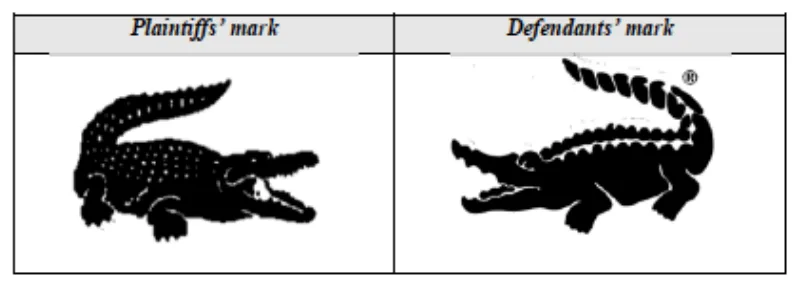
Para 17.81, Crocodile International Pte Ltd v. La Chemise Lacoste & connected matters, RFA(OS)(COMM) 18/2024, decided 09.03.2026, 2026:DHC:1918-DB

2Where the plaintiff's trade mark was admittedly unregistered and it held only a copyright registration for its label, the Court held that an injunction against use of the defendant's trade mark could not be founded on infringement.
“The respondent’s trademark is admittedly not registered, though the respondent has a copyright registration for the label.”

Para 6, Vishal Gupta & Ors v. Rahul Bansal, FAO (COMM) 103/2025, decided 08.05.2025, 2025:DHC:3685-DB

3The Court held, prima facie, that in the absence of a valid registration for a word mark, the plaintiff cannot maintain an infringement action on the basis of that word mark.
“Clearly, in the absence of any valid registration for the word mark QUANTUM, the appellant could not have maintained an infringement action against the respondent on the basis of the said mark.”

Para 19.1, Quantum Hi-Tech Merchandising Pvt Ltd v. LG Electronics India Pvt Ltd, FAO (COMM) 22/2022, decided 04.11.2025, 2025:DHC:9630-DB prima facie

4Under Section 31(1), registration of a mark is prima facie evidence of its validity. The Court held, prima facie, that at the stage of Order XXXIX Rules 1 and 2 CPC, registration itself discharges the plaintiff's onus of showing that the mark is prima facie valid.
“Section 31(1) of the Act clearly states that the very fact of registration of a mark is prima facie evidence of its validity. At the stage of Order XXXIX Rules 1 and 2, therefore, registration of the plaintiff's mark itself discharges the onus on the plaintiff to prove that the mark is prima facie valid.”

Para 44.2, Mankind Pharma Ltd v. Brinton Pharmaceuticals Ltd, FAO (COMM) 166/2024, decided 22.09.2025, 2025:DHC:8795-DB prima facie

5The Court held, prima facie, that the expression "trade mark registered under this Act" in Section 31(1) cannot apply where the mark that was registered is not the one for which the registrant applied; extending the presumption of validity to such a case would result in absurdity.
“The expression "trade mark registered under this Act", as employed in the said sub-section, to our view, cannot apply to a case in which the trade mark which is registered is not the one for which the registrant had applied. To extend the benefit of Section 31(1) to such a case would, in our view, result in absurdity.”

Para 19.1, Quantum Hi-Tech Merchandising Pvt Ltd v. LG Electronics India Pvt Ltd, FAO (COMM) 22/2022, decided 04.11.2025, 2025:DHC:9630-DB prima facie

6Section 28(1) confers on the holder of a valid and subsisting registration two rights: the exclusive right to use the mark for the goods or services for which it is registered, and the right to obtain relief against infringement within the meaning of Section 29. The reliefs are those set out in Section 135(1), including injunction. Section 28(1) of the 1958 Act is to the same effect.
“A valid and subsisting registration confers, on the proprietor of the mark, not only the exclusive right to use the mark in respect of goods or service for which it is registered”

Para 16.2, Suman Devi & Anr v. Rakesh Kumar Sharma, FAO (COMM) 189/2025, decided 25.07.2025, 2025:DHC:6149-DB

“The sub-section confers, on the registrant of a valid registration, two rights. The first is the exclusive right to use the mark in respect of the goods or services for which it is registered.”

Para 43.2.2, Mankind Pharma Ltd v. Brinton Pharmaceuticals Ltd, FAO (COMM) 166/2024, decided 22.09.2025, 2025:DHC:8795-DB prima facie

“Section 28(1) confers, on the registrant of a valid registered trade mark, two rights, viz., the right to exclusive use of the mark for the goods or services in respect of which it is registered, and the right to seek relief against infringement, where infringement, within the meaning of Section 29 of the Act, is found to exist.”

Para 11.2, Mohammad Talha v. Karim Hotels Pvt Ltd, FAO (COMM) 82/2025, decided 06.11.2025, 2025:DHC:9713-DB

“Section 28(1) entitles the registrant of a validly registered trade mark to the right to exclusively use the mark to the exception of the rest of the world, and to seek relief against infringement in case infringement is found to occur.”

Para 24, M/s Chandra Engineers v. M/s Multifrig Marketing Co Pvt Ltd, RFA(COMM) 352/2025, decided 09.12.2025, 2025:DHC:11132-DB

“Section 28(1) of the 1958 TMMA, like Section 28(1) of the 1999 TMA, confers, on the holder of a valid trade mark registration, the exclusive right to use the mark for the goods or services in respect of which it is registered, and the right to obtain relief against infringement.”

Para 201, Thukral Mechanical Works v. P.M. Diesels Private Limited & connected matters, LPA 320/2024, decided 06.02.2026, 2026:DHC:966-DB

7Where a registered trade mark is infringed within the meaning of Section 29 and no statutory exception or bar applies, the proprietor is entitled, by Section 28(1) read with Section 135, to relief against infringement, including injunction and damages. Mere registration of the mark entitles the registrant to an injunction against a third party who infringes it, and an infringing defendant must suffer the consequences envisaged by Section 135(1).
“If, therefore, a registered trademark is infringed, within the meaning of Section 29, and none of the exceptions contained in Section 30 apply, the proprietor of the registered trademark is entitled, in the event that the registered trademark is infringed, to relief against infringement.”

Para 25.1.20, Modi-Mundipharma Pvt Ltd v. Speciality Meditech Pvt Ltd, RFA(OS)(COMM) 8/2023, decided 01.07.2025, 2025:DHC:5039-DB

“inasmuch as the respondents are not entitled to the benefit of Section 30(2)(a) or Section 35 of the Trade Marks Act, the appellant would, by operation of Section 28(1), read with Section 135 of the Trade Marks Act, be entitled to an injunction against the use, by the respondents, of the mark”

Para 26.3, Modi-Mundipharma Pvt Ltd v. Speciality Meditech Pvt Ltd, RFA(OS)(COMM) 8/2023, decided 01.07.2025, 2025:DHC:5039-DB

“Short of these provisions, an infringing defendant must suffer the consequences of infringement as envisaged by Section 135(1)”

Para 16, Kamal Raheja v. Hahnemann Pure Drug Co., FAO (COMM) 105/2025, decided 08.07.2025, 2025:DHC:5613-DB

“As such, mere registration of a mark, by itself, entitles the registrant to injunction against any third party who may infringe the mark.”

Para 27.2, Bodhisattva Charitable Trust v. Mayo Foundation for Medical Education and Research, FAO(OS) (COMM) 73/2024, decided 28.07.2025, 2025:DHC:6317-DB

“Where infringement, within the meaning of Section 29, is found to exist, the proprietor of the registered trade mark which has been infringed is entitled, by Section 28(1), to relief against infringement which, by operation of Section 135, includes injunction as well as damages.”

Para 9.12, Keller Williams Realty, Inc. v. Dingle Buildcons Pvt Ltd & Ors, FAO(OS) (COMM) 120/2022, decided 06.08.2025, 2025:DHC:7395-DB

8Infringement, as defined in the sub-sections of Section 29, depends on registration and not on use. Actual or commercial use of the registered mark by the proprietor is not a sine qua non for an infringement action, and Section 28(1) does not make the right to relief dependent on user.
“Actual use of the registered trademark is not a sine qua non for a valid claim for infringement to lie.”

Para 7.6.2, Diamond Modular Pvt Ltd v. Vikash Kumar & Anr, RFA(COMM) 166/2025, decided 05.05.2025, 2025:DHC:3619-DB

“Section 28(1) does not make the right to seek relief against infringement dependent on user of the mark.”

Para 21.3, Oxygun Health Pvt Ltd & Ors v Pneumo Care Health Pvt Ltd & Anr, RFA(COMM) 271/2025, decided 13.05.2025, 2025:DHC:3897-DB

“registration, even by itself, assures the appellant of the right to relief against infringement. Use of the registered trademark is not necessary.”

Para 25.9.10, Modi-Mundipharma Pvt Ltd v. Speciality Meditech Pvt Ltd, RFA(OS)(COMM) 8/2023, decided 01.07.2025, 2025:DHC:5039-DB

“Commercial user of the mark is not required in order for an infringement action to lie.”

Para 9, Kamal Raheja v. Hahnemann Pure Drug Co., FAO (COMM) 105/2025, decided 08.07.2025, 2025:DHC:5613-DB

“Infringement, as defined in the various sub-sections of Section 29 of the Trade Marks Act, is not dependent on user, but on registration.”

Para 12, Kamal Raheja v. Hahnemann Pure Drug Co., FAO (COMM) 105/2025, decided 08.07.2025, 2025:DHC:5613-DB

“As such, commercial user of the registered mark is not a sine qua non for an infringement action to lie.”

Para 13, Kamal Raheja v. Hahnemann Pure Drug Co., FAO (COMM) 105/2025, decided 08.07.2025, 2025:DHC:5613-DB

“Commercial user of the mark is not required in order for an infringement action to lie.”

Para 27.1, Bodhisattva Charitable Trust v. Mayo Foundation for Medical Education and Research, FAO(OS) (COMM) 73/2024, decided 28.07.2025, 2025:DHC:6317-DB (extracted from Kamal Raheja v. Hahnemann Pure Drug Co)

“As such, it is registration of the mark in favour of the plaintiff which entails infringement, if the acts of the defendant fall within one or other of the sub-sections of Section 29. Whether the plaintiff uses or does not use the registered mark, is entirely irrelevant.”

Para 27.3, Bodhisattva Charitable Trust v. Mayo Foundation for Medical Education and Research, FAO(OS) (COMM) 73/2024, decided 28.07.2025, 2025:DHC:6317-DB

9Non-user of the registered mark is not a defence to infringement. An infringing defendant cannot escape the consequences of infringement on the ground that the proprietor is not commercially using the mark, and non-user is not one of the limits on the effect of registration set out in Section 30.
“"Infringement", as defined in Section 29 of the Trade Marks Act, solely requires the allegedly infringed mark to be registered, not used. The limits on the effect of a registered trade mark are contained in Section 30, and non-user of the mark is not one of the circumstances envisaged in that Section either.”

Para 21.3, Oxygun Health Pvt Ltd & Ors v Pneumo Care Health Pvt Ltd & Anr, RFA(COMM) 271/2025, decided 13.05.2025, 2025:DHC:3897-DB

“We, therefore, are of the firm view that it is not open to an infringing defendant to escape the consequences of infringement of a registered trade mark on the ground that the proprietor of the registered trade is not subjecting it to commercial use.”

Para 27.1, Bodhisattva Charitable Trust v. Mayo Foundation for Medical Education and Research, FAO(OS) (COMM) 73/2024, decided 28.07.2025, 2025:DHC:6317-DB (extracted from Kamal Raheja v. Hahnemann Pure Drug Co)

“"Infringement", as defined in the various sub-sections of Section 29, is not dependent on user of the infringed mark. It is dependent only on registration.”

Para 43.2.1, Mankind Pharma Ltd v. Brinton Pharmaceuticals Ltd, FAO (COMM) 166/2024, decided 22.09.2025, 2025:DHC:8795-DB prima facie

10The Court held, prima facie, that the plaintiff's non-user of its registered marks for a long period after registration made no difference to its entitlement to an interim injunction against the infringer.
“In that view of the matter, the plea of non-user of the registered trademarks of the plaintiff till 2022 does not make any difference to the respondent’s entitlement to interim injunction against the appellants.”

Para 27.7, Bodhisattva Charitable Trust v. Mayo Foundation for Medical Education and Research, FAO(OS) (COMM) 73/2024, decided 28.07.2025, 2025:DHC:6317-DB prima facie

11The Court expressed doubt whether, where the registration of the asserted mark is subsisting and valid, a court examining a plea of infringement can enter into the issue of commercial use of the mark.
“it remains doubtful whether the Court can, in the case of infringement of a trade mark of which the registration is subsisting and valid, enter into the issue of commercial use of the mark while examining a plea of infringement.”

Para 21.3, Oxygun Health Pvt Ltd & Ors v Pneumo Care Health Pvt Ltd & Anr, RFA(COMM) 271/2025, decided 13.05.2025, 2025:DHC:3897-DB

12Suspension or cancellation of the proprietor's licence under the Drugs and Cosmetics Act does not affect its right to relief against infringement under Section 28(1) read with Section 135(1), which cannot be sacrificed at the altar of user. The proprietor's adoption of another mark after such cancellation is no embargo on its asserting rights in the registered mark.
“The right to seek relief against infringement, under Section 28(1) read with Section 135(1) of the Trade Marks Act cannot, in any event, be sacrificed at the altar of user.”

Para 19, Kamal Raheja v. Hahnemann Pure Drug Co., FAO (COMM) 105/2025, decided 08.07.2025, 2025:DHC:5613-DB

“The fact that the respondent may, consequent to the decision of the authority under the Drugs and Cosmetics Act, have adopted another mark is also no embargo on the respondent asserting his right against infringement consequent to the registration of the mark”

Para 20, Kamal Raheja v. Hahnemann Pure Drug Co., FAO (COMM) 105/2025, decided 08.07.2025, 2025:DHC:5613-DB

13To maintain an action for infringement, the plaintiff is not required to establish any goodwill in the trade mark. The right to sue for infringement arises the moment the mark is registered, and infringement involves a mark-to-mark comparison.
“To maintain an action for infringement, the plaintiff is not required to establish the existence, in the trademark, of any goodwill whatsoever.”

Para 102, VIP Industries Ltd v. Carlton Shoes Ltd & connected matters, FAO(OS) (COMM) 151/2023, decided 01.07.2025, 2025:DHC:5042-DB

“Infringement merely involves a mark to mark comparison, and the right to infringement arises the moment a trade mark, or design, is registered. The plaintiff, in an infringement action, is not required to prove goodwill.”

Para 22.2, Crocs Inc USA v. Bata India Ltd & connected matters, RFA (OS) (Comm) 22/2019, decided 01.07.2025, 2025:DHC:5037-DB

14Section 29(4) is only one species within the genus of infringement, applying where the defendant, by unfair use of the mark, seeks to capitalise on the reputation the plaintiff's mark has garnered. It does not prioritise goodwill over likelihood of confusion in infringement cases generally.
“Section 29 (4) is merely one particular specie in the infringement genus, which applies in a case where the defendant, by unfair use of the trade mark, seeks to capitalize on the reputation that the plaintiff’s mark has garnered over time. It does not prioritize goodwill over likelihood of confusion, in a case of alleged infringement.”

Para 102, VIP Industries Ltd v. Carlton Shoes Ltd & connected matters, FAO(OS) (COMM) 151/2023, decided 01.07.2025, 2025:DHC:5042-DB

15Section 27(2) only saves passing off actions and the right to an injunction in them; it does not derogate from the registrant's right under Section 28(1). A passing off injunction obtained by the owner of goodwill against the registered proprietor may affect the registrant's further use of the mark, but cannot affect its right to relief against infringement, because passing off relief does not undo the registration.
“That, however, only saves passing off actions and the right to obtain injunction in such cases. It does not derogate from the right conferred in Section 28(1).”

Para 185, Thukral Mechanical Works v. P.M. Diesels Private Limited & connected matters, LPA 320/2024, decided 06.02.2026, 2026:DHC:966-DB

“The injunction that an owner of goodwill (let us call him X) can obtain against the registered proprietor of the mark (let us call him Y), by virtue of Section 27(2) on the ground of passing off, may affect the right of Y to further use the mark, but cannot affect the right of Y to obtain relief against infringement, on the basis of Section 28(1). This is because the right to relief, in a case of passing off, does not extend to undoing the registration granted to Y.”

Para 186, Thukral Mechanical Works v. P.M. Diesels Private Limited & connected matters, LPA 320/2024, decided 06.02.2026, 2026:DHC:966-DB

16Goodwill is not a defence to an injunction where infringement is found. Just as registration is no defence to passing off, goodwill accumulated by use of an infringing mark is no defence in an infringement action.
“The TMMA does not envisage goodwill to be a defence against injunction, where infringement is found to exist.”

Para 188, Thukral Mechanical Works v. P.M. Diesels Private Limited & connected matters, LPA 320/2024, decided 06.02.2026, 2026:DHC:966-DB

“Equally, however, the accumulation of goodwill, by use of an infringing mark is not a defence in an infringement action.”

Para 203, Thukral Mechanical Works v. P.M. Diesels Private Limited & connected matters, LPA 320/2024, decided 06.02.2026, 2026:DHC:966-DB

Back to contents

I.2 Section 29 of the Trade Marks Act as a Self-Contained Code: Who Can Infringe, 'Use' of the Mark, and Sections 29(1), 29(5) and 29(9)

The Bench has held that infringement is a statutory tort exhaustively defined by Section 29, which can be committed only by a person who is not the registered proprietor or a permitted user. Use of the mark by the defendant is the essence of infringement; 'use' is read widely, through Sections 2(2) and 29(6), and includes import. The section also collects the Bench's holdings on innocence, on Sections 29(1), 29(5) and 29(9), and on the requirement of identity of goods under Section 29 of the 1958 Act. Findings from interim appeals are prima facie.

23 propositions · 19 judgments

Show / hide the findings table
S. No.Proposition / finding / interpretationRelevant para & judgment (verbatim)
1Infringement of a trade mark is a statutory tort whose parameters are exhaustively circumscribed by the sub-sections of Section 29. Section 29 is a self-contained code: no other provision of the Act describes infringing conduct, an act infringes only if it satisfies one or more of its sub-sections, and any exceptions to infringement must be found in the statute.
“Section 29 is a self contained provision insofar as the circumstances in which infringement can be said to exist is concerned. There is no other provision in the Trade Marks Act which envisages any circumstance which could amount to infringement.”

Para 18.1(iii), Abros Sports International Pvt Ltd v Ashish Bansal & Ors, FAO(OS) (COMM) 140/2024, decided 13.05.2025, 2025:DHC:3606-DB

“Infringement is a statutory tort, and its parameters are statutorily defined. They stand exhaustively circumscribed by the various subsections of Section 29 of the Trade Marks Act.”

Para 8.3, Keller Williams Realty, Inc. v. Dingle Buildcons Pvt Ltd & Ors, FAO(OS) (COMM) 120/2022, decided 06.08.2025, 2025:DHC:7395-DB

“Infringement is a statutory tort. Any exceptions to infringement have to be found in the statute and not outside it.”

Para 13.1, Mohammad Talha v. Karim Hotels Pvt Ltd, FAO (COMM) 82/2025, decided 06.11.2025, 2025:DHC:9713-DB

“The only provision in the Act which envisages what “infringement” would be, and which is a self-contained code in that regard, is Section 29. If an act satisfies one or more of the sub-sections of Section 29, it would amount to infringement. Else, it would not.”

Para 25, Western Digital Technologies Inc v. Geonix International Pvt Ltd & connected matters, FAO(OS) (COMM) 146/2024, decided 09.03.2026, 2026:DHC:1908-DB prima facie

2The Court held, prima facie, that "conceptual similarity" as such is not a concept known to the Trade Marks Act; an injunction under the Act follows only upon infringement. Closeness to another trader's mark, whatever its degree, is not tortious absent infringement or passing off.
“No such concept is known to the Trade Marks Act. Injunction, under the Trade Marks Act, follows infringement.”

Para 14.3, Sanjay Gupta and Vinay Gupta v. Vineet Jain, Proprietor of Vijaypal Vineet Kumar and Co, FAO (COMM) 44/2026, decided 11.02.2026, 2026:DHC:1248-DB prima facie

““Closeness” with another trader’s mark, irrespective of the degree of closeness, is not tortious in absence of any element of infringement or passing off.”

Para 14.9, Sanjay Gupta and Vinay Gupta v. Vineet Jain, Proprietor of Vijaypal Vineet Kumar and Co, FAO (COMM) 44/2026, decided 11.02.2026, 2026:DHC:1248-DB prima facie

3Infringement under each clause of Section 29 can be committed only by a person who is not the registered proprietor or a permitted user. Use by the registered proprietor of its mark in the classes for which it is registered, or dealing with the proprietor's consent, is therefore not infringement.
“Sections 29(1) and 29(4) clearly envisage infringement only by a person who is not the proprietor of a registered trademark or the permissive user thereof.”

Para 37, M/s Nakoda Food Marketing v. M/s Mahesh Edible Oil Industries Ltd, FAO (COMM) 92/2024, decided 07.08.2025, 2025:DHC:6635-DB prima facie (extracted from Abros Sports International Pvt Ltd v. Ashish Bansal)

“As such, per definition, there can be no infringement by a registered user of a mark in the classes in which it is registered in his favour.”

Para 18.1, M/s Vaidya Rishi India Health Pvt Ltd & Anr v. Suresh Dutt Parashar & Ors, FAO (COMM) 122/2024, decided 07.08.2025, 2025:DHC:6644-DB

“If the person who deals in the trade marked goods is the proprietor of the mark, or deals in the mark with the consent of the proprietor and is, therefore, a permissive user, the use would, in any case, not be infringement within the meaning of Section 29, as “infringement”, in each of the clauses of Section 29, can be committed only by one who is not the registered proprietor, or the permissive user, of the infringing mark.”

Para 31, Western Digital Technologies Inc v. Geonix International Pvt Ltd & connected matters, FAO(OS) (COMM) 146/2024, decided 09.03.2026, 2026:DHC:1908-DB prima facie

4In a reference order, the Court expressed the view that Sections 29(1), (2) and (4) contemplate infringement only by a person who is not the registered proprietor or permitted user, so that there can be no infringement by a registered trade mark: only an unregistered mark can infringe, and use of a registered mark for the goods or services for which it is registered can never be infringing.
“Plainly said, there can be no infringement by the proprietor of a registered trade mark.”

Para 12, Abros Sports International Pvt Ltd v Ashish Bansal & Ors, FAO(OS) (COMM) 140/2024, decided 13.05.2025, 2025:DHC:3606-DB

“There can be no infringement by a registered trademark. An unregistered trademark alone can infringe. Use of a registered trademark, for the goods or services in respect of which it is registered, can never be infringing in nature.”

Para 16.2, Abros Sports International Pvt Ltd v Ashish Bansal & Ors, FAO(OS) (COMM) 140/2024, decided 13.05.2025, 2025:DHC:3606-DB

5An infringer cannot seek to injunct the person whose mark it infringes, on the ground of infringement of that mark.
“An infringer cannot, quite obviously, seek to injunct use of the infringed mark by the person whose mark is infringed, on the ground of infringement.”

Para 149, Thukral Mechanical Works v. P.M. Diesels Private Limited & connected matters, LPA 320/2024, decided 06.02.2026, 2026:DHC:966-DB

6The Court held, prima facie, that the registered proprietor of a word mark can maintain an infringement action against a defendant whose own registration has been cancelled and who has no surviving registration.
“The respondent has no surviving trademark registration. Registration No. 5369451 which had been issued to the respondent was subsequently cancelled by the High Court of Bombay by order dated 6 May 2025 in Comm Misc. Petition 117/2025. The appellant can, therefore, maintain an action for infringement against the respondent.”

Para 40, Mankind Pharma Ltd v. Brinton Pharmaceuticals Ltd, FAO (COMM) 166/2024, decided 22.09.2025, 2025:DHC:8795-DB prima facie

7The Court held, prima facie, that the Trade Marks Act contains no bar against a proprietor instituting an infringement suit against a person with whom it is carrying on business.
“We are unaware of any proscription to be found in the Trade Marks Act, against instituting a suit for infringement against a person with whom one is carrying on business.”

Para 16.1, Suman Devi & Anr v. Rakesh Kumar Sharma, FAO (COMM) 189/2025, decided 25.07.2025, 2025:DHC:6149-DB prima facie

8Use of the impugned mark by the defendant is the essence of infringement under Section 29; absent use there is no infringement. Applying Supreme Court authority, no cause of action to sue for infringement arises merely because the defendant has applied for registration of a mark.
“When we read paras 13 and 20 in juxtaposition, it is clear that the Supreme Court has held that no cause of action, to maintain a suit for infringement, would lie merely on the defendant filing an application for registration of a trade mark.”

Para 20, Deepak Kumar Khemka v. Yogesh Kumar Jaiswal, RFA(COMM) 381/2025, decided 28.07.2025, 2025:DHC:6176-DB

“Absent use by the defendant, there is no infringement.”

Para 21, Deepak Kumar Khemka v. Yogesh Kumar Jaiswal, RFA(COMM) 381/2025, decided 28.07.2025, 2025:DHC:6176-DB

9A quia timet action for infringement is maintainable where, apart from the application for registration, there is material indicating that the defendant intends to use the mark, whether before or after registration. The trigger point for an infringement action is use, not registration, by the defendant.
“Of course, if there is material to indicate that, apart from merely applying for registration of the mark, the defendant also intends to use the mark, whether before or after its registration, it would certainly suffice to maintain a quia timet action. The trigger point for an infringement action is use, not registration of the plaintiff’s mark, or a mark which is identical or deceptively similar thereto, by the defendant.”

Para 21, Deepak Kumar Khemka v. Yogesh Kumar Jaiswal, RFA(COMM) 381/2025, decided 28.07.2025, 2025:DHC:6176-DB

10Conflicting 'trade mark use' is the raison d'etre of Section 29. 'Trade mark use' under the Act is much wider than commercial exploitation, and the words "in any relation whatsoever" in Section 2(2)(c)(i) are words of expansion covering use of the mark in any manner that denotes a connection with the goods.
“Conflicting “trade mark use” is the raison d’ etre of Section 29 of the Trade Marks Act, and the principle of infringement in trade mark law. “Trade mark use”, in the Trade Marks Act, is a concept much wider than mere commercial exploitation of a trade mark.”

Para 21.8.2(xvii), Crocs Inc USA v. Bata India Ltd & connected matters, RFA (OS) (Comm) 22/2019, decided 01.07.2025, 2025:DHC:5037-DB

“The words “in any relation whatsoever” are compendious words of expansion and would encompass use of the mark in any manner so as to denote a connection with the goods.”

Para 21.8.2(xvii), Crocs Inc USA v. Bata India Ltd & connected matters, RFA (OS) (Comm) 22/2019, decided 01.07.2025, 2025:DHC:5037-DB

11'Use' by an alleged infringer under Sections 29(1) to (5) is to be interpreted with recourse to Section 2(2)(b). Applying this, a manufacturer of goods bearing the infringing mark was held as liable for infringement and its consequences as the marketer.
“While interpreting the term “use” as employed for the alleged infringer in Section 29(1) to (5), therefore, one has to seek recourse to Section 2(2)(b)”

Para 29.1, Modi-Mundipharma Pvt Ltd v. Speciality Meditech Pvt Ltd, RFA(OS)(COMM) 8/2023, decided 01.07.2025, 2025:DHC:5039-DB

“Respondent 2 is, therefore, as liable, for infringement and its sequelae, as Respondent 1.”

Para 29.2, Modi-Mundipharma Pvt Ltd v. Speciality Meditech Pvt Ltd, RFA(OS)(COMM) 8/2023, decided 01.07.2025, 2025:DHC:5039-DB

12Import of goods bearing another's registered trade mark independently constitutes 'use' of that mark under Section 29(6)(c). The importer's liability does not depend on whether its foreign supplier is an infringer, and an importer who is neither the proprietor nor a permitted user commits an act within Section 29.
“Inasmuch as import of goods bearing a registered trade mark amounts to “use” of the registered trademark under Section 29(6), and as the respondent was neither the proprietor, nor the permissive user of the registered trademark of the appellant, the import of the HDDs by the respondent was infringing in nature, within the meaning of Section 29.”

Para 158, Western Digital Technologies Inc v. Geonix International Pvt Ltd & connected matters, FAO(OS) (COMM) 146/2024, decided 09.03.2026, 2026:DHC:1908-DB prima facie

“Import of goods bearing the registered trademarks bearing the registered trademark of another independently constitutes “use” of the registered trademark, within the meaning of Section 29(6)(c)”

Para 42, M/s Products and Ideas India Pvt Ltd v. Nilkamal Ltd, FAO(OS) (COMM) 111/2025, decided 23.03.2026, 2026:DHC:2385-DB

13The Court held, prima facie, that a statement on affidavit made on the defendant's behalf before the Trade Marks Registry is a solemn affirmation on oath, and the defendant could not be permitted to resile from it.
“We cannot allow the respondents to resile from this stand. An affidavit is on oath. What is stated in the affidavit is by way of solemn affirmation.”

Para 19.5, Quantum Hi-Tech Merchandising Pvt Ltd v. LG Electronics India Pvt Ltd, FAO (COMM) 22/2022, decided 04.11.2025, 2025:DHC:9630-DB prima facie

14Innocence is no defence to infringement, which does not depend on mala fides or mens rea. A manufacturer may coin a mark but must ensure it is not confusingly or deceptively similar to a registered mark; a wholly innocent defendant may still be found to infringe and be injuncted.
“Infringement involves a mere mark-to-mark analysis. The defendant may be wholly innocent, and a case of infringement may still be made out, warranting an injunction.”

Para 9.12, Keller Williams Realty, Inc. v. Dingle Buildcons Pvt Ltd & Ors, FAO(OS) (COMM) 120/2022, decided 06.08.2025, 2025:DHC:7395-DB

“While doing so, however, the manufacturer has to take care to ensure that the mark is not confusingly or deceptively similar to any registered trademark. If it is, he risks the chance of an injunction. Innocence is no defence. Infringement is not dependent on mala fides or mens rea.”

Para 41.2, Mankind Pharma Ltd v. Brinton Pharmaceuticals Ltd, FAO (COMM) 166/2024, decided 22.09.2025, 2025:DHC:8795-DB prima facie

15The Court held, prima facie, that a defendant's position as a dominant player in the e-commerce market cannot be a basis for findings of infringement against it without evidence.
“The fact that Amazon Tech may be a “dominant player” in the e-commerce market can hardly be a basis to return findings of infringement, against it, without any evidence.”

Para 50, Amazon Technologies Inc v. Lifestyle Equities CV & Anr, RFA(OS)(COMM) 11/2025, decided 01.07.2025, 2025:DHC:5036-DB prima facie

16Section 29(1) applies only where the defendant uses the infringing mark in relation to the goods or services for which the plaintiff's mark is registered.
“Section 29(1) would apply, therefore, only where the use of the infringing trademark by the defendant is in relation to the goods or services in respect of which the trademark is registered in favour of the plaintiff.”

Para 25.1.3, Modi-Mundipharma Pvt Ltd v. Speciality Meditech Pvt Ltd, RFA(OS)(COMM) 8/2023, decided 01.07.2025, 2025:DHC:5039-DB

17Under Section 29(1) of the Trade and Merchandise Marks Act, 1958, infringement occurs only where the impugned mark is used for the very goods for which the plaintiff's mark is registered. Unlike the 1999 Act, the 1958 Act does not treat use for similar, allied or cognate goods as infringement, and even goods in the same class do not suffice; identity of goods is the statutory sine qua non.
“Infringement, under Section 29(1) of the 1958 TMMA, occurs only where the allegedly infringing mark is used in relation to the goods in respect of which the infringed mark is registered. The goods have, therefore, to be identical. Unlike the 1999 TMA, the 1958 TMMA does not envisage infringement as taking place where the goods are merely similar.”

Para 122, Thukral Mechanical Works v. P.M. Diesels Private Limited & connected matters, LPA 320/2024, decided 06.02.2026, 2026:DHC:966-DB

“Under the 1958 TMMA, infringement can take place only where the defendant uses the infringing mark in respect of the goods for which the mark is registered in favour of the plaintiff. No case of infringement can be made out if the goods are not identical, even if they are similar, or allied or cognate.”

Para 123, Thukral Mechanical Works v. P.M. Diesels Private Limited & connected matters, LPA 320/2024, decided 06.02.2026, 2026:DHC:966-DB

“We may go to the extent of observing that, even if the goods fall within the same class, there would still be no case of infringement in terms of Section 29 of the 1958 TMMA, as the words used in the Section are “goods in respect of which the trade mark is registered”. Identity of goods is, therefore, the statutory sine qua non for Section 29 of the 1958 TMMA to apply.”

Para 124, Thukral Mechanical Works v. P.M. Diesels Private Limited & connected matters, LPA 320/2024, decided 06.02.2026, 2026:DHC:966-DB

18The words "goods in respect of which the trade mark is registered" in Section 29 of the 1958 Act cannot be expanded to cover similar goods; the Court cannot rewrite a statute, even by applying the principles of purposive interpretation.
“It is trite that Court cannot re-write a statute, even by applying the principles of purposive interpretation.”

Para 125, Thukral Mechanical Works v. P.M. Diesels Private Limited & connected matters, LPA 320/2024, decided 06.02.2026, 2026:DHC:966-DB

19Applying the 1958 Act, a proprietor with no registration of its mark for centrifugal pumps could not sustain an infringement claim against use of an identical mark for centrifugal pumps.
“In the present case, PMD had no registration of the Field Marshal Mark for centrifugal pumps. It could not, therefore, sustain a case of infringement against Thukral, on the ground that Thukral was using an identical Field Marshal Mark for centrifugal pumps.”

Para 126, Thukral Mechanical Works v. P.M. Diesels Private Limited & connected matters, LPA 320/2024, decided 06.02.2026, 2026:DHC:966-DB

20Section 29(5) deems infringing the use of a registered trade mark by another as its trade name, or part of its trade name or business name, dealing in the goods or services for which the mark is registered. The provision applies where the rival marks are identical.
“Section 29(5) applies where the rival marks are identical. For the provision to apply, the defendant must use the plaintiff’s registered trademark as the defendant’s trade name, part of the defendant’s trade name or business concerned or part thereof, in relation to the goods or services in respect of which the trademark is registered in favour of the plaintiff.”

Para 25.1.9, Modi-Mundipharma Pvt Ltd v. Speciality Meditech Pvt Ltd, RFA(OS)(COMM) 8/2023, decided 01.07.2025, 2025:DHC:5039-DB

“Section 29(5) deems the use of a registered trade mark by another person as his trade name, or part of his trade name, or the name of his business concern, or part thereof, dealing in the goods or services in respect of which the trademark is registered, as infringing.”

Para 22, M/s Chandra Engineers v. M/s Multifrig Marketing Co Pvt Ltd, RFA(COMM) 352/2025, decided 09.12.2025, 2025:DHC:11132-DB

21The Court held, prima facie, that use of the impugned mark as part of the defendant's trade name, for identical, cognate and allied goods, was equally impermissible under Section 29(5).
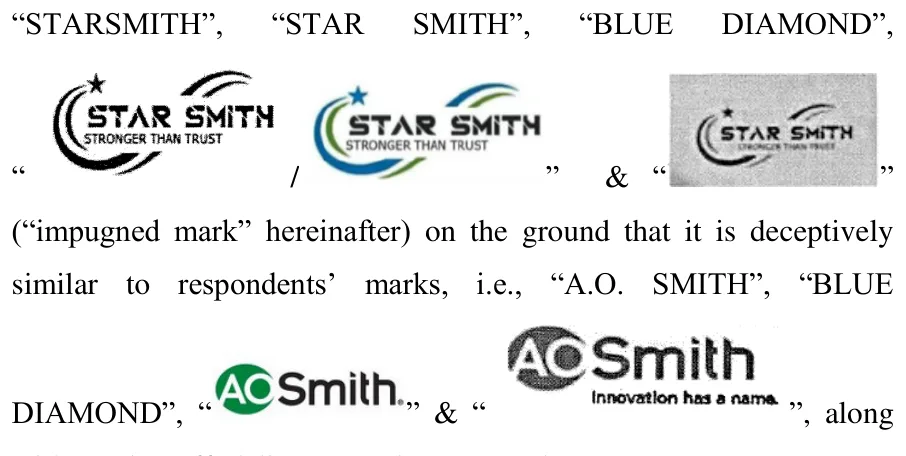
“the use of the impugned mark as part of the appellants’ trade name in relation to identical and cognate and allied goods is equally impermissible by virtue of Section 29(5) of the Act”

Para 44, Star Smith Export Pvt Ltd v. A O Smith Corporation, FAO(OS) (COMM) 216/2025, decided 13.02.2026, 2026:DHC:1306-DB prima facie

22Section 29(9) clarifies that infringement need not be in writing or by visual representation; it may also be by spoken use of the words that form part of the registered mark.
“Section 29(9) clarifies that infringement need not always be in writing or by visual representation, but could also be by spoken use of the words which constitute part of the infringed trademark.”

Para 25.1.12, Modi-Mundipharma Pvt Ltd v. Speciality Meditech Pvt Ltd, RFA(OS)(COMM) 8/2023, decided 01.07.2025, 2025:DHC:5039-DB

23Applying Section 29(9), if the spoken use of the defendant's mark is likely to lead a consumer of average intelligence and imperfect recollection, on hearing it, to presume an association with the plaintiff's mark, that suffices to constitute infringement.
“if the spoken use of the mark 'Liv-333' is likely to lead a consumer of average intelligence and imperfect recollection, on immediately hearing the spoken word, to presume an association between the mark and 'Liv.52', that would suffice to constitute infringement.”

Para 44, Rajasthan Aushdhalaya Pvt Ltd v. Himalaya Global Holdings Ltd, RFA(OS)(COMM) 18/2025, decided 04.07.2025, 2025:DHC:5307-DB

Back to contents

I.3 Infringement under Section 29(2): Likelihood of Confusion or Association, Similar Goods and the Mark-to-Mark Comparison

The Bench has repeatedly set out the ingredients of Section 29(2)(b): a registered mark, a similar defendant's mark, identical or similar goods or services, and a resulting likelihood of confusion or of association. Likelihood of association, or initial interest confusion, suffices, and actual confusion need not be proved. 'Similar goods' include allied and cognate goods. Infringement is tested mark to mark, so added matter, get-up, packaging and price are relevant only to passing off, relying on Kaviraj Pandit Durga Dutt Sharma v. Navaratna Pharmaceutical Laboratories and Renaissance Hotel Holdings. Several findings arise in interim appeals and are prima facie.

29 propositions · 21 judgments

Show / hide the findings table
S. No.Proposition / finding / interpretationRelevant para & judgment (verbatim)
1Infringement under Section 29(2)(b) requires that (i) the plaintiff has a registered trade mark, (ii) the defendant, not being the registered proprietor or permitted user, uses a mark similar or deceptively similar to it, (iii) for goods or services identical or similar to those for which the plaintiff's mark is registered or used, and (iv) by reason of these factors there is a likelihood of confusion in the public mind, or of the public assuming an association between the marks. Where these co-exist, infringement ipso facto stands committed.
“Thus, for infringement to have taken place within the meaning of Section 29(2), three factors must be found to co-exist. There must be (i) identity or similarity of the rival marks, (ii) identity or similarity of the goods or services in respect of which the rival marks are used, and (iii) resultant likelihood of confusion or of assertion between the two marks in the minds of the public.”

Para 25.1.6, Modi-Mundipharma Pvt Ltd v. Speciality Meditech Pvt Ltd, RFA(OS)(COMM) 8/2023, decided 01.07.2025, 2025:DHC:5039-DB

“If two marks are similar, and are used for similar goods or services, and such use results in likelihood of confusion in the mind of a consumer of average intelligence and imperfect recollection”

Para 42.2, Mankind Pharma Ltd v. Brinton Pharmaceuticals Ltd, FAO (COMM) 166/2024, decided 22.09.2025, 2025:DHC:8795-DB prima facie

“takes place where (a) the Plaintiff has a registered trade mark, (b) the defendants mark is similar to the Plaintiff registered trade mark, (c) the defendants mark is used for goods, or services, which are identical, or similar, to the goods or services in respect of which the Plaintiff uses its registered trade mark, and (d) because of these factors, there is likelihood of confusion in the minds of the public between the marks of the Plaintiff and the defendant or of the public assuming an association between the two marks.”

Para 22, Wow Momo Foods Private Limited v. Wow Burger, FAO(OS) (COMM) 143/2025, decided 16.10.2025, 2025:DHC:9320-DB

“Pared down to its essentials, Section 29(2)(b) envisages infringement as having taken place where (i) the marks of the plaintiff and defendant are similar, (ii) the goods or services for which they are used are similar, and”

Para 11.5, Mohammad Talha v. Karim Hotels Pvt Ltd, FAO (COMM) 82/2025, decided 06.11.2025, 2025:DHC:9713-DB

“uses a mark which is deceptively similar to a registered trade mark of another, for goods or services which are identical or deceptively similar to the goods or services in respect of which the mark of the other is registered, and such usage results in likelihood of confusion or likelihood of the public believing an association between the two marks,”

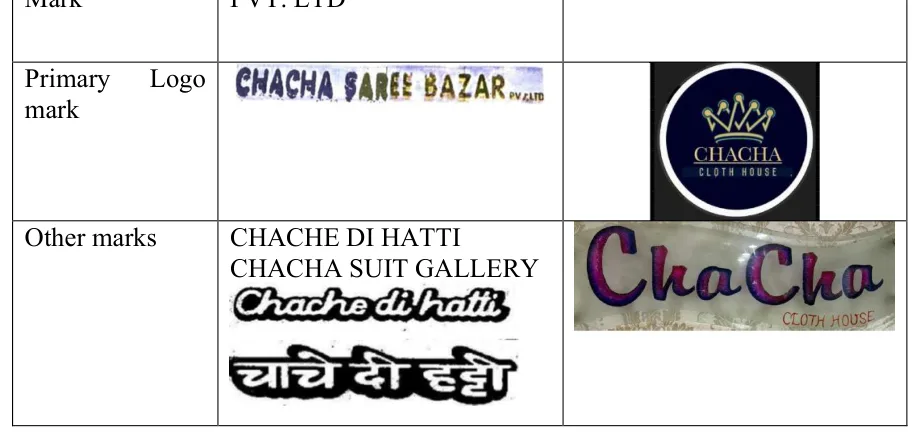
Para 31, Chacha Saree Bazar Pvt Ltd & Anr v. Chacha Cloth House, FAO (COMM) 217/2025, decided 12.02.2026, 2026:DHC:1296-DB

“infringement can only be established when the following conditions are met: (a) the Plaintiffs have a registered trade mark, (b) the Defendants’ mark is deceptively similar to the Plaintiffs’ registered trademark, (c) the Defendants’ mark is used in relation to goods or services that are identical or similar to those for which the Plaintiffs’ trademark is registered, and (d) because of these factors, there exists a likelihood of confusion in the minds of the public, or the public might assume an association between the Plaintiffs’ and Defendants’ marks.”

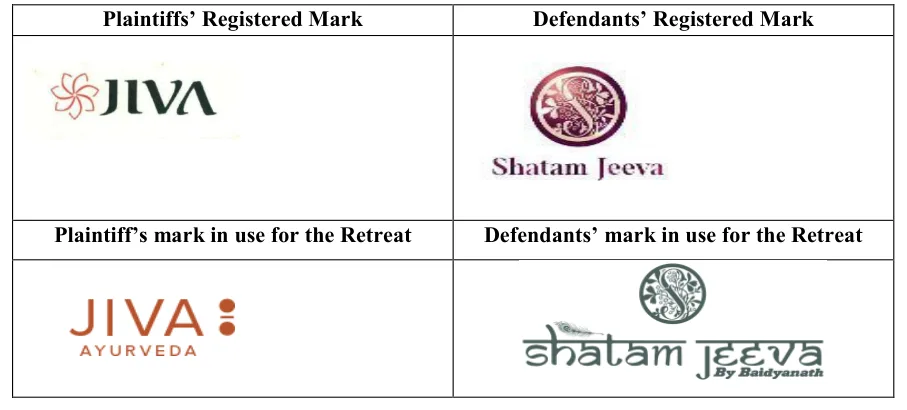
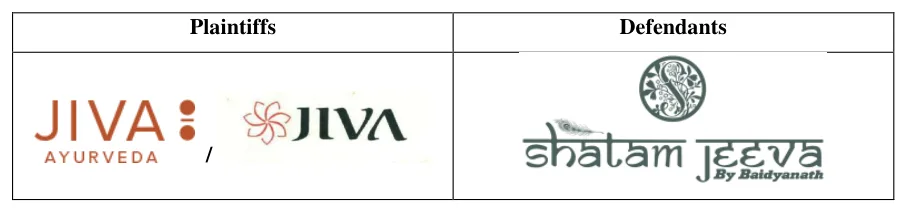
Para 40, Ms Anuradha Sharma & Anr v. Jiva Ayurvedic Pharmacy Ltd & Ors, FAO (COMM) 334/2025, decided 21.04.2026, 2026:DHC:3302-DB

2The Court held, prima facie, that the Trade Marks Act provides no yardstick to assess similarity; all Section 29 requires is that the similarity result in a likelihood of confusion or a likelihood of association between the marks in the public mind.
“No yardsticks, to assess “similarity”, are available in the Trade Marks Act. All that Section 29 requires is that the similarity should result in “likelihood of confusion”, or a likelihood that, owing to the similarity, an association between the marks is likely to arise in the minds of the public.”

Para 14.3, Sanjay Gupta and Vinay Gupta v. Vineet Jain, Proprietor of Vijaypal Vineet Kumar and Co, FAO (COMM) 44/2026, decided 11.02.2026, 2026:DHC:1248-DB prima facie

3A likelihood that the public will presume an association between the marks, judged from the standpoint of an average consumer of average intelligence and imperfect recollection, by itself suffices to constitute infringement under Section 29(2)(b), even without a likelihood of confusion.
“If, owing to the similarity between the marks and the identity or similarity of the goods or services in respect of which the rival marks are used, there is even a likelihood of presumption of association between the marks, that itself would suffice to constitute infringement under Section 29(2)(b).”

Para 42, Rajasthan Aushdhalaya Pvt Ltd v. Himalaya Global Holdings Ltd, RFA(OS)(COMM) 18/2025, decided 04.07.2025, 2025:DHC:5307-DB

“to a person of average intelligence and imperfect recollection, the words LABTRONICS and LABTRON, when used for identical goods, are bound to create confusion or, at the very least, an impression of association between the two marks, either of which would suffice to constitute infringement within the meaning of clause (b) of Section 29(2)”

Para 14.5, Suman Devi & Anr v. Rakesh Kumar Sharma, FAO (COMM) 189/2025, decided 25.07.2025, 2025:DHC:6149-DB prima facie

“At the very least, it would result in the average consumer believing an association between the two marks. That by itself would suffice to constitute infringement within the meaning of Section 29(2)(b) of the Act.”

Para 51, Wow Momo Foods Private Limited v. Wow Burger, FAO(OS) (COMM) 143/2025, decided 16.10.2025, 2025:DHC:9320-DB

4The Court held, prima facie, that infringement does not require the consumer to mistake one mark for the other. It is enough that a consumer of average intelligence and imperfect recollection, seeing the defendant's mark after having encountered the plaintiff's, even momentarily wonders whether the marks are associated.
“It is not necessary, therefore, for infringement to be found to exist, that the consumer must consume one mark for the other. Even if the marks are so similar that the consumer of average intelligence and imperfect recollection, when he sees the defendant's mark after having come across the plaintiff's mark earlier, even instantaneously, wonders whether there is any association between the marks, it would constitute infringement.”

Para 23.5, Madan Lal Purushottam Das Foods Pvt Ltd v B.L. Agro Industries Ltd, FAO (COMM) 234/2025, decided 28.08.2025, 2025:DHC:7772-DB prima facie

5Likelihood of confusion suffices; to succeed in infringement and obtain an injunction, the plaintiff need not prove actual confusion.
“In order to succeed in a claim of infringement, and to be entitled an injunction on that basis, the plaintiff is not required to prove actual confusion. All that has to be proved is likelihood of confusion.”

Para 26.2.11, Modi-Mundipharma Pvt Ltd v. Speciality Meditech Pvt Ltd, RFA(OS)(COMM) 8/2023, decided 01.07.2025, 2025:DHC:5039-DB

“At the cost of repetition, evidence of actual confusion is not required, and the mere likelihood of confusion is sufficient to establish infringement.”

Para 17.89, Crocodile International Pte Ltd v. La Chemise Lacoste & connected matters, RFA(OS)(COMM) 18/2024, decided 09.03.2026, 2026:DHC:1918-DB

6Relying on precedent, including Renaissance Hotel Holdings and Midas Hygiene, the Court held that in an infringement action an injunction issues as soon as improper use of the plaintiff's mark by the defendant is proved; no actual deception or actual damage need be shown.
“in an infringement action, an injunction would be issued as soon as it is proved that the defendant is improperly using the plaintiff's mark.”

Para 21.3, Oxygun Health Pvt Ltd & Ors v Pneumo Care Health Pvt Ltd & Anr, RFA(COMM) 271/2025, decided 13.05.2025, 2025:DHC:3897-DB (extracted from Renaissance Hotel Holdings Inc v B. Vijaya Sai)

“It has been reiterated that no case of actual deception nor any actual damage needs to be proved in such cases.”

Para 17.86, Crocodile International Pte Ltd v. La Chemise Lacoste & connected matters, RFA(OS)(COMM) 18/2024, decided 09.03.2026, 2026:DHC:1918-DB (extracted from Renaissance Hotel Holdings Inc v. B. Vijaya Sai)

7A likelihood of initial interest confusion among consumers is, by itself, sufficient to constitute infringement under Section 29.
“This substantial level of similarity is likely to cause initial interest confusion among consumers, which is, in itself, sufficient to constitute an infringement under Section 29 of the Act.”

Para 17.89, Crocodile International Pte Ltd v. La Chemise Lacoste & connected matters, RFA(OS)(COMM) 18/2024, decided 09.03.2026, 2026:DHC:1918-DB

8The Court held, prima facie, that Section 29(2) is not attracted where there is no likelihood of confusion.
“Besides, Section 29(2) would not apply as there is no likelihood of confusion.”

Para 164, Western Digital Technologies Inc v. Geonix International Pvt Ltd & connected matters, FAO(OS) (COMM) 146/2024, decided 09.03.2026, 2026:DHC:1908-DB prima facie

9The Court held, prima facie, that replication of the dominant idea of the plaintiff's registered mark constitutes infringement under Section 29; 'similarity' under Section 29(2)(b) includes similarity in the idea conveyed by the rival marks.
“It is a settled proposition that, if the dominant idea in the registered mark of the plaintiff is replicated by the defendant, it would constitute infringement within the meaning of Section 29 of the Trade Marks Act. The concept of ―similarity‖ between the rival marks, envisaged by Section 29(2)(b), would also include a case of similarity in the idea conveyed by the rival marks.”

Para 25, Madan Lal Purushottam Das Foods Pvt Ltd v B.L. Agro Industries Ltd, FAO (COMM) 234/2025, decided 28.08.2025, 2025:DHC:7772-DB prima facie

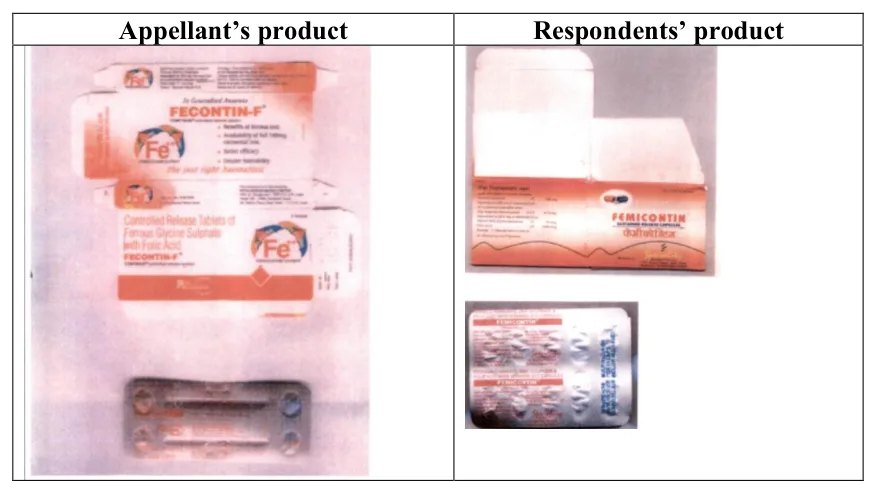
10The presumption of likelihood of confusion under Section 29(3) arises only in a Section 29(2)(c) case, where both the rival marks and the goods or services are identical. Any difference between the marks, however small, excludes Section 29(2)(c); FECONTIN-F and FEMICONTIN were held not identical.
“Section 29(3) caters to a situation in which Section 29(2)(c) applies, i.e., where the rival marks, as well as the goods or services in respect of which the rival marks are used, are identical. In such a circumstance, Section 29(3) ordains that likelihood of confusion in the minds of the public would be presumed.”

Para 25.1.7, Modi-Mundipharma Pvt Ltd v. Speciality Meditech Pvt Ltd, RFA(OS)(COMM) 8/2023, decided 01.07.2025, 2025:DHC:5039-DB

“clause (c) applies only where the rival marks are identical. Any difference between the rival marks, howsoever infinitesimal, would exclude the applicability of Section 29(2)(c).”

Para 25.1.13, Modi-Mundipharma Pvt Ltd v. Speciality Meditech Pvt Ltd, RFA(OS)(COMM) 8/2023, decided 01.07.2025, 2025:DHC:5039-DB

11The Court held, prima facie, that use of a mark identical to the registered word mark for services within the registration attracts Section 29(2)(c) read with Section 29(3), so that likelihood of confusion is presumed.
“there is prima facie substance in Mr. Kamath’s contention that the case would fall within Section 29(2)(c) read with Section 29(3) of the Trade Marks Act and that, therefore, there would be a presumption of likelihood of confusion.”

Para 29.1, Bodhisattva Charitable Trust v. Mayo Foundation for Medical Education and Research, FAO(OS) (COMM) 73/2024, decided 28.07.2025, 2025:DHC:6317-DB prima facie

12The registered proprietor is entitled to protect its mark against identical or deceptively similar marks used for identical or similar goods or services. Once the rival marks are found deceptively similar and likely to cause confusion, and the defendant uses its mark for identical or similar goods, the ingredients of infringement are established and the plaintiff is entitled to an injunction.
“the appellant, as a holder of a registered trademark specifically in respect of the aforenoted categories of electrical goods, was entitled to protect the registered trademark from infringement by others, who attempted to use any identical or deceptively similar trademark for identical or similar goods or services.”

Para 7.6.5, Diamond Modular Pvt Ltd v. Vikash Kumar & Anr, RFA(COMM) 166/2025, decided 05.05.2025, 2025:DHC:3619-DB

“Following our finding that there was deceptive similarity between the asserted mark DIAMOND and the respondent’s mark DIAMOND GOLD which was used for goods which were either identical or at the very least similar, the appellant was clearly entitled to a decree of injunction.”

Para 11, Diamond Modular Pvt Ltd v. Vikash Kumar & Anr, RFA(COMM) 166/2025, decided 05.05.2025, 2025:DHC:3619-DB

“Having concluded that the rival marks are deceptively similar and likely to cause confusion among consumers, the essential ingredients of infringement are prima facie established. The admitted use of the impugned marks in relation to identical goods by the appellants is fatal in terms of Section 29 of the Act.”

Para 43, Star Smith Export Pvt Ltd v. A O Smith Corporation, FAO(OS) (COMM) 216/2025, decided 13.02.2026, 2026:DHC:1306-DB prima facie

13"Similar" goods under Sections 29(2)(a) and (b) encompass all goods allied or cognate to those for which the asserted mark is used; infringement does not require the rival marks to be used for the same goods or services.
“Within the ambit of the expression “similar” would be encompassed all goods which are allied or cognate to the goods or services in respect of which the asserted mark is used. There is, therefore, no requirement of the rival marks being used in respect of the same goods or services, as the learned Commercial Court incorrectly presumes.”

Para 7.6.5, Diamond Modular Pvt Ltd v. Vikash Kumar & Anr, RFA(COMM) 166/2025, decided 05.05.2025, 2025:DHC:3619-DB

14The Court held, prima facie, that since one brand is now used across a wide variety of goods, the scope of "similar goods" under Section 29(2)(b) must be proportionately enlarged. Computers, computer peripherals and televisions were treated as similar, as recognised by their common Nice Class 9.
“In the present day and age, when one brand is used for a wide variety of goods, at times spanning the entire consumer spectrum, the scope of the definition of "similar goods" for the purposes of Section 29(2)(b) of the Act, has to be proportionately enlarged.”

Para 19.13, Quantum Hi-Tech Merchandising Pvt Ltd v. LG Electronics India Pvt Ltd, FAO (COMM) 22/2022, decided 04.11.2025, 2025:DHC:9630-DB prima facie

“This fact is apparently recognized even by the NICE classification of goods, which clubs computers, computer peripherals and televisions and their accessories in the same Class 9.”

Para 19.13, Quantum Hi-Tech Merchandising Pvt Ltd v. LG Electronics India Pvt Ltd, FAO (COMM) 22/2022, decided 04.11.2025, 2025:DHC:9630-DB prima facie

15Fans were held similar, within Section 29(2)(a) and (b), to switches and electrical fittings, being electrical goods often made by the same manufacturer.
“Fans are electrical goods. Fans, and other electrical goods such as switches and electrical fittings, are often manufactured by the same manufacturer. They are, therefore, clearly similar, within the meaning of Section 29(2)(a) and (b), to the electrical goods in respect of which the appellant’s DIAMOND mark is registered”

Para 7.6.6, Diamond Modular Pvt Ltd v. Vikash Kumar & Anr, RFA(COMM) 166/2025, decided 05.05.2025, 2025:DHC:3619-DB

16The Court held, prima facie, that food products for human consumption made from grains, pulses and seeds, dealt in by parties operating in the same segment of the food industry, were similar goods.
“As it is evident, the underlying goods are food products for human consumption, made from grains, pulses, and seeds etc. Both parties operate within the same segment of the food industry.”

Para 55, Nutrivative Foods Pvt Ltd v. B.L. Agro Industries Ltd, FAO (COMM) 122/2025, decided 04.11.2025, 2025:DHC:10125-DB prima facie

17The Court held, prima facie, that a pharmaceutical product for acne and an ordinary skin cream for acne scars were similar goods under Section 29(2)(b), as both treat associated skin ailments and cater to the same consumer segment.
“Even though the appellant's product may fall in the class of pharmaceutical products whereas the respondent's product may be an ordinary skin cream, both are intended to treat associated skin ailments, the appellants product being intended to treat acne and the respondent's product to treat the scars left behind after acne has been treated. They, therefore, cater to the same consumer segment.”

Para 42.2, Mankind Pharma Ltd v. Brinton Pharmaceuticals Ltd, FAO (COMM) 166/2024, decided 22.09.2025, 2025:DHC:8795-DB prima facie

18The Court held, prima facie, that hospital services and educational courses in medicine and healthcare were allied and cognate to periodicals, medical journals and printed matter for which the mark was registered.
“the services provided by the appellants under the infringing MAYO mark i.e., hospitals and education services providing courses of instructions in medical and healthcare are clearly allied and cognate to periodicals, medical and other journals and printed matter in respect of which the mark MAYO”

Para 26.2, Bodhisattva Charitable Trust v. Mayo Foundation for Medical Education and Research, FAO(OS) (COMM) 73/2024, decided 28.07.2025, 2025:DHC:6317-DB prima facie

19The Court held, prima facie, that use of the very mark registered in the plaintiff's favour for restaurants and similar activities, allied and cognate to the registered services, made out infringement under Section 29(2)(b).
“The mark in question is the very mark which is registered in favour of the respondents. The use by the appellants of the mark are for restaurants and other such activities which are allied and cognate to the activities in respect of which the mark is registered in favour of the respondents.”

Para 29, Dasaprakash Restaurant and Ice Cream Parlour Pvt Ltd v. Mysore Dasaprakash & connected matters, FAO(OS)(IPD) 1/2023, decided 21.01.2026, 2026:DHC:537-DB prima facie

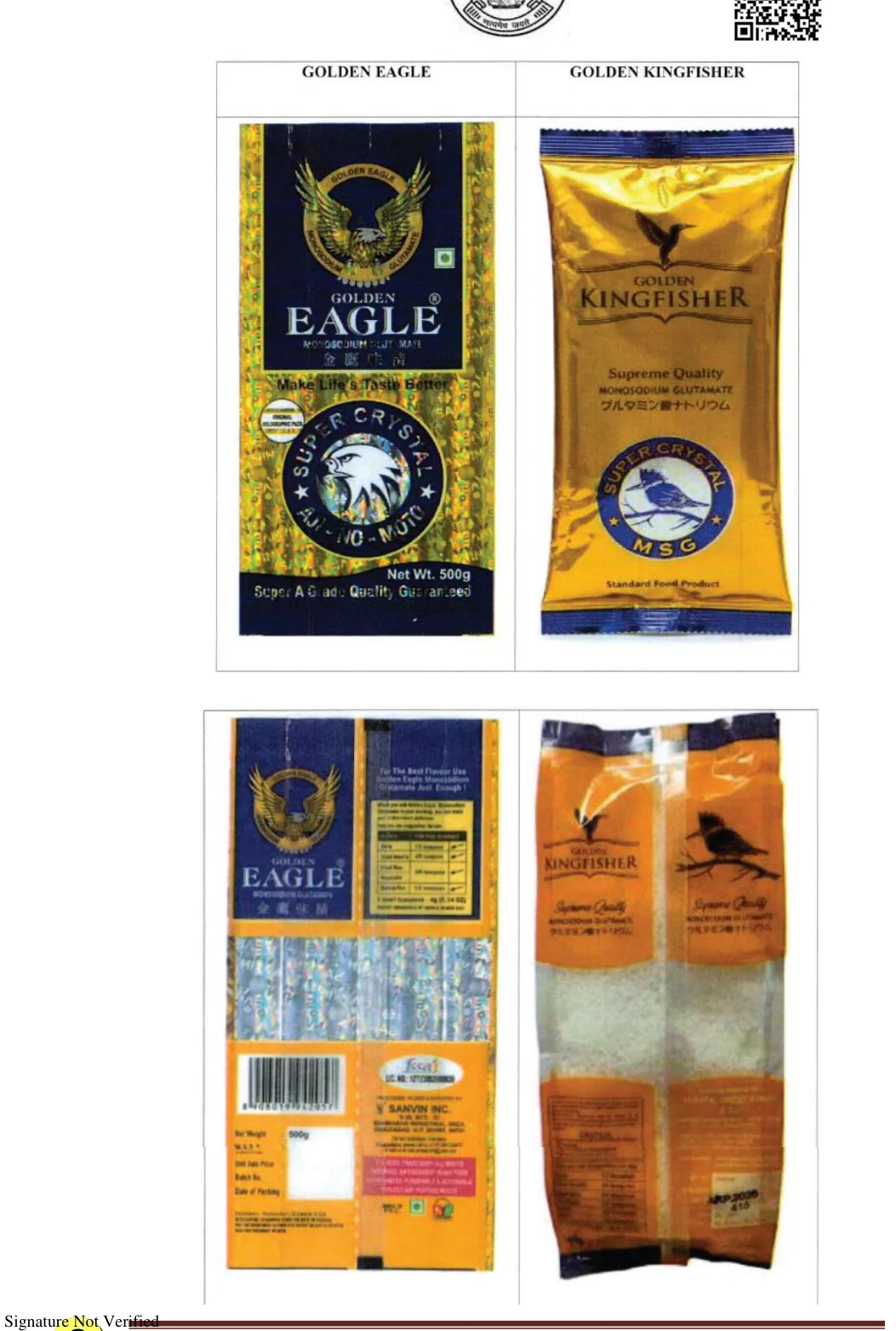
20Infringement is tested by comparing mark to mark. Distinguishing features such as get-up, colour, stylisation, appearance or added matter may be relevant to passing off, but not to infringement.
“that aspect would be of no relevance while assessing an infringement claim. An infringement claim has to be assessed by comparing mark to mark.”

Para 28.1, Madan Lal Purushottam Das Foods Pvt Ltd v B.L. Agro Industries Ltd, FAO (COMM) 234/2025, decided 28.08.2025, 2025:DHC:7772-DB prima facie

“Difference in appearance, or added matter, are of significance only in a case of passing off. Infringement is to be decided on a mark to mark basis.”

Para 42.6, Mankind Pharma Ltd v. Brinton Pharmaceuticals Ltd, FAO (COMM) 166/2024, decided 22.09.2025, 2025:DHC:8795-DB prima facie

“Thus, infringement, or its absence, has to be tested by comparing mark to mark.”

Para 25, Wow Momo Foods Private Limited v. Wow Burger, FAO(OS) (COMM) 143/2025, decided 16.10.2025, 2025:DHC:9320-DB

“makes it clear that these distinguishing features may be of relevance for assesssing passing off, but not for infringement. Infringement has to be determined mark to mark.”

Para 55, Wow Momo Foods Private Limited v. Wow Burger, FAO(OS) (COMM) 143/2025, decided 16.10.2025, 2025:DHC:9320-DB

21A claim of infringement is examined by a mark-to-mark comparison because infringement is an injury to the mark, unlike passing off, which concerns an attempt to make the public believe that the defendant's goods or services are the plaintiff's.
“A claim of infringement has to be examined merely by a mark-to-mark comparison, inasmuch as the tort of infringement is an injury to the mark and not, unlike passing off, an attempt to make the public believe the goods or services of the defendant to be those of the plaintiff.”

Para 50, Rajasthan Aushdhalaya Pvt Ltd v. Himalaya Global Holdings Ltd, RFA(OS)(COMM) 18/2025, decided 04.07.2025, 2025:DHC:5307-DB

22Relying on precedent, the Court held that use by the defendant of the plaintiff's trade mark is the sine qua non of infringement, though not essential to passing off.
“The use by the defendant of the trade mark of the plaintiff is not essential in an action for passing off, but is the sine qua non in the case of an action for infringement.”

Para 25, Wow Momo Foods Private Limited v. Wow Burger, FAO(OS) (COMM) 143/2025, decided 16.10.2025, 2025:DHC:9320-DB (extracted from Kaviraj Pandit Durga Dutt Sharma v. Navaratna Pharmaceutical Laboratories)

23Following Kaviraj Pandit Durga Dutt Sharma, if the essential features of the plaintiff's registered mark are adopted by the defendant, marked differences in get-up, packing or other writing, or a clear indication of a different trade origin, are immaterial to infringement, though in passing off the defendant may escape liability if the added matter sufficiently distinguishes its goods.
“if the essential features of the trade mark of the plaintiff have been adopted by the defendant, the fact that the get-up, packing and other writing or marks on the goods or on the packets in which he offers his goods for sale show marked differences, or indicate clearly a trade origin different from that of the registered proprietor of the mark would be immaterial; whereas in the case of passing off, the defendant may escape liability if he can show that the added matter is sufficient to distinguish his goods from those of the plaintiff.”

Para 22.4, Crocs Inc USA v. Bata India Ltd & connected matters, RFA (OS) (Comm) 22/2019, decided 01.07.2025, 2025:DHC:5037-DB (extracted from Kaviraj Pandit Durga Dutt Sharma v Navaratna Pharmaceutical Laboratories)

“Expressed in another way, if the essential features of the trade mark of the plaintiff have been adopted by the defendant, the fact that the get-up, packing and other writing or marks on the goods or on the packets in which he offers his goods for sale show marked differences, or indicate clearly a trade origin different from that of the registered proprietor of the mark would be immaterial”

Para 42.6, Mankind Pharma Ltd v. Brinton Pharmaceuticals Ltd, FAO (COMM) 166/2024, decided 22.09.2025, 2025:DHC:8795-DB prima facie (extracted from Kaviraj Pandit Durga Dutt Sharma v. Navaratna Pharmaceutical Laboratories)

“if the essential features of the trade mark of the plaintiff have been adopted by the defendant, the fact that the get-up, packing and other writing or marks on the goods or on the packets in which he offers his goods for sale show marked differences, or indicate clearly a trade origin different from that of the registered proprietor of the mark would be immaterial;”

Para 12.6, Mohammad Talha v. Karim Hotels Pvt Ltd, FAO (COMM) 82/2025, decided 06.11.2025, 2025:DHC:9713-DB (extracted from Kaviraj Pandit Durga Dutt Sharma v. Navaratna Pharmaceutical Laboratories)

24Added matter, such as visual dissimilarity between the marks as actually used, packaging, and difference in price, is not a relevant consideration in an infringement claim; following Renaissance Hotel Holdings and South India Beverages, price difference cannot mitigate the effect of infringement.
“"Added matter", in the form of visual dissimilarities between the marks as they are actually used on the goods on which they are affixed, the packaging of the products for which the marks are used and difference in price between the products of the plaintiff and defendant are not relevant considerations, while examining a claim of infringement.”

Para 52, Rajasthan Aushdhalaya Pvt Ltd v. Himalaya Global Holdings Ltd, RFA(OS)(COMM) 18/2025, decided 04.07.2025, 2025:DHC:5307-DB

“On this aspect, too, the law is no longer res integra. It has been held by the Supreme Court in Renaissance Hotel Holdings Inc. as well as by the Division Bench of this Court in South India Beverages that difference in prices cannot mitigate the effect of infringement.”

Para 42.4, Mankind Pharma Ltd v. Brinton Pharmaceuticals Ltd, FAO (COMM) 166/2024, decided 22.09.2025, 2025:DHC:8795-DB prima facie

25The Court held, prima facie, that mere visual difference between device marks is an irrelevant consideration for infringement and does not mitigate the likelihood of confusion.
“The mere visual difference between the device marks is unlikely to mitigate this likelihood of confusion, beside being an irrelevant consideration for the purposes of infringement.”

Para 56, Wow Momo Foods Private Limited v. Wow Burger, FAO(OS) (COMM) 143/2025, decided 16.10.2025, 2025:DHC:9320-DB prima facie

26The Court held, prima facie, that differences in the parties' menus, product variants or sub-brands are entirely irrelevant for the purposes of infringement.
“For the purposes of infringement, considerations such as the menu card of the appellant, or the fact that the appellant may be selling vegetarian and non-vegetarian burgers, while the respondent’s proposed range is of protein rich vegetarian burgers, or the fact that the appellant may be selling its burgers under the sub-brand ‘MOBURG’, are all entirely irrelevant.”

Para 57, Wow Momo Foods Private Limited v. Wow Burger, FAO(OS) (COMM) 143/2025, decided 16.10.2025, 2025:DHC:9320-DB prima facie

27The Court held, prima facie, that a perceived difference in the corporate composition of the plaintiff and the defendant is not germane to whether an injunction for infringement should be granted.
“We find ourselves unable to fathom or comprehend how the perceived distinction in the corporate composition of the appellant and the defendant could have constituted a factor relevant or germane for the purposes of examining whether the grant of an injunction was warranted.”

Para 3, Imax Healthcare Pvt Ltd v. Max Healthcare Institute Ltd, FAO (COMM) 60/2025, decided 26.03.2025, 2025:DHC:2208-DB prima facie (extracted from earlier DB order dated 25.09.2024 in FAO (Comm) 117/2024, Max Healthcare Institute Ltd v. Imax Healthcare Pvt Ltd (same dispute))

28A word mark registration entitles the proprietor to injunct not only deceptively similar word marks but also any device mark of which the prominent feature is textual.
“These word mark registrations entitled the appellant to injunct not only the use of a word mark by any other person which is deceptively similar to the mark CHACHA SAREE BAZAR PVT. LTD. or CHACHE DI HATTI but also any device mark of which the prominent feature is textual”

Para 70, Chacha Saree Bazar Pvt Ltd & Anr v. Chacha Cloth House, FAO (COMM) 217/2025, decided 12.02.2026, 2026:DHC:1296-DB

29The Court held, prima facie, that the registrant of a device mark of which a word is the dominant part is entitled to injunct use of any mark of which that word is a dominant part, for goods or services identical or similar to those covered by the registration.
“be entitled to an injunction against any other person using a mark of which QUANTUM is a dominant part, for goods or services which are identical to, or similar to the goods or services in respect of which the”

Para 19.11, Quantum Hi-Tech Merchandising Pvt Ltd v. LG Electronics India Pvt Ltd, FAO (COMM) 22/2022, decided 04.11.2025, 2025:DHC:9630-DB prima facie

Back to contents

I.4 Limits on Infringement under Section 30 of the Trade Marks Act: Statutory Exceptions, Bars to Injunction, and Exhaustion of Rights under Sections 30(3) and 30(4)

The Bench has held that Section 30 sets out circumstances in which an act otherwise within Section 29 is not infringement, while provisions such as Section 34 bar injunctive relief even where infringement exists. In Western Digital Technologies v. Geonix International, an interim appeal whose findings are prima facie, the Bench held that Section 30(3) is an escape route rather than a separate species of infringement, endorsed Kapil Wadhwa v. Samsung Electronics on international exhaustion, and construed 'lawful acquisition', 'changed or impaired' and 'legitimate reasons' in Section 30(4) in the context of refurbished and debranded goods.

25 propositions · 6 judgments

Show / hide the findings table
S. No.Proposition / finding / interpretationRelevant para & judgment (verbatim)
1Section 30 sets out circumstances in which, even if the ingredients of one or more sub-sections of Section 29 are satisfied, infringement is not deemed to take place.
“Where the exceptions apply, no infringement can be said to have taken place, even if all the ingredients of one or more of the various sub-sections of Section 29 are found to exist in a given case.”

Para 25.1.15, Modi-Mundipharma Pvt Ltd v. Speciality Meditech Pvt Ltd, RFA(OS)(COMM) 8/2023, decided 01.07.2025, 2025:DHC:5039-DB

“Section 30 sets out circumstances in which, even if the ingredients of Section 29 are satisfied, infringement would not be deemed to take place.”

Para 26, M/s Chandra Engineers v. M/s Multifrig Marketing Co Pvt Ltd, RFA(COMM) 352/2025, decided 09.12.2025, 2025:DHC:11132-DB

2Even where the act falls within Section 29, it is not infringing if it falls within Section 30. Separately, certain provisions operate as bars to injunctive relief, so that where they apply no injunction can be granted even if infringement exists; the Bench has referred in this context to Sections 31 to 35, to Sections 34 to 36, and to Section 34 alongside the Section 30(3) exception.
“if the case falls within the circumstances envisages by Sections 31 to 35 of the Trade Marks Act, the aspect of infringement becomes inconsequential as, in such cases, even if infringement exists, no injunctive relief can be granted.”

Para 27, M/s Chandra Engineers v. M/s Multifrig Marketing Co Pvt Ltd, RFA(COMM) 352/2025, decided 09.12.2025, 2025:DHC:11132-DB

“Even where the circumstances envisaged in Section 29 are found to exist, the act of the defendant would not be infringing if it falls within the various sub-sections of Section 30. Equally, if the case attracts Sections 34 to 36, then, even if infringement exists, the plaintiff would not be entitled to an injunction against the defendant.”

Para 39, Chacha Saree Bazar Pvt Ltd & Anr v. Chacha Cloth House, FAO (COMM) 217/2025, decided 12.02.2026, 2026:DHC:1296-DB

“Section 30(3) engrafts an exception to infringement, and Section 34 proscribes grant of any injunction against the defendant, if the circumstances envisaged therein apply.”

Para 27, M/s Products and Ideas India Pvt Ltd v. Nilkamal Ltd, FAO(OS) (COMM) 111/2025, decided 23.03.2026, 2026:DHC:2385-DB

3Section 30(1) excludes Section 29 where the defendant uses the mark to identify goods or services as those of the proprietor, in accordance with honest industrial and commercial practice, without taking unfair advantage of or being detrimental to the character and repute of the mark.
“Section 30(1) excludes the applicability of Section 29 where the defendant uses the allegedly infringing trademark for identifying the goods or services as those of the proprietor of the trademark, provided the use by the defendant is in accordance with honest industrial and commercial practice and does not take unfair advantage of, and is not detrimental to, the character and repute of the plaintiff’s trademark.”

Para 25.1.18, Modi-Mundipharma Pvt Ltd v. Speciality Meditech Pvt Ltd, RFA(OS)(COMM) 8/2023, decided 01.07.2025, 2025:DHC:5039-DB

4The key consideration in infringement is whether the plaintiff is the registered proprietor and whether the defendant is authorised to use the mark; a defendant who is neither the registered proprietor nor a permitted user, and has no express or implied consent, cannot claim the protection of Section 30(2)(c)(i).
“The key consideration is whether the plaintiff is a registered proprietor of the mark and whether the defendant is authorized to use the said mark.”

Para 17.90, Crocodile International Pte Ltd v. La Chemise Lacoste & connected matters, RFA(OS)(COMM) 18/2024, decided 09.03.2026, 2026:DHC:1918-DB

5The Court held, prima facie, that Section 30(3) does not create a distinct species of infringement. As the heading of Section 30 ('Limits on effect of registered trade mark') shows, its sub-sections limit the effects of registration; Section 30(3) provides an escape route for an act which would otherwise be infringement, and is not another avenue for alleging infringement.
“Clearly, therefore, Section 30(3) does not create a distinct specie of infringement. It sets out certain circumstances in which the act envisaged in the provision would not be infringement.”

Para 22, Western Digital Technologies Inc v. Geonix International Pvt Ltd & connected matters, FAO(OS) (COMM) 146/2024, decided 09.03.2026, 2026:DHC:1908-DB prima facie

“Section 30(3), therefore, provides an escape route, from the taint of infringement, of an act which, but for Section 30(3), would otherwise be infringement.”

Para 23, Western Digital Technologies Inc v. Geonix International Pvt Ltd & connected matters, FAO(OS) (COMM) 146/2024, decided 09.03.2026, 2026:DHC:1908-DB prima facie

“Thus, the various subsections of Section 30 must be read as incorporating limits, on the effects of registration. Section 30(3) cannot, therefore, be understood as providing one more avenue for alleging infringement, consequent to registration of a trade mark.”

Para 24, Western Digital Technologies Inc v. Geonix International Pvt Ltd & connected matters, FAO(OS) (COMM) 146/2024, decided 09.03.2026, 2026:DHC:1908-DB prima facie

6The Court held, prima facie, that if an act does not amount to infringement within Section 29, no occasion to refer to Section 30(3) arises at all.
“If an act does not amount to infringement within the meaning of Section 29, therefore, in the very first instance, no occasion to refer to Section 30(3) would arise at all.”

Para 26, Western Digital Technologies Inc v. Geonix International Pvt Ltd & connected matters, FAO(OS) (COMM) 146/2024, decided 09.03.2026, 2026:DHC:1908-DB prima facie

7The Court held, prima facie, that where Section 30(4) applies, the only result is that the Section 30(3) escape route is unavailable; the acts must still be shown to be infringing within Section 29, as Section 30(4) does not itself make an act infringing.
“It merely means that, if the circumstances of Section 30(4) apply, the escape clause, otherwise available under Section 30(3) to acts which are infringing within the meaning of Section 29, would no longer be available. The act would, nonetheless, have to be infringing, within the meaning of Section 29, in the first instance.”

Para 27, Western Digital Technologies Inc v. Geonix International Pvt Ltd & connected matters, FAO(OS) (COMM) 146/2024, decided 09.03.2026, 2026:DHC:1908-DB prima facie

“If, therefore, Section 30(4) does apply, the only result is that the benefit of Section 30(3), which would protect the respondents’ acts from the taint of infringement, would not apply. The acts, themselves, would nonetheless have to be shown to be infringing, within the meaning of Section 29, as Section 30(3), we reiterate, does not create a new and independent specie of infringement.”

Para 129, Western Digital Technologies Inc v. Geonix International Pvt Ltd & connected matters, FAO(OS) (COMM) 146/2024, decided 09.03.2026, 2026:DHC:1908-DB prima facie

8The Court held, prima facie, that dealing in goods that no longer bear the registered mark of the original manufacturer does not amount to infringement under any sub-section of Section 29, which requires the infringer to use the registered mark or a deceptively similar mark in the course of trade.
“If, however, the goods in which Mr. X deals does not bear the registered trade mark of the original manufacturer (as in the present appeals), such dealing would not, in any event, amount to infringement under Section 29, as Section 29, in each of its clauses, requires the infringer to use the infringed trade mark, or a trade mark which is deceptively similar thereto, in the course of trade.”

Para 38, Western Digital Technologies Inc v. Geonix International Pvt Ltd & connected matters, FAO(OS) (COMM) 146/2024, decided 09.03.2026, 2026:DHC:1908-DB prima facie

“Sale of goods bearing a registered trademark, after removing the trademark, cannot constitute “infringement” under any of the sub-sections of Section 29.”

Para 114, Western Digital Technologies Inc v. Geonix International Pvt Ltd & connected matters, FAO(OS) (COMM) 146/2024, decided 09.03.2026, 2026:DHC:1908-DB prima facie

9The Court held, prima facie, that to be accorded any meaning, the circumstances in clauses (a) and (b) of Section 30(3) must be read as those which, if they apply, make the lawful acquirer's sale of or dealing in the goods non-infringing.
“Circumstances (a) and (b) have, therefore, if they are to be accorded any meaning, to be understood as the circumstances which, if they apply, would result in the sale or otherwise dealing in the goods, by Mr. X, not being infringing in character”

Para 33, Western Digital Technologies Inc v. Geonix International Pvt Ltd & connected matters, FAO(OS) (COMM) 146/2024, decided 09.03.2026, 2026:DHC:1908-DB prima facie

10The Court held, prima facie, that by putting goods on the market, or consenting to their being put on the market, the registered proprietor exhausts its right to allege that sale of or dealing in those goods by a lawful acquirer is infringement.
“By putting them on the market, or consenting to their being put on the market, the registered proprietor of the mark has thus exhausted his right to allege that the sale, or dealing, in the goods, by a person who lawfully acquires them, results in infringement.”

Para 37, Western Digital Technologies Inc v. Geonix International Pvt Ltd & connected matters, FAO(OS) (COMM) 146/2024, decided 09.03.2026, 2026:DHC:1908-DB prima facie

11The Court held, prima facie, that the contrasting expressions in Sections 30(3) and 30(4) show that goods are put "on the market" by the registered proprietor, whereas "sale of the goods in the market" is by the person who has lawfully acquired them.
“The use of the contrasting expressions “on the market” and “in the market” in Sections 30(3) and (4), in their respective contexts, makes it clear that the putting of the goods “on the market” is by the registered proprietor of the mark, whereas the “sale of the goods in the market” is by the person who has lawfully acquired them.”

Para 41, Western Digital Technologies Inc v. Geonix International Pvt Ltd & connected matters, FAO(OS) (COMM) 146/2024, decided 09.03.2026, 2026:DHC:1908-DB prima facie

12The Court held, prima facie, that where the subsequent acquirer's act would otherwise infringe under Section 29, its further sale of or dealing in the goods is not infringement if the conditions of Section 30(3) are cumulatively satisfied: lawful acquisition of the goods, their having been put on the market by the proprietor or with its consent, and no change or impairment of their condition.
“In a case in which the act of the subsequent acquirer of the goods would otherwise amount to infringement within the meaning of Section 29, the subsequent sale of, or otherwise dealing in, the goods, by the acquirer, would not amount to infringement, if the following conditions are cumulatively satisfied”

Para 42, Western Digital Technologies Inc v. Geonix International Pvt Ltd & connected matters, FAO(OS) (COMM) 146/2024, decided 09.03.2026, 2026:DHC:1908-DB prima facie

13Endorsing Kapil Wadhwa v. Samsung Electronics, the Court held, prima facie, that Sections 30(3) and 30(4) adopt the principle of international exhaustion of rights, so that the 'market' in Section 30(3) is the international market, and 'lawful acquisition' means lawful acquisition in the country where the goods are acquired, not necessarily in the country where the mark is registered.
““lawful acquisition”, as employed in Section 30(3), implies lawful acquisition in the country where the goods are acquired, and not necessarily lawful acquisition in the country in which the trademark is registered”

Para 49, Western Digital Technologies Inc v. Geonix International Pvt Ltd & connected matters, FAO(OS) (COMM) 146/2024, decided 09.03.2026, 2026:DHC:1908-DB prima facie

“these provisions amount to adoption, by the legislature in India, of the principle of International exhaustion of rights, and (vi) the “market” in Section 30(3) is, therefore, the international market.”

Para 49, Western Digital Technologies Inc v. Geonix International Pvt Ltd & connected matters, FAO(OS) (COMM) 146/2024, decided 09.03.2026, 2026:DHC:1908-DB prima facie

14The Court held, prima facie, that the identity of the goods in Section 30(3) does not depend on the trade mark affixed on them; resale after replacing the proprietor's mark remains sale of the goods in the market.
“The identity of the goods, as the goods per se, in Section 30(3), is not dependent on, or conditioned by, the trade mark which may be affixed or present thereon.”

Para 117, Western Digital Technologies Inc v. Geonix International Pvt Ltd & connected matters, FAO(OS) (COMM) 146/2024, decided 09.03.2026, 2026:DHC:1908-DB prima facie

15The Court accepted, prima facie, that if the import of goods was illegal, a later acquisition of the illegally imported goods, even under valid commercial invoices, may not constitute 'lawful acquisition' under Section 30(3).
“We agree with Mr. Narula in his submission that if the import of the HDDs was illegal, the subsequent acquisition of the illegally imported HDDs by the respondents, even if under valid commercial invoices, may not constitute “lawful acquisition”.”

Para 120, Western Digital Technologies Inc v. Geonix International Pvt Ltd & connected matters, FAO(OS) (COMM) 146/2024, decided 09.03.2026, 2026:DHC:1908-DB prima facie

16The Court held, prima facie, that for lawful acquisition the relevant question is not whether the goods were 'meant for resale' when supplied to the intermediate purchaser, but whether any proscription barred that purchaser from reselling them.
“The question is not whether the HDDs, as supplied to the OEMs, were “meant for resale”, but whether there was any proscription on the OEMs reselling them after they had reached end-of-life stage.”

Para 121, Western Digital Technologies Inc v. Geonix International Pvt Ltd & connected matters, FAO(OS) (COMM) 146/2024, decided 09.03.2026, 2026:DHC:1908-DB prima facie

17The Court held, prima facie, that an infraction of a re-export condition under the Foreign Trade Policy would not render the import unlawful for the purposes of the Trade Marks Act, though it may give the Customs authorities a ground to proceed against the importer.
“Besides the fact that, if any infraction did take place on that count, it would not render the import unlawful for the purposes of applicability of the Trade Marks Act, but may constitute a ground for the Customs authorities to proceed against the importer”

Para 124, Western Digital Technologies Inc v. Geonix International Pvt Ltd & connected matters, FAO(OS) (COMM) 146/2024, decided 09.03.2026, 2026:DHC:1908-DB prima facie

18The Court held, prima facie, that the word "changed" in Section 30(4) must be read noscitur a sociis with "impaired": the change must produce something negative, of a like character to impairment.
“The word “change”, therefore, must result in something negative resulting; in other words, the word “changed” must be read noscitur a sociis with the word “impaired”. They must partake of a like character.”

Para 43, Western Digital Technologies Inc v. Geonix International Pvt Ltd & connected matters, FAO(OS) (COMM) 146/2024, decided 09.03.2026, 2026:DHC:1908-DB prima facie

19Applying this reading, the Court held, prima facie, that the acts undertaken in refurbishing the goods did not "change or impair" their condition within Section 30(4).
“Read together, applying the said principle, it cannot be said that the respondents “changed or impaired” the condition of the HDDs by the acts undertaken by them.”

Para 134, Western Digital Technologies Inc v. Geonix International Pvt Ltd & connected matters, FAO(OS) (COMM) 146/2024, decided 09.03.2026, 2026:DHC:1908-DB prima facie

20The Court held, prima facie, that a change which makes non-functional goods functional, or useless goods useful, without prejudice to the registered proprietor, cannot be a legitimate reason to oppose further dealing in the goods under Section 30(4).
“If the change is resulting in making non-functional goods functional, or useless goods useful, without any prejudice to the registered proprietor of the trade mark, it cannot, quite obviously, constitute a legitimate reason to oppose the dissemination of the goods in the market.”

Para 43, Western Digital Technologies Inc v. Geonix International Pvt Ltd & connected matters, FAO(OS) (COMM) 146/2024, decided 09.03.2026, 2026:DHC:1908-DB prima facie

21The Court held, prima facie, that a lawful acquirer's act of affixing its own mark on goods it sells cannot, by itself, constitute a legitimate reason for the registered proprietor to oppose their sale.
“Equally, if the lawful acquirer of the goods, who sells them in the market, affixes his mark on them, that, too, cannot constitute a legitimate reason for the registered proprietor of the mark to oppose their sale or dissemination.”

Para 43, Western Digital Technologies Inc v. Geonix International Pvt Ltd & connected matters, FAO(OS) (COMM) 146/2024, decided 09.03.2026, 2026:DHC:1908-DB prima facie

22The Court held, prima facie, that a 'legitimate reason' under Section 30(4) must be a circumstance that would reduce the quality or value of the goods, or impair the proprietor's goodwill or reputation, or otherwise prejudice it; the mere fact that goods are sold under different warranties or services may not by itself suffice.
“To our mind, the circumstance must be such as would reduce the quality or value of the goods, or impair the goodwill of the registered proprietor of the trade mark. For example, the mere fact that the goods may be sold under different warranties or services may not, by itself, constitute a legitimate reason to oppose further dealing in the goods.”

Para 50, Western Digital Technologies Inc v. Geonix International Pvt Ltd & connected matters, FAO(OS) (COMM) 146/2024, decided 09.03.2026, 2026:DHC:1908-DB prima facie

“It might have been another matter if the manner in which the respondents dealt with the HDDs was in any manner prejudicial to the appellants, or diminished their goodwill or reputation.”

Para 136, Western Digital Technologies Inc v. Geonix International Pvt Ltd & connected matters, FAO(OS) (COMM) 146/2024, decided 09.03.2026, 2026:DHC:1908-DB prima facie

23The Court held, prima facie, that whether the registered proprietor had a legitimate reason to oppose further dealing in the goods under Section 30(4) is largely a question of fact.
“At the end of the day, the determination of whether the registered proprietor of the trade mark had, or did not have, a legitimate reason to oppose further dealing in the goods, within the meaning of Section 30(4) of the Act, would be largely one of fact.”

Para 50, Western Digital Technologies Inc v. Geonix International Pvt Ltd & connected matters, FAO(OS) (COMM) 146/2024, decided 09.03.2026, 2026:DHC:1908-DB prima facie

24The Court held, prima facie, that the manufacturer's connection with its goods stood severed, at the latest, when the goods reached end-of-life and its warranty was no longer available.
“the umbilical cord might not have been severed at the point when the HDDs were installed in the equipment by the OEMs, but it unquestionably stood severed when the HDDs reached end-of-life stage, and the appellants’ warranty, in respect of the HDDs, was no longer available.”

Para 132, Western Digital Technologies Inc v. Geonix International Pvt Ltd & connected matters, FAO(OS) (COMM) 146/2024, decided 09.03.2026, 2026:DHC:1908-DB prima facie

25The Court held, prima facie, that goods seized while in the Customs area could not have had their condition changed or impaired within Section 30(4).
“There is no question of the respondent having changed or impaired the condition of the HDDs, as they were seized while in Customs area.”

Para 161, Western Digital Technologies Inc v. Geonix International Pvt Ltd & connected matters, FAO(OS) (COMM) 146/2024, decided 09.03.2026, 2026:DHC:1908-DB prima facie

Back to contents

I.5 Deceptive Similarity under Section 29 of the Trade Marks Act: The Amritdhara Consumer of Average Intelligence and Imperfect Recollection, Initial Interest Confusion and the Pianotist / Cadila Factors

The Bench has repeatedly held that deceptive similarity and likelihood of confusion are assessed from the standpoint of the consumer of average intelligence and imperfect recollection (Amritdhara Pharmacy v. Satyadeo Gupta), without placing the marks side by side, and by reference to the overall impression of the marks. The Court has applied the Pianotist test and the Cadila Health Care factors, held that likelihood (not actual) confusion suffices and is a matter of the Court's own perception rather than evidence, and consistently applied the initial interest confusion and 'state of wonderment' tests. Some of these statements were made in appeals arising from interim orders.

18 propositions · 15 judgments

Show / hide the findings table
S. No.Proposition / finding / interpretationRelevant para & judgment (verbatim)
1The Court held that the 'public' whose perception is relevant, and from whose standpoint deceptive similarity and likelihood of confusion are assessed, is the consumer of average intelligence and imperfect recollection, as held by the Supreme Court in Amritdhara Pharmacy v. Satyadeo Gupta.
“Likelihood of confusion has to be assessed from the perspective of a consumer of average intelligence and imperfect recollection.”

Para 11.6, Mohammad Talha v. Karim Hotels Pvt Ltd, FAO (COMM) 82/2025, decided 06.11.2025, 2025:DHC:9713-DB

“The “public” is represented by a consumer of average intelligence and imperfect recollection, as held by the Supreme Court in Amritdhara Pharmacy v. Satyadeo Gupta”

Para 31, Chacha Saree Bazar Pvt Ltd & Anr v. Chacha Cloth House, FAO (COMM) 217/2025, decided 12.02.2026, 2026:DHC:1296-DB

“The inquiry must be conducted from the perspective of an ordinary consumer of average intelligence and imperfect recollection.”

Para 17.83, Crocodile International Pte Ltd v. La Chemise Lacoste & connected matters, RFA(OS)(COMM) 18/2024, decided 09.03.2026, 2026:DHC:1918-DB

2The Court held that the perception of the consumer of average intelligence and imperfect recollection, as held in Brihan Karan Sugar Syndicate, is the litmus test for likelihood of confusion in passing off actions as well.
“The perception of the consumer with average intelligence and imperfect recollection, as held in Brihan Karan Sugar Syndicate, has to form the litmus test even in cases of passing off.”

Para 46.14, Exotic Mile v. Imagine Marketing Pvt Ltd, FAO(OS) (COMM) 20/2020, decided 15.09.2025, 2025:DHC:8075-DB prima facie

3The recollection of the relevant consumer must be imperfect: the consumer is not one who is overly familiar with the rival marks, and is not a meticulous or discerning observer.
“The use of the word ―imperfect‖ is, in this test, pregnant with meaning. The recollection of the consumer must be imperfect. This necessarily implies that the consumer must not be one who is overly familiar with the rival marks, or with either of them. The likelihood of confusion, equally, is not to be assessed by keeping the marks side by side.”

Para 23.2, Madan Lal Purushottam Das Foods Pvt Ltd v B.L. Agro Industries Ltd, FAO (COMM) 234/2025, decided 28.08.2025, 2025:DHC:7772-DB prima facie

“adopting the perspective of a person of average intelligence and imperfect recollection, and not that of a meticulous or discerning observer, the similarity between the marks is such that it would inevitably lead to confusion or deception.”

Para 128, Reddy Pharmaceuticals Ltd v. Dr. Reddy's Laboratories Ltd & connected matters, RFA(OS) 138/2013, decided 18.05.2026, 2026:DHC:4402-DB

4The Court held that its finding of likelihood of confusion must be a considered finding and its approach cannot be fanciful; the average consumer is neither a genius with a photographic memory nor an idiot or amnesiac.
“The approach of the Court cannot, in such cases, be fanciful. The finding of a likelihood of confusion must be a considered finding.”

Para 12.3, Mohammad Talha v. Karim Hotels Pvt Ltd, FAO (COMM) 82/2025, decided 06.11.2025, 2025:DHC:9713-DB

5Infringement is not examined by placing the marks side by side. The test is whether a consumer of average intelligence and imperfect recollection, who has come across the plaintiff's mark at one point of time and later comes across the defendant's mark, is likely to be confused or to believe in an association between them, comparing the defendant's mark with the plaintiff's mark as it would be remembered by persons of average memory with its usual imperfections.
“The classical test that applies is whether such an average consumer, of imperfect recollection, comes across one mark at one point of time, and the other later, he is likely to be placed in a state of confusion.”

Para 23.2, Madan Lal Purushottam Das Foods Pvt Ltd v B.L. Agro Industries Ltd, FAO (COMM) 234/2025, decided 28.08.2025, 2025:DHC:7772-DB prima facie

“In the first place, trademark infringement is not to be examined by placing the marks side by side. The test to be applied is whether a consumer of average intelligence and imperfect recollection, who has seen or come across the plaintiff’s mark at one point of time and, later, comes across the defendant’s mark, is likely to be confused between them or to believe the existence of an association between the two, owing to the similarity of the marks and the similarity of the goods or services in respect of which the marks are used.”

Para 14.2, Saurabh Gupta v. Sheopals Pvt Ltd & connected matters, FAO (COMM) 175/2025, decided 26.11.2025, 2025:DHC:10443-DB

“after a comparison of the Defendant's mark as used with the Plaintiff's registered mark, not placing them side by side, but by asking itself whether, having due regard to relevant surrounding circumstances, the Defendant's mark as used is similar (as defined by the Act) to the Plaintiff's registered mark as it would be remembered by persons possessed of an average memory with its usual imperfections.”

Para 14.2, Saurabh Gupta v. Sheopals Pvt Ltd & connected matters, FAO (COMM) 175/2025, decided 26.11.2025, 2025:DHC:10443-DB (extracted from Coca-Cola Co. of Canada Ltd v. Pepsi-Cola Co. of Canada Ltd)

6The broad and essential features of the rival marks are to be considered; they are not to be placed side by side to discover differences, and it is enough that the impugned mark bears such overall similarity to the registered mark as would be likely to mislead a person usually dealing with one into accepting the other.
“It would be enough if the impugned mark bears such an overall similarity to the registered mark as would be likely to mislead a person usually dealing with one to accept the other if offered to him.”

Para 43, Rajasthan Aushdhalaya Pvt Ltd v. Himalaya Global Holdings Ltd, RFA(OS)(COMM) 18/2025, decided 04.07.2025, 2025:DHC:5307-DB (extracted from Parle Products (P) Ltd v. J.P. & Co)

“They should not be placed side by side to find out if there are any differences in the design and if so, whether they are of such character as to prevent one design from being mistaken for the other.”

Para 17.84, Crocodile International Pte Ltd v. La Chemise Lacoste & connected matters, RFA(OS)(COMM) 18/2024, decided 09.03.2026, 2026:DHC:1918-DB (extracted from Parle Products (P) Ltd v. J.P. and Co)

7The test of deceptive similarity is one of the overall commercial impression left by the marks and likelihood of confusion, not a meticulous or mechanical comparison of individual components; the ultimate enquiry is whether the defendant's mark as a whole is deceptively similar to the plaintiff's registered mark. This approach applies in both infringement and passing off actions.
“It should, however, be borne in mind that the object of the enquiry in ultimate analysis is whether the mark used by the defendant as a whole is deceptively similar to that of the registered mark of the plaintiff.”

Para 42.6, Mankind Pharma Ltd v. Brinton Pharmaceuticals Ltd, FAO (COMM) 166/2024, decided 22.09.2025, 2025:DHC:8795-DB prima facie (extracted from Kaviraj Pandit Durga Dutt Sharma v. Navaratna Pharmaceutical Laboratories)

“It focuses on the overall commercial impression left by the marks, rather than conducting a mechanical or analytical breakdown. Indian courts have consistently adopted this approach in determining the likelihood of confusion in both infringement and passing off actions.”

Para 14.4, Saurabh Gupta v. Sheopals Pvt Ltd & connected matters, FAO (COMM) 175/2025, decided 26.11.2025, 2025:DHC:10443-DB (extracted from Pernod Ricard India (P) Ltd v. Karanveer Singh Chhabra)

“The test is one of overall impression and likelihood of confusion, not a meticulous comparison of individual components placed side by side.”

Para 34, Star Smith Export Pvt Ltd v. A O Smith Corporation, FAO(OS) (COMM) 216/2025, decided 13.02.2026, 2026:DHC:1306-DB

8The Pianotist test (Pianotist Co. Ltd.'s Application) remains the foundational test for deceptive similarity: the words are judged by their look and their sound, having regard to the goods, the nature of the likely customers, all surrounding circumstances and the normal use of each mark.
“You must take the two words. You must judge them, both by their look and by their sound. You must consider the goods to which they are to be applied.”

Para 26.2.2, Modi-Mundipharma Pvt Ltd v. Speciality Meditech Pvt Ltd, RFA(OS)(COMM) 8/2023, decided 01.07.2025, 2025:DHC:5039-DB (extracted from In re Pianotist Co's Application)

“The foundational test for assessing deceptive similarity remains the Pianotist Test, as laid down in Pianotist Co. Ltd's Application by Justice Parker.”

Para 14.4, Saurabh Gupta v. Sheopals Pvt Ltd & connected matters, FAO (COMM) 175/2025, decided 26.11.2025, 2025:DHC:10443-DB (extracted from Pernod Ricard India (P) Ltd v. Karanveer Singh Chhabra)

9Relying on Cadila Health Care v. Cadila Pharmaceuticals, the Court held that the factors relevant to deceptive similarity, in infringement and in passing off based on unregistered marks, include the nature of the marks (word, label or composite), the degree of visual and phonetic resemblance, the nature and similarity of the goods, the class of purchasers, the mode of purchase and other surrounding circumstances, with the weight to be given to each factor depending on the facts of each case.
“(a) The nature of the marks i.e. whether the marks are word marks or label marks or composite marks i.e. both words and label works.”

Para 9.4, Keller Williams Realty, Inc. v. Dingle Buildcons Pvt Ltd & Ors, FAO(OS) (COMM) 120/2022, decided 06.08.2025, 2025:DHC:7395-DB (extracted from Cadila Health Care Ltd v. Cadila Pharmaceuticals Ltd)

“These include considering the similarity in the nature of the goods, the class of consumers, and the marks’ visual and phonetic resemblance.”

Para 17.85, Crocodile International Pte Ltd v. La Chemise Lacoste & connected matters, RFA(OS)(COMM) 18/2024, decided 09.03.2026, 2026:DHC:1918-DB

“Weightage to be given to each of the aforesaid factors depending upon facts of each case and the same weightage cannot be given to each factor in every case.”

Para 88, Reddy Pharmaceuticals Ltd v. Dr. Reddy's Laboratories Ltd & connected matters, RFA(OS) 138/2013, decided 18.05.2026, 2026:DHC:4402-DB (extracted from Cadila Health Care Ltd v. Cadila Pharmaceuticals Ltd)

10The Court held that assessment of deceptive similarity is multi-factorial; no single factor, such as visual or phonetic similarity, is usually determinative unless, to the mind of the consumer of average intelligence and imperfect recollection, that factor is so predominant as to result in confusion overshadowing all other factors.
“No one factor, such as visual or phonetic similarity between the marks, can usually be determinative in such cases, unless, to the mind of the consumer blessed with average intelligence and imperfect recollection, that one factor would be so predominant, in his psyche, as to result in confusion, overshadowing all other factors.”

Para 14.5, Saurabh Gupta v. Sheopals Pvt Ltd & connected matters, FAO (COMM) 175/2025, decided 26.11.2025, 2025:DHC:10443-DB

11Whether there is likelihood of confusion or deceptive similarity is decided by the Court on its own subjective and dispassionate perception from a comparison of the marks, and not on the basis of evidence.
“The issue of whether there is likelihood of confusion, too, is an issue which has to be decided not on the basis of evidence, but from the perspective of the Judge”

Para 26.2.12, Modi-Mundipharma Pvt Ltd v. Speciality Meditech Pvt Ltd, RFA(OS)(COMM) 8/2023, decided 01.07.2025, 2025:DHC:5039-DB

“Thus, the aspect of deceptive similarity is not one to be decided on evidence, but on the basis of the Court’s perception.”

Para 31, Wow Momo Foods Private Limited v. Wow Burger, FAO(OS) (COMM) 143/2025, decided 16.10.2025, 2025:DHC:9320-DB

“The likelihood of confusion is to be viewed from the judge’s subjective and dispassionate perspective, not established by evidence.”

Para 11.6, Mohammad Talha v. Karim Hotels Pvt Ltd, FAO (COMM) 82/2025, decided 06.11.2025, 2025:DHC:9713-DB

“the Supreme Court clarified that deceptive similarity is not to be assessed purely based on evidence, but rather on the Court’s perception.”

Para 64, Ms Anuradha Sharma & Anr v. Jiva Ayurvedic Pharmacy Ltd & Ors, FAO (COMM) 334/2025, decided 21.04.2026, 2026:DHC:3302-DB

12The plaintiff is required to prove only likelihood of confusion, not actual confusion; once the Court finds likelihood of confusion by comparing the marks, the necessity of establishing actual confusion does not survive.
“Once the Court finds, by a comparison of the marks that there is likelihood of confusion, the necessity of establishing actual confusion does not survive.”

Para 26.2.13, Modi-Mundipharma Pvt Ltd v. Speciality Meditech Pvt Ltd, RFA(OS)(COMM) 8/2023, decided 01.07.2025, 2025:DHC:5039-DB

“It is also settled, in law, that the plaintiff is only required to prove likelihood of confusion, and not actual confusion. Further, the issue of whether there is, or is no, likelihood of confusion, is a view that the Court has to take on the material before it by a subjective comparison, and is not dependent on evidence.”

Para 46.20, Exotic Mile v. Imagine Marketing Pvt Ltd, FAO(OS) (COMM) 20/2020, decided 15.09.2025, 2025:DHC:8075-DB prima facie

“It is well-settled that confusion is to be assessed from the perspective of a consumer with average intelligence and imperfect recollection, and that actual proof of confusion is not required; the likelihood of such confusion suffices”

Para 66, Coromandel Indag Products India Ltd v. Sumitomo Chemical Company Ltd, RFA(OS)(COMM) 22/2025, decided 18.03.2026, 2026:DHC:2260-DB

13In an action for infringement, where the similarity between the plaintiff's and the defendant's marks is so close, visually, phonetically or otherwise, that the Court concludes there is an imitation, no further evidence is required to establish that the plaintiff's rights are violated.
“In an action for infringement, the plaintiff must, no doubt, make out that the use of the defendant's mark is likely to deceive, but where the similarity between the plaintiffs and the defendant's mark is so close either visually, phonetically or otherwise and the court reaches the conclusion that there is an imitation, no further evidence is required to establish that the plaintiff's rights are violated.”

Para 41.5, Mankind Pharma Ltd v. Brinton Pharmaceuticals Ltd, FAO (COMM) 166/2024, decided 22.09.2025, 2025:DHC:8795-DB prima facie (extracted from Cadila Health Care Ltd v. Cadila Pharmaceuticals Ltd (quoting Kaviraj Pandit Durga Dutt Sharma v. Navaratna Pharmaceutical Laboratories))

14The Court held, prima facie, that while comparing the overall effect of the rival marks along with other attendant aspects, the Court is not constrained by the pleadings.
“While comparing the overall effect of the rival marks, along with other attendant aspects, the Court is not, therefore, constrained by pleadings.”

Para 46.19, Exotic Mile v. Imagine Marketing Pvt Ltd, FAO(OS) (COMM) 20/2020, decided 15.09.2025, 2025:DHC:8075-DB prima facie

15Likelihood of confusion is assessed from an 'initial interest' perspective: the relevant consideration is the impression that the defendant's mark immediately conveys to a consumer of average intelligence and imperfect recollection who has earlier seen the plaintiff's mark; if such a consumer is likely to be confused or to presume an association, infringement has taken place.
“The definitive test is the impression that the mark of the defendant would immediately convey (hence the moniker "initial interest confusion"), on a consumer of average intelligence and imperfect recollection”

Para 43, Rajasthan Aushdhalaya Pvt Ltd v. Himalaya Global Holdings Ltd, RFA(OS)(COMM) 18/2025, decided 04.07.2025, 2025:DHC:5307-DB

“In other words, it is the initial impression that the defendant's mark conveys to the average consumer of imperfect recollection, which is relevant. Further, all that is required is likelihood of confusion, not actual confusion.”

Para 23.3, Madan Lal Purushottam Das Foods Pvt Ltd v B.L. Agro Industries Ltd, FAO (COMM) 234/2025, decided 28.08.2025, 2025:DHC:7772-DB prima facie

“In other words, if the defendants mark, when initially seen by such a consumer, who has earlier seen the Plaintiff’s mark, is likely to be confused between them, or to presume an association between the two marks, infringement has taken place.”

Para 23, Wow Momo Foods Private Limited v. Wow Burger, FAO(OS) (COMM) 143/2025, decided 16.10.2025, 2025:DHC:9320-DB

“It is also settled that the aspect of likelihood of confusion is to be examined from an initial interest perspective”

Para 32, Chacha Saree Bazar Pvt Ltd & Anr v. Chacha Cloth House, FAO (COMM) 217/2025, decided 12.02.2026, 2026:DHC:1296-DB

16Confusion does not require the consumer to be completely befuddled. If, on seeing the defendant's mark, the consumer of average intelligence and imperfect recollection is placed in a 'state of wonderment' as to whether he has seen the same, a similar or an associated mark earlier, or whether there is a connection with the plaintiff's mark, likelihood of confusion and the initial interest confusion test stand satisfied.
“Thus, if the consumer, of average intelligence and imperfect recollection, on coming across the defendant's mark, is placed in a state of wonderment if there is a connection between the said mark and the mark of the plaintiff, it amounts to ―likelihood of confusion‖.”

Para 23.4, Madan Lal Purushottam Das Foods Pvt Ltd v B.L. Agro Industries Ltd, FAO (COMM) 234/2025, decided 28.08.2025, 2025:DHC:7772-DB prima facie

“If, on seeing the defendant’s mark for the first time, the consumer of average intelligence and imperfect recollection is placed in a state of wonderment, even to the extent that he wonders whether he has seen the mark, or whether the mark could have an association with the WOW MOMO mark which he had seen earlier, the test of initial interest confusion stands satisfied.”

Para 23, Wow Momo Foods Private Limited v. Wow Burger, FAO(OS) (COMM) 143/2025, decided 16.10.2025, 2025:DHC:9320-DB

“It is enough if the average consumer is placed in a “state of wonderment”, on seeing the defendant’s mark, as to whether he has seen the same mark, a mark similar to it, or a mark associated with it, earlier.”

Para 11.6, Mohammad Talha v. Karim Hotels Pvt Ltd, FAO (COMM) 82/2025, decided 06.11.2025, 2025:DHC:9713-DB

17Even a momentary or fleeting state of confusion or wonderment in the mind of the consumer of imperfect recollection as to an association between the parties suffices to constitute infringement.
“Even if the initial reaction is likely to be a momentary state of confusion or wonderment, injunction stands proved.”

Para 11.6, Mohammad Talha v. Karim Hotels Pvt Ltd, FAO (COMM) 82/2025, decided 06.11.2025, 2025:DHC:9713-DB

“If on initially viewing the respondent’s mark, the consumer of imperfect recollection even fleetingly wonders as to whether there is some association between the respondent’s outlet and the appellant’s outlet, that by itself would suffice to constitute infringement.”

Para 12.1, Mohammad Talha v. Karim Hotels Pvt Ltd, FAO (COMM) 82/2025, decided 06.11.2025, 2025:DHC:9713-DB

18Confusion limited to the initial stage satisfies the requirement of deceptive similarity under Section 29; that the impression is later dispelled, or that the consumer is subsequently enlightened that the marks are unconnected, does not mitigate the infringement already committed.
“The confusion, albeit limited to the initial stage, is sufficient to satisfy the condition of deceptive similarity as contemplated in Section 29 of the TM Act.”

Para 43, Rajasthan Aushdhalaya Pvt Ltd v. Himalaya Global Holdings Ltd, RFA(OS)(COMM) 18/2025, decided 04.07.2025, 2025:DHC:5307-DB (extracted from Under Armour Inc v. Anish Agrawal)

“That subsequent enlightenment would not, in law, mitigate the effect of initial infringement. Infringement, once committed, inexorably persists, and its effect cannot be undone.”

Para 34, Wow Momo Foods Private Limited v. Wow Burger, FAO(OS) (COMM) 143/2025, decided 16.10.2025, 2025:DHC:9320-DB

“The fact that, later, this impression might be dispelled, does not mitigate the aspect of infringement.”

Para 32, Chacha Saree Bazar Pvt Ltd & Anr v. Chacha Cloth House, FAO (COMM) 217/2025, decided 12.02.2026, 2026:DHC:1296-DB

Back to contents

I.6 Composite Marks, the Dominant Feature Test and the Anti-Dissection Rule under Sections 17 and 29 of the Trade Marks Act

The Court has held, relying on Pernod Ricard and South India Beverages, that examining whether the dominant feature of a composite mark has been copied does not amount to vivisection under Section 17(2), since the average consumer recollects marks by their dominant feature. The Bench has also held that the ultimate test remains the overall impression of the marks, that word and device elements of composite marks are both relevant, and that a consumer does not ordinarily split a composite word into its components. Several applications of these principles are prima facie findings in interim appeals.

10 propositions · 7 judgments

Show / hide the findings table
S. No.Proposition / finding / interpretationRelevant para & judgment (verbatim)
1Examining whether the dominant feature of the plaintiff's composite mark has been copied does not re-write Section 17(2) or permit vivisection of a composite mark (Pernod Ricard; South India Beverages); marks are compared as a whole, but the dominant part assumes significance because the consumer of average intelligence and imperfect recollection recollects marks by their dominant feature.
“As the Supreme Court in Pernod Ricard and the Division Bench of this Court in South India Beverages have clarified, this does not amount to re-writing Section 17(2) and permitting vivisection of a composite mark. It emanates from the principle that a consumer of average intelligence and imperfect recollection, who sees two marks in both of which the same feature is dominant, and other features are subsidiary, would recollect the marks on the basis of their dominant feature.”

Para 47, Chacha Saree Bazar Pvt Ltd & Anr v. Chacha Cloth House, FAO (COMM) 217/2025, decided 12.02.2026, 2026:DHC:1296-DB

“in assessing deceptive similarity, the marks must be compared as a whole and from the perspective of an average consumer of ordinary intelligence and imperfect recollection. Therefore, the dominant part of a mark assumes significance, since consumers are likely to recollect or recall this part for purposes of future identification.”

Para 34, Star Smith Export Pvt Ltd v. A O Smith Corporation, FAO(OS) (COMM) 216/2025, decided 13.02.2026, 2026:DHC:1306-DB

2If the dominant features of the rival marks are identical or deceptively similar, the overall impression formed by the consumer is similar; where the dominant part of the plaintiff's composite mark is replicated in another's mark, that mark becomes ipso facto confusingly similar to the composite mark.
“If the dominant part of the composite mark is replicated in the marks of another, the mark of such other party becomes ipso facto confusingly similar to the composite mark of the plaintiff. This is the principle laid down in South India Beverages as well as in Pernod Ricard.”

Para 19.9, Quantum Hi-Tech Merchandising Pvt Ltd v. LG Electronics India Pvt Ltd, FAO (COMM) 22/2022, decided 04.11.2025, 2025:DHC:9630-DB prima facie

“If the dominant feature is identical, or if the dominant features are deceptively similar to each other, therefore, the overall impression that such a consumer would form is similar.”

Para 47, Chacha Saree Bazar Pvt Ltd & Anr v. Chacha Cloth House, FAO (COMM) 217/2025, decided 12.02.2026, 2026:DHC:1296-DB

3Infringement is not assessed solely by comparing the dominant parts of the marks; while the dominant feature may aid the assessment, the ultimate test is whether a person of average intelligence and imperfect recollection is likely to be confused or to believe in an association, focusing on the overall impression created by the competing marks.
“It is also trite that infringement is not assessed solely by comparing the dominant part of the marks. The ultimate test is whether a person of average intelligence and imperfect recollection is likely to be confused between the two marks or believe there is an association between them. While the dominant feature of a mark might aid in assessing deceptive similarity, the courts must focus on the overall impression created by the competing marks”

Para 41, Ms Anuradha Sharma & Anr v. Jiva Ayurvedic Pharmacy Ltd & Ors, FAO (COMM) 334/2025, decided 21.04.2026, 2026:DHC:3302-DB

4Composite device marks do not protect only the specific visual representation; both the visual elements and the word elements are relevant to likelihood of confusion, and their overall impression must be considered.
“Additionally, it cannot be argued that device marks, being composite in nature, protect only the specific visual representation of the mark and not the word elements contained therein. In cases involving composite device marks, both the visual elements and the word elements are crucial in determining the likelihood of confusion, and their overall impression must be considered.”

Para 63, Ms Anuradha Sharma & Anr v. Jiva Ayurvedic Pharmacy Ltd & Ors, FAO (COMM) 334/2025, decided 21.04.2026, 2026:DHC:3302-DB

5An unwary purchaser of average intelligence and imperfect recollection would not split a composite word into its component parts and consider its etymological meaning (Amritdhara Pharmacy).
“An unwary purchaser of average intelligence and imperfect recollection would not, as the High Court supposed, split the name into its component parts and consider the etymological meaning thereof”

Para 23.7.2, Madan Lal Purushottam Das Foods Pvt Ltd v B.L. Agro Industries Ltd, FAO (COMM) 234/2025, decided 28.08.2025, 2025:DHC:7772-DB prima facie (extracted from Amritdhara Pharmacy v Satya Deo Gupta)

6The Court held, prima facie, that where neither the anti-dissection rule nor the dominant part test applies, the rival marks (OPAL and SHEOPAL'S) are to be compared as whole marks; the mere fact that the plaintiff's mark forms part of the defendant's mark is insufficient to cause confusion where the consumer, seeing the defendant's mark (an ordinary personal name), would recollect it as a whole and would not break it up into components.
“The learned Commercial Court was, therefore, required to compare the marks OPAL and SHEOPAL’S as whole marks, without meandering into the labyrinth of the anti-dissection rule and the dominant part test.”

Para 13.3.9, Saurabh Gupta v. Sheopals Pvt Ltd & connected matters, FAO (COMM) 175/2025, decided 26.11.2025, 2025:DHC:10443-DB prima facie

“The mere fact that OPAL happens to be a part of SHEOPAL’S is insufficient, to our mind, to cause confusion in the mind of the consumer. Even a consumer of average intelligence and imperfect recollection, who sees the whole mark SHEOPAL’S, would be unlikely to break up that mark into SHE and OPAL’S and, after thus breaking up the mark, get confused because he has earlier seen the mark OPAL.”

Para 13.4.1, Saurabh Gupta v. Sheopals Pvt Ltd & connected matters, FAO (COMM) 175/2025, decided 26.11.2025, 2025:DHC:10443-DB prima facie

“No consumer of average intelligence, in this country at least, would be likely, therefore, to recollect the mark “SHEOPAL’S” as “She + Opal’s”. He would either recollect the name as “SHEOPAL’S”, or not recollect it at all.”

Para 13.4.2, Saurabh Gupta v. Sheopals Pvt Ltd & connected matters, FAO (COMM) 175/2025, decided 26.11.2025, 2025:DHC:10443-DB prima facie

7The Court held that a prima facie case of infringement exists where the dominant feature of both marks (CHACHA) is identical and the marks are used for identical goods or services (trading in sarees and apparel).
“Inasmuch as the dominant feature of both the marks is identical, i.e., CHACHA, and the marks are used for identical goods or services, i.e., trading in sarees and other similar garments and apparel, a prima facie case of infringement within the meaning of Section 17(2)(b) of the Act exists.”

Para 50, Chacha Saree Bazar Pvt Ltd & Anr v. Chacha Cloth House, FAO (COMM) 217/2025, decided 12.02.2026, 2026:DHC:1296-DB prima facie

8The Court held, prima facie, that STAR SMITH and AO SMITH, sharing the dominant element SMITH and used for identical goods targeting the same consumers through overlapping retail and online channels, may lead to confusion owing to imperfect recollection.
“both marks “STAR SMITH” and “AO SMITH” share “SMITH” this dominant part. Since the marks are used for identical goods, target the same consumer class through overlapping retail and online trade channels and owing to imperfect recollection, the rival marks may lead to confusion among consumers.”

Para 40, Star Smith Export Pvt Ltd v. A O Smith Corporation, FAO(OS) (COMM) 216/2025, decided 13.02.2026, 2026:DHC:1306-DB prima facie

9The Court held that REDDY was deceptively similar to Dr. Reddy's, the word REDDY being the dominant and essential feature of both marks, and that the likelihood of confusion was heightened by use for medicinal products, where even a remote possibility of confusion must be avoided.
“The dominant and essential feature of both marks is the word "REDDY", which is likely to leave a lasting impression on the average consumer. The likelihood of confusion is further heightened by the fact that the marks are used in relation to medicinal products, where even a remote possibility of confusion must be avoided”

Para 126, Reddy Pharmaceuticals Ltd v. Dr. Reddy's Laboratories Ltd & connected matters, RFA(OS) 138/2013, decided 18.05.2026, 2026:DHC:4402-DB

10The Court held, prima facie, that the composite device marks JIVA (with a lotus device) and SHATAM JEEVA (with an 'S' circle and herbal plants), compared as a whole, had no phonetic, visual or conceptual similarity.
“After comparing the competing marks as a whole, in their entirety, and considering all the principles mentioned above, this Court is of the opinion that there is no phonetic, visual, or conceptual similarity between the two trademarks.”

Para 55, Ms Anuradha Sharma & Anr v. Jiva Ayurvedic Pharmacy Ltd & Ors, FAO (COMM) 334/2025, decided 21.04.2026, 2026:DHC:3302-DB prima facie

Back to contents

I.7 Phonetic, Visual and Conceptual Similarity: The Sri Ambal Principle, Stylisation of Logos and 'Idea Infringement'

The Court has held that resemblance is assessed by the ear as well as the eye, that phonetic similarity alone can make out infringement, and, relying on K.R. Chinna Krishna Chettiar v. Shri Ambal & Co., that visual dissimilarity does not mitigate infringement where the essential or main feature is phonetically similar. The Bench has also held that phonetic similarity does not ipso facto establish confusion, and has explained 'idea infringement' as a judicially devised yardstick for deceptive similarity under Section 29. Some findings are prima facie, in interim appeals.

12 propositions · 8 judgments

Show / hide the findings table
S. No.Proposition / finding / interpretationRelevant para & judgment (verbatim)
1Ocular comparison is not always decisive; resemblance between marks must be assessed with reference to the ear as well as the eye.
“ocular comparison was not always the decisive test. Resemblance between the marks had to be assessed both with reference to the ear as well as with reference to the eye.”

Para 31, Wow Momo Foods Private Limited v. Wow Burger, FAO(OS) (COMM) 143/2025, decided 16.10.2025, 2025:DHC:9320-DB

2Mere phonetic similarity between marks can suffice to make out likelihood of confusion and infringement; it is assessed applying the Pianotist test and may be judged by the manner in which the marks are spoken in common parlance.
“Even if the two marks are phonetically similar, a case of infringement is made out. Phonetic similarity may be assessed even by the manner in which the marks are spoken in common parlance.”

Para 50, Rajasthan Aushdhalaya Pvt Ltd v. Himalaya Global Holdings Ltd, RFA(OS)(COMM) 18/2025, decided 04.07.2025, 2025:DHC:5307-DB

“Equally, mere phonetic similarity between marks could also suffice to make out a case of likelihood of confusion in infringement analysis.”

Para 12.7, Mohammad Talha v. Karim Hotels Pvt Ltd, FAO (COMM) 82/2025, decided 06.11.2025, 2025:DHC:9713-DB

3The Court held that phonetic similarity does not ipso facto result in likelihood of confusion; even where phonetic similarity exists, the Court must independently assess, having regard to the consumer, the goods and the surrounding circumstances, whether it is likely to confuse the consumer of average intelligence and imperfect recollection encountering the marks in the course of trade.
“The Court cannot blindly come to the conclusion that merely because two marks sound the same or because they are phonetically similar, there is ipso facto a likelihood of confusion.”

Para 14.6, Saurabh Gupta v. Sheopals Pvt Ltd & connected matters, FAO (COMM) 175/2025, decided 26.11.2025, 2025:DHC:10443-DB

“Expressed otherwise, the mere existence of phonetic similarity does not ipso facto result in likelihood of confusion. Even if the Court comes to a finding that there is phonetic similarity between the marks, the Court has to independently assess whether the mere existence of that phonetic similarity is likely to result in confusion in the mind of the consumer of average intelligence and imperfect recollection who comes across those marks when used for their respective goods in the course of trade in the market.”

Para 14.7, Saurabh Gupta v. Sheopals Pvt Ltd & connected matters, FAO (COMM) 175/2025, decided 26.11.2025, 2025:DHC:10443-DB

4Following K.R. Chinna Krishna Chettiar v. Shri Ambal & Co. (AMBAL / ANDAL), which continues to apply under the 1999 Act, where the main or essential feature of the rival marks is phonetically similar or replicated so as to result in likelihood of confusion, visual dissimilarity of the marks as a whole, even complete visual dissimilarity, does not mitigate infringement.
“The complete visual dissimilarity between the marks – which the Supreme Court emphasizes in the judgment – was held to make no difference.”

Para 54, Rajasthan Aushdhalaya Pvt Ltd v. Himalaya Global Holdings Ltd, RFA(OS)(COMM) 18/2025, decided 04.07.2025, 2025:DHC:5307-DB

“This enunciation, therefore, clarifies the position that, even if the rival marks are visually completely dissimilar, replication of one or more of essential features of one mark in the other, so as to result in likelihood of confusion in the mind of the average consumer, would result in infringement.”

Para 32, Wow Momo Foods Private Limited v. Wow Burger, FAO(OS) (COMM) 143/2025, decided 16.10.2025, 2025:DHC:9320-DB

“The Supreme Court held that, as the words AMBAL and ANDAL, which constituted the main feature of the rival marks, were phonetically similar and such as would be likely to result in confusion in the mind of the average consumer, the fact that the marks were visually dissimilar when seen as whole marks would not mitigate the possibility of infringement.”

Para 68, Chacha Saree Bazar Pvt Ltd & Anr v. Chacha Cloth House, FAO (COMM) 217/2025, decided 12.02.2026, 2026:DHC:1296-DB

5Differences in stylisation of the rival marks as logos are irrelevant to infringement, because the marks are not compared side by side and the consumer of imperfect recollection cannot be credited with recalling the intricacies of the plaintiff's logo; visual dissimilarity between logos does not assist a defendant whose textual mark infringes.
“The difference in stylization of the marks, when seen as logos, is irrelevant, for two reasons – firstly, because the marks are not to be seen by placing them side by side, but from the perspective of a consumer who has seen the respondent’s mark at one point of time and sees the appellant’s mark later,”

Para 12.6, Mohammad Talha v. Karim Hotels Pvt Ltd, FAO (COMM) 82/2025, decided 06.11.2025, 2025:DHC:9713-DB

“As CHACHA CLOTH HOUSE clearly infringes CHACHA SAREE BAZAR PVT. LTD., the visual dissimilarity between the logos cannot come to the aid of the respondent.”

Para 69, Chacha Saree Bazar Pvt Ltd & Anr v. Chacha Cloth House, FAO (COMM) 217/2025, decided 12.02.2026, 2026:DHC:1296-DB prima facie

6The Court held, prima facie, that ACNESCAR is nearly phonetically identical to ACNESTAR, the two being indistinguishable unless pronounced syllable by syllable, and that given such near phonetic identity the visual difference in the appearance of the marks makes no difference.
“Clearly, the mark ACNESCAR is phonetically nearly identical to ACNESTAR and, unless the two words are pronounced syllable by syllable, they are indistinguishable. A clear case of near phonetic identity, therefore, exists between the marks.”

Para 41.1, Mankind Pharma Ltd v. Brinton Pharmaceuticals Ltd, FAO (COMM) 166/2024, decided 22.09.2025, 2025:DHC:8795-DB prima facie

“In that view of the matter, the visual difference in the appearance of the marks ACNESTAR and ACNESCAR would not make any difference, given the near phonetic identity between them.”

Para 42.7, Mankind Pharma Ltd v. Brinton Pharmaceuticals Ltd, FAO (COMM) 166/2024, decided 22.09.2025, 2025:DHC:8795-DB prima facie

7The Court held, prima facie, that the fact that the defendant's mark may be a coined portmanteau descriptive of the product's purpose (ACNE + SCAR) does not save it from injunction where it is phonetically deceptively similar to the plaintiff's registered mark.
“The fact that the mark ACNESCAR may be a coined portmanteau of the words ACNE and SCAR cannot, therefore, save it from injunction on the ground of infringement, as it is clearly phonetically deceptively similar to the mark ACNESTAR of the appellant”

Para 41.3, Mankind Pharma Ltd v. Brinton Pharmaceuticals Ltd, FAO (COMM) 166/2024, decided 22.09.2025, 2025:DHC:8795-DB prima facie

8The Court held that a difference in the orientation of a device (leftward or rightward facing crocodiles) would not be discerned as significant by an average consumer with imperfect recollection, and the marks were visually deceptively similar.
“the marks are visually deceptively similar, particularly from the perspective of the average consumer, who, due to imperfect recollection, would not discern a significant difference between the leftward or rightward facing crocodiles.”

Para 17.89, Crocodile International Pte Ltd v. La Chemise Lacoste & connected matters, RFA(OS)(COMM) 18/2024, decided 09.03.2026, 2026:DHC:1918-DB

9The principle of idea infringement applies where the plaintiff's trade mark reflects a unique or inventive idea or concept and the defendant's mark uses the same idea or concept.
“The principle of idea infringement applies where the trade mark of the plaintiff reflects a unique or inventive idea (or concept), and mark of the defendant too uses the same idea, or concept.”

Para 14.2, Sanjay Gupta and Vinay Gupta v. Vineet Jain, Proprietor of Vijaypal Vineet Kumar and Co, FAO (COMM) 44/2026, decided 11.02.2026, 2026:DHC:1248-DB prima facie

10Because the consumer's recollection is imperfect, two marks for similar goods using the same idea may result in likelihood of confusion; idea infringement is neither foreign nor alien to Section 29 but is a judicially devised yardstick for assessing the existence of deceptive similarity.
“The recollection of such a consumer being imperfect, two marks, for similar goods, using the same “idea”, may result in a likelihood of confusion.”

Para 14.3, Sanjay Gupta and Vinay Gupta v. Vineet Jain, Proprietor of Vijaypal Vineet Kumar and Co, FAO (COMM) 44/2026, decided 11.02.2026, 2026:DHC:1248-DB prima facie

“The concept is neither foreign, nor alien, to Section 29, but is merely a judicially devised yardstick to assess the existence, or otherwise, of deceptive similarity in a given case.”

Para 14.3, Sanjay Gupta and Vinay Gupta v. Vineet Jain, Proprietor of Vijaypal Vineet Kumar and Co, FAO (COMM) 44/2026, decided 11.02.2026, 2026:DHC:1248-DB prima facie

11The Court held that replication of the idea underlying the plaintiff's mark, namely combining the exclamation WOW with the name of a food item, also results in likelihood of confusion and is referred to as idea infringement.
“Such replication of the idea of the mark, as employed by the appellant, also results in likelihood of confusion and is, therefore, often referred to as “idea infringement”.”

Para 41, Wow Momo Foods Private Limited v. Wow Burger, FAO(OS) (COMM) 143/2025, decided 16.10.2025, 2025:DHC:9320-DB prima facie

12The Court held, prima facie, that no case of idea infringement arose between GOLDEN EAGLE and GOLDEN KINGFISHER for MSG, as neither mark had any connection with, or brought to mind, the product it represented.
“There is no connection whatsoever between the marks GOLDEN EAGLE or GOLDEN KINGFISHER and the product to which these marks refer, which is MSG. Neither mark draws, to mind, the product which it represents.”

Para 14.6, Sanjay Gupta and Vinay Gupta v. Vineet Jain, Proprietor of Vijaypal Vineet Kumar and Co, FAO (COMM) 44/2026, decided 11.02.2026, 2026:DHC:1248-DB prima facie

Back to contents

I.8 Dishonest Adoption and Deceptive Similarity Applied: Munday v. Carey, Slazenger, Identical Marks and Comparisons of Rival Marks

The Bench has relied on Munday v. Carey and Slazenger v. Feltham to hold that, in cases of dishonest imitation, the Court concentrates on points of similarity and may credit the defendant with success in the intended deception. This section also collects the Court's applications of the deceptive similarity test to particular rival marks, including identical marks for identical or cognate goods, and factors such as the class of consumers and foreign co-existence agreements. Findings in interim appeals are prima facie.

10 propositions · 9 judgments

Show / hide the findings table
S. No.Proposition / finding / interpretationRelevant para & judgment (verbatim)
1In cases of dishonest imitation or copying, the Court concentrates on the points of similarity between the rival marks rather than the points of dissimilarity (Munday v. Carey), and where the intention is to deceive, the defendant may be credited with success in that attempt (Slazenger v. Feltham).
“In Munday, it has been held, in cases of dishonest imitation or copying, that the Court has to concentrate on the points of similarity between the rival marks, rather than points of dissimilarity.”

Para 26.2.7, Modi-Mundipharma Pvt Ltd v. Speciality Meditech Pvt Ltd, RFA(OS)(COMM) 8/2023, decided 01.07.2025, 2025:DHC:5039-DB

“if you are driven to the conclusion that what is intended to be done is to deceive if possible, I do not think it is stretching the imagination very much to credit the man with occasional success or possible success.”

Para 26.2.7, Modi-Mundipharma Pvt Ltd v. Speciality Meditech Pvt Ltd, RFA(OS)(COMM) 8/2023, decided 01.07.2025, 2025:DHC:5039-DB (extracted from Slazenger & Sons v. Feltham & Co)

“In Munday, it has been held, in cases of dishonest imitation or copying, that the Court has to concentrate on the points of similarity between the rival marks, rather than points of dissimilarity.”

Para 72, Rajasthan Aushdhalaya Pvt Ltd v. Himalaya Global Holdings Ltd, RFA(OS)(COMM) 18/2025, decided 04.07.2025, 2025:DHC:5307-DB

2The Court held, prima facie, that adoption by a former employee of the plaintiff of a closely similar mark (LABTRON) for identical goods could not be believed to be unconnected with the plaintiff's registered mark (LABTRONICS), and was intended to confuse the public.
“It cannot be reasonably believed that the adoption, by the appellants, of the mark LABTRON for scientific and laboratory instruments had nothing to do with the fact that the respondent, of whom Appellant 2 was a former employee, was using, and had registered in its favour, the mark LABTRONICS, for identical goods. The intent was, prima facie, to adopt a closely similar mark, in a manner which would confuse the public.”

Para 14.4, Suman Devi & Anr v. Rakesh Kumar Sharma, FAO (COMM) 189/2025, decided 25.07.2025, 2025:DHC:6149-DB prima facie

3The Court held that adoption of a mark that was a portmanteau of 'Liv' as an abbreviation for liver and a number, in the face of the established mark 'Liv.52', could not be treated as innocent.
“of a mark which was a portmanteau of 'Liv' as an abbreviation for liver and a number thereafter, cannot be treated as innocent.”

Para 70, Rajasthan Aushdhalaya Pvt Ltd v. Himalaya Global Holdings Ltd, RFA(OS)(COMM) 18/2025, decided 04.07.2025, 2025:DHC:5307-DB

4Where the rival marks are identical or practically identical and are used for identical, or allied and cognate, goods, likelihood of confusion to the consumer of average intelligence and imperfect recollection is self-evident and inevitable.
“The rival marks are practically identical, and were used for identical goods. The likelihood of confusion, in the mind of a consumer of average intelligence and imperfect recollection, if both the marks were allowed to co-exist in the market is, therefore, self evident.”

Para 70, Sauss Home Products Pvt Ltd v. Reckitt Benckiser India Pvt Ltd, FAO(OS) (COMM) 145/2025, decided 07.02.2026, 2026:DHC:1507-DB prima facie

“The marks in question are identical, and are used in relation to allied and cognate goods. In such circumstances, the likelihood of confusion is not merely probable, but inevitable.”

Para 96, Toyota Jidosha Kabushiki Kaisha v. Tech Square Engineering Pvt Ltd & connected matters, LPA 176/2023, decided 04.05.2026, 2026:DHC:3762-DB

5The Court held that DIAMOND and DIAMOND GOLD, both used for electrical goods and appliances, were deceptively similar, as a person of average intelligence and imperfect recollection is likely to be confused or to presume an association.
“Clearly, the marks DIAMOND and DIAMOND GOLD are deceptively similar to each other and, to a person of average intelligence and imperfect recollection, there is every likelihood of confusion, or of his presuming an association between the marks, as a consequence of the similarity between the marks and the fact that both are used for electrical goods and appliances.”

Para 7.6.8, Diamond Modular Pvt Ltd v. Vikash Kumar & Anr, RFA(COMM) 166/2025, decided 05.05.2025, 2025:DHC:3619-DB

6The Court held, prima facie, that a consumer aware of WOW MOMO would presume that WOW BURGER is a burger range of the same proprietor, and that this presumption of association, arising from the similarity of the marks and their use for fast food, results in infringement under Section 29(2)(b).
“This presumption of association, which arises out of the similarity between the marks WOW MOMO and WOW BURGER, and the fact that they are both used for fast food, would result, within the meaning of Section 29(2)(b) of the Act, in infringement.”

Para 33, Wow Momo Foods Private Limited v. Wow Burger, FAO(OS) (COMM) 143/2025, decided 16.10.2025, 2025:DHC:9320-DB prima facie

7The Court held, prima facie, that LABTRONICS and LABTRON, used for identical scientific and laboratory instruments, were similar, the only difference being the last syllable 'ICS'.
“There is clear similarity between the marks LABTRONICS and LABTRON. The learned Commercial Court has correctly held that the only difference between the two marks was the last syllable “ICS”.”

Para 14.2, Suman Devi & Anr v. Rakesh Kumar Sharma, FAO (COMM) 189/2025, decided 25.07.2025, 2025:DHC:6149-DB prima facie

8The Court held that FEMICONTIN is so close phonetically, structurally and visually to FECONTIN-F as to result in likelihood of confusion within the meaning of Section 29(2)(b).
“the mark FEMICONTIN is so close, phonetically, structurally and visually, to the mark FECONTIN-F, as to result in every likelihood of one being confused for the other, within the meaning of Section 29(2)(b) of the Trade Marks Act.”

Para 26.2.10, Modi-Mundipharma Pvt Ltd v. Speciality Meditech Pvt Ltd, RFA(OS)(COMM) 8/2023, decided 01.07.2025, 2025:DHC:5039-DB

9The Court held, prima facie, that speakers, ear pods and similar goods are not 'high technology' products but goods purchased in ordinary household commerce, a factor relevant to the class of consumers in assessing likelihood of confusion.
“The products are not "high technology" products. They are speakers, ear pods, and the like, which are goods purchased in ordinary household commerce.”

Para 46.18, Exotic Mile v. Imagine Marketing Pvt Ltd, FAO(OS) (COMM) 20/2020, decided 15.09.2025, 2025:DHC:8075-DB prima facie

10A co-existence arrangement concerning other jurisdictions carries little weight on likelihood of confusion in India where there is no document showing the plaintiff's acknowledgement that there is no likelihood of confusion between the marks in India.
“There is no communication or document placed on record that demonstrates Lacoste’s acknowledgement that there is no likelihood of confusion between the marks in India.”

Para 17.91, Crocodile International Pte Ltd v. La Chemise Lacoste & connected matters, RFA(OS)(COMM) 18/2024, decided 09.03.2026, 2026:DHC:1918-DB

Back to contents

I.9 Pharmaceutical Trade Marks: The Cadila Health Care Standard of Stricter Scrutiny and 'Near Zero Tolerance' for Confusion

The Bench has repeatedly applied Cadila Health Care v. Cadila Pharmaceuticals to hold that a stricter approach and a lower degree of resemblance apply to marks for medicinal products, because confusion between drugs affects public health. The Court has held that prescription-only (Schedule H) status or price differences do not by themselves prevent confusion, which may arise with the doctor, the chemist or the patient. Some findings, including those in Mankind Pharma v. Brinton, are prima facie.

10 propositions · 6 judgments

Show / hide the findings table
S. No.Proposition / finding / interpretationRelevant para & judgment (verbatim)
1In respect of pharmaceutical products, courts must exercise a greater degree of care in assessing infringement, and a stricter approach is to be adopted in judging the possibility of confusion of one medicinal product for another, as laid down in Cadila Health Care.
“Besides, it is settled that, in respect of pharmaceutical products, a greater degree of care is required to be exercised by courts while assessing the aspect of infringement.”

Para 41.5, Mankind Pharma Ltd v. Brinton Pharmaceuticals Ltd, FAO (COMM) 166/2024, decided 22.09.2025, 2025:DHC:8795-DB prima facie

“A stricter approach should be adopted while applying the test to judge the possibility of confusion of one medicinal product for another by the consumer.”

Para 41.5, Mankind Pharma Ltd v. Brinton Pharmaceuticals Ltd, FAO (COMM) 166/2024, decided 22.09.2025, 2025:DHC:8795-DB prima facie (extracted from Cadila Health Care Ltd v. Cadila Pharmaceuticals Ltd)

2Following Cadila Health Care, the degree of resemblance otherwise necessary is relaxed for pharmaceutical products and public interest supports a lesser degree of proof of confusing similarity, since 'drugs are poisons, not sweets'; as public health hangs in the balance, there can be no leniency and the approach is one of near zero tolerance, so that even the slightest chance of confusion between one drug and another must be avoided.
“The degree of resemblance which would otherwise be necessary is relaxed when one deals with pharmaceutical products, and the Court has to ensure that there is absolutely no chance of confusion in the minds of the public between one pharmaceutical product and another, by reasons of similarity of the marks under which the two products are dispensed.”

Para 26.2.5, Modi-Mundipharma Pvt Ltd v. Speciality Meditech Pvt Ltd, RFA(OS)(COMM) 8/2023, decided 01.07.2025, 2025:DHC:5039-DB

“Inasmuch as it is public health which hangs in the balance, there can be no leniency whatsoever. Even the slightest chance of confusion in the mind of public between, one drug and another, has to be avoided at all costs.”

Para 26.2.5, Modi-Mundipharma Pvt Ltd v. Speciality Meditech Pvt Ltd, RFA(OS)(COMM) 8/2023, decided 01.07.2025, 2025:DHC:5039-DB

“Public health considerations weigh in the bargain, and the approach has, therefore, to be one of near zero tolerance.”

Para 49, Rajasthan Aushdhalaya Pvt Ltd v. Himalaya Global Holdings Ltd, RFA(OS)(COMM) 18/2025, decided 04.07.2025, 2025:DHC:5307-DB

“Public interest would support lesser degree of proof showing confusing similarity in the case of trade mark in respect of medicinal products as against other non-medicinal products. Drugs are poisons, not sweets. Confusion between medicinal products may, therefore, be life threatening, not merely inconvenient.”

Para 41.5, Mankind Pharma Ltd v. Brinton Pharmaceuticals Ltd, FAO (COMM) 166/2024, decided 22.09.2025, 2025:DHC:8795-DB prima facie (extracted from Cadila Health Care Ltd v. Cadila Pharmaceuticals Ltd)

3The Court held, prima facie, that the Cadila principle applies with full force where the plaintiff's product is pharmaceutical, and it makes no difference that the defendant's product is of a non-medicinal class where both are similar products for similar ailments sold through the same trade channel to the same consumer segment.
“The principle applies with full force.”

Para 42.9, Mankind Pharma Ltd v. Brinton Pharmaceuticals Ltd, FAO (COMM) 166/2024, decided 22.09.2025, 2025:DHC:8795-DB prima facie

“This, again, makes no difference. They are similar products, meant for treatment of similar ailments. They are available through the same trade channel and cater to the same consumer segment.”

Para 42.8, Mankind Pharma Ltd v. Brinton Pharmaceuticals Ltd, FAO (COMM) 166/2024, decided 22.09.2025, 2025:DHC:8795-DB prima facie

4That the drugs are sold only on prescription, or are Schedule H drugs, or are differently priced, is not by itself sufficient to prevent or mitigate the likelihood of confusion between similar pharmaceutical marks.
“the mere fact that the products may be Schedule H drugs, or may be differently priced, does not mitigate the possibility or likelihood of confusion.”

Para 26.2.9, Modi-Mundipharma Pvt Ltd v. Speciality Meditech Pvt Ltd, RFA(OS)(COMM) 8/2023, decided 01.07.2025, 2025:DHC:5039-DB

“As far as the present case is concerned, although both the drugs are sold under prescription but this fact alone is not sufficient to prevent confusion which is otherwise likely to occur.”

Para 41.5, Mankind Pharma Ltd v. Brinton Pharmaceuticals Ltd, FAO (COMM) 166/2024, decided 22.09.2025, 2025:DHC:8795-DB prima facie (extracted from Cadila Health Care Ltd v. Cadila Pharmaceuticals Ltd)

“although both the drugs are sold under prescription but this fact alone is not sufficient to prevent confusion which is otherwise likely to occur.”

Para 120, Reddy Pharmaceuticals Ltd v. Dr. Reddy's Laboratories Ltd & connected matters, RFA(OS) 138/2013, decided 18.05.2026, 2026:DHC:4402-DB (extracted from Cadila Health Care Ltd v. Cadila Pharmaceuticals Ltd)

5In pharmaceutical cases, likelihood of confusion may arise at the end of the prescribing doctor, the dispensing chemist or the purchasing consumer, and the possibility of confusion at any stage is by itself sufficient to justify grant of an injunction.
“The likelihood of confusion, while dealing with pharmaceutical products, therefore, arises not only at the end of the prescribing doctor, but also at the end of the dispensing chemist and the purchasing consumer. The possibility of such likelihood of confusion at any stage is by itself sufficient, especially while dealing with pharmaceutical preparations, to justify grant of an injunction.”

Para 26.2.9, Modi-Mundipharma Pvt Ltd v. Speciality Meditech Pvt Ltd, RFA(OS)(COMM) 8/2023, decided 01.07.2025, 2025:DHC:5039-DB

6A plea that confusion is unlikely because the product is a prescription drug requires supporting material on record; the Court observed that 'Liv.52' can be obtained from a chemist without a prescription.
“Though Mr. Upadhyay sought to contend that 'Liv.52' is a prescription drug, no material to that effect is placed on record. To our understanding and knowledge, one does not need a prescription to visit a chemist and obtain a box of 'Liv.52'.”

Para 46, Rajasthan Aushdhalaya Pvt Ltd v. Himalaya Global Holdings Ltd, RFA(OS)(COMM) 18/2025, decided 04.07.2025, 2025:DHC:5307-DB

7The Court held, prima facie, that a consumer seeking treatment for a skin problem would, owing to near phonetic identity and the treatment of associated skin issues, either confuse the marks or presume an association between them.
“A consumer of average intelligence and imperfect recollection would be bound either to confuse the two marks or, at the very least, to presume an association between them owing to their near phonetic identity and the fact that they treat associated skin issues”

Para 42.5, Mankind Pharma Ltd v. Brinton Pharmaceuticals Ltd, FAO (COMM) 166/2024, decided 22.09.2025, 2025:DHC:8795-DB prima facie

8Where the products are used in the health sector (medical restrainers), the Court's approach is required to be more stern than usual.
“The products are used in the health sector and, therefore, the approach of the Court is required to be more stern than usual.”

Para 24.4, Oxygun Health Pvt Ltd & Ors v Pneumo Care Health Pvt Ltd & Anr, RFA(COMM) 271/2025, decided 13.05.2025, 2025:DHC:3897-DB

9Following Himalaya Drug Co. v. S.B.L. Ltd., use of 'Liv' as a prefix for an ayurvedic therapeutic liver preparation amounts to infringement of the registered mark 'Liv.52', and a mark consisting only of 'Liv' as a prefix and a number as a suffix (such as 'Liv 25' or 'Liv 100') would expressly infringe it.
“The Division Bench has, therefore, clearly held that use of 'Liv' as a prefix for an ayurvedic therapeutic liver preparation is not permissible and would amount to infringement.”

Para 34, Rajasthan Aushdhalaya Pvt Ltd v. Himalaya Global Holdings Ltd, RFA(OS)(COMM) 18/2025, decided 04.07.2025, 2025:DHC:5307-DB

“a number, with 'Liv' as the prefix and the number as the suffix, and contains nothing else, such as 'Liv 25' or 'Liv 100', to cite the examples cited by Mr. Upadhyay himself, would expressly infringe the registered 'Liv.52' mark of the respondents”

Para 33, Rajasthan Aushdhalaya Pvt Ltd v. Himalaya Global Holdings Ltd, RFA(OS)(COMM) 18/2025, decided 04.07.2025, 2025:DHC:5307-DB

10Explaining Milmet Oftho v. Allergan, the Court noted that, given the peculiar nature of pharmaceutical products and the literature and advertisements with which doctors are conversant, the existence of worldwide reputation could there be presumed.
“Given the peculiar nature of pharmaceutical products, the Supreme Court held that, by dint of extensive literature and advertisements, with which doctors were necessarily conversant, existence of worldwide reputation could be presumed.”

Para 9.6.8, Keller Williams Realty, Inc. v. Dingle Buildcons Pvt Ltd & Ors, FAO(OS) (COMM) 120/2022, decided 06.08.2025, 2025:DHC:7395-DB

Back to contents

I.10 Family of Marks, Common Prefixes and House Marks: Scope of Protection and Limits on Blanket Injunctions under Sections 29 and 135

The Bench has held that the judicially developed family of marks concept is not alien to the Trade Marks Act and applies to infringement, relying on Amar Singh Chawal Wala, so that a common dominant prefix or suffix may be protected against third-party use for similar goods. The Court has also held that such registration does not justify a blanket injunction against hypothetical marks, and that each impugned mark must be examined case by case. Findings on prefixes and house marks in Jiva Ayurvedic are prima facie.

7 propositions · 3 judgments

Show / hide the findings table
S. No.Proposition / finding / interpretationRelevant para & judgment (verbatim)
1The concept of a family of marks, though not expressly recognised in the Trade Marks Act, is not alien to it but a recognition of the principles that underlie the statute, and, as held by the Division Bench in Amar Singh Chawal Wala, it applies equally to infringement.
“Thus, the concept of a family of marks is not alien to the Trade Marks Act, but merely a recognition of the principles that underlie the statute.”

Para 25.11.9, Modi-Mundipharma Pvt Ltd v. Speciality Meditech Pvt Ltd, RFA(OS)(COMM) 8/2023, decided 01.07.2025, 2025:DHC:5039-DB

“Amar Singh Chawalwala, rendered by a Division Bench of this Court and therefore binding on us, clearly holds the family of marks concepts to apply, equally, to infringement.”

Para 25.11.5, Modi-Mundipharma Pvt Ltd v. Speciality Meditech Pvt Ltd, RFA(OS)(COMM) 8/2023, decided 01.07.2025, 2025:DHC:5039-DB

“Thus, the concept of a family of marks is not alien to the Trade Marks Act, but merely a recognition of the principles that underlie the statute.”

Para 48, Wow Momo Foods Private Limited v. Wow Burger, FAO(OS) (COMM) 143/2025, decided 16.10.2025, 2025:DHC:9320-DB (extracted from Modi-Mundipharma (P) Ltd v. Speciality Meditech (P) Ltd)

2Where a proprietor owns a family of registered marks with a common prefix, suffix or first or second word that is their dominant feature, use of the same element by a third party in another mark for similar goods or services may cause likelihood of confusion under Section 29(2), as the common feature conveys to the consumer that the products come from the same stable.
“When an entity is the proprietor of a number of registered trademarks containing a common prefix or suffix, or a common first or second word, any other mark by a third party which would contain the same first or second word, if used for similar goods or service, could result in likelihood of confusion within the meaning of Section 29(2) of the Trade Marks Act.”

Para 25.11.9, Modi-Mundipharma Pvt Ltd v. Speciality Meditech Pvt Ltd, RFA(OS)(COMM) 8/2023, decided 01.07.2025, 2025:DHC:5039-DB

“Where, therefore, an entity has a family of registered marks in all of which the dominant feature is common, it is entitled to protection against use of the same dominant feature by another person in another mark. This is because the use of the common dominant feature in the family of the marks results in that dominant feature conveying an impression, to the consumer of average intelligence and imperfect recollection, that the products come from the same stable.”

Para 49, Wow Momo Foods Private Limited v. Wow Burger, FAO(OS) (COMM) 143/2025, decided 16.10.2025, 2025:DHC:9320-DB

3The Court held that the prefix WOW had acquired distinctiveness in view of the plaintiff's existing family of marks.
“The prefix WOW has, therefore, acquired distinctiveness in view of the existing family of marks.”

Para 50, Wow Momo Foods Private Limited v. Wow Burger, FAO(OS) (COMM) 143/2025, decided 16.10.2025, 2025:DHC:9320-DB prima facie

4Registration of a word (CONTIN), or of a series of marks containing it, does not entitle the proprietor to an absolute injunction against any third party using that word as part of its mark; the Court cannot, without the facts of a particular mark, presume that every mark containing the common element is infringing.
“provisions of the Trade Marks Act do not permit any grant of injunction, merely because the appellant is the registered proprietor of the mark CONTIN or of a series of marks in all of which CONTIN may form a part, absolutely against any third party using CONTIN as any part of its trade mark, whether for pharmaceutical products or otherwise.”

Para 25.10, Modi-Mundipharma Pvt Ltd v. Speciality Meditech Pvt Ltd, RFA(OS)(COMM) 8/2023, decided 01.07.2025, 2025:DHC:5039-DB

“Though the principle of a family of marks is well recognised, the Court cannot, without actual facts before it, presume that every mark of which CONTIN is a part, and which may deal with pharmaceutical preparations, is necessarily infringing in nature.”

Para 25.11.11, Modi-Mundipharma Pvt Ltd v. Speciality Meditech Pvt Ltd, RFA(OS)(COMM) 8/2023, decided 01.07.2025, 2025:DHC:5039-DB

5Section 135 envisages injunction against particular trade marks before the Court and not hypothetical marks; when the family of marks principle is invoked, each instance must be examined case by case and the injunction must be against marks specifically under challenge.
“Section 135 of the Trade Marks Act also envisages injunction of a particular trade mark or trade marks, and not of hypothetical trade marks which are not before the Court.”

Para 25.11.12, Modi-Mundipharma Pvt Ltd v. Speciality Meditech Pvt Ltd, RFA(OS)(COMM) 8/2023, decided 01.07.2025, 2025:DHC:5039-DB

“The Court would have to examine each instance on a case to case basis. While it is possible for the Court to invoke the family of marks principle to grant injunction, that injunction has to be against marks which are specifically under challenge before the court.”

Para 25.11.13, Modi-Mundipharma Pvt Ltd v. Speciality Meditech Pvt Ltd, RFA(OS)(COMM) 8/2023, decided 01.07.2025, 2025:DHC:5039-DB

6The Court held, prima facie, that a prefix with no logical connection to the plaintiff's mark or products ('Shatam') eliminated the possibility of its being construed as an attempt to associate with the plaintiff's mark.
“There is no logical or reasonable connection between the word “Shatam” and the Plaintiffs’ mark or products, thus eliminating the possibility of it being construed as an attempt to associate with the Plaintiffs’ mark.”

Para 67, Ms Anuradha Sharma & Anr v. Jiva Ayurvedic Pharmacy Ltd & Ors, FAO (COMM) 334/2025, decided 21.04.2026, 2026:DHC:3302-DB prima facie

7The Court held, prima facie, that the addition of the phrase 'By Baidyanath' to the defendant's mark, even if an afterthought, served to disassociate the marks and mitigate possible confusion.
“Further, even assuming arguendo that the use of “By Baidyanath” is an afterthought, it still clearly indicates a deliberate attempt to differentiate the Defendants’ mark from that of the Plaintiffs. The addition of such a phrase serves to further disassociate the two marks, mitigating any possible confusion.”

Para 68, Ms Anuradha Sharma & Anr v. Jiva Ayurvedic Pharmacy Ltd & Ors, FAO (COMM) 334/2025, decided 21.04.2026, 2026:DHC:3302-DB prima facie

Back to contents

I.11 Trade Dress, Shape of Goods and Registered Designs: Passing Off after Mohan Lal v. Sona Paints and Carlsberg v. Hindustan Breweries

In Crocs v. Bata, the Bench held that nothing in Mohan Lal v. Sona Paints or Carlsberg bars a passing off action based on a registered design and that there is no 'something more' requirement. The Court has also held that copying of a registered container shape and label get-up, or of trade dress elements alongside a similar name, augments confusion, while added matter on packaging may dispel it. Several trade dress findings are prima facie.

11 propositions · 8 judgments

Show / hide the findings table
S. No.Proposition / finding / interpretationRelevant para & judgment (verbatim)
1The three-Judge Full Bench in Mohan Lal v. Sona Paints held that there is no bar on the use of a registered design as a trade mark; it does not hold, expressly or by necessary implication, that a passing off action is not maintainable merely because the mark is registered as a design.
“Thus, the three-Judge Bench was clear in its view that there was no proscription on the use of a registered design as a trademark.”

Para 20.5.2, Crocs Inc USA v. Bata India Ltd & connected matters, RFA (OS) (Comm) 22/2019, decided 01.07.2025, 2025:DHC:5037-DB

“The issue that arises for consideration is whether, merely because the mark happens to have been registered as a design, the latter action would not be maintainable in law. 20.6.4 It certainly does not appear that Mohan Lal says so, either expressly or by necessary implication.”

Para 20.6.3, Crocs Inc USA v. Bata India Ltd & connected matters, RFA (OS) (Comm) 22/2019, decided 01.07.2025, 2025:DHC:5037-DB

2Paragraphs 67 to 69 of the opinion in Carlsberg indicate that a passing off action predicated on the identity or deceptive similarity of the shape, features or colour combination of the defendant's goods with the plaintiff's registered design is permissible.
“These paragraphs, therefore, indicate, without any equivocation whatsoever, that a passing off action, predicated on the identity or deceptive similarity of the shape, features, combination of colours, etc., of the defendant’s goods, with the registered design of the plaintiff, is permissible.”

Para 21.7.5, Crocs Inc USA v. Bata India Ltd & connected matters, RFA (OS) (Comm) 22/2019, decided 01.07.2025, 2025:DHC:5037-DB

3Neither Mohan Lal nor Carlsberg holds that the proprietor of a registered design may sue for passing off only if the subject matter of the action is 'something more' than the registered design; no proscription on such an action is found in the Trade Marks Act or the Designs Act, and the 'something more' requirement is not supported by substantial precedent.
“Mohan Lal does not contain any legal formulation to the effect that an action for passing off can lie, at the instance of the proprietor of a registered design, only if the subject matter of the passing off action is “something more” than the design which stands registered.”

Para 21.8.2(xvi), Crocs Inc USA v. Bata India Ltd & connected matters, RFA (OS) (Comm) 22/2019, decided 01.07.2025, 2025:DHC:5037-DB

“No proscription against such a passing off action is to be found in the Trade Marks Act, or the Designs Act, or in Mohan Lal or Carlsberg. The principle that such a passing off action can lie only if the “subject matter” of the action is “something more” than the subject matter of the design registration does not, in our view, appear to be supported by any substantial legal precedent.”

Para 21.8.2(xxi), Crocs Inc USA v. Bata India Ltd & connected matters, RFA (OS) (Comm) 22/2019, decided 01.07.2025, 2025:DHC:5037-DB

4Commercial use by the defendant of the plaintiff's registered design not merely as a trade mark but as its larger trade dress, packaging or the like, so as to pass off its goods as the plaintiff's, justifies a claim for passing off.
“Expressed otherwise, commercial use of the registered design of the plaintiff by the defendant, not merely as a trade mark, but as its larger trade dress, or packaging, or the like, so as to pass off its goods as the goods of the plaintiff, would certainly justify a claim for passing off at the instance of the plaintiff.”

Para 21.8.2(xviii), Crocs Inc USA v. Bata India Ltd & connected matters, RFA (OS) (Comm) 22/2019, decided 01.07.2025, 2025:DHC:5037-DB

5The same subject matter can found both a claim for design infringement and a claim for passing off; if passing off is made out on facts, the Court cannot decline protection on the sole ground that the subject matter is a design registered in the plaintiff's favour.
“The very same subject matter can, therefore, constitute the basis of the claim of design infringement, as well as the claim of passing off. In other words, if the defendant, by using the plaintiff’s registered design, or something deceptively similar thereto, seeks to pass off its goods as those of the plaintiff, a passing off action, at the instance of the plaintiff and against the defendant, would lie.”

Para 21.8.2(xxii), Crocs Inc USA v. Bata India Ltd & connected matters, RFA (OS) (Comm) 22/2019, decided 01.07.2025, 2025:DHC:5037-DB

“If it is, however, the Court cannot decline protection to the plaintiff on the sole ground that the subject matter of the passing off action happens to be a design in respect of which the plaintiff has a registration under the Designs Act.”

Para 22.6, Crocs Inc USA v. Bata India Ltd & connected matters, RFA (OS) (Comm) 22/2019, decided 01.07.2025, 2025:DHC:5037-DB

6The Court held, prima facie, that a defendant who copied the plaintiff's registered container shape together with the entire layout, colour scheme, design and overall appearance of the label was liable to be restrained for infringement and passing off, since a person of average intelligence and imperfect recollection would likely mistake the products.
“The respondent has copied not only the shape of the appellant’s container, which is registered as a trademark in the appellant’s favour, but has also copied the entire layout and design of the label on the container to the extent of using the same colour scheme, design and over all appearance.”

Para 7, Castrol Limited v. Vivek Pratap Singh, FAO(OS) (COMM) 77/2025, decided 29.04.2025, 2025:DHC:11017-DB prima facie

“The respondent has copied not only the shape of the appellant’s container, which is registered as a trademark in the appellant’s favour, but has also copied the entire layout and design of the label on the container to the extent of using the same colour scheme, design and over all appearance.”

Para 6, Castrol Ltd v. Vivek Pratap Singh, FAO(OS) (COMM) 77/2025, decided 04.12.2025, 2025:DHC:11007-DB prima facie (extracted from order dated 29.04.2025 in the same appeal)

“To a person of average intelligence and imperfect recollection, there is every possibility of the product of the respondent being mistaken for that of the appellant.”

Para 6, Castrol Ltd v. Vivek Pratap Singh, FAO(OS) (COMM) 77/2025, decided 04.12.2025, 2025:DHC:11007-DB prima facie (extracted from order dated 29.04.2025 in the same appeal)

7Adoption of a similar trade dress, including package colouring, or of the plaintiff's logo features such as a colour scheme and two-leaf motif, alongside a deceptively similar name, augments the possibility of confusion, as a consumer may recollect the manufacturer's logo by its generalised features rather than its name.
“If one compares the photographs, it is clear that the respondents have not only adopted a name which is deceptively similar to FECONTIN, but have also adopted a trade dress, including colouring on the package, which would augment the possibility of confusion.”

Para 26.2.3, Modi-Mundipharma Pvt Ltd v. Speciality Meditech Pvt Ltd, RFA(OS)(COMM) 8/2023, decided 01.07.2025, 2025:DHC:5039-DB

“If he were to recollect the manufacturers' logo, not by name, but by its generalised features of the colour scheme and the two-leaf motif, the possibility of confusion gets enhanced.”

Para 47, Rajasthan Aushdhalaya Pvt Ltd v. Himalaya Global Holdings Ltd, RFA(OS)(COMM) 18/2025, decided 04.07.2025, 2025:DHC:5307-DB

8The Court held that use of a distinctive trade dress (saffron packaging) by the defendant did not negate misrepresentation where the defendant used a mark deceptively similar to the plaintiff's.
“we find that the use of impugned trademark by the defendant would lead to misrepresentation, and the submission that the defendant's distinctive saffron trade dress makes it clearly distinguishable from the plaintiff's packaging cannot be accepted.”

Para 131, Reddy Pharmaceuticals Ltd v. Dr. Reddy's Laboratories Ltd & connected matters, RFA(OS) 138/2013, decided 18.05.2026, 2026:DHC:4402-DB

9The Court held, prima facie, that there can be no fetter on a party representing its product in any manner, including its choice of imagery or colour, so long as the representation does not amount to infringement or passing off.
“There can be no fetter on a party representing its product in any manner, so long as the manner of representation does not amount to infringement or passing off.”

Para 14.8, Sanjay Gupta and Vinay Gupta v. Vineet Jain, Proprietor of Vijaypal Vineet Kumar and Co, FAO (COMM) 44/2026, decided 11.02.2026, 2026:DHC:1248-DB prima facie

10The Court held, prima facie, that where the product names are boldly depicted on both packagings and the added material results in sufficient dissimilarity, likelihood of confusion between the trade dresses is dispelled.
“Besides, the names of the products are boldly depicted in both, and there is no likelihood of any consumer mistaking one for the other. The added material on the two packings, therefore, result in sufficient dissimilarity between them, as would disabuse any notion of a consumer being confused between one and the other.”

Para 15.5, Sanjay Gupta and Vinay Gupta v. Vineet Jain, Proprietor of Vijaypal Vineet Kumar and Co, FAO (COMM) 44/2026, decided 11.02.2026, 2026:DHC:1248-DB prima facie

11The Court held, prima facie, that apart from the words 'Jiva' and 'Jeeva', trade dresses featuring a lotus flower and herbal plants respectively had no substantial similarity.
“Apart from the occurrence of the words “Jeeva” and “Jiva”, there are no substantial similarities in the trade dresses. The Defendants’ mark features herbal plants, while the Plaintiffs’ mark consists of a lotus flower. These are entirely different visual elements.”

Para 75, Ms Anuradha Sharma & Anr v. Jiva Ayurvedic Pharmacy Ltd & Ors, FAO (COMM) 334/2025, decided 21.04.2026, 2026:DHC:3302-DB prima facie

Back to contents

I.12 Domain Names, Online Sales and E-Commerce: Passing Off, Phonetic Similarity Online and Trans-Border Reputation

The Court has held that domain names serve as source identifiers with the attributes of a trade mark and can be protected in passing off, without the plaintiff owning an identical domain name. The Bench has also held that phonetic similarity remains relevant for goods sold online, that generalised observations about e-infringement do not substitute for findings on a particular defendant's role, and that website accessibility or e-commerce listings do not by themselves prove trans-border reputation in India. Several findings are prima facie.

8 propositions · 5 judgments

Show / hide the findings table
S. No.Proposition / finding / interpretationRelevant para & judgment (verbatim)
1A domain name is not merely an internet address but serves the same function as a trade mark, identifying and distinguishing the source of goods or services in the virtual marketplace; it possesses the attributes of a trade mark and is capable of protection in a passing off action.
“Domain names serve as source identifiers in the virtual marketplace; their deceptive similarity may lead to diversion of online consumers. Therefore, domain names possess attributes of a trademark capable of protection in a passing off action.”

Para 36, Star Smith Export Pvt Ltd v. A O Smith Corporation, FAO(OS) (COMM) 216/2025, decided 13.02.2026, 2026:DHC:1306-DB

“a domain name is not merely an internet address but serves the same function as a trademark, namely, identifying and distinguishing the source of goods or services.”

Para 161, Reddy Pharmaceuticals Ltd v. Dr. Reddy's Laboratories Ltd & connected matters, RFA(OS) 138/2013, decided 18.05.2026, 2026:DHC:4402-DB

2The essential test for an impugned domain name is whether it is likely to cause confusion or deception by leading internet users to believe that the defendant's website is associated with or originates from the plaintiff.
“The essential test, therefore, is whether the impugned domain name is likely to cause confusion or deception by leading internet users to believe that the website of the defendant is associated with or originates from the plaintiff.”

Para 164, Reddy Pharmaceuticals Ltd v. Dr. Reddy's Laboratories Ltd & connected matters, RFA(OS) 138/2013, decided 18.05.2026, 2026:DHC:4402-DB

3In a passing off action concerning a domain name, the plaintiff need not demonstrate ownership of an identical domain name; existence of goodwill and likelihood of misrepresentation suffice.
“In an action for passing off, it is not necessary for the plaintiff to demonstrate ownership of an identical domain name. What is required is the existence of goodwill and the likelihood of misrepresentation. Once these elements are established, protection follows.”

Para 168, Reddy Pharmaceuticals Ltd v. Dr. Reddy's Laboratories Ltd & connected matters, RFA(OS) 138/2013, decided 18.05.2026, 2026:DHC:4402-DB

4The Court held, prima facie, that the domain name www.starsmith.in, which wholly subsumed the plaintiff's registered mark and was used for identical and cognate goods, could lead an online consumer of average intelligence and imperfect recollection to confuse the source or assume a business connection, creating initial interest confusion, so that an injunction must follow.
“the similarity in the domain names may lead an online consumer of average intelligence and imperfect recollection to either confuse the source of the products or assume a business connection between them, particularly since both parties deal in identical and cognate goods.”

Para 47, Star Smith Export Pvt Ltd v. A O Smith Corporation, FAO(OS) (COMM) 216/2025, decided 13.02.2026, 2026:DHC:1306-DB prima facie

“The appellants’ domain name wholly subsumes the respondents’ registered mark, creating both initial interest confusion and likelihood of confusion, hence, the learned Single Judge rightly concluded that an injunction must follow.”

Para 48, Star Smith Export Pvt Ltd v. A O Smith Corporation, FAO(OS) (COMM) 216/2025, decided 13.02.2026, 2026:DHC:1306-DB prima facie

5The Court held, prima facie, that phonetic similarity remains relevant even where products are largely sold online: names reside in memory by sound as well as appearance, and confusion cannot be assessed solely on the hypothesis of both products being on screen together; phonetic similarity may be of somewhat lesser significance online but is not altogether irrelevant.
“Names reside in the human psyche as much because of their sound as because of their appearance, when presented as logos. The possibility of likelihood of confusion for passing off cannot be viewed solely on the basis of a hypothetical situation in which the consumer purchases the product online and has both products before him on the screen.”

Para 46.14, Exotic Mile v. Imagine Marketing Pvt Ltd, FAO(OS) (COMM) 20/2020, decided 15.09.2025, 2025:DHC:8075-DB prima facie

“Though, therefore, the aspect of phonetic similarity may be of somewhat lesser significance when the products are sold online, it cannot be said to be altogether irrelevant.”

Para 46.14, Exotic Mile v. Imagine Marketing Pvt Ltd, FAO(OS) (COMM) 20/2020, decided 15.09.2025, 2025:DHC:8075-DB prima facie

6The Court held, prima facie, that generalised findings on the phenomenon of e-infringement, reflecting a view that an e-commerce entity could infringe rather than that it did infringe, do not substitute for a specific finding on the role of a particular defendant.
“The findings are, we feel, largely generalized in nature, concentrating on the phenomenon of e-infringement and reflect a view that, if Amazon Tech desired, it could infringe, rather than that it did infringe.”

Para 139, Amazon Technologies Inc v. Lifestyle Equities CV & Anr, RFA(OS)(COMM) 11/2025, decided 01.07.2025, 2025:DHC:5036-DB prima facie

7Accessibility of a mark on globally accessible websites is not an indicator of trans-border reputation in India; otherwise every mark would have trans-border reputation in every country.
“Websites are globally accessible. If the principle that accessibility of a mark on a website is to be treated as an indicator of trans-border reputation, every mark of every entity would have trans border reputation in every country in the world.”

Para 12.9, Sumit Vijay & Anr v. Major League Baseball Properties Inc & Anr, LPA 475/2025, decided 05.01.2026, 2026:DHC:6-DB

8Mere availability of products bearing a mark for sale on an e-commerce website or the proprietor's own website does not prove trans-border goodwill or reputation; it must be shown that orders were actually placed or purchases effected from within India to a considerable extent.
“Mere availability of products bearing a mark for sale on an e-commerce website, or on the website of the owner of the mark, would not, however, suffice as proof of trans-border goodwill or reputation. It would further have to be shown that orders were actually placed or purchases effected, to a considerable existent, of the goods bearing the mark, from within India.”

Para 12.10, Sumit Vijay & Anr v. Major League Baseball Properties Inc & Anr, LPA 475/2025, decided 05.01.2026, 2026:DHC:6-DB

Back to contents

I.13 Passing Off v. Trade Mark Infringement: Common Law Action in Deceit, Whole-Representation Comparison and Added Matter

The Bench has repeatedly distinguished passing off, a common law action in substance for deceit and founded on goodwill arising from use, from infringement, a statutory remedy founded on registration, relying on Kaviraj Pandit Durga Dutt Sharma v. Navaratna Pharmaceutical Laboratories. The Court has held that passing off is not a mark-to-mark comparison: the entire representation of the goods is compared, and added matter such as get-up, packing or trade channels may distinguish the defendant's goods. Some of these holdings were rendered in appeals from interim orders.

11 propositions · 15 judgments

Show / hide the findings table
S. No.Proposition / finding / interpretationRelevant para & judgment (verbatim)
1The Court held that an action for passing off is a common law remedy, in substance an action for deceit, namely the passing off by a person of his own goods as those of another, and that this is not the gist of an action for infringement.
“While an action for passing off is a Common Law remedy being in substance an action for deceit, that is, a passing off by a person of his own goods as those of another, that is not the gist of an action for infringement.”

Para 22.4, Crocs Inc USA v. Bata India Ltd & connected matters, RFA (OS) (Comm) 22/2019, decided 01.07.2025, 2025:DHC:5037-DB (extracted from Kaviraj Pandit Durga Dutt Sharma v Navaratna Pharmaceutical Laboratories)

“While an action for passing off is a Common Law remedy being in substance an action for deceit, that is, a passing off by a person of his own goods as those of another, that is not the gist of an action for infringement.”

Para 91, VIP Industries Ltd v. Carlton Shoes Ltd & connected matters, FAO(OS) (COMM) 151/2023, decided 01.07.2025, 2025:DHC:5042-DB (extracted from Kaviraj Pandit Durga Dutt Sharma v. Navaratna Pharmaceutical Laboratories)

“While an action for passing off is a Common Law remedy being in substance an action for deceit, that is, a passing off by a person of his own goods as those of another, that is not the gist of an action for infringement.”

Para 72, Ms Anuradha Sharma & Anr v. Jiva Ayurvedic Pharmacy Ltd & Ors, FAO (COMM) 334/2025, decided 21.04.2026, 2026:DHC:3302-DB (extracted from Kaviraj Pandit Durga Dutt Sharma v. Navaratna Pharmaceutical Laboratories)

2Passing off is a common law tort fundamentally founded on deceit, even though proof of deceit is not a sine qua non, and it is registration agnostic.
“Passing off is a common law tort, fundamentally founded on deceit – even if proof of deceit is not a sine qua non – and is registration agnostic.”

Para 77, Sauss Home Products Pvt Ltd v. Reckitt Benckiser India Pvt Ltd, FAO(OS) (COMM) 145/2025, decided 07.02.2026, 2026:DHC:1507-DB

3An action for infringement is founded on a statutory right and is primarily concerned with unauthorised use of the registered trade mark, whereas an action for passing off is a common law remedy directed against misrepresentation in the course of trade and is assessed on the basis of the defendant's goods.
“While an action for infringement is founded on a statutory right and is primarily concerned with the unauthorised use of the registered trademark, an action for passing off is a common law remedy directed against misrepresentation in the course of trade and is to be assessed on the basis of the defendant's goods.”

Para 98, Reddy Pharmaceuticals Ltd v. Dr. Reddy's Laboratories Ltd & connected matters, RFA(OS) 138/2013, decided 18.05.2026, 2026:DHC:4402-DB

4Passing off is based on the goodwill that a trader has in its name, whereas infringement is based on the trader's proprietary right in the name registered in its favour. Accordingly, the right to an injunction in passing off is predicated on goodwill arising from use, while the right to an injunction for infringement arises from registration.
“Passing off differs from infringement. Passing off is based on the goodwill that the trader has in his name, whereas infringement is based on the trader's proprietary right in the name, registered in his favour.”

Para 9.5, Keller Williams Realty, Inc. v. Dingle Buildcons Pvt Ltd & Ors, FAO(OS) (COMM) 120/2022, decided 06.08.2025, 2025:DHC:7395-DB (extracted from FDC Ltd v. Faraway Foods Pvt Ltd)

“Passing off is based on the goodwill that the trader has in his name, whereas infringement is based on the trader's proprietary right in the name, registered in his favour.”

Para 32, Kedar Nath Mishra v. Invision Medi Sciences Pvt Ltd & connected matters, FAO (COMM) 159/2024, decided 13.01.2026, 2026:DHC:352-DB (extracted from FDC Ltd v. Faraway Foods (P) Ltd)

“Indisputably, the right to injunction, in a passing off action, is predicated on goodwill arising from use, whereas the right to injunction, following infringement, is a right arising from registration.”

Para 179, Thukral Mechanical Works v. P.M. Diesels Private Limited & connected matters, LPA 320/2024, decided 06.02.2026, 2026:DHC:966-DB

5Unlike a statutory infringement action, which applies to registered marks, passing off is a common law remedy available even in respect of unregistered marks, provided the plaintiff establishes goodwill or reputation in the mark, misrepresentation by the defendant and a likelihood of damage to its goodwill; it allows brands of international repute to seek relief where they may not be registered.
“an action for passing off is available even in respect of unregistered marks, provided the plaintiff can establish (i) the existence of goodwill or reputation in the mark, (ii) misrepresentation made by the defendant, and (iii) a likelihood of damage to the plaintiff’s goodwill.”

Para 30, Kedar Nath Mishra v. Invision Medi Sciences Pvt Ltd & connected matters, FAO (COMM) 159/2024, decided 13.01.2026, 2026:DHC:352-DB

“Unlike a statutory infringement action, which applies to registered marks, passing off is a common law remedy available for unregistered trademarks, and it allows brands of international repute to seek relief in jurisdictions where they may not be registered.”

Para 17.93, Crocodile International Pte Ltd v. La Chemise Lacoste & connected matters, RFA(OS)(COMM) 18/2024, decided 09.03.2026, 2026:DHC:1918-DB

6Where neither party holds a registration under the Trade Marks Act, 1999, the suit can be considered only on the cause of action of passing off.
“Neither of the parties have registrations under the Trade Marks Act, 1999, as a result of which the suit could only be considered on passing off.”

Para 10, Suresh Sharma v. Krishan Lal Thukral, FAO (COMM) 21/2024, decided 02.02.2026, 2026:DHC:855-DB

7Use by the defendant of the plaintiff's trade mark is not essential in an action for passing off, but is the sine qua non of an action for infringement.
“The use by the defendant of the trade mark of the plaintiff is not essential in an action for passing off, but is the sine qua non in the case of an action for infringement.”

Para 20.2, Quantum Hi-Tech Merchandising Pvt Ltd v. LG Electronics India Pvt Ltd, FAO (COMM) 22/2022, decided 04.11.2025, 2025:DHC:9630-DB prima facie (extracted from Kaviraj Pandit Durga Dutt Sharma v. Navaratna Pharmaceutical Laboratories)

8Passing off, unlike infringement, is not based on a mark-to-mark comparison. The Court compares the entire representation of the defendant's product with that of the plaintiff, and the goods in respect of which, and the manner in which, the defendant uses the mark are of prime significance.
“A claim for passing off, unlike a claim for infringement, is not based on a mark-to-mark comparison. The goods in respect of which the mark is used by the defendants, and the manner of such use, are of prime significance when examining an allegation of passing off.”

Para 20.2, Quantum Hi-Tech Merchandising Pvt Ltd v. LG Electronics India Pvt Ltd, FAO (COMM) 22/2022, decided 04.11.2025, 2025:DHC:9630-DB prima facie

“Thus, unlike infringement, which involves a mark to mark comparison, in the case of passing off, added matter may make all the difference. The court is required to compare the entire representation of the product by the defendant to the representation of the product by the plaintiff while examining a case of passing off.”

Para 15.3, Sanjay Gupta and Vinay Gupta v. Vineet Jain, Proprietor of Vijaypal Vineet Kumar and Co, FAO (COMM) 44/2026, decided 11.02.2026, 2026:DHC:1248-DB prima facie

“It has been held that in passing off actions, added elements can make a significant difference. The enquiry in passing off involves a comparison of the entire representation of the competing goods or services.”

Para 73, Ms Anuradha Sharma & Anr v. Jiva Ayurvedic Pharmacy Ltd & Ors, FAO (COMM) 334/2025, decided 21.04.2026, 2026:DHC:3302-DB

9The Court held that, since the very basis of the tort is an attempt to pass off one's goods as those of another, whether passing off is made out has to be assessed on the basis of the manner in which the defendant's goods are sold in the market.
“The very basis of a passing off tort is an attempt to pass off one's goods as the goods of another. The issue of whether a case of passing off is, or is not, made out has, therefore, to be assessed on the basis of the manner in which the defendants' goods are sold in the market.”

Para 20.4, Quantum Hi-Tech Merchandising Pvt Ltd v. LG Electronics India Pvt Ltd, FAO (COMM) 22/2022, decided 04.11.2025, 2025:DHC:9630-DB prima facie

10In infringement, once the essential features of the plaintiff's mark are adopted and the marks are deceptively similar, differences in get-up, colour, packing or indication of trade origin are immaterial. In passing off, by contrast, added features are significant: the defendant may escape liability by showing that added matter, such as packing or procurement through different trade channels, distinguishes its goods and belies the possibility of confusion.
“whereas in the case of passing off, the defendant may escape liability if he can show that the added matter is sufficient to distinguish his goods from those of the plaintiff.”

Para 91, VIP Industries Ltd v. Carlton Shoes Ltd & connected matters, FAO(OS) (COMM) 151/2023, decided 01.07.2025, 2025:DHC:5042-DB (extracted from Kaviraj Pandit Durga Dutt Sharma v. Navaratna Pharmaceutical Laboratories)

“Added features, such as difference in getup, colour, appearance, and the like, would not be of significance where the marks, compared to each other, are deceptively similar. For a case of passing off to be made out, however, added features, which may distinguish the two marks from each other, would be of significance.”

Para 25, Wow Momo Foods Private Limited v. Wow Burger, FAO(OS) (COMM) 143/2025, decided 16.10.2025, 2025:DHC:9320-DB

“Added features, such as difference in getup, colour, appearance, and the like, would not be of significance where the marks, compared to each other, are deceptively similar. For a case of passing off to be made out, however, added features, which may distinguish the two marks from each other, would be of significance.”

Para 12.6, Mohammad Talha v. Karim Hotels Pvt Ltd, FAO (COMM) 82/2025, decided 06.11.2025, 2025:DHC:9713-DB

“if the essential features of the trade mark of the plaintiff have been adopted by the defendant, the fact that the get-up, packing and other writing or marks on the goods or on the packets in which he offers his goods for sale show marked differences, or indicate clearly a trade origin different from that of the registered proprietor of the mark would be immaterial; whereas in the case of passing off, the defendant may escape liability if he can show that the added matter is sufficient to distinguish his goods from those of the plaintiff.”

Para 15.2, Sanjay Gupta and Vinay Gupta v. Vineet Jain, Proprietor of Vijaypal Vineet Kumar and Co, FAO (COMM) 44/2026, decided 11.02.2026, 2026:DHC:1248-DB (extracted from Kaviraj Pandit Durga Dutt Sharma v. Navaratna Pharmaceutical Laboratories)

“Passing off, however, may be resisted on the ground of added material, such as packing, procurement through different trade channels, etc., which would distinguish the goods of the defendant from those of the plaintiff and belie the possibility of confusion or deception.”

Para 89, Reddy Pharmaceuticals Ltd v. Dr. Reddy's Laboratories Ltd & connected matters, RFA(OS) 138/2013, decided 18.05.2026, 2026:DHC:4402-DB (extracted from VIP Industries Ltd v. Carlton Shoes Ltd (summarising FDC Ltd v. Faraway Foods (P) Ltd))

11In an appeal from an interim order, the Court held that added matter in passing off may cut either way: the defendant may argue that it diminishes the likelihood of confusion, but similarity in the added matter may instead enhance it.
“The added matter could either mitigate the likelihood of confusion, or exacerbate it. While it is open to the defendant in a passing off suit to argue that, owing to the added matter, the likelihood of confusion is diminished, it may also be that the similarity of the added matter enhances the likelihood of confusion.”

Para 46.15, Exotic Mile v. Imagine Marketing Pvt Ltd, FAO(OS) (COMM) 20/2020, decided 15.09.2025, 2025:DHC:8075-DB prima facie

Back to contents

I.14 Ingredients of Passing Off: The Classical Trinity of Goodwill, Misrepresentation and Damage; Fraud, Intent and Actual Damage

The Court has consistently held that passing off rests on the classical trinity of goodwill, misrepresentation and damage, and has also relied on the five-element formulation in Erven Warnink. The Bench has repeatedly held, relying on settled Supreme Court and High Court authority, that neither fraud nor mala fide intention need be proved, that actual damage need not be shown, but that misrepresentation must be. Some findings were rendered in interim matters and are prima facie.

11 propositions · 12 judgments

Show / hide the findings table
S. No.Proposition / finding / interpretationRelevant para & judgment (verbatim)
1The Court held that passing off rests on the classical trinity: (i) goodwill or reputation of the plaintiff in the mark, (ii) misrepresentation by the defendant of its goods or services as those of, or associated with, the plaintiff, likely to deceive the purchasing public, and (iii) actual or likely damage to the plaintiff as a result. The asserted mark must have amassed sufficient goodwill before the defendant adopted the impugned mark.
“For passing off, the primary ingredients that have to be satisfied are the existence of goodwill, the attempt of the defendant to pass off the defendant’s product as the product of the plaintiff and resultant”

Para 9, Vishal Gupta & Ors v. Rahul Bansal, FAO (COMM) 103/2025, decided 08.05.2025, 2025:DHC:3685-DB

“The three inalienable prerequisites for any passing off action are (i) goodwill of the plaintiff, (ii) misrepresentation, by the defendant, of its goods or services as those of the plaintiff and (iii) loss or injury to the plaintiff, as a result.”

Para 9.2, Keller Williams Realty, Inc. v. Dingle Buildcons Pvt Ltd & Ors, FAO(OS) (COMM) 120/2022, decided 06.08.2025, 2025:DHC:7395-DB

“These are (i) goodwill, (ii) misrepresentation and (iii) damage. The mark asserted by the plaintiff must be shown to have amassed sufficient goodwill, before the defendant adopted the deceptively similar mark.”

Para 46.9, Exotic Mile v. Imagine Marketing Pvt Ltd, FAO(OS) (COMM) 20/2020, decided 15.09.2025, 2025:DHC:8075-DB

“and that the claimant must establish (i) goodwill or reputation in the mark; (ii) misrepresentation; and (iii) likelihood of damage. Goodwill is the sine qua non i.e. without goodwill there can be no deception.”

Para 57, Suparshva Swabs India v. AGN International & Ors, FAO (COMM) 253/2023, decided 03.11.2025, 2025:DHC:9625-DB prima facie

“the classic trinity test for passing off was established, which includes: (i) the existence of goodwill or reputation, (ii) a misrepresentation to the public that defendants’ goods are associated with the plaintiff’s goods, and (iii) the plaintiff suffering or being likely to suffer actual damage due to such misrepresentation.”

Para 17.95, Crocodile International Pte Ltd v. La Chemise Lacoste & connected matters, RFA(OS)(COMM) 18/2024, decided 09.03.2026, 2026:DHC:1918-DB

“It was delineated that an action for passing off is founded on the classical trinity, namely goodwill, misrepresentation and damage. The Plaintiffs must establish prior goodwill in the mark, a misrepresentation by the Defendants likely to deceive the purchasing public, and the consequent or likely injury to the Plaintiffs’ goodwill.”

Para 44, Ms Anuradha Sharma & Anr v. Jiva Ayurvedic Pharmacy Ltd & Ors, FAO (COMM) 334/2025, decided 21.04.2026, 2026:DHC:3302-DB

2Relying on Erven Warnink, the Court noted that the modern tort of passing off has five elements: a misrepresentation, made by a trader in the course of trade, to prospective customers or ultimate consumers, calculated to injure the business or goodwill of another trader, and causing (or, in a quia timet action, likely to cause) actual damage to that trader's business or goodwill.
“the modern tort of passing off has five elements i.e. (1) a misrepresentation, (2) made by a trader in the course of trade, (3) to prospective customers of his or ultimate consumers of goods or services supplied by him, (4) which is calculated to injure the business or goodwill of another trader (in the sense that this is a reasonably foreseeable consequence), and (5) which causes actual damage to a business or goodwill of the trader by whom the action is brought or (in a quia timet action) will probably do so.”

Para 9.3, Keller Williams Realty, Inc. v. Dingle Buildcons Pvt Ltd & Ors, FAO(OS) (COMM) 120/2022, decided 06.08.2025, 2025:DHC:7395-DB (extracted from Cadila Health Care Ltd v. Cadila Pharmaceuticals Ltd)

3Passing off is classically a tort of deceit, in which the tortfeasor seeks to ride on another's goodwill and reputation by confusing consumers into believing his goods to be the other's; nonetheless, the plaintiff is not inexorably required to prove mala fides on the defendant's part to obtain an injunction.
“Though it is classically a tort of deceit, a plaintiff is not required, inexorably, to prove malafides on the part of the defendant to succeed in obtaining an injunction on the ground of passing off.”

Para 46.8, Exotic Mile v. Imagine Marketing Pvt Ltd, FAO(OS) (COMM) 20/2020, decided 15.09.2025, 2025:DHC:8075-DB

“It is classically a tort of deceit, in which the tortfeasor seeks to ride on the goodwill and reputation of another, by confusing consumers into believing his goods to be the other’s though proof of mala fides on the part of the tortfeasor is not indispensable for a passing off action to succeed. The existence of goodwill, in the mark which has been imitated is, therefore, the sine qua non of any passing off action.”

Para 12.3, Sumit Vijay & Anr v. Major League Baseball Properties Inc & Anr, LPA 475/2025, decided 05.01.2026, 2026:DHC:6-DB

4Though based on deceit, passing off does not require fraud as a necessary element. The defendant's intent or state of mind is irrelevant to the cause of action, the absence of an intention to deceive is no defence, and it does not matter whether the defendant acted fraudulently or otherwise; imitation or adoption of the plaintiff's mark in a manner causing confusion or deception in the minds of prospective customers is sufficient.
“It does not matter whether the latter person does so fraudulently or otherwise.”

Para 93, VIP Industries Ltd v. Carlton Shoes Ltd & connected matters, FAO(OS) (COMM) 151/2023, decided 01.07.2025, 2025:DHC:5042-DB (extracted from Laxmikant V. Patel v. Chetanbhai Shah)

“Passing off, though an action based on deceit, does not require the establishment of fraud as a necessary element to sustain the action.”

Para 9.5, Keller Williams Realty, Inc. v. Dingle Buildcons Pvt Ltd & Ors, FAO(OS) (COMM) 120/2022, decided 06.08.2025, 2025:DHC:7395-DB (extracted from FDC Ltd v. Faraway Foods Pvt Ltd)

“Intent or state of mind of the defendant is irrelevant to a cause of action for passing off”

Para 17.93, Crocodile International Pte Ltd v. La Chemise Lacoste & connected matters, RFA(OS)(COMM) 18/2024, decided 09.03.2026, 2026:DHC:1918-DB

“it is well settled that fraud is not a necessary element of the right of action, and the absence of an intention to deceive is not a defence”

Para 17.96, Crocodile International Pte Ltd v. La Chemise Lacoste & connected matters, RFA(OS)(COMM) 18/2024, decided 09.03.2026, 2026:DHC:1918-DB (extracted from Laxmikant V. Patel v. Chetanbhai Shah)

“Passing off, though an action based on deceit, does not require the establishment of fraud as a necessary element to sustain the action. Imitation or adoption, by the defendant, of the plaintiffs trade mark, in such manner as to cause confusion or deception in the mind of prospective customers, is sufficient.”

Para 89, Reddy Pharmaceuticals Ltd v. Dr. Reddy's Laboratories Ltd & connected matters, RFA(OS) 138/2013, decided 18.05.2026, 2026:DHC:4402-DB (extracted from VIP Industries Ltd v. Carlton Shoes Ltd (summarising FDC Ltd v. Faraway Foods (P) Ltd))

5Dishonesty is not a necessary ingredient of a passing off action; the Court sustained a prima facie finding of passing off, and the resulting interim injunction, independently of the finding of dishonest adoption.
“Dishonesty is not, as we have already noted, a necessary ingredient of a valid passing off action. Even de hors the finding of dishonesty, we are of the view that the ultimate decision of the learned Single Judge is sustainable in law.”

Para 46.21, Exotic Mile v. Imagine Marketing Pvt Ltd, FAO(OS) (COMM) 20/2020, decided 15.09.2025, 2025:DHC:8075-DB prima facie

6'Misrepresentation' does not require the plaintiff to prove any mala fide intention on the part of the defendant; what must be established is the likelihood of confusion in the minds of the public, that is, actual or potential customers or users, that the defendant's goods or services are those of the plaintiff.
“The word “misrepresentation” does not mean that the plaintiff has to prove any mala fide intention on the part of the defendant.”

Para 9, Vishal Gupta & Ors v. Rahul Bansal, FAO (COMM) 103/2025, decided 08.05.2025, 2025:DHC:3685-DB (extracted from Satyam Infoway Ltd v. Siffynet Solutions (P) Ltd)

“The word “misrepresentation” does not mean that the plaintiff has to prove any mala fide intention on the part of the defendant.”

Para 22.3, Crocs Inc USA v. Bata India Ltd & connected matters, RFA (OS) (Comm) 22/2019, decided 01.07.2025, 2025:DHC:5037-DB (extracted from Satyam Infoway Ltd v Siffynet Solutions (P) Ltd (as extracted in Birhan Karan Sugar Syndicate))

“The word “misrepresentation” does not mean that the plaintiff has to prove any mala fide intention on the part of the defendant.”

Para 92, VIP Industries Ltd v. Carlton Shoes Ltd & connected matters, FAO(OS) (COMM) 151/2023, decided 01.07.2025, 2025:DHC:5042-DB (extracted from Brihan Karan Sugar Syndicate (P) Ltd v. Yashwantrao Mohite Krushna Sahakari Sakhar Karkhana (quoting Satyam Infoway Ltd v. Sifynet Solutions (P) Ltd))

“What has to be established is the likelihood of confusion in the minds of the public (the word "public" being understood to mean actual or potential customers or users) that the goods or services offered by the defendant are the goods or the services of the plaintiff.”

Para 46.11, Exotic Mile v. Imagine Marketing Pvt Ltd, FAO(OS) (COMM) 20/2020, decided 15.09.2025, 2025:DHC:8075-DB (extracted from Satyam Infoway Ltd v. Siffynet Solutions (P) Ltd (as quoted in Brihan Karan Sugar Syndicate))

“The word “misrepresentation” does not mean that the plaintiff has to prove any mala fide intention on the part of the defendant.”

Para 12.4, Sumit Vijay & Anr v. Major League Baseball Properties Inc & Anr, LPA 475/2025, decided 05.01.2026, 2026:DHC:6-DB (extracted from Satyam Infoway Ltd v. Siffynet Solutions (P) Ltd (as approved in Brihan Karan Sugar Syndicate (P) Ltd v. Yashwantrao Mohite Krushna Sahakari Sakhar Karkhana))

“The word misrepresentation does not mean that the plaintiff has to prove any mala fide intention on the part of the defendant.”

Para 121, Reddy Pharmaceuticals Ltd v. Dr. Reddy's Laboratories Ltd & connected matters, RFA(OS) 138/2013, decided 18.05.2026, 2026:DHC:4402-DB (extracted from Satyam Infoway Ltd v. Sifynet Solutions (P) Ltd)

7Proof of actual damage is not necessary to establish passing off, but proof of misrepresentation is, even if intent to misrepresent is not proved; the question of intent may nevertheless be relevant to the ultimate relief.
“Proof of actual damage is not necessary, to establish passing off. However, proof of Misrepresentation is necessary, even if intent to misrepresent is not approved.”

Para 94, VIP Industries Ltd v. Carlton Shoes Ltd & connected matters, FAO(OS) (COMM) 151/2023, decided 01.07.2025, 2025:DHC:5042-DB (extracted from FDC Ltd v. Faraway Foods (P) Ltd)

“(iii) Proof of actual damage is not necessary, to establish passing off. However, proof of Misrepresentation is necessary, even if intent to misrepresent is not approved. The question of intent may, nevertheless, be relevant, when it comes to the ultimate relief to be granted to the plaintiff.”

Para 32, Kedar Nath Mishra v. Invision Medi Sciences Pvt Ltd & connected matters, FAO (COMM) 159/2024, decided 13.01.2026, 2026:DHC:352-DB (extracted from FDC Ltd v. Faraway Foods (P) Ltd)

“Proof of actual damage is not necessary, to establish passing off. However, proof of misrepresentation is necessary, even if intent to misrepresent is not approved.”

Para 89, Reddy Pharmaceuticals Ltd v. Dr. Reddy's Laboratories Ltd & connected matters, RFA(OS) 138/2013, decided 18.05.2026, 2026:DHC:4402-DB (extracted from VIP Industries Ltd v. Carlton Shoes Ltd (summarising FDC Ltd v. Faraway Foods (P) Ltd))

8The cause of action in passing off arises not merely from the adoption or use of a mark, but from misrepresentation leading to deception or a likelihood of confusion in the minds of the public.
“the cause of action in a passing off action arises not merely from the adoption or use of a mark but from misrepresentation that leads to deception or the likelihood of confusion in the minds of the public.”

Para 74, Reddy Pharmaceuticals Ltd v. Dr. Reddy's Laboratories Ltd & connected matters, RFA(OS) 138/2013, decided 18.05.2026, 2026:DHC:4402-DB

9Once the claimant establishes goodwill in the jurisdiction concerned, the burden of establishing actual confusion, as distinct from its possibility, ought not to be fastened on it.
“Once the claimant who has brought the action of passing-off establishes his goodwill in the jurisdiction in which he claims that the defendants are trying to pass off their goods under the brand name of the claimant's goods, the burden of establishing actual confusion as distinguished from possibility thereof ought not to be fastened on the claimant.”

Para 9.6.15, Keller Williams Realty, Inc. v. Dingle Buildcons Pvt Ltd & Ors, FAO(OS) (COMM) 120/2022, decided 06.08.2025, 2025:DHC:7395-DB (extracted from Toyota Jidosha Kabushiki Kaisha v. Prius Auto Industries Ltd)

10Misrepresentation remains a crucial ingredient of passing off. Where the claim fails, prima facie, for want of deceptive similarity and misrepresentation, the Court need not examine the remaining ingredients of goodwill and damage.
“misrepresentation remains a crucial ingredient in passing off, and this is notably absent in the present lis.”

Para 78, Ms Anuradha Sharma & Anr v. Jiva Ayurvedic Pharmacy Ltd & Ors, FAO (COMM) 334/2025, decided 21.04.2026, 2026:DHC:3302-DB prima facie

“Since the Defendants’ case fails on the ground of deceptive similarity, we do not find it necessary to examine the remaining two ingredients of passing off, namely, goodwill and damage.”

Para 80, Ms Anuradha Sharma & Anr v. Jiva Ayurvedic Pharmacy Ltd & Ors, FAO (COMM) 334/2025, decided 21.04.2026, 2026:DHC:3302-DB prima facie

11Prima facie, absent deceptive similarity between the rival trade dresses and absent proof of goodwill in the plaintiff's mark prior to the defendant's adoption, no case of passing off is made out.
“Absent any deceptive similarity between the trade dresses and absent any proof of goodwill in the appellant’s mark prior to adoption of the mark by the respondent, no case of passing off can be made out either.”

Para 15.12, Sanjay Gupta and Vinay Gupta v. Vineet Jain, Proprietor of Vijaypal Vineet Kumar and Co, FAO (COMM) 44/2026, decided 11.02.2026, 2026:DHC:1248-DB prima facie

Back to contents

I.15 Misrepresentation and Likelihood of Confusion in Passing Off: Imperfect Recollection, the Slazenger Presumption, Initial Interest Confusion and Corporate Names

The Bench has applied the average consumer of imperfect recollection standard and the Slazenger presumption to passing off, and has held that the principle of initial interest confusion applies to passing off as much as to infringement. The rows below also record how the Court assessed source-identifying matter, common distinctive elements in corporate names, and copying or counterfeiting. Several findings arise from interim appeals and are prima facie.

11 propositions · 8 judgments

Show / hide the findings table
S. No.Proposition / finding / interpretationRelevant para & judgment (verbatim)
1In passing off, the Court considers whether, owing to the similarity of marks, there is a chance of one product being mistaken for the other; the Slazenger principle, which requires the Court to presume that an attempt at deception, or even at creating confusion, succeeds, applies equally to passing off.
“In passing off, it has to be remembered that the Court is concerned, not so much with the likelihood of confusion, but whether there is a chance, owing to the similarity of marks, of one product being mistaken for the other. The Slazenger principle, which requires the Court to presume that the attempt at deception, or even creation of confusion, succeeds, would equally apply when examining whether a case of passing off is made out.”

Para 27.4, Modi-Mundipharma Pvt Ltd v. Speciality Meditech Pvt Ltd, RFA(OS)(COMM) 8/2023, decided 01.07.2025, 2025:DHC:5039-DB

2Under the principle of initial interest confusion, likelihood of confusion is assessed at the point when the consumer first sees the defendant's goods; the principle applies as much to passing off as to infringement, there being no qualitative difference between confusion in the one and in the other.
“The principle of “initial interest confusion” requires the aspect of likelihood of confusion by the consumer to be assessed at the point of “initial interest”, i.e., when the consumer first sees the goods of the defendant. This principle applies as much to passing off as to infringement, as there is no qualitative difference between confusion in one case and confusion in the other.”

Para 98, Western Digital Technologies Inc v. Geonix International Pvt Ltd & connected matters, FAO(OS) (COMM) 146/2024, decided 09.03.2026, 2026:DHC:1908-DB prima facie

3Applying the standard of the average consumer of imperfect recollection, the Court held it plainly unrealistic to expect such a consumer, on encountering FEMICONTIN, to recall that it was not the appellant's mark FECONTIN and to notice the additional 'MI'.
“To expect that an average consumer, whose recollection is imperfect, would recollect, on coming across the respondents’ mark FEMICONTIN, that it is not the mark of the appellant FECONTIN which he had earlier seen, and that there is an extra “MI” in the former, is plainly unrealistic.”

Para 27.3, Modi-Mundipharma Pvt Ltd v. Speciality Meditech Pvt Ltd, RFA(OS)(COMM) 8/2023, decided 01.07.2025, 2025:DHC:5039-DB

4Though the triple identity test may not apply stricto sensu where there is a minor difference between the marks, the Court held that it applies to all intents and purposes where the marks are nearly identical and the goods, consumers and trade channels are the same.
“Though, stricto sensu, the triple identity test may not directly apply, as there is a minor difference between the two marks owing to the intervening “MI” in the mark of the respondents, the test, to all intent and purposes, would apply to the present case as well.”

Para 27.5, Modi-Mundipharma Pvt Ltd v. Speciality Meditech Pvt Ltd, RFA(OS)(COMM) 8/2023, decided 01.07.2025, 2025:DHC:5039-DB

5A factor which may not suffice by itself, such as a similar product sub-name, may legitimately be considered, prima facie, in conjunction with the phonetic and visual similarity of the rival marks and a deceptively similar tagline, as likely to create confusion in the mind of the average consumer.
“She has found this factor, seen in conjunction with the phonetic and visual similarity of the rival marks and the use of a deceptively similar tagline, to be likely to create confusion in the mind of the average consumer. Again, we see no reason to differ.”

Para 46.17, Exotic Mile v. Imagine Marketing Pvt Ltd, FAO(OS) (COMM) 20/2020, decided 15.09.2025, 2025:DHC:8075-DB prima facie

6Prima facie, a source-identifying phrase such as 'By Baidyanath' in the defendant's mark was held to eliminate any reasonable doubt that consumers might associate the defendant's mark with the plaintiff's.
“The use of the phrase “By Baidyanath” in the Defendants’ mark clearly acts as a source-identifying feature, eliminating any reasonable doubt that a consumer might associate the Defendants’ mark with the Plaintiffs’ mark.”

Para 76, Ms Anuradha Sharma & Anr v. Jiva Ayurvedic Pharmacy Ltd & Ors, FAO (COMM) 334/2025, decided 21.04.2026, 2026:DHC:3302-DB prima facie

7Where a defendant adopts a corporate name similar to that of an established entity and no satisfactory explanation is forthcoming, the Court is entitled to infer a lack of bona fides and a likelihood of deception.
“where a defendant adopts a corporate name similar to that of an established entity, and no satisfactory explanation is forthcoming, the Court is entitled to infer a lack of bona fidenes and the likelihood of deception.”

Para 123, Reddy Pharmaceuticals Ltd v. Dr. Reddy's Laboratories Ltd & connected matters, RFA(OS) 138/2013, decided 18.05.2026, 2026:DHC:4402-DB

8Use of a common distinctive element ('REDDY') in the same field of activity was held sufficient to give rise to a likelihood of association, particularly in light of the plaintiff's established reputation, notwithstanding differences in the full corporate names.
“The use of the common element "REDDY" in the same field of activity is sufficient to give rise to a likelihood of association, particularly in light of the plaintiff's established reputation.”

Para 130, Reddy Pharmaceuticals Ltd v. Dr. Reddy's Laboratories Ltd & connected matters, RFA(OS) 138/2013, decided 18.05.2026, 2026:DHC:4402-DB

9In examining the adoption of the impugned mark, the Court noted, prima facie, that CARLTON is not a word of ordinary usage or one that would readily come to the mind of a manufacturer of travel luggage, a factor bearing on whether the adoption was innocent.
“CARLTON is not a word of ordinary usage, or one which would readily come to the mind of a manufacturer of travel luggage.”

Para 135, VIP Industries Ltd v. Carlton Shoes Ltd & connected matters, FAO(OS) (COMM) 151/2023, decided 01.07.2025, 2025:DHC:5042-DB prima facie

10Rank copying of the plaintiff's registered trade mark and registered design for identical products, so as to capitalise on the plaintiff's goodwill, was held to attract the principles of both infringement and passing off.
“This, therefore, is a case of rank copying of the registered trade mark and the registered design of the plaintiff, clearly to capitalise on the goodwill of the respondent. The appellant's conduct is egregious in the extreme. The case, therefore, attracts not only the principles of infringement, but also of passing off.”

Para 24.3, Oxygun Health Pvt Ltd & Ors v Pneumo Care Health Pvt Ltd & Anr, RFA(COMM) 271/2025, decided 13.05.2025, 2025:DHC:3897-DB

11Prima facie, counterfeiters seek to capitalise on the reputation of the brand owner and to confuse consumers into believing their product to be that of the brand owner.
“the counterfeiters are seeking to capitalize on the reputation of the appellant, and confuse consumers into believing their product to be that of the appellant.”

Para 6, Castrol Limited v. Vivek Pratap Singh, FAO(OS) (COMM) 77/2025, decided 29.04.2025, 2025:DHC:11017-DB prima facie

Back to contents

I.16 Goodwill as the Sine Qua Non of Passing Off: Threshold, Relevant Date and Priority of User (Toyota v. Prius)

The Bench has held in a large number of judgments that goodwill is the first and indispensable ingredient of passing off, and that if goodwill is not established no other issue needs examination. Relying on Toyota Jidosha Kabushiki Kaisha v. Prius Auto Industries, the Court has repeatedly held that sufficient goodwill must be shown in India prior to the defendant's adoption or commencement of use, and that mere priority of user is not enough. Findings in interim appeals are prima facie.

9 propositions · 16 judgments

Show / hide the findings table
S. No.Proposition / finding / interpretationRelevant para & judgment (verbatim)
1The existence of goodwill in the mark is the first and most fundamental ingredient, and the sine qua non, of a passing off action. Since passing off involves misleading the public into believing one's goods or services to be those of another, if that other has no goodwill or reputation, the very raison d'etre of the claim fails.
“The existence of goodwill is the first and most fundamental element for a passing off action to succeed.”

Para 2, Vijay Gupta v. Pawan Kumar Mittal & Ors, FAO (COMM) 167/2025, decided 03.07.2025, 2025:DHC:5286-DB prima facie

“The first ingredient to be established, for a plaintiff to succeed in an action of passing off, is the existence of goodwill in the mark which it seeks to assert.”

Para 58, Vasundhra Jewellers Pvt Ltd v. Vasundhara Fashion Jewellery LLP, FAO(OS) (COMM) 232/2023, decided 18.08.2025, 2025:DHC:7193-DB

“Passing off, in its very essence, involves misleading the consumer public into believing one’s goods or services, to be those of another. If the other has no goodwill or reputation, the very raison d’ etre of alleging passing off fails.”

Para 12.12, Sumit Vijay & Anr v. Major League Baseball Properties Inc & Anr, LPA 475/2025, decided 05.01.2026, 2026:DHC:6-DB

“Therefore, the existence of goodwill and reputation attached to the mark is the sine qua non for a passing off action,”

Para 31, Kedar Nath Mishra v. Invision Medi Sciences Pvt Ltd & connected matters, FAO (COMM) 159/2024, decided 13.01.2026, 2026:DHC:352-DB

2If the plaintiff does not establish goodwill or reputation in the particular jurisdiction, no other issue needs further examination; no occasion arises to examine whether the defendant's mark is deceptively similar or whether the plaintiff has suffered injury. The plaintiff must demonstrate substantial goodwill in the territory where relief is sought.
“if goodwill or reputation in a particular jurisdiction is not established by the plaintiff, no other issue really would need any further examination to determine the extent of the plaintiff's right in the action of passing off.”

Para 9, Vishal Gupta & Ors v. Rahul Bansal, FAO (COMM) 103/2025, decided 08.05.2025, 2025:DHC:3685-DB (extracted from Brihan Karan Sugar Syndicate (P) Ltd v. Yashwantrao Mohite Krushna Sahakari Sakhar Karkhana)

“if goodwill or reputation in a particular jurisdiction is not established by the plaintiff, no other issue really would need any further examination to determine the extent of the plaintiff's right in the action of passing off.”

Para 92, VIP Industries Ltd v. Carlton Shoes Ltd & connected matters, FAO(OS) (COMM) 151/2023, decided 01.07.2025, 2025:DHC:5042-DB (extracted from Brihan Karan Sugar Syndicate (P) Ltd v. Yashwantrao Mohite Krushna Sahakari Sakhar Karkhana (referring to Toyota Jidosha Kabushiki Kaisha v. Prius Auto Industries Ltd))

“if goodwill or reputation in a particular jurisdiction is not established by the plaintiff, no other issue really would need any further examination to determine the extent of the plaintiff's right in the action of passing off.”

Para 9.2, Keller Williams Realty, Inc. v. Dingle Buildcons Pvt Ltd & Ors, FAO(OS) (COMM) 120/2022, decided 06.08.2025, 2025:DHC:7395-DB (extracted from Brihan Karan Sugar Syndicate Pvt Ltd v. Yashwantrao Mohite Krushna Sahakari Sakhar Karkhana)

“In other words, if the plaintiff is unable to demonstrate the existence of goodwill, no occasion would arise to examine whether the mark of the defendant is, or is not, deceptively similar to the asserted mark of the plaintiff or whether the plaintiff has suffered any injury.”

Para 58, Vasundhra Jewellers Pvt Ltd v. Vasundhara Fashion Jewellery LLP, FAO(OS) (COMM) 232/2023, decided 18.08.2025, 2025:DHC:7193-DB

“if goodwill or reputation in a particular jurisdiction is not established by the plaintiff, no other issue really would need any further examination to determine the extent of the plaintiff's right in the action of passing off.”

Para 46.11, Exotic Mile v. Imagine Marketing Pvt Ltd, FAO(OS) (COMM) 20/2020, decided 15.09.2025, 2025:DHC:8075-DB (extracted from Brihan Karan Sugar Syndicate (P) Ltd v. Yashwantrao Mohite Krushna Sahakari Sakhar Karkhana)

“The plaintiff must demonstrate substantial goodwill in the territory where the action is sought. If such goodwill is not established, further examination is unnecessary.”

Para 17.97, Crocodile International Pte Ltd v. La Chemise Lacoste & connected matters, RFA(OS)(COMM) 18/2024, decided 09.03.2026, 2026:DHC:1918-DB

3Similarity, or even identity, of marks or trade dress does not by itself provide a valid cause of action for passing off; proof of goodwill is indispensable, and absent evidence of goodwill of the plaintiff's mark in India, similarity or identity of the marks does not suffice for a finding of passing off.
“Similarity, or even identity, of trade marks, or trade dress does not, by itself, however, provide a valid cause of action for passing off. Proof of the existence of goodwill, in the plaintiff, is an indispensable sine qua non. Sans goodwill, no action for passing off can sustain.”

Para 22.3, Crocs Inc USA v. Bata India Ltd & connected matters, RFA (OS) (Comm) 22/2019, decided 01.07.2025, 2025:DHC:5037-DB

“absent evidence of goodwill of the plaintiff's mark in India, similarity, or even identity, of the marks of the plaintiff and defendant would not suffice to arrive at a finding that the defendant is passing off its goods or services as those of the plaintiff.”

Para 9.16, Keller Williams Realty, Inc. v. Dingle Buildcons Pvt Ltd & Ors, FAO(OS) (COMM) 120/2022, decided 06.08.2025, 2025:DHC:7395-DB

4Goodwill in a passing off action has two facets, one vis-a-vis the defendant and the other vis-a-vis the consuming public. An attempt to pass off is made only where the plaintiff's mark commands goodwill in the market, and this aspect of goodwill must be established by the plaintiff, vis-a-vis the defendant, to succeed.
“"Goodwill", in such cases, we may observe, has two facets, one vis-à-vis the defendant and the other vis-à-vis the consuming public.”

Para 9.11, Keller Williams Realty, Inc. v. Dingle Buildcons Pvt Ltd & Ors, FAO(OS) (COMM) 120/2022, decided 06.08.2025, 2025:DHC:7395-DB

“It is but natural that such an attempt would be made only where the latter mark commands goodwill in the market. This is the aspect of goodwill which has to be established by the plaintiff, vis-à-vis the defendant, to succeed in a claim of passing off.”

Para 9.13, Keller Williams Realty, Inc. v. Dingle Buildcons Pvt Ltd & Ors, FAO(OS) (COMM) 120/2022, decided 06.08.2025, 2025:DHC:7395-DB

5Following Toyota v. Prius, goodwill is not presumed from global reputation; it must be established in the Indian market at the material time, and passing off succeeds only where the relevant section of Indian consumers associates the mark with the claimant's goods.
“goodwill is not presumed from global reputation but it must be established in the Indian market at the material time and that a passing off action succeeds only where the relevant section of the Indian consumers associate the mark in question with the claimant’s goods”

Para 58, Suparshva Swabs India v. AGN International & Ors, FAO (COMM) 253/2023, decided 03.11.2025, 2025:DHC:9625-DB prima facie

6Following Toyota v. Prius, a plaintiff can succeed in passing off only if it establishes sufficient goodwill or reputation in its mark, in the relevant market, prior to and at the time of the defendant's adoption or commencement of use of the impugned mark. Even if the rival marks or trade dresses are similar, this requirement must additionally be satisfied.
“In as much as the respondents claim user of the mark VASUNDHARA with effect from 2001, the appellant, in order to succeed in a passing off action, would have to demonstrate accumulation of goodwill prior to 2001.”

Para 60, Vasundhra Jewellers Pvt Ltd v. Vasundhara Fashion Jewellery LLP, FAO(OS) (COMM) 232/2023, decided 18.08.2025, 2025:DHC:7193-DB prima facie

“Even if the manner of use of the marks QUANTUM and QUANTUM DISPLAY by the respondents were known, a claim of passing off could sustain only if the appellant could establish accumulation of sufficient goodwill prior to 2015”

Para 20.5, Quantum Hi-Tech Merchandising Pvt Ltd v. LG Electronics India Pvt Ltd, FAO (COMM) 22/2022, decided 04.11.2025, 2025:DHC:9630-DB prima facie

“This follows from the judgment in Toyota, in which the Supreme Court has clearly held that a plaintiff can succeed in a claim of passing off against the defendant only if the plaintiff can establish the existence of sufficient goodwill or reputation in its mark prior to the adoption of the mark by the defendant.”

Para 12.15, Sumit Vijay & Anr v. Major League Baseball Properties Inc & Anr, LPA 475/2025, decided 05.01.2026, 2026:DHC:6-DB

“to succeed in a claim of passing off, the plaintiff must demonstrate accumulation of the requisite degree of goodwill and reputation by it, in the asserted mark, prior to the adoption of the mark by the defendant.”

Para 39, Kedar Nath Mishra v. Invision Medi Sciences Pvt Ltd & connected matters, FAO (COMM) 159/2024, decided 13.01.2026, 2026:DHC:352-DB

“The three indispensable ingredients for a claim of passing off to succeed are the existence of goodwill on the part of the plaintiff, prior to adoption of the mark by the defendant”

Para 10, Suresh Sharma v. Krishan Lal Thukral, FAO (COMM) 21/2024, decided 02.02.2026, 2026:DHC:855-DB

“Besides, passing off involves three ingredients, i.e. goodwill, misrepresentation and damages. Thus, even if the two trade dresses were, arguendo, to be treated as similar to each other, the appellant would additionally have to establish accumulation of goodwill by use of the marks asserted by the appellant prior to the adoption of the mark used by the respondent, in order to sustain a case of passing off.”

Para 15.7, Sanjay Gupta and Vinay Gupta v. Vineet Jain, Proprietor of Vijaypal Vineet Kumar and Co, FAO (COMM) 44/2026, decided 11.02.2026, 2026:DHC:1248-DB prima facie

“to sustain a passing off claim, Lacoste was required to establish goodwill or reputation in India prior to and at the time of commencement Crocodile International’s use of the impugned mark in 1998.”

Para 17.99, Crocodile International Pte Ltd v. La Chemise Lacoste & connected matters, RFA(OS)(COMM) 18/2024, decided 09.03.2026, 2026:DHC:1918-DB

“it is incumbent upon the plaintiff to establish that it had acquired goodwill and reputation in the relevant market prior to the defendant's adoption and use of the impugned mark.”

Para 99, Reddy Pharmaceuticals Ltd v. Dr. Reddy's Laboratories Ltd & connected matters, RFA(OS) 138/2013, decided 18.05.2026, 2026:DHC:4402-DB

7Mere priority of user does not entitle a plaintiff to a passing off injunction; the fact that the plaintiff is the senior user is irrelevant absent sufficient goodwill before the defendant commenced use. Only a trader who has built up goodwill in the mark before the subsequent user's adoption can restrain that later user, even if the later user holds a statutory registration.
“In the absence of establishment of sufficient goodwill possessed by the appellant in the mark VASUNDHRA prior to the commencement of user, by the respondents, of the mark VASUNDHARA, no case of passing off can be set to exist, and the appellant cannot be held to be entitled to any injunction against the respondents on that ground. The fact that the appellant was the senior user, vis-à-vis the respondents, is irrelevant in a passing off action, sans the existence of sufficient goodwill.”

Para 77, Vasundhra Jewellers Pvt Ltd v. Vasundhara Fashion Jewellery LLP, FAO(OS) (COMM) 232/2023, decided 18.08.2025, 2025:DHC:7193-DB

“Only a trader who has, prior to the adoption by the subsequent user, built up goodwill in the mark is entitled to restrain such later user, even if the later user holds a statutory registration.”

Para 40, Kedar Nath Mishra v. Invision Medi Sciences Pvt Ltd & connected matters, FAO (COMM) 159/2024, decided 13.01.2026, 2026:DHC:352-DB

“Mere priority of user would not entitle the respondent to an injunction on the basis of passing off, unless the respondent could establish, prima facie, that, before commencement of user by the appellant, the respondent had sufficient goodwill in the market.”

Para 71, Sauss Home Products Pvt Ltd v. Reckitt Benckiser India Pvt Ltd, FAO(OS) (COMM) 145/2025, decided 07.02.2026, 2026:DHC:1507-DB prima facie

8Prima facie, where the defendant's registration predates the plaintiff's registration but not the plaintiff's claimed user, the plaintiff bears the burden of showing that it had acquired goodwill and reputation, sufficient to maintain a passing off action, before the date of the defendant's registration.
“the defendants’ registration predates the plaintiff’s registration date, but not its user claim, imposes a burden on the plaintiff to demonstrate that it had acquired goodwill and reputation in “TULIPS” prior to 15.02.2010, sufficient to maintain a passing off action.”

Para 59, Suparshva Swabs India v. AGN International & Ors, FAO (COMM) 253/2023, decided 03.11.2025, 2025:DHC:9625-DB prima facie

9At the prima facie stage, a claim of user made by the defendant before the Trade Marks Registry, in its registrations, is to be accepted for determining the date from which the plaintiff's prior goodwill must be shown.
“Respondent 1, in all the trade marks registrations possessed by it, claimed user of the VASUNDHARA mark with effect from 1 June 2001. At a prima facie stage, this assertion has to be accepted, especially as it was made by the respondent before the Trade Marks Registry”

Para 57, Vasundhra Jewellers Pvt Ltd v. Vasundhara Fashion Jewellery LLP, FAO(OS) (COMM) 232/2023, decided 18.08.2025, 2025:DHC:7193-DB prima facie

Back to contents

I.17 Where Goodwill Resides: Goodwill in the Mark Per Se, Line of Trade and Allied or Cognate Goods in Passing Off

In VIP Industries v. Carlton Shoes, the Bench held that goodwill for passing off resides in the name or mark per se rather than in the goods, that the law recognises no separate categories of goodwill for famous and humbler marks, and that the Section 29(4) standard cannot be imported into passing off, relying on T.V. Venugopal and Laxmikant V. Patel. In Suparshva Swabs v. AGN International, the Court held, prima facie, that goodwill must be shown in the line of trade relevant to the dispute. Findings at the interim stage are prima facie.

14 propositions · 2 judgments

Show / hide the findings table
S. No.Proposition / finding / interpretationRelevant para & judgment (verbatim)
1There is no property in a mere name; the plaintiff must show property in the form of goodwill, consisting of a reputation either in the name under which it trades or in a get-up or appearance distinctive of its goods.
“There is no property in a mere name or face. It has to be shown that the complaining plaintiff has property in the form of goodwill which consists of a reputation either in a name under which it trades by providing goods or services to the public or in a getup or appearance which is distinctive of goods supplied by the plaintiff”

Para 106, VIP Industries Ltd v. Carlton Shoes Ltd & connected matters, FAO(OS) (COMM) 151/2023, decided 01.07.2025, 2025:DHC:5042-DB (extracted from Fortune & Manson plc v. Fortnam Ltd)

2For passing off, goodwill resides in the name or mark under which the business is carried on, which carries the goodwill with it; even if goodwill ultimately attaches to the goods or services in respect of which the mark is used, it is attributable to the mark or name and not to the goods or services as such.
“the concept of “goodwill”, for the purposes of passing off, is in the name under which the business is carried out. The name, or the mark, therefore, carries, with it, goodwill.”

Para 105, VIP Industries Ltd v. Carlton Shoes Ltd & connected matters, FAO(OS) (COMM) 151/2023, decided 01.07.2025, 2025:DHC:5042-DB

“even if the goodwill ultimately attaches to the goods or services in respect of which the mark is used, that goodwill is attributable, not to the goods or services, but to the mark or name under which the goods or services are provided.”

Para 107, VIP Industries Ltd v. Carlton Shoes Ltd & connected matters, FAO(OS) (COMM) 151/2023, decided 01.07.2025, 2025:DHC:5042-DB

3Goodwill must reside in the name or mark per se. So long as the plaintiff's name or mark carries goodwill, it is entitled to protection against every person using the same or a deceptively similar name or mark in a manner that would lead the consuming public to regard that person's goods or services as the plaintiff's.
“Though, in every case, the name or mark would undoubtedly be used for providing goods are rendering services, the goodwill has to reside in the name or mark per se. So long as the plaintiff’s name or mark carries goodwill, it is entitled to protection against passing off, and against every other person using the same, or a deceptively similar name, or mark, as would result in the consuming public regarding the goods or services provided by such other person as those provided by the plaintiff.”

Para 114, VIP Industries Ltd v. Carlton Shoes Ltd & connected matters, FAO(OS) (COMM) 151/2023, decided 01.07.2025, 2025:DHC:5042-DB

4The Court read T.V. Venugopal v. Ushodaya Enterprises as upholding passing off on the basis of goodwill in the mark 'Eenadu' per se.
“Here, again, the goodwill which had been acquired, and on the basis of which the Supreme Court held the allegation of passing off to be sustainable, was in the mark “Eenadu” per se.”

Para 109, VIP Industries Ltd v. Carlton Shoes Ltd & connected matters, FAO(OS) (COMM) 151/2023, decided 01.07.2025, 2025:DHC:5042-DB

5As one mark is commonly used over time for a variety of goods or services, the reputation of a mark cannot be confined to its use with a particular category of goods or services.
“It would be facile, therefore, to suggest that the reputation that the market carries is only when used with a particular category of goods or services.”

Para 110, VIP Industries Ltd v. Carlton Shoes Ltd & connected matters, FAO(OS) (COMM) 151/2023, decided 01.07.2025, 2025:DHC:5042-DB

6The law does not recognise distinct categories of goodwill for more and less reputed marks; goodwill either exists or does not. In all cases the goodwill to be established is in the mark or name, as used in connection with the plaintiff's goods or services.
“The law does not recognise, or envisage, such distinct categories of goodwill. Goodwill either exists, or it does not exist.”

Para 112, VIP Industries Ltd v. Carlton Shoes Ltd & connected matters, FAO(OS) (COMM) 151/2023, decided 01.07.2025, 2025:DHC:5042-DB

“In all cases, however, the goodwill that is required to be established is in the mark, or name, no doubt when used in connection with the goods or services which the plaintiff provides.”

Para 112, VIP Industries Ltd v. Carlton Shoes Ltd & connected matters, FAO(OS) (COMM) 151/2023, decided 01.07.2025, 2025:DHC:5042-DB

7A modest business with no more than a local reputation may be protected against passing off, as in Laxmikant V. Patel, where the mark of a colour studio was protected.
“Laxmikant V. Patel was concerned with the use of the mark “Muktajivan” when used for a modest colour studio, having no more than a reputation in the area, or the city, in which it was located. Nonetheless, the Supreme Court protected the mark against passing off.”

Para 113, VIP Industries Ltd v. Carlton Shoes Ltd & connected matters, FAO(OS) (COMM) 151/2023, decided 01.07.2025, 2025:DHC:5042-DB

8The Court held that it is not open to a court to apply, by judicial fiat, to a case of passing off the statutory indicia that apply exclusively under Section 29(4) of the Trade Marks Act to a specific category of infringement.
“Even otherwise, it is not open to Court to apply, by judicial fiat, to a case of passing off, the statutory indicia which exclusively apply, under Section 29(4), to a specific category of infringement.”

Para 103, VIP Industries Ltd v. Carlton Shoes Ltd & connected matters, FAO(OS) (COMM) 151/2023, decided 01.07.2025, 2025:DHC:5042-DB

9Prima facie, goodwill established by a prior user in the CARLTON mark for footwear was held sufficient to maintain a plea for injunction against use of the same mark for travel luggage.
“Even if CSL had established goodwill, in respect of the CARLTON mark, for footwear, that by itself would suffice to maintain a plea for injunction against VIP using the CARLTON mark, even if it was for travel luggage.”

Para 130, VIP Industries Ltd v. Carlton Shoes Ltd & connected matters, FAO(OS) (COMM) 151/2023, decided 01.07.2025, 2025:DHC:5042-DB prima facie

10Prima facie, handbags and purses were held to be allied and cognate to travel luggage, being receptacles in which persons carry items for their use, though on a smaller scale.
“To our mind, handbags and purses are also receptacles in which persons carry items for use by them, though on a much smaller scale than travel luggage.”

Para 131, VIP Industries Ltd v. Carlton Shoes Ltd & connected matters, FAO(OS) (COMM) 151/2023, decided 01.07.2025, 2025:DHC:5042-DB prima facie

11In an appeal from an interim order, the Court held that goodwill must be established in the specific line of trade relevant to the dispute.
“The law requires that goodwill be established in the specific line of trade relevant to the dispute.”

Para 60, Suparshva Swabs India v. AGN International & Ors, FAO (COMM) 253/2023, decided 03.11.2025, 2025:DHC:9625-DB prima facie

12Prima facie, the display of goods within the same outlet, or even on the same shelf, does not automatically extend goodwill across distinct product categories.
“The fact that goods may be displayed within the same outlet or even on the same shelf does not automatically extend goodwill across distinct product categories.”

Para 63, Suparshva Swabs India v. AGN International & Ors, FAO (COMM) 253/2023, decided 03.11.2025, 2025:DHC:9625-DB prima facie

13Prima facie, goodwill in the mark TULIPS for cotton buds and allied hygiene products was held not to extend to perfumes, as consumer association of the mark with perfumes or fragrances before the defendants' adoption in 2010 was not shown, though the products may be sold through overlapping trade channels.
“Though such products may be sold through overlapping trade channels within Class 3, the plaintiff has failed to demonstrate consumer association of the word “TULIPS” with perfumes or fragrances prior to the defendants’ adoption in 2010.”

Para 61, Suparshva Swabs India v. AGN International & Ors, FAO (COMM) 253/2023, decided 03.11.2025, 2025:DHC:9625-DB prima facie

14The inquiry in passing off concerns actual reputation and not formal estoppel; the defendant's own claim of distinctiveness in a mark containing the disputed word did not, prima facie, estop it.
“the inquiry in passing off is not about formal estoppel but about actual reputation.”

Para 64, Suparshva Swabs India v. AGN International & Ors, FAO (COMM) 253/2023, decided 03.11.2025, 2025:DHC:9625-DB prima facie

Back to contents

I.18 Proving Goodwill in Passing Off: Sales Turnover, Advertisement Expenditure, CA Certificates and Other Evidence

The Court has repeatedly held that volume of sales and extent of advertisement are the relevant indicators of goodwill, and that long user is not essential. The Bench has held that Chartered Accountant-certified statements may be considered at the interim stage but figures must be proved in a manner known to law at trial, and that goodwill may also be shown through a mosaic of evidence. Applications at the interim stage are prima facie.

11 propositions · 12 judgments

Show / hide the findings table
S. No.Proposition / finding / interpretationRelevant para & judgment (verbatim)
1The volume of sales and the extent of advertisement of the product in question are relevant to whether the plaintiff has acquired reputation or goodwill; the overall market presence of the plaintiff's mark is also relevant in determining whether goodwill had accumulated before the defendant's use.
“Thus, the volume of sale and the extent of advertisement made by the appellant of the product in question will be a relevant consideration for deciding whether the appellant had acquired a reputation or goodwill.”

Para 9, Vishal Gupta & Ors v. Rahul Bansal, FAO (COMM) 103/2025, decided 08.05.2025, 2025:DHC:3685-DB (extracted from Brihan Karan Sugar Syndicate (P) Ltd v. Yashwantrao Mohite Krushna Sahakari Sakhar Karkhana)

“Thus, the volume of sale and the extent of advertisement made by the appellant of the product in question will be a relevant consideration for deciding whether the appellant had acquired a reputation or goodwill.”

Para 59, Vasundhra Jewellers Pvt Ltd v. Vasundhara Fashion Jewellery LLP, FAO(OS) (COMM) 232/2023, decided 18.08.2025, 2025:DHC:7193-DB (extracted from Brihan Karan Sugar Syndicate (P) Ltd v. Yashwantrao Mohite Krushna Sahakari Sakhar Karkhana)

“to satisfy the ingredient of goodwill in a passing off action, the party seeking injunction must show the accumulation of goodwill prior to the Defendants’ use of the mark. The volume of sales, extent of advertisement, and the overall market presence of the Plaintiffs’ mark are all relevant factors in determining the accumulation of goodwill.”

Para 45, Ms Anuradha Sharma & Anr v. Jiva Ayurvedic Pharmacy Ltd & Ors, FAO (COMM) 334/2025, decided 21.04.2026, 2026:DHC:3302-DB

2The plaintiff is not required to prove long user to establish reputation in a passing off action; the existence of reputation depends on the volume of sales and the extent of advertisement.
“It is not essential for the plaintiff to prove long user to establish reputation in a passing off action. It would depend upon the volume of sales and extent of advertisement.”

Para 92, VIP Industries Ltd v. Carlton Shoes Ltd & connected matters, FAO(OS) (COMM) 151/2023, decided 01.07.2025, 2025:DHC:5042-DB (extracted from Brihan Karan Sugar Syndicate (P) Ltd v. Yashwantrao Mohite Krushna Sahakari Sakhar Karkhana (quoting Satyam Infoway Ltd v. Sifynet Solutions (P) Ltd))

“(b) The plaintiff is not required to prove long user to prove established reputation. The existence, or otherwise, of reputation, would depend upon the volume of the plaintiff's sales and the extent of its advertisement.”

Para 32, Kedar Nath Mishra v. Invision Medi Sciences Pvt Ltd & connected matters, FAO (COMM) 159/2024, decided 13.01.2026, 2026:DHC:352-DB (extracted from FDC Ltd v. Faraway Foods (P) Ltd)

3Goodwill has to be established by empirical data; generally, the plaintiff must demonstrate sufficient turnover or earnings by use of the asserted mark to indicate that the mark has garnered a reputation in the market.
“Goodwill has to be established by empirical data. Generally, the plaintiff is required to demonstrate that, by using the asserted mark, the plaintiff has sufficient turnover, or earnings, as it would indicate that the mark has garnered a reputation in the market.”

Para 46.10, Exotic Mile v. Imagine Marketing Pvt Ltd, FAO(OS) (COMM) 20/2020, decided 15.09.2025, 2025:DHC:8075-DB

4Statements of accounts signed by the plaintiff's Chartered Accountant, showing sales and advertisement and promotional expenditure, may be considered at the interim stage to examine whether a prima facie case is made out, but at the final hearing the figures must be proved in a manner known to law.
“While deciding an application for a temporary injunction in a suit for passing off action, in a given case, the statements of accounts signed by the Chartered Accountant of the plaintiff indicating the expenses incurred on advertisement and promotion and figures of sales may constitute a material which can be considered for examining whether a prima facie case was made out by the appellant-plaintiff. However, at the time of the final hearing of the suit, the figures must be proved in a manner known to law.”

Para 22.3, Crocs Inc USA v. Bata India Ltd & connected matters, RFA (OS) (Comm) 22/2019, decided 01.07.2025, 2025:DHC:5037-DB (extracted from Birhan Karan Sugar Syndicate (P) Ltd v Yashwantrao Mohite Krushna Sahakari Sakhar Karkhana)

“While deciding an application for a temporary injunction in a suit for passing off action, in a given case, the statements of accounts signed by the Chartered Accountant of the plaintiff indicating the expenses incurred on advertisement and promotion and figures of sales may constitute a material which can be considered for examining whether a prima facie case was made out by the appellant-plaintiff. However, at the time of the final hearing of the suit, the figures must be proved in a manner known to law.”

Para 15.8, Sanjay Gupta and Vinay Gupta v. Vineet Jain, Proprietor of Vijaypal Vineet Kumar and Co, FAO (COMM) 44/2026, decided 11.02.2026, 2026:DHC:1248-DB (extracted from Brihan Karan Sugar Syndicate Pvt Ltd v. Yashwantrao Mohite Krushna Sahakari Sakhar Karkhana)

5The law on passing off does not require goodwill to be proved solely through Chartered Accountant-certified records; what must be proved is that the mark has generated reputation and public association in the market, which may be established through a mosaic of evidence showing actual trade, promotion and public recognition.
“While it is true that these records are not CA certified, the law on passing off does not require goodwill to be proved solely through CA certified records. What is required is proof that the mark has generated reputation and public association in the market, which may be established through a mosaic of evidence showing actual trade, promotion, and public recognition.”

Para 114, Reddy Pharmaceuticals Ltd v. Dr. Reddy's Laboratories Ltd & connected matters, RFA(OS) 138/2013, decided 18.05.2026, 2026:DHC:4402-DB

6Newspaper publications and invoices are among the categories of evidence treated by the Supreme Court as relevant to establish reputation and public association of a mark.
“newspaper publications and invoices are not only relevant but are among the very categories of evidence that the Supreme Court has treated as relevant to establish reputation and public association.”

Para 110, Reddy Pharmaceuticals Ltd v. Dr. Reddy's Laboratories Ltd & connected matters, RFA(OS) 138/2013, decided 18.05.2026, 2026:DHC:4402-DB

7Goodwill is best evidenced not by mere assertion but by the response of the market itself; on the facts, the Court found that the market had spoken unequivocally in favour of the appellant's mark.
“Goodwill is best evidenced not by mere assertion, but by the response of the market itself, and in this case, the market has spoken unequivocally in favour of the Appellant's mark.”

Para 71, Toyota Jidosha Kabushiki Kaisha v. Tech Square Engineering Pvt Ltd & connected matters, LPA 176/2023, decided 04.05.2026, 2026:DHC:3762-DB

8Prima facie, sales figures pleaded in the plaint and supported by a Chartered Accountant's certificate were entitled to be regarded as representing returns from sales of products bearing the asserted mark.
“we are of the prima facie view that the sales figures provided by the respondent in para 15 of the plaint, which were supported by the CA certificate, were entitled to be regarded as figures representing the returns from sales of products bearing the Flying Bird mark.”

Para 76, Sauss Home Products Pvt Ltd v. Reckitt Benckiser India Pvt Ltd, FAO(OS) (COMM) 145/2025, decided 07.02.2026, 2026:DHC:1507-DB prima facie

9Prima facie, a table of year-wise sales figures not certified by any Chartered Accountant affords no way of ascertaining whether the figures are correct.
“The aforesaid table is not certified by any Chartered Accountant. There is, therefore, at the prima facie stage, no way of ascertaining whether these figures are correct.”

Para 15.10, Sanjay Gupta and Vinay Gupta v. Vineet Jain, Proprietor of Vijaypal Vineet Kumar and Co, FAO (COMM) 44/2026, decided 11.02.2026, 2026:DHC:1248-DB prima facie

10Prima facie, invoices covering a period of just one year before the defendant commenced use were held insufficient to make out accumulation of goodwill justifying an injunction.
“These invoices, in our view, especially over a period of just one year prior to the commencement of user by the respondents of the mark VASUNDHARA, cannot make out a case of accumulation of sufficient goodwill as would justify injuncting the respondents from use of the mark.”

Para 66, Vasundhra Jewellers Pvt Ltd v. Vasundhara Fashion Jewellery LLP, FAO(OS) (COMM) 232/2023, decided 18.08.2025, 2025:DHC:7193-DB prima facie

11Prima facie, a prior user who has accumulated goodwill and reputation in the mark before the defendant's adoption is entitled to protect that goodwill from encroachment.
“Therefore, the respondents are entitled to protect such goodwill from encroachment.”

Para 45, Star Smith Export Pvt Ltd v. A O Smith Corporation, FAO(OS) (COMM) 216/2025, decided 13.02.2026, 2026:DHC:1306-DB prima facie

Back to contents

I.19 Passing Off Against a Registered Proprietor: Section 27(2) of the Trade Marks Act, Prior User and the Kerly Impasse (Neon Laboratories)

The Bench has repeatedly held that registration does not immunise its proprietor from an injunction for passing off, since Section 27(2) of the Trade Marks Act, 1999 saves passing off actions, and that a passing off action founded on a prior user's goodwill is unaffected by registration. In Thukral Mechanical Works v. P.M. Diesels the Court applied Neon Laboratories, Kerly and Inter Lotto v. Camelot to a registrant whose registration remained unused while another trader built up goodwill.

11 propositions · 8 judgments

Show / hide the findings table
S. No.Proposition / finding / interpretationRelevant para & judgment (verbatim)
1A passing off action premised on the rights of the prior user generating goodwill remains unaffected by any registration under the Trade Marks Act.
“the passing off action which is premised on the rights of the prime user generating goodwill, shall remain unaffected by any registration provided in the Act.”

Para 59, Vasundhra Jewellers Pvt Ltd v. Vasundhara Fashion Jewellery LLP, FAO(OS) (COMM) 232/2023, decided 18.08.2025, 2025:DHC:7193-DB (extracted from Brihan Karan Sugar Syndicate (P) Ltd v. Yashwantrao Mohite Krushna Sahakari Sakhar Karkhana)

“the passing off action which is premised on the rights of the prime user generating goodwill, shall remain unaffected by any registration provided in the Act.”

Para 46.11, Exotic Mile v. Imagine Marketing Pvt Ltd, FAO(OS) (COMM) 20/2020, decided 15.09.2025, 2025:DHC:8075-DB (extracted from Brihan Karan Sugar Syndicate (P) Ltd v. Yashwantrao Mohite Krushna Sahakari Sakhar Karkhana)

2A passing off action lies even against the proprietor of a registered trade mark, as the right to sue for passing off arises under common law and is saved by Section 27(2). The insulation that registration gives against an injunction for infringement is not available in a case of passing off, and where passing off is made out the defendant cannot escape an injunction on the ground that it is the registered proprietor of the mark.
“This insulation, against injunction is not, however, available even to a registered proprietor of a trade mark, in a case of passing off.”

Para 8.10, Keller Williams Realty, Inc. v. Dingle Buildcons Pvt Ltd & Ors, FAO(OS) (COMM) 120/2022, decided 06.08.2025, 2025:DHC:7395-DB

“registration of a trade mark does not immunise its proprietor from injunction on the ground of passing off, as passing off actions stand statutorily saved by Section 27(2)”

Para 9.2, Keller Williams Realty, Inc. v. Dingle Buildcons Pvt Ltd & Ors, FAO(OS) (COMM) 120/2022, decided 06.08.2025, 2025:DHC:7395-DB

“A passing off action, we may note, would lie even against the proprietor of a registered trademark, as the right to sue against passing off arises under common law, and is not a statutory tort.”

Para 19.10, M/s Vaidya Rishi India Health Pvt Ltd & Anr v. Suresh Dutt Parashar & Ors, FAO (COMM) 122/2024, decided 07.08.2025, 2025:DHC:6644-DB

“In other words, where a case of passing off is made out, the defendant cannot escape an injunction on the ground that it is a registered proprietor of the mark which the owner of goodwill seeks to injunct.”

Para 191, Thukral Mechanical Works v. P.M. Diesels Private Limited & connected matters, LPA 320/2024, decided 06.02.2026, 2026:DHC:966-DB

3Against a registered proprietor of the mark, the suit lies only for passing off, the right to sue for which is saved by Section 27(2) of the Trade Marks Act.
“The suit, therefore, would lie only for passing off, the right to sue for which stands saved by Section 27(2) of the Act.”

Para 4, M/s Awadh Oils Pvt Ltd v. Shri Kaushal Goyal & Ors, FAO (COMM) 318/2025, decided 03.02.2026, 2026:DHC:935-DB

4The mere existence of the defendant's registration does not extinguish the plaintiff's common law remedies or benefits arising from licence agreements.
“The mere existence of a registration does not extinguish the Plaintiff’s common law remedies or benefits arising from the license agreements.”

Para 69, Coromandel Indag Products India Ltd v. Sumitomo Chemical Company Ltd, RFA(OS)(COMM) 22/2025, decided 18.03.2026, 2026:DHC:2260-DB

5Once the defendant's registration is removed from the Register, the dispute must be examined purely on the touchstone of common law principles governing passing off, prior use and protection of goodwill, independent of statutory rights.
“the dispute between the parties must now be examined purely on the touchstone of common law principles governing passing off, prior use, and the protection of goodwill, independent of statutory rights.”

Para 57, Reddy Pharmaceuticals Ltd v. Dr. Reddy's Laboratories Ltd & connected matters, RFA(OS) 138/2013, decided 18.05.2026, 2026:DHC:4402-DB

6As Section 27(2) of the Trade and Merchandise Marks Act, 1958 corresponds to Section 27(2) of the Trade Marks Act, 1999, all principles relating to passing off under the 1999 Act apply equally to proceedings under the 1958 Act.
“All principles relating to passing off, as applicable under the 1999 TMA would, therefore, ipso facto apply to proceedings under the 1958 TMMA as well.”

Para 120, Thukral Mechanical Works v. P.M. Diesels Private Limited & connected matters, LPA 320/2024, decided 06.02.2026, 2026:DHC:966-DB

7Where a party registers a mark but does not immediately use it, and another party uses the mark and generates sufficient goodwill to support a passing off claim before the registered proprietor's first use, an impasse ensues, as stated in Kerly: the registrant can injunct the other's user on the ground of infringement, and the other can injunct the registrant's user on the ground of passing off.
“Where a party applies to register a mark but does not immediately use it, and another party uses the mark and generates sufficient goodwill to support a passing claim prior to the first use by the registered proprietor, an impasse ensues.”

Para 2, Thukral Mechanical Works v. P.M. Diesels Private Limited & connected matters, LPA 320/2024, decided 06.02.2026, 2026:DHC:966-DB (extracted from Kerly's Law of Trade Marks and Trade Names (treatise))

“Kerly states that an impasse results, in which A can injunct B’s user on infringement and B can injunct A’s user on passing off.”

Para 3, Thukral Mechanical Works v. P.M. Diesels Private Limited & connected matters, LPA 320/2024, decided 06.02.2026, 2026:DHC:966-DB

8Relying on Inter Lotto v. Camelot, the Court noted that under UK law goodwill has to be shown by the plaintiff to exist on the date the defendant commenced actual use of the mark, and not on the effective date of the defendant's registration.
“The existing law in UK is, therefore, clear on the point that goodwill has to be shown by the plaintiff to exist on the date of commencement of actual user of the mark by the defendant, and not on the effective date of registration of the mark in its favour.”

Para 167, Thukral Mechanical Works v. P.M. Diesels Private Limited & connected matters, LPA 320/2024, decided 06.02.2026, 2026:DHC:966-DB

9Applying Neon Laboratories, which reflects Kerly and Inter Lotto, the Court held that a trader who accumulated goodwill in a mark while the registration remained unused was entitled to maintain a passing off action against the registrant's assignee on the basis of goodwill accumulated until the latter commenced use.
“applying the law laid down by the Supreme Court in Neon Laboratories, which reflects the legal position as settled by Kerly and elucidated in the judgment of the UK Court of Appeal in Inter Lotto, PMD would be entitled to maintain a passing off action against Thukral on the basis of the goodwill accumulated by it between 1975 and 1988, when Thukral commenced user of the mark FIELD MARSHAL, for centrifugal pumps.”

Para 173, Thukral Mechanical Works v. P.M. Diesels Private Limited & connected matters, LPA 320/2024, decided 06.02.2026, 2026:DHC:966-DB

10A registrant who did not exploit its registration for 23 years could not rely on it to displace another trader's right to an injunction on the ground of passing off, founded on goodwill accumulated in the interregnum.
“Inasmuch as Jain had not cared to exploit the registration of the mark FIELD MARSHAL for centrifugal pumps obtained by it with effect from 13 May 1965, for 23 years, we are in agreement with the learned Single Judge that Thukral could not seek to displace the right of PMD to obtain an injunction on the ground of passing off”

Para 174, Thukral Mechanical Works v. P.M. Diesels Private Limited & connected matters, LPA 320/2024, decided 06.02.2026, 2026:DHC:966-DB

11The exception noted in Neon Laboratories was held unavailable where there was no evidence of use of the mark, for the relevant goods, by the registrant or its predecessor before the plaintiff commenced use.
“We may note that Thukral would not be able to capitalize even on the exception engrafted in the opening sentence in para 11 of the decision in Neon, as there is no evidence of user either by Thukral or by Jain, of the FIELD MARSHAL mark for centrifugal pumps prior to the commencement of user of the mark by PMD in 1975.”

Para 175, Thukral Mechanical Works v. P.M. Diesels Private Limited & connected matters, LPA 320/2024, decided 06.02.2026, 2026:DHC:966-DB

Back to contents

I.20 Interim Injunctions and Pleadings in Passing Off Suits: Finding on Goodwill, Order VII Rule 11 CPC and Laxmikant V. Patel

The Bench has repeatedly set aside interim injunctions granted on passing off without a prima facie finding on the plaintiff's goodwill, and has held that the court must examine all three ingredients in addition to prior use. At the Order VII Rule 11 stage, the Court held, relying on Westend Green Farms Society, that the plaint need only disclose the material facts of passing off. Relying on Laxmikant V. Patel, the Court held that an injunction must follow once passing off is established.

5 propositions · 6 judgments

Show / hide the findings table
S. No.Proposition / finding / interpretationRelevant para & judgment (verbatim)
1A court deciding an interim injunction application on passing off must examine whether the plaintiff has established goodwill or reputation in the mark, misrepresentation by the defendant and likelihood of damage, in addition to prior use.
“there is no doubt that the learned Commercial Court was required to examine whether the respondent had established the three essential elements of that cause of action, namely: (i) goodwill or reputation in the mark “BONRICH”, (ii) misrepresentation by the appellant, and (iii) likelihood of damage, in addition to prior use.”

Para 34, Kedar Nath Mishra v. Invision Medi Sciences Pvt Ltd & connected matters, FAO (COMM) 159/2024, decided 13.01.2026, 2026:DHC:352-DB

2An interim injunction founded on passing off cannot be sustained where the court has not recorded a prima facie, specific and affirmative finding that the plaintiff had acquired sufficient goodwill, prior to the defendant's adoption, to sustain the claim.
“There is, in particular, no specific finding regarding the acquisition, by the respondent-plaintiff, of sufficient goodwill, as could sustain a claim of passing off.”

Para 10, Vishal Gupta & Ors v. Rahul Bansal, FAO (COMM) 103/2025, decided 08.05.2025, 2025:DHC:3685-DB

“the interim order has been passed on a finding of passing off without recording a prima facie finding of goodwill.”

Para 3, Hemant Kumar Goyal alias Harish Goyal t/a Goyal Traders v. Yashwant Jain t/a Jain Traders, FAO (COMM) 247/2025, decided 03.09.2025, 2025:DHC:7803-DB prima facie

“In our view, in the absence of an affirmative finding that such goodwill existed in favour of the respondent prior to 29.08.2011, a claim for passing off cannot be sustained.”

Para 42, Kedar Nath Mishra v. Invision Medi Sciences Pvt Ltd & connected matters, FAO (COMM) 159/2024, decided 13.01.2026, 2026:DHC:352-DB prima facie

3An interim order that relies only on infringement of the plaintiff's registered trade mark, without examining passing off, does not support a finding of passing off.
“Apparently, the impugned order only relies on the infringement of the registered trade mark of the respondent and does not examine the aspect of passing off in detail.”

Para 27, M/s Nakoda Food Marketing v. M/s Mahesh Edible Oil Industries Ltd, FAO (COMM) 92/2024, decided 07.08.2025, 2025:DHC:6635-DB prima facie

4Relying on Laxmikant V. Patel, the Court noted that where the court is satisfied that a case of passing off exists, it must immediately grant an injunction.
“In Laxmikant Patel, the Supreme Court has held that where the Court is satisfied that a case of passing off exists, the Court must immediately grant an injunction and appoint a local commissioner to seize the infringing products.”

Para 28.3, Modi-Mundipharma Pvt Ltd v. Speciality Meditech Pvt Ltd, RFA(OS)(COMM) 8/2023, decided 01.07.2025, 2025:DHC:5039-DB

5At the Order VII Rule 11(a) CPC stage, the court examines only whether the plaint discloses the essential ingredients of passing off, namely goodwill, misrepresentation and damage or its likelihood, and not whether goodwill has been conclusively proved; it is sufficient that the plaint discloses the material facts constituting the allegation of passing off.
“At this stage, the Court is required to examine only whether the plaint discloses the essential ingredients of passing off, including goodwill, misrepresentation, and damage or likelihood thereof to the plaintiff, rather than determining whether goodwill has been conclusively proven.”

Para 65, Coromandel Indag Products India Ltd v. Sumitomo Chemical Company Ltd, RFA(OS)(COMM) 22/2025, decided 18.03.2026, 2026:DHC:2260-DB

“In light of the decision in Westend Green Farms Society (supra), it is sufficient if the plaint discloses material facts constituting the allegation of passing off.”

Para 66, Coromandel Indag Products India Ltd v. Sumitomo Chemical Company Ltd, RFA(OS)(COMM) 22/2025, decided 18.03.2026, 2026:DHC:2260-DB

Back to contents

I.21 Passing Off and Registered Designs: Suing in Passing Off on a Design Used as a Trade Mark (Crocs v. Bata, Carlsberg)

In Crocs Inc USA v. Bata India, the Bench held that passing off is a distinct common law right independent of the Trade Marks Act and the Designs Act, and that the proprietor of a registered design may sue for passing off where the design has been used as a trade mark and has generated goodwill, relying on the Full Bench decision in Carlsberg Breweries v. Som Distilleries.

7 propositions · 1 judgment

Show / hide the findings table
S. No.Proposition / finding / interpretationRelevant para & judgment (verbatim)
1Passing off is a distinct right residing in its own common law space, independent of the Trade Marks Act, the Designs Act or any other statute, and there is no justifiable reason to limit it to the use of one's trade mark or trade dress by another.
“Passing off is a distinct right, which resides in its own common law space, apart from and independent of, the confines and constraints of the Trade Marks Act, or the Designs Act, or, for that matter, any other statute. In fact, there appears to be no justifiable reason to limit passing off to the use of one’s trade mark, or even trade dress, by another.”

Para 22.1, Crocs Inc USA v. Bata India Ltd & connected matters, RFA (OS) (Comm) 22/2019, decided 01.07.2025, 2025:DHC:5037-DB

2Passing off is a valuable common law right protecting goodwill and reputation, which must be sedulously protected; its availability as a cause of action cannot be denied unless the law denies it, and no law does so.
“It is a precious right, therefore, and has to be sedulously protected. Its availability, as a cause of action, cannot, therefore, be denied, unless the law denies it. To our mind, no law does so.”

Para 22.5, Crocs Inc USA v. Bata India Ltd & connected matters, RFA (OS) (Comm) 22/2019, decided 01.07.2025, 2025:DHC:5037-DB

3The basic ingredients of a suit for design infringement and a suit against passing off differ: the former protects a statutory right flowing from registration, and the latter protects goodwill and reputation earned by use of the mark under which goods or services are provided.
“At the face of it, therefore, it is clear that the most basic ingredients of a design infringement suit, and a suit for injunction against passing off are different, with one seeking to protect a statutory right flowing from registration and the second seeking to protect the goodwill and reputation earned by the Plaintiff is reason of the use, buy it, of the mark under which it provides its goods or services.”

Para 20.6.2, Crocs Inc USA v. Bata India Ltd & connected matters, RFA (OS) (Comm) 22/2019, decided 01.07.2025, 2025:DHC:5037-DB

4The right of a proprietor of a registered design to sue for passing off stands recognised in the opinion of Mehta J. in Carlsberg and is not disputable.
“The right of a plaintiff, who is the proprietor of a registered design, to sue for passing off, thus stands recognized by Mehta J at the very beginning of his opinion. The existence of a right to sue for passing off is not, therefore, disputable.”

Para 21.7.1, Crocs Inc USA v. Bata India Ltd & connected matters, RFA (OS) (Comm) 22/2019, decided 01.07.2025, 2025:DHC:5037-DB

5Since the right to sue arises from goodwill generated in a trade mark that is registered as a design, the absence in the Designs Act of a clause saving passing off actions does not bar such an action.
“As this right emanated from the goodwill which had been generated in the trade mark, which was registered as a design under the Designs Act, the absence of any saving clause in the Designs Act, protecting passing off actions,”

Para 20.5.4(iv), Crocs Inc USA v. Bata India Ltd & connected matters, RFA (OS) (Comm) 22/2019, decided 01.07.2025, 2025:DHC:5037-DB

6To sustain a passing off action founded on a registered design, the plaintiff must show that the design was used by it as a trade mark, that the purchasing public associated the mark with the plaintiff's goods or services, and that this resulted in goodwill or reputation worthy of protection.
“To sustain such a passing off action, however, the plaintiff would have to demonstrate that (a) the registered design was used by him as a trade mark, (b) the trade mark was, in the minds of the purchasing public, associated with the plaintiff’s goods or services, and (c) this had resulted in accumulation of goodwill/reputation which was worthy of protection.”

Para 20.5.4(iii), Crocs Inc USA v. Bata India Ltd & connected matters, RFA (OS) (Comm) 22/2019, decided 01.07.2025, 2025:DHC:5037-DB

7For a passing off claim to succeed, the plaintiff must establish the distinctiveness of the elements of the mark and its visual or other presentation, and the association of the mark with the trader or owner.
“For a passing off claim to succeed, the plaintiff has to establish the distinctiveness of the elements of the mark and its visual or other presentation, and association of the mark with the trader or owner.”

Para 21.8.2(iii), Crocs Inc USA v. Bata India Ltd & connected matters, RFA (OS) (Comm) 22/2019, decided 01.07.2025, 2025:DHC:5037-DB

Back to contents

I.22 Reverse Passing Off Not Actionable in Indian Trade Mark Law: Sections 27(2), 134 and 135 of the Trade Marks Act (Western Digital v. Geonix)

In Western Digital Technologies v. Geonix International, an appeal from an interim order, the Bench held that Section 27(2) saves only an action for passing off one's own goods as those of another, so that 'reverse passing off' is not actionable in trade mark law; whether relief lies under any other law was left open. The Court also examined, prima facie, the initial interest stage and the subsistence of goodwill in end-of-life goods.

10 propositions · 1 judgment

Show / hide the findings table
S. No.Proposition / finding / interpretationRelevant para & judgment (verbatim)
1It is implicit in Section 27(2) of the Trade Marks Act that passing off must be of one's own goods or services as those of another; courts cannot, by judicial fiat, expand the statutory rights to include a right of action against a person for misrepresenting the goods or services of someone else as his own.
“However, we regarded it as implicit, in Section 27(2), that passing off must be of one’s goods or services as those of another.”

Para 85, Western Digital Technologies Inc v. Geonix International Pvt Ltd & connected matters, FAO(OS) (COMM) 146/2024, decided 09.03.2026, 2026:DHC:1908-DB prima facie

“we cannot, by judicial fiat, expand the existing statutory rights by including a right of action against a person for misrepresenting goods or services of someone else as his own.”

Para 89, Western Digital Technologies Inc v. Geonix International Pvt Ltd & connected matters, FAO(OS) (COMM) 146/2024, decided 09.03.2026, 2026:DHC:1908-DB prima facie

2Section 134(1)(c) contemplates a suit for passing off arising from the defendant's use of an allegedly injurious trade mark; the Act does not envisage a suit alleging that the defendant has passed off the goods of the plaintiff, or of anyone else, as his own.
“The defendant must, therefore, be the user of the allegedly injurious trademark. This, too, indicates that the Act does not envisage a suit by a plaintiff alleging that a defendant has passed off the goods of the plaintiff or, for that matter, of anyone else, as his own.”

Para 91, Western Digital Technologies Inc v. Geonix International Pvt Ltd & connected matters, FAO(OS) (COMM) 146/2024, decided 09.03.2026, 2026:DHC:1908-DB prima facie

3No injunction under Section 135 can be granted in a suit alleging that the defendant is misrepresenting the plaintiff's goods as its own, as that is neither 'passing off' within Section 27(2) nor a suit envisaged by Section 134.
“No injunction can, therefore, be granted in a suit which alleges that the defendant is misrepresenting the plaintiff’s goods as its own, as that would neither constitute “passing off” within the meaning of Section 27(2), nor does Section 134 envisage filing of a suit in such a case.”

Para 92, Western Digital Technologies Inc v. Geonix International Pvt Ltd & connected matters, FAO(OS) (COMM) 146/2024, decided 09.03.2026, 2026:DHC:1908-DB prima facie

4No right to sue, or to obtain an injunction, on the ground of 'reverse passing off' is available in Indian trade mark law; the Court expressed no view on whether relief against such an act lies under any other statute or law.
“We, therefore, agree with Mr. Mahant that no right to sue, or obtain an injunction, on the ground of “reverse passing off”, is available in our jurisprudence, at least in trade mark law. We do not express any view on whether any injunction, against such an act, is available under any other statute, or law for the time being in force.”

Para 93, Western Digital Technologies Inc v. Geonix International Pvt Ltd & connected matters, FAO(OS) (COMM) 146/2024, decided 09.03.2026, 2026:DHC:1908-DB prima facie

5Even assuming reverse passing off were actionable, it would have to be shown that, though the defendant misrepresents the plaintiff's goods as his own by masking the plaintiff's trade mark or otherwise, the consumer is able to identify the goods as the plaintiff's at the initial interest stage, when the consumer first comes across them.
“In other words, for a case of reverse passing off to successfully be pleaded – assuming reverse passing off its actionable as a tort in our jurisprudence – it must be shown that, though the defendant seeks to misrepresent the goods as being his, though they are of the plaintiff, by masking the plaintiff’s trademark or by any other means, the consumer is able to identify the goods as those of the plaintiff at the initial interest stage, i.e., when the consumer first comes across the goods.”

Para 99, Western Digital Technologies Inc v. Geonix International Pvt Ltd & connected matters, FAO(OS) (COMM) 146/2024, decided 09.03.2026, 2026:DHC:1908-DB prima facie

6Prima facie, the onus of making out that the plaintiff's goods were identifiable as its own by their features lay on the plaintiff, and was held not to have been satisfactorily discharged.
“The onus, to make out such a case, was undeniably on the appellants and, to our mind, the onus has not been satisfactorily discharged.”

Para 100, Western Digital Technologies Inc v. Geonix International Pvt Ltd & connected matters, FAO(OS) (COMM) 146/2024, decided 09.03.2026, 2026:DHC:1908-DB prima facie

7Prima facie, the fact that the original manufacturer can be identified only through a technical tool does not amount to clarity in the consumer's mind at the initial interest stage and cannot suffice to make out reverse passing off.
“That, however, would not amount to clarity in the mind of the consumer at the initial interest stage and cannot, therefore, suffice to make out a case of reverse passing off.”

Para 101, Western Digital Technologies Inc v. Geonix International Pvt Ltd & connected matters, FAO(OS) (COMM) 146/2024, decided 09.03.2026, 2026:DHC:1908-DB prima facie

8Misrepresenting goods (such as used or end-of-life goods) to consumers may amount to cheating and, perhaps, a ground to proceed under consumer protection law, but it does not constitute 'passing off' as understood in trade mark jurisprudence.
“If the respondents were doing this, it might amount to cheating the consumers and, perhaps, a ground to proceed under consumer protection law, but it does not constitute “passing off” as understood in trademark jurisprudence.”

Para 103, Western Digital Technologies Inc v. Geonix International Pvt Ltd & connected matters, FAO(OS) (COMM) 146/2024, decided 09.03.2026, 2026:DHC:1908-DB prima facie

9Passing off involves not merely misrepresentation but also misappropriation of the plaintiff's goodwill resulting in damage; its three ingredients are goodwill, misrepresentation and damage.
““Passing off” involves not merely an aspect of misrepresentation, but also misappropriation of the goodwill of the plaintiff, resulting in damage to the plaintiff. The three ingredients of passing off, it is trite, are goodwill, misrepresentation and damage”

Para 104, Western Digital Technologies Inc v. Geonix International Pvt Ltd & connected matters, FAO(OS) (COMM) 146/2024, decided 09.03.2026, 2026:DHC:1908-DB prima facie

10Prima facie, once goods have reached the end-of-life stage and have effectively been discarded by the original equipment manufacturers, no goodwill of the plaintiff in the marks affixed to them can be said to continue to subsist.
“Once the HDDs have reached end-of-life stage, and have effectively been discarded by the OEMs, we do not see how any goodwill of the appellants, in the marks affixed on the said HDDs, could be said to continue to subsist.”

Para 105, Western Digital Technologies Inc v. Geonix International Pvt Ltd & connected matters, FAO(OS) (COMM) 146/2024, decided 09.03.2026, 2026:DHC:1908-DB prima facie

Back to contents

Part II — Trade Marks: Distinctiveness, Well-Known Marks, Registration, Defences and Rectification

II.1 Distinctiveness under Sections 9(1)(a) and 17(2)(b) of the Trade Marks Act: Common Words, Coined Marks and the Effect of Registration

The Bench has repeatedly held that distinctiveness is assessed with reference to the goods or services for which a mark is used, not in the abstract, and that a common word is not for that reason alone non-distinctive. Registration under Section 31(1) has been held to be prima facie evidence of distinctiveness, and a party that has itself sought registration of a mark has been held unable to plead that it is non-distinctive or descriptive. Several of the findings applying these principles were rendered at the interim stage and are prima facie.

14 propositions · 10 judgments

Show / hide the findings table
S. No.Proposition / finding / interpretationRelevant para & judgment (verbatim)
1A mark lacks distinctive character, for the purposes of Section 17(2)(b) read with Section 9(1)(a), when it is incapable of distinguishing the goods or services in respect of which it is used from those of another person.
“a mark is said to be lacking indistinctive character when it is incapable of distinguishing the goods or services in respect of which it is used, from the goods or services of another person.”

Para 15.7, Saurabh Gupta v. Sheopals Pvt Ltd & connected matters, FAO (COMM) 175/2025, decided 26.11.2025, 2025:DHC:10443-DB

2The Court has held that distinctiveness is to be assessed vis-à-vis the goods or services in respect of which the mark is registered and used, and not in vacuo or in the abstract; a commonplace word may be distinctive when used for goods or services with which it has no connection, and every common word is not ipso facto lacking in distinctive character.
“The distinctive nature, or otherwise, of the mark, has to be assessed by examining its use in the context of the goods or services for which it is registered and is being used. Every common word, therefore, is not ipso facto lacking in distinctive character.”

Para 15.8, Saurabh Gupta v. Sheopals Pvt Ltd & connected matters, FAO (COMM) 175/2025, decided 26.11.2025, 2025:DHC:10443-DB

“The aspect of whether a mark possesses, or lacks, distinctiveness, has to be assessed vis-à-vis the goods or services in respect of which the mark is used, and not in the abstract. A commonplace word of everyday usage may be distinctive when used as a mark for goods with which it has no etymological connection.”

Para 2, Chacha Saree Bazar Pvt Ltd & Anr v. Chacha Cloth House, FAO (COMM) 217/2025, decided 12.02.2026, 2026:DHC:1296-DB prima facie

“distinctiveness, within the meaning of Section 17(2)(b) of the Act, has to be assessed not in vacuo, but vis-a-vis the goods or services in question. A mark which has no connection whatsoever with the goods or services for which it is used would ordinarily be distinctive.”

Para 54, Chacha Saree Bazar Pvt Ltd & Anr v. Chacha Cloth House, FAO (COMM) 217/2025, decided 12.02.2026, 2026:DHC:1296-DB prima facie

“The assessment of distinctiveness of a mark is to be done in relation to the goods and services for which it is used.”

Para 49, Star Smith Export Pvt Ltd v. A O Smith Corporation, FAO(OS) (COMM) 216/2025, decided 13.02.2026, 2026:DHC:1306-DB

3The Trade Marks Act does not expressly bar monopoly over common or generic expressions as such; what it proscribes is a mark that lacks distinctiveness.
“A word which is otherwise perfectly common may become distinctive when used for goods or services with which it has no connection at all. Use of a “common” word as a trade mark is not proscribed by the Trade Marks Act. What is proscribed is use of a mark which is lacking in distinctiveness.”

Para 15.8, Saurabh Gupta v. Sheopals Pvt Ltd & connected matters, FAO (COMM) 175/2025, decided 26.11.2025, 2025:DHC:10443-DB

“This, in fact, is a principle which does not find any specific mention in the Act. The Act does not expressly place an embargo on monopoly in respect of generic expressions.”

Para 52, Chacha Saree Bazar Pvt Ltd & Anr v. Chacha Cloth House, FAO (COMM) 217/2025, decided 12.02.2026, 2026:DHC:1296-DB

4The mere fact that a word is a vernacular word of common usage cannot, by itself, be the basis for holding that the mark lacks distinctiveness.
“That, by itself, cannot be the basis for a Court to hold that the mark is lacking in distinctiveness.”

Para 56, Chacha Saree Bazar Pvt Ltd & Anr v. Chacha Cloth House, FAO (COMM) 217/2025, decided 12.02.2026, 2026:DHC:1296-DB

5Distinctiveness is to be assessed in the manner in which the plaintiff uses the expression, not by viewing it standalone; a word that may not be distinctive by itself can acquire distinctiveness when used in combination, for instance with the name of a food item.
“The aspect of distinctiveness, in any expression has to be assessed not by seeing the expression “standalone” but keeping in mind the manner in which the expression has been used by the plaintiff. WOW as a standalone expression may not be distinctive. When, however, it is used in combination with the name of a food item, so as to convey the quality of that food item, it acquires distinctiveness.”

Para 42, Wow Momo Foods Private Limited v. Wow Burger, FAO(OS) (COMM) 143/2025, decided 16.10.2025, 2025:DHC:9320-DB

6Applying these principles, prima facie, common words having no connection with the goods or services were held distinctive: CHACHA for sarees and garments, OPAL for cosmetics, and KARIM for a restaurant (though it may not be distinctive for a place of worship).
“Distinctiveness is not to be assessed by viewing the plaintiff’s mark in vacuo. It has to be assessed by viewing the mark keeping in mind the manner of its use. KARIM may not be distinctive for a place of worship; it is certainly distinctive, in our view, for a restaurant.”

Para 13.2, Mohammad Talha v. Karim Hotels Pvt Ltd, FAO (COMM) 82/2025, decided 06.11.2025, 2025:DHC:9713-DB prima facie

“The lack of any connection between opals and cosmetics by itself renders the use of the mark OPAL, for cosmetics, distinctive.”

Para 15.9, Saurabh Gupta v. Sheopals Pvt Ltd & connected matters, FAO (COMM) 175/2025, decided 26.11.2025, 2025:DHC:10443-DB prima facie

“CHACHA, though otherwise a word of common usage, has clearly no connection with sarees or garments. There is no basis, therefore, for a Court to hold that, when used for in connection with the sarees or garments, the word CHACHA is not distinctive.”

Para 55, Chacha Saree Bazar Pvt Ltd & Anr v. Chacha Cloth House, FAO (COMM) 217/2025, decided 12.02.2026, 2026:DHC:1296-DB prima facie

7Whether a mark is or is not lacking in distinctiveness in connection with the goods or services is ordinarily a matter of evidence and trial, unlike deceptive similarity, which the Court decides on its own perception.
“In fact, ordinarily, an aspect of whether a mark is distinctive is lacking or is not lacking in distinctiveness in connection with the goods or services in respect of which it is used, would be a matter of evidence and, therefore, a matter of trial, unlike an aspect of deceptive similarity, which has to be decided by the Court on its own perception.”

Para 56, Chacha Saree Bazar Pvt Ltd & Anr v. Chacha Cloth House, FAO (COMM) 217/2025, decided 12.02.2026, 2026:DHC:1296-DB

8Since registration is prima facie evidence of validity under Section 31(1) and distinctiveness is a condition of registration under Section 9(1)(a), a registered trade mark is entitled to be regarded prima facie as distinctive, and a plea of want of distinctiveness against a registered mark fails on that ground.
“Even on the ground that the respondent’s marks were registered, therefore, the plea of want of distinctiveness, as advanced by the appellant, has necessarily to fail.”

Para 13.4, Mohammad Talha v. Karim Hotels Pvt Ltd, FAO (COMM) 82/2025, decided 06.11.2025, 2025:DHC:9713-DB prima facie

“A registered trade mark is, therefore, entitled to be regarded prima facie as distinctive, in view of Section 31(1) read with Section 9(1)(a).”

Para 58, Chacha Saree Bazar Pvt Ltd & Anr v. Chacha Cloth House, FAO (COMM) 217/2025, decided 12.02.2026, 2026:DHC:1296-DB prima facie

9The Trade Marks Act contains no requirement that a mark be original, inventive or coined by its proprietor.
“there is no requirement, in the Trade Marks Act, of the mark having to be “original” or “inventive” or “coined” by the proprietor of the mark.”

Para 15.11, Saurabh Gupta v. Sheopals Pvt Ltd & connected matters, FAO (COMM) 175/2025, decided 26.11.2025, 2025:DHC:10443-DB

10A word that is neither publici juris nor etymologically common to the English language (LABTRONICS) is, prima facie, a coined and inventive word entitled to additional protection on that ground.
“LABTRONICS cannot be regarded as publici juris, or a word which is etymologically common to the English language. It is, therefore, a coined and inventive word and is, therefore, entitled to additional protection even on that ground.”

Para 14.3, Suman Devi & Anr v. Rakesh Kumar Sharma, FAO (COMM) 189/2025, decided 25.07.2025, 2025:DHC:6149-DB prima facie

11A mark such as Liv.52, viewed as a whole, is not generic but a coined and invented mark, irrespective of the explanation offered for its constituent parts.
“Irrespective of the merits of the explanation, it is clear that 'Liv.52', as a whole mark, is not generic, but is clearly a coined and invented mark.”

Para 41, Rajasthan Aushdhalaya Pvt Ltd v. Himalaya Global Holdings Ltd, RFA(OS)(COMM) 18/2025, decided 04.07.2025, 2025:DHC:5307-DB

12Prima facie, 'WOW' is not an adjective and is not descriptive of the goods; at most it is an exclamation, and combining it with the name of the food item sold (WOW MOMO) is itself distinctive.
““WOW” is not an adjective. It cannot, therefore, be said to be descriptive of the item in connection with which it is used. At the highest, “WOW” is an exclamation. The very idea of combining the exclamation “WOW” with the food item being sold by the appellant is itself distinctive.”

Para 38, Wow Momo Foods Private Limited v. Wow Burger, FAO(OS) (COMM) 143/2025, decided 16.10.2025, 2025:DHC:9320-DB prima facie

13Where the plaintiff had not entered the perfume trade before the defendant's adoption, no monopoly over a floral expression (TULIP) in relation to fragrances could, prima facie, be presumed.
“the essential point remains that when the plaintiff had not ventured into perfumes prior to 2010, no monopoly over a floral expression in relation to fragrances could be presumed.”

Para 68, Suparshva Swabs India v. AGN International & Ors, FAO (COMM) 253/2023, decided 03.11.2025, 2025:DHC:9625-DB prima facie

14A party that has itself applied to register a mark cannot contend that the mark, or the corresponding word in the rival mark, is non-distinctive, descriptive or common; a party cannot simultaneously claim exclusivity over a mark and deny its distinctiveness, as that attracts the principle against approbate and reprobate and disentitles it from the defence of commonality.
“as Respondent 1 had itself applied for registration of the FEMICONTIN mark, it could not lie in its mouth to contend that either FEMICONTIN or FECONTIN-F was descriptive.”

Para 26.1.9, Modi-Mundipharma Pvt Ltd v. Speciality Meditech Pvt Ltd, RFA(OS)(COMM) 8/2023, decided 01.07.2025, 2025:DHC:5039-DB

“Having himself applied for registration of the mark GULSHAN-E-KARIM, the appellant is estopped from contending that the mark GULSHAN-EKARIM is not distinctive.”

Para 13.3, Mohammad Talha v. Karim Hotels Pvt Ltd, FAO (COMM) 82/2025, decided 06.11.2025, 2025:DHC:9713-DB prima facie

“The appellants cannot, after filing for registration of “STAR SMITH”, contend that “SMITH” is not distinctive, as also rightly observed by the learned Single Judge that a party cannot approbate and reprobate”

Para 49, Star Smith Export Pvt Ltd v. A O Smith Corporation, FAO(OS) (COMM) 216/2025, decided 13.02.2026, 2026:DHC:1306-DB prima facie

“A party cannot simultaneously claim exclusivity over a mark and deny its distinctiveness. This position attracts the principle of approbate and reprobate, which disentitles the defendant from invoking the defence of commonality.”

Para 148, Reddy Pharmaceuticals Ltd v. Dr. Reddy's Laboratories Ltd & connected matters, RFA(OS) 138/2013, decided 18.05.2026, 2026:DHC:4402-DB

Back to contents

II.2 Acquired Distinctiveness and Secondary Meaning: Common Words, Surnames and Corporate Names as Trade Marks

The Court has held that a word that is common, descriptive or generic in origin, or a common surname, may be protected once it has acquired secondary meaning through extensive use, relying on T.V. Venugopal v. Ushodaya Enterprises. Absent such evidence, shared or non-distinctive terms cannot be monopolised. Some findings were rendered at the interim stage and are prima facie.

6 propositions · 6 judgments

Show / hide the findings table
S. No.Proposition / finding / interpretationRelevant para & judgment (verbatim)
1The Act does not prohibit common or generic words as such, but marks lacking distinctiveness; even an ordinary, common, descriptive or generic word may merit protection, including by injunction, once it has acquired a secondary meaning uniquely identifying the proprietor's goods (following T.V. Venugopal v. Ushodaya Enterprises).
“it was held that even where a mark may be descriptive or generic in its origin, protection may still be afforded if it has acquired a “secondary meaning” uniquely identifying the proprietor’s goods.”

Para 60, Suparshva Swabs India v. AGN International & Ors, FAO (COMM) 253/2023, decided 03.11.2025, 2025:DHC:9625-DB prima facie

“the Act does not prohibit the use of common or generic words but the ones lacking distinctiveness. Rather, even an ordinary or common word may, upon acquiring secondary meaning and association with the proprietor’s products, merit protection by way of injunction”

Para 49, Star Smith Export Pvt Ltd v. A O Smith Corporation, FAO(OS) (COMM) 216/2025, decided 13.02.2026, 2026:DHC:1306-DB

2Shared or non-distinctive terms cannot be monopolised unless it is established that they have acquired secondary meaning through extensive and exclusive use and are uniquely associated with the plaintiff's goods in the minds of the public.
“Such shared or non-distinctive terms cannot be monopolized, unless it is established that they have acquired secondary meaning through extensive and exclusive use,and are uniquely associated with the plaintiff's goods in the minds of the public.”

Para 43, Ms Anuradha Sharma & Anr v. Jiva Ayurvedic Pharmacy Ltd & Ors, FAO (COMM) 334/2025, decided 21.04.2026, 2026:DHC:3302-DB (extracted from Pernod Ricard India (P) Ltd v. Karanveer Singh Chhabra)

3Prima facie, 'WOW', a common English expression, cannot be claimed exclusively when used standalone in the absence of evidence that it has, per se, acquired a secondary meaning linking it exclusively with the claimant.
““Wow” is, undoubtedly, a common English expression and, in the absence of any evidence of the word “Wow”, per se, having acquired a secondary meaning, linking it exclusively with the appellant, the appellant cannot claim exclusivity over the word “WOW”, if used standalone.”

Para 36, Wow Momo Foods Private Limited v. Wow Burger, FAO(OS) (COMM) 143/2025, decided 16.10.2025, 2025:DHC:9320-DB prima facie

4A common surname is prima facie non-distinctive and cannot ordinarily be monopolised, but through long, continuous and extensive use it may acquire distinctiveness and secondary meaning.
“It is also well settled law that a common surname is prima facie non-distinctive and cannot ordinarily be monopolised. However, it is equally established that a surname, through long, continuous and extensive use, may acquire distinctiveness and secondary meaning.”

Para 125, Reddy Pharmaceuticals Ltd v. Dr. Reddy's Laboratories Ltd & connected matters, RFA(OS) 138/2013, decided 18.05.2026, 2026:DHC:4402-DB

5A corporate name may transcend its primary function of identification and acquire trade mark significance through consistent commercial use.
“the plaintiff's corporate name has transcended its primary function of mere identification and has acquired trademark significance through consistent commercial use.”

Para 124, Reddy Pharmaceuticals Ltd v. Dr. Reddy's Laboratories Ltd & connected matters, RFA(OS) 138/2013, decided 18.05.2026, 2026:DHC:4402-DB

6The plaintiff's turnover has no connection with whether its mark is distinctive, and no exclusivity can be claimed in respect of a mark that is not distinctive.
“The turnover of the plaintiff, and the aspect of whether the mark asserted by the plaintiff is, or is not, distinctive, are aspects which have no connection with each other. No exclusivity can be claimed in respect of a mark which is not distinctive.”

Para 15.12, Saurabh Gupta v. Sheopals Pvt Ltd & connected matters, FAO (COMM) 175/2025, decided 26.11.2025, 2025:DHC:10443-DB

Back to contents

II.3 Anti-Dissection under Section 17 and the Dominant Part Test for Composite Trade Marks

The Bench has consistently held that Section 17(2)(a) embodies the anti-dissection principle, that it applies only to the plaintiff's mark and not to the defendant's, and that it is subject to the dominant part test, relying on South India Beverages v. General Mills and Pernod Ricard. The two principles have been described as complementary, with the ultimate test remaining whether the marks, viewed as a whole, are likely to cause confusion. Several applications of the dominant part test were rendered at the interim stage and are prima facie.

19 propositions · 9 judgments

Show / hide the findings table
S. No.Proposition / finding / interpretationRelevant para & judgment (verbatim)
1Section 17 incorporates the anti-dissection principle: where a mark consisting of several parts is registered as a whole, no exclusive right enures to the registrant in any part that is not separately registered or for which no separate application is pending, or which is common to the trade or non-distinctive.
“Section 17 incorporates the principle of antidissection, under which it is not permissible to claim exclusivity over any one part of a composite mark unless a separate registration has been obtained in respect of that part.”

Para 37, Rajasthan Aushdhalaya Pvt Ltd v. Himalaya Global Holdings Ltd, RFA(OS)(COMM) 18/2025, decided 04.07.2025, 2025:DHC:5307-DB

“Section 17(2)(a) states that if a trademark consists of more than one part, and registration is of the trademark as a whole, no exclusive right would enure in favour of the registrant in respect of any part of such a mark which is not separately registered and in respect of which no separate application for registration of a mark is pending.”

Para 43, Chacha Saree Bazar Pvt Ltd & Anr v. Chacha Cloth House, FAO (COMM) 217/2025, decided 12.02.2026, 2026:DHC:1296-DB

“Section 17 grants exclusivity over a composite mark as a whole but such exclusivity does not extend to any constituent part thereof which is not separately registered (or for which separate application is made), or which is common to trade or non-distinctive.”

Para 35, Star Smith Export Pvt Ltd v. A O Smith Corporation, FAO(OS) (COMM) 216/2025, decided 13.02.2026, 2026:DHC:1306-DB

2The anti-dissection principle in Section 17(2) applies only to the plaintiff's mark, since it is the plaintiff who claims exclusivity; the Act contemplates no anti-dissection principle in respect of the defendant's mark.
“The rule of anti-dissection applies to the plaintiff and not to the defendant.”

Para 14.1, Mohammad Talha v. Karim Hotels Pvt Ltd, FAO (COMM) 82/2025, decided 06.11.2025, 2025:DHC:9713-DB

“The Act does not contemplate any anti-dissection principle, qua the defendant’s mark.”

Para 14.2, Mohammad Talha v. Karim Hotels Pvt Ltd, FAO (COMM) 82/2025, decided 06.11.2025, 2025:DHC:9713-DB

“if the plaintiff is the registered proprietor of a composite mark, the plaintiff cannot claim any exclusive right over any part of that mark, unless that part is separately registered, or an application for such registration is pending. This is the principle of anti-dissection and, by its very nature, it applies only to the mark of the plaintiff.”

Para 13.3.3, Saurabh Gupta v. Sheopals Pvt Ltd & connected matters, FAO (COMM) 175/2025, decided 26.11.2025, 2025:DHC:10443-DB

“By its very nature, therefore, Section 17(2) applies only to the plaintiff’s marks, as exclusivity is being claimed by the plaintiff and not by the defendant.”

Para 44, Chacha Saree Bazar Pvt Ltd & Anr v. Chacha Cloth House, FAO (COMM) 217/2025, decided 12.02.2026, 2026:DHC:1296-DB

3As a foundational principle, marks must be compared as a whole and not by dissecting them into individual components, reflecting the way consumers perceive marks by their overall impression.
“A foundational principle in trademark law is that marks must be compared as a whole, and not by dissecting them into individual components. This is known as the anti-dissection rule, which reflects the real-world manner in which consumers perceive trademarks - based on their overall impression, encompassing appearance, sound, structure, and commercial impression.”

Para 43, Ms Anuradha Sharma & Anr v. Jiva Ayurvedic Pharmacy Ltd & Ors, FAO (COMM) 334/2025, decided 21.04.2026, 2026:DHC:3302-DB (extracted from Pernod Ricard India (P) Ltd v. Karanveer Singh Chhabra)

4Where the plaintiff's mark is a single word not ordinarily divisible into parts (OPAL) and exclusivity is claimed over the entire mark, the anti-dissection principle in Section 17(2)(a) has no application.
“as Saurabh was claiming exclusivity in respect of the entire mark OPAL, the principle of anti-dissection, contained in Section 17(2)(a), was not applicable at all to the facts of the present case.”

Para 13.3.5, Saurabh Gupta v. Sheopals Pvt Ltd & connected matters, FAO (COMM) 175/2025, decided 26.11.2025, 2025:DHC:10443-DB

5The absence of a separate registration for one part of a composite mark does not erode the proprietor's claim to exclusivity over the registered composite mark, or its entitlement to relief against a confusingly or deceptively similar mark.
“The absence of any registration, held by the appellant, for WOW does not, in any manner, erode the appellant’s claim of exclusivity over the mark WOW MOMO or impact its entitlement to relief against infringement by any other person, by use of a mark which is confusingly or deceptively similar to WOW MOMO, such as WOW BURGER.”

Para 43, Wow Momo Foods Private Limited v. Wow Burger, FAO(OS) (COMM) 143/2025, decided 16.10.2025, 2025:DHC:9320-DB

6The anti-dissection rule is subject to the dominant part (dominant feature) test: although exclusivity ordinarily cannot be claimed over an individual part of a composite mark that is not separately registered, where an element constitutes the dominant part, the claim to exclusivity over the composite mark may be assessed by reference to that dominant part (relying on South India Beverages and Pernod Ricard).
“Thus, the anti-dissection rule contained in Section 17 is subject to the dominant part test.”

Para 40, Rajasthan Aushdhalaya Pvt Ltd v. Himalaya Global Holdings Ltd, RFA(OS)(COMM) 18/2025, decided 04.07.2025, 2025:DHC:5307-DB

“Besides, the principle of anti-dissection is subject to the dominant feature test, as had been clearly held in the following passages from the judgments in M/s. South India Beverages Pvt Ltd v General Mills Marketing Inc & Anr”

Para 46, Wow Momo Foods Private Limited v. Wow Burger, FAO(OS) (COMM) 143/2025, decided 16.10.2025, 2025:DHC:9320-DB

“While, ordinarily, it is not permissible for the proprietor of a registered composite mark to claim exclusivity over any individual part of a composite mark, unless that individual part is separately registered, nonetheless, where any particular element of such composite mark constitutes its dominant part, the claim of exclusivity over the composite mark itself can be assessed by reference to the dominant part.”

Para 19.9, Quantum Hi-Tech Merchandising Pvt Ltd v. LG Electronics India Pvt Ltd, FAO (COMM) 22/2022, decided 04.11.2025, 2025:DHC:9630-DB prima facie

7The anti-dissection rule and the dominant feature test are not antithetical but complementary; the dominant part test is explanatory of the anti-dissection rule and of the likelihood of confusion principle, and identifying a dominant feature is an analytical aid in the holistic comparison of marks.
“Thus, the principle of ‘anti-dissection’ and identification of ‘dominant mark’ are not antithetical to one another and if viewed in a holistic perspective, the said principles rather compliment each other.”

Para 46, Wow Momo Foods Private Limited v. Wow Burger, FAO(OS) (COMM) 143/2025, decided 16.10.2025, 2025:DHC:9320-DB (extracted from South India Beverages Pvt Ltd v. General Mills Marketing Inc)

“The principles of the anti-dissection rule and the dominant feature test, though seemingly in tension, are not mutually exclusive. Identifying a dominant feature can serve as an analytical aid in the holistic comparison of marks.”

Para 46, Wow Momo Foods Private Limited v. Wow Burger, FAO(OS) (COMM) 143/2025, decided 16.10.2025, 2025:DHC:9320-DB (extracted from Pernod Ricard India (P) Ltd v. Karanveer Singh Chhabra)

“The dominant part test is, therefore, merely explanatory of the anti-dissection rule and the principle of likelihood of confusion, in a situation in which part of the plaintiff’s mark is dominant and that dominant part is replicated in the defendant’s mark. The Division Bench has, therefore, in South India Beverages, clarified that there is no conflict between the anti-dissection rule and the dominant part test.”

Para 13.3.7, Saurabh Gupta v. Sheopals Pvt Ltd & connected matters, FAO (COMM) 175/2025, decided 26.11.2025, 2025:DHC:10443-DB

“Thus, the principle of ‘anti-dissection’ and identification of ‘dominant mark’ are not antithetical to one another and if viewed in a holistic perspective, the said principles rather compliment each other.”

Para 45, Chacha Saree Bazar Pvt Ltd & Anr v. Chacha Cloth House, FAO (COMM) 217/2025, decided 12.02.2026, 2026:DHC:1296-DB (extracted from South India Beverages Pvt Ltd v. General Mills Marketing Inc)

“The principles of the anti-dissection rule and the dominant feature test, though seemingly in tension, are not mutually exclusive. Identifying a dominant feature can serve as an analytical aid in the holistic comparison of marks.”

Para 46, Chacha Saree Bazar Pvt Ltd & Anr v. Chacha Cloth House, FAO (COMM) 217/2025, decided 12.02.2026, 2026:DHC:1296-DB (extracted from Pernod Ricard India (P) Ltd v. Karanveer Singh Chhabra)

8The rationale of the dominant part test is that a consumer of average intelligence and imperfect recollection tends to absorb and remember a composite mark by its dominant part, so that replication of that part in the defendant's mark may result in confusion when the marks are compared in their entirety.
“Where a composite mark has a dominant part, a consumer of average intelligence and imperfect recollection would remember the mark by reference to that dominant part.”

Para 14.3, Mohammad Talha v. Karim Hotels Pvt Ltd, FAO (COMM) 82/2025, decided 06.11.2025, 2025:DHC:9713-DB

“Even in a situation in which the mark of the plaintiff was a composite mark, capable of being divided into parts, if any one part of that mark was dominant, the replication of that dominant part in the defendant’s mark could be held, by the Court, to result in confusion when the two marks were compared in their entirety. This is because the human mind, particularly the perception of a consumer of average intelligence and imperfect recollection, tends to absorb and remember the dominant part of a mark, where a mark contains any such dominant part.”

Para 13.3.6, Saurabh Gupta v. Sheopals Pvt Ltd & connected matters, FAO (COMM) 175/2025, decided 26.11.2025, 2025:DHC:10443-DB

9The dominant part of a composite mark is that part which fixes itself in the psyche of the average buyer with imperfect recollection; it is typically identified from its visual and phonetic prominence, its placement (initial components often carrying greater weight), its inherent distinctiveness and the degree of consumer association it has generated.
“Thus, the test for determining the essential feature, or the dominant part, of a composite mark, is to identify that part of the composite mark, if any, which fixes itself in the psyche of an average buyer with imperfect recollection.”

Para 29, Wow Momo Foods Private Limited v. Wow Burger, FAO(OS) (COMM) 143/2025, decided 16.10.2025, 2025:DHC:9320-DB

“The dominant feature of a mark is typically identified based on factors such as its visual and phonetic prominence, placement within the mark (with initial components often carrying greater perceptual weight), inherent distinctiveness, and the degree of consumer association it has generated.”

Para 46, Wow Momo Foods Private Limited v. Wow Burger, FAO(OS) (COMM) 143/2025, decided 16.10.2025, 2025:DHC:9320-DB (extracted from Pernod Ricard India (P) Ltd v. Karanveer Singh Chhabra)

10Emphasis on a dominant feature alone is not determinative: even where a composite mark has an essential or dominant feature, the ultimate inquiry is whether the impugned mark, viewed as a whole and in the context of the goods, trade channels and class of purchasers, creates an overall impression likely to cause confusion or suggest association.
“even where a mark is composite, its essential or dominant feature may be relevant, but infringement depends on whether the impugned mark, viewed in its entirety and in the context of the goods, trade channels and class of purchasers, is likely to cause confusion or suggest association.”

Para 34, Star Smith Export Pvt Ltd v. A O Smith Corporation, FAO(OS) (COMM) 216/2025, decided 13.02.2026, 2026:DHC:1306-DB

“However, emphasis on a dominant feature alone cannot be determinative; the ultimate test remains whether the mark, viewed as a whole, creates a deceptive similarity likely to mislead an average consumer of ordinary intelligence and imperfect recollection.”

Para 43, Ms Anuradha Sharma & Anr v. Jiva Ayurvedic Pharmacy Ltd & Ors, FAO (COMM) 334/2025, decided 21.04.2026, 2026:DHC:3302-DB (extracted from Pernod Ricard India (P) Ltd v. Karanveer Singh Chhabra)

“even assuming arguendo that “Jiva” is the dominant part of the Plaintiffs’ mark, the ultimate inquiry must still be the overall impression created by the marks in mind of the average consumer.”

Para 60, Ms Anuradha Sharma & Anr v. Jiva Ayurvedic Pharmacy Ltd & Ors, FAO (COMM) 334/2025, decided 21.04.2026, 2026:DHC:3302-DB

11In disputes involving composite marks, the mere presence of a shared or generic word in both marks does not, by itself, justify a finding of deceptive similarity.
“Consequently, in disputes involving composite marks, the mere presence of a shared or generic word in both marks does not, by itself, justify a finding of deceptive similarity.”

Para 43, Ms Anuradha Sharma & Anr v. Jiva Ayurvedic Pharmacy Ltd & Ors, FAO (COMM) 334/2025, decided 21.04.2026, 2026:DHC:3302-DB (extracted from Pernod Ricard India (P) Ltd v. Karanveer Singh Chhabra)

12Although a trade mark is to be looked at in its entirety, consideration of the mark as a whole does not condone infringement where less than the entire mark is appropriated.
“It is also settled that while a trademark is supposed to be looked at in entirety, yet the consideration of a trademark as a whole does not condone infringement where less than the entire trademark is appropriated.”

Para 39, Rajasthan Aushdhalaya Pvt Ltd v. Himalaya Global Holdings Ltd, RFA(OS)(COMM) 18/2025, decided 04.07.2025, 2025:DHC:5307-DB (extracted from South India Beverages Pvt Ltd v. General Mills Marketing Inc)

13Prima facie, following K.R. Chinna Krishna Chettiar, where the main part of the plaintiff's device mark is a word, the plaintiff may claim exclusivity over that word and is entitled to an injunction in infringement against marks of which that word is the dominant part.
“where the main part of the device mark of the plaintiff consists of a word, the plaintiff is entitled to claim exclusivity over the word and is also entitled to an injunction against third parties adopting marks of which the same word constitutes the dominant part, in an infringement action.”

Para 19.8, Quantum Hi-Tech Merchandising Pvt Ltd v. LG Electronics India Pvt Ltd, FAO (COMM) 22/2022, decided 04.11.2025, 2025:DHC:9630-DB prima facie

14Even if a component of a mark lacks inherent distinctiveness, its imitation may amount to infringement if it constitutes an essential and distinctive feature of the composite mark as a whole.
“Even if a particular component of a mark lacks inherent distinctiveness, its imitation may still amount to infringement if it constitutes an essential and distinctive feature of the composite mark as a whole.”

Para 33, Star Smith Export Pvt Ltd v. A O Smith Corporation, FAO(OS) (COMM) 216/2025, decided 13.02.2026, 2026:DHC:1306-DB (extracted from Pernod Ricard India (P) Ltd v. Karanveer Singh Chhabra)

15Prima facie, where both elements of a composite mark are dominant or equally prominent, both are entitled to protection, and the mark is considered as a whole without the proprietor sacrificing exclusivity over either part.
“Where both elements of a composite mark are dominant, or equally prominent, both are entitled to protection. In such circumstances, one has to consider the mark as a whole, ensuring that the proprietor of the registered mark does not sacrifice his claim to exclusivity over either part of the mark.”

Para 24.5, Madan Lal Purushottam Das Foods Pvt Ltd v B.L. Agro Industries Ltd, FAO (COMM) 234/2025, decided 28.08.2025, 2025:DHC:7772-DB prima facie

16Prima facie, a pictorial motif in a composite device mark (an ox dragging a grinding stone) may be its dominant feature, and the Court may decide infringement by examining whether that motif is replicated, since replication of the dominant feature renders the impugned mark infringing.
“To our mind, it is quite clear that the dominant feature of the respondent's mark is the motif of the ox dragging the grinding stone.”

Para 24.3, Madan Lal Purushottam Das Foods Pvt Ltd v B.L. Agro Industries Ltd, FAO (COMM) 234/2025, decided 28.08.2025, 2025:DHC:7772-DB prima facie

“the Court is well within its rights to decide the aspect of infringement by examining whether the motif of ox dragging the grinding stone is replicated by others. Any such replication would result in the mark becoming infringing in nature, as it amounts to copying the dominant feature of the mark of the respondent.”

Para 24.6, Madan Lal Purushottam Das Foods Pvt Ltd v B.L. Agro Industries Ltd, FAO (COMM) 234/2025, decided 28.08.2025, 2025:DHC:7772-DB prima facie

17Prima facie, where the suffixes of rival marks merely name the food item (WOW MOMO and WOW BURGER), the common prefix is the dominant feature of both marks.
“the dominant feature of the marks WOW MOMO and WOW BURGER is clearly the prefix “WOW”, as the suffix in each mark merely refers to the food item in respect of which the mark is being used.”

Para 47, Wow Momo Foods Private Limited v. Wow Burger, FAO(OS) (COMM) 143/2025, decided 16.10.2025, 2025:DHC:9320-DB prima facie

18Where the dominant part of the defendant's mark (KARIM in GULSHAN-E-KARIM) is the same as the plaintiff's mark, prima facie, simultaneous use of the two marks is likely to cause confusion in the mind of a consumer of average intelligence and imperfect recollection.
“The dominant part of the appellant’s mark being the same as the respondent’s mark, no error can be found in the decision of the learned Commercial Court that the use of the two marks simultaneously is likely to result in confusion in the mind of a consumer of average intelligence and imperfect recollection.”

Para 14.5, Mohammad Talha v. Karim Hotels Pvt Ltd, FAO (COMM) 82/2025, decided 06.11.2025, 2025:DHC:9713-DB prima facie

19Where both competing marks are composite device marks and the defendant's mark contains other prominent distinguishing elements, the common word element (Jiva) cannot be dissected and viewed independently.
““Jiva” cannot be dissected and viewed independently, as both competing marks are composite device marks. The Defendants’ impugned mark contains other prominent elements that make it clearly distinguishable and different from the Plaintiffs’ mark, as discussed above.”

Para 62, Ms Anuradha Sharma & Anr v. Jiva Ayurvedic Pharmacy Ltd & Ors, FAO (COMM) 334/2025, decided 21.04.2026, 2026:DHC:3302-DB prima facie

Back to contents

II.4 'Common to the Trade' under Section 17(2)(b): Burden of Proof, Register Entries, Third-Party Use and Disclaimers

The Bench has held that Section 17(2)(b) contains two distinct limbs, matter common to the trade and matter of a non-distinctive character, and that a defendant pleading commonality must prove substantial actual use in the particular trade, not merely cite entries on the Register, relying on Pankaj Goel. The provision only bars a claim to exclusivity over the common part and does not defeat a claim that the impugned mark as a whole is deceptively similar. Disclaimers have been held to operate only on the mark to which they attach. Several findings are prima facie.

9 propositions · 5 judgments

Show / hide the findings table
S. No.Proposition / finding / interpretationRelevant para & judgment (verbatim)
1Under Section 17(2)(b), the proprietor of a registered trade mark cannot claim exclusivity over a part of the mark that is common to the trade.
“In other words, briefly put, the proprietor of the trademark cannot claim exclusivity over a part of the mark which is common to the trade.”

Para 57, Rajasthan Aushdhalaya Pvt Ltd v. Himalaya Global Holdings Ltd, RFA(OS)(COMM) 18/2025, decided 04.07.2025, 2025:DHC:5307-DB

2Section 17(2)(b) contains two qualitatively distinct grounds, matter common to the trade and matter of a non-distinctive character, which are to be examined separately.
“Though the proscription against claiming exclusivity in respect of a part of a composite mark which is common to the trade, and which lacks distinctiveness, are contained in the same provision [Section 17(2)(b)] of the Trade Marks Act, there is a perceptible qualitative distinction between these aspects.”

Para 26.2, Madan Lal Purushottam Das Foods Pvt Ltd v B.L. Agro Industries Ltd, FAO (COMM) 234/2025, decided 28.08.2025, 2025:DHC:7772-DB prima facie

3The 'common to the trade' bar applies only where the mark, or the feature over which exclusivity is claimed, is common to the particular trade under consideration in which the rival marks are used; the definite article 'the' is significant, and citing a plenitude of marks does not suffice.
“In order to successfully invoke the defence based on this proscription, therefore, the defendant would have to show that the mark asserted by the plaintiff, or the feature of the mark over which the plaintiff claims exclusivity, is common to the trade in which the rival marks are used. In other words, the defendant cannot successfully invoke this clause by merely citing a plenitude of marks.”

Para 26.3.2, Madan Lal Purushottam Das Foods Pvt Ltd v B.L. Agro Industries Ltd, FAO (COMM) 234/2025, decided 28.08.2025, 2025:DHC:7772-DB prima facie

“The use of the particular article “the” is of considerable significance. It conveys the idea that the mark must be common to the trade which is under consideration, in order for a claim to exclusivity not to be permissible in respect thereof.”

Para 61, Chacha Saree Bazar Pvt Ltd & Anr v. Chacha Cloth House, FAO (COMM) 217/2025, decided 12.02.2026, 2026:DHC:1296-DB

4A mark or part of a mark cannot be shown to be common to the trade by citing identical or similar registrations on the Register of Trade Marks, or marks existing outside the Register, since such registrations do not even indicate actual use; the defendant must produce details of the trade in such marks.
“Mere reference to registrations, present on the Register of the Registrar of Trade Marks, are entirely insufficient in this regard. These registrations do not even indicate actual user of the registered marks.”

Para 62, Rajasthan Aushdhalaya Pvt Ltd v. Himalaya Global Holdings Ltd, RFA(OS)(COMM) 18/2025, decided 04.07.2025, 2025:DHC:5307-DB

“a mark or a part of a mark, cannot be pleaded to be common to the trade by merely providing examples of registrations existing on the Register of the Registrar of Trade Marks, which may be identical or similar to the plaintiff mark.”

Para 26.3.7, Madan Lal Purushottam Das Foods Pvt Ltd v B.L. Agro Industries Ltd, FAO (COMM) 234/2025, decided 28.08.2025, 2025:DHC:7772-DB prima facie

“Thus, it is not sufficient for a defendant to cite various marks existing on the Register of Trademark, or even existing outside the Register, to make out a case of the plaintiff’s mark being common to the trade within the meaning of Section 17(2)(b) of the Act. The defendant would have to produce details of the trade in such marks.”

Para 64, Chacha Saree Bazar Pvt Ltd & Anr v. Chacha Cloth House, FAO (COMM) 217/2025, decided 12.02.2026, 2026:DHC:1296-DB

5The defendant bears the burden of producing empirical data that the third-party marks are actually used, that the use is substantial or significant and poses a business threat to the plaintiff's mark; mere third-party use does not dilute the registered proprietor's rights, and failing proof of significant turnover or sales the commonality plea fails (relying on Pankaj Goel).
“Empirical data in this regard has to be produced by the defendant, failing which the plea that the mark, or the part of the mark which, according to the defendant, has become common to the trade, must fail.”

Para 62, Rajasthan Aushdhalaya Pvt Ltd v. Himalaya Global Holdings Ltd, RFA(OS)(COMM) 18/2025, decided 04.07.2025, 2025:DHC:5307-DB

“Mere reference to registrations, present on the Register of the Registrar of Trade Marks, are entirely insufficient in this regard. These registrations do not even indicate actual user of the registered marks. The defendant would have to show not only that the registered marks are being used, but that the user is significant and poses a business threat to the plaintiff's asserted registered trademark.”

Para 26.3.7, Madan Lal Purushottam Das Foods Pvt Ltd v B.L. Agro Industries Ltd, FAO (COMM) 234/2025, decided 28.08.2025, 2025:DHC:7772-DB prima facie

“To establish the plea of common use, the use by other persons should be shown to be substantial.”

Para 63, Chacha Saree Bazar Pvt Ltd & Anr v. Chacha Cloth House, FAO (COMM) 217/2025, decided 12.02.2026, 2026:DHC:1296-DB (extracted from Pankaj Goel v. Dabur India Ltd (quoting Express Bottlers Services Pvt Ltd v. Pepsi Inc))

“mere thirdparty use does not dilute respondents’ rights. As held in Pankaj Goel (supra), significant business turnover or volume of sales must be proven to show dilution or commonality in trade.”

Para 50, Star Smith Export Pvt Ltd v. A O Smith Corporation, FAO(OS) (COMM) 216/2025, decided 13.02.2026, 2026:DHC:1306-DB prima facie

6The date on which trade in the allegedly common marks commenced is relevant, as those marks may have been copied from the plaintiff's mark.
“The date on which the trade in these marks commenced becomes relevant, as there is every possibility of the marks being copied from the plaintiff’s mark itself.”

Para 64, Chacha Saree Bazar Pvt Ltd & Anr v. Chacha Cloth House, FAO (COMM) 217/2025, decided 12.02.2026, 2026:DHC:1296-DB

7Even where part of a mark is common to the trade or non-distinctive, Section 17(2)(b) only disentitles the proprietor from claiming exclusivity over that part as a standalone mark; it does not bar a claim that the impugned mark as a whole is deceptively similar to the registered mark.
“Even if, for the sake of argument, 'Liv' were to be regarded as common to the trade in the pharmaceutical industry, Section 17(2)(b) of the Trade Marks Act would only proscribe any claim to exclusivity over 'Liv' as a part of the mark under which pharmaceutical preparations are manufactured or sold.”

Para 58, Rajasthan Aushdhalaya Pvt Ltd v. Himalaya Global Holdings Ltd, RFA(OS)(COMM) 18/2025, decided 04.07.2025, 2025:DHC:5307-DB

“Applying this principle, the observations and findings of the learned Single Judge can only operate to disentitle the appellant from claiming exclusivity over the mark WOW as a standalone mark.”

Para 42, Wow Momo Foods Private Limited v. Wow Burger, FAO(OS) (COMM) 143/2025, decided 16.10.2025, 2025:DHC:9320-DB

“the respondents are not claiming exclusivity over “SMITH”, instead, it is their case that the impugned mark as a whole is deceptively similar to their registered marks.”

Para 49, Star Smith Export Pvt Ltd v. A O Smith Corporation, FAO(OS) (COMM) 216/2025, decided 13.02.2026, 2026:DHC:1306-DB prima facie

8A disclaimer affects the right of exclusivity only in respect of the mark to which it applies; there is no principle of law by which it can attach to the proprietor's other registered marks.
“Besides, a disclaimer can affect the right of exclusivity only in respect of the mark to which it applies.”

Para 53, Wow Momo Foods Private Limited v. Wow Burger, FAO(OS) (COMM) 143/2025, decided 16.10.2025, 2025:DHC:9320-DB

“There is no principle of law by which the disclaimer can attach to any of the other marks.”

Para 53, Wow Momo Foods Private Limited v. Wow Burger, FAO(OS) (COMM) 143/2025, decided 16.10.2025, 2025:DHC:9320-DB

9Prima facie, where the plaintiff's registration certificate carries no disclaimer, the certificate is the sole consideration on the scope of the registered right.
“the respondents’ trademark registration certificate, which lacks any disclaimer, should be the sole consideration”

Para 50, Star Smith Export Pvt Ltd v. A O Smith Corporation, FAO(OS) (COMM) 216/2025, decided 13.02.2026, 2026:DHC:1306-DB prima facie

Back to contents

II.5 Descriptive versus Suggestive Marks: The Section 30(2)(a) and Section 35 Defences in Trade Mark Infringement

The Court has held that Sections 30(2)(a) and 35 protect only descriptive, not suggestive, use, that the inquiry concerns the defendant's entire mark rather than the plaintiff's, and that Section 30(2)(a) is pari materia with Section 9(1)(b), relying on T.V. Venugopal v. Ushodaya Enterprises. Findings on composite pharmaceutical marks and device marks illustrate the descriptive/suggestive line; some of them are prima facie.

13 propositions · 3 judgments

Show / hide the findings table
S. No.Proposition / finding / interpretationRelevant para & judgment (verbatim)
1Under Section 30(2)(a), where the defendant's impugned mark describes the characteristics of the defendant's goods or services, it is not infringing even if the ingredients of Section 29 are otherwise satisfied.
“Where, therefore, the impugned mark of the defendant describes the characteristics of the goods or services of the defendant, it cannot be said to be infringing, even if the ingredients of one or more of the sub-sections of Section 29, vis-a-vis the plaintiff’s registered trademark, are satisfied.”

Para 25.1.19, Modi-Mundipharma Pvt Ltd v. Speciality Meditech Pvt Ltd, RFA(OS)(COMM) 8/2023, decided 01.07.2025, 2025:DHC:5039-DB

2Section 35 prohibits an injunction against bona fide use by a defendant of its own name, its place of business, the name or place of business of its predecessors, or a bona fide description of the character or quality of its goods or services.
“Section 35 prohibits grant of an injunction against bona fide use, by a defendant, of his own name, his place of business, the name or place of business of his predecessors or of any bona fide description of the character or quality of the respondent of his goods or services.”

Para 25.1.24, Modi-Mundipharma Pvt Ltd v. Speciality Meditech Pvt Ltd, RFA(OS)(COMM) 8/2023, decided 01.07.2025, 2025:DHC:5039-DB

3A descriptive mark is not entitled to registration and its use cannot be injuncted, but a suggestive mark escapes both interdictions; the Section 35 bar applies only to descriptive and not to merely suggestive marks.
“Thus, while a descriptive mark is not entitled to registration, and cannot be injuncted, a suggestive mark escapes these interdictions. The proscription against injunction, available under Section 35 of the Trade Marks Act, applies only to descriptive marks, and not to merely suggestive marks.”

Para 26.1.14, Modi-Mundipharma Pvt Ltd v. Speciality Meditech Pvt Ltd, RFA(OS)(COMM) 8/2023, decided 01.07.2025, 2025:DHC:5039-DB

“A descriptive mark cannot be registered, and its use cannot be injuncted either. That, however, is not true of suggestive marks.”

Para 27.6, Madan Lal Purushottam Das Foods Pvt Ltd v B.L. Agro Industries Ltd, FAO (COMM) 234/2025, decided 28.08.2025, 2025:DHC:7772-DB prima facie

4In an infringement action, whether a mark is descriptive or suggestive is relevant to the defendant's mark, because a descriptive defendant's mark escapes infringement under Section 30(2)(a) and injunction under Section 35, and not to the plaintiff's registered mark.
“the aspect of whether a mark is descriptive or suggestive or otherwise, would actually be relevant only for the respondents’ FEMICONTIN mark, and not for the appellant’s FECONTIN mark. This is because, if the respondents’ mark is descriptive, its use would not amount to infringement by virtue of Section 30(2)(a), and it would be saved from any injunctive order by virtue of Section 35 of the Trade Marks Act.”

Para 26.1.7, Modi-Mundipharma Pvt Ltd v. Speciality Meditech Pvt Ltd, RFA(OS)(COMM) 8/2023, decided 01.07.2025, 2025:DHC:5039-DB

5Whether a mark is descriptive, suggestive or otherwise is decided on the mark as a whole, not by dividing it into its elements (such as 'FE' and 'CONTIN').
“the issue of whether the marks FECONTIN or FEMICONTIN, are descriptive, suggestive or otherwise have to be decided on the basis of the marks themselves, and not by dividing the marks into their individual elements such as “FE” and “CONTIN”.”

Para 26.1.6, Modi-Mundipharma Pvt Ltd v. Speciality Meditech Pvt Ltd, RFA(OS)(COMM) 8/2023, decided 01.07.2025, 2025:DHC:5039-DB

6Both the Section 35 bar on injunction and the Section 30(2)(a) exception operate with respect to the defendant's entire mark, and not a part of it.
“The proscription against injunction of a descriptive mark applies, under Section 35, to the entire mark. Equally, the amnesty against the injunction, as contained in Section 30(2)(a) also applies vis-a-vis the entire mark of the defendant, and not with respect to part thereof.”

Para 26.1.11, Modi-Mundipharma Pvt Ltd v. Speciality Meditech Pvt Ltd, RFA(OS)(COMM) 8/2023, decided 01.07.2025, 2025:DHC:5039-DB

7Prima facie, Section 30(2)(a) is pari materia with Section 9(1)(b); if the plaintiff's mark is entitled to registration, the defendant cannot ordinarily invoke Section 30(2)(a) where the marks are identical or comprise the same features.
“In other words, if the plaintiff's mark is entitled to registration, the defendant cannot, ordinarily, urge Section 30(2)(a) as a defence, if the marks are identical or comprising the same features.”

Para 27.4, Madan Lal Purushottam Das Foods Pvt Ltd v B.L. Agro Industries Ltd, FAO (COMM) 234/2025, decided 28.08.2025, 2025:DHC:7772-DB prima facie

8Prima facie, since registration is prima facie evidence of validity under Section 31(1), the disabilities in Section 9(1)(b), and consequently the Section 30(2)(a) defence, are prima facie inapplicable to a registered mark.
“The disabilities envisaged by Section 9(1)(b) are, therefore, prima facie not applicable. The sequitur would be that Section 30(2)(a) of the act would also, prima facie, not be applicable.”

Para 27.5, Madan Lal Purushottam Das Foods Pvt Ltd v B.L. Agro Industries Ltd, FAO (COMM) 234/2025, decided 28.08.2025, 2025:DHC:7772-DB prima facie

9Prima facie, Section 30(2)(a) does not save a device that is, at the highest, representative of the process by which the product is manufactured.
“At the highest, it can be said to be representative of the process by which the product, which is sold under the mark, is manufactured. Section 30(2)(a) does not save such a mark.”

Para 27.3, Madan Lal Purushottam Das Foods Pvt Ltd v B.L. Agro Industries Ltd, FAO (COMM) 234/2025, decided 28.08.2025, 2025:DHC:7772-DB prima facie

10Prima facie, the question of distinctiveness is not whether the depicted process (extracting mustard oil with an ox tethered to a grinder) is common or well known, but whether adoption of that image as a mark for the goods is distinctive.
“The issue is not whether the extraction of mustard oil using an ox tethered to the grinder is, or is not, a common phenomenon, or well known. The issue is whether the adoption of such an image, as a mark under which mustard oil is sold, is distinctive.”

Para 26.4.1, Madan Lal Purushottam Das Foods Pvt Ltd v B.L. Agro Industries Ltd, FAO (COMM) 234/2025, decided 28.08.2025, 2025:DHC:7772-DB prima facie

11Prima facie, the depiction of an ox tethered to a grinding machine is not descriptive of mustard oil but, at the highest, suggestive of the process of manufacture, and the Section 30(2)(a) defence is available only to descriptive, not suggestive, marks.
“The depiction of an ox tethered to the grinding machine cannot be treated as descriptive of the oil. At the highest, it can only be suggestive of the process by which the oil is manufactured. The defence under Section 30(2)(a) is available only to descriptive, and not to suggestive, marks.”

Para 27.8, Madan Lal Purushottam Das Foods Pvt Ltd v B.L. Agro Industries Ltd, FAO (COMM) 234/2025, decided 28.08.2025, 2025:DHC:7772-DB prima facie

12A pharmaceutical mark (FEMICONTIN) devised as a portmanteau of the chemical symbol of an ingredient, the sex of the intended patient and the mode of action of the drug is not, as plainly read, descriptive of the product.
“Even if, for the sake of argument, it is assumed that, in devising the FEMICONTIN mark, Respondent 1 was intending to achieve some kind of a portmanteau of the chemical symbol for one of the ingredients of the product, the sex of the patient for whom the drug was intended and the mode or mechanism or action of the product within the body of the patient, that can hardly render the name FEMICONTIN, as plainly read, descriptive of the product.”

Para 26.1.12, Modi-Mundipharma Pvt Ltd v. Speciality Meditech Pvt Ltd, RFA(OS)(COMM) 8/2023, decided 01.07.2025, 2025:DHC:5039-DB

13Prima facie, a mark combining the ailment treated with part of the manufacturer's company name (ACNESTAR, from 'acne' and LIFESTAR) is distinctive and not descriptive of the product.
“Being, thus, a combination of the affliction which the preparations intend to treat, i.e., acne, and the second part of the name of the company which manufactures the product, the mark ACNESTAR acquires distinctiveness.”

Para 41.4, Mankind Pharma Ltd v. Brinton Pharmaceuticals Ltd, FAO (COMM) 166/2024, decided 22.09.2025, 2025:DHC:8795-DB prima facie

Back to contents

II.6 Well-Known Trade Marks under Section 11(6) and Protection for Dissimilar Goods under Sections 11(2) and 29(4)

The Bench has held that well-known status under Section 11(6) is an exacting standard because it extends protection beyond the registered goods, and that it turns on recognition in the relevant section of the public in India rather than mass-market penetration. For luxury goods, imports and niche presence, including unsolicited imports by private individuals, have been treated as probative. A finding on goodwill confined to one class of goods was rendered at the interim stage and is prima facie.

12 propositions · 3 judgments

Show / hide the findings table
S. No.Proposition / finding / interpretationRelevant para & judgment (verbatim)
1Section 11(2) permits refusal of a later mark even for dissimilar goods or services where the earlier mark is well known in India and use of the later mark without due cause would take unfair advantage of, or be detrimental to, its distinctive character or repute, thereby preventing dilution or exploitation of its reputation.
“This provision safeguards the rights of well-known marks by preventing dilution or exploitation of their reputation in India.”

Para 47, Toyota Jidosha Kabushiki Kaisha v. Tech Square Engineering Pvt Ltd & connected matters, LPA 176/2023, decided 04.05.2026, 2026:DHC:3762-DB

2Under Section 29(4), use of a mark for dissimilar goods or services amounts to infringement if the plaintiff's mark has a reputation in India and the defendant's use, without due cause, takes unfair advantage of or is detrimental to the plaintiff's mark.
“Even in such a case, if the plaintiff’s mark is reputed, and the use of the defendant’s mark without due cause results in unfair advantage or detriment to the plaintiff’s mark, a case of infringement would be made out.”

Para 25.1.8, Modi-Mundipharma Pvt Ltd v. Speciality Meditech Pvt Ltd, RFA(OS)(COMM) 8/2023, decided 01.07.2025, 2025:DHC:5039-DB

3The standard for well-known status under Section 11(6) is exacting, because such status elevates protection of the mark beyond the goods for which it is registered.
“The standard is exacting, for the grant of such status elevates the protection of the mark beyond the confines of the goods for which it is registered.”

Para 65, Suparshva Swabs India v. AGN International & Ors, FAO (COMM) 253/2023, decided 03.11.2025, 2025:DHC:9625-DB prima facie

4Prima facie, goodwill that remains tethered to a specific class of products does not sustain a claim to well-known status under Section 11(6) read with Section 29(4), though the registered proprietor may still assert rights against confusing similarity within its class.
“The goodwill is appreciable but remains tethered to a specific class of products. Consequently, while the plaintiff enjoys statutory protection as a registered proprietor and may assert rights against confusing similarity within its class of goods, the claim to well-known status under Section 11(6) read with Section 29(4) of the Act cannot be sustained.”

Para 67, Suparshva Swabs India v. AGN International & Ors, FAO (COMM) 253/2023, decided 03.11.2025, 2025:DHC:9625-DB prima facie

5A foreign proprietor with neither a prior registration nor a prior application in India can invoke Sections 11(1) and 11(2) only if its mark qualifies as a well-known trade mark in India.
“Thus, for the provisions of Section 11(1) and 11(2) to be triggered, the Appellant's mark must qualify as a "well-known" trade mark in India.”

Para 51, Toyota Jidosha Kabushiki Kaisha v. Tech Square Engineering Pvt Ltd & connected matters, LPA 176/2023, decided 04.05.2026, 2026:DHC:3762-DB

6Whether a mark is well known is governed by the factors in Section 11(6) to (10), including recognition in the relevant section of the public, duration and extent of use and promotion, registrations and record of enforcement.
“These factors are crucial in determining whether a mark qualifies as a "well-known" trade mark and thus entitles the Appellant to seek protection under Section 11.”

Para 52, Toyota Jidosha Kabushiki Kaisha v. Tech Square Engineering Pvt Ltd & connected matters, LPA 176/2023, decided 04.05.2026, 2026:DHC:3762-DB

7A well-known mark need not be universally known across the population; it must enjoy real and substantial recognition within the relevant consumer segment, and the Registrar must look at recognition or knowledge of the mark in that section of the public rather than merely count actual or potential users.
“The law does not require the mark to be universally known across the entire population; rather it must enjoy real and substantial recognition within the relevant consumer segment that engages with those particular goods or services.”

Para 58, Toyota Jidosha Kabushiki Kaisha v. Tech Square Engineering Pvt Ltd & connected matters, LPA 176/2023, decided 04.05.2026, 2026:DHC:3762-DB

“Thus, the Registrar, when applying Section 11 must look beyond simply counting how many people actually use or could potentially use a well-known brand's products or services , but what matters is the recognition or the knowledge of the mark in that relevant section of the public.”

Para 59, Toyota Jidosha Kabushiki Kaisha v. Tech Square Engineering Pvt Ltd & connected matters, LPA 176/2023, decided 04.05.2026, 2026:DHC:3762-DB

8Mass-market penetration or extensive commercial sales are not required: under Section 11(6) and (7) it suffices that the mark is known within the relevant section of the public, and reputation in a niche market is sufficient to establish a well-known mark.
“The law does not require massmarket penetration or extensive commercial sales to establish reputation. As recognised under Section 11(6) and (7) of the Act, it is sufficient if the mark is known within the relevant section of the public.”

Para 80, Toyota Jidosha Kabushiki Kaisha v. Tech Square Engineering Pvt Ltd & connected matters, LPA 176/2023, decided 04.05.2026, 2026:DHC:3762-DB

“The law acknowledges that reputation in a niche market, even without mass penetration, is sufficient to establish a well-known mark.”

Para 82, Toyota Jidosha Kabushiki Kaisha v. Tech Square Engineering Pvt Ltd & connected matters, LPA 176/2023, decided 04.05.2026, 2026:DHC:3762-DB

9For high-value luxury goods, whose penetration is inherently limited to a niche segment, consumer awareness is driven by brand visibility and global reputation, so indicia of reputation are evaluated against the targeted consumer base and evidence of imports and niche presence carries heightened probative value.
“In markets for luxury goods, consumer awareness is not driven by mass penetration but rather by brand visibility and global reputation. Therefore, evidence such as imports and niche market presence holds heightened probative value, especially when establishing the reputation and goodwill of the mark in the relevant territory.”

Para 63, Toyota Jidosha Kabushiki Kaisha v. Tech Square Engineering Pvt Ltd & connected matters, LPA 176/2023, decided 04.05.2026, 2026:DHC:3762-DB

“Unlike mass-market products, the penetration of such goods is inherently limited to a niche, specialised consumer segment. Consequently, the indicia of reputation must be evaluated accordingly, considering the targeted consumer base rather than broad public penetration.”

Para 73, Toyota Jidosha Kabushiki Kaisha v. Tech Square Engineering Pvt Ltd & connected matters, LPA 176/2023, decided 04.05.2026, 2026:DHC:3762-DB

10Unsolicited importation of the claimant's goods into India by third parties or private individuals is not neutral and does not lose evidentiary value for not being effected by the proprietor; it reflects recognition of the mark and pre-existing awareness and demand among Indian consumers.
“Such unsolicited importation is not a neutral or accidental occurrence. Rather, it reflects a conscious commercial decision, driven by the recognition and attractiveness of the Appellant's mark among Indian consumers and traders.”

Para 70, Toyota Jidosha Kabushiki Kaisha v. Tech Square Engineering Pvt Ltd & connected matters, LPA 176/2023, decided 04.05.2026, 2026:DHC:3762-DB

“While it is true that the imports of the Appellant's vehicle were effected by private individuals, this circumstance does not diminish their evidentiary value. On the contrary, voluntary importation by consumers strongly indicates pre-existing awareness and demand.”

Para 77, Toyota Jidosha Kabushiki Kaisha v. Tech Square Engineering Pvt Ltd & connected matters, LPA 176/2023, decided 04.05.2026, 2026:DHC:3762-DB

11Where global prior adoption is undisputed, the question is whether that adoption translates into protectable goodwill within India such that the mark qualifies for protection under Indian law.
“The controversy, therefore, is not the priority of adoption per se, but whether the Appellant's prior adoption of the mark translates into protectable goodwill within India, such that the Appellant's mark qualifies for protection under Indian law.”

Para 65, Toyota Jidosha Kabushiki Kaisha v. Tech Square Engineering Pvt Ltd & connected matters, LPA 176/2023, decided 04.05.2026, 2026:DHC:3762-DB

12A later 'proposed to be used' application by the foreign proprietor in India reflects only the absence of a formal commercial launch and does not negate spill-over goodwill already accrued.
“Such an application reflects the absence of a formal commercial launch but does not negate the existence of spill-over goodwill that had already accrued.”

Para 83, Toyota Jidosha Kabushiki Kaisha v. Tech Square Engineering Pvt Ltd & connected matters, LPA 176/2023, decided 04.05.2026, 2026:DHC:3762-DB

Back to contents

II.7 Trans-Border Reputation and the Territoriality Principle in Passing Off: Spill-Over of Goodwill into India after Toyota v. Prius

The Bench has held, relying principally on Toyota Jidosha Kabushiki Kaisha v. Prius Auto Industries and Milmet Oftho v. Allergan, that trade mark rights and goodwill are territorial, that global reputation is irrelevant unless it has spilled over into India, and that the foreign claimant bears the onus of proving such spill-over as on the date the defendant commenced use. The Bench has also noted that Prius does not reject cross-border reputation and that a real market is not a precondition where the mark's presence in India is otherwise shown.

16 propositions · 6 judgments

Show / hide the findings table
S. No.Proposition / finding / interpretationRelevant para & judgment (verbatim)
1Trade mark rights are territorial and enforceable only within the territory where they are registered; they are not automatically extended globally.
“Trademark rights are enforceable only within the jurisdiction of the territory where they are registered and is not automatically extended globally.”

Para 17.37, Crocodile International Pte Ltd v. La Chemise Lacoste & connected matters, RFA(OS)(COMM) 18/2024, decided 09.03.2026, 2026:DHC:1918-DB

2The territoriality principle, and not the universality principle, governs passing off in India; the injury founding a passing off action must be suffered within India, and injury suffered abroad cannot found relief.
“The injury suffered by the Plaintiff, which gives rise to a cause of action in passing off, to seek injunction and claimed damages, must be suffered within the territory of India. A plaintiff cannot, therefore, seek relief on the ground that he has suffered injury, as a result of the tortious acts of the defendant, outside India.”

Para 95, VIP Industries Ltd v. Carlton Shoes Ltd & connected matters, FAO(OS) (COMM) 151/2023, decided 01.07.2025, 2025:DHC:5042-DB

“The overwhelming judicial and academic opinion all over the globe, therefore, seems to be in favour of the territoriality principle. We do not see why the same should not apply to this country.”

Para 12.8.9.7, Sumit Vijay & Anr v. Major League Baseball Properties Inc & Anr, LPA 475/2025, decided 05.01.2026, 2026:DHC:6-DB (extracted from Toyota Jidosha Kabushiki Kaisha v. Prius Auto Industries Ltd)

3Global goodwill and reputation is irrelevant in a passing off claim; the plaintiff must establish goodwill in the mark in India, the jurisdiction in which the action is brought, and its dilution or erosion by the defendant's acts. Goodwill acquired in other jurisdictions is not enough without adequate evidence of substantial goodwill in the Indian market.
“to sustain a plea of passing off, against the defendant, the plaintiff must establish existence of goodwill and reputation in India, and the dilution or erosion of that goodwill or reputation by the tortious acts of the defendant. Territorial existence of goodwill and reputation has, therefore, to be established.”

Para 96, VIP Industries Ltd v. Carlton Shoes Ltd & connected matters, FAO(OS) (COMM) 151/2023, decided 01.07.2025, 2025:DHC:5042-DB

“The goodwill that the plaintiff must assert and establish, in order to succeed in a claim of passing off against the defendant has, therefore, to be goodwill in the mark in question, in the jurisdiction in which the passing off action is brought.”

Para 9.6.1, Keller Williams Realty, Inc. v. Dingle Buildcons Pvt Ltd & Ors, FAO(OS) (COMM) 120/2022, decided 06.08.2025, 2025:DHC:7395-DB

“if the territoriality principle is to govern the matter, and we have already held it should, there must be adequate evidence to show that the plaintiff had acquired a substantial goodwill for its car under the brand name "Prius" in the Indian market also.”

Para 9.6.15, Keller Williams Realty, Inc. v. Dingle Buildcons Pvt Ltd & Ors, FAO(OS) (COMM) 120/2022, decided 06.08.2025, 2025:DHC:7395-DB (extracted from Toyota Jidosha Kabushiki Kaisha v. Prius Auto Industries Ltd)

“Acquisition of global goodwill and reputation is entirely irrelevant, while examining an allegation of passing off. It is goodwill and reputation in India that matters. The Court has to assess whether the “global” goodwill, assuming it exists, has percolated into India.”

Para 12.8.2, Sumit Vijay & Anr v. Major League Baseball Properties Inc & Anr, LPA 475/2025, decided 05.01.2026, 2026:DHC:6-DB

4Spill-over of goodwill into India, making out trans-border reputation, is the indispensable condition for a foreign plaintiff to succeed in passing off, and the courts must determine whether such spill-over has occurred (Toyota v. Prius).
“Spill over of goodwill, so as to make out a case of trans-border reputation is, therefore, the indispensable sine qua non for the appellant to succeed in its challenge to the respondents' mark on the ground of passing off.”

Para 9.6.1, Keller Williams Realty, Inc. v. Dingle Buildcons Pvt Ltd & Ors, FAO(OS) (COMM) 120/2022, decided 06.08.2025, 2025:DHC:7395-DB

“To give effect to the territoriality principle, the courts must necessarily have to determine if there has been a spillover of the reputation and goodwill of the mark used by the claimant who has brought the passing-off action.”

Para 9.6.15, Keller Williams Realty, Inc. v. Dingle Buildcons Pvt Ltd & Ors, FAO(OS) (COMM) 120/2022, decided 06.08.2025, 2025:DHC:7395-DB (extracted from Toyota Jidosha Kabushiki Kaisha v. Prius Auto Industries Ltd)

5User of a mark outside India is relevant only in passing off cases in which percolation of trans-border reputation into India is pleaded.
“User outside India is relevant only in cases of passing off in which percolation of trans border reputation into India is pleaded.”

Para 31, M/s Products and Ideas India Pvt Ltd v. Nilkamal Ltd, FAO(OS) (COMM) 111/2025, decided 23.03.2026, 2026:DHC:2385-DB

6There is no presumption that a mark with wide or global reputation has trans-border reputation in India; the onus lies on the foreign claimant to prove positively that its reputation has percolated into India, especially where the mark is associated with an activity not popular in India.
“Of course, if Burger King were to bring a passing off action against such entrepreneur, the onus would be on Burger King to prove that its global reputation had percolated into India so that it could be said to enjoy trans-border reputation within this country.”

Para 119, VIP Industries Ltd v. Carlton Shoes Ltd & connected matters, FAO(OS) (COMM) 151/2023, decided 01.07.2025, 2025:DHC:5042-DB

“Firstly, there is no presumption that a mark, howsoever wide or global its reputation might otherwise be, has trans border reputation in India. Trans border reputation in India has to be positively proved. This is especially shown in the case of marks which may be associated with activities which are not popular or well known in India.”

Para 12.8.12, Sumit Vijay & Anr v. Major League Baseball Properties Inc & Anr, LPA 475/2025, decided 05.01.2026, 2026:DHC:6-DB

7A plaintiff relying on a mark used outside India must show actual percolation of reputation and goodwill into India; it need not have an office here but must have customers within the territory, and such presence may be by reputation alone, as where the mark is extensively advertised in India.
“it has to show actual percolation of reputation and goodwill in that mark or name into the territory in which it alleges passing off to have taken place. While it may not be necessary for the plaintiff to have an office in that particular territory or country, it must have customers within such territory.”

Para 117, VIP Industries Ltd v. Carlton Shoes Ltd & connected matters, FAO(OS) (COMM) 151/2023, decided 01.07.2025, 2025:DHC:5042-DB

“This “presence” may be merely by reputation also, as in a situation in which the mark or name is extensively advertised in that country.”

Para 117, VIP Industries Ltd v. Carlton Shoes Ltd & connected matters, FAO(OS) (COMM) 151/2023, decided 01.07.2025, 2025:DHC:5042-DB

8Trans-border reputation matters because consumers in India who are aware of the reputation of a mark used abroad may presume, on the defendant's use of it, that the plaintiff has established a presence in India.
“if consumers within the defendant’s territory are consciously aware of the reputation of the mark or name in question, even though it is exclusively, or even essentially, used outside the territory, they may presume, when such mark or name is used by the defendant, that the plaintiff has now established a presence in that territory.”

Para 118, VIP Industries Ltd v. Carlton Shoes Ltd & connected matters, FAO(OS) (COMM) 151/2023, decided 01.07.2025, 2025:DHC:5042-DB

9Toyota v. Prius does not reject cross-border reputation; the claimant there failed on facts for want of real commercial presence, sufficient publicity and consumer recognition in India. As held in Prius, the inquiry is not necessarily into a real market but into the presence of the claimant through its mark in the territory in a more subtle form.
“it is also important to note that Prius(supra) should not be read as rejecting the concept of cross-border reputation. Rather, it should be understood as holding that Toyota failed on facts because Prius brand lacked a real commercial presence, sufficient publicity, and inadequate consumer recognition in India.”

Para 60, Toyota Jidosha Kabushiki Kaisha v. Tech Square Engineering Pvt Ltd & connected matters, LPA 176/2023, decided 04.05.2026, 2026:DHC:3762-DB

“In the course of such determination it may be necessary to seek and ascertain the existence of not necessarily a real market but the presence of the claimant through its mark within a particular territorial jurisdiction in a more subtle form”

Para 74, Toyota Jidosha Kabushiki Kaisha v. Tech Square Engineering Pvt Ltd & connected matters, LPA 176/2023, decided 04.05.2026, 2026:DHC:3762-DB (extracted from Toyota Jidosha Kabushiki Kaisha v. Prius Auto Industries Ltd)

10The foreign claimant must show that its mark made a substantial imprint on the Indian market, even without direct sales; spill-over may be shown through extensive advertisements, promotions and public awareness, and the core test is whether a significant segment of the relevant Indian consumer base recognises the mark and associates it with the claimant.
“In the present case, the Appellant must show that the mark has made a substantial imprint on the Indian market, even if no direct sales were made. The necessary territorial goodwill can be shown through spill-over reputation, such as extensive advertisements, promotions, and general public awareness. The core test is whether a significant and noteworthy segment of the relevant Indian consumer base recognizes the mark and associates it with the claimant.”

Para 61, Toyota Jidosha Kabushiki Kaisha v. Tech Square Engineering Pvt Ltd & connected matters, LPA 176/2023, decided 04.05.2026, 2026:DHC:3762-DB

11The test for trans-border reputation is one of recognition, not mere visibility: whether, before the relevant date, the mark had acquired a discernible association in the minds of the relevant section of the public in India.
“The test, therefore, is not one of mere visibility, but of recognition, whether the mark had, prior to the relevant date, acquired a discernible association in the minds of the relevant section of the public within India.”

Para 79, Toyota Jidosha Kabushiki Kaisha v. Tech Square Engineering Pvt Ltd & connected matters, LPA 176/2023, decided 04.05.2026, 2026:DHC:3762-DB

12Where the defendant has been using its mark in India, the plaintiff must establish the requisite goodwill in India, or penetration of its trans-border goodwill into India, as on the date on which the defendant commenced use of the impugned mark.
“where the respondents have also been using their mark in India for some time, the appellant would have to establish the existence of the requisite degree of goodwill in India, of the asserted marks, prior to the commencement of user of the mark under challenge by the respondents.”

Para 9.6.2, Keller Williams Realty, Inc. v. Dingle Buildcons Pvt Ltd & Ors, FAO(OS) (COMM) 120/2022, decided 06.08.2025, 2025:DHC:7395-DB

“the appellant would have to establish penetration of trans-border goodwill into India prior to 2006, when the respondents commenced use of its mark.”

Para 9.10, Keller Williams Realty, Inc. v. Dingle Buildcons Pvt Ltd & Ors, FAO(OS) (COMM) 120/2022, decided 06.08.2025, 2025:DHC:7395-DB prima facie

13Where goodwill is asserted on the basis of trans-border reputation, awareness of the mark in the trade is distinct from awareness among consumers, and the reputation must penetrate both for a passing off action to succeed.
“Especially in a case where goodwill is being sought to be asserted on the basis of trans-border reputation, there is a distinction between awareness of the mark in the trade and awareness of the mark in the consuming public, and the trans-border reputation of the mark has to penetrate both these realms in order for a passing off action to succeed.”

Para 9.14, Keller Williams Realty, Inc. v. Dingle Buildcons Pvt Ltd & Ors, FAO(OS) (COMM) 120/2022, decided 06.08.2025, 2025:DHC:7395-DB

14In Milmet Oftho v. Allergan, the Supreme Court upheld spill-over of trans-border reputation into India as a prerequisite for relief, presuming worldwide reputation there because of the peculiar nature of pharmaceutical products and doctors' familiarity with international literature.
“Firstly, it is necessary to note that, even in this case, the Supreme Court upheld the necessity of the existence of trans border reputation which has spilled over into India as a prerequisite for grant of relief. Given the peculiar nature of pharmaceutical products, the Supreme Court held that, by dint of extensive literature and advertisements, with which doctors were necessarily conversant, existence of worldwide reputation could be presumed.”

Para 12.8.8.4, Sumit Vijay & Anr v. Major League Baseball Properties Inc & Anr, LPA 475/2025, decided 05.01.2026, 2026:DHC:6-DB

15Milmet Oftho also entered a cautionary caveat that multinational corporations with no intention of entering India should not be allowed to throttle an Indian company that has genuinely adopted the mark, developed the product and is first in the Indian market.
“multinational corporations, which have no intention of coming to India or introducing their product in India should not be allowed to throttle an Indian company by not permitting it to sell a product in India, if the Indian company has genuinely adopted the mark and developed the product and is first in the market”

Para 9.6.8, Keller Williams Realty, Inc. v. Dingle Buildcons Pvt Ltd & Ors, FAO(OS) (COMM) 120/2022, decided 06.08.2025, 2025:DHC:7395-DB (extracted from Milmet Oftho Industries v. Allergan Inc)

“Secondly, the Supreme Court, even in such a case and with full consciousness of the overwhelming public interest involved, deemed it necessary to enter a cautionary caveat”

Para 12.8.8.4, Sumit Vijay & Anr v. Major League Baseball Properties Inc & Anr, LPA 475/2025, decided 05.01.2026, 2026:DHC:6-DB

16Once goodwill in the jurisdiction is established, likelihood of confusion is the surer and better test in a passing off action, rather than proof of actual confusion.
“In such a situation, likelihood of confusion would be a surer and better test of proving an action of passing off by the defendants.”

Para 116, VIP Industries Ltd v. Carlton Shoes Ltd & connected matters, FAO(OS) (COMM) 151/2023, decided 01.07.2025, 2025:DHC:5042-DB (extracted from Toyota Jidosha Kabushiki Kaisha v. Prius Auto Industries Ltd)

Back to contents

II.8 Proving Trans-Border Reputation in India: Websites, Magazines, Broadcasts and Other Evidence

Applying Toyota v. Prius and N.R. Dongre v. Whirlpool, the Bench has examined what material can establish spill-over of reputation into India. Website accessibility, foreign publications without proof of Indian readership, global rankings and material post-dating the defendant's adoption have been held insufficient, while advertisement in magazines circulating in India among the relevant buyers was accepted in Whirlpool. Findings in interim appeals are prima facie.

7 propositions · 2 judgments

Show / hide the findings table
S. No.Proposition / finding / interpretationRelevant para & judgment (verbatim)
1Toyota v. Prius holds that accessibility of the claimant's websites in India, visits to them by Indians, exhibitions of the product, advertisements and cover stories in magazines, and information on internet portals, even seen cumulatively, did not make out trans-border reputation and goodwill in India.
“Toyota, thus, holds that facts such as (i) the accessibility of Toyota’s websites in India, (ii) several visits to Toyota’s websites by many Indians seeking information about Prius’ products, (iii) exhibitions of the Prius product in India and other countries, (iv) advertisements and cover stories in magazines and availability of information regarding the “Prius” mark and products in various internet portals, even seen cumulatively, did not make out a case of trans border reputation and goodwill.”

Para 12.8.9.9, Sumit Vijay & Anr v. Major League Baseball Properties Inc & Anr, LPA 475/2025, decided 05.01.2026, 2026:DHC:6-DB

2In N.R. Dongre v. Whirlpool, spill-over of trans-border reputation was found without evidence of actual sales in India because the mark had been frequently advertised and featured in international magazines with Indian circulation.
“Though there was no evidence of actual sales of Whirlpool appliances in India, Whirlpool had been frequently advertised and featured in international magazines having Indian circulation.”

Para 9.6.4, Keller Williams Realty, Inc. v. Dingle Buildcons Pvt Ltd & Ors, FAO(OS) (COMM) 120/2022, decided 06.08.2025, 2025:DHC:7395-DB

3Appearance of a mark in magazines or periodicals does not by itself establish trans-border reputation; there must be positive, non-bald assertions about readership or subscription among Indians, supported by disclosure of the underlying material, even if positive evidence may be deferred to trial.
“There would have to be positive assertions regarding the readership or subscription of such magazines among Indians. Besides, such assertions cannot be merely in the nature of bald statements, but would also have to be supported by disclosure of the material on which the assertion is made, even if positive evidence in that regard may be deferred to the stage of trial.”

Para 12.11, Sumit Vijay & Anr v. Major League Baseball Properties Inc & Anr, LPA 475/2025, decided 05.01.2026, 2026:DHC:6-DB

4Mere accessibility of websites bearing the mark, or availability of merchandise bearing it for sale in India, does not make out even a prima facie case of goodwill or reputation; likewise, website hits recorded on the Wayback Machine were held, prima facie, not to establish penetration of foreign goodwill into India under the Toyota standards.
“applying the Toyota standards, no case of penetration, into India, of the goodwill commanded by the appellant abroad, has been made out.”

Para 9.9, Keller Williams Realty, Inc. v. Dingle Buildcons Pvt Ltd & Ors, FAO(OS) (COMM) 120/2022, decided 06.08.2025, 2025:DHC:7395-DB prima facie

“Thirdly, merely accessibility of websites, on which the respondent’s mark figured, or availability of merchandise bearing the said mark for sale in India, would not make out even a prima facie case of goodwill or reputation.”

Para 12.22, Sumit Vijay & Anr v. Major League Baseball Properties Inc & Anr, LPA 475/2025, decided 05.01.2026, 2026:DHC:6-DB

5News reports of broadcasts of a sport in India, without any averment on Indian viewership, cannot found a claim of trans-border reputation in the claimant's mark.
“Mere reference, in news articles, of broadcast of MLB games in India, cannot constitute a basis for asserting trans-border reputation. There is no reference, in the petition, to the viewership of such games within India.”

Para 12.23, Sumit Vijay & Anr v. Major League Baseball Properties Inc & Anr, LPA 475/2025, decided 05.01.2026, 2026:DHC:6-DB

6Prima facie, a ranking as a leading global franchise shows, at best, global reputation and not its penetration into India, and advertisements in foreign magazines without evidence of purchase or readership by the Indian public do not establish spill-over of goodwill into India.
“The listing, of the appellant, as the 100th ranked Global Franchise makes out, at best, a case of global reputation, not of penetration of that reputation into India. There is no evidence of any purchase or reading of the Billboard or New York magazines by the consuming Indian public.”

Para 9.15, Keller Williams Realty, Inc. v. Dingle Buildcons Pvt Ltd & Ors, FAO(OS) (COMM) 120/2022, decided 06.08.2025, 2025:DHC:7395-DB prima facie

7Trans-border reputation was held not made out where there was no evidence of use of the mark in India, or of percolation of its reputation into India, even as on the date of filing of the Section 57 rectification petition, much less as on the earlier date of the impugned adoption.
“There is no evidence of use of the said mark in India, or of percolation, into India, of the trans-border reputation of the said mark even as on the date of filing of the Section 57 petition, much less as far back as in 1998.”

Para 11.7, Sumit Vijay & Anr v. Major League Baseball Properties Inc & Anr, LPA 475/2025, decided 05.01.2026, 2026:DHC:6-DB

Back to contents

II.9 No Infringement Against a Registered Proprietor: Sections 28(1), 28(3), 29 and 30(2)(e) of the Trade Marks Act and S. Syed Mohideen

The Bench has repeatedly held that the use of a registered trade mark by its proprietor, for the goods or services for which it is registered, cannot be infringement, and that no injunction on the ground of infringement lies against it. It reads Sections 28(1), 28(3), 29 and 30(2)(e) together, following S. Syed Mohideen v. P. Sulochana Bai and its own decision in Abros Sports International v. Ashish Bansal, and has held the contrary view in Raj Kumar Prasad v. Abbott Healthcare to be no longer good law. Some rows arise from interim appeals and are prima facie findings.

17 propositions · 11 judgments

Show / hide the findings table
S. No.Proposition / finding / interpretationRelevant para & judgment (verbatim)
1Registration confers on the registered proprietor an absolute right under Section 28(1) to the exclusive use of the mark in respect of the goods and services for which it is registered; Section 28(3) is a sequitur to that right.
“The registration of a trademark confers an absolute right on the registered proprietor of the trademark to exclusive use of the trademark in respect of the goods and services for which the registration is granted.”

Para 19.1(iii), Abros Sports International Pvt Ltd v Ashish Bansal & Ors, FAO(OS) (COMM) 140/2024, decided 13.05.2025, 2025:DHC:3606-DB

“Section 28(3) is, in fact, merely a sequitur to Section 28(1) which confers, on the registered proprietor of any trade mark, the exclusive right to use the mark in the class or classes in which it is registered.”

Para 8.7, Keller Williams Realty, Inc. v. Dingle Buildcons Pvt Ltd & Ors, FAO(OS) (COMM) 120/2022, decided 06.08.2025, 2025:DHC:7395-DB

2Every sub-section of Section 29 opens with the words 'not being a registered proprietor or a person using by way of permitted use'. Registered proprietors and permitted users are therefore excluded from the definition of an infringer; infringement can only be by use of a mark that is not registered in the user's favour, and use of a registered trade mark can never be infringement. An infringement action lies only at the instance of a registered proprietor and not against another registered proprietor.
“proprietors of registered trademarks, and permissive users, stand ipso facto excluded from being regarded as infringers. Infringement, therefore, per definition, has to be by the use of a mark which is not registered, and of which the infringer is not a permissive user. Use of a registered trademark can never be infringement.”

Para 8.4, Keller Williams Realty, Inc. v. Dingle Buildcons Pvt Ltd & Ors, FAO(OS) (COMM) 120/2022, decided 06.08.2025, 2025:DHC:7395-DB

“no case of infringement could lie against it, as infringement, per definition in Section 29 of the Trade Marks Act, lies only against a person who is not a registered proprietor of a trade mark.”

Para 46.6, Exotic Mile v. Imagine Marketing Pvt Ltd, FAO(OS) (COMM) 20/2020, decided 15.09.2025, 2025:DHC:8075-DB prima facie

“No proceeding for infringement lies against a registered trade mark, as the very definition of infringement, in Section 29 of the Act, envisages the infringer being neither the proprietor, nor the permissive user, of the infringing trade mark.”

Para 3, M/s Awadh Oils Pvt Ltd v. Shri Kaushal Goyal & Ors, FAO (COMM) 318/2025, decided 03.02.2026, 2026:DHC:935-DB

“It is clear, therefore, that an infringement action can lie only at the instance of a registered proprietor of the mark and cannot lie against another registered proprietor. The infringer must be a person who is not the registered proprietor of the allegedly infringing mark and is not using it by way of permitted use.”

Para 33, Chacha Saree Bazar Pvt Ltd & Anr v. Chacha Cloth House, FAO (COMM) 217/2025, decided 12.02.2026, 2026:DHC:1296-DB

3The circumstances in Section 30(2) operate as exceptions to Section 29: if a case falls within any clause of Section 30(2), there is no infringement, irrespective of whether the marks are identical or deceptively similar and whether there is likelihood of confusion.
“These circumstances, therefore, operate as exceptions to Section 29. In other words, irrespective of whether the rival marks are identical, or deceptively similar, or whether there is, or is not, likelihood of confusion between them, if the case falls within one of the clauses of Section 30(2), there is no infringement.”

Para 13.1, Abros Sports International Pvt Ltd v Ashish Bansal & Ors, FAO(OS) (COMM) 140/2024, decided 13.05.2025, 2025:DHC:3606-DB

4Section 30(2)(e) excludes from infringement the use of a registered trade mark by its registered proprietor, in the class in which it is registered, even if the mark is identical or deceptively similar to an earlier mark of another. It affords the defendant whose mark is registered an absolute defence; where both marks are registered, each proprietor exercises a statutory right and use by one cannot be infringement of the other, so no injunction on the ground of infringement lies against a registered proprietor.
“The fact that his trademark is registered, therefore, affords the defendant an absolute defence against infringement, by virtue of Section 30(2)(e).”

Para 13.2, Abros Sports International Pvt Ltd v Ashish Bansal & Ors, FAO(OS) (COMM) 140/2024, decided 13.05.2025, 2025:DHC:3606-DB

“There cannot, therefore, be an action for injunction, on the ground of infringement, against the registered proprietor of a trademark.”

Para 87, VIP Industries Ltd v. Carlton Shoes Ltd & connected matters, FAO(OS) (COMM) 151/2023, decided 01.07.2025, 2025:DHC:5042-DB

“the use of a registered trade mark, by its proprietor, in the class or classes in which it is registered, is ipso facto not infringement, even if it is identical or deceptively similar to another pre-existing mark of someone else.”

Para 8.5, Keller Williams Realty, Inc. v. Dingle Buildcons Pvt Ltd & Ors, FAO(OS) (COMM) 120/2022, decided 06.08.2025, 2025:DHC:7395-DB

“The Trade Marks Act further insulates every proprietor of a registered trademark from any injunction against the use thereof, even if the mark is confusingly or deceptively similar to the registered mark of another.”

Para 8.1, Keller Williams Realty, Inc. v. Dingle Buildcons Pvt Ltd & Ors, FAO(OS) (COMM) 120/2022, decided 06.08.2025, 2025:DHC:7395-DB

“Sub-clause (e) excludes, from the ambit of “infringement”, the use of a trade mark by its registered proprietor, as the very registration of the trade mark confers absolute right to use it. As such, even by operation of Section 30(2)(e), use of a registered trade mark by its proprietor can never be infringement.”

Para 18.2, M/s Vaidya Rishi India Health Pvt Ltd & Anr v. Suresh Dutt Parashar & Ors, FAO (COMM) 122/2024, decided 07.08.2025, 2025:DHC:6644-DB

“Section 30(2)(e) in these types of situations lays that when both marks are registered, then each registered proprietor is entitled to use their mark. Consequently, use by one cannot be called infringement by the other, because both are exercising a statutory right bestowed on them by virtue of their registration.”

Para 55, Nutrivative Foods Pvt Ltd v. B.L. Agro Industries Ltd, FAO (COMM) 122/2025, decided 04.11.2025, 2025:DHC:10125-DB prima facie

5Read together, Sections 28, 29 and 30(2)(e) mean that infringement cannot be alleged against a registered proprietor's use of its mark in the class in which it is registered.
“No infringement can be alleged by use, of a proprietor of a registered trademark, of the mark in the class in which it is registered.”

Para 18.4, M/s Vaidya Rishi India Health Pvt Ltd & Anr v. Suresh Dutt Parashar & Ors, FAO (COMM) 122/2024, decided 07.08.2025, 2025:DHC:6644-DB

6Under Section 28(3), where identical or deceptively similar marks are registered in favour of different proprietors, each has exclusivity against third persons who are not registered proprietors, but not against the other registered proprietor. Section 28(3) is an absolute proscription on such a claim to exclusivity and gives each a concurrent right to use its registered mark.
“While each of the registered proprietors would have a right to exclusivity, in respect of his registered trademark, qua the goods or services in respect of which it is registered, against the rest of the world, he cannot have any such right against the proprietor of the other registered trademark, even though it is identical or deceptively similar.”

Para 15.1, Abros Sports International Pvt Ltd v Ashish Bansal & Ors, FAO(OS) (COMM) 140/2024, decided 13.05.2025, 2025:DHC:3606-DB

“the finding is clearly in sync with Section 28(3) of the Trade Marks Act, which proscribes a registered holder of trademark from claiming exclusivity, in respect of the mark, against any other person who may also be a registered holder of the same, or of a deceptively similar, trademark, while preserving the rights of each such registered trademark holder to claim exclusivity, for use of the mark, against any third person who is not a registered holder of the same, or of a deceptively similar, trademark.”

Para 85, VIP Industries Ltd v. Carlton Shoes Ltd & connected matters, FAO(OS) (COMM) 151/2023, decided 01.07.2025, 2025:DHC:5042-DB

“Section 28(3) engrafts an absolute proscription against the proprietor of a registered trade mark claiming exclusivity over it, vis-a-vis the proprietor of another registered mark which may be identical or deceptively similar.”

Para 8.6, Keller Williams Realty, Inc. v. Dingle Buildcons Pvt Ltd & Ors, FAO(OS) (COMM) 120/2022, decided 06.08.2025, 2025:DHC:7395-DB

“Section 28(3) clearly holds that in such cases neither person would be allowed to interfere with the exclusive right of the other person to use the mark, though each of them would have a right of injunction against a third party, who may not be a registered proprietor of the mark.”

Para 18.3.3, M/s Vaidya Rishi India Health Pvt Ltd & Anr v. Suresh Dutt Parashar & Ors, FAO (COMM) 122/2024, decided 07.08.2025, 2025:DHC:6644-DB

“Thus, between the two persons who are the registered owners of the trade marks, there is no exclusive right to use the said trade mark against each other, which means this provision gives concurrent right to both the persons to use the registered trade mark in their favour.”

Para 19.8, M/s Vaidya Rishi India Health Pvt Ltd & Anr v. Suresh Dutt Parashar & Ors, FAO (COMM) 122/2024, decided 07.08.2025, 2025:DHC:6644-DB (extracted from S. Syed Mohideen v. P. Sulochana Bai)

7Section 28(1) cannot be used by a plaintiff to injunct a defendant from using a mark registered in the defendant's favour for the registered goods or services; such an injunction would be in the teeth of the defendant's own exclusive right under Section 28(1). So long as the mark remains on the register, that right cannot be jeopardised or injuncted by anyone, including the registered proprietor of an identical or similar mark.
“Section 28(1) cannot, therefore, be used by the plaintiff to injunct the defendant from using the impugned trademark, if the trademark is registered in favour of the defendant, as grant of any such injunction would entrench on the exclusive right of the defendant to use the trademark in respect of the goods or services for which the trademark is registered.”

Para 14.7, Abros Sports International Pvt Ltd v Ashish Bansal & Ors, FAO(OS) (COMM) 140/2024, decided 13.05.2025, 2025:DHC:3606-DB

“So long as the mark remains registered, this exclusive right cannot be jeopardised or injuncted by anyone, even by the registered proprietor of another identical or similar trademark.”

Para 16.4, Abros Sports International Pvt Ltd v Ashish Bansal & Ors, FAO(OS) (COMM) 140/2024, decided 13.05.2025, 2025:DHC:3606-DB

“Section 28(1) grants the holder of a registered trademark exclusive right to use the mark in the classes in which it is registered in his favour. Any injunction against such use would, therefore, be in the teeth of Section 28(1) of the Trade Marks Act.”

Para 18.3.2, M/s Vaidya Rishi India Health Pvt Ltd & Anr v. Suresh Dutt Parashar & Ors, FAO (COMM) 122/2024, decided 07.08.2025, 2025:DHC:6644-DB

8If two trade marks are registered, the proprietor of one cannot ordinarily seek to injunct the proprietor of the other from using its mark on the ground of infringement, even if the marks are deceptively similar; a defendant holding a valid registration cannot (prima facie, in the case before the Court) be restrained from exercising the rights arising from it.
“If two trademarks are registered, then, even if they are deceptively similar to each other, the proprietor of one cannot seek to injunct the proprietor of the other from use of the mark.”

Para 19.1(v), Abros Sports International Pvt Ltd v Ashish Bansal & Ors, FAO(OS) (COMM) 140/2024, decided 13.05.2025, 2025:DHC:3606-DB

“the legal position, as clarified in the decision under consideration, is that once a trademark is registered, no suit for infringement ordinarily lies against its proprietor, as registration grants an exclusive right to use the mark under Section 28(1) of the Act.”

Para 37, M/s Nakoda Food Marketing v. M/s Mahesh Edible Oil Industries Ltd, FAO (COMM) 92/2024, decided 07.08.2025, 2025:DHC:6635-DB prima facie

“Applying the law, in this particular case, the appellant cannot be restrained to invoke their rights arising from the valid registration of their mark on grounds of infringement”

Para 56, Nutrivative Foods Pvt Ltd v. B.L. Agro Industries Ltd, FAO (COMM) 122/2025, decided 04.11.2025, 2025:DHC:10125-DB prima facie

9Because Section 28(1) is 'subject to the other provisions of this Act', no 'relief against infringement' under Section 28(1) is available against the proprietor of a registered trade mark; a Court cannot grant such relief, even to the proprietor of a validly registered mark, where doing so would compromise or jeopardise the statutory rights of the person injuncted.
“no "relief against infringement", as envisaged by Section 28(1) of the Trade Marks Act, would be available against the proprietor of a registered trade mark.”

Para 14.3, Abros Sports International Pvt Ltd v Ashish Bansal & Ors, FAO(OS) (COMM) 140/2024, decided 13.05.2025, 2025:DHC:3606-DB

“a Court cannot grant relief against infringement, even to the proprietor of a validly registered trade mark, if, by doing so, the rights available under the Trade Marks Act to the person against whom injunction is granted, are being compromised or jeopardized.”

Para 14.5, Abros Sports International Pvt Ltd v Ashish Bansal & Ors, FAO(OS) (COMM) 140/2024, decided 13.05.2025, 2025:DHC:3606-DB

10Following S. Syed Mohideen v. P. Sulochana Bai, which binds the Court, no infringement action lies against the proprietor of a registered trade mark, and no injunction can be granted on the ground of infringement against the use of a registered trade mark by its proprietor in accordance with the registration.
“following Syed Mohideen, it has to be held that no infringement action can lie against a registered trademark, and there can be no injunction against the use of a registered trademark by its proprietor, in accordance with the registration.”

Para 8.13, Keller Williams Realty, Inc. v. Dingle Buildcons Pvt Ltd & Ors, FAO(OS) (COMM) 120/2022, decided 06.08.2025, 2025:DHC:7395-DB

“Thus, the Supreme Court, in S. Syed Mohideen, has clearly held that there can be no infringement action against the proprietor of a registered trademark and that no injunction can be granted against use, by the proprietor of a registered trademark, of the mark in the class in which it is registered in his favour, on the ground of infringement.”

Para 19.9, M/s Vaidya Rishi India Health Pvt Ltd & Anr v. Suresh Dutt Parashar & Ors, FAO (COMM) 122/2024, decided 07.08.2025, 2025:DHC:6644-DB

“this court is bound by the decision of Syed Mohideen (supra) of the Supreme Court and hence, no infringement suit may lie against a registered user by an unregistered user.”

Para 39, M/s Nakoda Food Marketing v. M/s Mahesh Edible Oil Industries Ltd, FAO (COMM) 92/2024, decided 07.08.2025, 2025:DHC:6635-DB prima facie

“which clearly holds that an infringement suit would not lie against a registered trademark. We have, thereafter, followed the said decision.”

Para 6, Abros Sports International Pvt Ltd v. Ashish Bansal & Ors, FAO(OS) (COMM) 140/2024, decided 13.03.2026, 2026:DHC:2352-DB

11The view in Raj Kumar Prasad v. Abbott Healthcare, that an infringement suit lies against the proprietor of a registered trade mark and that its use may be injuncted on a finding of infringement, is contrary to the law declared by the Supreme Court in S. Syed Mohideen and is no longer good law.
“the view, expressed in Raj Kumar Prasad, that an infringement suit lies against the proprietor of a registered trade mark, and that the use of such registered trade mark can be injuncted following a finding of infringement, is contrary to the law declared by the Supreme Court”

Para 5, M/s Vaidya Rishi India Health Pvt Ltd & Anr v. Suresh Dutt Parashar & Ors, FAO (COMM) 122/2024, decided 07.08.2025, 2025:DHC:6644-DB

12Under Section 28(3), no infringement action lies against a registered proprietor unless its registration is declared invalid; prima facie, where no challenge under Section 9 or Section 11 has been raised, the Court cannot reach any conclusion of invalidity of the defendant's registration.
“Additionally, as per section 28(3) of the Trade Mark Act no infringement can lie against a person/legal entity unless their registration is declared to be invalid. In the present case, no defence or argument has been made under Section 9 or Section 11 of the Trade Marks Act, for the Court to come to any conclusion with regard to prima facie invalidity of the registration of the defendant.”

Para 57, Nutrivative Foods Pvt Ltd v. B.L. Agro Industries Ltd, FAO (COMM) 122/2025, decided 04.11.2025, 2025:DHC:10125-DB prima facie

13Reading 'any order granting an injunction' in Section 124(5) as empowering the Court to injunct the use of a registered mark would conflict with Sections 28(1), 28(3) and 30(2)(e); harmonious construction does not permit one provision to be given an interpretation that effaces another.
“Harmonizing provisions in a statute is one thing; according, to one provision, an interpretation which would totally efface another, is quite another.”

Para 18.1(xxv), Abros Sports International Pvt Ltd v Ashish Bansal & Ors, FAO(OS) (COMM) 140/2024, decided 13.05.2025, 2025:DHC:3606-DB

14The registered proprietor's exclusive right under Section 28 and its protection under Section 30(2)(e) extend only to bona fide use within the scope of the registration. Prima facie, a defendant registered in one class acquires no statutory rights in classes in which its mark is not registered.
“It is settled law by Section 28 that a registered proprietor enjoys the exclusive right to use the mark in respect of goods for which it is registered, and is further protected under Section 30(2)(e), provided the usage is bona fide and limited to the scope of registration.”

Para 44, M/s Nakoda Food Marketing v. M/s Mahesh Edible Oil Industries Ltd, FAO (COMM) 92/2024, decided 07.08.2025, 2025:DHC:6635-DB prima facie

“In the present case, while the appellants have a valid and subsisting registration for the SALONI mark in Class 30, it has no such registration in other classes. As such, no statutory rights accrue to the appellants in those unregistered classes.”

Para 42, M/s Nakoda Food Marketing v. M/s Mahesh Edible Oil Industries Ltd, FAO (COMM) 92/2024, decided 07.08.2025, 2025:DHC:6635-DB prima facie

15Prima facie, where the defendant holds a Class 35 registration for retailing and marketing particular goods, an injunction restraining use of its mark for those goods indirectly prevents the exercise of the statutory right conferred by the Class 35 registration, since the marketing operations cannot be performed without using the mark.
“The consequence of the injunction is that appellant is now indirectly prevented from using the statutory right granted by registration under class 35 since the appellant's marketing operations cannot be performed without using the mark in connection with such items.”

Para 60, Nutrivative Foods Pvt Ltd v. B.L. Agro Industries Ltd, FAO (COMM) 122/2025, decided 04.11.2025, 2025:DHC:10125-DB prima facie

16A defendant obtaining registration of its mark after an interim injunction is not an automatic ground for setting the injunction aside, but is a 'change in circumstances' warranting re-examination of the prima facie case, irreparable loss and balance of convenience.
“the very fact of obtainment of the registered trade mark by the appellant after the temporary injunction does not constitute an automatic ground for setting aside the said injunction, however it definitely gives rise to a “change in circumstances””

Para 32, M/s Nakoda Food Marketing v. M/s Mahesh Edible Oil Industries Ltd, FAO (COMM) 92/2024, decided 07.08.2025, 2025:DHC:6635-DB prima facie

17An interim order which records that no infringement action lies against the owner of a registered trade mark, while also holding a prima facie case of infringement to be made out, suffers from an internal discrepancy and was set aside.
“there is an apparent discrepancy between paras 21.1 and 25.2 of the impugned order”

Para 2, Hemant Kumar Goyal alias Harish Goyal t/a Goyal Traders v. Yashwant Jain t/a Jain Traders, FAO (COMM) 247/2025, decided 03.09.2025, 2025:DHC:7803-DB prima facie

Back to contents

II.10 Passing Off Against a Registered Proprietor: Section 27(2), Goodwill and Rights Between Two Registrants

The Court has held, following S. Syed Mohideen v. P. Sulochana Bai, that passing off is the one action that lies even against a registered proprietor, because of the non obstante clause in Section 27(2). Where both parties hold registrations, the dispute turns on passing off alone. In Thukral Mechanical Works v. P.M. Diesels, the Bench explained that a passing off injunction restrains only the registrant's use and does not take away its own right to relief against infringement. Some rows are prima facie findings in interim appeals.

7 propositions · 7 judgments

Show / hide the findings table
S. No.Proposition / finding / interpretationRelevant para & judgment (verbatim)
1Following S. Syed Mohideen, an action for infringement does not lie between two registered proprietors; the only exception is passing off, which is the common law remedy available to a prior user even against another registered proprietor, since it protects goodwill and prevents misrepresentation.
“the Supreme Court has clearly held, in the afore-extracted passages, that no infringement action will lie at the instance of one registered proprietor of a trademark against another registered proprietor of a trademark, seeking an injunction against the use, by the latter, of the registered trademark, in the class(es) in which it is registered. The only exception, as Syed Mohideen itself holds, is in cases of passing off.”

Para 19.12, M/s Vaidya Rishi India Health Pvt Ltd & Anr v. Suresh Dutt Parashar & Ors, FAO (COMM) 122/2024, decided 07.08.2025, 2025:DHC:6644-DB

“wherein it was held that an action for infringement would not lie inter se between two registered proprietors. Further, the Court clarified that the action of passing off is the only common law remedy that is available to the prior user even against another registered proprietor since the essence of passing off lies in protection of goodwill and prevention of misrepresentation.”

Para 56, Suparshva Swabs India v. AGN International & Ors, FAO (COMM) 253/2023, decided 03.11.2025, 2025:DHC:9625-DB prima facie

2Because of the non obstante clause with which Section 27(2) opens, the statutory defences flowing from registration, including Section 30(2)(e), are not available to a person guilty of passing off his goods as those of another.
“In view of the non obstante clause with which Section 27(2) commences, no defence under Section 28(2) or 30(2)(e) would be available to one who is guilty of passing off his product as that of another.”

Para 77, Sauss Home Products Pvt Ltd v. Reckitt Benckiser India Pvt Ltd, FAO(OS) (COMM) 145/2025, decided 07.02.2026, 2026:DHC:1507-DB

3The prima facie presumption of validity of a registration under Section 31(1) is immaterial to passing off, since even a valid registered mark can be injuncted if passing off is established.
“Section 31(1) merely confers, on a registered trade mark, a prima facie presumption of validity, and, as a valid trade mark can also be injuncted if a case of passing off is established, this provision, too, is immaterial.”

Para 77, Sauss Home Products Pvt Ltd v. Reckitt Benckiser India Pvt Ltd, FAO(OS) (COMM) 145/2025, decided 07.02.2026, 2026:DHC:1507-DB

4Under the scheme of the Act, a passing off action premised on prior user generating goodwill is unaffected by registration. That both the prior user and the subsequent user are registered proprietors is irrelevant to whether the prior user generated goodwill first and whether the later user is causing misrepresentation.
“The mere fact that both prior user and subsequent user are registered proprietors are irrelevant for the purposes of examining who generated the goodwill first in the market and whether the latter user is causing misrepresentation in the course of trade and damaging the goodwill and reputation of the prior right holder/former user.”

Para 108, VIP Industries Ltd v. Carlton Shoes Ltd & connected matters, FAO(OS) (COMM) 151/2023, decided 01.07.2025, 2025:DHC:5042-DB (extracted from S. Syed Mohideen v. P. Sulochana Bai)

“the scheme of the Act is such where rights of prior user are recognised superior than that of the registration and even the registered proprietor cannot disturb/interfere with the rights of prior user.”

Para 8.8, Keller Williams Realty, Inc. v. Dingle Buildcons Pvt Ltd & Ors, FAO(OS) (COMM) 120/2022, decided 06.08.2025, 2025:DHC:7395-DB (extracted from S. Syed Mohideen v. P. Sulochana Bai)

“The overall effect of collective reading of the provisions of the Act is that the action for passing off which is premised on the rights of prior user generating a goodwill shall be unaffected by any registration provided under the Act.”

Para 19.8, M/s Vaidya Rishi India Health Pvt Ltd & Anr v. Suresh Dutt Parashar & Ors, FAO (COMM) 122/2024, decided 07.08.2025, 2025:DHC:6644-DB (extracted from S. Syed Mohideen v. P. Sulochana Bai)

5Where both parties are registered proprietors of the mark (or of marks containing the same expression), no action for infringement lies between them and the plaintiff's case must rest on passing off; whichever side establishes passing off is entitled to an injunction against the other. Several of these findings were made prima facie at the interim stage.
“it is only to be seen whether either side could successfully maintain a case, against the other, or passing off. If it can, it is entitled to an injunction against the use, by the other, of the CARLTON mark, as sought.”

Para 88, VIP Industries Ltd v. Carlton Shoes Ltd & connected matters, FAO(OS) (COMM) 151/2023, decided 01.07.2025, 2025:DHC:5042-DB prima facie

“this Court finds that no action for infringement can lie between two registered proprietors, and the plaintiff’s case must therefore rest on the common law remedy of passing off.”

Para 70, Suparshva Swabs India v. AGN International & Ors, FAO (COMM) 253/2023, decided 03.11.2025, 2025:DHC:9625-DB prima facie

“On the aspect of infringement, we find that the appellant has secured registration for the mark “BONERICH” under Class 5 on 08.02.2021. Accordingly, at best, the claim of passing off can be made against the appellant.”

Para 28, Kedar Nath Mishra v. Invision Medi Sciences Pvt Ltd & connected matters, FAO (COMM) 159/2024, decided 13.01.2026, 2026:DHC:352-DB

“as the appellant and respondent were both registered owners of the Flying Bird device mark, no action for trademark infringement could be maintained.”

Para 69, Sauss Home Products Pvt Ltd v. Reckitt Benckiser India Pvt Ltd, FAO(OS) (COMM) 145/2025, decided 07.02.2026, 2026:DHC:1507-DB prima facie

6The right flowing from registration that must yield to a prior user's goodwill is only the right to use the registered mark. A passing off action entitles the owner of goodwill only to injunct the registrant from continuing to use the mark; it does not divest the registrant of its right to relief against infringement under Section 28(1).
“The right emanating from registration, which must cede place to the right of the prior user, who has accumulated goodwill, to an injunction against passing off, is the right to use the registered mark, and nothing more than that”

Para 191, Thukral Mechanical Works v. P.M. Diesels Private Limited & connected matters, LPA 320/2024, decided 06.02.2026, 2026:DHC:966-DB

“The rights flowing from registration, under Section 28(1), are subject to the rights of action against any person for passing off. That right of action entitles the owner of goodwill only to injunct the other from continuing to use its mark. It does not, in any way, entitle the owner of goodwill to divest the registrant of the right to obtain relief against infringement, flowing from the registration.”

Para 192, Thukral Mechanical Works v. P.M. Diesels Private Limited & connected matters, LPA 320/2024, decided 06.02.2026, 2026:DHC:966-DB

7Where a trader with prior goodwill can injunct a registrant on the ground of passing off, the registrant may equally be entitled to an injunction against that trader on the ground of infringement, so that both injunctions coexist (the 'Kerly impasse').
“While PMD is entitled to an injunction against the use of the FIELD MARSHAL mark by Thukral on the ground of passing off, in view of the goodwill that PMD has amassed between 1975 and 1988, Thukral would equally be entitled to an injunction against PMD on the ground of infringement.”

Para 178, Thukral Mechanical Works v. P.M. Diesels Private Limited & connected matters, LPA 320/2024, decided 06.02.2026, 2026:DHC:966-DB

Back to contents

II.11 Prior User Defence Under Section 34 of the Trade Marks Act (Section 33 of the 1958 Act): 'Whichever Is the Earlier' and Continuous User

The Bench has held that priority of user is a defence to infringement only within Section 34, which applies where the defendant's continuous use predates both the plaintiff's registration and the plaintiff's use. In Thukral Mechanical Works v. P.M. Diesels it held that this is the only protection the statute gives an unregistered owner of goodwill against an infringement injunction, and that courts cannot add to it. Several applications arise from interim appeals and are prima facie.

11 propositions · 6 judgments

Show / hide the findings table
S. No.Proposition / finding / interpretationRelevant para & judgment (verbatim)
1Section 34 is a proscriptive provision operating as an exception to the right to claim relief against infringement, even where the plaintiff's mark is registered and the defendant's is not; it is the chief provision under which a defendant, though an infringer, may be protected against an injunction.
“Section 34 is a proscriptive provision, which acts as an exception to a right to claim relief against infringement even where the plaintiff’s mark is registered and the defendant’s is not.”

Para 7.7.2, Diamond Modular Pvt Ltd v. Vikash Kumar & Anr, RFA(COMM) 166/2025, decided 05.05.2025, 2025:DHC:3619-DB

“whether the case falls within any of the provisions in the Trade Marks Act in which the defendant, though an infringer, is entitled to protection against an injunction – chiefly, Section 34”

Para 16.4, Suman Devi & Anr v. Rakesh Kumar Sharma, FAO (COMM) 189/2025, decided 25.07.2025, 2025:DHC:6149-DB

2Because of the words 'whichever is the earlier', Section 34 applies only where the defendant's use of the impugned mark predates both the registration and the user of the plaintiff's mark. It is only in such a case that 'user trumps registration'.
“The use of the words “whichever is earlier” in Section 34 results in the Section being applicable only where the defendant has been using the infringing mark from a point of time prior to the date of registration as well as user of the plaintiff’s mark.”

Para 30.1, Bodhisattva Charitable Trust v. Mayo Foundation for Medical Education and Research, FAO(OS) (COMM) 73/2024, decided 28.07.2025, 2025:DHC:6317-DB

“The only protection against injunction, available to X (the owner of the goodwill), in such a case, is under Section 33 of the TMMA – corresponding to Section 34 of the 1999 TMA. It is only in such a case that “user trumps registration”. User is accorded priority over registration, therefore, only where the user, by the defendant is prior both to the user of the mark by the plaintiff as well as the registration of the mark in the plaintiff’s favour.”

Para 189, Thukral Mechanical Works v. P.M. Diesels Private Limited & connected matters, LPA 320/2024, decided 06.02.2026, 2026:DHC:966-DB

3On its plain words, Section 34 requires not mere prior user but prior continuous user by the defendant, antedating both registration and user of the asserted mark by the plaintiff.
“On its plain words, Section 34 requires not mere prior user by the respondent, but prior continuous user, antedating both registration and user of the asserted mark by the plaintiff.”

Para 33, M/s Products and Ideas India Pvt Ltd v. Nilkamal Ltd, FAO(OS) (COMM) 111/2025, decided 23.03.2026, 2026:DHC:2385-DB

4Priority of user is not a defence to an action for infringement unless it falls within the parameters of Section 34; otherwise mere priority of user by the defendant does not avert the injunction that must follow a finding of infringement.
“Priority of user is not a defence to an action for infringement. It becomes a defence only if it falls within the parameters of Section 34 of the Trade Marks Act.”

Para 31, Bodhisattva Charitable Trust v. Mayo Foundation for Medical Education and Research, FAO(OS) (COMM) 73/2024, decided 28.07.2025, 2025:DHC:6317-DB

“Else, mere priority of user by the defendant is no defence to infringement, or the injunction which must inexorably follow a finding of infringement.”

Para 31, Bodhisattva Charitable Trust v. Mayo Foundation for Medical Education and Research, FAO(OS) (COMM) 73/2024, decided 28.07.2025, 2025:DHC:6317-DB

5The only protection against an infringement injunction that a non-registrant owner of goodwill can claim against the registered proprietor is under Section 33 of the 1958 Act / Section 34 of the 1999 Act. Treating goodwill earned through use as an additional defence would rewrite the statute; a Court cannot grant any additional layer of protection by judicial fiat.
“The only protection against injunction, that the non-registrant owner of goodwill can claim against the registered proprietor of the mark, is under Section 33 of the 1958 TMMA/Section 34 of the 1999 TMA.”

Para 193, Thukral Mechanical Works v. P.M. Diesels Private Limited & connected matters, LPA 320/2024, decided 06.02.2026, 2026:DHC:966-DB

“The statute has granted an additional level of protection to a prior user, but only where the circumstances attract Section 33 of the TMMA/Section 34 of the TMA which, in turn, would apply only where the user of the infringing mark, by the defendant, pre-dates both registration and user of the plaintiff. A Court cannot, by judicial fiat, grant any additional layer of protection.”

Para 195, Thukral Mechanical Works v. P.M. Diesels Private Limited & connected matters, LPA 320/2024, decided 06.02.2026, 2026:DHC:966-DB

6Section 28(1) of the Trade and Merchandise Marks Act, 1958 was subject to the other provisions of that Act, including Section 27(2) (saving of passing off) and Section 33 (which parallels Section 34 of the 1999 Act).
“Section 28(1) is, however, made subject to the other provisions of the 1958 TMMA. This would, therefore, make Section 28(1) subject to Section 27(2) as well as Section 33 (which parallels Section 34 of the 1999 TMA).”

Para 184, Thukral Mechanical Works v. P.M. Diesels Private Limited & connected matters, LPA 320/2024, decided 06.02.2026, 2026:DHC:966-DB

7A defendant whose use of the mark began after the registration of the mark in the plaintiff's favour cannot invoke Section 33 of the 1958 Act.
“Inasmuch as the user of the FIELD MARSHAL mark for centrifugal pumps by PMD is of 1975 vintage, much after the registration of the mark in favour of Jain with effect from 1965, PMD cannot seek sanctuary behind Section 33.”

Para 194, Thukral Mechanical Works v. P.M. Diesels Private Limited & connected matters, LPA 320/2024, decided 06.02.2026, 2026:DHC:966-DB

8Section 34 contains no requirement that the goods in respect of which infringement is alleged be continuously produced, and no bar on an infringement claim on the ground that their manufacture was casual.
“Nothing of the kind is to be found in Section 34 of the Act.”

Para 7.7.3, Diamond Modular Pvt Ltd v. Vikash Kumar & Anr, RFA(COMM) 166/2025, decided 05.05.2025, 2025:DHC:3619-DB

9Prima facie, where the defendant's invoices show use of its mark for particular goods before the plaintiff's application dates and claimed user date for those goods, the defendant is entitled to the benefit of Section 34 for those goods, and an interim injunction covering them cannot be sustained.
“Thus, for all goods except edible oils covered under Classes 29, 30 and 31, the appellant has placed invoices on record which indicate prior user by the appellant of the mark “nourish you”, i.e., prior to the dates of application by the respondent for registration of the mark for the said goods as well as the date of user which was claimed as 01.01.2017.”

Para 65, Nutrivative Foods Pvt Ltd v. B.L. Agro Industries Ltd, FAO (COMM) 122/2025, decided 04.11.2025, 2025:DHC:10125-DB prima facie

“the impugned order cannot be sustained in the eyes of law as the appellant/ defendant is also entitled to the benefit of Section 34 of the Trade Marks Act.”

Para 66, Nutrivative Foods Pvt Ltd v. B.L. Agro Industries Ltd, FAO (COMM) 122/2025, decided 04.11.2025, 2025:DHC:10125-DB prima facie

10Prima facie, a handful of invoices spread over several years, some not mentioning the mark and others being proforma, do not establish continuous prior user for the purposes of Section 34.
“Even if, arguendo, the four invoices, on which the respondents rely, were to be treated as credible, they do not, prima facie, evidence continuous user of the STELLA or STELLADEXIN mark by SIC prior to 2017”

Para 36, M/s Products and Ideas India Pvt Ltd v. Nilkamal Ltd, FAO(OS) (COMM) 111/2025, decided 23.03.2026, 2026:DHC:2385-DB prima facie

11Prima facie, where the plaintiff's registration in India predates the defendant's first use, the plaintiff enjoys priority in India without needing to rely on worldwide user.
“we are of the clear opinion that, even in India, the respondent enjoyed priority of registration of the MAYO and MAYO CLINIC marks vis-à-vis the user of the MAYO mark by the appellants,”

Para 26.3, Bodhisattva Charitable Trust v. Mayo Foundation for Medical Education and Research, FAO(OS) (COMM) 73/2024, decided 28.07.2025, 2025:DHC:6317-DB prima facie

Back to contents

II.12 Prior User and Goodwill in Passing Off: Why Priority of Use Alone Is Not Enough

The Court has held that prior use may be a defence to infringement under Section 34, but that a passing off claim requires proof that the prior use has generated goodwill and reputation in the relevant trade, relying on S. Syed Mohideen v. P. Sulochana Bai. Where two traders independently adopt the same mark, the prior user who proves goodwill succeeds. Some findings are prima facie.

5 propositions · 5 judgments

Show / hide the findings table
S. No.Proposition / finding / interpretationRelevant para & judgment (verbatim)
1Prior use by itself may operate as a defence to infringement under Section 34, but the right to maintain a passing off action arises only upon proof of goodwill and reputation attached to the mark.
“Prior use, by itself, may operate as a defence under Section 34 of the Trade Marks Act, in an action for infringement. However, the right to maintain an action for passing off arises only upon proof of goodwill and reputation attached to the mark.”

Para 41, Kedar Nath Mishra v. Invision Medi Sciences Pvt Ltd & connected matters, FAO (COMM) 159/2024, decided 13.01.2026, 2026:DHC:352-DB

2Priority of user by itself cannot sustain a finding of passing off or justify an injunction. The yardstick is prior user in India, but mere priority of user in India is insufficient unless it has resulted in accumulation of goodwill and reputation in the mark.
“Priority of user by itself cannot sustain a finding of passing off or justify grant of injunction on that basis.”

Para 11, Vishal Gupta & Ors v. Rahul Bansal, FAO (COMM) 103/2025, decided 08.05.2025, 2025:DHC:3685-DB

“Of course, mere priority of user in India may not be sufficient to sustain a claim of passing off unless the plaintiff ascertaining the claim is able to establish that such prior user has resulted in accumulation of goodwill and reputation in the mark that it seeks to assert.”

Para 120, VIP Industries Ltd v. Carlton Shoes Ltd & connected matters, FAO(OS) (COMM) 151/2023, decided 01.07.2025, 2025:DHC:5042-DB

3Prima facie, relying on S. Syed Mohideen, the principle that prior user prevails over registration presupposes that the prior user has in fact established reputation in the relevant field of trade; the rights of a prior user are not absolute and must be established in relation to the relevant trade.
“The principle that prior user prevails over registration, as held in Syed Mohideen (supra) presupposes that prior user has in fact established reputation in the relevant field of trade.”

Para 62, Suparshva Swabs India v. AGN International & Ors, FAO (COMM) 253/2023, decided 03.11.2025, 2025:DHC:9625-DB prima facie

“As was observed in Syed Mohideen (supra) that the rights of a prior user are not absolute but must be established in relation to the relevant trade.”

Para 68, Suparshva Swabs India v. AGN International & Ors, FAO (COMM) 253/2023, decided 03.11.2025, 2025:DHC:9625-DB prima facie

4Where two traders claim to have independently adopted the same mark, the trader who establishes prior user succeeds.
“If two trade rivals claim to have individually invented the same mark, then the trader who is able to establish prior user will succeed.”

Para 92, VIP Industries Ltd v. Carlton Shoes Ltd & connected matters, FAO(OS) (COMM) 151/2023, decided 01.07.2025, 2025:DHC:5042-DB (extracted from Brihan Karan Sugar Syndicate (P) Ltd v. Yashwantrao Mohite Krushna Sahakari Sakhar Karkhana (quoting Satyam Infoway Ltd v. Sifynet Solutions (P) Ltd))

5Prima facie, goodwill accumulated by the plaintiff in a single year cannot justify injuncting a defendant who had used its mark for 17 years before the suit was filed.
“It can hardly be said that, in the lone year 2000-2001, the appellant had accumulated sufficient goodwill to injunct the respondents from using a mark which it had been using for 17 years thereafter, before the suit came to be filed.”

Para 67, Vasundhra Jewellers Pvt Ltd v. Vasundhara Fashion Jewellery LLP, FAO(OS) (COMM) 232/2023, decided 18.08.2025, 2025:DHC:7193-DB prima facie

Back to contents

II.13 'Use' of a Trade Mark Under Section 2(2): Meaning, Use in India and Proof of Use

The Bench has held that 'use' of a trade mark under Sections 2(2)(b) and 2(2)(c) is wider than affixing the mark on goods sold in the market and may be inferred from public-domain references, relying on Trustees of Princeton University. It has also held that use means use in India, separate from trans-border reputation, and has set out what evidence does not prove use in the course of trade. Some findings are prima facie.

9 propositions · 6 judgments

Show / hide the findings table
S. No.Proposition / finding / interpretationRelevant para & judgment (verbatim)
1The concept of 'use of a mark' under Sections 2(2)(b) and 2(2)(c) of the Trade Marks Act is much wider than affixation of the mark on products bought and sold in the market, and is not limited to commercial exploitation of goods or services bearing the mark; Section 2(2)(c)(i) covers use in any physical or other relation to the goods.
“Besides, the concept of "use" of a registered trade mark, in the Trade Marks Act, is not limited to commercial exploitation of goods or services bearing the mark.”

Para 21.7, Oxygun Health Pvt Ltd & Ors v Pneumo Care Health Pvt Ltd & Anr, RFA(COMM) 271/2025, decided 13.05.2025, 2025:DHC:3897-DB

“the concept of ―use of a mark‖ under the Trade Marks Act is much wider than mere affixation of the mark on products which may be bought and sold in the market.”

Para 17, Kamal Raheja v. Hahnemann Pure Drug Co., FAO (COMM) 105/2025, decided 08.07.2025, 2025:DHC:5613-DB

2Following Trustees of Princeton University, 'use' is not restricted to formal commercial sales by the proprietor and can be inferred from third-party actions and public-domain references that associate the mark with the goods or services.
“As established in Trustees of Princeton University (supra), "use" can be inferred from third party actions and public domain references that associate the mark with the goods or services and is not restricted to formal commercial sales by the proprietor.”

Para 95, Toyota Jidosha Kabushiki Kaisha v. Tech Square Engineering Pvt Ltd & connected matters, LPA 176/2023, decided 04.05.2026, 2026:DHC:3762-DB

3'Use' of a trade mark has a definite statutory meaning under Section 2(2)(b) and (c). The mere appearance of a mark on websites accessible in India, or on merchandise that could be purchased from India, does not amount to use of the mark within India.
“The mere fact that the BLUE JAYS mark figured on websites which are accessible in India, or figured on merchandise which could be purchased in India, cannot amount to use of the mark, by the respondent, within India.”

Para 12.7.2, Sumit Vijay & Anr v. Major League Baseball Properties Inc & Anr, LPA 475/2025, decided 05.01.2026, 2026:DHC:6-DB

4Prior user for the purpose of challenging an Indian registration is assessed by reference to user in India; adoption and use of the mark abroad from an earlier date, without proof of use in India, does not make the foreign proprietor a prior user in India.
“The very basis of this premise is incorrect, as the respondent commenced user of the BLUE JAYS mark in 1976 only in Canada and the US. There is no proof of any user, by the respondent, of the BLUE JAYS mark, in India, prior to 1998.”

Para 14.2, Sumit Vijay & Anr v. Major League Baseball Properties Inc & Anr, LPA 475/2025, decided 05.01.2026, 2026:DHC:6-DB

5Prima facie, a date of first user claimed for specific goods (such as edible oil in Class 29) applies only to those goods and cannot be treated as a blanket user date for other goods or services falling in other classes.
“It is to be noted that the date of 2007, though claimed by the plaintiff/respondent, applies only to its specific goods such as edible oil under Class 29 and cannot be treated as a blanket date or have any extended effect of usage for all other food products or services falling under other classes.”

Para 64, Nutrivative Foods Pvt Ltd v. B.L. Agro Industries Ltd, FAO (COMM) 122/2025, decided 04.11.2025, 2025:DHC:10125-DB prima facie

6Prima facie, statutory registrations, tax records and similar government documents referring to the defendant's establishment do not by themselves constitute use of the mark in the course of trade.
“such documents cannot constitute user of the mark GULSHAN-E-KARIM in the course of trade.”

Para 15.2, Mohammad Talha v. Karim Hotels Pvt Ltd, FAO (COMM) 82/2025, decided 06.11.2025, 2025:DHC:9713-DB prima facie

7Invoices in the name of a third party described as a 'sister concern' cannot be attributed to the registered proprietor as its use of the mark without foundational evidence of the corporate relationship; a mere assertion of corporate association is insufficient.
“In the absence of such foundational evidence, the invoices cannot, in law, be attributed to the Respondent. A mere assertion of corporate association, unsupported by documentary proof, cannot convert the actions of a third party into use by the proprietor.”

Para 89, Toyota Jidosha Kabushiki Kaisha v. Tech Square Engineering Pvt Ltd & connected matters, LPA 176/2023, decided 04.05.2026, 2026:DHC:3762-DB

8Invoices recording cash transactions without the identity or address of the purchasers are not reliable proof of commercial use in the ordinary course of trade.
“Such undocumented transactions cannot be regarded as reliable proof of commercial use in the ordinary course of trade.”

Para 90, Toyota Jidosha Kabushiki Kaisha v. Tech Square Engineering Pvt Ltd & connected matters, LPA 176/2023, decided 04.05.2026, 2026:DHC:3762-DB

9A party cannot monopolise, or claim exclusivity in, a mark it has abandoned.
“Further, if the findings of the learned Single Judge have to be accepted, it would amount to permitting the respondents to monopolize, and claim exclusivity in, an abandoned mark, which is clearly impermissible in law.”

Para 13.14, Sumit Vijay & Anr v. Major League Baseball Properties Inc & Anr, LPA 475/2025, decided 05.01.2026, 2026:DHC:6-DB

Back to contents

II.14 Delay and Laches in Trade Mark Infringement and Passing Off: Midas Hygiene and the Grant of Injunction

The Bench has consistently held, relying on Midas Hygiene Industries v. Sudhir Bhatia, that where infringement is made out an injunction must ordinarily follow and mere delay in bringing the action does not defeat it. It harmonised Midas Hygiene with Power Control Appliances v. Sumeet Machines, holding that refusal of an injunction on the ground of acquiescence can, if at all, follow only a trial. In passing off, delay is held immaterial where dishonesty is shown or no definite acquiescence is proved.

8 propositions · 5 judgments

Show / hide the findings table
S. No.Proposition / finding / interpretationRelevant para & judgment (verbatim)
1Delay, laches and acquiescence are to be addressed first, as the issue goes to the very root of the plaintiff's entitlement to equitable relief.
“to first address the issue of delay, laches, and acquiescence, as this issue goes to the very root of the plaintiff's entitlement to equitable relief.”

Para 62, Reddy Pharmaceuticals Ltd v. Dr. Reddy's Laboratories Ltd & connected matters, RFA(OS) 138/2013, decided 18.05.2026, 2026:DHC:4402-DB

2Following Midas Hygiene, in cases of infringement of a trade mark (or copyright) an injunction must normally follow, and mere delay in bringing the action does not defeat it; even if the plaintiff were guilty of some delay and laches, its right to an injunction where infringement is found is not inhibited. An interlocutory injunction in a case of infringement is a necessary and immediate consequence and cannot be refused on the ground of delay.
“The Supreme Court has, therefore, clarified that, in the case of infringement of the trademark, an injunction must follow, even if there is delay on the part of the plaintiff in bringing the action.”

Para 24.2, Modi-Mundipharma Pvt Ltd v. Speciality Meditech Pvt Ltd, RFA(OS)(COMM) 8/2023, decided 01.07.2025, 2025:DHC:5039-DB

“Even if the Court were to hold that the appellant was guilty of delay and laches to the some extent, that would nonetheless not inhibit, in any manner, the appellant’s right to injunction, where infringement was found to have taken place.”

Para 24.7, Modi-Mundipharma Pvt Ltd v. Speciality Meditech Pvt Ltd, RFA(OS)(COMM) 8/2023, decided 01.07.2025, 2025:DHC:5039-DB

“In cases of infringement either of trade mark or of copyright, normally an injunction must follow. Mere delay in bringing action is not sufficient to defeat grant of injunction in such cases.”

Para 17.4, Saurabh Gupta v. Sheopals Pvt Ltd & connected matters, FAO (COMM) 175/2025, decided 26.11.2025, 2025:DHC:10443-DB (extracted from Midas Hygiene Industries (P) Ltd v. Sudhir Bhatia)

“Even otherwise, interlocutory injunction, in a case of infringement, is a necessary and immediate consequence, and cannot be disallowed on the ground of delay in bring the action to the Court.”

Para 19.4, Saurabh Gupta v. Sheopals Pvt Ltd & connected matters, FAO (COMM) 175/2025, decided 26.11.2025, 2025:DHC:10443-DB

3Delay is not fatal in an infringement action because every infringement of a registered trade mark gives rise to a recurring cause of action.
“delay if any, is not fatal in a case of infringement inasmuch as in every infringement of the registered trademark is a recurring cause of action.”

Para 24.4, Modi-Mundipharma Pvt Ltd v. Speciality Meditech Pvt Ltd, RFA(OS)(COMM) 8/2023, decided 01.07.2025, 2025:DHC:5039-DB (extracted from Mex Switch Gears Pvt Ltd v. Omex Cables Industries)

4Dishonest adoption by the defendant is an additional reason for an injunction, but an injunction must be granted even where the infringement is wholly innocent; the plaintiff's delay is irrelevant in such cases.
“However, even if no dishonesty could be imputed to the defendant, and the infringement of the appellant’s trademark may be wholly innocent, para 5 of Midas Hygiene is clear in its mandate that an injunction has to be granted. Delay on the plaintiff’s part is irrelevant in such cases.”

Para 24.2, Modi-Mundipharma Pvt Ltd v. Speciality Meditech Pvt Ltd, RFA(OS)(COMM) 8/2023, decided 01.07.2025, 2025:DHC:5039-DB

5Harmonising Midas Hygiene and Power Control Appliances, in a clear-cut case of infringement the Court must ordinarily grant an injunction, and denial of an injunction on the ground of acquiescence can, if at all, only be a conclusion that follows a trial.
“To our mind, in a clear cut case of infringement, the Court has ordinarily to grant an injunction, and denial of an injunction on the ground of acquiescence can, if at all, only be a conclusion which follows a trial.”

Para 17.7, Saurabh Gupta v. Sheopals Pvt Ltd & connected matters, FAO (COMM) 175/2025, decided 26.11.2025, 2025:DHC:10443-DB

6Once passing off has been prima facie proved, delay is immaterial unless definite proof of acquiescence by the plaintiff is shown.
“once the charge of passing off has been prima facie proved, in our view, the delay is immaterial unless it is shown that there is definite proof of acquiescence of the plaintiff.”

Para 24.5, Modi-Mundipharma Pvt Ltd v. Speciality Meditech Pvt Ltd, RFA(OS)(COMM) 8/2023, decided 01.07.2025, 2025:DHC:5039-DB (extracted from Amar Nath Chakroborty v. Dutta Bucket Industries)

7Where the adoption of a mark is dishonest or tainted with mala fides, delay or laches cannot defeat an injunction, particularly in passing off; where dishonest intention is prima facie shown, an injunction should ordinarily follow. Even long user by another, if fraudulent, does not affect the plaintiff's right to a final injunction.
“if it could be prima facie shown that there was a dishonest intention on the part of the defendant in passing off goods, an injunction should ordinarily follow and the mere delay in bringing the matter to court was not a ground to defeat the case of the plaintiff.”

Para 138, VIP Industries Ltd v. Carlton Shoes Ltd & connected matters, FAO(OS) (COMM) 151/2023, decided 01.07.2025, 2025:DHC:5042-DB prima facie (extracted from Heinz Italia v. Dabur India Ltd)

“But even long user by another, if fraudulent, does not affect the plaintiff's right to a final injunction”

Para 17.109, Crocodile International Pte Ltd v. La Chemise Lacoste & connected matters, RFA(OS)(COMM) 18/2024, decided 09.03.2026, 2026:DHC:1918-DB (extracted from Amritdhara Pharmacy v. Satyadeo Gupta (quoting Halsbury's Laws of England))

“it was held that where the adoption of a mark is dishonest or tainted with mala fide intent, delay or laches cannot defeat the grant of an injunction, particularly in cases of passing off.”

Para 73, Reddy Pharmaceuticals Ltd v. Dr. Reddy's Laboratories Ltd & connected matters, RFA(OS) 138/2013, decided 18.05.2026, 2026:DHC:4402-DB

8Delay cannot be computed from the date of the defendant's application for registration, which does not connote the plaintiff's knowledge; at the earliest it runs from the date the plaintiff opposed that application.
“The application by SPL for registration of the mark SHEOPAL’S cannot connote knowledge on the part of Saurabh of such an application having been filed. At the earliest, therefore, the aspect of delay could have been computed from the date when Saurabh filed his opposition to SPL’s first application for registration of trademark SHEOPAL’S.”

Para 17.3, Saurabh Gupta v. Sheopals Pvt Ltd & connected matters, FAO (COMM) 175/2025, decided 26.11.2025, 2025:DHC:10443-DB

Back to contents

II.15 Acquiescence as a Defence in Trade Mark Cases: Positive Act, Cease-and-Desist Notices and Statutory Acquiescence Under Section 33

The Court has held that acquiescence requires a positive act of encouragement or assent with knowledge, and that mere silence, inaction or delay is not enough, relying on Power Control Appliances v. Sumeet Machines. A cease-and-desist notice or opposition to the defendant's application negates acquiescence. Statutory acquiescence under Section 33 applies only where the defendant's later mark is registered and the plaintiff has acquiesced for five continuous years. Some findings are prima facie.

10 propositions · 7 judgments

Show / hide the findings table
S. No.Proposition / finding / interpretationRelevant para & judgment (verbatim)
1Acquiescence is a species of estoppel that implies positive acts: sitting by while another invades one's rights and spends money on it, or actively facilitating continued infringement. It is distinct from mere silence, passivity, delay or inaction, which do not amount to acquiescence.
“Acquiescence is a positive act. It must involve active facilitation, whether by action or omission, of continued infringement by the respondent. Mere inaction, even if it were found to exist, would not amount to acquiescence.”

Para 28.2.6, Modi-Mundipharma Pvt Ltd v. Speciality Meditech Pvt Ltd, RFA(OS)(COMM) 8/2023, decided 01.07.2025, 2025:DHC:5039-DB

“Acquiescence is sitting by, when another is invading the rights and spending money on it. It is a course of conduct inconsistent with the claim for exclusive rights in a trade mark, trade name etc. It implies positive acts; not merely silence or inaction such as is involved in laches.”

Para 28.2, Bodhisattva Charitable Trust v. Mayo Foundation for Medical Education and Research, FAO(OS) (COMM) 73/2024, decided 28.07.2025, 2025:DHC:6317-DB (extracted from Power Control Appliances v. Sumeet Machines Pvt Ltd)

“Thus, mere inaction does not amount to acquiescence. Acquiescence implies positive conduct on the part of one party, sitting back and allowing the other to continue the injurious act and, thereby, build up a reputation.”

Para 17.6, Saurabh Gupta v. Sheopals Pvt Ltd & connected matters, FAO (COMM) 175/2025, decided 26.11.2025, 2025:DHC:10443-DB

“Acquiescence requires that the party actively sits on their rights, rather than simply remaining silent or passive.”

Para 17.108, Crocodile International Pte Ltd v. La Chemise Lacoste & connected matters, RFA(OS)(COMM) 18/2024, decided 09.03.2026, 2026:DHC:1918-DB

“the Court held that acquiescence involves a positive act of encouragement or assent and is distinct from mere delay.”

Para 72, Reddy Pharmaceuticals Ltd v. Dr. Reddy's Laboratories Ltd & connected matters, RFA(OS) 138/2013, decided 18.05.2026, 2026:DHC:4402-DB

2Acquiescence is not applied mechanically. Mere delay or knowledge of the defendant's activities is insufficient; it must be shown that the plaintiff, with full knowledge of its rights and the infringing conduct, deliberately stood by and allowed the defendant to build its business to such an extent that relief would be inequitable.
“The doctrine of acquiescence is not to be applied in a mechanical or rigid manner. Mere delay or knowledge of the defendant's activities does not, by itself, constitute acquiescence. It must be shown that the plaintiff, with full knowledge of its rights and the defendant's infringing conduct, deliberately stood by and allowed the defendant to build its business to such an extent that granting relief would be inequitable.”

Para 68, Reddy Pharmaceuticals Ltd v. Dr. Reddy's Laboratories Ltd & connected matters, RFA(OS) 138/2013, decided 18.05.2026, 2026:DHC:4402-DB

3Following Midas Hygiene, mere acquiescence is no defence to infringement.
“Thus, mere acquiescence is no defence to infringement.”

Para 15.5, Mohammad Talha v. Karim Hotels Pvt Ltd, FAO (COMM) 82/2025, decided 06.11.2025, 2025:DHC:9713-DB

4Public advertisements or announcements by the defendant of its business activities do not by themselves establish acquiescence; what must be shown is conscious encouragement of, or assent to, a use that is legally objectionable, and not mere knowledge of use.
“The mere issuance of advertisements or public announcements regarding business activities does not, by itself, constitute a valid defence of acquiescence. What is required to be established is not mere knowledge of use, but conscious encouragement or assent to a use that is legally objectionable and would be detrimental to the plaintiff's rights.”

Para 71, Reddy Pharmaceuticals Ltd v. Dr. Reddy's Laboratories Ltd & connected matters, RFA(OS) 138/2013, decided 18.05.2026, 2026:DHC:4402-DB

5Acquiescence implies consent and cannot coexist with objection. Issuance of a cease-and-desist notice, or opposition to the defendant's application for registration, negates acquiescence; a defendant that continues to use the mark thereafter does so at its own risk and peril and cannot derive equities from that use.
“If the appellants, despite the said notice, continued to use the MAYO mark till 2022, they did so at their own peril. They cannot seek to derive any equities from such user having been put on notice by the respondent in that regard.”

Para 28.2, Bodhisattva Charitable Trust v. Mayo Foundation for Medical Education and Research, FAO(OS) (COMM) 73/2024, decided 28.07.2025, 2025:DHC:6317-DB

“Mere inaction does not constitute acquiescence. In the present case, far from there being a positive act allowing the appellant to expand its business, the respondent in fact not only issued a cease and desist notice to the appellant on 18 May 2022, but also filed an opposition before the Trade Mark Registry opposing the application of the appellant for registration of the mark GULSHAN-E-KARIM.”

Para 15.4, Mohammad Talha v. Karim Hotels Pvt Ltd, FAO (COMM) 82/2025, decided 06.11.2025, 2025:DHC:9713-DB prima facie

“Once the plaintiff has expressed his objection to the use of the allegedly infringing mark by the defendant, there can ordinarily be no question of any acquiescence. Acquiescence implies consent. One can either object or acquiesce. Acquiescence and opposition cannot exist side by side, and the existence of opposition belies any presumption of acquiescence.”

Para 17.8, Saurabh Gupta v. Sheopals Pvt Ltd & connected matters, FAO (COMM) 175/2025, decided 26.11.2025, 2025:DHC:10443-DB

“If, even after Saurabh had tendered his opposition to the applications of SPL for the registration of the mark SHEOPAL’S, SPL nonetheless continue to use that mark, it did so at its own risk and peril.”

Para 17.9, Saurabh Gupta v. Sheopals Pvt Ltd & connected matters, FAO (COMM) 175/2025, decided 26.11.2025, 2025:DHC:10443-DB

6The plaintiff's tolerance of the defendant's use of a name in a non-competing segment, including acknowledgement of the defendant's corporate name in a commercial arrangement concerning that segment, cannot be construed as acquiescence in or consent to its later use in a directly competing line of business.
“The plaintiff's tolerance of the defendant's use of the corporate name "Reddy Pharmaceuticals Ltd." in a non-competing segment cannot, in our view, be construed as acquiescence to its subsequent use in a directly competing line of business.”

Para 67, Reddy Pharmaceuticals Ltd v. Dr. Reddy's Laboratories Ltd & connected matters, RFA(OS) 138/2013, decided 18.05.2026, 2026:DHC:4402-DB

“The acknowledgment of the defendant's corporate name in the context of a commercial arrangement concerning a noncompeting segment cannot be construed as consent to the defendant's subsequent use of the impugned mark in a competing line of business”

Para 82, Reddy Pharmaceuticals Ltd v. Dr. Reddy's Laboratories Ltd & connected matters, RFA(OS) 138/2013, decided 18.05.2026, 2026:DHC:4402-DB

7Since the cause of action in passing off arises from actionable misrepresentation and not mere adoption, acquiescence is to be assessed from the point at which the defendant's use became legally objectionable, not from the initial inception of use.
“The doctrine of acquiescence must therefore be applied with reference to the point of actionable misrepresentation and not merely the initial inception of use.”

Para 83, Reddy Pharmaceuticals Ltd v. Dr. Reddy's Laboratories Ltd & connected matters, RFA(OS) 138/2013, decided 18.05.2026, 2026:DHC:4402-DB

8A delay of about three years in filing suit does not amount to acquiescence where the defendant has not proved that it suffered any detriment during that period.
“The purported three-year delay in initiating the suit does not, in this instance, prejudice the defendants, as no detriment has been proved to have occurred during this period.”

Para 17.111, Crocodile International Pte Ltd v. La Chemise Lacoste & connected matters, RFA(OS)(COMM) 18/2024, decided 09.03.2026, 2026:DHC:1918-DB

9Acquiescence constitutes a statutory interdiction to injunction, even where infringement is made out; it is covered by Section 33 and must be pleaded and established within the four corners of that provision.
“Acquiescence constitutes a statutory interdiction to injunction, even where a case of infringement is made out. It is covered by Section 33 of the Trade Marks Act and has, therefore, to be pleaded, and established, within the four corners of that provision.”

Para 28.2.3, Modi-Mundipharma Pvt Ltd v. Speciality Meditech Pvt Ltd, RFA(OS)(COMM) 8/2023, decided 01.07.2025, 2025:DHC:5039-DB

10Section 33 requires two cumulative conditions: the later mark, which the plaintiff seeks to injunct, must be registered, and the proprietor of the earlier mark must have acquiesced in its use for a continuous period of five years. It is designed to protect a registered trade mark and cannot be invoked by a defendant whose mark is unregistered.
“Thus, the principle of acquiescence statutorily applies only where the defendant’s trademark is registered, and not where the impugned trademark of the defendant is unregistered.”

Para 25.1.23, Modi-Mundipharma Pvt Ltd v. Speciality Meditech Pvt Ltd, RFA(OS)(COMM) 8/2023, decided 01.07.2025, 2025:DHC:5039-DB

“Plainly, there are two statutory conditions, which are required cumulatively to be satisfied for the principle of acquiescence to apply, and neither is fulfilled here. Firstly, the later trade mark, i.e. the trade mark which the plaintiff desires to see injuncted, must be a registered trade mark.”

Para 28.2.5, Modi-Mundipharma Pvt Ltd v. Speciality Meditech Pvt Ltd, RFA(OS)(COMM) 8/2023, decided 01.07.2025, 2025:DHC:5039-DB

“In the first place, Section 33, which deals with the effect of acquiescence, applies only to a registered trademark. Inasmuch as the appellant does not have any registered trademark, it cannot seek the benefit of Section 33.”

Para 28.1, Bodhisattva Charitable Trust v. Mayo Foundation for Medical Education and Research, FAO(OS) (COMM) 73/2024, decided 28.07.2025, 2025:DHC:6317-DB

“Section 33 is found to be designed for the protection of a registered trade mark, by saving it from an action for passing off, by providing that if the proprietor of a mark has acquiesced in use of a registered trade mark for a period of five years, he/she shall not be entitled to apply for revocation of the mark or to oppose the use thereof.”

Para 41, M/s Nakoda Food Marketing v. M/s Mahesh Edible Oil Industries Ltd, FAO (COMM) 92/2024, decided 07.08.2025, 2025:DHC:6635-DB prima facie (extracted from GSK Consumer Healthcare S.A. v. EG Pharmaceuticals)

Back to contents

II.16 Honest and Dishonest Adoption of a Trade Mark: Bona Fides, Inconsistent Explanations and Innocent Adoption

The Bench has held that honesty of adoption is tested at the inception of use, and that adopting an identical or closely similar mark in the same field against the plaintiff's established reputation, or offering inconsistent explanations for adoption, bears on bona fides. In one interim appeal it accepted adoption of a mark with a definite meaning as prima facie innocent.

4 propositions · 5 judgments

Show / hide the findings table
S. No.Proposition / finding / interpretationRelevant para & judgment (verbatim)
1Honesty of adoption is assessed at the inception of use; if the adoption of a mark is tainted at its origin, subsequent use cannot cleanse it.
“it was held that if the adoption of a mark is tainted at its origin, subsequent use cannot cleanse it.”

Para 141, Reddy Pharmaceuticals Ltd v. Dr. Reddy's Laboratories Ltd & connected matters, RFA(OS) 138/2013, decided 18.05.2026, 2026:DHC:4402-DB

2Adoption of an identical mark in the same field of business or for cognate goods or services, against the backdrop of the claimant's established (including global) reputation, raises a serious doubt as to bona fides. Where the plaintiff's reputation is established, adoption of a starkly similar mark for a product with similar constituents for the same condition was held too much of a coincidence to withstand judicial scrutiny.
“There is no other reason why the respondents adopted a mark which was so starkly similar to the mark adopted by the appellant. As Mr. Pravin Anand correctly submits, it is too much of a coincidence to sustain judicial scrutiny.”

Para 26.2.14, Modi-Mundipharma Pvt Ltd v. Speciality Meditech Pvt Ltd, RFA(OS)(COMM) 8/2023, decided 01.07.2025, 2025:DHC:5039-DB

“The adoption of an identical mark in the same field of business or in relation to cognate goods or services, particularly against the backdrop of the Appellant's global reputation, raises a serious doubt as to the bona fides of such adoption.”

Para 84, Toyota Jidosha Kabushiki Kaisha v. Tech Square Engineering Pvt Ltd & connected matters, LPA 176/2023, decided 04.05.2026, 2026:DHC:3762-DB

3Prima facie, inconsistent explanations by a defendant for adopting the contested element of its mark militate against its bona fides and support an inference of dishonest adoption.
“the inconsistent explanations offered by the appellants for adopting “SMITH” in 2020, such as ‘Smith’ is the nickname of Appellant No.2’s son or a coined term derived from the names of Appellant No.2’s son and grandmother, militate against their bona fides”

Para 41, Star Smith Export Pvt Ltd v. A O Smith Corporation, FAO(OS) (COMM) 216/2025, decided 13.02.2026, 2026:DHC:1306-DB prima facie

4Prima facie, adoption of a mark with a definite meaning (an Urdu expression suggestively laudatory of the cuisine) for a single local restaurant, absent material showing intent to copy, was treated as innocent rather than deliberate infringement.
“We, therefore, find no reason to disbelieve the appellant’s assertion that the use of the mark GULSHAN-E-KARIM, for its restaurant, was not by way of deliberate infringement, but innocent in nature.”

Para 16.5, Mohammad Talha v. Karim Hotels Pvt Ltd, FAO (COMM) 82/2025, decided 06.11.2025, 2025:DHC:9713-DB prima facie

Back to contents

II.17 Bona Fide Use of One's Own Name Under Section 35 of the Trade Marks Act: Surname, First Name and Predecessor's Name

The Court has held that Section 35, opening with 'nothing in this Act', bars any injunction, in infringement or passing off, against bona fide use of a person's own name or that of a predecessor in business. In Vasundhra Jewellers and Chandra Engineers it held that the protection extends to use of only a first name or a surname and is not confined to natural persons. In Reddy Pharmaceuticals v. Dr. Reddy's Laboratories it held the defence unavailable where conduct showed an attempt to create market association. Some findings are prima facie.

8 propositions · 3 judgments

Show / hide the findings table
S. No.Proposition / finding / interpretationRelevant para & judgment (verbatim)
1Section 35, which opens with 'nothing in this Act', operates as an exception to any action that can be taken and any relief that can be obtained under the Act; since Section 135 provides for relief in both infringement and passing off, it covers injunctions sought on either ground.
“The proscription operates, therefore, as an exception to any action which can be taken, and any relief which can be obtained, under the Trade Marks Act.”

Para 45, Vasundhra Jewellers Pvt Ltd v. Vasundhara Fashion Jewellery LLP, FAO(OS) (COMM) 232/2023, decided 18.08.2025, 2025:DHC:7193-DB

“The words “nothing in this Act” in Section 35 would, therefore, cover all reliefs available under Section 135 of the Act, which includes injunction both in the case of infringement as well as passing off.”

Para 46, Vasundhra Jewellers Pvt Ltd v. Vasundhara Fashion Jewellery LLP, FAO(OS) (COMM) 232/2023, decided 18.08.2025, 2025:DHC:7193-DB

2Section 35 proscribes interference by a registered proprietor with bona fide use by a person of his own name or the name of his predecessor in business; even if such use facially amounts to infringement under Section 29, no injunction can be granted. Prima facie, where Section 35 applies, no injunction lies irrespective of the merits of the infringement or passing off claim.
“We, therefore, are of the opinion that, irrespective of the merits of the matter, there could have been no injunction restraining the respondents from using the mark VASUNDHARA in view of the protection available under Section 35 of the Trade Marks Act.”

Para 54, Vasundhra Jewellers Pvt Ltd v. Vasundhara Fashion Jewellery LLP, FAO(OS) (COMM) 232/2023, decided 18.08.2025, 2025:DHC:7193-DB prima facie

“even if the use, by the person, of the name of his predecessor in business would amount, facially, to infringement within Section 29, no injunction against such use can be granted in view of the proscription contained in Section 35.”

Para 28, M/s Chandra Engineers v. M/s Multifrig Marketing Co Pvt Ltd, RFA(COMM) 352/2025, decided 09.12.2025, 2025:DHC:11132-DB

3Section 35 is not limited to use of a person's full name; it protects use of only the first name or only the surname, including as the name of the enterprise, as the provision contains no such limitation and courts cannot rewrite the statute.
“In any event, in the absence of any particular stipulation, in Section 35, to the effect that it applies only where the full name is used, we are unwilling to read any such limitation into the provision. It is trite that courts cannot re-write the statute. A name is a name.”

Para 53, Vasundhra Jewellers Pvt Ltd v. Vasundhara Fashion Jewellery LLP, FAO(OS) (COMM) 232/2023, decided 18.08.2025, 2025:DHC:7193-DB

“In Vasundhra, we have held that there is no proscription in Section 35 from the use even of the first name or the surname of the proprietor as the mark of the enterprise itself. There is no requirement that the complete name should be used.”

Para 32, M/s Chandra Engineers v. M/s Multifrig Marketing Co Pvt Ltd, RFA(COMM) 352/2025, decided 09.12.2025, 2025:DHC:11132-DB

4The defence under Section 35 is contingent on the use being bona fide.
“Of course, the benefit of Section 35 is available only in the case of bona fide use by a defendant of her, or his, name as a mark.”

Para 55, Vasundhra Jewellers Pvt Ltd v. Vasundhara Fashion Jewellery LLP, FAO(OS) (COMM) 232/2023, decided 18.08.2025, 2025:DHC:7193-DB prima facie

“A reading of the above Section reveals that the defence under Section 35 is contingent on the use being "bona fide".”

Para 139, Reddy Pharmaceuticals Ltd v. Dr. Reddy's Laboratories Ltd & connected matters, RFA(OS) 138/2013, decided 18.05.2026, 2026:DHC:4402-DB

5Where a proprietor uses his own surname as the name of his business, there is a presumption that the use is bona fide unless there is positive evidence of lack of bona fides.
“The name he used for his proprietorship was his own surname. In such a case, unless there is positive evidence to show lack of bona fides, there would be a presumption that the use of the mark was bona fide.”

Para 38, M/s Chandra Engineers v. M/s Multifrig Marketing Co Pvt Ltd, RFA(COMM) 352/2025, decided 09.12.2025, 2025:DHC:11132-DB

6Mere awareness of the plaintiff's registered mark, or a speculative potential for deception, does not establish lack of bona fides in a person's adoption of his own surname as the name of his business.
“The fact that there may have been “potential for deception” in shared tender processes is purely speculative and, again, cannot be a basis for doubting the bona fides of the adoption”

Para 37, M/s Chandra Engineers v. M/s Multifrig Marketing Co Pvt Ltd, RFA(COMM) 352/2025, decided 09.12.2025, 2025:DHC:11132-DB

7The benefit of Section 35 is not confined to natural persons. In law there is no difference between a sole proprietorship and its proprietor, so a trade name adopted by the proprietorship from the proprietor's surname is treated as adopted by the proprietor himself.
“We are also not in agreement with the contention that the benefit of Section 35 is available only to natural persons.”

Para 39, M/s Chandra Engineers v. M/s Multifrig Marketing Co Pvt Ltd, RFA(COMM) 352/2025, decided 09.12.2025, 2025:DHC:11132-DB

“There is legally no difference between a proprietorship and its proprietor. It may, therefore, be taken that it was Phool Chandra who adopted the trade name Chandra Engineers using his own surname.”

Para 31, M/s Chandra Engineers v. M/s Multifrig Marketing Co Pvt Ltd, RFA(COMM) 352/2025, decided 09.12.2025, 2025:DHC:11132-DB

8Section 35 does not protect use of a name where the conduct reveals an attempt to create market association with an established trader and secure exclusivity, rather than honest use of a personal name; an application to register the name on a 'proposed to be used' basis, filed shortly after an agency agreement with the established trader, was held inconsistent with long, honest, natural or inherited use.
“The defendant's conduct reveals not an honest use of a personal name but an attempt to create market association and secure exclusivity over the disputed name.”

Para 155, Reddy Pharmaceuticals Ltd v. Dr. Reddy's Laboratories Ltd & connected matters, RFA(OS) 138/2013, decided 18.05.2026, 2026:DHC:4402-DB

“This filing is wholly inconsistent with any case of long, honest, natural or inherited use of the name in the relevant trade.”

Para 151, Reddy Pharmaceuticals Ltd v. Dr. Reddy's Laboratories Ltd & connected matters, RFA(OS) 138/2013, decided 18.05.2026, 2026:DHC:4402-DB

Back to contents

II.18 Exhaustion of Trade Mark Rights and Parallel Imports Under Section 30(3): Consent of the Indian Registered Proprietor

The Bench has held that international exhaustion is located in Section 30(3), as noted in Kapil Wadhwa v. Samsung Electronics, and that the provision protects resale only where the goods were put on the market by, or with the consent of, the proprietor of the mark registered in India. Import of genuine goods without that consent infringes under Section 29.

4 propositions · 1 judgment

Show / hide the findings table
S. No.Proposition / finding / interpretationRelevant para & judgment (verbatim)
1International exhaustion of trade mark rights does not expressly find mention in the Trade Marks Act; as noted in Kapil Wadhwa, the principle is contained in Section 30(3).
“International exhaustion of trademarks rights does not expressly find mention in the Act. The judgment of the Division Bench in Kapil Wadhwa, on which the learned Single Judge relies, itself notes that the principle of international exhaustion is contained in Section 30(3) of the Act.”

Para 45, M/s Products and Ideas India Pvt Ltd v. Nilkamal Ltd, FAO(OS) (COMM) 111/2025, decided 23.03.2026, 2026:DHC:2385-DB

2Section 30(3) protects resale by a lawful acquirer only where the goods were put on the market by the registered proprietor or with his consent; it does not apply where the Indian registered proprietor did not consent to the import.
“Respondent 2 was not importing the goods, bearing the appellant’s registered trademark, with the consent of the appellant. As such, Section 30(3) would not apply.”

Para 47, M/s Products and Ideas India Pvt Ltd v. Nilkamal Ltd, FAO(OS) (COMM) 111/2025, decided 23.03.2026, 2026:DHC:2385-DB

3It is incorrect in law that any person may import genuine goods bearing another's trade mark and sell them in India; import can only be by the registered proprietor or with his consent, failing which it infringes under Section 29.
“The import can only be by the proprietor of the registered trade mark or with his consent, absent which the import would certainly be infringing within the meaning of Section 29 of the Act.”

Para 48, M/s Products and Ideas India Pvt Ltd v. Nilkamal Ltd, FAO(OS) (COMM) 111/2025, decided 23.03.2026, 2026:DHC:2385-DB

4Under Sections 2(w) and 2(t), only a trade mark registered in India is a 'registered trade mark' for the purposes of the Act, including Section 30(3); consent of a foreign registrant cannot attract Section 30(3) against the Indian registered proprietor.
“The words “registered trade mark” cannot include registration outside India, as Section 2(w) defines “registered trade mark” as meaning “a trade mark which is actually on the register and remaining in force””

Para 49, M/s Products and Ideas India Pvt Ltd v. Nilkamal Ltd, FAO(OS) (COMM) 111/2025, decided 23.03.2026, 2026:DHC:2385-DB

“A trade mark which is registered in India alone is, therefore, a “registered trade mark” for the purposes of the Act and, therefore, for the purposes of Section 30(3) thereof as well.”

Para 49, M/s Products and Ideas India Pvt Ltd v. Nilkamal Ltd, FAO(OS) (COMM) 111/2025, decided 23.03.2026, 2026:DHC:2385-DB

Back to contents

II.19 Groundless Threats of Infringement Proceedings Under Section 142 of the Trade Marks Act and Section 60 of the Copyright Act, Distinguished from Disparagement

In Castrol Ltd v. Sanjay Sonavane, the Court held that a groundless-threats suit necessarily requires a declaration of non-infringement, and that such a claim is distinct from disparagement, which requires injury to the plaintiff's reputation. It set out what the plaintiff must establish in each.

4 propositions · 1 judgment

Show / hide the findings table
S. No.Proposition / finding / interpretationRelevant para & judgment (verbatim)
1A suit under Section 142 of the Trade Marks Act and Section 60 of the Copyright Act against groundless threats necessarily requires a declaration that the plaintiff has committed no infringement, since only then can the threats be shown to be groundless.
“In the very nature of the relief that Section 142 envisages, a declaration that there is no infringement committed by the plaintiff is necessary, as it is only then that the plaintiff can assert that the threats held out by the defendant are groundless.”

Para 84, Castrol Ltd v. Sanjay Sonavane & Ors, RFA(OS)(COMM) 38/2025, decided 20.04.2026, 2026:DHC:3210-DB

2To succeed in a groundless-threats suit, the plaintiff must establish that it has not infringed the defendant's trade mark or copyright and that the defendant nonetheless acted so as to create an apprehension that groundless legal proceedings would be instituted.
“(i) Castrol had not infringed Sanjay Sonavane’s trademark or copyright, and (ii) Sanjay Sonavane was, despite this fact, acting in a manner which created an apprehension that groundless legal proceedings were being sought to be instituted against Castrol.”

Para 89, Castrol Ltd v. Sanjay Sonavane & Ors, RFA(OS)(COMM) 38/2025, decided 20.04.2026, 2026:DHC:3210-DB

3Groundless threats and disparagement are distinct claims: disparagement requires damage to the plaintiff's reputation, which is irrelevant to an injunction against groundless threats.
“Groundless threats have absolutely nothing to do with disparagement. Disparagement essentially requires damage to the reputation of the plaintiff, and the reputation of the plaintiff has nothing to do with a plea for injunction against groundless threats.”

Para 88, Castrol Ltd v. Sanjay Sonavane & Ors, RFA(OS)(COMM) 38/2025, decided 20.04.2026, 2026:DHC:3210-DB

4To succeed in a disparagement claim, the plaintiff must establish that the defendants were responsible for circulating the offending material and that the material lowered the plaintiff's reputation in the eyes of the public.
“(i) that Sanjay Sonavane and the other defendants were responsible for circulating material such as YouTube videos and news reports against Castrol and (ii) the said material had resulted in lowering of the reputation of Castrol in the eyes of the public, and was, therefore, disparaging in nature.”

Para 90, Castrol Ltd v. Sanjay Sonavane & Ors, RFA(OS)(COMM) 38/2025, decided 20.04.2026, 2026:DHC:3210-DB

Back to contents

II.20 General Principles of Trade Mark Enforcement: Counterfeiting, Other Infringers, Article 19(1)(g) and Matters Outside Section 135

This section collects the Bench's holdings on counterfeiting and judicial notice, the rule that a plaintiff may choose whom to sue (following Pankaj Goel v. Dabur), the consumer-protection purpose of trade mark law, Article 19(1)(g), false trade descriptions under Section 103, and the transitional application of the 1958 Act. Some findings are prima facie.

7 propositions · 7 judgments

Show / hide the findings table
S. No.Proposition / finding / interpretationRelevant para & judgment (verbatim)
1Trade mark law is intended not merely to protect the proprietary interests of registered users but equally to safeguard consumers against deception and confusion, preserving honesty and fair play in the market.
“This Court is mindful that trademark law is intended not merely to protect the proprietary interests of registered users, but equally to safeguard consumers against deception and confusion, thereby preserving honesty and fair play in the market.”

Para 53, Suparshva Swabs India v. AGN International & Ors, FAO (COMM) 253/2023, decided 03.11.2025, 2025:DHC:9625-DB prima facie

2Article 19(1)(g) of the Constitution gives no right to carry on business by infringing the registered trade mark of another.
“Article 19(1)(g) certainly does not entitle anyone to, while carrying on its business or profession, do so by infringing the registered trademark of another.”

Para 73, Rajasthan Aushdhalaya Pvt Ltd v. Himalaya Global Holdings Ltd, RFA(OS)(COMM) 18/2025, decided 04.07.2025, 2025:DHC:5307-DB

3That others may also be infringing the plaintiff's mark is no ground to refuse an injunction against an infringing defendant; the plaintiff may choose its defendant and is under no obligation to sue every infringer (following Pankaj Goel v. Dabur). The coexistence of other infringers gives the defendant no licence to infringe.
“Thus, a defendant cannot escape the consequences of infringement merely by pleading that there are other infringers in the market.”

Para 61, Rajasthan Aushdhalaya Pvt Ltd v. Himalaya Global Holdings Ltd, RFA(OS)(COMM) 18/2025, decided 04.07.2025, 2025:DHC:5307-DB

“The mere fact that other infringers are also coexisting cannot, quite obviously, provide a license to the appellant, to infringe.”

Para 63, Rajasthan Aushdhalaya Pvt Ltd v. Himalaya Global Holdings Ltd, RFA(OS)(COMM) 18/2025, decided 04.07.2025, 2025:DHC:5307-DB

“The first is that the mere fact that the plaintiff's asserted mark may have been infringed by others as well is no ground to deny an injunction against the defendant, where the defendant is also found to be an infringer. This is for the simple reason that it is for the plaintiff to choose his defendant, and there is no legal obligation on a plaintiff to sue every infringer.”

Para 26.3.6, Madan Lal Purushottam Das Foods Pvt Ltd v B.L. Agro Industries Ltd, FAO (COMM) 234/2025, decided 28.08.2025, 2025:DHC:7772-DB prima facie

4A counterfeiter abandons any right to equitable consideration and is entitled to no sympathy; the Court must be sensitised to counterfeiting and send a deterrent message against it.
“A counterfeiter abandons, completely, any right to equitable consideration by a Court functioning within the confines of the rule of law. He is entitled to no sympathy, as he practices, knowingly and with complete impunity, falsehood and deception.”

Para 6, Castrol Ltd v. Vivek Pratap Singh, FAO(OS) (COMM) 77/2025, decided 04.12.2025, 2025:DHC:11007-DB prima facie (extracted from Louis Vuitton Malletier v. Capital General Store)

5The Court may take judicial notice that a brand (here, Castrol) is one of the most widely counterfeited brands.
“This Court may take judicial notice of the fact that the appellant’s brand is one of the most widely counterfeited brands.”

Para 5, Castrol Limited v. Vivek Pratap Singh, FAO(OS) (COMM) 77/2025, decided 29.04.2025, 2025:DHC:11017-DB prima facie

“This Court may take judicial notice of the fact that the appellant’s brand is one of the most widely counterfeited brands.”

Para 6, Castrol Ltd v. Vivek Pratap Singh, FAO(OS) (COMM) 77/2025, decided 04.12.2025, 2025:DHC:11007-DB prima facie (extracted from order dated 29.04.2025 in the same appeal)

6Applying a false trade description is an offence under Section 103 of the Trade Marks Act; it is not a ground for an injunction, and no remedy for it is available under Section 135. Prima facie, concerns that refurbished goods may compromise security in surveillance equipment do not bear on infringement or passing off.
“No remedy, under Section 135 of the Act, is available on this ground. As learned Counsel for the appellants themselves acknowledge, resorting to “false trade descriptions” is covered by Section 103 of the Act, which cannot constitute a ground to seek an injunction.”

Para 141, Western Digital Technologies Inc v. Geonix International Pvt Ltd & connected matters, FAO(OS) (COMM) 146/2024, decided 09.03.2026, 2026:DHC:1908-DB prima facie

“In any event, this is a consideration which is alien to the controversy before us, as it does not impact either infringement or passing off.”

Para 140, Western Digital Technologies Inc v. Geonix International Pvt Ltd & connected matters, FAO(OS) (COMM) 146/2024, decided 09.03.2026, 2026:DHC:1908-DB prima facie

7Proceedings instituted before the enactment of the Trade Marks Act, 1999 are governed by the Trade and Merchandise Marks Act, 1958.
“All proceedings, which stand decided by the impugned judgment, were instituted before the enactment of the 1999 TMA. They would, therefore, be governed by the 1958 TMMA.”

Para 101, Thukral Mechanical Works v. P.M. Diesels Private Limited & connected matters, LPA 320/2024, decided 06.02.2026, 2026:DHC:966-DB

Back to contents

II.21 Rectification and Removal of Registered Trade Marks under Sections 47 and 57: "Wrongly Remaining on the Register", Sections 9 and 11, Earlier Trade Marks and Bad Faith

The Bench has held that Sections 47 and 57 are the only routes by which one person's registered mark can be removed at the instance of another, and that whether a mark is "wrongly remaining" on the Register under Section 57(2) is tested against the refusal grounds in Sections 9 and 11. The section collects the Court's reading of the "earlier trade mark" definition, Section 11(3)(a), and bad faith under Section 11(10)(ii) as on the date of application, together with the mandatory notice requirement in Rule 100(1) of the Trade Marks Rules, 2017.

22 propositions · 4 judgments

Show / hide the findings table
S. No.Proposition / finding / interpretationRelevant para & judgment (verbatim)
1The Court held that Sections 47 and 57 are the only provisions of the Trade Marks Act under which a registered trade mark of one person can be removed from the Register at the instance of another: Section 47 on the ground of continuous non-use, and Section 57(1) where a condition entered in the Register in relation to the mark is contravened or not observed.
“Section 47 allows the mark to be removed on the ground of continuous disuse. Section 57(1) allows removal of a registered trade mark if any condition, in relation to the mark and entered in the Register, is contravened or not observed.”

Para 5.1, Sumit Vijay & Anr v. Major League Baseball Properties Inc & Anr, LPA 475/2025, decided 05.01.2026, 2026:DHC:6-DB

“Sections 47 and 57 are the only provisions, in the Trade Marks Act, under which a registered trade mark of one person can be removed from the Register of Trade Marks at the instance of another.”

Para 39, Toyota Jidosha Kabushiki Kaisha v. Tech Square Engineering Pvt Ltd & connected matters, LPA 176/2023, decided 04.05.2026, 2026:DHC:3762-DB (extracted from Sumit Vijay v. Major League Baseball Properties Inc)

2Section 57 operates as a corrective mechanism to ensure that the Register of Trade Marks does not continue to carry marks that should not have been registered.
“Section 57 operates as a corrective mechanism to ensure that the Register of Trade Marks does not continue to carry marks that should not have been registered.”

Para 37, Toyota Jidosha Kabushiki Kaisha v. Tech Square Engineering Pvt Ltd & connected matters, LPA 176/2023, decided 04.05.2026, 2026:DHC:3762-DB

3Rectification of the Register under Section 57(2) is a broad and independent remedy that allows any "aggrieved person" to challenge a registered trade mark not only for technical errors but also on substantive grounds.
“rectification of the Register under Section 57(2) is a broad and independent remedy that allows any "aggrieved person" to challenge a registered trademark not only on technical errors but also on substantive grounds.”

Para 42, Reddy Pharmaceuticals Ltd v. Dr. Reddy's Laboratories Ltd & connected matters, RFA(OS) 138/2013, decided 18.05.2026, 2026:DHC:4402-DB

4As the Act does not define when a mark is "wrongly remaining" on the Register, the expression is understood by reference to the grounds of refusal in Sections 9 and 11; a mark which ought not to have been registered because it breached Section 9 or Section 11 ought not to remain on the Register and can be removed through rectification under Section 57.
“In the circumstances, one has to refer, for the purpose, to Sections 9 and 11, which set out the grounds on which registration of a trade mark can be refused. If a mark ought not to have been registered in the first place, as it breached the proscriptions contained in Section 9 or Section 11, the sequitur is, naturally, that it ought not to remain on the Register either.”

Para 5.4, Sumit Vijay & Anr v. Major League Baseball Properties Inc & Anr, LPA 475/2025, decided 05.01.2026, 2026:DHC:6-DB

“If a mark could not have been registered in the first place, having regard to the prohibitions contained in Sections 9 or 11, it cannot be permitted to remain on the Register.”

Para 42, Toyota Jidosha Kabushiki Kaisha v. Tech Square Engineering Pvt Ltd & connected matters, LPA 176/2023, decided 04.05.2026, 2026:DHC:3762-DB

“If a mark ought not to have been registered in the first place, as it breached the proscriptions contained in Section 9 or Section 11, the sequitur is, naturally, that it ought not to remain on the Register.”

Para 39, Toyota Jidosha Kabushiki Kaisha v. Tech Square Engineering Pvt Ltd & connected matters, LPA 176/2023, decided 04.05.2026, 2026:DHC:3762-DB (extracted from Sumit Vijay v. Major League Baseball Properties Inc)

“Although, the Act does not define the circumstances under which a trademark can be said to be "wrongly remaining" on the Register, it is clear that such a term must be understood in light of the refusal provisions under Sections 9 and 11. If a mark was registered in violation of these provisions, it can later be removed through rectification under Section 57.”

Para 43, Reddy Pharmaceuticals Ltd v. Dr. Reddy's Laboratories Ltd & connected matters, RFA(OS) 138/2013, decided 18.05.2026, 2026:DHC:4402-DB

5Section 9 contains the "absolute" grounds of refusal and Section 11 the "relative" grounds; Section 9 examines the mark in isolation, whereas Section 11 examines it in relation to an earlier mark or prior rights held by another party.
“Of these, Section 9 contains “absolute” grounds of refusal, whereas Section 11 contains “relative” grounds of refusal.”

Para 5.5, Sumit Vijay & Anr v. Major League Baseball Properties Inc & Anr, LPA 475/2025, decided 05.01.2026, 2026:DHC:6-DB

“Section 9 deals with absolute grounds for refusal, while Section 11 addresses relative grounds for refusal. Section 9 examines the mark in isolation, whereas Section 11 looks at the mark in relation to an earlier mark or prior rights held by another party.”

Para 43, Toyota Jidosha Kabushiki Kaisha v. Tech Square Engineering Pvt Ltd & connected matters, LPA 176/2023, decided 04.05.2026, 2026:DHC:3762-DB

6The proscription in Sections 11(1) and 11(2) against registering a mark identical with or similar to an earlier trade mark applies at the stage of registration.
“The proscription against registration of a mark, which is identical with or similar to an earlier trade mark, as contained in Sections 11(1) and 11(2) of the Trade Marks Act, applies at the stage of registration.”

Para 11.3, Sumit Vijay & Anr v. Major League Baseball Properties Inc & Anr, LPA 475/2025, decided 05.01.2026, 2026:DHC:6-DB

7Sections 11(1) and 11(2) apply only in relation to an "earlier trade mark", which under the Explanation to Section 11 means a mark that was (i) a prior registered trade mark, (ii) the subject of a pending application for registration, or (iii) a well-known trade mark, on the date of application for registration of the later mark.
“A mark would qualify as an “earlier trade mark” plainly said, if (i) it was a prior registered trade mark, or (ii) an application for registration of the trade mark was pending before the Registrar, or (iii) it was a well known trade mark on the date of application for registration of the latter mark.”

Para 11.4, Sumit Vijay & Anr v. Major League Baseball Properties Inc & Anr, LPA 475/2025, decided 05.01.2026, 2026:DHC:6-DB

“It is important to note that both sub-sections (1) and (2) are applicable only in the case of an "earlier trade mark".”

Para 48, Toyota Jidosha Kabushiki Kaisha v. Tech Square Engineering Pvt Ltd & connected matters, LPA 176/2023, decided 04.05.2026, 2026:DHC:3762-DB

8Applications for registration that already stood abandoned before the impugned mark was applied for do not give the earlier applicant a prior registration, so its mark does not qualify as an "earlier trade mark" on that date.
“The applications for registration of the BLUE JAYS mark, filed in 1983 and 1988, already stood abandoned in 1990 and 1995, prior to the application by the appellants for registration of the BLUE-JAY mark in 1998. There was, therefore, no prior registration of the respondent’s BLUE JAYS mark on that date.”

Para 11.6, Sumit Vijay & Anr v. Major League Baseball Properties Inc & Anr, LPA 475/2025, decided 05.01.2026, 2026:DHC:6-DB

9Section 11(3)(a) proscribes registration of a trade mark whose use in India is liable to be prevented by any law, in particular the law of passing off; the provision ensures that marks likely to infringe unregistered rights or other intellectual property rights are not allowed registration.
“Section 11(3)(a) proscribes registration of a trade mark if its use is liable to be prevented by any law, in particular the law of passing off.”

Para 12.2, Sumit Vijay & Anr v. Major League Baseball Properties Inc & Anr, LPA 475/2025, decided 05.01.2026, 2026:DHC:6-DB

“This provision seeks to ensure that marks that are likely to infringe upon unregistered rights or other intellectual property rights are not allowed registration.”

Para 53, Toyota Jidosha Kabushiki Kaisha v. Tech Square Engineering Pvt Ltd & connected matters, LPA 176/2023, decided 04.05.2026, 2026:DHC:3762-DB

10Registrations obtained in contravention of Section 11 are "wrongly remaining on the Register" within the meaning of Section 57 and are liable to removal; the Court so held where the registrant's adoption lacked bona fides and the rival mark was well known in India on the date of the registrant's application.
“The impugned registrations are in contravention of the provisions of Section 11 of the Act, and the marks are "wrongly remaining on the Register" within the meaning of Section 57.”

Para 100, Toyota Jidosha Kabushiki Kaisha v. Tech Square Engineering Pvt Ltd & connected matters, LPA 176/2023, decided 04.05.2026, 2026:DHC:3762-DB

11A finding that a mark was adopted deliberately and dishonestly with intent to deceive the public invokes Section 9(2)(a), which prohibits registration of marks liable to deceive or cause confusion, and such a mark should not remain on the Register.
“the IPAB's finding that the defendant's adoption of the mark was deliberate, dishonest, and intended to deceive the public invokes the statutory framework of Section 9(2)(a), which prohibits the registration of marks that are liable to deceive or cause confusion. In such cases, the mark should not remain on the register.”

Para 48, Reddy Pharmaceuticals Ltd v. Dr. Reddy's Laboratories Ltd & connected matters, RFA(OS) 138/2013, decided 18.05.2026, 2026:DHC:4402-DB

12A rectification order is not vitiated merely because the tribunal did not expressly cite Sections 9 and 11, where the grounds of refusal in those provisions were effectively applied in holding the mark invalidly registered.
“even without express citations of Sections 9 and 11, the grounds for refusal contained in these provisions were effectively applied by the IPAB in concluding that the respondent's mark was invalidly registered and should be removed from the Register.”

Para 49, Reddy Pharmaceuticals Ltd v. Dr. Reddy's Laboratories Ltd & connected matters, RFA(OS) 138/2013, decided 18.05.2026, 2026:DHC:4402-DB

13Even assuming a rectification order incorrectly invoked an inapplicable provision (Section 158 of the Trade Marks Act), the order was sustained because its findings on confusion, false trade connection, dishonest adoption and absence of bona fide proprietorship independently justified removal of the mark.
“even assuming arguendo that Section 158 was incorrectly invoked, the IPAB's findings regarding confusion, false trade connection, dishonest adoption, and absence of bona fide proprietorship independently justify the removal of the defendant's mark from the Register.”

Para 52, Reddy Pharmaceuticals Ltd v. Dr. Reddy's Laboratories Ltd & connected matters, RFA(OS) 138/2013, decided 18.05.2026, 2026:DHC:4402-DB

14Bad faith under Section 11(10)(ii) is the opposite of good faith, generally implying or involving, but not limited to, actual or constructive fraud, a design to mislead or deceive another, or any other sinister motive.
“Bad faith is the opposite of good faith, generally implying or involving, but not limited to, actual or constructive fraud, or a design to mislead or deceive another, or any other sinister motive.”

Para 13.4, Sumit Vijay & Anr v. Major League Baseball Properties Inc & Anr, LPA 475/2025, decided 05.01.2026, 2026:DHC:6-DB (extracted from BPI Sports LLC v. Saurabh Gulati (citing Harrison v. Teton Valley Trading Co Ltd))

15Bad faith also includes dealings that fall short of the standards of acceptable commercial behaviour observed by reasonable and experienced persons in the particular area being examined.
“It includes also some dealings which fall short of the standards of acceptable commercial behaviour observed by reasonable and experienced men in the particular area being examined.”

Para 13.5, Sumit Vijay & Anr v. Major League Baseball Properties Inc & Anr, LPA 475/2025, decided 05.01.2026, 2026:DHC:6-DB (extracted from Gromax Plasticulture Ltd v. Don & Low Nonwovens Ltd)

16No amount of suspicion makes out a case of bad faith; bad faith has to be definitively established before a mark can be removed from the Register under Section 11(10)(ii).
“No amount of suspicion make out a case of bad faith, which has to be definitively established in order for a mark to be removable from the register in terms of Section 11(10)(ii) of the Trade Marks Act.”

Para 13.3, Sumit Vijay & Anr v. Major League Baseball Properties Inc & Anr, LPA 475/2025, decided 05.01.2026, 2026:DHC:6-DB

17For removal under Section 11(10)(ii), bad faith must reside in the applicant and must exist when the application was made, or arise after the application but before registration; no allegation of bad faith subsequent to registration, however serious, is relevant.
“It has to be remembered that bad faith, in order to constitute a basis to remove of mark from the register of Trade Marks has to be found to exist at the time when the applicant applied for registration of the mark. This is because bad faith must reside in the applicant who applies for registration of the mark and not in any other person.”

Para 13.6, Sumit Vijay & Anr v. Major League Baseball Properties Inc & Anr, LPA 475/2025, decided 05.01.2026, 2026:DHC:6-DB

“Either, therefore, the application made by the applicant must be tainted with bad faith or, after the application has been submitted, but before it is registered, the applicant must have acted with bad faith. No allegation of bad faith, howsoever serious, subsequent to the registration of the mark, can be relevant for the purposes of Section 11(10)(ii) of the Trade Marks Act.”

Para 13.7, Sumit Vijay & Anr v. Major League Baseball Properties Inc & Anr, LPA 475/2025, decided 05.01.2026, 2026:DHC:6-DB

18Differences in the reasons given by a registrant, at different stages, for adopting its mark do not by themselves make out bad faith adoption at the time of the application for registration.
“Even if, arguendo, it were to be assumed that the reasons cited by the appellants for adopting the BLUE-JAY mark on these two occasions were different, that cannot, in our mind, make out a case of bad faith adoption of the BLUE-JAY mark at the time when the appellants applied for registration thereof.”

Para 13.12, Sumit Vijay & Anr v. Major League Baseball Properties Inc & Anr, LPA 475/2025, decided 05.01.2026, 2026:DHC:6-DB

19Where the rival mark had neither goodwill nor reputation in India on the date of adoption, the Court found no real reason for the registrant to seek to capitalise on it, which told against a finding of bad faith.
“We agree with Mr. Lall, therefore, that there was no real reason for the appellants to seek to capitalize on the goodwill or reputation of the mark belonging to a baseball club which was based in Canada and had never played a single match in India, where it has neither goodwill nor reputation.”

Para 13.13, Sumit Vijay & Anr v. Major League Baseball Properties Inc & Anr, LPA 475/2025, decided 05.01.2026, 2026:DHC:6-DB

20A party's abandonment of its applications for registration conveys that there is no proscription on others applying for an identical or similar mark in India, and such a later application cannot on that account be said to be tainted with bad faith.
“In fact, the very fact that the respondent had abandoned its applications for registration of the mark BLUE JAYS would convey a clear signal that there was no proscription on any other party applying for registration of an identical or similar mark in India. Any such application, if made, cannot, therefore, be said to have been tainted with bad faith.”

Para 13.16, Sumit Vijay & Anr v. Major League Baseball Properties Inc & Anr, LPA 475/2025, decided 05.01.2026, 2026:DHC:6-DB

21The requirement in Rule 100(1) of the Trade Marks Rules, 2017 of not less than one month's notice before the Registrar rectifies the Register of his own motion under Section 57(4) is mandatory; a plea that the rule is directory in the absence of prejudice cannot succeed, since cancellation of the registration is itself the gravest prejudice.
“We fail to understand what greater prejudice could result than cancellation of the registration of the trade mark registered in favour of the respondent.”

Para 42, Landmark Crafts Ltd v. Romil Gupta trading as Sohan Lal Gupta & Anr, LPA 575/2025, decided 25.02.2026, 2026:DHC:1674-DB

22Compliance with Rule 100(1) is not subject to estoppel, so the registered proprietor's failure to object before the Registrar does not preclude it from raising non-compliance in appeal.
“The requirement of compliance with the mandate of Rule 100(1) cannot be subject to any principle of estoppel.”

Para 44, Landmark Crafts Ltd v. Romil Gupta trading as Sohan Lal Gupta & Anr, LPA 575/2025, decided 25.02.2026, 2026:DHC:1674-DB

Back to contents

II.22 Non-Use, Section 47 and the Presumption of Validity: Why Non-Use or Invalidity Is No Defence to Infringement under Sections 28, 29 and 31

The Bench has repeatedly held that the only statutory consequence of non-use is removal under Section 47, which requires an application and cannot be effected suo motu, and that until a mark is removed the registered proprietor's right to relief against infringement under Sections 28(1), 29 and 135 subsists. The Court read the words "if valid" in Section 28(1) with the presumption of validity in Section 31(1). Some of these findings arise in interim appeals and are prima facie.

12 propositions · 8 judgments

Show / hide the findings table
S. No.Proposition / finding / interpretationRelevant para & judgment (verbatim)
1Non-user is a ground on which removal of a mark from the Register may be sought, but only subject to the rigours of Section 47; removal for non-use can be effected only on an application by an aggrieved person, and there is no provision enabling the Registrar to remove a mark suo motu.
“That, again, cannot be a suo motu exercise by the Registrar of Trade Marks, but has to be on an application made by an aggrieved person.”

Para 21.4, Oxygun Health Pvt Ltd & Ors v Pneumo Care Health Pvt Ltd & Anr, RFA(COMM) 271/2025, decided 13.05.2025, 2025:DHC:3897-DB

“In any event, there is no provision which enables the Registrar suo motu to remove a mark from the”

Para 14, Kamal Raheja v. Hahnemann Pure Drug Co., FAO (COMM) 105/2025, decided 08.07.2025, 2025:DHC:5613-DB

“That, however, cannot be suo motu but only on an application by an applicant who seeks removal of the mark from the register.”

Para 27.4, Bodhisattva Charitable Trust v. Mayo Foundation for Medical Education and Research, FAO(OS) (COMM) 73/2024, decided 28.07.2025, 2025:DHC:6317-DB

“Non-user is, in fact, envisaged as a ground on which a mark can be sought to be removed from the register of trade marks. That, however, is an exercise which is subject to the rigours of Section 47”

Para 43.2.3, Mankind Pharma Ltd v. Brinton Pharmaceuticals Ltd, FAO (COMM) 166/2024, decided 22.09.2025, 2025:DHC:8795-DB prima facie

“Section 47 can only be invoked by application, and not suo motu.”

Para 43.2.3, Mankind Pharma Ltd v. Brinton Pharmaceuticals Ltd, FAO (COMM) 166/2024, decided 22.09.2025, 2025:DHC:8795-DB prima facie

2The only consequence of non-use envisaged by the Trade Marks Act is removal of the mark from the Register, and the Court doubted whether any other consequence of non-use can be fashioned by judicial fiat.
“Once the Trade Marks Act, as the governing statute, envisages a statutory consequence of non-use, we have our doubts as to whether any other consequence of non-use can be fashioned by judicial fiat. The only consequence of non-use, envisaged in the Trade Marks Act, is removal of the mark from the register of Trade Marks.”

Para 21.4, Oxygun Health Pvt Ltd & Ors v Pneumo Care Health Pvt Ltd & Anr, RFA(COMM) 271/2025, decided 13.05.2025, 2025:DHC:3897-DB

3Squatting on a registered mark without using it is unwholesome and to be deprecated, but the consequences must be those which the statute envisages.
“Squatting on a trade mark, after getting it registered, without using it, is, no doubt, unwholesome and to be deprecated. The sequelae must, however, be those which the statutory envisages.”

Para 21.5, Oxygun Health Pvt Ltd & Ors v Pneumo Care Health Pvt Ltd & Anr, RFA(COMM) 271/2025, decided 13.05.2025, 2025:DHC:3897-DB

4Section 47 is not an exception either to Section 29, which defines infringement, or to Section 28(1) read with Section 135, which entitles the registered proprietor to an injunction against an infringer.
“Section 47 is not an exception either to Section 29 of the Trade Marks Act, which defines infringement, or to Section 28(1) read with Section 135 which entitles the proprietor of a registered trade mark to an injunction against an infringer of such a registered trade mark.”

Para 25.9.4, Modi-Mundipharma Pvt Ltd v. Speciality Meditech Pvt Ltd, RFA(OS)(COMM) 8/2023, decided 01.07.2025, 2025:DHC:5039-DB

5So long as a registered mark remains on the Register, its infringement is impermissible and the proprietor's right to relief is statutorily guaranteed; a third party's right to seek removal for non-use is an independent right that does not affect the proprietor's right to relief while the registration is valid and subsisting.
“That, however, is an independent right and does not impact, in any way, the right of the registered trademark owner to seek relief against infringement, where the registration is valid and subsisting,”

Para 7.6.3, Diamond Modular Pvt Ltd v. Vikash Kumar & Anr, RFA(COMM) 166/2025, decided 05.05.2025, 2025:DHC:3619-DB

“So long as this is not done, and the registered trade mark remains on the register, however, infringement of the registered trade mark is impermissible and, if infringement takes place, the right of the proprietor of the registered trade mark to relief against infringement is statutorily guaranteed.”

Para 25.9.4, Modi-Mundipharma Pvt Ltd v. Speciality Meditech Pvt Ltd, RFA(OS)(COMM) 8/2023, decided 01.07.2025, 2025:DHC:5039-DB

6An infringing defendant cannot escape the consequences of infringement on the ground that the registered proprietor is not using the mark, or plead that the mark has "died" by non-user; the Act envisages no automatic death of a registered mark, and the defendant must first apply under Section 47(1) to have it removed.
“Without having the mark removed from the register, however, we are clear in our mind that no one can infringe the mark and, thereafter, plead, as a defence to infringement, that the mark had "died" by non-user. The Trade Marks Act, plainly, does not envisage any such automatic death of a registered trade mark.”

Para 21.5, Oxygun Health Pvt Ltd & Ors v Pneumo Care Health Pvt Ltd & Anr, RFA(COMM) 271/2025, decided 13.05.2025, 2025:DHC:3897-DB

“We, therefore, are of the firm view that it is not open to an infringing defendant to escape the consequences of infringement of a registered trade mark on the ground that the proprietor of the registered trade is not subjecting it to commercial use. The defendant would, in that case, have to apply under Section 47(1) to have the registered trade mark removed from the register of trademarks and can only, thereafter, defend the case.”

Para 15, Kamal Raheja v. Hahnemann Pure Drug Co., FAO (COMM) 105/2025, decided 08.07.2025, 2025:DHC:5613-DB

7A court that finds infringement cannot refuse relief on the ground that the defendant could institute cancellation proceedings under Section 47(1), nor can it presume the outcome of such proceedings.
“The Court cannot refuse to grant relief where it finds infringement on the ground that the defendant could possibly, if it so chose, institute proceedings for cancellation of the asserted mark of the plaintiff under Section 47(1). Nor can the Court presume the outcome of such proceedings, even if they were instituted.”

Para 25.9.5, Modi-Mundipharma Pvt Ltd v. Speciality Meditech Pvt Ltd, RFA(OS)(COMM) 8/2023, decided 01.07.2025, 2025:DHC:5039-DB

8Unlike Section 22(3) of the Designs Act and Section 107(1) of the Patents Act, the Trade Marks Act contains no provision making grounds of invalidity available as a defence to infringement; the omission is presumed to be conscious and the legislative mandate has to be respected.
“it must be presumed that the legislature, in not providing, in the Trade Marks Act, any provision analogous to Section 22(3) of the Trade Marks Act or Section 107(1) of the Patents Act, did so consciously. The legislative mandate has to be respected.”

Para 25.9.7, Modi-Mundipharma Pvt Ltd v. Speciality Meditech Pvt Ltd, RFA(OS)(COMM) 8/2023, decided 01.07.2025, 2025:DHC:5039-DB

9However fragile the validity of a registered trade mark may seem, so long as it remains on the Register the right against infringement under Section 28(1) stands protected.
“howsoever fragile the validity of a registered trade mark may seem, so long as it remains on the register, the right against infringement, available under Section 28(1), stands protected.”

Para 25.9.8, Modi-Mundipharma Pvt Ltd v. Speciality Meditech Pvt Ltd, RFA(OS)(COMM) 8/2023, decided 01.07.2025, 2025:DHC:5039-DB

10The words "if valid" in Section 28(1) are to be read with Section 31(1) and its statutory presumption of validity; they do not empower a court hearing an infringement action on a registered mark to pronounce on the mark's validity as a ground to deny an injunction.
“However, that does not empower a Court, seized with an infringement action based on a registered trade mark, to pronounce on the validity of the trade mark as a ground to deny injunction, even where the defendant has infringed the mark.”

Para 25.9.9, Modi-Mundipharma Pvt Ltd v. Speciality Meditech Pvt Ltd, RFA(OS)(COMM) 8/2023, decided 01.07.2025, 2025:DHC:5039-DB

“The words “if valid” in Section 28(1) have, therefore, in our opinion, to be read in conjunction with Section 31(1), and the statutory presumption of validity engrafted therein.”

Para 25.9.9, Modi-Mundipharma Pvt Ltd v. Speciality Meditech Pvt Ltd, RFA(OS)(COMM) 8/2023, decided 01.07.2025, 2025:DHC:5039-DB

11Prima facie, subsisting registrations carry a presumption of validity under Section 31(1), even while rectification petitions against them are pending.
“Inasmuch as the said registrations are still subsisting, there is a presumption of their validity, by virtue of Section 31(1)”

Para 9.1, Keller Williams Realty, Inc. v. Dingle Buildcons Pvt Ltd & Ors, FAO(OS) (COMM) 120/2022, decided 06.08.2025, 2025:DHC:7395-DB prima facie

12In normal cases, the court at the interim stage accepts the registration of the plaintiff's mark as satisfying the requirement of prima facie validity, so that registration is prima facie treated as overcoming the objections to registrability in Sections 9 and 11.
“in normal cases, the Court would accept the very registration of the plaintiff’s trademark as satisfying the requirement of prima facie validity of the mark.”

Para 16.4, Saurabh Gupta v. Sheopals Pvt Ltd & connected matters, FAO (COMM) 175/2025, decided 26.11.2025, 2025:DHC:10443-DB

“The corollary would be, therefore, that the registration of the mark would prima facie be treated as overcoming the objections to registrability as contained in Sections 9 and 11 of the Trade Marks Act.”

Para 16.5, Saurabh Gupta v. Sheopals Pvt Ltd & connected matters, FAO (COMM) 175/2025, decided 26.11.2025, 2025:DHC:10443-DB

Back to contents

II.23 Section 124 of the Trade Marks Act: Infringement Suits against a Registered Mark, Plea of Invalidity, Stay of Trial and Interlocutory Injunction under Section 124(5)

The Bench has held that questions of validity of registration are foundational and are to be decided by the statutory forum before infringement claims that depend on them. It read Section 124 as not expressly contemplating an infringement suit to injunct a registered mark, described the sequence of prima facie tenability, framing of an issue, adjournment and stay under Section 124(1)-(2), and held that Section 124(5) operates only once trial is stayed, in the course of examining the inference drawn in Raj Kumar Prasad. One finding arises in an interim appeal and is prima facie.

11 propositions · 4 judgments

Show / hide the findings table
S. No.Proposition / finding / interpretationRelevant para & judgment (verbatim)
1Questions concerning the validity of a trade mark registration occupy a foundational position and must ordinarily be determined before adjudicating claims of infringement or passing off which rely on or are affected by that registration.
“The statutory scheme governing trademark disputes makes it clear that questions concerning the validity of a trademark registration occupy a foundational position and must ordinarily be determined before adjudicating upon claims of infringement or passing off which rely upon or are affected by such registration.”

Para 26, Reddy Pharmaceuticals Ltd v. Dr. Reddy's Laboratories Ltd & connected matters, RFA(OS) 138/2013, decided 18.05.2026, 2026:DHC:4402-DB

2Questions relating to the validity of registration of a trade mark are to be adjudicated by the statutory forum entrusted with maintaining the Register, and the outcome of such proceedings binds the civil court adjudicating an infringement or passing off dispute.
“The Court held that questions relating to the validity of the registration of a trademark must be adjudicated by the statutory forum entrusted with maintaining the Register of Trade Marks under the Act. It emphasized that the outcome of such proceedings binds the civil court adjudicating an infringement or passing off dispute.”

Para 27, Reddy Pharmaceuticals Ltd v. Dr. Reddy's Laboratories Ltd & connected matters, RFA(OS) 138/2013, decided 18.05.2026, 2026:DHC:4402-DB

3Section 124 does not, expressly or by necessary implication, envisage a suit seeking to injunct a defendant's use of its registered trade mark on the ground of infringement; that is, at best, an inference drawn in Raj Kumar Prasad from Section 124(5).
“In the first place, Section 124 does not expressly, or even by necessary implication, envisage the filing of a suit seeking injunction of the use of a registered trademark by the defendant.”

Para 18.1(xi), Abros Sports International Pvt Ltd v Ashish Bansal & Ors, FAO(OS) (COMM) 140/2024, decided 13.05.2025, 2025:DHC:3606-DB

“Section 124 does not, in express terms, state that an infringement suit would lie against a registered trade mark, or that the use of a registered trade mark could be injuncted on the ground of infringement. That is, at best, an inference which Raj Kumar Prasad draws, from Section 124(5).”

Para 19.14, M/s Vaidya Rishi India Health Pvt Ltd & Anr v. Suresh Dutt Parashar & Ors, FAO (COMM) 122/2024, decided 07.08.2025, 2025:DHC:6644-DB

4A plaintiff cannot institute an infringement suit against a registered trade mark, merely plead invalidity of the defendant's registration in the plaint, and seek an injunction on the ground of infringement; such a plea does not by itself render the suit maintainable, and permitting it would divest the defendant of its right to exclusive use conferred by Sections 28(1), 28(3) and 30(2)(e).
“by a mere plea regarding the invalidity of the defendant's trademark, a plaintiff can completely divest a defendant of his right to exclusive use of his registered trademark, conferred and sanctified by Sections 28(1), 28(3) and 30(2)(e). To our mind, this appears to be impermissible.”

Para 18.1(i), Abros Sports International Pvt Ltd v Ashish Bansal & Ors, FAO(OS) (COMM) 140/2024, decided 13.05.2025, 2025:DHC:3606-DB

“it is not open to a plaintiff to institute an infringement suit against a registered trademark, merely plead invalidity of the registration of the defendant's mark in the plaint, and seek an injunction on the ground of infringement.”

Para 18.1(xxvii), Abros Sports International Pvt Ltd v Ashish Bansal & Ors, FAO(OS) (COMM) 140/2024, decided 13.05.2025, 2025:DHC:3606-DB

“No doubt, the plaintiff has pleaded invalidity of the defendant's mark in the suit. That, however, would not ipso facto render the suit maintainable, insofar as it alleges infringement or seeks injunction against the defendant on that ground.”

Para 20, Abros Sports International Pvt Ltd v Ashish Bansal & Ors, FAO(OS) (COMM) 140/2024, decided 13.05.2025, 2025:DHC:3606-DB

5Section 124(1)(b) envisages a situation in which the suit does not proceed on the premise that the defendant's mark is registered, but the defendant raises a defence under Section 30(2)(e).
“Section 124(1)(b), in our opinion, envisages a situation in which, though the suit does not proceed on the premise that the defendant's trademark is registered, the defendant raises a Section 30(2)(e) defence.”

Para 18.1(xv), Abros Sports International Pvt Ltd v Ashish Bansal & Ors, FAO(OS) (COMM) 140/2024, decided 13.05.2025, 2025:DHC:3606-DB

6Where the plaintiff sues for infringement and the defendant pleads registration as a defence under Section 30(2)(e), the plaintiff may plead that the defendant's registration is invalid; the court must then first satisfy itself that the challenge is prima facie tenable, frame an issue, and adjourn the suit by three months to enable the plaintiff to file a rectification action.
“in the event that the plaintiff sues for infringement by the defendant's mark, and the defendant pleads registration of the allegedly infringing mark as a defence under Section 30(2)(e) of the Trade Marks Act, the plaintiff then has the option to plead that the registration of the defendant's trademark is invalid.”

Para 19.1(vii), Abros Sports International Pvt Ltd v Ashish Bansal & Ors, FAO(OS) (COMM) 140/2024, decided 13.05.2025, 2025:DHC:3606-DB

“the Court hearing the suit has first to satisfy itself that the challenge to the validity of the defendant’s registration is prima facie tenable. If the Court is satisfied that the challenge is prima facie tenable, it has to frame an issue in that regard and has to adjourn the suit by three months in order to enable the plaintiff to file a rectification action.”

Para 19.17.2, M/s Vaidya Rishi India Health Pvt Ltd & Anr v. Suresh Dutt Parashar & Ors, FAO (COMM) 122/2024, decided 07.08.2025, 2025:DHC:6644-DB

7Section 124(5), which preserves the court's power to pass interlocutory orders, applies only where the suit has gone through the earlier stages of Section 124 and its trial has been stayed under Section 124(2) on a rectification being filed; it then clarifies that the stay does not inhibit the court from passing an injunction order.
“Section 124(5), which forms the fulcrum, so to speak, of the Raj Kumar Prasad decision, applies only once the trial of the suit is stayed under Section 124(2).”

Para 18.1(xxiv), Abros Sports International Pvt Ltd v Ashish Bansal & Ors, FAO(OS) (COMM) 140/2024, decided 13.05.2025, 2025:DHC:3606-DB

“that provision applies only in a situation in which the suit has suffered the rigour of the earlier provisions of Section 124.”

Para 19.17.1, M/s Vaidya Rishi India Health Pvt Ltd & Anr v. Suresh Dutt Parashar & Ors, FAO (COMM) 122/2024, decided 07.08.2025, 2025:DHC:6644-DB

“It is only in these circumstances that Section 124(5) applies, and clarifies that the stay of the suit would not inhibit the court from passing any injunction order.”

Para 19.17.2, M/s Vaidya Rishi India Health Pvt Ltd & Anr v. Suresh Dutt Parashar & Ors, FAO (COMM) 122/2024, decided 07.08.2025, 2025:DHC:6644-DB

“If the plaintiff files a rectification application within three months and informs the Suit Court accordingly, Section 124(2) ordains that the trial of the suit would stand stayed till the rectification is decided. It is only in these circumstances that Section 124(5) applies, and clarifies that the stay of the suit would not inhibit the court from passing any injunction order.”

Para 45, M/s Nakoda Food Marketing v. M/s Mahesh Edible Oil Industries Ltd, FAO (COMM) 92/2024, decided 07.08.2025, 2025:DHC:6635-DB prima facie (extracted from M/s Vaidya Rishi India Health Pvt Ltd v. Suresh Dutt Parashar)

8Until the Register is rectified and the defendant's mark removed, there can be no valid proceeding for infringement against the defendant's registered mark; the mandate in Section 124(2) to stay trial indicates that trial of an infringement suit cannot proceed while the allegedly infringing mark is registered.
“Till the register is rectified, and the defendant's trademark is removed, there can be no valid proceeding for infringement against the defendant's mark.”

Para 18.1(xx), Abros Sports International Pvt Ltd v Ashish Bansal & Ors, FAO(OS) (COMM) 140/2024, decided 13.05.2025, 2025:DHC:3606-DB

“This also indicates that trial of a suit alleging infringement of a trademark cannot proceed if the allegedly infringing trademark is registered.”

Para 18.1(xxi), Abros Sports International Pvt Ltd v Ashish Bansal & Ors, FAO(OS) (COMM) 140/2024, decided 13.05.2025, 2025:DHC:3606-DB

9Even after the Section 124 sequence has run its course, the Court considered it highly debatable whether a court can injunct the defendant's use of its registered mark before the registration is declared invalid and the mark removed from the Register.
“Even then, in our considered opinion, it is highly debatable as to whether a Court can, till the registration of the defendant's mark is declared invalid and the mark is removed from the register, injunct the use, by the defendant, of such mark.”

Para 19.1(ix), Abros Sports International Pvt Ltd v Ashish Bansal & Ors, FAO(OS) (COMM) 140/2024, decided 13.05.2025, 2025:DHC:3606-DB

10Section 124 was held not to be attracted where the suit court had not examined the prima facie tenability of the challenge to the defendant's registration, framed no issue, did not adjourn the suit and passed no stay order.
“As such, the circumstances in which Section 124 applies, has not even arisen in the present case.”

Para 19.17.3, M/s Vaidya Rishi India Health Pvt Ltd & Anr v. Suresh Dutt Parashar & Ors, FAO (COMM) 122/2024, decided 07.08.2025, 2025:DHC:6644-DB

11Prima facie, a rectification petition filed by the plaintiff after an injunction order cannot retrospectively affect the defendant's rights unless the procedure under Section 124 is strictly followed.
“The respondent‟s subsequent filing of a rectification petition on 28.09.2024, after the injunction order, cannot retrospectively affect the appellants‟ rights, unless the procedure under Section 124 of the Act was strictly followed.”

Para 45, M/s Nakoda Food Marketing v. M/s Mahesh Edible Oil Industries Ltd, FAO (COMM) 92/2024, decided 07.08.2025, 2025:DHC:6635-DB prima facie

Back to contents

II.24 Rectification under the Trade and Merchandise Marks Act, 1958: Sections 46, 56, 11(a) and 12(1), Non-Use by an Assignor and Remand Scope

In a legacy rectification dispute remanded by the Supreme Court, the Bench compared Sections 46, 56, 11 and 12 of the 1958 Act with the corresponding provisions of the 1999 Act. It held that Section 46 is to be strictly construed and confined to non-user, that a bona fide assignee is not removed for its assignor's non-use, and that Section 11(a) of the 1958 Act is more widely worded than Section 11(1) of the 1999 Act. Several propositions restate the principles laid down by the Supreme Court in the same litigation.

17 propositions · 1 judgment

Show / hide the findings table
S. No.Proposition / finding / interpretationRelevant para & judgment (verbatim)
1Sections 56(1) and 56(2) of the 1958 Act are substantially similar to the corresponding sub-sections of Section 57 of the 1999 Act, and both are invocable only on application by a person aggrieved.
“Sections 56(1) and (2) are substantially similar to the corresponding sub-sections of Section 57 of the 1999 TMA. Both provisions are invokable only on application by the person aggrieved.”

Para 105, Thukral Mechanical Works v. P.M. Diesels Private Limited & connected matters, LPA 320/2024, decided 06.02.2026, 2026:DHC:966-DB

2Section 56(2) of the 1958 Act relates back to the registrability provisions in Sections 9 and 11 of that Act.
“Section 56(2) relates one back to Sections 9 and 11 of the 1958 TMMA.”

Para 109, Thukral Mechanical Works v. P.M. Diesels Private Limited & connected matters, LPA 320/2024, decided 06.02.2026, 2026:DHC:966-DB

3Unlike Section 11(1) of the 1999 Act, Section 11(a) of the 1958 Act does not refer to identity or similarity of goods or marks, leaving the Court wide latitude in assessing likelihood of confusion.
“Significantly, unlike Section 11(1) of the 1999 TMA, Section 11(a) of the 1958 TMMA does not refer to any identity or similarity of goods or marks. The Court has, therefore, with it, wide latitude in arriving at a conclusion on the aspect of likelihood of confusion.”

Para 117, Thukral Mechanical Works v. P.M. Diesels Private Limited & connected matters, LPA 320/2024, decided 06.02.2026, 2026:DHC:966-DB

4Section 11(a) of the 1958 Act has to be reasonably interpreted; broadly, likelihood of deception or confusion would ordinarily arise where there already exists a mark, used for goods or services, such that registration of the applicant's mark would cause confusion in the minds of the public.
“Though there are no guidelines contained in the provision, it is obvious that it has to be reasonably interpreted. Broadly speaking, the likelihood of deception or confusion would ordinarily arise, under Section 11(a), where there already exists a mark, being used for goods or services, as would result in registration of the applicant’s mark causing confusion in the minds of the public.”

Para 116, Thukral Mechanical Works v. P.M. Diesels Private Limited & connected matters, LPA 320/2024, decided 06.02.2026, 2026:DHC:966-DB

5Registration must be refused under Section 11(a) of the 1958 Act where the mark is identical or deceptively similar to a mark registered for similar goods, the likelihood of confusion then being apparent.
“Clearly, if the trade mark, of which registration is sought, is identical or deceptively similar to a registered trade mark, which stands registered for goods which are similar to those in respect of which registration is sought by the applicant, registration would have to be refused under Section 11(a) as the likelihood of confusion is apparent.”

Para 118, Thukral Mechanical Works v. P.M. Diesels Private Limited & connected matters, LPA 320/2024, decided 06.02.2026, 2026:DHC:966-DB

6Though Section 11 of the 1958 Act has no counterpart to Section 11(3)(a) of the 1999 Act, the absence may not be of particular significance in view of clause (a) of Section 11 of the 1958 Act.
“Nonetheless, this absence may not be of particular significance, in view of the existence of clause (a) in Section 11 of the 1958 TMMA.”

Para 113, Thukral Mechanical Works v. P.M. Diesels Private Limited & connected matters, LPA 320/2024, decided 06.02.2026, 2026:DHC:966-DB

7Section 12(1) of the 1958 Act applies only where there is an earlier registered mark for the same goods.
“as the said provision applies only where there is an earlier mark for the same goods, and there has never been any registration of the FIELD MARSHAL mark for centrifugal pumps except Registration No. 228867 issued to Jain with effect from 13 May 1965.”

Para 143(v), Thukral Mechanical Works v. P.M. Diesels Private Limited & connected matters, LPA 320/2024, decided 06.02.2026, 2026:DHC:966-DB

8Once a prior registration of a mark for particular goods (and the substitution of its assignee as registered proprietor) is upheld, a later registration of the same mark for the same goods in favour of another person infracts Section 12(1) of the 1958 Act.
“once the 1965 registration of Jain, and the 1986 substitution of Thukral as the registered proprietor of the FIELD MARSHAL mark for centrifugal pumps is upheld, the simultaneous registration of the mark in favour of PMD for centrifugal pumps, from a later date, would infract Section 12(1) of the 1958 TMMA.”

Para 221(xi), Thukral Mechanical Works v. P.M. Diesels Private Limited & connected matters, LPA 320/2024, decided 06.02.2026, 2026:DHC:966-DB

9Section 46 of the 1958 Act, inasmuch as it takes away the registered proprietor's right to use the mark, must be strictly construed and its conditions strictly satisfied.
“Section 46, inasmuch as it took away the right of a registered proprietor to use his mark, had to be strictly construed. Strict satisfaction of the conditions of the Section was, therefore, necessary.”

Para 31(iv), Thukral Mechanical Works v. P.M. Diesels Private Limited & connected matters, LPA 320/2024, decided 06.02.2026, 2026:DHC:966-DB

10Proceedings under Section 46(1)(b) of the 1958 Act are restricted to non-user, and the competing rights of the parties over the mark cannot be determined in them.
“CO 6/1987 was under Section 46(1)(b) of the 1958 TMMA, which was restricted to non-user. The right of PMD qua Jain or Thukral could not be determined in these proceedings.”

Para 31(xii), Thukral Mechanical Works v. P.M. Diesels Private Limited & connected matters, LPA 320/2024, decided 06.02.2026, 2026:DHC:966-DB

11Jurisdiction under Section 46(1)(b) of the 1958 Act is to be exercised on the basis of the averments in the rectification petition filed under that provision, and not otherwise.
“The IPAB was required to exercise jurisdiction, under Section 46(1)(b), on the basis of the averments in the rectification petition filed under the said section, and not otherwise.”

Para 31(xiv), Thukral Mechanical Works v. P.M. Diesels Private Limited & connected matters, LPA 320/2024, decided 06.02.2026, 2026:DHC:966-DB

12A case of speculative assignment may be a ground to seek cancellation under Section 56 of the 1958 Act, but not under Section 46(1)(b).
“Besides, a case of speculative assignment may have been a ground to seek cancellation of Thukral’s registration of the FIELD MARSHAL mark under Section 56, but not under Section 46(1)(b).”

Para 31(ix), Thukral Mechanical Works v. P.M. Diesels Private Limited & connected matters, LPA 320/2024, decided 06.02.2026, 2026:DHC:966-DB

13If a registered mark was assigned bona fide, the assignee's registration cannot be cancelled under Section 46(1)(b) of the 1958 Act because of non-use by the assignor; the predecessor's default is not visited on the successor.
“If the assignment to the assignee was bona fide, his registration could not be cancelled under Section 46(1)(b) because of non-use by his assignor. The mistake of the predecessor could not be visited on the successor.”

Para 31(vi), Thukral Mechanical Works v. P.M. Diesels Private Limited & connected matters, LPA 320/2024, decided 06.02.2026, 2026:DHC:966-DB

14Non-use by the assignor becomes relevant against the assignee only if the assignment is shown to be a camouflage with assignor and assignee acting in concert, and for that purpose the assignor must be impleaded.
“The Supreme Court has clearly held that non-use by Jain, could become relevant, if at all, only if the assignment of the mark by Jain to Thukral is to be treated as a camouflage and Jain and Thukral are to be treated as acting in concert. For this purpose, the Supreme Court has clarified that Jain would have to be impleaded as a party in the proceedings.”

Para 134, Thukral Mechanical Works v. P.M. Diesels Private Limited & connected matters, LPA 320/2024, decided 06.02.2026, 2026:DHC:966-DB

15For removal under Section 46 of the 1958 Act against an assignee, non-use is reckoned from the date the assignee became the registered proprietor; where there was no lack of use for more than five years from that date, no case for cancellation arises.
“It could not, therefore, be said that as the registered proprietor of the FIELD MARSHAL mark for centrifugal pumps with effect from 30 May 1986, there was more than five years’ lack of use of the mark by Thukral as would justify cancellation of the mark under Section 46 of the 1958 TMMA.”

Para 137, Thukral Mechanical Works v. P.M. Diesels Private Limited & connected matters, LPA 320/2024, decided 06.02.2026, 2026:DHC:966-DB

16Once the assignment deed is regarded as valid, substitution of the assignee as registered proprietor is a mere sequitur and cannot be assailed under Section 56 of the 1958 Act.
“Once the Assignment Deed is regarded as valid, the substitution of Thukral, in place of Jain, as the registered proprietor of the FIELD MARSHAL mark for centrifugal pumps and other connected items in the Register of Trade Marks was but a sequitur thereof.”

Para 139, Thukral Mechanical Works v. P.M. Diesels Private Limited & connected matters, LPA 320/2024, decided 06.02.2026, 2026:DHC:966-DB

17Where a rectification petition invoked both Sections 46 and 56 of the 1958 Act and the Supreme Court remanded it for de novo consideration without restricting the remand to Section 46, both provisions remain available on remand.
“Nonetheless, the Supreme Court has remanded CO 6/1987 for de novo consideration, without entering any caveat restricting the scope of remand to Section 46 of the 1958 TMMA.”

Para 129, Thukral Mechanical Works v. P.M. Diesels Private Limited & connected matters, LPA 320/2024, decided 06.02.2026, 2026:DHC:966-DB

Back to contents

II.25 Examination, Advertisement and Correction of Trade Mark Applications: Registrar's Duties under Rule 33, Section 20 and Rule 37 of the Trade Marks Rules, 2017

The Bench has held that examination under Rule 33 of the Trade Marks Rules, 2017 is an exhaustive exercise, that the proprietor of an earlier identical or deceptively similar mark has a valuable right to have it cited in the examination report, and that advertisement under Section 20 is not a purely ministerial act. On Rule 37, the Court held that only a "substantial" alteration of the mark is barred, reading the term in light of Santosh Hazari v. Purushottam Tiwari, and that no fresh affidavit of user is required. Findings in one interim appeal are prima facie.

18 propositions · 4 judgments

Show / hide the findings table
S. No.Proposition / finding / interpretationRelevant para & judgment (verbatim)
1Under Rule 33 of the Trade Marks Rules, 2017, if the applicant's response to the examination report is received within one month and found acceptable, the Registrar is to advertise the application under Section 20(1) of the Trade Marks Act; if not, the applicant must be heard and an appropriate order passed.
“If the response is received within one month and found acceptable, the Registrar shall advertise the application under Section 20(1) of the TMA.”

Para 2.2, Ashiana Ispat Ltd v. Kamdhenu Ltd & Ors, LPA 407/2025, decided 03.09.2025, 2025:DHC:7801-DB

2Examination under Rule 33 is an exhaustive exercise and the Registrar's failure to diligently comply with it is actionable; Rule 33(1) specifically requires the Registrar to search existing registrations and pending applications for identical or deceptively similar marks.
“Failure, on the part of the Registrar, to diligently comply with the said procedure, is certainly actionable. Rule 33(1) specifically requires the Registrar to search among the existing registered trade marks, or trade marks in respect of which applications for registration are pending, as to whether there are any trade marks which are deceptively similar to, or identical with, the mark of which the applicant seeks registration.”

Para 11.10, Ashiana Ispat Ltd v. Kamdhenu Ltd & Ors, LPA 407/2025, decided 03.09.2025, 2025:DHC:7801-DB

3Where such marks exist, the Registrar is statutorily bound to require the applicant, in the examination report, to satisfy the Registrar that its mark nonetheless merits registration despite the marks cited.
“If there are, it is the statutory duty of the Registrar to require the applicant, in the FER which the Registrar would issue, to satisfy the Registrar that the trade mark forming subject matter of the application nonetheless merits registration, despite the existing trade marks that the Registrar chooses to cite.”

Para 11.10, Ashiana Ispat Ltd v. Kamdhenu Ltd & Ors, LPA 407/2025, decided 03.09.2025, 2025:DHC:7801-DB

4The proprietor of an earlier registered mark, or the applicant for an earlier pending mark, that is identical with or deceptively similar to an applied-for mark is entitled to have its mark cited by the Registrar as a rival mark; this is a valuable right.
“Equally, it would be the entitlement of the proprietor of any such deceptively similar, or identical, trademark, registered prior in point of time or in respect of which an application for registration is pending, to have its mark cited by the Registrar as a rival mark. This is a valuable right, as a proprietor of a registered trade mark is entitled to every opportunity to protect his intellectual property.”

Para 11.11, Ashiana Ispat Ltd v. Kamdhenu Ltd & Ors, LPA 407/2025, decided 03.09.2025, 2025:DHC:7801-DB

5If the Registrar fails to cite such identical or deceptively similar marks in the examination report, their proprietor or applicant may question the Registrar's action as not taken in accordance with Rule 33 read with Section 20.
“If, therefore, the Registrar is remiss in his responsibility to cite, by way of FER issued to the applicant, the identical or deceptively similar marks which are already on the register, or of which applications for registration are pending, the proprietor of such registered trade marks, or the applicant of an application seeking registration of such an identical or similar trade mark, would be within his right to question the action of the Registrar as not having been undertaken in accordance with Rule 33 of the TMR read with Section 20 of the TMA.”

Para 11.11, Ashiana Ispat Ltd v. Kamdhenu Ltd & Ors, LPA 407/2025, decided 03.09.2025, 2025:DHC:7801-DB

6Advertisement of an application by the Registrar is not a purely ministerial act: the Registrar must apply his mind to whether rival marks exist and issue an appropriate examination report before advertising, and the decision to advertise is amenable to challenge under Article 226.
“the advertisement of the application by the Registrar of Trademarks is not a purely ministerial act. The Registrar is required to apply his mind as to whether any rival marks are in existence and to issue an appropriate FER in a case where such rival marks exist before advertising the application. The decision to advertise the application is, therefore, in our view, a decision against which a writ petition under Article 226 of the Constitution is maintainable.”

Para 11.16, Ashiana Ispat Ltd v. Kamdhenu Ltd & Ors, LPA 407/2025, decided 03.09.2025, 2025:DHC:7801-DB

7Without examining the merits, a writ court cannot arrive even at a prima facie finding that the petitioner's marks are deceptively similar so as to hold that the Registrar erred in not citing them; the Registrar's undertaking to withdraw acceptance of the application is not determinative, much less dispositive, of that issue.
“without adverting to the merits of the matter, the learned Single Judge could not have arrived even at a prima facie finding that the appellant's marks were deceptively similar to those of the respondent, so that the Registrar could be said to have erred in not including them in the FER issued to the appellant. The undertaking, by the Registrar, to withdraw the acceptance of the applications of the appellant, quite obviously, could not be in any way even determinative, much less, dispositive, of the issue.”

Para 13.6.2, Ashiana Ispat Ltd v. Kamdhenu Ltd & Ors, LPA 407/2025, decided 03.09.2025, 2025:DHC:7801-DB

8Where the defendant has merely applied for registration, the correct course for the prior proprietor is to oppose the application before the Registrar.
“That, in fact, is the correct course of action for the appellant to pursue at this stage.”

Para 26, Deepak Kumar Khemka v. Yogesh Kumar Jaiswal, RFA(COMM) 381/2025, decided 28.07.2025, 2025:DHC:6176-DB

9Prima facie, a word mark registration granted against an application that sought registration only of a device mark is invalid.
“For reasons which we are unaware of, but which appear, at the least, to be recondite, the Trade Marks Registry granted, to the appellant, a word mark registration for the mark QUANTUM against an application for the device mark”

Para 18.8, Quantum Hi-Tech Merchandising Pvt Ltd v. LG Electronics India Pvt Ltd, FAO (COMM) 22/2022, decided 04.11.2025, 2025:DHC:9630-DB prima facie

10Prima facie, a bona fide registrant granted registration of a mark it never applied for ought to apprise the Trade Marks Registry of that fact.
“Had the appellant been bona fide, it ought, even at that stage, to have apprised the Trade Marks Registry that it had been granted registration for the word mark QUANTUM for which it had never applied.”

Para 18.9, Quantum Hi-Tech Merchandising Pvt Ltd v. LG Electronics India Pvt Ltd, FAO (COMM) 22/2022, decided 04.11.2025, 2025:DHC:9630-DB prima facie

11The words "any error" and "any amendment" in Rule 37 of the Trade Marks Rules, 2017 are wide and compendious and, read apart from the proviso, confer vast latitude on an applicant to seek correction of its application.
“The words “any error” are wide and compendious.”

Para 51, Landmark Crafts Ltd v. Romil Gupta trading as Sohan Lal Gupta & Anr, LPA 575/2025, decided 25.02.2026, 2026:DHC:1674-DB

“Viewed de hors the proviso, therefore, Rule 37, by use of the words “any error” and “any amendment”, confer vast latitude to the applicant seeking registration of a trade mark to apply for correction.”

Para 53, Landmark Crafts Ltd v. Romil Gupta trading as Sohan Lal Gupta & Anr, LPA 575/2025, decided 25.02.2026, 2026:DHC:1674-DB

12The proviso to Rule 37 bars any amendment having the effect of substantially altering the trade mark applied for, but provides no yardstick for gauging whether an alteration is "substantial".
“It states, inter alia, that no amendment shall be permitted which shall have the effect of substantially altering the trademark applied for. It does not, however, provide any yardstick by which to gauge whether an alteration of a trade mark, applied for, is, or is not, “substantial”.”

Para 54, Landmark Crafts Ltd v. Romil Gupta trading as Sohan Lal Gupta & Anr, LPA 575/2025, decided 25.02.2026, 2026:DHC:1674-DB

13The expression "substantial" in the proviso to Rule 37 is to be understood as explained in Santosh Hazari v. Purushottam Tiwari.
“There is no reason why this same understanding of the expression “substantial” should not inform the interpretation of the expression as used in the proviso to Rule 37.”

Para 55, Landmark Crafts Ltd v. Romil Gupta trading as Sohan Lal Gupta & Anr, LPA 575/2025, decided 25.02.2026, 2026:DHC:1674-DB

14Not every alteration of the applied-for mark sought under Rule 37 is impermissible; only a substantial alteration is proscribed.
“Not every alteration in the trade mark applied for, as sought under Rule 37, is impermissible; it is only substantial alteration that is proscribed.”

Para 56, Landmark Crafts Ltd v. Romil Gupta trading as Sohan Lal Gupta & Anr, LPA 575/2025, decided 25.02.2026, 2026:DHC:1674-DB

15Rule 37 contains no requirement of a fresh affidavit of user, and such a requirement cannot be imposed by judicial fiat: if the alteration is substantial the correction application itself is liable to be rejected, and if it is not substantial the claim of user for the original mark applies equally to the altered mark.
“We do not find, in Rule 37, any requirement of submitting any fresh affidavit of user. We are clear in our mind that a requirement, which is not to be found in the statute, cannot be imposed by judicial fiat.”

Para 57, Landmark Crafts Ltd v. Romil Gupta trading as Sohan Lal Gupta & Anr, LPA 575/2025, decided 25.02.2026, 2026:DHC:1674-DB

“If the alternation in the mark is substantial, the very application for correction under Rule 37 would be liable to be rejected. The question of a fresh affidavit of user, then, becomes redundant. If, on the other hand, the alteration is not substantial, the claim of user of the original mark would obviously apply, equally, to the altered mark, as the alteration is insubstantial in nature.”

Para 57, Landmark Crafts Ltd v. Romil Gupta trading as Sohan Lal Gupta & Anr, LPA 575/2025, decided 25.02.2026, 2026:DHC:1674-DB

16Where an applicant erroneously applied for one mark instead of another and the correction involves no substantial alteration, the claim of user for the erroneously applied mark also covers the corrected mark.
“In such circumstances, the claim of user of the mark – which was erroneously applied for – would obviously also cover the “corrected” mark.”

Para 59, Landmark Crafts Ltd v. Romil Gupta trading as Sohan Lal Gupta & Anr, LPA 575/2025, decided 25.02.2026, 2026:DHC:1674-DB

17Acceptance of a Rule 37 correction does not preclude a third party from questioning the correctness of the registrant's claim of user in rectification proceedings.
“Of course, it would always be open to the appellant to question the correctness of the claim of user of the respondent in its rectification proceedings.”

Para 60, Landmark Crafts Ltd v. Romil Gupta trading as Sohan Lal Gupta & Anr, LPA 575/2025, decided 25.02.2026, 2026:DHC:1674-DB

18Having found a procedural breach by the Registrar, the court may either remand the matter or decide it on merits; where the material needed to decide on merits is available, it should ordinarily avoid remanding the matter for a decision de novo.
“Having held the Dy RTM to have contravened Rule 100(1), it was open to the learned Single Judge either to remand the matter to the Dy RTM for reconsideration, or to consider the matter on merits.”

Para 46, Landmark Crafts Ltd v. Romil Gupta trading as Sohan Lal Gupta & Anr, LPA 575/2025, decided 25.02.2026, 2026:DHC:1674-DB

“It is settled that, if the material on the basis of which the Court can arrive at a decision on merits is available with it, it should ordinarily avoid remanding the matter for a decision de novo.”

Para 46, Landmark Crafts Ltd v. Romil Gupta trading as Sohan Lal Gupta & Anr, LPA 575/2025, decided 25.02.2026, 2026:DHC:1674-DB

Back to contents

II.26 Prosecution History Estoppel in Trade Mark Law: Statements to the Registry, Approbate and Reprobate, and Raman Kwatra v. KEI Industries

The Bench has held that a party which told the Trade Marks Registry that its mark is not similar to a cited mark cannot contend before the Court that the two are deceptively similar, applying Raman Kwatra v. KEI Industries even where the application was abandoned. It has also held, following Raman Kwatra, that prosecution history is relevant only where it concerns the rival marks. Findings in one of these appeals are prima facie.

5 propositions · 2 judgments

Show / hide the findings table
S. No.Proposition / finding / interpretationRelevant para & judgment (verbatim)
1Estoppel arising from statements made before the Trade Marks Registry is a species of approbate and reprobate, restraining a party from adopting two diametrically opposing stands on the same subject matter.
“Estoppel, in such cases, is a species of approbate and reprobate. It operates to restrain a party from adopting two diametrically opposing stands, on the same subject matter.”

Para 72, Vasundhra Jewellers Pvt Ltd v. Vasundhara Fashion Jewellery LLP, FAO(OS) (COMM) 232/2023, decided 18.08.2025, 2025:DHC:7193-DB

2A party that, in reply to an examination report citing the defendant's mark, told the Registry that the marks were not similar cannot contend in a suit that they are deceptively similar, even if its application did not proceed to registration; the ratio of Raman Kwatra v. KEI Industries is not confined to cases where registration was obtained, since a mark cannot be not deceptively similar before the Registry but deceptively similar before the Court.
“The fact that, in that case, the application had proceeded to registration, in our view, cannot dilute the applicability of the ratio decidendi of the decision. So long as the statement was made by the appellant in FER which set up the disputed VASUNDHARA mark of the respondents as a deceptively similar mark, the appellant cannot be permitted to adopt two contrasting stands; one before the Trademarks Registry and other before this Court.”

Para 73, Vasundhra Jewellers Pvt Ltd v. Vasundhara Fashion Jewellery LLP, FAO(OS) (COMM) 232/2023, decided 18.08.2025, 2025:DHC:7193-DB

“The respondents’ mark is either deceptively similar to the appellant’s, or it is not. It cannot be that the mark is not deceptively similar before the Trade Marks Registry, but becomes deceptively similar before this Court.”

Para 74, Vasundhra Jewellers Pvt Ltd v. Vasundhara Fashion Jewellery LLP, FAO(OS) (COMM) 232/2023, decided 18.08.2025, 2025:DHC:7193-DB

3A party which asserted that its mark is dissimilar to a cited mark and obtained registration on that basis is not entitled to an interim injunction against the cited mark on the ground of deceptive similarity.
“A party that has made an assertion that its mark is dissimilar to a cited mark and obtains a registration on the basis of that assertion, is not to be entitled to obtain an interim injunction”

Para 69, Vasundhra Jewellers Pvt Ltd v. Vasundhara Fashion Jewellery LLP, FAO(OS) (COMM) 232/2023, decided 18.08.2025, 2025:DHC:7193-DB (extracted from Raman Kwatra v. KEI Industries Ltd)

4Prima facie, following Raman Kwatra, prosecution history is relevant only where it pertains to the rival marks: a stand taken by the plaintiff when the defendant's mark is cited against it may be relevant, but a stand taken against a third-party opponent is not relevant in a dispute with the defendant.
“In Raman Kwatra, it has clearly been held, in para 43 of the report, that prosecution history is relevant only where the history pertains to the rival marks.”

Para 45.2, Mankind Pharma Ltd v. Brinton Pharmaceuticals Ltd, FAO (COMM) 166/2024, decided 22.09.2025, 2025:DHC:8795-DB prima facie

“In other words, a stand adopted by the appellant when the respondent's mark is cited against the appellant in opposition may be relevant. However, a stand adopted by the appellant against Biomedica, apropos an opposition by Biomedica, cannot be relevant in a dispute between the appellant and the respondent”

Para 45.2, Mankind Pharma Ltd v. Brinton Pharmaceuticals Ltd, FAO (COMM) 166/2024, decided 22.09.2025, 2025:DHC:8795-DB prima facie

5Prima facie, S.K. Sachdeva v. Shri Educare, which concerned concealment of prosecution history, is distinguishable where the plaintiff has candidly disclosed the prosecution history in its plaint.
“As against this, in the present case, the appellant has candidly disclosed, in its plaint, the facts relating to Application No. 2520524 as well as the opposition of Biomedica thereto and the counter statement of the appellant to the said opposition.”

Para 45.3, Mankind Pharma Ltd v. Brinton Pharmaceuticals Ltd, FAO (COMM) 166/2024, decided 22.09.2025, 2025:DHC:8795-DB prima facie

Back to contents

II.27 Assignment, Licensing, Permitted Use and Co-Existence Agreements under the Trade Marks Act: Sections 2(r), 30(2)(c), 31 and 35

The Bench has held that a trade mark may be asserted by its registered proprietor or a lawful assignee, that a valid assignment confers the assignor's rights, and that permitted use depends on the proprietor's consent and cannot outlast it. It has construed co-existence agreements and undertakings by their terms, holding that non-opposition or expressions of goodwill do not create enforceable rights, and held that a licensor is not liable for every infringing act of its licensee. Several findings arise in interim appeals and are prima facie.

15 propositions · 8 judgments

Show / hide the findings table
S. No.Proposition / finding / interpretationRelevant para & judgment (verbatim)
1A trade mark can be asserted by its registered proprietor or by a person to whom it has been lawfully assigned, so the plaintiff's ownership of the asserted mark is relevant to applications for interim injunction and appointment of a Local Commissioner, and the trial court cannot be foreclosed from examining that entitlement.
“That said, it is also a fact that a trademark can be asserted by its registered proprietor or by a person to whom the mark has been lawfully assigned.”

Para 13, Khilender Gupta trading as M/s Bobby Enterprises v. M/s Hind Food Product & Ors, FAO (COMM) 100/2025, decided 25.04.2025, 2025:DHC:2987-DB

“We cannot, therefore, foreclose the learned Commercial Court from examining the entitlement of the appellant to assert proprietorial rights over the asserted trademark BOOM BOOM”

Para 13, Khilender Gupta trading as M/s Bobby Enterprises v. M/s Hind Food Product & Ors, FAO (COMM) 100/2025, decided 25.04.2025, 2025:DHC:2987-DB

2A valid assignment of a trade mark confers on the assignee the same rights as vested in the assignor, where the assignor held a valid registration on the date of assignment.
“A valid assignment of a trade mark conferred, on the assignee, the same rights as vested in the assignor prior to assignment as, on the date of assignment, the assignor had a valid registration in the mark.”

Para 31(xv), Thukral Mechanical Works v. P.M. Diesels Private Limited & connected matters, LPA 320/2024, decided 06.02.2026, 2026:DHC:966-DB

3An assignee substituted as registered proprietor holds the registration as of its original date, so its entitlement to hold the registration is determined as on the date the mark was registered in the assignor's favour.
“The entitlement of Thukral to hold the said registration has, therefore, to be determined as on 13 May 1965, when the FIELD MARSHAL mark was registered in favour of Jain in Class 7.”

Para 141, Thukral Mechanical Works v. P.M. Diesels Private Limited & connected matters, LPA 320/2024, decided 06.02.2026, 2026:DHC:966-DB

4Under Section 31(1), the registration and the recorded chain of assignments are prima facie evidence of title; an unrebutted Legal Proceedings Certificate setting out the chain of transfer was held sufficient to prove the plaintiff's title.
“The LPC dated 12 March 2021, as issued by the office of Registrar of Trade Marks clearly sets out the chain of transfer of titular rights over the trade marks from Ms. Lalita Gupta to Mr. Rajesh Gupta and thereafter from Mr. Rajesh Gupta to the appellant Diamond Modular Pvt Ltd.”

Para 8.8, Diamond Modular Pvt Ltd v. Vikash Kumar & Anr, RFA(COMM) 166/2025, decided 05.05.2025, 2025:DHC:3619-DB

5Prima facie, where a mark adopted by an individual from her own name was assigned to a company, the company is entitled to the benefit of Section 35 as assignee-in-interest of the individual's rights.
“Inasmuch as those rights were availed by an individual, the benefit of Section 35 would also be available to Respondent 1 as the assignee-in-interest of the intellectual property rights earlier held by Vasundhara Mantri.”

Para 50, Vasundhra Jewellers Pvt Ltd v. Vasundhara Fashion Jewellery LLP, FAO(OS) (COMM) 232/2023, decided 18.08.2025, 2025:DHC:7193-DB prima facie

6Permitted use of a registered trade mark by a person other than the registered proprietor requires the proprietor's consent, in writing under Section 2(r) or express or implied under Section 30(2)(c)(i).
“Under Indian trademark law, permissive use refers to the legal use of a registered trademark by a party other than the registered proprietor, provided such use does not amount to trademark infringement.”

Para 17.73, Crocodile International Pte Ltd v. La Chemise Lacoste & connected matters, RFA(OS)(COMM) 18/2024, decided 09.03.2026, 2026:DHC:1918-DB

7Prima facie, a party that is not the registered proprietor and traces its right only to contractual arrangements can at the highest claim to be a permissive user; once the permission no longer subsists, as where the person through whom it was derived has been adjudged insolvent, it cannot be treated as a permissive user.
“They were tracing their entitlement to use the mark to the MOU dated 16 January 2001 and the subsequent agreement dated 11 November 2001. At the highest, therefore, they could claim to be permissive users of the mark within the meaning of Section 29 of the Trade Marks Act, 1999.”

Para 28, Dasaprakash Restaurant and Ice Cream Parlour Pvt Ltd v. Mysore Dasaprakash & connected matters, FAO(OS)(IPD) 1/2023, decided 21.01.2026, 2026:DHC:537-DB prima facie

“Once the learned Single Judge of the High Court has held that the appellants did not retain the permission to use the mark after K. Balakrishna Rao had been adjudged insolvent, the appellants cannot be treated as permissive users of the mark.”

Para 29, Dasaprakash Restaurant and Ice Cream Parlour Pvt Ltd v. Mysore Dasaprakash & connected matters, FAO(OS)(IPD) 1/2023, decided 21.01.2026, 2026:DHC:537-DB prima facie

8Consent to use a device mark only when accompanied by a word mark does not extend to use of the device on a standalone basis.
“The evidence on record supports Lacoste’s claim that they only consented to the use of the saurian device by Crocodile International when accompanied by the word mark “CROCODILE”.”

Para 17.79, Crocodile International Pte Ltd v. La Chemise Lacoste & connected matters, RFA(OS)(COMM) 18/2024, decided 09.03.2026, 2026:DHC:1918-DB

9Non-opposition to, or forbearance from opposing, another party's trade mark application does not by itself translate into a legally enforceable agreement.
“such non-opposition or forbearance does not, by itself, translate into a legally enforceable agreement.”

Para 17.72, Crocodile International Pte Ltd v. La Chemise Lacoste & connected matters, RFA(OS)(COMM) 18/2024, decided 09.03.2026, 2026:DHC:1918-DB

10A unilateral letter of undertaking, without evidence of unequivocal acceptance and consideration, cannot be construed as a binding bilateral agreement conferring a right to use the mark.
“For a contract to be legally binding, an offer must be unequivocally accepted and supported by valid consideration.”

Para 17.70, Crocodile International Pte Ltd v. La Chemise Lacoste & connected matters, RFA(OS)(COMM) 18/2024, decided 09.03.2026, 2026:DHC:1918-DB

11A trade mark co-existence agreement whose territory clause expressly lists specific countries cannot be read as extending to a country not listed.
“Upon examining the explicit terms of the 1983 Agreement, Article I clearly lists five countries within its scope, without any reference to India.”

Para 17.43, Crocodile International Pte Ltd v. La Chemise Lacoste & connected matters, RFA(OS)(COMM) 18/2024, decided 09.03.2026, 2026:DHC:1918-DB

12A clause in a co-existence agreement expressing an intention to co-operate in other parts of the world is merely indicative of goodwill and lacks the precision and certainty required under Indian contract law to create enforceable obligations.
“this clause is merely indicative of goodwill and does not provide for enforceable legal obligations. It fails to meet the threshold of precision and certainty required under Indian contract law to be enforceable.”

Para 17.44, Crocodile International Pte Ltd v. La Chemise Lacoste & connected matters, RFA(OS)(COMM) 18/2024, decided 09.03.2026, 2026:DHC:1918-DB

13At the Order VII Rule 11 stage, where the plaint pleads a licence to a subsidiary and use by a sister concern, it can reasonably be inferred that their use may inure to the benefit of the plaintiff, which is entitled to sue in its own right and is not non-suited merely because the licensee is in liquidation.
“it can be reasonably inferred that the use by CAPL as the licensee and Agrimas as the sister concern may inure to the benefit of the Plaintiff. The existence of the license agreement suggests that the Plaintiff was entitled to sue in its own right and could not be non-suited merely because CAPL is under liquidation.”

Para 67, Coromandel Indag Products India Ltd v. Sumitomo Chemical Company Ltd, RFA(OS)(COMM) 22/2025, decided 18.03.2026, 2026:DHC:2260-DB

14Prima facie, a licence to do a particular act does not render the licensor liable for every infringing or illegal act committed by the licensee, in the absence of material showing that the infringing act was also authorised by the licence.
“Needless to say, a licence by one party to another, to do a particular act, cannot render the first party liable for every infringing or illegal act committed by the second, in the absence of any material to indicate that the commission of the illegal infringing act was also authorised by the license.”

Para 150, Amazon Technologies Inc v. Lifestyle Equities CV & Anr, RFA(OS)(COMM) 11/2025, decided 01.07.2025, 2025:DHC:5036-DB prima facie

15Prima facie, a licensor of a word mark was not liable for infringement merely because the licensee's goods, which carried the licensed mark, also bore a different infringing logo that the licensor had not licensed.
“In view thereof, it is plainly obvious that the affixation, on the apparel sold by Cloudtail, of the infringing logo, could not incriminate Amazon Tech in any manner, merely because the same apparel also happened to carry the ‘SYMBOL’ mark, the use of which had been licensed by Amazon Tech to Cloudtail.”

Para 151, Amazon Technologies Inc v. Lifestyle Equities CV & Anr, RFA(OS)(COMM) 11/2025, decided 01.07.2025, 2025:DHC:5036-DB prima facie

Back to contents

II.28 Writ Jurisdiction under Articles 226 and 227 and Letters Patent Appeals in IP Matters: Maintainability, Entertainability and Review of IPAB and Registrar Orders

The Bench has distinguished the maintainability of a writ petition, which depends solely on Article 226, from its entertainability, which is discretionary, applying Godrej Sara Lee, and held that writs against the Registrar's examination and advertisement of applications are maintainable though they may be declined where opposition is an efficacious alternate remedy. Relying on Syed Yakoob, it held that a writ court does not sit in appeal over IPAB findings of fact, and it described Letters Patent jurisdiction as that of a Court of Error.

16 propositions · 3 judgments

Show / hide the findings table
S. No.Proposition / finding / interpretationRelevant para & judgment (verbatim)
1Maintainability and entertainability of a writ petition are distinct; maintainability is decided solely by reference to Article 226.
“There is a well-recognised distinction between the maintainability, and the entertainability, of a writ petition. The maintainability of a writ petition is to be decided solely by reference to Article 226 of the Constitution of India, where the writ petition is filed in the High Court.”

Para 11.1, Ashiana Ispat Ltd v. Kamdhenu Ltd & Ors, LPA 407/2025, decided 03.09.2025, 2025:DHC:7801-DB

2On maintainability no discretion vests in the Court: a writ petition conforming to Article 226 cannot be held non-maintainable, though whether to entertain it is a matter of discretion.
“Thus, on the aspect of maintainability of a writ petition, no discretion vests with the Court. A writ petition is either maintainable, or not maintainable, depending on whether it conforms, or does not conform, to Article 226. If the writ petition conforms to Article 226, the Court cannot hold that it is not maintainable.”

Para 11.3, Ashiana Ispat Ltd v. Kamdhenu Ltd & Ors, LPA 407/2025, decided 03.09.2025, 2025:DHC:7801-DB

3Applying Godrej Sara Lee, a sustainable objection to maintainability must be one that denudes the Court of jurisdiction altogether even to receive the matter, the lis being one that Article 226 does not permit to be adjudicated at all.
“Thus, a sustainable objection to maintainability must be one which deserves acceptance and denudes the Court of jurisdiction altogether, even to receive the matter. In other words, the lis must be one of which Article 226 does not even permit adjudication.”

Para 11.9, Ashiana Ispat Ltd v. Kamdhenu Ltd & Ors, LPA 407/2025, decided 03.09.2025, 2025:DHC:7801-DB

4A Court may refuse to entertain a maintainable writ petition, but only on cogent and well-established principles, most commonly the availability of an equally efficacious alternate remedy or disputed questions of fact requiring trial.
“It is open to a Court, even in a case in which a writ petition is maintainable, to refuse to entertain the writ petition. That refusal, however, has to be on cogent and well-established principles.”

Para 11.2, Ashiana Ispat Ltd v. Kamdhenu Ltd & Ors, LPA 407/2025, decided 03.09.2025, 2025:DHC:7801-DB

5A party whose suit lies in law cannot be non-suited, as ordinary original jurisdiction is not subject to the fetters that attach to the extraordinary jurisdiction under Article 226.
“A party which approaches the Court in a suit, which lies in law, cannot be non-suited, as exercise of ordinary original jurisdiction by the Court is not subjected to the fetters which attach to exercise of extraordinary original jurisdiction.”

Para 11.6, Ashiana Ispat Ltd v. Kamdhenu Ltd & Ors, LPA 407/2025, decided 03.09.2025, 2025:DHC:7801-DB

6The only circumstance in which the Court cannot refuse to entertain a writ petition is where the petition is maintainable and the party has no other remedy, since no litigant can be left remediless.
“The only circumstance in which the Court cannot refuse to entertain a writ petition is where the petition conforms to Article 226 and is therefore maintainable, and where the party has no other remedy available. No litigant can be left remediless.”

Para 11.7, Ashiana Ispat Ltd v. Kamdhenu Ltd & Ors, LPA 407/2025, decided 03.09.2025, 2025:DHC:7801-DB

7Article 226(1) confers very wide power, but it has been subjected to judicially evolved checks, and a court approached under Article 226 should remain conscious that it is exercising extraordinary, not ordinary, jurisdiction.
“it would, to our mind, be advisable for the Court, approached under Article 226, to remain conscious of the fact that it is exercising extraordinary, and not ordinary, jurisdiction.”

Para 11.14, Ashiana Ispat Ltd v. Kamdhenu Ltd & Ors, LPA 407/2025, decided 03.09.2025, 2025:DHC:7801-DB

8A writ petition challenging the Registrar's failure to cite the petitioner's identical or deceptively similar marks in the examination report, or the advertisement of an application without any examination report, is maintainable.
“If the respondent's marks were actually identical, or deceptively similar to, the mark of which the appellant seeks registration, and if they were not cited as rival marks in the FER issued by the Registrar, or if the appellant's marks were allowed to proceed to advertisement without any FER, as the respondent would allege, the action would become vulnerable to challenge and, therefore, the writ petitions filed by the respondent would be maintainable.”

Para 11.15, Ashiana Ispat Ltd v. Kamdhenu Ltd & Ors, LPA 407/2025, decided 03.09.2025, 2025:DHC:7801-DB

9Even where such a writ petition is maintainable, the Court may decline to entertain it on the ground that the petitioner has equally efficacious alternate remedies, such as opposition under Section 21 of the Trade Marks Act.
“Whether the writ petitions ought, or ought not, to be entertained is, however, an altogether different matter. It is open to the Court, before whom such a writ petition is brought, to hold that the petitioner had equally efficacious alternate avenues of remedy available and on that ground, or on any other ground, refuse to entertain the writ petition.”

Para 13.1, Ashiana Ispat Ltd v. Kamdhenu Ltd & Ors, LPA 407/2025, decided 03.09.2025, 2025:DHC:7801-DB

10Suo motu action is action taken by a court of its own accord and not at the request of a party; an order passed on writ petitions filed by a party is not passed in exercise of suo motu jurisdiction.
“Suo motu action is that taken by a Court of its own accord, not at the request of any party. Inasmuch as the impugned order has been passed on writ petitions filed by the respondent, it cannot be said to have been passed in exercise of suo motu jurisdiction.”

Para 13.3, Ashiana Ispat Ltd v. Kamdhenu Ltd & Ors, LPA 407/2025, decided 03.09.2025, 2025:DHC:7801-DB

11In jurisdiction under Articles 226 and 227, the High Court does not sit as an appellate authority over the IPAB; interference is permissible only for manifest illegality, perversity, non-application of mind or disregard of material evidence.
“this Court, exercising jurisdiction under Article 226 and 227 of the Constitution, does not sit as an appellate authority over the IPAB's findings. Interference in writ jurisdiction is permissible only where the impugned order suffers from manifest illegality, perversity, non-application of mind, or disregard of material evidence”

Para 35, Reddy Pharmaceuticals Ltd v. Dr. Reddy's Laboratories Ltd & connected matters, RFA(OS) 138/2013, decided 18.05.2026, 2026:DHC:4402-DB

12Following Syed Yakoob, the writ court is bound by the IPAB's findings of fact based on its appreciation of evidence and cannot reopen them unless there is a manifest error of law.
“as per the principles laid down in Syed Yakoob (supra), we are bound by the factual findings of the IPAB, which are based on its appreciation of the evidence. This Court, in its writ jurisdiction, cannot reopen or re-evaluate these factual findings unless there is a manifest error of law.”

Para 50, Reddy Pharmaceuticals Ltd v. Dr. Reddy's Laboratories Ltd & connected matters, RFA(OS) 138/2013, decided 18.05.2026, 2026:DHC:4402-DB

13Writ courts are not the appropriate forum for resolving disputed questions of fact, which must be addressed by the relevant statutory authorities or tribunals.
“It is well-settled that writ courts are not the appropriate forums for resolving factual disputes, which must be addressed by the relevant statutory authorities or tribunals. This Court cannot re-evaluate evidence or resolve factual issues within the scope of writ jurisdictions.”

Para 53, Reddy Pharmaceuticals Ltd v. Dr. Reddy's Laboratories Ltd & connected matters, RFA(OS) 138/2013, decided 18.05.2026, 2026:DHC:4402-DB

14In a Letters Patent appeal, the High Court exercises the powers of a Court of Error.
“In such appellate jurisdiction the High Court exercises the powers of a Court of Error.”

Para 48, Landmark Crafts Ltd v. Romil Gupta trading as Sohan Lal Gupta & Anr, LPA 575/2025, decided 25.02.2026, 2026:DHC:1674-DB (extracted from Baddula Lakshmaiah v. Sri Anjaneya Swami Temple)

15Jurisdiction in a Letters Patent appeal is limited to rectifying errors of law and does not extend to re-appreciating evidence or substituting findings unless they are perverse or lack any evidentiary basis.
“This Court's jurisdiction in a Letters Patent Appeal is limited to rectifying errors of law and does not extend to re-appreciation of evidence or substituting its own findings for those of the learned Industrial Tribunal, unless the findings are perverse or lack any evidentiary basis.”

Para 49, Landmark Crafts Ltd v. Romil Gupta trading as Sohan Lal Gupta & Anr, LPA 575/2025, decided 25.02.2026, 2026:DHC:1674-DB (extracted from Sawhney Rubber Industries v. Workmen)

16A Single Judge's view, reached by comparing the marks, that an amendment under Rule 37 involved no substantial alteration is a subjective view with which the Division Bench declined to differ within the limited scope of Letters Patent jurisdiction.
“The view being purely subjective, we see no reason to differ therewith, within the limited scope of letters patent jurisdiction.”

Para 62, Landmark Crafts Ltd v. Romil Gupta trading as Sohan Lal Gupta & Anr, LPA 575/2025, decided 25.02.2026, 2026:DHC:1674-DB

Back to contents

Part III — Patents

III.1 Patent Infringement under Sections 48 and 49 of the Patents Act, 1970: Statutory Basis and the Structure of an Infringement Action

The Court has held that, although the Patents Act does not define 'infringement', infringement is the infraction of the rights conferred on the patentee by Section 48, read with Section 49. The Bench set out the sequence of the enquiry in an infringement suit (infringement first, then any Section 107 defence) and held that infringement and invalidity are distinct enquiries. Some findings were rendered at the interim stage and are prima facie.

6 propositions · 6 judgments

Show / hide the findings table
S. No.Proposition / finding / interpretationRelevant para & judgment (verbatim)
1The Court held that the Patents Act, unlike Section 29 of the Trade Marks Act, Section 51 of the Copyright Act and Section 22 of the Designs Act, does not define 'infringement', which the Court described as a legislative lacuna; infringement is understood as the infraction of the rights conferred on the patentee by Section 48, read with Section 49, which sets out acts that do not amount to infringement.
“The Patents Act is, in the intellectual property firmament, a peculiar statute, in that it does not define “infringement”, or delineate what constitutes infringement of a patent.”

Para 36, Mold Tek Packaging Ltd v. Pronton Plast Pack Pvt Ltd, FAO (COMM) 114/2024, decided 11.07.2025, 2025:DHC:5549-DB

“Unlike other intellectual property statutes, it does not define "infringement", though it refers to it. Section 48, however, refers to the rights of patentees, and, for want of any other definition, one presumes that infraction of those rights amounts to infringement.”

Para 25.1, Zydus Lifesciences Ltd v. E.R. Squibb and Sons, LLC, FAO(OS) (COMM) 120/2025, decided 12.01.2026, 2026:DHC:178-DB

“Though the Patents Act, owing to what can only be a legislative lacuna, does not define “infringement”, Section 48, without using the word, sets out what infringement constitutes, by identifying the rights available to a patentee.”

Para 79, K K Bansal v. Koninklijke Philips Electronics NV & connected matters, RFA(OS)(COMM) 17/2018, decided 18.05.2026, 2026:DHC:4317-DB

2The Court held that, for product patents, Section 48(a) confers on the patentee the exclusive right to prevent third parties from making, using, offering for sale, selling or importing into India the patented product without consent, and that any such unauthorised act amounts to infringement.
“Insofar as product patents are concerned, grant of the confers on the patentee the exclusive right to prevent third parties from making, using, offering for sale, selling or importing, into India, the product covered by the patent.”

Para 38, Mold Tek Packaging Ltd v. Pronton Plast Pack Pvt Ltd, FAO (COMM) 114/2024, decided 11.07.2025, 2025:DHC:5549-DB

“The Sections which succeed Section 48 makes it clear that any such act, if committed by such third party, amounts to ―infringement‖.”

Para 5, F. Hoffmann-La Roche AG & Anr v. Natco Pharma Ltd, FAO(OS) (COMM) 43/2025, decided 09.10.2025, 2025:DHC:8943-DB

3The Court held that a court seized of a patent infringement action ordinarily has two aspects to consider: first, whether the defendant's product infringes the suit patent; and, only if infringement is found, whether the defendant has raised a defence under Section 107 of the Patents Act, i.e. a credible challenge to the validity of the suit patent under Section 64.
“Thus, every court which is seized with a patent infringement action has ordinarily two aspects to consider. The first aspect is whether the defendant’s product does, or does not, infringe the suit patent.”

Para 44, Mold Tek Packaging Ltd v. Pronton Plast Pack Pvt Ltd, FAO (COMM) 114/2024, decided 11.07.2025, 2025:DHC:5549-DB

“If, however, the Court finds that infringement has taken place, the Court has to examine whether the defendant has raised a defence under Section 107 of the Patents Act.”

Para 41, Mold Tek Packaging Ltd v. Pronton Plast Pack Pvt Ltd, FAO (COMM) 114/2024, decided 11.07.2025, 2025:DHC:5549-DB

4The Court held, prima facie, that infringement and invalidity are distinct enquiries: a finding that the suit patent is generic or lacks novelty or inventive step, or an assertion that the features of the defendant's product are present in prior art, cannot negate or controvert a finding of infringement; such matters go, if at all, to a defence of invalidity.
“The finding that the respondent’s suit patent is generic or suffers from lack of novelty or inventive step cannot impact the existence of infringement.”

Para 18.3, Neway Industries Pvt Ltd v. Mold-Tek Packaging Ltd & connected matters, FAO (COMM) 235/2025, decided 28.01.2026, 2026:DHC:702-DB prima facie

“That, in our view, cannot constitute any basis to controvert the findings of infringement.”

Para 14.3, Neway Industries Pvt Ltd v. Mold-Tek Packaging Ltd & connected matters, FAO (COMM) 235/2025, decided 28.01.2026, 2026:DHC:702-DB prima facie

5The Court held, prima facie, that manufacture or sale of a compound falling within the broad coverage of a Markush formulation in a genus patent by itself entitles the holder of the genus patent to sue for infringement.
“Any manufacture or sale, by a defendant, of a compound, which falls within the broad coverage of the Markush formulation in the genus patent would by itself entitle the holder of the genus patent to sue for infringement.”

Para 19.7.3, F. Hoffmann-La Roche AG & Anr v. Natco Pharma Ltd, FAO(OS) (COMM) 43/2025, decided 09.10.2025, 2025:DHC:8943-DB prima facie

6The Court held, prima facie, that where the defendants are themselves found to infringe the suit patent by making and selling the infringing articles, the question of their vicarious liability for the acts of a third party does not arise.
“Inasmuch as the learned Single Judge has found the appellants themselves to be complicit in infringing the suit patent, the question of vicarious liability does not arise.”

Para 18.3, Maj (Retd.) Sukesh Behl v. Koninklijke Philips NV & connected matters, RFA(OS)(COMM) 8/2025, decided 05.01.2026, 2026:DHC:5-DB prima facie

Back to contents

III.2 Product-to-Claim Mapping as the Test of Patent Infringement: Section 48, Rule 3(A)(ix) of the Delhi High Court Patent Suits Rules and Biosimilars

The Bench has repeatedly held that patent infringement is established by mapping the defendant's product onto the claims of the suit patent, and not by a product-to-product comparison, relying on F. Hoffmann-La Roche v. Cipla and on the expression 'that product' in Section 48. It held that mapping is a necessary ingredient of a plaint under the Delhi High Court Patent Suits Rules, 2022, and that, in its absence, collateral material must be conclusive. Several findings, including those on biosimilars in Zydus v. E.R. Squibb, were rendered at the interim stage and are prima facie.

16 propositions · 5 judgments

Show / hide the findings table
S. No.Proposition / finding / interpretationRelevant para & judgment (verbatim)
1The Court held that the classical test of patent infringement is a claim-to-product mapping, i.e. comparing the claims of the suit patent (as contained in its complete specification) with the defendant's product; infringement must always be tested by comparing the claims of the patent with the allegedly infringing product (relying on F. Hoffmann-La Roche v. Cipla).
“Whether infringement has, or has not, taken place in a particular instance, has to be decided on the basis of a mapping between the product of the defendant and the complete specifications of the suit patent.”

Para 39, Mold Tek Packaging Ltd v. Pronton Plast Pack Pvt Ltd, FAO (COMM) 114/2024, decided 11.07.2025, 2025:DHC:5549-DB

“Infringement must always be tested by comparing the claims of the patent with the allegedly infringing product.”

Para 186, Canva Pty Ltd & Ors v. RxPrism Health Systems Pvt Ltd & Anr, FAO(OS) (COMM) 211/2023, decided 28.01.2026, 2026:DHC:659-DB

“Infringement, in patent litigation, is classically required to be established by comparing the claims in the suit patent with the product of the defendant – i.e., on the basis of a claim-to-product mapping.”

Para 11, K K Bansal v. Koninklijke Philips Electronics NV & connected matters, RFA(OS)(COMM) 17/2018, decided 18.05.2026, 2026:DHC:4317-DB

“Thus, the classical test for determining infringement, in the case of patents, is mapping of the defendant’s product onto the suit patent.”

Para 106, K K Bansal v. Koninklijke Philips Electronics NV & connected matters, RFA(OS)(COMM) 17/2018, decided 18.05.2026, 2026:DHC:4317-DB

2The Court held that the comparison must be product-to-patent and not product-to-product; comparing the defendant's product with the plaintiff's commercial product, rather than with the claims of the suit patent, is fundamentally flawed and an error of law.
“The comparison has to be product-to-patent, not product-toproduct.”

Para 47, Mold Tek Packaging Ltd v. Pronton Plast Pack Pvt Ltd, FAO (COMM) 114/2024, decided 11.07.2025, 2025:DHC:5549-DB

“This is, to our mind, fundamentally flawed, as it would envisage a product-to-product mapping, whereas patent infringement is to be assessed on the basis of a product-to-claim mapping.”

Para 15.2, Zydus Lifesciences Ltd v. E.R. Squibb and Sons, LLC, FAO(OS) (COMM) 120/2025, decided 12.01.2026, 2026:DHC:178-DB prima facie

3The Court held that, since Section 48 confers exclusive rights over 'that product', i.e. the product which is the subject matter of the patent, mapping of the defendant's product to the granted claim is indispensable, and is a necessary element of any patent infringement suit except where it is impossible to undertake.
“"That product", obviously, refers to the product which is subject matter of the patent. It is for this reason that mapping of the product to the granted claim in the patent becomes indispensable, for it is only then that it can be said that the product in which the defendant is dealing is the product which is subject matter of the plaintiff's patent.”

Para 25.2, Zydus Lifesciences Ltd v. E.R. Squibb and Sons, LLC, FAO(OS) (COMM) 120/2025, decided 12.01.2026, 2026:DHC:178-DB

“had occasion to advert to the necessity of product-to-claim mapping, as a necessary element of any patent infringement suit, except where it is impossible to do so.”

Para 13.9, Neway Industries Pvt Ltd v. Mold-Tek Packaging Ltd & connected matters, FAO (COMM) 235/2025, decided 28.01.2026, 2026:DHC:702-DB

“It is for this reason that mapping of the product to the granted claim in the patent becomes indispensable, for it is only then that it can be said that the product in which the defendant is dealing is the product which is subject matter of the plaintiff’s patent.”

Para 13.9, Neway Industries Pvt Ltd v. Mold-Tek Packaging Ltd & connected matters, FAO (COMM) 235/2025, decided 28.01.2026, 2026:DHC:702-DB (extracted from Zydus Lifesciences Ltd v. E.R. Squibb & Sons LLC)

4The Court held that Rule 3(A)(ix) of the High Court of Delhi Rules Governing Patent Suits, 2022 specifically requires product-to-claim mapping as one of the necessary ingredients of a patent infringement suit.
“of the High Court of Delhi Rules Governing Patent Suits, 2022 specifically requires product-to-claim mapping as one of the necessary ingredients of a patent infringement suit.”

Para 11, K K Bansal v. Koninklijke Philips Electronics NV & connected matters, RFA(OS)(COMM) 17/2018, decided 18.05.2026, 2026:DHC:4317-DB

5The Court noted that the Supreme Court, in the challenge to Zydus Lifesciences v. E.R. Squibb, acknowledged the primacy of product-to-claim mapping as a definite test to establish patent infringement.
“In a manner of speaking, therefore, the Supreme Court has also acknowledged the primacy of product-to-claim mapping as a definite test to establish infringement in the case of patents.”

Para 107, K K Bansal v. Koninklijke Philips Electronics NV & connected matters, RFA(OS)(COMM) 17/2018, decided 18.05.2026, 2026:DHC:4317-DB

6The Court held that 'mapping' is not a term of art; it merely means identification of the product in which the defendant deals as the product of which the plaintiff holds the patent, and any method by which this can be established suffices.
“"mapping" is not a word of art; it merely implies identification of the product in which the defendant is dealing as the product of which the plaintiff holds the patent, and nothing else. Any method by which this can be established would suffice, to constitute "mapping".”

Para 25.3, Zydus Lifesciences Ltd v. E.R. Squibb and Sons, LLC, FAO(OS) (COMM) 120/2025, decided 12.01.2026, 2026:DHC:178-DB

7The Court held, prima facie, that product-to-claim mapping is not a cast-in-iron imperative in every case, but in its absence there must be overwhelming circumstantial material, amounting to a continuous and unbroken chain of circumstances, to show that the defendant's product maps onto the suit patent; there is no room for assumption or presumption.
“While product-to-claim mapping may not be a cast-in-iron imperative in every case, in its absence, there must be overwhelming circumstantial material to indicate that the defendant's product maps onto the suit patent. There must be, in a manner of speaking, a continuous and unbroken chain of circumstances to that effect. There is no room for assumption and presumption.”

Para 26.5.1, Zydus Lifesciences Ltd v. E.R. Squibb and Sons, LLC, FAO(OS) (COMM) 120/2025, decided 12.01.2026, 2026:DHC:178-DB prima facie

8The Court held, prima facie, that where no product-to-claim mapping is attempted and the Court relies on collateral material, that material must be so conclusive, even at the prima facie stage, as to show that the defendant's product is the patented product before its dissemination is restrained; collateral material raising only highly arguable issues requiring expert evidence does not suffice.
“Where, however, no product-to-claim mapping has been attempted, and the Court is relying on other collateral material, that material, to our mind, has to be so conclusive, even at the prima facie stage, as to indicate that the defendant's product is that product of which the plaintiff holds the patent, before its dissemination to the public can be restrained.”

Para 26.5.7, Zydus Lifesciences Ltd v. E.R. Squibb and Sons, LLC, FAO(OS) (COMM) 120/2025, decided 12.01.2026, 2026:DHC:178-DB prima facie

“the collateral material, on the basis of which the learned Single Judge has proceeded, in the absence of any product-to-claim mapping, raise, at the best, issues which are highly arguable, and would require expert evidence.”

Para 19, Zydus Lifesciences Ltd v. E.R. Squibb and Sons, LLC, FAO(OS) (COMM) 120/2025, decided 12.01.2026, 2026:DHC:178-DB prima facie

9The Court held, prima facie, that test results showing that the plaintiff's and the defendant's products map onto each other do not, by themselves, establish that the defendant's product maps onto the claims of the suit patent.
“The highest that the test results would reveal is that the respondent's 5C4 and the appellants' ZRC 3276 mapped onto each other - which, too, may be disputable. They cannot, in any case, make out a case of mapping onto the suit patent”

Para 26.4.2, Zydus Lifesciences Ltd v. E.R. Squibb and Sons, LLC, FAO(OS) (COMM) 120/2025, decided 12.01.2026, 2026:DHC:178-DB prima facie

10The Court held, prima facie, that 'mapping' the claims of a patent onto the International Non-proprietary Name (INN) of the very product exemplified in that patent is no more than mapping onto itself and does not advance the infringement enquiry.
“Once this is understood, the principle of "mapping" of the 5C4 antibody onto INN Nivolumab becomes meaningless, as it is no more, and no less, than mapping onto oneself.”

Para 26.2.3.6, Zydus Lifesciences Ltd v. E.R. Squibb and Sons, LLC, FAO(OS) (COMM) 120/2025, decided 12.01.2026, 2026:DHC:178-DB prima facie

11The Court held, prima facie, that a defendant's claim that its product is a biosimilar of the reference biologic does not, on that basis alone, establish that its product maps onto or infringes the patent covering the reference biologic; otherwise every biosimilar would automatically infringe.
“The issue of whether a biosimilar product can, on that basis alone, be said to be infringing of the reference biologic, appears to us to be extremely thorny. If the impugned judgment is accepted, every biosimilar product would, on that basis alone, infringe the patent claimed by the reference biologic.”

Para 26.2.5.3, Zydus Lifesciences Ltd v. E.R. Squibb and Sons, LLC, FAO(OS) (COMM) 120/2025, decided 12.01.2026, 2026:DHC:178-DB prima facie

“It cannot, therefore, to our mind, be regarded, merely on the basis of the fact that the respondent had claimed its product to be biosimilar to Nivolumab, that it mapped onto the suit patent.”

Para 26.2.5.13, Zydus Lifesciences Ltd v. E.R. Squibb and Sons, LLC, FAO(OS) (COMM) 120/2025, decided 12.01.2026, 2026:DHC:178-DB prima facie

12The Court held, prima facie, that the definition of 'Similar Biologic product' in the Similar Biologic Guidelines speaks of similarity only in quality, safety and efficacy and does not imply identical amino acid sequencing.
“Thus, biologics are similar only in quality, safety and efficacy. The definition in the Similar Biologic Guidelines does not state that they have identical amino acid sequencing, or are similar in other respects.”

Para 26.2.5.5, Zydus Lifesciences Ltd v. E.R. Squibb and Sons, LLC, FAO(OS) (COMM) 120/2025, decided 12.01.2026, 2026:DHC:178-DB prima facie

13The Court held, prima facie, that where a claim is defined by specified amino acid sequences, infringement requires identity, not mere similarity, of the sequences in the defendant's product; and that if a biosimilar is chemically different from the reference product, it is difficult to see how Section 48(1), which protects 'that product', would apply.
“In the first place, what is needed is not similarity of amino acid sequencing, but identity. Else, the Court would have to assess the degree of dissimilarity and hold that, despite there being dissimilarity, ZRC 3276 infringes the suit patent.”

Para 26.2.5.8, Zydus Lifesciences Ltd v. E.R. Squibb and Sons, LLC, FAO(OS) (COMM) 120/2025, decided 12.01.2026, 2026:DHC:178-DB prima facie

“it is impossible to understand how Section 48(1) of the Patents Act would at all apply, as it employs the expression "that product".”

Para 26.2.5.10, Zydus Lifesciences Ltd v. E.R. Squibb and Sons, LLC, FAO(OS) (COMM) 120/2025, decided 12.01.2026, 2026:DHC:178-DB prima facie

14The Court held that a defendant's argument that its products are dissimilar cannot, without examination of its merits, be treated as a valid and credible defence; the Court must itself undertake the infringement analysis.
“Without examining the merits of the argument, we are unable to fathom how the learned Commercial Court found the argument to constitute a defence which was both “valid” and “credible”.”

Para 46, Mold Tek Packaging Ltd v. Pronton Plast Pack Pvt Ltd, FAO (COMM) 114/2024, decided 11.07.2025, 2025:DHC:5549-DB

15The Court held that testing of a whole end product (a DVD player) could make out infringement of a patent residing solely in one component (a chip or PCB) only if the logs and details of the infringement analysis were tendered in evidence and the defendant given an opportunity to test them in cross-examination.
“To what extent the testing, if any, undertaken by PW2 on the DVD player of the Bansals would make out a case of infringement of the suit patent, which resided solely in the chip, or PCB, could have been asserted only if the logs and details relating to the infringement analysis were tendered in evidence, and the Bansals provided an opportunity to test their veracity and correctness by cross-examination if necessary.”

Para 120, K K Bansal v. Koninklijke Philips Electronics NV & connected matters, RFA(OS)(COMM) 17/2018, decided 18.05.2026, 2026:DHC:4317-DB

16The Court held that a defendant's PCT application at best reflects its research trajectory and technical disclosures; it is not an admission of infringement, and similarity in disclosures does not establish that a commercial product embodies the claimed invention.
“It is trite law that a PCT application, at best, reflects the applicant’s research trajectory and technical disclosures. It does not constitute an admission of infringement, nor does similarity in disclosures establish that a commercial product necessarily embodies the claimed invention.”

Para 186, Canva Pty Ltd & Ors v. RxPrism Health Systems Pvt Ltd & Anr, FAO(OS) (COMM) 211/2023, decided 28.01.2026, 2026:DHC:659-DB

Back to contents

III.3 Literal Infringement and the Doctrine of Equivalents in Patent Law: Essential Elements and the Function-Way-Result Test

In Canva v. RxPrism the Bench set out a four-step framework for patent infringement: claim construction, comparison, literal infringement, and the doctrine of equivalents. It held that the doctrine applies to both product and process patents, with the function-way-result test for products and the essential-element test of FMC v. Natco for processes. The applications of the framework to the impugned software product were made at the interim stage and are prima facie.

11 propositions · 2 judgments

Show / hide the findings table
S. No.Proposition / finding / interpretationRelevant para & judgment (verbatim)
1The Court laid down the infringement framework: (a) the asserted claims are construed to ascertain their scope, meaning, essential elements and limitations; (b) the construed claims are compared with the impugned product or process; (c) if every essential element is found, literal infringement is established; and (d) even absent literal infringement, the doctrine of equivalents may apply.
“(a) First, the claims of the patent asserted to be infringed must be construed to ascertain their scope, meaning, essential elements and limitations, (b) Second, the properly construed claims must be compared with the allegedly infringing process or product, (c) If every essential element is found, literal infringement is established, (d) Even if literal infringement is absent, the Doctrine of Equivalents may apply,”

Para 120, Canva Pty Ltd & Ors v. RxPrism Health Systems Pvt Ltd & Anr, FAO(OS) (COMM) 211/2023, decided 28.01.2026, 2026:DHC:659-DB

2The Court held that where every element of the claim is found in the impugned product or process, infringement is literal; where the infringing product or process does not reproduce every claimed element verbatim, the doctrine of equivalents becomes relevant.
“In cases where every element of the claim is found in the impugned product or process, infringement is established on a literal basis. However, it is well recognized that in many cases, the infringing product or process may not reproduce every claimed element verbatim. In such circumstances, the Doctrine of Equivalents becomes relevant.”

Para 114, Canva Pty Ltd & Ors v. RxPrism Health Systems Pvt Ltd & Anr, FAO(OS) (COMM) 211/2023, decided 28.01.2026, 2026:DHC:659-DB

3The Court held that the doctrine of equivalents prevents an infringer from escaping liability by minor, insubstantial, cosmetic or colourable changes while appropriating the core inventive concept, and that it applies equally to product patents and process patents.
“Thus, this doctrine prevents an infringer from escaping liability by making only minor, insubstantial, or cosmetic changes to a patented invention while appropriating its core inventive concept.”

Para 116, Canva Pty Ltd & Ors v. RxPrism Health Systems Pvt Ltd & Anr, FAO(OS) (COMM) 211/2023, decided 28.01.2026, 2026:DHC:659-DB

“The Doctrine of Equivalents therefore prevents colourable or cosmetic modifications from defeating patent rights and applies equally to both product patents and process patents.”

Para 118, Canva Pty Ltd & Ors v. RxPrism Health Systems Pvt Ltd & Anr, FAO(OS) (COMM) 211/2023, decided 28.01.2026, 2026:DHC:659-DB

4The Court held that the essential features of the patented claim must be found to exist in the infringing product and that minor 'workshop improvisations' cannot mitigate infringement, which is the rationale of the doctrine of equivalents; the extent to which the doctrine applies to chemical or pharmaceutical patents was, however, described as seriously disputable.
“What is of the essence, however, is that the essential features of the patented claim must be found to exist in the infringing product. Minor "workshop improvisations" cannot mitigate infringement. It is for this reason that the doctrine of equivalents has been formulated. The extent to which this doctrine would apply in the case of chemical or pharmaceutical patents is, however, to our mind, seriously disputable.”

Para 25.4, Zydus Lifesciences Ltd v. E.R. Squibb and Sons, LLC, FAO(OS) (COMM) 120/2025, decided 12.01.2026, 2026:DHC:178-DB

5The Court, relying on earlier authority, held that the doctrine of equivalents applies only where the variation between the impugned product or process and the patented claim is insignificant, insubstantial and not essential to the patented claim.
“The doctrine of equivalents is applicable only in cases where the variation or difference between the product or process and the patented claim is insignificant, insubstantial and not essential to the patented claim.”

Para 117, Canva Pty Ltd & Ors v. RxPrism Health Systems Pvt Ltd & Anr, FAO(OS) (COMM) 211/2023, decided 28.01.2026, 2026:DHC:659-DB (extracted from FMC Corporation v. Natco Pharma Ltd)

6The Court held that, for a product or device patent, infringement by equivalence is assessed by the 'function-way-result' triple test; for a process or method patent, it depends on substantial identity of the method, assessed by comparing the essential elements of the process, the necessary steps and the manner in which those elements interact at each step.
“In the case of a product or device patent, infringement by equivalence is assessed by applying the “function-way-result” triple test; whereas in the case of a process or method patent, infringement by equivalence depends on whether there is substantial identity of the method itself, assessed by comparing the essential elements of the process, the necessary steps involved, and the manner in which those essential elements interact at each step.”

Para 120, Canva Pty Ltd & Ors v. RxPrism Health Systems Pvt Ltd & Anr, FAO(OS) (COMM) 211/2023, decided 28.01.2026, 2026:DHC:659-DB

7The Court upheld, prima facie, an analysis that examined, for each disputed essential feature, whether it was altogether absent from the impugned product or merely substituted by insubstantial variations introduced to camouflage infringement.
“The learned Single Judge examined whether any of the four disputed essential features were altogether absent, or whether they had merely been substituted by insubstantial variations introduced to camouflage infringement.”

Para 138, Canva Pty Ltd & Ors v. RxPrism Health Systems Pvt Ltd & Anr, FAO(OS) (COMM) 211/2023, decided 28.01.2026, 2026:DHC:659-DB prima facie

8The Court held, prima facie, that where the defendant admits the presence of some essential inventive features in its product, infringement requires that each of the remaining essential features also be found present.
“Therefore, in order to establish infringement, the remaining four essential inventive steps must also be found to be present in the Defendant’s product.”

Para 141, Canva Pty Ltd & Ors v. RxPrism Health Systems Pvt Ltd & Anr, FAO(OS) (COMM) 211/2023, decided 28.01.2026, 2026:DHC:659-DB prima facie

9The Court held, prima facie, that relabelling a component that performs the claimed function (calling a configuration interface a 'formatting option') is a semantic manoeuvre that does not avoid infringement where the product performs the same function in substantially the same way to achieve the same result.
“Merely labelling it as a “formatting option” is a semantic manoeuvre that does not alter its substantive function. The Defendant’s product, therefore, performs the same function in substantially the same way to achieve the same result.”

Para 169, Canva Pty Ltd & Ors v. RxPrism Health Systems Pvt Ltd & Anr, FAO(OS) (COMM) 211/2023, decided 28.01.2026, 2026:DHC:659-DB prima facie

10The Court held, prima facie, that a defendant cannot rely on browser-dependent behaviour as a product-level defence to infringement; the enquiry is whether the impugned system, as deployed, embodies the essential elements of the claimed invention.
“However, this Court is of the view that at the prima facie stage, the Defendant cannot seek to appropriate browser-dependent behaviour as a product-level defence to infringement. The relevant inquiry remains whether the impugned system, as deployed, embodies the essential elements of the claimed invention.”

Para 160, Canva Pty Ltd & Ors v. RxPrism Health Systems Pvt Ltd & Anr, FAO(OS) (COMM) 211/2023, decided 28.01.2026, 2026:DHC:659-DB prima facie

11The Court held that whether a disputed feature is an essential feature of the claimed invention can be conclusively determined only after evidence; at the prima facie stage, a reasonable conclusion that the feature is inessential does not warrant appellate interference.
“Accordingly, whether movability constitutes an essential feature of the claimed invention is a matter that can be conclusively determined only after full evidence is led. At the prima facie stage, however, it is reasonable to conclude that movability is inessential, and therefore, no interference with the learned Single Judge’s finding is warranted.”

Para 162, Canva Pty Ltd & Ors v. RxPrism Health Systems Pvt Ltd & Anr, FAO(OS) (COMM) 211/2023, decided 28.01.2026, 2026:DHC:659-DB prima facie

Back to contents

III.4 Interim Injunctions in Patent Suits under Order XXXIX CPC: Credible Challenge, Public Interest and Life-Saving Drugs

The Bench has held, in appeals arising from interim-injunction orders, that a clear case of infringement on product-to-claim mapping without a credible validity challenge requires protection by injunction, and that the life-saving nature of a drug is not by itself a bar to an injunction. It recognised a public interest in encouraging invention. These findings were rendered at the interim stage and are prima facie.

4 propositions · 3 judgments

Show / hide the findings table
S. No.Proposition / finding / interpretationRelevant para & judgment (verbatim)
1The Court held, in an interim appeal, that where a clear case of infringement under Section 48 is made out on product-to-claim mapping and no credible challenge to the validity of the suit patent is made out, the Court has to protect the patentee from infringement, and on that there can be no compromise.
“Where, however, a clear cut case of patent infringement, within the meaning of Section 48, is made out, on the basis of product-to-claim mapping, and there is no credible challenge made out to the validity of the asserted suit patent, the Court has to protect the patentee from infringement. On that, to our mind, there can be no compromise.”

Para 26.5.6, Zydus Lifesciences Ltd v. E.R. Squibb and Sons, LLC, FAO(OS) (COMM) 120/2025, decided 12.01.2026, 2026:DHC:178-DB prima facie

2The Court held that a court deciding an Order XXXIX Rule 4 application in a patent suit could not vacate an existing ad interim injunction without considering both infringement and the credibility of the challenge to validity.
“Mr. Mehta is correct in his contention that, without considering either of these aspects, the learned Commercial Court could not have vacated the existing ad interim injunction dated 20 December 2023.”

Para 58, Mold Tek Packaging Ltd v. Pronton Plast Pack Pvt Ltd, FAO (COMM) 114/2024, decided 11.07.2025, 2025:DHC:5549-DB

3The Court held, in an interim appeal, that the mere fact that the injuncted product is a life-saving drug is no absolute armour against an injunction; products infringing the patents of others cannot be permitted to circulate in the market.
“the mere fact that the injuncted product is a life saving drug is no absolute armour against injunction. Products which infringe patents of others cannot be permitted to circulate in the market. Intellectual property rights are entitled to protection.”

Para 4, Zydus Lifesciences Ltd v. E.R. Squibb and Sons, LLC, FAO(OS) (COMM) 120/2025, decided 12.01.2026, 2026:DHC:178-DB prima facie

4The Court held that there is a pre-eminent public interest in encouraging scientists to invent, particularly in the case of pharmaceutical preparations; openly allowing circulation of drugs that infringe valuable pharmaceutical patents would destroy the incentive to invent.
“If Courts are to swing to the other extreme, and openly allow circulation, in the market, of drugs which infringe valuable pharmaceutical patents, the incentive to invent would be altogether lost, which might result in ebbing the stream at the source.”

Para 26.5.4, Zydus Lifesciences Ltd v. E.R. Squibb and Sons, LLC, FAO(OS) (COMM) 120/2025, decided 12.01.2026, 2026:DHC:178-DB prima facie

“A pre-eminent element of public interest also exists in ensuring that scientists must be encouraged to invent.”

Para 9, Novo Nordisk A/S v. Dr Reddys Laboratories Ltd & Anr, FAO(OS) (COMM) 204/2025, decided 09.03.2026, 2026:DHC:1911-DB

Back to contents

III.5 Claim Construction in Patent Cases: Claims Define the Monopoly, Read with the Complete Specification under Section 10 of the Patents Act

The Bench has held that claim construction, a question of law, is the first stage of the infringement enquiry; the claims define the monopoly, are construed objectively on their language and are read with the complete specification, which cannot enlarge them. It held that scope must be consistent for validity and infringement, and that a patentee is bound by its pre-grant explanation of a claim term. The applications to particular claims (Canva v. RxPrism, Zydus v. E.R. Squibb and the Philips DVD cases) were made at the interim stage and are prima facie.

19 propositions · 6 judgments

Show / hide the findings table
S. No.Proposition / finding / interpretationRelevant para & judgment (verbatim)
1The Court held that the determination of infringement proceeds in two stages: first, construing the meaning and scope of the asserted claims, which is a question of law; and second, comparing the properly construed claims with the allegedly infringing product or process, which is a mixed question of law and fact.
“this Court recognized that the determination of infringement proceeds in two distinct stages: (i) to determine the meaning and scope of the patent claims asserted to be infringed (ii) Comparison of the properly construed claims with the allegedly infringing product or process.”

Para 103, Canva Pty Ltd & Ors v. RxPrism Health Systems Pvt Ltd & Anr, FAO(OS) (COMM) 211/2023, decided 28.01.2026, 2026:DHC:659-DB

“The first stage, namely claim construction, is a matter of law. The second stage, i.e., comparison with the impugned product/process, is a mixed question of law and fact.”

Para 104, Canva Pty Ltd & Ors v. RxPrism Health Systems Pvt Ltd & Anr, FAO(OS) (COMM) 211/2023, decided 28.01.2026, 2026:DHC:659-DB

2The Court held that the claims define the scope of the monopoly and the patentee's rights are confined strictly to what is claimed; what is not claimed is deemed disclaimed. Under Section 10(4)(c), protection is available only to what is claimed in the claims with which the complete specification concludes, so a statement elsewhere in the specification that the patent relates to a method cannot extend protection beyond claims to a device.
“The claims of a patent define the scope of the monopoly granted to patentee, and the patentees’ rights are confined strictly to what is claimed. What is not claimed is deemed to be disclaimed. Claim construction must be done objectively by focusing on the plain language of the claims.”

Para 108, Canva Pty Ltd & Ors v. RxPrism Health Systems Pvt Ltd & Anr, FAO(OS) (COMM) 211/2023, decided 28.01.2026, 2026:DHC:659-DB

“Protection under the Patents Act is, therefore, available only to what is claimed in the claims with which the complete specifications conclude. Even if, therefore, elsewhere in the complete specifications, it is stated that the patent relates to a method, so far as the claims in the suit patent claim only a device, it is only the device forming subject matter of the claims which is entitled to protection under the Patents Act.”

Para 78, K K Bansal v. Koninklijke Philips Electronics NV & connected matters, RFA(OS)(COMM) 17/2018, decided 18.05.2026, 2026:DHC:4317-DB

3The Court, relying on earlier authority, held that a patent is construed objectively by reference to the words used by the inventor, and not the inventor's subjective intent as to what was meant to be covered.
“A patent is construed by reference to the words used by the inventor, and not her subjective intent as to what was meant to be covered”

Para 106, Canva Pty Ltd & Ors v. RxPrism Health Systems Pvt Ltd & Anr, FAO(OS) (COMM) 211/2023, decided 28.01.2026, 2026:DHC:659-DB (extracted from Merck Sharp & Dohme Corporation v. Glenmark Pharmaceuticals)

4The Court held that the complete specification is a guide to the technical meaning and context of the claims but cannot be used to enlarge, rewrite or substitute their language; claims are not construed in isolation and must be read together with the entire specification.
“While the complete specification serves as a guide to understand the technical meaning and context of the claims, it cannot be used to enlarge, rewrite, or substitute the language of the claims. Claims cannot be construed in isolation as they are intended to be concise delimitations of the monopoly and must therefore be read in light of, and together with, the entirety of the specification.”

Para 109, Canva Pty Ltd & Ors v. RxPrism Health Systems Pvt Ltd & Anr, FAO(OS) (COMM) 211/2023, decided 28.01.2026, 2026:DHC:659-DB

5The Court, relying on earlier authority, held that the proper way to construe a specification is first to read the description of the invention, so that the mind is prepared for what is to be claimed, and then the claims.
“the proper way to construe a specification is not to read the claims first and then see what the full description of the invention is, but first to read the description of the invention, in order that the mind may- be prepared for what it is, that the invention is to be claimed, for the patentee cannot claim more than he desires to patent.”

Para 105, Canva Pty Ltd & Ors v. RxPrism Health Systems Pvt Ltd & Anr, FAO(OS) (COMM) 211/2023, decided 28.01.2026, 2026:DHC:659-DB (extracted from Bishwanath Prasad Radhey Shyam v. Hindustan Metal Industries)

6The Court held that a claim must be interpreted on its own language and, if it is clear, resort cannot be had to subsequent statements or documents to enlarge or narrow its scope; where a claim, read with the drawings, is self-sufficient and unambiguous, it is given that meaning.
“On this aspect, the stipulations in Claim 1 are self-sufficient. When seen in the company of the drawings provided in the complete specifications, they are also unambiguous.”

Para 24.2, Jay Switches (India) Pvt Ltd v. Sandhar Technologies Ltd & Ors, FAO(OS) (COMM) 6/2025, decided 19.08.2025, 2025:DHC:7085-DB

“It is a cardinal principle of claim construction that the claim must be interpreted on its own language and if it is clear then resort cannot be had to subsequent statements or documents either to enlarge its scope or to narrow the same.”

Para 107, Canva Pty Ltd & Ors v. RxPrism Health Systems Pvt Ltd & Anr, FAO(OS) (COMM) 211/2023, decided 28.01.2026, 2026:DHC:659-DB (extracted from F. Hoffmann-La Roche Ltd v. Cipla Ltd)

7The Court held that the purpose of claim construction is to identify the essential features, elements and limitations of the invention as claimed, without importing extraneous material from the specification or unduly restricting the scope of protection.
“The purpose of claim construction is thus to identify the essential features, elements, and limitations of the invention as claimed, without importing extraneous material from the specification or unduly restricting the scope of protection.”

Para 111, Canva Pty Ltd & Ors v. RxPrism Health Systems Pvt Ltd & Anr, FAO(OS) (COMM) 211/2023, decided 28.01.2026, 2026:DHC:659-DB

8The Court held that the scope of the claims must remain consistent for validity and infringement; a patentee cannot adopt a narrow construction to avoid prior art and a broad construction to allege infringement.
“Importantly, the scope of the claims must remain consistent for both validity and infringement. A patentee cannot adopt a narrow construction to avoid prior art challenges and simultaneously seek a broad construction to allege infringement. Such an inconsistent approach is impermissible in law.”

Para 110, Canva Pty Ltd & Ors v. RxPrism Health Systems Pvt Ltd & Anr, FAO(OS) (COMM) 211/2023, decided 28.01.2026, 2026:DHC:659-DB

9The Court held that the meaning of a claimed dimension is to be arrived at from the wording of the claim read with the complete specification, and does not depend on whether a component is of functional utility or contributes to the utility of the invention.
“To our mind, the answer has to be arrived at, by reference to the wordings of the claim, read with the complete specifications. It cannot in any way depend on whether the circular plate, sans the EPs is, or is not, of any functional utility or contributes to the utility of the invention covered by the suit patent.”

Para 9.2, Jay Switches (India) Pvt Ltd v. Sandhar Technologies Ltd & Ors, FAO(OS) (COMM) 6/2025, decided 19.08.2025, 2025:DHC:7085-DB

10The Court held that where the dispute can be resolved by reference to the claims read with the complete specification, it is not necessary to refer to the prosecution history.
“Again, in our view, the dispute is capable of easy resolution by a mere reference to the claims in the suit patents read with the complete specifications, and it is not necessary for us to refer to the prosecution history.”

Para 10, Jay Switches (India) Pvt Ltd v. Sandhar Technologies Ltd & Ors, FAO(OS) (COMM) 6/2025, decided 19.08.2025, 2025:DHC:7085-DB

11The Court held, prima facie, that the explanation of a claim term tendered by the patentee in pre-grant proceedings (here, 'specifically' binding) could not be ignored when construing the claim for infringement.
“the understanding of the expression in the pre-grant proceedings, and the explanation tendered by the respondent in that regard, could not have been ignored”

Para 26.3.9, Zydus Lifesciences Ltd v. E.R. Squibb and Sons, LLC, FAO(OS) (COMM) 120/2025, decided 12.01.2026, 2026:DHC:178-DB prima facie

12The Court held, prima facie, that the word 'specifically', in a claim to an antibody that 'binds specifically' to a protein, plainly etymologically understood, implies exclusivity.
“"Specifically", plainly etymologically understood, would imply exclusivity.”

Para 26.3.9, Zydus Lifesciences Ltd v. E.R. Squibb and Sons, LLC, FAO(OS) (COMM) 120/2025, decided 12.01.2026, 2026:DHC:178-DB prima facie

13The Court held, prima facie and relying on F. Hoffmann-La Roche and Merck Sharp and Dohme, that the infringement enquiry must remain tethered to the claims as purposively construed, and an isolated descriptive term in the specification is not to be elevated into an essential claim limitation.
“Further, as settled in patent jurisdiction, including F.Hoffmann La Roche Ltd.(supra) and Merck Sharp and Dohme Corporation (supra), the infringement enquiry must remain tethered to the claims as purposively construed, and not to an isolated descriptive term in the specification being elevated into essential claim limitations.”

Para 159, Canva Pty Ltd & Ors v. RxPrism Health Systems Pvt Ltd & Anr, FAO(OS) (COMM) 211/2023, decided 28.01.2026, 2026:DHC:659-DB prima facie

14The Court held, prima facie, that reading into the patent a limitation (such as a distinct 'sandwiched' layer) that finds no place in the claims would amount to re-writing the claims, which is not warranted at the appellate stage.
“Reading such a limitation into the patent would amount to impermissible reappreciation of the evidence and re-writing of the claims, which is not warranted at the appellate stage.”

Para 152, Canva Pty Ltd & Ors v. RxPrism Health Systems Pvt Ltd & Anr, FAO(OS) (COMM) 211/2023, decided 28.01.2026, 2026:DHC:659-DB prima facie

15The Court held, prima facie, that treating a descriptive attribute in a definition in the specification (a picture-in-picture window 'movable' through haptic interaction) as a non-essential feature at the interlocutory stage was not an error of principle.
“While it cannot be conclusively ruled out that “movability” may constitute a functional attribute, the learned Single Judge, exercising prima facie discretion, has not committed any error of principle in treating such movability as a non-essential feature at the interlocutory stage.”

Para 158, Canva Pty Ltd & Ors v. RxPrism Health Systems Pvt Ltd & Anr, FAO(OS) (COMM) 211/2023, decided 28.01.2026, 2026:DHC:659-DB prima facie

16The Court held, prima facie, that where neither the claims nor the specification require a negative limitation (that call-to-action elements not be visible to authors), the visibility of such elements does not take the defendant's product outside the claim, a view fortified by the defendant's own expert.
“Consequently, it would not be unreasonable or perverse to conclude, at the prima facie stage, that the visibility of CTAs to authors does not take the Defendant’s product outside the scope of Claim C7. This view is fortified by the Defendant’s own expert opinion.”

Para 173, Canva Pty Ltd & Ors v. RxPrism Health Systems Pvt Ltd & Anr, FAO(OS) (COMM) 211/2023, decided 28.01.2026, 2026:DHC:659-DB prima facie

17The Court held that where all the claims are for a device, the suit patent is a product patent and not a method or process patent.
“The suit patent is, clearly, a product patent, not a method or process patent.”

Para 77, K K Bansal v. Koninklijke Philips Electronics NV & connected matters, RFA(OS)(COMM) 17/2018, decided 18.05.2026, 2026:DHC:4317-DB

18The Court held that auxiliary components without which a patented device cannot work (such as the other components of a DVD player housing a patented chip) do not, for that reason alone, become part of the patented invention.
“Even if it were to be assumed that the invention forming subject matter of the suit patent could not work without the auxiliary components contained in the DVD player, that would not ipso facto render such auxiliary components part of the suit patent.”

Para 125, K K Bansal v. Koninklijke Philips Electronics NV & connected matters, RFA(OS)(COMM) 17/2018, decided 18.05.2026, 2026:DHC:4317-DB

19In the Philips DVD cases the Court held, prima facie and at the Order XLI Rule 5 stage, that the learned Single Judge's reading of a 'record carrier' product claim (Claim 12) as covering DVDs replicated from stampers was a prima facie finding on claim interpretation that was not an impossible interpretation and did not brook interference.
“This interpretation may, or may not, ultimately sustain scrutiny when the appeals are heard. It is clear, however, that it is not an impossible interpretation of Claim 12.”

Para 16.3.3, Maj (Retd.) Sukesh Behl v. Koninklijke Philips NV & connected matters, RFA(OS)(COMM) 8/2025, decided 05.01.2026, 2026:DHC:5-DB prima facie

“we have held that, at least at the Order XLI Rule 5 stage, this was a prima facie finding based on interpretation of Claim 12 in the suit patent, which did not brook interference.”

Para 14, Surinder Kumar Wadhwa & Anr v. Koninklijke Philips N.V. & connected matters, REVIEW PET. 89/2026 in RFA(OS)(COMM) 13/2025, decided 26.02.2026, 2026:DHC:1781-DB prima facie

Back to contents

III.6 Reference Numerals and Drawings in Patent Claims: Sections 10(2) and 10(4)(a) of the Patents Act and the Jay Switches Ruling

In Jay Switches v. Sandhar Technologies the Bench held that reference numerals in the claims and drawings of an Indian patent are reliable aids to construction, may be determinative, and bind the patentee who chose to use them. It declined to follow Virgin Atlantic v. Premium Aircraft, which rests on Rule 29(7) of the EPC Implementing Regulations, there being no similar provision in Indian law, and referred to the WIPO guidelines.

10 propositions · 1 judgment

Show / hide the findings table
S. No.Proposition / finding / interpretationRelevant para & judgment (verbatim)
1The Court held that numerical references in the claims or in the complete specification are reliable aids and guides to understanding the scope and ambit of the claims, and may even be determinative.
“We are clear in our view that numerical references in the claims or in the complete specifications, are reliable aids and guides to understanding the scope and ambit of the claims. In fact, they may even be determinative in that regard.”

Para 21.1, Jay Switches (India) Pvt Ltd v. Sandhar Technologies Ltd & Ors, FAO(OS) (COMM) 6/2025, decided 19.08.2025, 2025:DHC:7085-DB

2The Court held that a patentee who has drafted the complete specification, obtained a patent on that basis and chosen to incorporate reference numerals in its claims cannot wish away any part of that content; the numerals form part of the full description of the invention and the patentee is bound by them.
“We fail to understand how the patentee, who has drafted the complete specifications itself, and has obtained a patent on that basis, can wish away any part of the content of the complete specifications, as drafted. The numerical references in the claims have been provided by the appellant itself.”

Para 21.1, Jay Switches (India) Pvt Ltd v. Sandhar Technologies Ltd & Ors, FAO(OS) (COMM) 6/2025, decided 19.08.2025, 2025:DHC:7085-DB

“once a patentee has chosen to incorporate reference numerals in his claims as aids to understanding their scope and effect, they are part of the ―full and complete description‖ of the invention covered by the suit patent, and the patentee is bound thereby.”

Para 21.8, Jay Switches (India) Pvt Ltd v. Sandhar Technologies Ltd & Ors, FAO(OS) (COMM) 6/2025, decided 19.08.2025, 2025:DHC:7085-DB

3The Court held that under Section 10(2) drawings are deemed part of the specification, and where the patentee employs numerical references to describe the invention, they become part of the 'full and particular description' required by Section 10(4)(a).
“If the patentee desires to employ numerical references to describe the invention, those numerical references become part of the ―full and particular description‖, as envisaged by Section 10(4)(a).”

Para 21.2, Jay Switches (India) Pvt Ltd v. Sandhar Technologies Ltd & Ors, FAO(OS) (COMM) 6/2025, decided 19.08.2025, 2025:DHC:7085-DB

4The Court held that Section 10(2) is subject to the Patents Rules, and Rule 13(4) requires that, where the invention needs explanation through drawings, the drawings be prepared in accordance with Rule 15 and be detailed.
“Rule 13(4) stipulates that, where the invention requires explanation through drawings, the drawings would be prepared in accordance with Rule 15, and would be detailed.”

Para 21.3, Jay Switches (India) Pvt Ltd v. Sandhar Technologies Ltd & Ors, FAO(OS) (COMM) 6/2025, decided 19.08.2025, 2025:DHC:7085-DB

5The Court held that parenthesised numerals in the claims cross-refer to the drawings; neither can be fully understood without the other, and the numerals are therefore of pivotal significance in understanding the scope and ambit of the claims.
“Neither can the drawings be completely understood without alluding to the numerical references, nor would the numerical references make sense, unless one refers to the drawings. Even for this reason, therefore, the numerical references, parenthesized in the wordings of the claims, are of pivotal significance in understanding their scope and ambit.”

Para 21.9, Jay Switches (India) Pvt Ltd v. Sandhar Technologies Ltd & Ors, FAO(OS) (COMM) 6/2025, decided 19.08.2025, 2025:DHC:7085-DB

6The Court held that the principle in Virgin Atlantic v. Premium Aircraft, that reference numerals cannot limit the scope of a claim, rests on Rule 29(7) of the EPC Implementing Regulations and, there being no similar provision in Indian law, does not apply to patent jurisprudence in India.
“The principle, in that decision, that numerical references could not limit the scope of a claim, and were not of substantial importance in understanding a claim, cannot, therefore, apply to patent jurisprudence in our country.”

Para 21.4, Jay Switches (India) Pvt Ltd v. Sandhar Technologies Ltd & Ors, FAO(OS) (COMM) 6/2025, decided 19.08.2025, 2025:DHC:7085-DB

7The Court held that the WIPO guidelines recognise reference numerals as aids to comprehension of claims, and that the position differs only in jurisdictions where the law specifically delimits their use, which is not so in India.
“The WIPO guidelines, therefore, clearly demonstrate the error in Mr. Choubey‘s contention, which is predicated on a decision rendered in a jurisdiction in which there is specific delimitation of the use of reference numerals, as compared to India, where there is no such limitation applicable.”

Para 21.6.2, Jay Switches (India) Pvt Ltd v. Sandhar Technologies Ltd & Ors, FAO(OS) (COMM) 6/2025, decided 19.08.2025, 2025:DHC:7085-DB

8The Court held that judgments rendered overseas, even if they hold to the contrary, cannot be of value in construing patents in India, which is governed by the Patents Act.
“Judgments rendered overseas, even if they hold to the contrary, cannot be of any value in the patent regime in this country, which is governed by the Patents Act.”

Para 21.2, Jay Switches (India) Pvt Ltd v. Sandhar Technologies Ltd & Ors, FAO(OS) (COMM) 6/2025, decided 19.08.2025, 2025:DHC:7085-DB

9The Court held, applying these principles, that where claim 1 refers to 'the main circular plate (241)' and the drawings assign 241 to the plate and 242 to the engagement projections, the claimed dimension refers to the plate alone and not to the projections.
“The appellant has itself consciously assigned, to the MCP, the number ―241‖ and, to the EP, the number ―242‖. This, in our view, cannot be ignored, especially when the appellant, as the person who has drafted the claim, has equally consciously parenthesised the number ―241‖ after the words ―the main circular plate‖ in claim 1 of the suit patent.”

Para 22.1, Jay Switches (India) Pvt Ltd v. Sandhar Technologies Ltd & Ors, FAO(OS) (COMM) 6/2025, decided 19.08.2025, 2025:DHC:7085-DB prima facie

10The Court held that, having chosen the parameter by reference to which a claimed range is computed, the patentee cannot rewrite the claim at the infringement stage to substitute a different base, nothing in the complete specification indicating such a base.
“It was quite open to the Appellant to provide, instead, that the PD would be 10% to 100% of the length/thickness of the EPs. It has not chosen to do so. It cannot, therefore, seek to rewrite its claim at this stage.”

Para 22.4, Jay Switches (India) Pvt Ltd v. Sandhar Technologies Ltd & Ors, FAO(OS) (COMM) 6/2025, decided 19.08.2025, 2025:DHC:7085-DB

“It was open to the appellant to specify that the figure of 10% or 100% would have to be with reference to the thickness/length of the EP. It has not done so. Nowhere in the complete specification of the suit patent do we find anything to indicate that the PD has to be 10% or 100% of the thickness/length of the EP.”

Para 23.2, Jay Switches (India) Pvt Ltd v. Sandhar Technologies Ltd & Ors, FAO(OS) (COMM) 6/2025, decided 19.08.2025, 2025:DHC:7085-DB prima facie

Back to contents

III.7 Novelty and Anticipation under Section 64 of the Patents Act: Prior Claiming, Prior Publication and Markush Coverage versus Disclosure

The Bench has held that anticipation by prior claiming under Section 64(1)(a) requires a claim-to-claim comparison and identity of claims, and that anticipation by prior publication dovetails into novelty. In F. Hoffmann-La Roche v. Natco it held, prima facie, that infringement rests on coverage while invalidity rests on enabling disclosure, so that coverage within a Markush formula is not by itself disclosure. It also held that the onus to establish lack of novelty remains on the defendant. Several findings were rendered at the interim stage and are prima facie.

16 propositions · 4 judgments

Show / hide the findings table
S. No.Proposition / finding / interpretationRelevant para & judgment (verbatim)
1The Court held that novelty is decided on whether the patented invention was publicly known or publicly used in India before the priority date of the claim, and that under Section 11(6) the priority date is ordinarily the date of filing of the complete specification.
“Novelty of the patent has to be decided on the basis of whether the patented invention was publicly known or publicly used in India before the priority date of the claim in the patent, which claims the invention. Under Section 11(6), the priority date of a claim in a patent is ordinarily the date of filing of the complete specification of the said patent.”

Para 8, F. Hoffmann-La Roche AG & Anr v. Natco Pharma Ltd, FAO(OS) (COMM) 43/2025, decided 09.10.2025, 2025:DHC:8943-DB

2The Court held that the Patents Act does not define 'anticipation'; its provisions only set out circumstances which would not amount to anticipation, without explaining the circumstances which would.
“The provisions only set out circumstances which would not amount to anticipation, without explaining the circumstances which would.”

Para 22, Novo Nordisk A/S v. Dr Reddys Laboratories Ltd & Anr, FAO(OS) (COMM) 204/2025, decided 09.03.2026, 2026:DHC:1911-DB

3The Court held that Section 64(1)(e) covers anticipation by prior publication, and that 'anticipation' dovetails into the concept of 'novelty'.
“It is generally accepted, however, that “anticipation” dovetails into the concept of “novelty”, and this interpretation also appears to be in sync with the provisions of the Act”

Para 20, Novo Nordisk A/S v. Dr Reddys Laboratories Ltd & Anr, FAO(OS) (COMM) 204/2025, decided 09.03.2026, 2026:DHC:1911-DB

4The Court held that Section 64(1)(a) applies only where the claim in the suit patent is claimed in an earlier granted patent; read with Section 13(1)(b), it requires a claim-to-claim comparison, and identity of claims is its sine qua non.
“What matters, therefore, is not the invention per se, but the extent to which the invention is claimed in the claim of the suit patent. It is only, therefore, where the claim in the suit patent is claimed in an earlier granted patent that Section 64(1)(a) would apply. Identity of claims in the suit patent and the prior art is, therefore, the sine qua non for Section 64(1)(a) to apply.”

Para 16, Novo Nordisk A/S v. Dr Reddys Laboratories Ltd & Anr, FAO(OS) (COMM) 204/2025, decided 09.03.2026, 2026:DHC:1911-DB

“Insofar as anticipation by prior claim is concerned, under Section 13(1)(b), the Examiner is required to examine whether the invention, so far as claimed in any claim of the complete specification of the applicant’s patent application, is claimed in any claim of earlier priority date. What is, therefore, required is a claim-to-claim comparison.”

Para 17, Novo Nordisk A/S v. Dr Reddys Laboratories Ltd & Anr, FAO(OS) (COMM) 204/2025, decided 09.03.2026, 2026:DHC:1911-DB

5The Court held that the person skilled in the art has no real part to play in Section 64(1)(a); that perspective is relevant to Section 64(1)(f) and, to a lesser degree, Section 64(1)(e).
“The person skilled in the art, in fact, has no real part to pay in Section 64(1)(a). His perspective is relevant to Section 64(1)(f) and, to a lesser degree, to Section 64(1)(e).”

Para 58, Novo Nordisk A/S v. Dr Reddys Laboratories Ltd & Anr, FAO(OS) (COMM) 204/2025, decided 09.03.2026, 2026:DHC:1911-DB

6The Court held that findings on whether a genus patent contains teachings that would guide a person skilled in the art to the species compound pertain to obviousness under Section 64(1)(f), not to anticipation by prior claiming under Section 64(1)(a).
“The italicized parts of the above paragraphs from the impugned judgment pertain, not to the realm of anticipation by prior claiming under Section 64(1)(a), but obviousness to a person skilled in the art, under Section 64(1)(f).”

Para 57, Novo Nordisk A/S v. Dr Reddys Laboratories Ltd & Anr, FAO(OS) (COMM) 204/2025, decided 09.03.2026, 2026:DHC:1911-DB prima facie

7The Court held, prima facie, that infringement is predicated on coverage whereas invalidity is predicated on disclosure, and expressed the view that the decision in AstraZeneca overlooks this distinction.
“To our mind, infringement is predicted on coverage, whereas invalidity is predicated on disclosure. This distinction, to our mind, the decision in Astrazeneca overlooks.”

Para 19.7.2.8, F. Hoffmann-La Roche AG & Anr v. Natco Pharma Ltd, FAO(OS) (COMM) 43/2025, decided 09.10.2025, 2025:DHC:8943-DB prima facie

8The Court held, prima facie, that Section 64(1)(e) is predicated on prior claiming, which in turn entails prior disclosure.
“Section 64(1)(e) is, however, predicated on prior claiming. This would, in its turn, entail prior disclosure.”

Para 19.7.4, F. Hoffmann-La Roche AG & Anr v. Natco Pharma Ltd, FAO(OS) (COMM) 43/2025, decided 09.10.2025, 2025:DHC:8943-DB prima facie

9The Court held, prima facie, that disclosure must be enabling, i.e. such as would enable a person skilled in the art to synthesise the product claimed in the species patent; only if that product is specifically disclosed or exemplified in the genus patent can the species claim be said to be disclosed in it.
“Disclosure, it is settled, has to be enabling in nature. It must be such as would enable a person skilled in the art to synthesize the product claimed in the species patent. In other words, it is only if the product claimed in the species patent is specifically so disclosed or exemplified in the genus patent, that it can be said that the claim in the species patent is disclosed in the genus patent.”

Para 19.7.5, F. Hoffmann-La Roche AG & Anr v. Natco Pharma Ltd, FAO(OS) (COMM) 43/2025, decided 09.10.2025, 2025:DHC:8943-DB prima facie

10The Court observed that whether coverage of a product in a broad Markush formulation in a genus patent ipso facto amounts to disclosure of that product may require further consideration.
“We, nonetheless, deem it appropriate to observe that the issue of whether coverage of a product in a broad Markush formulation in a genus patent would ipso facto amount to disclosure of the product in the genus patent may require further consideration.”

Para 19.7.6, F. Hoffmann-La Roche AG & Anr v. Natco Pharma Ltd, FAO(OS) (COMM) 43/2025, decided 09.10.2025, 2025:DHC:8943-DB

11The Court held, prima facie, that admitted coverage of a compound within a broad Markush claim may not justify a prima facie finding of invalidity on the ground of prior claiming.
“The appellant does not dispute the coverage of Risdiplam within the broad Markush claim in US‘955. That may not, however, amount to justify a prima facie finding of invalidity on the ground of prior claiming.”

Para 19.10, F. Hoffmann-La Roche AG & Anr v. Natco Pharma Ltd, FAO(OS) (COMM) 43/2025, decided 09.10.2025, 2025:DHC:8943-DB prima facie

12The Court held, prima facie, that statements by the patentee in foreign proceedings that the compound is covered by or claimed in the genus patent cannot amount to an admission of specific disclosure of the compound in the genus patent.
“In any event, such a statement cannot amount to an admission of specific disclosure of Risdiplam in the genus patent.”

Para 19.11, F. Hoffmann-La Roche AG & Anr v. Natco Pharma Ltd, FAO(OS) (COMM) 43/2025, decided 09.10.2025, 2025:DHC:8943-DB prima facie

13The Court held, prima facie, that a US Orange Book listing, which itself carries a disclaimer against reliance for determining the range of claims, is of considerably diluted reliability as an indicator of invalidity under Section 64(1)(e).
“The learned Single Judge, to our mind, did not notice the aforesaid disclaimer entered in the Orange Book itself, which would considerably dilute its reliability as an indicator of vulnerability of the suit patent to invalidity under Section 64(1)(e).”

Para 19.9, F. Hoffmann-La Roche AG & Anr v. Natco Pharma Ltd, FAO(OS) (COMM) 43/2025, decided 09.10.2025, 2025:DHC:8943-DB prima facie

14The Court held that a challenge to validity based on prior art could not be accepted as credible without any exercise of mapping against the complete specification of the prior art.
“without carrying out any exercise of mapping the features of the respondent’s product to the complete specifications of the said prior art IN’276.”

Para 56, Mold Tek Packaging Ltd v. Pronton Plast Pack Pvt Ltd, FAO (COMM) 114/2024, decided 11.07.2025, 2025:DHC:5549-DB

15The Court held that a statement in the complete specification that the suit patent is novel over prior art does not shift to the plaintiff the onus, under Section 107 read with Section 64, of establishing novelty; the onus to establish lack of novelty remains on the defendant.
“Even if, in the complete specifications of the suit patent, it was stated that the suit patent was novel vis-a-vis prior art, that does not shift the onus under Section 107 read with Section 64 of the Patents Act, to establish absence of novelty of the suit patent vis-a-vis prior art from the defendant to the plaintiff.”

Para 60, Mold Tek Packaging Ltd v. Pronton Plast Pack Pvt Ltd, FAO (COMM) 114/2024, decided 11.07.2025, 2025:DHC:5549-DB

16The Court held, prima facie, that prior art must be compared with the claim as granted: a patent claiming a lid of which a spout is a part cannot be tested only against a prior art claiming a spout per se.
“the suit patent claims a lid of which a spout is a part, whereas IN’276 is a claim for a spout per se.”

Para 17.4, Neway Industries Pvt Ltd v. Mold-Tek Packaging Ltd & connected matters, FAO (COMM) 235/2025, decided 28.01.2026, 2026:DHC:702-DB prima facie

Back to contents

III.8 Inventive Step and Obviousness under Sections 2(1)(ja) and 64(1)(f): Genus–Species Patents, the 'Person in the Know' Test and Evergreening

The Bench has held that obviousness is tested by whether a person skilled in the art could arrive at the claimed invention from prior art and common general knowledge. Where the genus and species patents share inventors, it applied the 'person in the know' test (AstraZeneca v. Intas; F. Hoffmann-La Roche v. Natco), noting the dismissal of SLPs against both decisions, and linked the defence to preventing evergreening. In Novo Nordisk v. Dr Reddy's it held that the Roche-II five-step test need not be strictly applied at the Order XXXIX stage. Findings on particular compounds are prima facie.

13 propositions · 2 judgments

Show / hide the findings table
S. No.Proposition / finding / interpretationRelevant para & judgment (verbatim)
1The Court held that an invention is obvious and lacks inventive step (Sections 2(1)(ja) and 64(1)(f)) if a person skilled in the art, from the teachings of prior art together with common general knowledge existing on the priority date, would be able to arrive at the claimed invention; the presumption of obviousness can be dispelled by establishing an inventive step in the transition from prior art to the claim.
“If, therefore, the disclosures, along with the teaching contained in earlier prior art, whether in the form of a patent document or otherwise, along with common general knowledge existing on or before the priority date of a claim in a later patent, a person skilled in the art would be able to create the invention claimed in the later patent, that invention would be ―obvious‖ and ―lacking in inventive step‖, vis-à-vis the disclosure in the prior art and would, therefore, be liable to be revoked, if already patented.”

Para 9, F. Hoffmann-La Roche AG & Anr v. Natco Pharma Ltd, FAO(OS) (COMM) 43/2025, decided 09.10.2025, 2025:DHC:8943-DB

““Obviousness” is to be decided by examining whether a “person skilled in the art” would, from the teachings in prior art, in conjunction with his existing prior knowledge, be able to arrive at the invention claimed in the later patent. If he can, the claim in the later patent is “obvious” from prior art, and would, therefore, not be patentable. The presumption of obviousness can be dispelled by establishing that, in transitioning from the teachings in prior art to the claim in the later patent, an inventive step is involved.”

Para 26, Novo Nordisk A/S v. Dr Reddys Laboratories Ltd & Anr, FAO(OS) (COMM) 204/2025, decided 09.03.2026, 2026:DHC:1911-DB

2The Court held that obviousness of a species patent over a genus patent is decided by whether a person skilled in the art, from the teachings in the genus patent and common general knowledge, would be able to arrive at the claim in the species patent.
“Obviousness has to be decided by examining whether a person skilled in the art would, from the teachings contained in the genus patent and common general knowledge, be able to arrive at the claim in the species patent. If he would be able to do so, the claim in the species patent would be obvious from the disclosures and teachings in the genus patent.”

Para 20.2, F. Hoffmann-La Roche AG & Anr v. Natco Pharma Ltd, FAO(OS) (COMM) 43/2025, decided 09.10.2025, 2025:DHC:8943-DB

3The Court held that where the inventors of the genus and species patents are the same or common, obviousness is assessed from the perspective of the 'person in the know' rather than only the person skilled in the art, and becomes easier to establish (AstraZeneca v. Intas; F. Hoffmann-La Roche v. Natco); SLPs against both decisions having been dismissed, the test may be regarded as having apex affirmation.
“While, normally, this assessment is to be made from the point of view of a person skilled in the art, where the inventors of the genus and species patent are the same, the paradigm shifts.”

Para 20.3.2, F. Hoffmann-La Roche AG & Anr v. Natco Pharma Ltd, FAO(OS) (COMM) 43/2025, decided 09.10.2025, 2025:DHC:8943-DB

“The aspect of obviousness, therefore, becomes easier to establish where the inventors of the genus and species patent are the same.”

Para 20.3.3, F. Hoffmann-La Roche AG & Anr v. Natco Pharma Ltd, FAO(OS) (COMM) 43/2025, decided 09.10.2025, 2025:DHC:8943-DB

“Special Leave Petitions, preferred against both these decisions, stand dismissed by the Supreme Court. The “person in the know” test may, therefore, be regarded as having been accorded Apical affirmation.”

Para 61, Novo Nordisk A/S v. Dr Reddys Laboratories Ltd & Anr, FAO(OS) (COMM) 204/2025, decided 09.03.2026, 2026:DHC:1911-DB

4The Court held that the rationale of obviousness over prior art as a defence to infringement is to prevent evergreening through obvious modifications, and where the inventor of both patents is the same, that fact must inform the court in deciding whether the later patent is obvious from the earlier.
“The whole raison d‟ etre, behind providing for obviousness from prior art as a defence against infringement, is to prevent the inventor from evergreening the invention, by making obvious modifications, inventing what is facially a ―new‖ invention, and obtaining a fresh patent lease of life for 20 years. Where the inventor of both patents is the same, that fact has necessarily to inform the Court, or other authority, seized with the task of determining whether the later patent is obvious from the earlier.”

Para 20.6.1, F. Hoffmann-La Roche AG & Anr v. Natco Pharma Ltd, FAO(OS) (COMM) 43/2025, decided 09.10.2025, 2025:DHC:8943-DB

5The Court held that, in the case of drugs and pharmaceutical products, the principle against evergreening acquires a superadded and predominant element of public interest.
“In the case of drugs and pharmaceutical products, this principle acquires a superadded and predominant element of public interest.”

Para 20.6.1, F. Hoffmann-La Roche AG & Anr v. Natco Pharma Ltd, FAO(OS) (COMM) 43/2025, decided 09.10.2025, 2025:DHC:8943-DB

6The Court held that, conversely, where the later invention is not obvious even to the inventors themselves and manifests a non-obvious inventive step, the court must sedulously safeguard the inventor's rights.
“Needless to say, however, if the later invention is, to the perception of the Court or authority, not “obvious” from the earlier patented invention, even to the inventors themselves, and actually manifests a non-obvious inventive step, the Court or authority has to sedulously safeguard the right of the inventor”

Para 20.6.1, F. Hoffmann-La Roche AG & Anr v. Natco Pharma Ltd, FAO(OS) (COMM) 43/2025, decided 09.10.2025, 2025:DHC:8943-DB

7The Court held, prima facie, that specific exemplification of the claimed compound in the prior art document is not necessary to establish obviousness.
“Specific exemplification of the claim in the suit patent, in the complete specifications of the prior art document, is by no means necessary.”

Para 20.5, F. Hoffmann-La Roche AG & Anr v. Natco Pharma Ltd, FAO(OS) (COMM) 43/2025, decided 09.10.2025, 2025:DHC:8943-DB prima facie

8The Court held, prima facie, that where inventors of the genus patent are also inventors of the species patent, there is a legitimate basis to presume they possessed the knowledge to select the relevant exemplified compound as the starting point, and the obviousness of the species compound is enhanced when seen from their perspective.
“The ―obviousness‖ of Risdiplam, vis-à-vis Compound 809 in the genus patent would, therefore, be enhanced, when seen from the perspective of the inventors of Compound 809.”

Para 20.3.4, F. Hoffmann-La Roche AG & Anr v. Natco Pharma Ltd, FAO(OS) (COMM) 43/2025, decided 09.10.2025, 2025:DHC:8943-DB prima facie

“Thus, where four of the inventors of the genus WO‘916/US‘955 were also inventors of the suit species patent, there is legitimate basis to presume, at least prima facie, that they would be possessed of the requisite degree of knowledge to select Compound 809, from the exemplified compounds in the genus patent, as the compound to be worked upon, or modified, to arrive at Risdiplam.”

Para 20.6.2, F. Hoffmann-La Roche AG & Anr v. Natco Pharma Ltd, FAO(OS) (COMM) 43/2025, decided 09.10.2025, 2025:DHC:8943-DB prima facie

9The Court held, prima facie, that disclosures in the genus patent furnished a clear pointer enabling a person skilled in the art, and more easily the common inventors, to substitute -CH with -N in an exemplified compound so as to arrive at the claimed compound.
“Thus, there was a clear pointer, even in the disclosures in WO‘916, as would enable a person skilled in the art, and even more easily enabled the inventors of WO‘916 themselves, to make the necessary substitution of -CH with -N, in the exemplified Compound 809, as would enable them to arrive at Risdiplam.”

Para 20.4.4, F. Hoffmann-La Roche AG & Anr v. Natco Pharma Ltd, FAO(OS) (COMM) 43/2025, decided 09.10.2025, 2025:DHC:8943-DB prima facie

10The Court held, prima facie, that where the only difference between an exemplified compound in the genus patent and the claimed compound is a substitution taught in the genus patent, the claimed compound is obvious from the perspective of a person in the know, and a credible challenge under Section 64(1)(f) is made out.
“Viewed from the perspective of a person in the know, it is prima facie clear that Semaglutide would be obvious from the teachings contained in the Genius Patent IN’964 and that, therefore, a credible challenge to the validity of the suit patent, under Section 64(1)(f), is made out.”

Para 62, Novo Nordisk A/S v. Dr Reddys Laboratories Ltd & Anr, FAO(OS) (COMM) 204/2025, decided 09.03.2026, 2026:DHC:1911-DB prima facie

11The Court held that the five-step test for obviousness in F. Hoffmann-La Roche v. Cipla (Roche-II) is a test for final determination, and strict adherence to it at the Order XXXIX stage is impractical and unnecessary.
“it is our respectful opinion that strict adherence to the aforesaid five steps, postulated by the Division Bench in Roche-II, would be both impractical and unnecessary.”

Para 28, Novo Nordisk A/S v. Dr Reddys Laboratories Ltd & Anr, FAO(OS) (COMM) 204/2025, decided 09.03.2026, 2026:DHC:1911-DB

12The Court held that applying detailed tests for identifying the person skilled in the art at the Order XXXIX stage would amount to a mini trial, which Brihan Karan Sugar Syndicate proscribes.
“These tests, though undoubtedly of great pith and moment in a final ascertainment of obviousness, if employed by the Court at the Order XXXIX stage, would unquestionably result in the Court embarking on a mini trial, which is what the judgment of the Supreme Court in Brihan Karan Sugar Syndicate specifically proscribes.”

Para 29, Novo Nordisk A/S v. Dr Reddys Laboratories Ltd & Anr, FAO(OS) (COMM) 204/2025, decided 09.03.2026, 2026:DHC:1911-DB

13The Court held that at the Order XXXIX stage the Court need only be prima facie satisfied that a credible challenge to validity on the ground of obviousness is made out, and the judge may permissibly don the mantle of the person skilled in the art for that purpose.
“At the Order XXXIX stage, the Court is only required to satisfy itself, prima facie, that a credible challenge to the validity of the claims in the suit patent, as obvious from the disclosures contained in prior art, is made out. For this, the judge may permissibly himself don the mantle of the “person skilled in the art”, and examine the issue from such a perspective.”

Para 30, Novo Nordisk A/S v. Dr Reddys Laboratories Ltd & Anr, FAO(OS) (COMM) 204/2025, decided 09.03.2026, 2026:DHC:1911-DB

Back to contents

III.9 Exhaustion of Patent Rights and Parallel Imports under Section 107A(b) of the Patents Act; Application of International Patent Principles

In K K Bansal v. Koninklijke Philips the Bench held that Section 107A(b), as amended in 2003, excludes from infringement importation from a person duly authorised under the law, without requiring the patentee's authorisation, and applied the principle of international exhaustion, relying on US authority on exhaustion. Separately, in Boehringer Ingelheim v. Controller, the Court held that internationally accepted patent principles may be applied where they do not conflict with Indian law.

6 propositions · 2 judgments

Show / hide the findings table
S. No.Proposition / finding / interpretationRelevant para & judgment (verbatim)
1The Court held that Section 107A(b) of the Patents Act expressly excludes from infringement the importation of patented products from a person duly authorised under the law to produce and sell or distribute the product.
“Clause (b) of Section 107A of the Patents Act expressly excludes, from the ambit of “infringement of patent rights”, importation of patented products by a person from a person who is duly authorised under the law to produce and sell or distribute the product.”

Para 122, K K Bansal v. Koninklijke Philips Electronics NV & connected matters, RFA(OS)(COMM) 17/2018, decided 18.05.2026, 2026:DHC:4317-DB

2The Court held that, after the 2003 amendment of Section 107A(b), the importation need not be from a person authorised by the patentee; it is enough that the person from whom the goods are purchased and imported is duly authorised under the law to produce and sell the product.
“It is not required, therefore, after the amendment of Section 107A(b) of the Patents Act in 2003, that the importation must be from a person who is duly authorised by the patentee to produce and sell or distribute the patented product. The person, from whom the goods are purchased and imported must only be duly authorised under the law to produce and sell the product.”

Para 135, K K Bansal v. Koninklijke Philips Electronics NV & connected matters, RFA(OS)(COMM) 17/2018, decided 18.05.2026, 2026:DHC:4317-DB

3The Court held that once the patentee sells the patented product in the market, the product passes out of the monopoly and becomes the purchaser's property; the patentee's exclusivity stands exhausted and cannot be enforced against a purchaser for consideration, especially one buying from an authorised dealer.
“When a patentee chooses to sell an item, that product “is no longer within the limits of the monopoly” and instead becomes the “private, individual property” of the purchaser, with the rights and benefits that come along with ownership.”

Para 137, K K Bansal v. Koninklijke Philips Electronics NV & connected matters, RFA(OS)(COMM) 17/2018, decided 18.05.2026, 2026:DHC:4317-DB (extracted from Impression Products Inc v. Lexmark International Inc)

“it is clear that the rights to exclusivity, if any, which vested in Philips as the proprietor of the suit patent, stood exhausted, and incapable of any further enforcement, once Philips sold the patented device in the market. No further exclusivity could be claimed against a purchaser of the product for consideration from the market, especially when, as in the present case, the purchase is from an authorised dealer.”

Para 141, K K Bansal v. Koninklijke Philips Electronics NV & connected matters, RFA(OS)(COMM) 17/2018, decided 18.05.2026, 2026:DHC:4317-DB

4The Court, relying on US authority, noted that the bar on patent restrictions following sale applies where the item sold sufficiently embodies the patent, even if it does not completely practise it, such that its only and intended use is to be finished under the terms of the patent.
“In sum, the Court concluded that the traditional bar on patent restrictions following the sale of an item applies when the item sufficiently embodies the patent'even if it does not completely practice the patent'such that its only and intended use is to be finished under the terms of the patent.”

Para 139, K K Bansal v. Koninklijke Philips Electronics NV & connected matters, RFA(OS)(COMM) 17/2018, decided 18.05.2026, 2026:DHC:4317-DB (extracted from Quanta Computer Inc v. LG Electronics Inc)

5The Court held that, by operation of the principle of international exhaustion, the patentee could not enforce its patent against an assembler who imported chips/PCBs embodying the patent from dealers authorised under the law.
“We, therefore, are of the opinion that, by operation of the principle of international exhaustion of patent rights, Philips cannot enforce the patent against the Bansals.”

Para 145, K K Bansal v. Koninklijke Philips Electronics NV & connected matters, RFA(OS)(COMM) 17/2018, decided 18.05.2026, 2026:DHC:4317-DB

6The Court held that, so long as their application does not conflict with Indian law, courts should have no hesitation in applying internationally accepted legal principles, practice and procedure in patent matters.
“So long as applicable of internationally accepted legal principles, practice and procedure, in patent matters, does not conflict with Indian law, Courts should have no hesitation in applying them.”

Para 65, Boehringer Ingelheim Pharma GmbH and Co KG v. The Controller of Patents & Anr, LPA 129/2025, decided 24.02.2026, 2026:DHC:1609-DB

Back to contents

III.10 Revocation of Patents under Section 64 of the Patents Act: Counter-Claim v. Revocation Petition, Retrospective Effect, Expired Patents and the Section 107 Defence

The Bench held that a revocation petition and a counter-claim for revocation stand at par under Section 64, that revocation invalidates the grant ab initio and operates in rem, and that a defendant may pursue one of the two routes (but not both) alongside a Section 107 invalidity defence. Construing Aloys Wobben v. Yogesh Mehra and relying on Virgin Atlantic Airways v. Zodiac Seats, the Court has held that a revocation petition is maintainable and survives after the patent expires, and that an infringement defendant is a "person interested".

18 propositions · 1 judgment

Show / hide the findings table
S. No.Proposition / finding / interpretationRelevant para & judgment (verbatim)
1The Court held that a petition for revocation and a counter-claim for revocation in an instituted infringement suit are at par, as both are governed by Section 64 of the Patents Act.
“A petition for revocation and a counter-claim in an infringement suit which already stands instituted, are therefore, at par, as both are governed by Section 64.”

Para 54, Boehringer Ingelheim Pharma GmbH and Co KG v. The Controller of Patents & Anr, LPA 129/2025, decided 24.02.2026, 2026:DHC:1609-DB

2The Court held that, since infringement and the damages claimed for it precede the suit, a counter-claim questioning the plaintiff's claim must invariably seek a declaration that the suit patent was invalid ab initio.
“Any counter-claim, filed to question the claim of the plaintiff would, therefore, invariably have to seek a declaration of invalidity of the suit patent ab initio.”

Para 55, Boehringer Ingelheim Pharma GmbH and Co KG v. The Controller of Patents & Anr, LPA 129/2025, decided 24.02.2026, 2026:DHC:1609-DB

3The Court held that revocation under Section 64, whether on a revocation petition or a counter-claim, invalidates the very grant of the patent and dates back to the date of grant; as the grounds of revocation mirror the conditions for grant, a patent found invalid on any of them was invalidly granted.
“the revocation would, in either case, invalidate the very grant of the patent and would date back to the date of grant.”

Para 56, Boehringer Ingelheim Pharma GmbH and Co KG v. The Controller of Patents & Anr, LPA 129/2025, decided 24.02.2026, 2026:DHC:1609-DB

“If a granted patent is found to be invalid on any of these grounds, it would mean that the very grant of the patent was invalid. Even for this reason, therefore, the revocation of a granted patent under Section 64 has to date back to the date when the patent was granted.”

Para 58, Boehringer Ingelheim Pharma GmbH and Co KG v. The Controller of Patents & Anr, LPA 129/2025, decided 24.02.2026, 2026:DHC:1609-DB

4Relying on Virgin Atlantic Airways v. Zodiac Seats (UK Supreme Court), the Court held that revocation acts in rem and retrospectively from the date of grant, so that everyone is entitled to conduct their affairs as if the patent had never existed.
“we may usefully rely on the aforesaid decision of the UK Supreme Court in Virgin Atlantic Airways to support our conclusion that revocation acts in rem and retrospectively from the date of grant.”

Para 64, Boehringer Ingelheim Pharma GmbH and Co KG v. The Controller of Patents & Anr, LPA 129/2025, decided 24.02.2026, 2026:DHC:1609-DB

“In other words, the effect of the revocation was that everyone was entitled to conduct their affairs as if the patent had never existed.”

Para 63, Boehringer Ingelheim Pharma GmbH and Co KG v. The Controller of Patents & Anr, LPA 129/2025, decided 24.02.2026, 2026:DHC:1609-DB (extracted from Virgin Atlantic Airways Ltd v. Zodiac Seats UK Ltd (per Lord Neuberger))

5The Court held that Section 64, being "subject to the provisions contained in this Act", stands eclipsed only where it conflicts with some other provision of the Patents Act.
“Section 64, therefore, “stands eclipsed” only if it is in conflict with some other provision of the Patents Act.”

Para 79, Boehringer Ingelheim Pharma GmbH and Co KG v. The Controller of Patents & Anr, LPA 129/2025, decided 24.02.2026, 2026:DHC:1609-DB

6The Court held that a defendant in an infringement suit may, apart from raising a Section 107 invalidity defence, seek revocation either by a counter-claim or by a revocation petition, but not both; relying on Aloys Wobben, the disjunctive "or" in Section 64 disentitles a defendant from pursuing both proceedings for the same purpose simultaneously.
“As a defendant in an infringement suit, therefore, apart from raising a Section 107 invalidity defence, the defendant can seek revocation of the patent either by a counter-claim seeking a declaration to that effect or by way of a revocation petition, but not both.”

Para 57, Boehringer Ingelheim Pharma GmbH and Co KG v. The Controller of Patents & Anr, LPA 129/2025, decided 24.02.2026, 2026:DHC:1609-DB

“In para 23 of the report, the Supreme Court held that the use of the disjunctive “or” in Section 64 disentitled a defendant from filing both the proceedings for the same purpose simultaneously.”

Para 80, Boehringer Ingelheim Pharma GmbH and Co KG v. The Controller of Patents & Anr, LPA 129/2025, decided 24.02.2026, 2026:DHC:1609-DB

7Relying on Aloys Wobben, the Court noted that where a defendant has filed a revocation petition before the infringement suit is instituted, it cannot later file a counter-claim in the suit, and invalidity is then tested in the revocation proceedings.
“if a defendant, before the institution of the infringement suit, has already preferred a revocation petition seeking revocation of the suit patent, it could not be permitted to file a counter-claim in the infringement suit, as the invalidity of the suit patent would then have to be tested in the revocation proceedings.”

Para 81, Boehringer Ingelheim Pharma GmbH and Co KG v. The Controller of Patents & Anr, LPA 129/2025, decided 24.02.2026, 2026:DHC:1609-DB

8The Court held that Aloys Wobben does not lay down an absolute bar on filing a revocation petition after an infringement suit is instituted (the bar applies only where the defendant has already filed a counter-claim in that suit), nor does it hold that a Section 107 invalidity defence cannot simultaneously accompany a revocation petition or a counter-claim.
“The observation that a revocation petition cannot be filed after an infringement suit has been instituted is, therefore, clearly not stated as an absolute proposition in para 26, but only if the defendant has already filed a counter-claim in the said suit.”

Para 83, Boehringer Ingelheim Pharma GmbH and Co KG v. The Controller of Patents & Anr, LPA 129/2025, decided 24.02.2026, 2026:DHC:1609-DB

“Neither does Aloys Wobben say that a revocation petition cannot be filed after the infringement suit is instituted (as we have already held hereinabove), nor does it say that a Section 107 invalidity defence cannot simultaneously accompany a revocation petition, or a counter-claim.”

Para 86, Boehringer Ingelheim Pharma GmbH and Co KG v. The Controller of Patents & Anr, LPA 129/2025, decided 24.02.2026, 2026:DHC:1609-DB

9The Court held that Aloys Wobben does not address whether a revocation petition survives the expiry of the patent, or whether a revocation petition can be filed after a Section 107 invalidity defence has been taken in the infringement suit.
“Aloys Wobben, therefore, does not address either the issue of whether a revocation petition can survive the expiry of the patent of which it seeks revocation, or whether a revocation petition can be filed after a Section 107 invalidity defence is taken by the defendant in the infringement suit.”

Para 85, Boehringer Ingelheim Pharma GmbH and Co KG v. The Controller of Patents & Anr, LPA 129/2025, decided 24.02.2026, 2026:DHC:1609-DB

10The Court held that a defence taken in a written statement cannot restrict the defendant's right to file a counter-claim, and the right to file a revocation petition can never be impacted by the right to plead invalidity under Section 107; a revocation petition may therefore be instituted even after a Section 107 defence is taken.
“It would be unknown to all principles of civil law and procedure to urge that a defence taken in a written statement can, in any way, restrict the right of the defendant to independently file a counter-claim.”

Para 87, Boehringer Ingelheim Pharma GmbH and Co KG v. The Controller of Patents & Anr, LPA 129/2025, decided 24.02.2026, 2026:DHC:1609-DB

“The right to file a revocation petition can, therefore, never be impacted by the right to plead invalidity of the suit patent under Section 107, as a defence to the infringement action.”

Para 87, Boehringer Ingelheim Pharma GmbH and Co KG v. The Controller of Patents & Anr, LPA 129/2025, decided 24.02.2026, 2026:DHC:1609-DB

11The Court held that a successful revocation petition removes the patent entirely from the register and invalidates the very grant, whereas a successful Section 107 defence does not have that effect.
“A revocation petition, if it succeeds, removes the patent entirely from the register of patents, and invalidates the very grant of the patent.”

Para 88(i), Boehringer Ingelheim Pharma GmbH and Co KG v. The Controller of Patents & Anr, LPA 129/2025, decided 24.02.2026, 2026:DHC:1609-DB

12The Court held that under Section 151 the decision on a revocation petition is entered in the register of patents, whereas the decision on a Section 107 invalidity defence is entered only in a supplemental record.
“It is for this reason that Section 151 requires the decision on the revocation petition to be transmitted to the Controller of Patents, and requires the Controller to make an entry in that regard in the register of patents, whereas the decision on a Section 107 invalidity defence is, though transmitted to the Controller, only required to be entered in a supplemental record.”

Para 88(ii), Boehringer Ingelheim Pharma GmbH and Co KG v. The Controller of Patents & Anr, LPA 129/2025, decided 24.02.2026, 2026:DHC:1609-DB

13The Court held that a decision on a Section 107 invalidity defence operates in personam, whereas a decision on a revocation petition under Section 64 operates in rem.
“The decision on an invalidity defence under Section 107 operates in personam, whereas the decision in a revocation petition under Section 64 operates in rem.”

Para 88(iii), Boehringer Ingelheim Pharma GmbH and Co KG v. The Controller of Patents & Anr, LPA 129/2025, decided 24.02.2026, 2026:DHC:1609-DB

14The Court held that pursuing a revocation petition alongside a Section 107 invalidity defence does not amount to multiplicity of litigation, since the patent remains valid and enforceable until revoked and the cause of action for the defence subsists.
“Till the patent is revoked, it continues to remain valid and enforceable, and the cause of action for raising the Section 107 invalidity defence, too, therefore, subsists. There is, therefore, no question of multiplicity of litigation.”

Para 89, Boehringer Ingelheim Pharma GmbH and Co KG v. The Controller of Patents & Anr, LPA 129/2025, decided 24.02.2026, 2026:DHC:1609-DB

15The Court held that, under Section 2(m), a "patent" means a patent granted under the Act, and expiry merely renders it unenforceable without denuding it of that character; a patent therefore remains a patent for the purposes of Section 64(1) even after it expires.
“The expiry of the life of the patent merely renders it unenforceable, and does not denude it of its character as a “patent granted under” the Patents Act.”

Para 67, Boehringer Ingelheim Pharma GmbH and Co KG v. The Controller of Patents & Anr, LPA 129/2025, decided 24.02.2026, 2026:DHC:1609-DB

“a patent remains a patent for the purposes of Section 64(1), even after it expires.”

Para 68, Boehringer Ingelheim Pharma GmbH and Co KG v. The Controller of Patents & Anr, LPA 129/2025, decided 24.02.2026, 2026:DHC:1609-DB

16The Court held that a defendant sued for infringement, whose successful revocation petition would defeat the claims to injunction and damages, has a real and live interest and is ex facie a "person interested" within Section 64(1).
“it is obvious that Macleods has a real and live interest in seeing that its revocation petition succeeds. Macleods is, therefore, ex facie a “person interested” within the meaning of Section 64(1).”

Para 69, Boehringer Ingelheim Pharma GmbH and Co KG v. The Controller of Patents & Anr, LPA 129/2025, decided 24.02.2026, 2026:DHC:1609-DB

17The Court held that because revocation takes effect from the date of grant and renders the patent incapable of assertion ab initio, the revocation petitioner's interest subsists after expiry and he remains a "person interested".
“Revocation, if granted, takes effect from the grant of the patent being revoked. It is, therefore, rendered ineffective and incapable of assertion ab initio. The interest of the revocation petitioner, to ensure that the revocation succeeds, therefore, subsists, and he remains a “person interested”.”

Para 70, Boehringer Ingelheim Pharma GmbH and Co KG v. The Controller of Patents & Anr, LPA 129/2025, decided 24.02.2026, 2026:DHC:1609-DB

18The Court held that a revocation petition is maintainable, and continues to survive, even after the patent of which revocation is sought expires by efflux of time.
“a revocation petition would be maintainable, and would continue to survive, even after the patent of which revocation is sought expires by efflux of time”

Para 90, Boehringer Ingelheim Pharma GmbH and Co KG v. The Controller of Patents & Anr, LPA 129/2025, decided 24.02.2026, 2026:DHC:1609-DB

Back to contents

III.11 Credible Challenge to Patent Validity under Section 107 read with Section 64: Interim Injunction Standard, Onus and Prior-Art Comparison

The Court has held that every ground of revocation under Section 64 is available as a defence under Section 107, and that at the Order XXXIX stage a defendant need only set up a credible challenge showing the suit patent to be vulnerable to revocation, not a cast-iron case (relying on Roche v. Cipla). The onus of the credible challenge lies on the defendant once a prima facie case of infringement is made out, and the standard of credibility is a high one. Several findings in this section were rendered at the interim stage or on stay applications and are prima facie.

19 propositions · 6 judgments

Show / hide the findings table
S. No.Proposition / finding / interpretationRelevant para & judgment (verbatim)
1The Court held that each clause of Section 64(1) independently constitutes a ground for revocation, and every such ground is available as a defence to infringement under Section 107(1).
“The opening words of Section 64 make it clear that a patent may be revoked on any of the grounds enlisted in the clauses which follow, which indicates that each ground, independently, constitutes a ground for revocation.”

Para 14, Novo Nordisk A/S v. Dr Reddys Laboratories Ltd & Anr, FAO(OS) (COMM) 204/2025, decided 09.03.2026, 2026:DHC:1911-DB

2The Court held that if the defendant shows that the suit patent is vulnerable to revocation on one or more Section 64 grounds, that is a valid defence even if the defendant's product otherwise infringes, and the defendant escapes an injunction; such a finding of vulnerability prevails over a finding of infringement (the latter prima facie).
“if the defendant is able to show that the suit patent is vulnerable to revocation for one or more of the grounds envisaged by Section 64 of the Patents Act, that would constitute a valid defence even if, otherwise, the defendant’s product does infringe the suit patent, and the defendant would escape an injunction.”

Para 42, Mold Tek Packaging Ltd v. Pronton Plast Pack Pvt Ltd, FAO (COMM) 114/2024, decided 11.07.2025, 2025:DHC:5549-DB

“that finding would prevail over the finding of infringement as Section 107 offers a defence in every case of the infringement of a patent.”

Para 17.6, Neway Industries Pvt Ltd v. Mold-Tek Packaging Ltd & connected matters, FAO (COMM) 235/2025, decided 28.01.2026, 2026:DHC:702-DB prima facie

3The Court held, prima facie, that a credible challenge under any one clause of Section 64(1) suffices to set up a successful Section 107 defence, so that refusal of an interim injunction may be upheld on concurrence with the finding under a single clause.
“As a credible challenge to the validity of the suit patent under any of the clauses of Section 64 would suffice to constitute a valid defence to infringement under Section 107, the impugned judgment of the learned Single Judge is entitled to be upheld even on the basis of our concurrence with the learned Single Judge on her findings apropos Section 64(1)(f).”

Para 17.3, F. Hoffmann-La Roche AG & Anr v. Natco Pharma Ltd, FAO(OS) (COMM) 43/2025, decided 09.10.2025, 2025:DHC:8943-DB prima facie

“As a credible challenge under any of the clauses of Section 64(1) would suffice to set up a successful defence, under Section 107(1), to an infringement action, we concur in the final decision of the learned Single Judge that the respondents have been able to make”

Para 43, Novo Nordisk A/S v. Dr Reddys Laboratories Ltd & Anr, FAO(OS) (COMM) 204/2025, decided 09.03.2026, 2026:DHC:1911-DB prima facie

4The Court has repeatedly held that at the Order XXXIX stage the defendant need only set up a credible challenge to the validity of the suit patent, showing that it is vulnerable to revocation on one or more Section 64 grounds; a cast-iron case is not required, the Court does not delve deep into the merits, and a definite finding on validity awaits trial (relying on Roche v. Cipla).
“The defendant is not required to make out a cast iron case of vulnerability of the suit patent to revocation under Section 64. All that the defendant has to raise is a credible challenge to the suit patent as being vulnerable to revocation under Section 64.”

Para 43, Mold Tek Packaging Ltd v. Pronton Plast Pack Pvt Ltd, FAO (COMM) 114/2024, decided 11.07.2025, 2025:DHC:5549-DB

“The defendant, in a patent infringement suit, who pleads a Section 107 defence, has only to set up a credible challenge to the validity of the suit patent”

Para 20.7.2, F. Hoffmann-La Roche AG & Anr v. Natco Pharma Ltd, FAO(OS) (COMM) 43/2025, decided 09.10.2025, 2025:DHC:8943-DB prima facie

“It is also settled that, at the Order XXXIX stage, the defendant is only required to set up a credible challenge to the validity of the suit patent, on any one or more of the grounds contained in Section 64, to escape an injunction. The Court is not required to delve deep into the merits of the challenge at that stage, and has only to satisfy itself that the defendant has made out a case of vulnerability of the suit patent to revocation under Section 64.”

Para 14, Novo Nordisk A/S v. Dr Reddys Laboratories Ltd & Anr, FAO(OS) (COMM) 204/2025, decided 09.03.2026, 2026:DHC:1911-DB

“At this stage of course the Court is not expected to examine the challenge in any great detail and arrive at a definite finding on the question of validity. That will have to await the trial. At the present stage of considering the grant of an interim injunction, the defendant has to show that the patent that has been granted is vulnerable to challenge.”

Para 14, Novo Nordisk A/S v. Dr Reddys Laboratories Ltd & Anr, FAO(OS) (COMM) 204/2025, decided 09.03.2026, 2026:DHC:1911-DB (extracted from F. Hoffmann-La Roche Ltd v. Cipla Ltd (Roche-I))

5Relying on earlier authority, the Court held that to raise a credible challenge even at an interlocutory stage the defendant must place on record acceptable scientific material, supported or explained by expert evidence, showing that the patent is prima facie vulnerable to revocation.
“In order to raise a credible challenge to the validity of a patent, even at an interlocutory stage, the Defendant will have to place on record some acceptable scientific material, supported or explained by the evidence of an expert, that the Plaintiff's patent is prima facie vulnerable to revocation.”

Para 43, Mold Tek Packaging Ltd v. Pronton Plast Pack Pvt Ltd, FAO (COMM) 114/2024, decided 11.07.2025, 2025:DHC:5549-DB (extracted from Strix Ltd v Maharaja Appliances Ltd)

6Relying on earlier authority, the Court held that the onus is on the defendant to establish the credibility of its challenge, which cannot be incredible, fanciful or moonshine.
“The onus would be on the defendant, therefore, to establish the credibility of the challenge raised by it. The challenge cannot be incredible, fanciful, or moonshine. It must not strain the sinews of acceptability.”

Para 43, Mold Tek Packaging Ltd v. Pronton Plast Pack Pvt Ltd, FAO (COMM) 114/2024, decided 11.07.2025, 2025:DHC:5549-DB (extracted from Kudos Pharmaceuticals Ltd v Natco Pharma Ltd (quoting FMC Corporation v Best Crop Science LLP))

7The Court noted that the standard of credibility for a challenge to validity is a high standard, not a low one.
“The standard of credibility is, therefore, a high standard, not a low standard, as is commonly understood.”

Para 43, Mold Tek Packaging Ltd v. Pronton Plast Pack Pvt Ltd, FAO (COMM) 114/2024, decided 11.07.2025, 2025:DHC:5549-DB (extracted from Kudos Pharmaceuticals Ltd v Natco Pharma Ltd)

8The Court noted that revocation is a drastic act, and a patent once granted cannot be treated as easily vulnerable to revocation.
“Revocation is a drastic act, and a patent, once granted, cannot be treated as easily vulnerable to revocation.”

Para 43, Mold Tek Packaging Ltd v. Pronton Plast Pack Pvt Ltd, FAO (COMM) 114/2024, decided 11.07.2025, 2025:DHC:5549-DB (extracted from Kudos Pharmaceuticals Ltd v Natco Pharma Ltd (quoting Novartis AG v Natco Pharma Ltd))

9The Court held that in an infringement action the onus is first on the plaintiff to establish (prima facie) infringement; once that is made out, the onus of making out a credible challenge to validity under Section 107 read with Section 64 lies on the defendant, not the plaintiff.
“In an infringement action, the onus is, at the first stage, on the plaintiff alleging infringement and, at the second stage, on the defendant pleading a Section 107 defence.”

Para 59, Mold Tek Packaging Ltd v. Pronton Plast Pack Pvt Ltd, FAO (COMM) 114/2024, decided 11.07.2025, 2025:DHC:5549-DB

“In the Patents Act, the onus to prove infringement lies on the plaintiff. However, once a prima facie case of infringement is made out, as Section 107 provides a defence in cases of infringement, where a credible challenge to the validity to the suit patent on one or more of the grounds envisaged in Section 64 is made out, the onus in that regard has to be on the defendant and not on the plaintiff.”

Para 19, Neway Industries Pvt Ltd v. Mold-Tek Packaging Ltd & connected matters, FAO (COMM) 235/2025, decided 28.01.2026, 2026:DHC:702-DB

10The Court held, prima facie, that the onus of demonstrating that the suit patent is obvious from a cited prior art lies on the defendant, and where the defendant fails to discharge it the grant of an interim injunction cannot be faulted.
“The onus, in this regard, was clearly on Neway, and, as Neway failed to discharge it, we can find no fault with the decision of the learned Commercial Court.”

Para 14.3, Neway Industries Pvt Ltd v. Mold-Tek Packaging Ltd & connected matters, FAO (COMM) 235/2025, decided 28.01.2026, 2026:DHC:702-DB prima facie

11The Court held that it is not enough to note the proposition that a credible challenge defeats interim protection; the court must actually examine whether the defendant has in fact raised a credible challenge to the validity of the suit patent.
“However, having so said, there is no attempt, by the learned Commercial Court, to examine whether the respondent had, in fact, raised a credible challenge to the validity of the suit patents.”

Para 51, Mold Tek Packaging Ltd v. Pronton Plast Pack Pvt Ltd, FAO (COMM) 114/2024, decided 11.07.2025, 2025:DHC:5549-DB

12The Court held, prima facie, that once the defendant is found to have set up a credible challenge to validity under Section 107 read with Section 64, the Court need not enter into the other aspects of the interim injunction application.
“that the respondent had succeeded in set up a credible challenge to the validity of the suit patent, within the meaning of Section 107 read with Section 64 of the Patents Act, worthy of acceptance, we are not required to enter into other aspect of the matter.”

Para 21, F. Hoffmann-La Roche AG & Anr v. Natco Pharma Ltd, FAO(OS) (COMM) 43/2025, decided 09.10.2025, 2025:DHC:8943-DB prima facie

13The Court held that the assessment of validity in the light of prior art must proceed through a structured, element-wise comparison of the asserted claims, as properly construed, with the prior art disclosures; patent protection attaches to the claims, not to the manner in which the invention is commercially embodied.
“A foundational requirement of patent adjudication is that the assessment of validity in light of prior art must proceed through a structured and element-wise comparison between the asserted claims, as properly construed, and the disclosures contained in the prior art. Patent protection attaches to the claims, and not to the manner in which the invention is commercially embodied.”

Para 176, Canva Pty Ltd & Ors v. RxPrism Health Systems Pvt Ltd & Anr, FAO(OS) (COMM) 211/2023, decided 28.01.2026, 2026:DHC:659-DB

14The Court held, prima facie, that a defendant alleging anticipation or obviousness but making no comparison of the claims of the suit patent with the prior art in its pleadings, submissions or arguments does not make out a credible challenge under Section 107 read with Section 64.
“No credible challenge to the validity of the suit patent, within the meaning of Section 107 of the Patent’s Act read with Section 64 thereof could, therefore, be said to have been made out by Neway before the learned Commercial Court.”

Para 13.8, Neway Industries Pvt Ltd v. Mold-Tek Packaging Ltd & connected matters, FAO (COMM) 235/2025, decided 28.01.2026, 2026:DHC:702-DB prima facie

15The Court held, prima facie, that an observation in the validity analysis framed by reference to the plaintiff's product does not vitiate the analysis where it is rooted in the technical architecture claimed in the suit patent.
“This observation, though couched in reference to the Plaintiff’s product, is clearly rooted in the technical architecture claimed in the Suit Patent.”

Para 180, Canva Pty Ltd & Ors v. RxPrism Health Systems Pvt Ltd & Anr, FAO(OS) (COMM) 211/2023, decided 28.01.2026, 2026:DHC:659-DB prima facie

16On an application to stay a decree passed after trial, the Court held, prima facie, that the validity of the suit patent is essentially a matter to be considered while appreciating evidence in the appeal.
“To our mind, the question of validity of the suit patent is essentially a matter to be considered while appreciating evidence in the appeals.”

Para 17.2, Maj (Retd.) Sukesh Behl v. Koninklijke Philips NV & connected matters, RFA(OS)(COMM) 8/2025, decided 05.01.2026, 2026:DHC:5-DB prima facie

17The Court held, prima facie, that findings of fact on a non-disclosure challenge under Section 64(1)(m) that are not seriously traversed in appeal do not make out a case for stay of the decree.
“The afore extracted findings of the learned Single Judge are pure findings of facts and have not been seriously traversed by the appellants.”

Para 17.3.4, Maj (Retd.) Sukesh Behl v. Koninklijke Philips NV & connected matters, RFA(OS)(COMM) 8/2025, decided 05.01.2026, 2026:DHC:5-DB prima facie

18The Court held, prima facie, that no case for stay of execution of a money decree was made out on an anticipation challenge where the trial court had rendered reasoned findings on the prior art.
“On this aspect, too, therefore, it cannot be said that a case for granting stay of execution of the impugned judgment and decree is made out, especially considering the fact that it is a money decree.”

Para 17.4.3, Maj (Retd.) Sukesh Behl v. Koninklijke Philips NV & connected matters, RFA(OS)(COMM) 8/2025, decided 05.01.2026, 2026:DHC:5-DB prima facie

19The Court held, prima facie, that an allegation that the patentee suppressed facts (relating to its divisional application) requires examination of the merits of the appeal and does not by itself justify stay of a money decree.
“Even otherwise, the issue of suppression of facts is essentially a matter which would require examination of the merits of the appeal.”

Para 17.5.5, Maj (Retd.) Sukesh Behl v. Koninklijke Philips NV & connected matters, RFA(OS)(COMM) 8/2025, decided 05.01.2026, 2026:DHC:5-DB prima facie

Back to contents

III.12 Standard Essential Patents (SEPs): Proving Essentiality, Claim Mapping, Essentiality Certificates and Infringement

In K K Bansal v. Koninklijke Philips, the Bench set out the sequence an SEP plaintiff must establish: SEP status, infringement, willingness to license on FRAND terms, and an unwilling licensee. Relying on Intex Technologies v. Ericsson, the Court has held that complete mapping of the patent (and, under the indirect method, the defendant's product) onto an SSO standard is required, and that essentiality certificates from private evaluators are at most expert evidence.

11 propositions · 1 judgment

Show / hide the findings table
S. No.Proposition / finding / interpretationRelevant para & judgment (verbatim)
1The Court held that a plaintiff claiming infringement of a Standard Essential Patent must establish, in sequence, that its patent is an SEP, that the defendant's product infringes it, that it is willing to license the patent on FRAND terms, and that the defendant is an unwilling licensee.
“he has to first establish that his patent is an SEP; thereafter, that the defendant’s product infringes his patent; that he is willing to offer use of the patent to the defendant on licence at terms which are fair, reasonable and non-discriminatory”

Para 1, K K Bansal v. Koninklijke Philips Electronics NV & connected matters, RFA(OS)(COMM) 17/2018, decided 18.05.2026, 2026:DHC:4317-DB

2The Court held that to show that a patent is an SEP, the plaintiff must first establish the existence of a standard set by a Standard Setting Organization, and then demonstrate that the suit patent maps onto, i.e. is essential for implementing, that standard.
“To demonstrate that his patent is an SEP, a plaintiff has to establish the existence of a standard, set by a Standard Setting Organization”

Para 3, K K Bansal v. Koninklijke Philips Electronics NV & connected matters, RFA(OS)(COMM) 17/2018, decided 18.05.2026, 2026:DHC:4317-DB

“In order to demonstrate that the suit patent is an SEP, Philips would first have to establish the existence of a standard, set by an SSO and would, thereafter, had to demonstrate that the suit patent maps onto the said standard, i.e., that the suit patent is essential for implementing the standard.”

Para 83, K K Bansal v. Koninklijke Philips Electronics NV & connected matters, RFA(OS)(COMM) 17/2018, decided 18.05.2026, 2026:DHC:4317-DB

3Relying on Intex Technologies v. Ericsson, the Court held that complete mapping between the elements of the SSO's standard and the features of the suit patent as claimed is necessary for the patent to be regarded as an SEP.
“Complete mapping, between the elements of the standard set by the SSO, and the features of the suit patent as claimed is, therefore, necessary for the suit patent to be regarded as an SEP.”

Para 6, K K Bansal v. Koninklijke Philips Electronics NV & connected matters, RFA(OS)(COMM) 17/2018, decided 18.05.2026, 2026:DHC:4317-DB

4The Court held that every SEP holder has to enter into a contractual commitment with the SSO to make its SEP available to willing licensees at FRAND rates.
“Every holder of an SEP has, therefore, to enter into a contractual commitment with the SSO that it would make available its SEP to willing licensees at FRAND rates.”

Para 7, K K Bansal v. Koninklijke Philips Electronics NV & connected matters, RFA(OS)(COMM) 17/2018, decided 18.05.2026, 2026:DHC:4317-DB

5The Court held that where the plaintiff proves documentation showing that the SSO has certified its patent as an SEP, the existence of a FRAND undertaking to the SSO may be presumed.
“Of course, if the plaintiff proves the existence of documentation evidencing that the plaintiff’s patent has been certified by the SSO as an SEP, the existence of a FRAND undertaking by the plaintiff to the SSO may be presumed.”

Para 8, K K Bansal v. Koninklijke Philips Electronics NV & connected matters, RFA(OS)(COMM) 17/2018, decided 18.05.2026, 2026:DHC:4317-DB

6Relying on Intex, the Court held that even under the "indirect method" the plaintiff must demonstrate that both the suit patent and the defendant's product map onto the standard, i.e. that the essential features of the standard are present in both.
“Thus, even under the “indirect method”, the plaintiff, as the proprietor of the suit patent, would have to demonstrate that the suit patent, as well as the defendant’s product, map onto the standard set by the SSO, i.e., that the essential features of the standard are present in the suit patent as well as the defendant’s product.”

Para 13, K K Bansal v. Koninklijke Philips Electronics NV & connected matters, RFA(OS)(COMM) 17/2018, decided 18.05.2026, 2026:DHC:4317-DB

7The Court held that a defendant may demonstrate that its product functions without the patented technology, in which event the presumption of essentiality is defeated and no case of infringement is made out.
“It is always open to the defendant, at this stage, to assert, and demonstrate, that its product can function without the aid of the product, or technology, patented in the suit patent. In such an event, the presumption of “essentiality” of the suit patent would itself stand defeated, and no case of infringement would be made out.”

Para 14, K K Bansal v. Koninklijke Philips Electronics NV & connected matters, RFA(OS)(COMM) 17/2018, decided 18.05.2026, 2026:DHC:4317-DB

8The Court held that essentiality certificates issued by private evaluators, not by any governmental, statutory or empowered authority, are at the highest expert evidence.
“At the highest, these certificates are entitled to be treated as expert evidence, as they have not been tendered either by any governmental or statutory authority or any other authority who is conferred with power in that regard.”

Para 92, K K Bansal v. Koninklijke Philips Electronics NV & connected matters, RFA(OS)(COMM) 17/2018, decided 18.05.2026, 2026:DHC:4317-DB

9The Court held that essentiality certificates, being expert evidence, do not come into evidence automatically unless the manner in which the opinions were arrived at is disclosed and their authors are available for cross-examination.
“Being in the nature of expert evidence, therefore, the ECs would not come into evidence automatically, unless the manner in which the opinions were arrived at is forthcoming, and the authors of the opinions are available for cross-examination.”

Para 94, K K Bansal v. Koninklijke Philips Electronics NV & connected matters, RFA(OS)(COMM) 17/2018, decided 18.05.2026, 2026:DHC:4317-DB

10The Court held that in the absence of credible evidence of essentiality, the suit patent cannot be held to be an SEP.
“In the absence of any credible evidence of essentiality, the suit patent cannot aspire to the status of an SEP.”

Para 98, K K Bansal v. Koninklijke Philips Electronics NV & connected matters, RFA(OS)(COMM) 17/2018, decided 18.05.2026, 2026:DHC:4317-DB

11The Court held that where the essentiality certificates lack credible evidentiary value, infringement cannot be held proved by applying the indirect test.
“In view of our finding that the ECs issued by Proskauer Rose and Cohausz & Florack cannot be regarded as having credible evidentiary value, we are unable to accept Mr Anand’s submission that infringement, by the Bansals, of the suit patent, has been proved applying the indirect test.”

Para 104, K K Bansal v. Koninklijke Philips Electronics NV & connected matters, RFA(OS)(COMM) 17/2018, decided 18.05.2026, 2026:DHC:4317-DB

Back to contents

III.13 FRAND Licensing in SEP Litigation: Willing Licensor, Unwilling Licensee, Huawei v. ZTE Protocol and Proof of FRAND Royalty Rates

The Bench held that injunctive or compensatory relief in SEP litigation is available only if the plaintiff first proves that it is a willing licensor and then that the defendant is an unwilling licensee, following the Huawei v. ZTE protocol as approved in Intex Technologies v. Ericsson. The onus of proving that the offered rate is FRAND lies on the SEP holder, which ordinarily requires production of its third-party licence agreements; withholding them may attract an adverse inference under Section 114 of the Evidence Act.

17 propositions · 1 judgment

Show / hide the findings table
S. No.Proposition / finding / interpretationRelevant para & judgment (verbatim)
1The Court held that any relief, injunctive or compensatory, is available to an SEP plaintiff only if it additionally demonstrates that the defendant is an "unwilling licensee".
“Any relief, whether injunctive or compensatory, would be available to a plaintiff against a defendant, in an SEP litigation, only if the plaintiff can additionally demonstrate that the defendant is an “unwilling licensee””

Para 15, K K Bansal v. Koninklijke Philips Electronics NV & connected matters, RFA(OS)(COMM) 17/2018, decided 18.05.2026, 2026:DHC:4317-DB

2The Court held that the question whether the defendant is an unwilling licensee arises only if the SEP holder first positively demonstrates that it is a willing licensor at FRAND rates.
“Thus, the question of whether the defendant is, or is not, a willing licensee would arise only if the plaintiff, in the first instance, demonstrates that it is a willing licensor.”

Para 16, K K Bansal v. Koninklijke Philips Electronics NV & connected matters, RFA(OS)(COMM) 17/2018, decided 18.05.2026, 2026:DHC:4317-DB

“It is imperative, for a plaintiff seeking injunction or damages in the capacity of an SEP holder, to demonstrate that he is willing to license the SEP at FRAND rates. The question of whether the defendant is, or is not, an unwilling licensee, would arise only if the plaintiff demonstrates, positively, that he is a willing licensor.”

Para 146, K K Bansal v. Koninklijke Philips Electronics NV & connected matters, RFA(OS)(COMM) 17/2018, decided 18.05.2026, 2026:DHC:4317-DB

3Following Huawei v. ZTE as approved in Intex, the Court held that the SEP holder must alert the alleged infringer to the infringement, extend a specific written offer to license at a FRAND rate, allow the infringer to respond, and then demonstrate that the infringer is unwilling to accept a FRAND licence.
“(i) the proprietor of the SEP has to alert the alleged infringer of the infringement of the SEP, and the manner in which the infringement is taken place, (ii) the proprietor of the SEP has, thereafter, to extend a specific and written offer to the alleged infringer, to licence the SEP at a licence rate which is FRAND, (iii) the alleged infringer has, thereafter, to respond to the offer and (iv) the Plaintiff would have to demonstrate that the alleged infringer is unwilling to accept the offer of a license at FRAND terms and is, therefore, an “unwilling licensee”.”

Para 146, K K Bansal v. Koninklijke Philips Electronics NV & connected matters, RFA(OS)(COMM) 17/2018, decided 18.05.2026, 2026:DHC:4317-DB

4The Court held that the SEP holder must provide the proposed licensee with the information necessary to assess whether the offer is FRAND, including whether it is fair and reasonable; without such information the FRAND nature of the offer cannot be ascertained.
“To us, it appears that disclosure of the necessary information would also be essential to enable the defendant to satisfy itself that the offer is “fair” and “reasonable”.”

Para 17, K K Bansal v. Koninklijke Philips Electronics NV & connected matters, RFA(OS)(COMM) 17/2018, decided 18.05.2026, 2026:DHC:4317-DB

“The providing of this information is imperative as, in its absence, it would be impossible to ascertain whether the offer held out by the SEP holder is FRAND.”

Para 147, K K Bansal v. Koninklijke Philips Electronics NV & connected matters, RFA(OS)(COMM) 17/2018, decided 18.05.2026, 2026:DHC:4317-DB

5The Court held that the words "fair", "reasonable" and "non-discriminatory" form a combined package, implying royalty rates that are commercially fair and non-exploitative.
“In the ultimate eventuate, it appears that the words “fair”, “reasonable” and “nondiscriminatory” form a kind of combined package, which would essentially imply the extending, by the plaintiff-SEP holder, of royalty rates which are commercially fair and non-exploitative in nature.”

Para 18, K K Bansal v. Koninklijke Philips Electronics NV & connected matters, RFA(OS)(COMM) 17/2018, decided 18.05.2026, 2026:DHC:4317-DB

6The Court held that there is no authoritative exposition that "non-discriminatory" requires the same royalty rate to be charged from every licensee.
“Even on the aspect of whether the royalty rate proposed is “non-discriminatory”, there is no authoritative exposition to the effect that the same royalty rate has to be charged from every licensee.”

Para 18, K K Bansal v. Koninklijke Philips Electronics NV & connected matters, RFA(OS)(COMM) 17/2018, decided 18.05.2026, 2026:DHC:4317-DB

7The Court held that the onus to prove that the rate is FRAND is squarely on the plaintiff; it is not sufficient to show that licences are granted to all at the same rate, as the plaintiff must also show that the rate is fair and reasonable.
“The onus to prove that the rate is FRAND is squarely on the plaintiff, and it is open to the defendant to contend otherwise. It has to be remembered that the rate must not merely be non-discriminatory; i.e., it is not sufficient for the plaintiff to show that it is granting licences to all at the same rate; the plaintiff would also have to demonstrate that the rate is “fair” and “reasonable”.”

Para 19, K K Bansal v. Koninklijke Philips Electronics NV & connected matters, RFA(OS)(COMM) 17/2018, decided 18.05.2026, 2026:DHC:4317-DB

8The Court held that proving a FRAND rate would ideally require disclosure of the entire third-party agreements, so that the defendant and the Court can ascertain that the rate is not influenced by extraneous factors or artificial discounts.
“Ideally, this would require the plaintiff to disclose the entire agreements executed with the third parties in question, so that the defendant, as also the Court, is in a position to ascertain for itself that the rate is not influenced by any extraneous or ulterior factors, or by any artificial discounts, whether quantity-based or otherwise.”

Para 20, K K Bansal v. Koninklijke Philips Electronics NV & connected matters, RFA(OS)(COMM) 17/2018, decided 18.05.2026, 2026:DHC:4317-DB

9The Court held that once a FRAND dispute reaches the Court, it cannot conclude that the offered rate is FRAND unless the SEP holder's agreements with other licensees for the same patent or portfolio are before it.
“If matters are not settled at that stage, and travel to the Court, there is no way in which the Court can arrive at a conclusion that the license rate offered by the plaintiff-SEP holder is FRAND, unless the Court has, before it, agreements executed by the plaintiff-SEP holder with other agencies for the same patent/patent portfolio.”

Para 151, K K Bansal v. Koninklijke Philips Electronics NV & connected matters, RFA(OS)(COMM) 17/2018, decided 18.05.2026, 2026:DHC:4317-DB

10The Court held that a mere facial comparison of agreements may be insufficient to conclude that the rates at which they were negotiated were FRAND.
“A mere facial comparison of agreements may be insufficient to arrive at an informed conclusion that the rates at which these agreements were negotiated were, in fact, fair, reasonable and non-discriminatory, so as to subject the defendant, too, to the said rates.”

Para 22, K K Bansal v. Koninklijke Philips Electronics NV & connected matters, RFA(OS)(COMM) 17/2018, decided 18.05.2026, 2026:DHC:4317-DB

11The Court held that a final adjudication of SEP royalty, and therefore of damages, must rest on an objective assessment of the SEP holder's agreements with other licensees, resulting in an objective view that the rate offered to the defendant is FRAND.
“A final adjudication of royalty and, therefore, of damages, would have to be based on an objective assessment of agreements executed by the plaintiff-SEP holder with other licensees, resulting in an objective view that the rate offered to the defendant is fair, reasonable and non-discriminatory.”

Para 158, K K Bansal v. Koninklijke Philips Electronics NV & connected matters, RFA(OS)(COMM) 17/2018, decided 18.05.2026, 2026:DHC:4317-DB

12The Court held that informal negotiations between the parties can never be the basis for final adjudication of SEP royalty; at the highest they may support an interim pro tem arrangement.
“informal negotiations between parties can, to our mind, never constitute the basis for a final adjudication of the rates of royalty payable by a defendant to a plaintiff who claims to be an SEP holder, to exploit the patent. At the highest, they might constitute a basis to place an interim pro tem arrangement in place”

Para 158, K K Bansal v. Koninklijke Philips Electronics NV & connected matters, RFA(OS)(COMM) 17/2018, decided 18.05.2026, 2026:DHC:4317-DB

13The Court held that where the SEP holder pleads confidentiality over its licence agreements and the plea has merit, a confidentiality club may be set up; but a confidentiality club only dispels misgivings about leakage and does not by itself ensure that all information needed to decide whether the offer is FRAND is provided.
“creation of a confidentiality club may only dispel, to an extent, misgivings harboured by either party regarding leakage of its confidential information; it still does not mean that all requisite information, so as to enable the defendant – or even the Court – to arrive at an informed decision that the offer of the plaintiff is FRAND, is provided”

Para 21, K K Bansal v. Koninklijke Philips Electronics NV & connected matters, RFA(OS)(COMM) 17/2018, decided 18.05.2026, 2026:DHC:4317-DB

“If the plaintiff pleads confidentiality, and the Court finds merit in the plea, a confidentiality club can be set up so as to ensure that the process remains fair and transparent, even while ensuring confidentiality of confidential data.”

Para 151, K K Bansal v. Koninklijke Philips Electronics NV & connected matters, RFA(OS)(COMM) 17/2018, decided 18.05.2026, 2026:DHC:4317-DB

14The Court held that the principle in Intex (following Philips v. Wiko) that an implementer may assess an offer by reference to its own agreements with other SEP holders may not apply unless the SEP holder's case is that the implementer executed such agreements for the same patent portfolio.
“That principle may not apply, unless it is the case of the plaintiff-SEP holder that the defendant/alleged infringer had executed agreements with other SEP holders for the same patent portfolio.”

Para 150, K K Bansal v. Koninklijke Philips Electronics NV & connected matters, RFA(OS)(COMM) 17/2018, decided 18.05.2026, 2026:DHC:4317-DB

15The Court held that a royalty rate offered by the defendant in court as an interim arrangement, expressly without prejudice, is irrelevant in deciding whether the SEP holder's rates are FRAND.
“the offer extended on the said date was merely interim, and expressly without prejudice to the rights and contentions of the Bansals in the present litigation. It cannot, therefore, be of relevance in arriving at conclusion as to whether the royalty rates extended by Philips were FRAND.”

Para 154, K K Bansal v. Koninklijke Philips Electronics NV & connected matters, RFA(OS)(COMM) 17/2018, decided 18.05.2026, 2026:DHC:4317-DB

16Applying Section 114 of the Evidence Act, the Court held that an adverse inference may be drawn against an SEP holder that withholds its licence agreements, to the effect that, if produced, they would not substantiate its claim that the offered rate is FRAND.
“Once again, applying Section 114 of the Evidence Act, it would be permissible to draw an adverse inference against Philips, to the effect that the license agreements, if produced, would not substantiate Philips’ assertion that the royalty rate offered by it was FRAND.”

Para 155, K K Bansal v. Koninklijke Philips Electronics NV & connected matters, RFA(OS)(COMM) 17/2018, decided 18.05.2026, 2026:DHC:4317-DB

17The Court observed that the full FRAND-determination exercise is so demanding that it is doubtful whether any Court can arrive at a precise and accurate FRAND rate following all steps in their proper sequence.
“The entire exercise is so intimidating that it is doubtful whether any Court can arrive at a precise and accurate determination of FRAND rates, following all the steps in their proper sequence and complying with all considerations.”

Para 24, K K Bansal v. Koninklijke Philips Electronics NV & connected matters, RFA(OS)(COMM) 17/2018, decided 18.05.2026, 2026:DHC:4317-DB

Back to contents

III.14 Patent Damages and Interim Security: FRAND Royalty Computation, Royalty Base, Best Available Evidence and Pro-Tem Deposits

The Court has held that damages for infringement of an SEP are computed on the FRAND royalty, as the per-unit rate multiplied by the number of infringing units, and that such figures may rest on third-party data where the defendant withholds its own, but not on presumption. Royalty cannot be computed on an end product where the patent claims only a component. Several findings arise from stay and interim proceedings and are prima facie, including a deposit direction against a foreign defendant and the treatment of life-saving drugs.

13 propositions · 6 judgments

Show / hide the findings table
S. No.Proposition / finding / interpretationRelevant para & judgment (verbatim)
1The Court has held that where the infringed patent is a Standard Essential Patent, damages are computed on the basis of the royalty to which the patentee is entitled at FRAND rates.
“damages, consequent to a finding of infringement, would have to be computed on the basis of the royalty to which the respondent would be entitled at FRAND”

Para 19.2.1, Maj (Retd.) Sukesh Behl v. Koninklijke Philips NV & connected matters, RFA(OS)(COMM) 8/2025, decided 05.01.2026, 2026:DHC:5-DB

“As the suit patent was a SEP, damages would have to be computed on the basis of the royalty to which Philips would be entitled at FRAND”

Para 16, Surinder Kumar Wadhwa & Anr v. Koninklijke Philips N.V. & connected matters, REVIEW PET. 89/2026 in RFA(OS)(COMM) 13/2025, decided 26.02.2026, 2026:DHC:1781-DB prima facie

2The Court held that once the per-unit FRAND royalty is fixed, the remaining step is to determine the number of infringing units (here, DVDs replicated, i.e. stampers sourced multiplied by DVDs replicable per stamper), to which the per-unit rate is applied.
“Once the FRAND royalty rate of US $ 0.03 per DVD was thus determined, all that remained was for the learned Single Judge to assess the number of DVDs, which had been replicated by the appellants.”

Para 19.2.2, Maj (Retd.) Sukesh Behl v. Koninklijke Philips NV & connected matters, RFA(OS)(COMM) 8/2025, decided 05.01.2026, 2026:DHC:5-DB

“Needless to say, the product of (a) and (b) would be the number of DVDs replicated by the appellants, to which the assessed per DVD FRAND royalty rate could be applied, to work out the FRAND royalty to which Philips would be entitled.”

Para 16, Surinder Kumar Wadhwa & Anr v. Koninklijke Philips N.V. & connected matters, REVIEW PET. 89/2026 in RFA(OS)(COMM) 13/2025, decided 26.02.2026, 2026:DHC:1781-DB prima facie

3The Court held, prima facie, that where the defendant was not forthcoming about the number of stampers it procured, there was no reason to discredit the figure obtained from the supplier.
“given the fact that Pearl Engineering was not forthcoming regarding the number of stampers that they had procured from Moser Baer, we find no reason, at this prima facie stage, to discredit the figure of 2500”

Para 19.3.2.3, Maj (Retd.) Sukesh Behl v. Koninklijke Philips NV & connected matters, RFA(OS)(COMM) 8/2025, decided 05.01.2026, 2026:DHC:5-DB prima facie

“We held that, even otherwise, as Pearl Engineering had not been forthcoming with respect to the number of stampers sourced from Moser Baer, at a prima facie stage, there was no reason to discredit the figure of 2500.”

Para 19, Surinder Kumar Wadhwa & Anr v. Koninklijke Philips N.V. & connected matters, REVIEW PET. 89/2026 in RFA(OS)(COMM) 13/2025, decided 26.02.2026, 2026:DHC:1781-DB prima facie

4The Court held, prima facie, that while infringing volumes may be estimated on the best available evidence, that evidence must relate to the actual number of infringing units produced.
“There can be no cavil whatsoever with this proposition. The "best available evidence" would, however, have to be evidence regarding the number of DVDs replicated from the stampers sourced from Moser Baer.”

Para 19.3.2.7, Maj (Retd.) Sukesh Behl v. Koninklijke Philips NV & connected matters, RFA(OS)(COMM) 8/2025, decided 05.01.2026, 2026:DHC:5-DB prima facie

5The Court held, prima facie, that describing an assumed per-unit production figure as a "reasonable estimate" does not make it so where there is no material on record to support it.
“Though the learned Single Judge characterizes this figure as a "reasonable estimate", there is no material on the basis of which it can be asserted that this figure is reasonable.”

Para 19.3.2.10, Maj (Retd.) Sukesh Behl v. Koninklijke Philips NV & connected matters, RFA(OS)(COMM) 8/2025, decided 05.01.2026, 2026:DHC:5-DB prima facie

6The Court reiterated, prima facie, that damages cannot be fastened on a litigant on the basis of mere presumption.
“It is well settled that damages cannot be fastened on a litigant on the basis of mere presumption.”

Para 20.6, Maj (Retd.) Sukesh Behl v. Koninklijke Philips NV & connected matters, RFA(OS)(COMM) 8/2025, decided 05.01.2026, 2026:DHC:5-DB prima facie

7The Court held, prima facie, that Ramnik Madhvani was distinguishable where the damages decree was substantially supported by material emerging during trial.
“In the present case, we have found that the decision of the learned Single Judge is substantially supported by material which emerged during trial, though prima facie we have found the manner of working out by the learned Single Judge of the number of replicated DVDs, to be arguable.”

Para 42, Surinder Kumar Wadhwa & Anr v. Koninklijke Philips N.V. & connected matters, REVIEW PET. 89/2026 in RFA(OS)(COMM) 13/2025, decided 26.02.2026, 2026:DHC:1781-DB prima facie

8The Court held that where the patent claims a specific device that is one component of a product, computing royalty or damages on the entire end product would give the patentee royalty for items over which it holds no patent.
“if the damages payable to Philips, or even the royalty payable to Philips, is to be computed on per DVD player basis, it would amount to Philips obtaining royalty for items in respect of which it holds no patent.”

Para 165, K K Bansal v. Koninklijke Philips Electronics NV & connected matters, RFA(OS)(COMM) 17/2018, decided 18.05.2026, 2026:DHC:4317-DB

9The Court held that a patentee's commercial practice of licensing at the end-product level cannot be the basis for determining royalty in litigation premised on a specific patent claiming a specific device.
“That is a commercial decision which, while it may be open to Philips to take, cannot constitute the basis of determination of payable royalty in a litigation premised on a specific patent, claiming a specific device.”

Para 166, K K Bansal v. Koninklijke Philips Electronics NV & connected matters, RFA(OS)(COMM) 17/2018, decided 18.05.2026, 2026:DHC:4317-DB

10The Court held that expiry of the patent during the suit ends the remedy of injunction, but the plaintiff retains the right to claim damages for infringement during the life of the patent; infringement therefore remains material, since without infringement there can be no damages.
“The remedy of injunction, for the plaintiff, is lost, and the defendant, too, can rest easy on that score. However, the plaintiff still retains the right to claim damages for infringement which took place during the life of the patent”

Para 72, Boehringer Ingelheim Pharma GmbH and Co KG v. The Controller of Patents & Anr, LPA 129/2025, decided 24.02.2026, 2026:DHC:1609-DB

“the aspect of infringement continues to remain material as, if there is no infringement, there can be no damages.”

Para 36, K K Bansal v. Koninklijke Philips Electronics NV & connected matters, RFA(OS)(COMM) 17/2018, decided 18.05.2026, 2026:DHC:4317-DB

11The Court held that punitive damages could not be awarded merely because the defendant was formerly employed by the plaintiff, and no damages could be awarded where SEP status, infringement and FRAND rates were not proved.
“We are unable to understand how, on this sole ground, punitive damages could be awarded against the Bansals. That apart, in view of our findings earlier in this judgment, there can be no question of awarding any damages to Philips in the present suit.”

Para 168, K K Bansal v. Koninklijke Philips Electronics NV & connected matters, RFA(OS)(COMM) 17/2018, decided 18.05.2026, 2026:DHC:4317-DB

12The Court held, prima facie, that where the product is a life-saving drug, the Court has to err in favour of public interest and secure the plaintiff's interest by alternate methods, short of making the drug unavailable during the pendency of the suit.
“where the product in question is a life-saving drug, the Court has to err in favour of public interest, and ensure securing of the plaintiff's interest by alternate methods, short of making the drug unavailable to the public during the entire period for which the suit would remain pending.”

Para 26.5.8, Zydus Lifesciences Ltd v. E.R. Squibb and Sons, LLC, FAO(OS) (COMM) 120/2025, decided 12.01.2026, 2026:DHC:178-DB prima facie

13The Court held, prima facie, that directing a foreign defendant to deposit an amount as security for past use, expressly subject to the outcome of the suit, is a protective and provisional measure to safeguard the plaintiff against irrecoverable loss.
“The amount directed to be deposited has been expressly made subject to the final outcome of the suit and is in the nature of a protective and provisional measure, intended to safeguard the Plaintiff against the risk of irrecoverable loss.”

Para 196, Canva Pty Ltd & Ors v. RxPrism Health Systems Pvt Ltd & Anr, FAO(OS) (COMM) 211/2023, decided 28.01.2026, 2026:DHC:659-DB prima facie

Back to contents

Part IV — Copyright, Designs and Disparagement

IV.9 Commercial Disparagement and Defamation: Puffery, Competitors and Interim Injunctions against Media Platforms

In TV Today Network v. News Laundry Media, the Bench, relying on settled precedent, restated the elements of commercial disparagement and the line between puffery and denigration, and the caution required before granting pre-trial injunctions against journalistic content. At the interim stage, the Court held prima facie that news producers with different revenue models can be competitors and that abusive characterisations went beyond legitimate criticism.

8 propositions · 1 judgment

Show / hide the findings table
S. No.Proposition / finding / interpretationRelevant para & judgment (verbatim)
1The Court, relying on precedent, noted that disparagement is the denigration and downgrading of a rival product or service, by misrepresentation or otherwise, in order to influence the consumer to prefer the advertiser's product.
“Disparagement is nothing but the denigration and downgrading of a rival product or service in an advertisement by way of misrepresentation or otherwise, in order to influence the consumer to prefer the advertiser’s product over the competitor’s product.”

Para 66, TV Today Network Ltd v. News Laundry Media Pvt Ltd & connected matters, FAO(OS) (COMM) 268/2022, decided 20.03.2026, 2026:DHC:2339-DB (extracted from Dabur India Ltd v. Patanjali Ayurved Ltd)

2The Court, relying on precedent, noted that to be actionable the impugned statement must specifically denigrate the claimant's product and be likely to be taken seriously, and that general praise of one's own goods is not actionable.
“(i) The impugned statement/representation must specifically denigrate the product of the claimant in order to be actionable; (ii) The representation shall not be actionable unless it is likely to be taken seriously; (iii) General praise of one's product/goods would not be actionable.”

Para 68, TV Today Network Ltd v. News Laundry Media Pvt Ltd & connected matters, FAO(OS) (COMM) 268/2022, decided 20.03.2026, 2026:DHC:2339-DB (extracted from Reckitt Benckiser (India) Pvt Ltd v. Gillette India Ltd)

3The Court, relying on precedent, noted that puffery is permissible but direct disparagement of a rival product is not.
“while puffery is permissible, the direct disparagement of a rival product is not.”

Para 70, TV Today Network Ltd v. News Laundry Media Pvt Ltd & connected matters, FAO(OS) (COMM) 268/2022, decided 20.03.2026, 2026:DHC:2339-DB

4The Court held that the primary purpose of the action for commercial disparagement is to protect goodwill and commercial reputation from ongoing market-facing denigration.
“The primary purpose of commercial disparagement is to protect goodwill and commercial reputation from ongoing market-facing denigration.”

Para 89, TV Today Network Ltd v. News Laundry Media Pvt Ltd & connected matters, FAO(OS) (COMM) 268/2022, decided 20.03.2026, 2026:DHC:2339-DB prima facie

5The Court, relying on precedent, noted that the protection of journalistic expression is a constitutional mandate and courts must tread cautiously while granting pre-trial interim injunctions in defamation actions against media platforms or journalists.
“The constitutional mandate of protecting journalistic expression cannot be understated, and courts must tread cautiously while granting pre-trial interim injunctions.”

Para 71, TV Today Network Ltd v. News Laundry Media Pvt Ltd & connected matters, FAO(OS) (COMM) 268/2022, decided 20.03.2026, 2026:DHC:2339-DB (extracted from Bloomberg Television Production Services India (P) Ltd v. Zee Entertainment Enterprises Ltd)

6The Court held, prima facie, that parties producing similar content and able to influence the same audience are competitors for the purposes of commercial disparagement, regardless of whether one is advertisement-driven and the other subscription-based.
“The revenue model does not alter the fact that both parties produce similar content and can influence the same audience, regardless of their business model.”

Para 77, TV Today Network Ltd v. News Laundry Media Pvt Ltd & connected matters, FAO(OS) (COMM) 268/2022, decided 20.03.2026, 2026:DHC:2339-DB prima facie

7The Court held, prima facie, that abusive characterisations of a rival's standards and reporters went beyond the realm of criticism or review and were defamatory and disparaging.
“Terms such as “shit standards” and “shit reporters” clearly go beyond the realm of criticism or review and are defamatory and disparaging and therefore, intended to demean the Plaintiff’s reputation.”

Para 78, TV Today Network Ltd v. News Laundry Media Pvt Ltd & connected matters, FAO(OS) (COMM) 268/2022, decided 20.03.2026, 2026:DHC:2339-DB prima facie

8The Court held, prima facie, that a defendant's self-description as a guardian of journalistic standards cannot serve as a blanket justification for disparaging remarks.
“This selfentitlement cannot serve as a blanket justification for disparaging remarks.”

Para 82, TV Today Network Ltd v. News Laundry Media Pvt Ltd & connected matters, FAO(OS) (COMM) 268/2022, decided 20.03.2026, 2026:DHC:2339-DB prima facie

Back to contents

IV.10 Design Piracy under Section 22 of the Designs Act, 2000: What the Registered Design Covers and the 'Instructed Eye' Test

The Bench has held that a 'design' under Section 2(d) consists of the features applied to an article, and that the registered design is limited to the features in which novelty is certified, so that elements such as colour outside the certificate cannot found piracy. Comparison is between the defendant's article and the registered design, from the perspective of the 'instructed eye' rather than the trade mark standard of average intelligence and imperfect recollection, relying on Bharat Glass Tube and B. Chawla. Several findings in Trodat and Relaxo were made at the interim stage and are prima facie.

9 propositions · 2 judgments

Show / hide the findings table
S. No.Proposition / finding / interpretationRelevant para & judgment (verbatim)
1The Court held that, under Section 2(d) of the Designs Act, the 'design' is constituted only by the features of shape, configuration, pattern, ornament or composition of lines or colours applied to an article, and not by the article itself.
“Section 2(d) makes it clear that the entire article does not constitute the design. The “design” is constituted “only (of) the features of shape, configuration, pattern, ornament or composition of lines or colours applied to” the article. The features of the article, therefore, constitute the “design” as defined in Section 2(d); not the article itself.”

Para 15.2, Aqualite Industries Private Ltd v. Relaxo Footwears Ltd, FAO(OS)(IPD)-1/2022, decided 18.11.2025, 2025:DHC:10128-DB

2The Court held that the design, as registered, is not the article forming subject matter of the registration but the novel features in which novelty resides as stated in the Certificate of Registration.
“The corollary would, therefore, be that the design, as registered, would be, not the article forming subject matter of registration, but the features in which novelty resides, as per the Certificate of Registration.”

Para 15.4, Aqualite Industries Private Ltd v. Relaxo Footwears Ltd, FAO(OS)(IPD)-1/2022, decided 18.11.2025, 2025:DHC:10128-DB

“The “design”, as we have already seen, consists, not of the article, but of its novel feature or features.”

Para 16.3, Aqualite Industries Private Ltd v. Relaxo Footwears Ltd, FAO(OS)(IPD)-1/2022, decided 18.11.2025, 2025:DHC:10128-DB

3The Court noted that, although 'configuration' is not defined in the Designs Act, it is etymologically understood as the manner in which the individual elements of a design are arranged together.
“While “configuration” does not find definition in the Designs Act, it is etymologically understood as the manner in which the individual elements of a design are arranged together.”

Para 11, Trodat GmbH & Anr v. Addprint India Enterprises Pvt Ltd & Anr, FAO(OS) (COMM) 93/2025, decided 20.05.2025, 2025:DHC:4270-DB prima facie

4The Court held that where the registration certificate certifies novelty only in shape, configuration and surface pattern, the colours of the registered article are not part of the design; replication of those colours is not piracy under Section 22, which must be examined by asking whether the certified features have been replicated.
“The colours used in the footwear BHG 136 and BHG 137, in respect of which the suit designs stand registered, therefore, are not part of the suit designs. Replication of the colours shown in the footwear, as contained in the Design Registration Certificates would not, therefore, constitute “piracy” under Section 22.”

Para 16.5, Aqualite Industries Private Ltd v. Relaxo Footwears Ltd, FAO(OS)(IPD)-1/2022, decided 18.11.2025, 2025:DHC:10128-DB

“Piracy has to be examined by assessing whether the suit designs, i.e., the shape, configuration and surface pattern of the footwear BHG 136 and BHG 137, as certified in the Design Registration Certificates, have been replicated in Aqualite’s footwear.”

Para 16.6, Aqualite Industries Private Ltd v. Relaxo Footwears Ltd, FAO(OS)(IPD)-1/2022, decided 18.11.2025, 2025:DHC:10128-DB prima facie

5The Court held, prima facie, that side ridges on footwear fall within 'shape, configuration and surface pattern' and are therefore subject matter of a design registered for those features, so that their replication by another constitutes design piracy under Section 22.
“The side ridges in the BHG 136 and BHG 137 footwear, on the other hand, clearly fall withing the ambit of the expression “shape, configuration and surface pattern”, and are, therefore, subject matter of the suit designs. Replication of the side ridges by anyone else would, therefore, constitute design piracy, within the meaning of Section 22 of the Designs Act.”

Para 16.7, Aqualite Industries Private Ltd v. Relaxo Footwears Ltd, FAO(OS)(IPD)-1/2022, decided 18.11.2025, 2025:DHC:10128-DB prima facie

6The Court has held that the comparison for design piracy is between the defendant's article and the plaintiff's registered design, and not article-to-article; there is no inflexible principle in design law, akin to the trade mark rule of comparing rival marks as a whole, that bars examination of individual features.
“While we are aware of the principle regarding comparison of rival marks as a whole in trade mark law, there is no such inflexible principle in design law. No doubt, the Court is required to compare the allegedly infringing article of the respondent as a whole with the registered design of the appellant, and is not to undertake an article-toarticle comparison.”

Para 9, Trodat GmbH & Anr v. Addprint India Enterprises Pvt Ltd & Anr, FAO(OS) (COMM) 93/2025, decided 20.05.2025, 2025:DHC:4270-DB prima facie

“In the first place, the comparison has to be between Aqualite’s footwear and Relaxo’s suit designs.”

Para 18.3, Aqualite Industries Private Ltd v. Relaxo Footwears Ltd, FAO(OS)(IPD)-1/2022, decided 18.11.2025, 2025:DHC:10128-DB

7The Court held, prima facie, that where configuration is one of the main elements of the design registration, the Court may compare the individual elements of the defendant's article with those of the registered design.
“Thus, when the configuration of the article constitutes one of the main elements of a design registration, we cannot fault the learned Single Judge for comparing the individual elements of the design”

Para 12, Trodat GmbH & Anr v. Addprint India Enterprises Pvt Ltd & Anr, FAO(OS) (COMM) 93/2025, decided 20.05.2025, 2025:DHC:4270-DB prima facie

8The Court has held that design piracy is examined not from the viewpoint of a person of average intelligence and imperfect recollection, which is the trade mark standard, but from that of an 'instructed eye' aware of the features of the registered design and of prior art; the same instructed-eye perspective applies both to comparing the defendant's article with the design and to comparing the design with prior art under a Section 22(3) defence.
“While examining a charge of design piracy, the Court is not to proceed from the point of view of a person of average intelligence and imperfect recollection, but has to examine the article vis-à-vis the registered design as it would appear to an instructed eye, which is aware of the features of the registered design.”

Para 14, Trodat GmbH & Anr v. Addprint India Enterprises Pvt Ltd & Anr, FAO(OS) (COMM) 93/2025, decided 20.05.2025, 2025:DHC:4270-DB prima facie

“the impugned order of the learned Single Judge is an extremely well-reasoned decision, which even takes into account the difference in perception between the person of average intelligence and imperfect recollection from whose eyes trade mark infringement is to be examined, vis-à-vis the instructed eye, from whose perception design piracy is to be dealt with.”

Para 13, Trodat GmbH & Anr v. Addprint India Enterprises Pvt Ltd & Anr, FAO(OS) (COMM) 93/2025, decided 20.05.2025, 2025:DHC:4270-DB prima facie

“It is also a settled proposition that whether comparing the defendants’ article with the plaintiff’s design for the purpose of infringement or comparing the plaintiff design with prior art in the face of a Section 22(3) defence, the perception would be from the point of view of an “instructed eye”.”

Para 19.15.4, Aqualite Industries Private Ltd v. Relaxo Footwears Ltd, FAO(OS)(IPD)-1/2022, decided 18.11.2025, 2025:DHC:10128-DB

“The person from whose point of view - both literally as well as figurately – the comparisons are to be made in the case of a design infringement action, is not a person who is either of average intelligence or of imperfect recollection. Her eye is instructed. In other words, she is a person who is aware of prior art and of the features of prior art.”

Para 19.15.4, Aqualite Industries Private Ltd v. Relaxo Footwears Ltd, FAO(OS)(IPD)-1/2022, decided 18.11.2025, 2025:DHC:10128-DB

9The Court, relying on Bharat Glass Tube, held that before pronouncing on a design infringement action, or examining the validity of the design against prior art, the Court should, if possible, examine the articles to which the designs are applied.
“In its judgment in Bharat Glass Tube, the Supreme Court has held that before pronouncing on a design infringement action, or even examining the validity of the asserted design vis-à-vis prior art, the Court should, if possible, examine the articles themselves, to which the designs have to be applied.”

Para 19.15.3, Aqualite Industries Private Ltd v. Relaxo Footwears Ltd, FAO(OS)(IPD)-1/2022, decided 18.11.2025, 2025:DHC:10128-DB

Back to contents

IV.11 Novelty, Originality and Prior Publication under Sections 4, 19 and 22(3) of the Designs Act: Defences of Invalidity in Piracy Suits

The Court has held that every ground for cancellation under Section 19 may be raised as a defence under Section 22(3), and that, unlike the Trade Marks Act, the Designs Act contains no presumption of validity. Relying on Reckitt Benckiser, Bharat Glass Tube and B. Chawla v. Bright Auto, the Bench addressed prior publication in India or abroad, publication on paper and online, aesthetic appeal and functionality, and trivial variations. Findings on the novelty of the footwear designs in Relaxo were prima facie.

18 propositions · 2 judgments

Show / hide the findings table
S. No.Proposition / finding / interpretationRelevant para & judgment (verbatim)
1The Court held that Section 4 of the Designs Act sets out the pre-requisites for registration in negative terms, and these are pre-requisites of the features of the article to which the registration relates, incorporating the definition of 'design' in Section 2(d) by reference.
“These are pre-requisites of the features of the article to which the registration relates, incorporating, into Section 4, the definition of “design” in Section 2(d) by reference.”

Para 15.3, Aqualite Industries Private Ltd v. Relaxo Footwears Ltd, FAO(OS)(IPD)-1/2022, decided 18.11.2025, 2025:DHC:10128-DB

2The Court held that Section 22(3) permits every ground on which registration of a design may be cancelled under Section 19 to be raised as a defence in a piracy suit.
“Aqualite predicates its defence on Section 22(3) of the Designs Act, which permits every ground, on which the registration of a design can be cancelled under Section 19, to be raised as a ground of defence by the defendant.”

Para 19.1, Aqualite Industries Private Ltd v. Relaxo Footwears Ltd, FAO(OS)(IPD)-1/2022, decided 18.11.2025, 2025:DHC:10128-DB

3Reading the Full Bench decision in Carlsberg, the Court noted that the fact of registration of a design facially satisfies the tests of novelty and absence of prior publication, and that if the defendant establishes lack of novelty or prior publication, the infringement claim fails.
“The very fact of registration of a design under the Designs Act facially satisfies the test of novelty and absence of prior publication.”

Para 21.8.2(i), Crocs Inc USA v. Bata India Ltd & connected matters, RFA (OS) (Comm) 22/2019, decided 01.07.2025, 2025:DHC:5037-DB

4The Court held that where the Registering Authority has certified novelty, the Court must still assess for itself whether the design has a novel feature since, unlike Section 31(1) of the Trade Marks Act, 1999, the Designs Act contains no presumption of validity of a registered design.
“It cannot, therefore, be said that footwear designs can never be novel. Where the Registering Authority has certified novelty as residing in the Registration Certificates, the Court has to assess for itself as to whether the design has any novel feature. Of course, unlike Section 31(1) of the Trade Marks Act, 1999, there is no presumption in the Designs Act, of the validity of a registered design.”

Para 19.12.2, Aqualite Industries Private Ltd v. Relaxo Footwears Ltd, FAO(OS)(IPD)-1/2022, decided 18.11.2025, 2025:DHC:10128-DB

5The Court, relying on the Full Bench in Reckitt Benckiser, noted that prior registration as a ground of cancellation must be registration in India, whereas prior publication may be in India or abroad.
“Prior registration had necessarily to be in India, whereas prior publication could be either in India or abroad.”

Para 19.3.3, Aqualite Industries Private Ltd v. Relaxo Footwears Ltd, FAO(OS)(IPD)-1/2022, decided 18.11.2025, 2025:DHC:10128-DB

6The Court, relying on precedent, noted that a design need not be totally new to be registrable; it is enough that an existing design is applied in a new manner, i.e. to an article to which it has not been applied before.
“Therefore, for seeking registration under the Act it is not necessary that the design must be totally new, and it is enough that the existing design is applied in a new manner i.e. to an article to which that design has not been applied before.”

Para 19.3.4, Aqualite Industries Private Ltd v. Relaxo Footwears Ltd, FAO(OS)(IPD)-1/2022, decided 18.11.2025, 2025:DHC:10128-DB (extracted from Reckitt Benckiser India Ltd v Wyeth Ltd (FB))

7The Court, relying on Bharat Glass Tube, held that for publication on paper to constitute prior publication, the design must appear on the paper so that the shape or other features of the article are made clear to the eye, with a visual impact similar to the design on a physical article; documents downloaded from a foreign design office website without that clarity do not amount to prior publication.
“Putting it differently if the design is on paper then it must exist upon a piece of paper in such a way that the shape or other features of the article are made clear to the eye. The visual impact should be similar to when we see the design on a physical object i.e. an object in tangible form/in use.”

Para 19.3.6, Aqualite Industries Private Ltd v. Relaxo Footwears Ltd, FAO(OS)(IPD)-1/2022, decided 18.11.2025, 2025:DHC:10128-DB (extracted from Reckitt Benckiser India Ltd v Wyeth Ltd (FB))

“The Supreme Court, in Bharat Glass Tube, held that “the documents downloaded through Internet from the website of the UK Patent Office did not add that amount of clarity for the same to be said to be prior publication for seeking cancellation on the basis of such alleged prior publication of a design registered in India”.”

Para 19.3.6, Aqualite Industries Private Ltd v. Relaxo Footwears Ltd, FAO(OS)(IPD)-1/2022, decided 18.11.2025, 2025:DHC:10128-DB

8The Court held that whether a design is aesthetically appealing is a matter of subjective opinion with no fixed test; a design need not be beautiful or even aesthetically appealing to be registrable, but must possess a distinct visual appeal, which may be positive or negative.
“Whether a design is, or is not, aesthetically appealing, is a matter of entirely subjective personal opinion. No test, set in crystal, exists, to assess aesthetic appeal.”

Para 19.14.2, Aqualite Industries Private Ltd v. Relaxo Footwears Ltd, FAO(OS)(IPD)-1/2022, decided 18.11.2025, 2025:DHC:10128-DB

“Besides, it is not necessary for a design to be registrable, that it must be beautiful or even aesthetically appealing. All that is required is that, it must possess a distinct visual appeal. That appeal itself may be positive or negative.”

Para 19.14.3, Aqualite Industries Private Ltd v. Relaxo Footwears Ltd, FAO(OS)(IPD)-1/2022, decided 18.11.2025, 2025:DHC:10128-DB

9The Court held that so long as the shape, configuration or other elements within Section 2(d) are not merely utilitarian or functional, they would ordinarily be registrable as designs.
“So long, therefore, as the shape, configuration or other elements included in the definition of “design” in Section 2(d) of the Designs Act are not merely utilitarian or functional in nature, they would ordinarily be registrable as designs.”

Para 19.14.4, Aqualite Industries Private Ltd v. Relaxo Footwears Ltd, FAO(OS)(IPD)-1/2022, decided 18.11.2025, 2025:DHC:10128-DB

10The Court, relying on Carlsberg, noted that since Section 2(d) excludes trade marks from the definition of 'design', use of a registered design as a trade mark constitutes a ground for its cancellation under Section 19(1)(e).
“Thus, if a registered design was used as a trademark that constituted a ground for cancellation of the design.”

Para 21.8.2(x), Crocs Inc USA v. Bata India Ltd & connected matters, RFA (OS) (Comm) 22/2019, decided 01.07.2025, 2025:DHC:5037-DB

11The Court held that the instructed eye, being aware of the features of prior art, is better equipped than a person of average intelligence and imperfect recollection to assess whether the suit design is novel vis-à-vis prior art.
“A person of average intelligence and imperfect recollection may not recollect all the specific features of the prior art. At the same time, the instructed eye, which is aware of the novel features of prior art would be much better equipped to assess as to whether the suit design is novel vis-à-vis prior art.”

Para 19.15.5, Aqualite Industries Private Ltd v. Relaxo Footwears Ltd, FAO(OS)(IPD)-1/2022, decided 18.11.2025, 2025:DHC:10128-DB

12The Court, relying on B. Chawla & Sons v. Bright Auto Industries, noted that trivial changes and the introduction of ordinary trade variants do not render a design new or original, and that both infringement and novelty are tested by the instructed eye aware of prior art.
“(i) Trivial changes would not render the design new or original. (ii) Infringement and novelty are both to be tested by the instructed eye, which is aware of prior art. (iii) Introduction of ordinary trade variants did not render a design new or original.”

Para 19.15.4, Aqualite Industries Private Ltd v. Relaxo Footwears Ltd, FAO(OS)(IPD)-1/2022, decided 18.11.2025, 2025:DHC:10128-DB (extracted from T.T.K. Prestige Ltd v K.C.M. Appliances Pvt Ltd)

13The Court noted, relying on precedent, that footwear, which must correspond to the shape of the foot, is an item with very limited scope for novelty in design.
“Footwear, therefore, by its very nature, is an item in respect of which there is very limited scope of novelty. In order to be utilitarian, footwear has to correspond to the shape of the foot, and yet not be ungainly in appearance.”

Para 19.12.1, Aqualite Industries Private Ltd v. Relaxo Footwears Ltd, FAO(OS)(IPD)-1/2022, decided 18.11.2025, 2025:DHC:10128-DB

14The Court held that since the amendment to the Designs Rules in 2021, classification of designs follows the Locarno Classification, in which footwear falls in Class 2; footwear designs therefore cannot be said never to be novel.
“Thus, the classifiability of designs, under the Designs Rules, now abides by the Locarno Classification published by the WIPO. In the Locarno Classification, footwear figures in Class 2.”

Para 19.12.2, Aqualite Industries Private Ltd v. Relaxo Footwears Ltd, FAO(OS)(IPD)-1/2022, decided 18.11.2025, 2025:DHC:10128-DB

15The Court held, prima facie, that a feature outside the normal shape of an article, which most such articles do not have, such as side ridges on a hawai slipper, is capable of imparting novelty to a design.
“Viewed thus, the side ridges in Relaxo’s footwear, are, to our mind capable of imparting novelty to the suit designs. The ridges are undoubtedly a feature which is outside the normal shape of the hawai slipper and a majority of hawai slippers do not have such ridges.”

Para 19.13, Aqualite Industries Private Ltd v. Relaxo Footwears Ltd, FAO(OS)(IPD)-1/2022, decided 18.11.2025, 2025:DHC:10128-DB prima facie

16The Court held, prima facie, that where novelty is certified in shape, configuration and surface pattern, those design elements are compared cumulatively with the prior art.
“When these design elements, in the suit designs, are cumulatively compared with Prior Arts 5 to 7, there is clearly no similarity between them whatsoever.”

Para 19.15.10, Aqualite Industries Private Ltd v. Relaxo Footwears Ltd, FAO(OS)(IPD)-1/2022, decided 18.11.2025, 2025:DHC:10128-DB prima facie

17The Court held, prima facie, that rectangular 'crenellation-shaped' side ridges on hawai slippers were clearly and starkly different in visual appeal from prior art footwear with saw-like ridges.
“In the case of the footwear forming subject matter of Prior Arts 1 and 2, the vertical outer surface of the Hawai slippers have a more saw like structure, unlike the rectangular “crenellation-shaped” ridges which are present in the footwear forming subject matter of the suit designs. In visual appeal, there is a clear and stark difference between the two designs.”

Para 19.15.8, Aqualite Industries Private Ltd v. Relaxo Footwears Ltd, FAO(OS)(IPD)-1/2022, decided 18.11.2025, 2025:DHC:10128-DB prima facie

18The Court held, prima facie, that where the same prior art is relied on for both lack of novelty and prior publication, a finding that the design is novel against that prior art also disposes of the prior publication challenge.
“As the same prior art forms subject matter of the claim of prior publication, the suit designs can also not be treated as vulnerable to cancellation by reason of their having been prior published in point of time.”

Para 19.15.14, Aqualite Industries Private Ltd v. Relaxo Footwears Ltd, FAO(OS)(IPD)-1/2022, decided 18.11.2025, 2025:DHC:10128-DB prima facie

Back to contents

IV.12 Transfer of Design Piracy Suits to the High Court under Section 22(4) and Composite Design–Passing Off Suits

The Bench held that Section 22(4) of the Designs Act is absolute: once a defendant in a design piracy suit raises a ground for cancellation, the court in which the suit is pending must transfer it to the High Court, regardless of its view of the strength of the defence. The section also records the Carlsberg holding, relied on by the Bench, that a composite suit for design infringement and passing off is maintainable.

3 propositions · 2 judgments

Show / hide the findings table
S. No.Proposition / finding / interpretationRelevant para & judgment (verbatim)
1The Court held that Section 22(4) of the Designs Act, 2000 is absolute in terms: once the defendant in a design piracy suit raises a challenge to the validity of the design registration, the court in which the suit is pending cannot decline to transfer the suit to the High Court.
“In our considered opinion, the learned Commercial Court could not have declined to transfer the suit to this Court once the appellant had raised a challenge to the validity of the respondent's design registration. Section 22(4) is absolute in terms.”

Para 4, Lalita Goyal, Proprietor of Baby Wheels India v. Sumit Garg, FAO (COMM) 125/2025, decided 24.07.2025, 2025:DHC:6069-DB

2The Court held that a Commercial Court cannot avoid the mandate of Section 22(4) by regarding the invalidity defence as vague or insubstantial.
“The mandate of Section 22(4) could not, therefore, have been avoided by the learned Commercial Court by regarding the defence taken as vague or insubstantial.”

Para 5, Lalita Goyal, Proprietor of Baby Wheels India v. Sumit Garg, FAO (COMM) 125/2025, decided 24.07.2025, 2025:DHC:6069-DB

3The Court, relying on the five-Judge Bench decision in Carlsberg, noted that a composite suit joining a claim for infringement of a registered design with a claim for passing off of the plaintiff's goods is maintainable.
“the reference is hereby answered by holding that a composite suit that joins two causes of action - one for infringement of a registered design and the other for passing of, of the plaintiff's goods - is maintainable.”

Para 21.3, Crocs Inc USA v. Bata India Ltd & connected matters, RFA (OS) (Comm) 22/2019, decided 01.07.2025, 2025:DHC:5037-DB (extracted from Carlsberg Breweries A/S v Som Distilleries and Breweries Ltd)

Back to contents

Part V — Interim Injunctions and the Scope of Appellate Interference

V.1 Scope of Appellate Interference in Interim Injunction Appeals: The Wander v. Antox 'Appeal on Principle' Standard under Order XXXIX CPC

The Bench has repeatedly held that an appeal against an order granting or refusing an interlocutory injunction under Order XXXIX Rules 1 and 2 CPC, including an appeal from a Commercial Court in an IP dispute, is an appeal on principle and not on facts. Relying on para 14 of Wander Ltd v. Antox India, the Court has held that it will not substitute its own discretion unless the order is arbitrary, capricious, perverse or in disregard of settled principles, and will not interfere merely because another view is plausible. The same limits apply to grants and refusals, and the scope of interference is narrower still against ad interim orders.

10 propositions · 23 judgments

Show / hide the findings table
S. No.Proposition / finding / interpretationRelevant para & judgment (verbatim)
1An appeal against an order granting or refusing an interlocutory injunction under Order XXXIX Rules 1 and 2 CPC, including an order of a Commercial Court in an intellectual property dispute, is an appeal on principle and not an appeal on facts, and appellate interference with such discretionary orders is limited and circumscribed.
“Appeals in intellectual property matters, from interlocutory orders passed by the Commercial Court, are appeals on principle, not appeals on facts.”

Para 17, Trodat GmbH & Anr v. Addprint India Enterprises Pvt Ltd & Anr, FAO(OS) (COMM) 93/2025, decided 20.05.2025, 2025:DHC:4270-DB

“An appeal in such cases, therefore, is not an appeal on facts but an appeal on principle. If the learned Commercial Court has applied the principles of law correctly, this Court is not expected to sit in appeal or reverse the decision of the learned Commercial Court.”

Para 17.2, Suman Devi & Anr v. Rakesh Kumar Sharma, FAO (COMM) 189/2025, decided 25.07.2025, 2025:DHC:6149-DB

“It is well settled that appeals against interlocutory orders passed by a learned Single Judge under Order XXXIX Rules 1 and 2 of the CPC are appeals on principle.”

Para 35, Vasundhra Jewellers Pvt Ltd v. Vasundhara Fashion Jewellery LLP, FAO(OS) (COMM) 232/2023, decided 18.08.2025, 2025:DHC:7193-DB

“Even otherwise, we are sitting in appeal over an interlocutory order passed by a learned Single Judge.”

Para 2.6, A.R. Rahman v. Ustad Faiyaz Wasifuddin Dagar & Ors, FAO(OS) (COMM) 86/2025, decided 24.09.2025, 2025:DHC:8522-DB

“Thus, an appeal against an order of a Commercial Court of interlocutory injunction, is an appeal in principle and would yield for any interference only in those cases, wherein it has been shown from the order itself that it has essential traits or trapping of a final order”

Para 47, Nutrivative Foods Pvt Ltd v. B.L. Agro Industries Ltd, FAO (COMM) 122/2025, decided 04.11.2025, 2025:DHC:10125-DB prima facie

“It is trite law that appellate interference with such discretionary orders is limited and circumscribed. An appeal against an order granting or refusing an injunction is not an appeal on facts, but an appeal on principle.”

Para 99, Canva Pty Ltd & Ors v. RxPrism Health Systems Pvt Ltd & Anr, FAO(OS) (COMM) 211/2023, decided 28.01.2026, 2026:DHC:659-DB

“an appeal against an interlocutory Order XXXIX order is merely an appeal on principle, and the appellate Court would not substitute its subjective opinion for the opinion of the Commercial Court.”

Para 15, Western Digital Technologies Inc v. Geonix International Pvt Ltd & connected matters, FAO(OS) (COMM) 146/2024, decided 09.03.2026, 2026:DHC:1908-DB prima facie

2The appellate court does not re-appreciate evidence or exercise the powers of a first appellate court under Section 96 CPC. Its task is confined to examining whether the court below applied the correct legal principles, adopted a legally sound methodology, considered the relevant material and reached a conclusion that is not arbitrary, perverse or contrary to settled law.
“An appeal against an order of the Commercial Court, in an application for interlocutory injunction in an intellectual property dispute, is an appeal on principle. The Court does not re-appreciate the evidence or exercise the normal powers which an appellate Court would exercise under Section 96 of the Code of Civil Procedure, 1908. The task of the appellate Court is to examine whether the Commercial Court has applied the correct principles.”

Para 18, Wow Momo Foods Private Limited v. Wow Burger, FAO(OS) (COMM) 143/2025, decided 16.10.2025, 2025:DHC:9320-DB

“This Court does not sit in appeal over the factual appreciation of evidence as would be done under Section 96 of the CPC. The task of this Court is confined to examining whether the learned Single Judge applied the correct legal principles, adopted a legally sound methodology, considered the relevant material, and arrived at a conclusion that is not arbitrary, perverse, or contrary to settled law.”

Para 123, Canva Pty Ltd & Ors v. RxPrism Health Systems Pvt Ltd & Anr, FAO(OS) (COMM) 211/2023, decided 28.01.2026, 2026:DHC:659-DB

3Relying on Wander Ltd v. Antox India, the Court held that the appellate court will not interfere with the exercise of discretion by the court of first instance, or substitute its own discretion, except where the discretion is shown to have been exercised arbitrarily, capriciously or perversely, or where the court ignored the settled principles governing the grant or refusal of interlocutory injunctions. The appellate court does not re-evaluate the entire case.
“the appellate court will not interfere with the exercise of discretion of the court of first instance and substitute its own discretion except where the discretion has been shown to have been exercised arbitrarily, or capriciously or perversely or where the court had ignored the settled principles of law regulating grant or refusal of interlocutory injunctions.”

Para 17.1, Suman Devi & Anr v. Rakesh Kumar Sharma, FAO (COMM) 189/2025, decided 25.07.2025, 2025:DHC:6149-DB (extracted from Wander Ltd v. Antox India (P) Ltd)

“it is not required to re-evaluate the entire case and see whether the grant or non-grant of injunction was properly granted or not, but has to test, if the trail court‟s discretion was exercised arbitrarily or perversely or in ignorance of the settled principle of law.”

Para 31, M/s Nakoda Food Marketing v. M/s Mahesh Edible Oil Industries Ltd, FAO (COMM) 92/2024, decided 07.08.2025, 2025:DHC:6635-DB prima facie

“the appellate court will not interfere with the exercise of discretion of the court of first instance and substitute its own discretion except where the discretion has been shown to have been exercised arbitrarily, or capriciously or perversely or where the court had ignored the settled principles of law regulating grant or refusal of interlocutory injunctions.”

Para 35, Vasundhra Jewellers Pvt Ltd v. Vasundhara Fashion Jewellery LLP, FAO(OS) (COMM) 232/2023, decided 18.08.2025, 2025:DHC:7193-DB (extracted from Wander Ltd v. Antox India (P) Ltd)

“In such appeals, the appellate court will not interfere with the exercise of discretion of the court of first instance and substitute its own discretion except where the discretion has been shown to have been exercised arbitrarily, or capriciously or perversely or where the court had ignored the settled principles of law regulating grant or refusal of interlocutory injunctions.”

Para 46.3.2, Exotic Mile v. Imagine Marketing Pvt Ltd, FAO(OS) (COMM) 20/2020, decided 15.09.2025, 2025:DHC:8075-DB (extracted from Wander Ltd v. Antox India (P) Ltd)

“appellate court will not interfere with the exercise of discretion of the court of first instance and substitute its own discretion except where the discretion has been shown to have been exercised arbitrarily, or capriciously or perversely or where the court had ignored the settled principles of law regulating grant or refusal of interlocutory injunctions.”

Para 19.15.11, Aqualite Industries Private Ltd v. Relaxo Footwears Ltd, FAO(OS)(IPD)-1/2022, decided 18.11.2025, 2025:DHC:10128-DB (extracted from Wander Ltd v Antox India (P) Ltd)

“this court is aware that it cannot substitute its own view merely because another view is possible, and that interference is warranted only where the discretion has been exercised arbitrarily, capriciously, perversely, or in disregard of settled legal principles governing interim relief.”

Para 26, Kedar Nath Mishra v. Invision Medi Sciences Pvt Ltd & connected matters, FAO (COMM) 159/2024, decided 13.01.2026, 2026:DHC:352-DB

“an appellate Court may interfere only where the discretion exercised by the Court of first instance is shown to be arbitrary, capricious, perverse, or contrary to settled legal principles, and not merely because another view is possible on the same material.”

Para 100, Canva Pty Ltd & Ors v. RxPrism Health Systems Pvt Ltd & Anr, FAO(OS) (COMM) 211/2023, decided 28.01.2026, 2026:DHC:659-DB

“Interference is warranted only where the discretion has been exercised arbitrarily, capriciously, perversely, or in disregard of settled legal principles.”

Para 67, Sauss Home Products Pvt Ltd v. Reckitt Benckiser India Pvt Ltd, FAO(OS) (COMM) 145/2025, decided 07.02.2026, 2026:DHC:1507-DB (extracted from Pernod Ricard India (P) Ltd v. Karanveer Singh Chhabra)

“the appellate court will not interfere with the exercise of discretion of the court of first instance and substitute its own discretion except where the discretion has been shown to have been exercised arbitrarily, or capriciously or perversely or where the court had ignored the settled principles of law regulating grant or refusal of interlocutory injunctions.”

Para 7.1, Sanjay Gupta and Vinay Gupta v. Vineet Jain, Proprietor of Vijaypal Vineet Kumar and Co, FAO (COMM) 44/2026, decided 11.02.2026, 2026:DHC:1248-DB (extracted from Wander Ltd v. Antox India (P) Ltd)

“Interference is warranted only where the discretion has been exercised arbitrarily, capriciously, perversely, or in disregard of settled legal principles.”

Para 7.2, Sanjay Gupta and Vinay Gupta v. Vineet Jain, Proprietor of Vijaypal Vineet Kumar and Co, FAO (COMM) 44/2026, decided 11.02.2026, 2026:DHC:1248-DB (extracted from Pernod Ricard India (P) Ltd v. Karanveer Singh Chhabra)

“Interference is warranted only where the discretion has been exercised arbitrarily, capriciously, perversely, or in disregard of settled legal principles.”

Para 34, Novo Nordisk A/S v. Dr Reddys Laboratories Ltd & Anr, FAO(OS) (COMM) 204/2025, decided 09.03.2026, 2026:DHC:1911-DB (extracted from Pernod Ricard India (P) Ltd v. Karanveer Singh Chhabra)

4An appellate court hearing an appeal against an interim order does not act as a court of first instance. Interference is warranted only where the discretion exercised is arbitrary, capricious, perverse or based on a misapplication of settled legal principles, or where material evidence has been ignored.
“The role of an appellate court is not to act as a court of first instance. Instead, interference is warranted only where the discretion exercised by the learned Single Judge is shown to be arbitrary, capricious, perverse, or based on a misapplication of settled legal principles, or where material evidence has been ignored.”

Para 31, TV Today Network Ltd v. News Laundry Media Pvt Ltd & connected matters, FAO(OS) (COMM) 268/2022, decided 20.03.2026, 2026:DHC:2339-DB

5The appellate court will not reassess the material to reach a conclusion different from that of the court below if the conclusion reached was reasonably possible on the material; interference is justified where the view taken was not reasonably possible on the material before the court.
“Appellate court will not reassess the material and seek to reach a conclusion different from the one reached by the court below if the one reached by that court was reasonably possible on the material.”

Para 15, Trodat GmbH & Anr v. Addprint India Enterprises Pvt Ltd & Anr, FAO(OS) (COMM) 93/2025, decided 20.05.2025, 2025:DHC:4270-DB (extracted from Wander Ltd v. Antox India (P) Ltd)

“Appellate court will not reassess the material and seek to reach a conclusion different from the one reached by the court below if the one reached by that court was reasonably possible on the material.”

Para 3, F. Hoffmann-La Roche AG & Anr v. Natco Pharma Ltd, FAO(OS) (COMM) 43/2025, decided 09.10.2025, 2025:DHC:8943-DB (extracted from Wander Ltd v. Antox India (P) Ltd)

“Appellate court will not reassess the material and seek to reach a conclusion different from the one reached by the court below if the one reached by that court was reasonably possible on the material.”

Para 12.4, Mohammad Talha v. Karim Hotels Pvt Ltd, FAO (COMM) 82/2025, decided 06.11.2025, 2025:DHC:9713-DB (extracted from Wander Ltd v. Antox India (P) Ltd)

“Appellate court will not reassess the material and seek to reach a conclusion different from the one reached by the court below if the one reached by that court was reasonably possible on the material.”

Para 66, Sauss Home Products Pvt Ltd v. Reckitt Benckiser India Pvt Ltd, FAO(OS) (COMM) 145/2025, decided 07.02.2026, 2026:DHC:1507-DB (extracted from Wander Ltd v. Antox India (P) Ltd)

“an appeal against an order of a commercial court is an appeal on principle, and interference is justified only where the order is arbitrary, capricious, perverse, ignores settled principles governing interlocutory injunctions, or where the view taken by the learned Commercial Court was not reasonably possible based on the material before it.”

Para 38, Ms Anuradha Sharma & Anr v. Jiva Ayurvedic Pharmacy Ltd & Ors, FAO (COMM) 334/2025, decided 21.04.2026, 2026:DHC:3302-DB

6So long as the court below has applied the correct principles and taken a plausible view, the appellate court will not interfere merely because another view is possible, or because on its own assessment it would have reached a different or more appropriate conclusion. The mere plausibility of a reasonable alternative view is insufficient.
“So long as the Commercial Court has applied the correct principles, and the view taken is a plausible view on the facts and the law, the appellate court is proscribed from interfering. The appellate court would not interfere merely because, on its own assessment, it would have arrived at a contrary finding.”

Para 26, Jay Switches (India) Pvt Ltd v. Sandhar Technologies Ltd & Ors, FAO(OS) (COMM) 6/2025, decided 19.08.2025, 2025:DHC:7085-DB

“Appeals against interlocutory orders passed by the Commercial Court in applications under Order XXXIX of the CPC are appeals on principle. The appellate Court does not substitute its subjective view for the view adopted by the learned Commercial Court, even if it feels that the view that it has itself adopted is more appropriate or suitable.”

Para 46.3.1, Exotic Mile v. Imagine Marketing Pvt Ltd, FAO(OS) (COMM) 20/2020, decided 15.09.2025, 2025:DHC:8075-DB

“If the principles are correctly invoked and applied by the learned Single Judge, we would not interfere, even if we could arrive at a different conclusion.”

Para 4, A.R. Rahman v. Ustad Faiyaz Wasifuddin Dagar & Ors, FAO(OS) (COMM) 86/2025, decided 24.09.2025, 2025:DHC:8522-DB

“We are essentially concerned with whether the learned Single Judge has applied the principles of law correctly. If the learned Single Judge has applied the correct principles, then, even if we are of the opinion that an alternative conclusion could more preferably be arrived at, that would not make out a ground for interference.”

Para 4, F. Hoffmann-La Roche AG & Anr v. Natco Pharma Ltd, FAO(OS) (COMM) 43/2025, decided 09.10.2025, 2025:DHC:8943-DB

“If the learned Commercial Court has applied the correct principle, the appellate court would not interfere.”

Para 12.4, Mohammad Talha v. Karim Hotels Pvt Ltd, FAO (COMM) 82/2025, decided 06.11.2025, 2025:DHC:9713-DB

“an appellate court must not substitute its own view for the view adopted by the court of first instance, unless the same is found to be arbitrary, capricious, perverse or is in teeth of settled legal principles. Mere plausibility of a reasonable alternative based on the material on record is insufficient.”

Para 28, Star Smith Export Pvt Ltd v. A O Smith Corporation, FAO(OS) (COMM) 216/2025, decided 13.02.2026, 2026:DHC:1306-DB

“In light of Wander Ltd. (supra), dehors any perversity or arbitrariness, we cannot intervene in the view adopted by the learned Single Judge merely because another view is plausible.”

Para 42, Star Smith Export Pvt Ltd v. A O Smith Corporation, FAO(OS) (COMM) 216/2025, decided 13.02.2026, 2026:DHC:1306-DB prima facie

7In an appeal against an interim order, the inquiry is whether the court below erred on principle. The appellate court does not substitute its subjective view for that of the Commercial Court and will not disturb the findings unless they err on principle.
“The Court is, therefore, concerned, while dealing with an appeal against an interim order, with the issue of whether the learned Single Judge has erred on principle.”

Para 36, Vasundhra Jewellers Pvt Ltd v. Vasundhara Fashion Jewellery LLP, FAO(OS) (COMM) 232/2023, decided 18.08.2025, 2025:DHC:7193-DB

“Thus, in an appeal against an interlocutory order passed by the learned Commercial Court, the appellate Court would not substitute its subjective view for the view adopted by the learned Commercial Court. It is only if the learned Commercial Court errs on principle that the Court would interfere.”

Para 7.3, Sanjay Gupta and Vinay Gupta v. Vineet Jain, Proprietor of Vijaypal Vineet Kumar and Co, FAO (COMM) 44/2026, decided 11.02.2026, 2026:DHC:1248-DB

“the Supreme Court has clearly held that such appeals are merely appeals on principle, and that the appellate Court should not disturb the findings of the Commercial Court, unless they err on principle.”

Para 11, Novo Nordisk A/S v. Dr Reddys Laboratories Ltd & Anr, FAO(OS) (COMM) 204/2025, decided 09.03.2026, 2026:DHC:1911-DB

“Thus, we are examining this appeal solely with a view to ascertaining whether the learned Single Judge has so erred in principle as to justify interference by us in appeal.”

Para 40, Novo Nordisk A/S v. Dr Reddys Laboratories Ltd & Anr, FAO(OS) (COMM) 204/2025, decided 09.03.2026, 2026:DHC:1911-DB

8The Wander limits on appellate interference apply equally whether the interim injunction was granted or refused. The High Court cannot read down the Supreme Court's enunciation to cover only orders of refusal.
“There can be no question of this Court reading down the above enunciation of the law by the Supreme Court, which is clear.”

Para 68, Sauss Home Products Pvt Ltd v. Reckitt Benckiser India Pvt Ltd, FAO(OS) (COMM) 145/2025, decided 07.02.2026, 2026:DHC:1507-DB

9The scope of appellate interference is narrower still where the order under challenge is merely an ad interim order and not an order disposing of the Order XXXIX Rules 1 and 2 application; such an appeal is examined within the limited Wander parameters.
“It is also settled that the scope of examination by this Court while sitting in appeal over an interim order passed by the learned Commercial Court on an application under Order XXXIX Rules 1 and 2 is limited by the following exordium contained in the judgment of the Supreme Court in Wander Ltd. v Antox India Pvt Ltd.”

Para 30, Madan Lal Purushottam Das Foods Pvt Ltd v B.L. Agro Industries Ltd, FAO (COMM) 234/2025, decided 28.08.2025, 2025:DHC:7772-DB prima facie

“Still more circumspect, in our view, would be the scope of interference where the order under challenge is not even an order disposing of the application under Order XXXIX Rules 1 and 2 of the CPC but merely an ad interim order.”

Para 7.3, Sanjay Gupta and Vinay Gupta v. Vineet Jain, Proprietor of Vijaypal Vineet Kumar and Co, FAO (COMM) 44/2026, decided 11.02.2026, 2026:DHC:1248-DB

10Intra-court appellate jurisdiction is warranted only where the judgment or order under challenge is demonstrably erroneous or perverse, and ought not to be invoked merely because another view is possible where the Single Judge's view is plausible and reasonable.
“In our view, the exercise of intra-court appellate jurisdiction is warranted only where the judgment or order under challenge is demonstrably erroneous or suffers from perversity. Such jurisdiction ought not to be invoked merely because another view is possible on the same set of facts, particularly where the view adopted by the Single Judge is a plausible and reasonable one.”

Para 34, Toyota Jidosha Kabushiki Kaisha v. Tech Square Engineering Pvt Ltd & connected matters, LPA 176/2023, decided 04.05.2026, 2026:DHC:3762-DB (extracted from Bihar Industrial Area Development Authority v. Scope Sales Pvt Ltd)

Back to contents

V.2 Wander v. Antox Applied: When the Division Bench Interferes with Interim Orders on Deceptive Similarity, Design Novelty, Goodwill, Fair Dealing and Patent Validity

These rows show how the Bench has applied the Wander standard to particular issues in IP interim appeals. The Court has interfered where the order proceeded on an erroneous principle, failed to consider a material aspect, or returned a finding unsupported by evidence. It has declined to interfere with subjective assessments such as deceptive similarity, likelihood of confusion, design comparison, goodwill and the credibility of a patent validity challenge where correct principles were applied. Findings are at the interim stage and therefore prima facie.

17 propositions · 19 judgments

Show / hide the findings table
S. No.Proposition / finding / interpretationRelevant para & judgment (verbatim)
1Even within the limited Wander parameters, interference is warranted where the impugned order proceeds on erroneous principles or errs on an established principle of law; such an order is fundamentally erroneous on principle and invites interference within the meaning of para 14 of Wander.
“Even within the limited Wander parameters, we feel this to be a case deserving of interference, as the learned Single Judge has proceeded on certain erroneous principles.”

Para 19, Wow Momo Foods Private Limited v. Wow Burger, FAO(OS) (COMM) 143/2025, decided 16.10.2025, 2025:DHC:9320-DB

“we deem it appropriate to interfere in the present case because we feel that the impugned order erred on the established principle of law, while granting an injunction in favour of the respondent.”

Para 48, Kedar Nath Mishra v. Invision Medi Sciences Pvt Ltd & connected matters, FAO (COMM) 159/2024, decided 13.01.2026, 2026:DHC:352-DB prima facie

“Unfortunately, as the learned Commercial Court has proceeded on this basis, the impugned order is fundamentally erroneous on principle and, therefore, invites interference within the meaning of para 14 of Wander Ltd v. Antox India P Ltd”

Para 56, Chacha Saree Bazar Pvt Ltd & Anr v. Chacha Cloth House, FAO (COMM) 217/2025, decided 12.02.2026, 2026:DHC:1296-DB

2Where the Single Judge has completely failed to consider a material aspect, the appellate court need not test the view on the Wander touchstone; the want of consideration is itself fatal to the impugned order.
“Had this aspect been addressed by the learned Single Judge, and a plausible view taken thereon, we would have had to test the amenability of the view to interference on the Wander touchstone. However, the complete want of consideration, by the learned Single Judge, of this aspect, is, to our view, fatal to the impugned order.”

Para 26.3.10, Zydus Lifesciences Ltd v. E.R. Squibb and Sons, LLC, FAO(OS) (COMM) 120/2025, decided 12.01.2026, 2026:DHC:178-DB prima facie

3A finding (here, of prior continuous user) that is not supported by the material on record may be set aside even within the limited confines of appellate interference charted in Wander v. Antox and Pernod Ricard v. Karanveer Singh Chhabra.
“we are unable to uphold this finding, even within the limited confines of appellate interference charted by the Supreme Court in Wander India Ltd v. Antox (India) P. Ltd12 and Pernod Ricard v. Karanveer Singh Chhabra13.”

Para 33, M/s Products and Ideas India Pvt Ltd v. Nilkamal Ltd, FAO(OS) (COMM) 111/2025, decided 23.03.2026, 2026:DHC:2385-DB prima facie

4The Division Bench confines its findings to the issues on which a case for interference is made out within the limited parameters of para 14 of Wander; on other issues, interference would amount to substituting its own view.
“We are restricting our observations and findings, qua the impugned judgment, to the issues on which we feel that a case for interference, even within the limited parameters of para 14 of Wander Ltd v. Antox India (P) Ltd”

Para 26.1, Zydus Lifesciences Ltd v. E.R. Squibb and Sons, LLC, FAO(OS) (COMM) 120/2025, decided 12.01.2026, 2026:DHC:178-DB prima facie

5The appellate court may affirm the outcome of the impugned order for its own reasons, including where the order is unreasoned or where the appellate court's reasoning differs on some aspects from that of the court below.
“As a result, we endorse the decision of the learned Single Judge allowing OA 1072 to 1074 of 2008 filed by the respondents in CS 945 of 2008, albeit for our own reasons cited supra.”

Para 32, Dasaprakash Restaurant and Ice Cream Parlour Pvt Ltd v. Mysore Dasaprakash & connected matters, FAO(OS)(IPD) 1/2023, decided 21.01.2026, 2026:DHC:537-DB prima facie

“Though our reasoning differs, on some minor aspects, with that of the learned Single Judge, we are in agreement on the ultimate outcome.”

Para 35, Ilaiyaraaja v. Saregama India Ltd, FAO(OS) (COMM)-52/2025, decided 21.05.2026, 2026:DHC:4556-DB prima facie

6Where the Single Judge has given no cogent reason for finding a suit design novel over prior art, the appellate court may itself examine the suit designs, the prior art documents and physical samples.
“Nonetheless, as the learned Single Judge has not really provided any cogent reason as to why he finds the suit designs novel vis-à-vis prior art, we have ourselves perused the suit designs, perused the prior art documents as well as, in the case of the Prior Arts 1 and 2, the footwear themselves”

Para 19.15.12, Aqualite Industries Private Ltd v. Relaxo Footwears Ltd, FAO(OS)(IPD)-1/2022, decided 18.11.2025, 2025:DHC:10128-DB prima facie

7Deceptive similarity and likelihood of confusion are matters of subjective discretion. Once the court below has taken a view applying correct principles, the appellate court will not substitute its own subjective view or examine whether the discretion could have been better exercised, unless the view is palpably erroneous or the application of principle is vitiated by perversity or ex facie illegality.
“Nor can the Court substitute its subjective view with respect to aspects such as deceptive similarity and the like, once the learned Commercial Court has taken a view in that regard, unless the view is found to be palpably erroneous or such as would not be taken by any person who is aware of law and the facts of the case.”

Para 17.2, Suman Devi & Anr v. Rakesh Kumar Sharma, FAO (COMM) 189/2025, decided 25.07.2025, 2025:DHC:6149-DB

“We are concerned only with whether the learned Single Judge adopted and applied the correct principles and, if she did, whether the application of the principles was vitiated by perversity or ex facie illegality. On issues of subjective discretion, such as the aspect of deceptive similarity, we will not sit in appeal, or seek to even examine whether the discretion could have been more appropriately exercised in another manner.”

Para 46.3.5, Exotic Mile v. Imagine Marketing Pvt Ltd, FAO(OS) (COMM) 20/2020, decided 15.09.2025, 2025:DHC:8075-DB

“On whether these factors were sufficient to create likelihood of confusion, we would not like to comment, as the decision pertains to the realm of subjective discretion of the learned Single Judge and is, therefore, no man's land for us, applying Wander.”

Para 46.13, Exotic Mile v. Imagine Marketing Pvt Ltd, FAO(OS) (COMM) 20/2020, decided 15.09.2025, 2025:DHC:8075-DB prima facie

“The principles applied by the learned Commercial Court are correct. Within the Wander parameters, we cannot substitute our subjective view, in that regard, for the view of the learned Commercial Court.”

Para 14.10, Sanjay Gupta and Vinay Gupta v. Vineet Jain, Proprietor of Vijaypal Vineet Kumar and Co, FAO (COMM) 44/2026, decided 11.02.2026, 2026:DHC:1248-DB prima facie

8Comparison of designs, whether of a suit design against prior art for novelty or of rival designs, is a subjective exercise within the discretion of the court below; even if the appellate court would arrive at a different prima facie view, that is no ground to interfere.
“Even if we were to compare the design of the new self-inking stamp of the respondent vis-à-vis the appellant’s registered design and to arrive at a prima facie view different from that of the learned Single Judge, that could not, therefore, constitute a basis for us to interfere.”

Para 16, Trodat GmbH & Anr v. Addprint India Enterprises Pvt Ltd & Anr, FAO(OS) (COMM) 93/2025, decided 20.05.2025, 2025:DHC:4270-DB

“Comparison of the suit designs, for the purposes of novelty, vis-à-vis prior art, is an entirely subjective exercise, which essentially depends on the discretion of the Court. We, in appeal against the decision of the learned Single Judge, are circumscribed in our power to interfere with the exercise of such discretion”

Para 19.15.11, Aqualite Industries Private Ltd v. Relaxo Footwears Ltd, FAO(OS)(IPD)-1/2022, decided 18.11.2025, 2025:DHC:10128-DB prima facie

9Prima facie findings on trans-border reputation, priority of user and the sufficiency of evidence of user and goodwill are findings of fact; the appellate court will not re-appreciate the sufficiency of evidence unless the appreciation is capricious, perverse or such as no reasonable person would undertake.
“We would not, therefore, interfere with the exercise of subjective discretion, by the learned Single Judge, on issues of fact, unless the exercise is capricious, perverse, or such as no reasonable man would undertake on the facts before him.”

Para 123, VIP Industries Ltd v. Carlton Shoes Ltd & connected matters, FAO(OS) (COMM) 151/2023, decided 01.07.2025, 2025:DHC:5042-DB prima facie

“There is no perversity in the manner in which the learned Single Judge has appreciated the evidence before him, and this Court, in exercise of its appellate jurisdiction, cannot re-appreciate the sufficiency of evidence.”

Para 74, Sauss Home Products Pvt Ltd v. Reckitt Benckiser India Pvt Ltd, FAO(OS) (COMM) 145/2025, decided 07.02.2026, 2026:DHC:1507-DB prima facie

10Keeping in mind the circumspection Wander requires, the appellate court will not, at the prima facie stage, set aside an interim injunction by accepting a debatable factual contention such as whether the goods are allied and cognate.
“At least at a prima facie stage, keeping in mind the circumspection which the judgment of the Supreme Court in Wander requires us to maintain while sitting in appeal, we certainly cannot set aside the judgment of the learned Single Judge by accepting Mr. Sibal’s contention that handbags and purses are not allied and cognate to luggage.”

Para 131, VIP Industries Ltd v. Carlton Shoes Ltd & connected matters, FAO(OS) (COMM) 151/2023, decided 01.07.2025, 2025:DHC:5042-DB prima facie

11Where the Single Judge's view that fair dealing involves a fact-intensive enquiry to be decided at trial is a permissible view, the appellate court will not interfere merely because an alternative view is possible, and will not reassess facts and evidence at the interim appellate stage.
“Following the Wander (supra) principle, we are only required to enquire whether the learned Single Judge erred on principle.”

Para 58, TV Today Network Ltd v. News Laundry Media Pvt Ltd & connected matters, FAO(OS) (COMM) 268/2022, decided 20.03.2026, 2026:DHC:2339-DB prima facie

“As an appellate court, we are not in a position to reassess facts and evidence at this stage.”

Para 59, TV Today Network Ltd v. News Laundry Media Pvt Ltd & connected matters, FAO(OS) (COMM) 268/2022, decided 20.03.2026, 2026:DHC:2339-DB prima facie

12In an appeal against an interlocutory order under Order XXXIX CPC, the appellate court will not enter into disputes about the genuineness of invoices relied upon.
“Though the respondents have contested the genuineness of the said invoices, we do not propose to enter into that aspect at this stage, especially as we are dealing with an appeal against an interlocutory order passed by a learned Single Judge under Order XXXIX of the CPC.”

Para 64, Vasundhra Jewellers Pvt Ltd v. Vasundhara Fashion Jewellery LLP, FAO(OS) (COMM) 232/2023, decided 18.08.2025, 2025:DHC:7193-DB prima facie

13In an appeal against an interim injunction in a patent suit, the question is whether the Single Judge's methodology conforms to settled principles of patent law and whether the findings suffer from legal infirmity, perversity or misapplication of law, and not whether a different conclusion was possible.
“Therefore, the threshold question before this Court is not whether a different conclusion could have been arrived at on the same set of facts but whether the methodology adopted by the learned Single Judge conforms to settled principles of patent jurisprudence, and whether the findings suffer from legal infirmity, perversity, or misapplication of law.”

Para 101, Canva Pty Ltd & Ors v. RxPrism Health Systems Pvt Ltd & Anr, FAO(OS) (COMM) 211/2023, decided 28.01.2026, 2026:DHC:659-DB

14In an appeal against refusal of an interim injunction in a patent suit, the appellate court will not re-examine obviousness as though it were the court hearing the suit; it only satisfies itself that the Single Judge applied the correct principles.
“We are not, in that process, to re-examine, as though we were the Court hearing the suit, the entire aspect of obviousness and all the myriad submissions raised in that regard ad nauseam. We have to satisfy ourselves that the learned Single Judge has applied the correct principles.”

Para 20.7.1, F. Hoffmann-La Roche AG & Anr v. Natco Pharma Ltd, FAO(OS) (COMM) 43/2025, decided 09.10.2025, 2025:DHC:8943-DB

15Where the Single Judge has found that the defendant has raised a credible challenge to the validity of the suit patent, the appellate court will not interfere unless the challenge is not credible or incorrect principles were applied or applicable principles ignored.
“So long as the learned Single Judge has found that such a credible challenge has been made out by the defendant, unless the challenge is not credible, or the learned Single Judge has applied incorrect principles or ignored the applicable principles, we would be loath to interfere. Wander tells us, in no uncertain terms, to step back in such a case.”

Para 20.7.2, F. Hoffmann-La Roche AG & Anr v. Natco Pharma Ltd, FAO(OS) (COMM) 43/2025, decided 09.10.2025, 2025:DHC:8943-DB

16An impugned judgment must be read as a whole and not selectively; isolated observations cannot be used to contend that an impermissible product-to-product comparison was undertaken.
“It is settled law that a judgment of a court must not be read selectively and must be read as a whole.”

Para 133, Canva Pty Ltd & Ors v. RxPrism Health Systems Pvt Ltd & Anr, FAO(OS) (COMM) 211/2023, decided 28.01.2026, 2026:DHC:659-DB

17The appellate court declined to interfere beyond limited modifications, noting that the impugned order returned only prima facie findings and the interim application remained pending before the Single Judge.
“We do not deem it appropriate to interfere with the impugned order in any other respect. In this context, we also note that the impugned order has only returned prima facie findings and IA 7194/2025 is still pending before the learned Single Judge.”

Para 9, Elxir Trading Pvt Ltd v. Kent RO Systems Ltd & Ors, FAO(OS) (COMM) 156/2025, decided 06.10.2025, 2025:DHC:8836-DB prima facie

Back to contents

V.3 Procedure in IP Interim Appeals: Ad Interim Orders, New Pleas, Cross-Objections, Remand and the Non-Binding Effect of Prima Facie Findings

The Court has held that parties cannot set up a new case in appeal or go beyond the issues argued before the Single Judge, and that a respondent who has neither appealed nor cross-objected cannot assail adverse findings in the appellant's appeal. The rows also cover appeals against ad interim orders, remand for fresh consideration, the principle that an appellant should not be worse off for appealing, and the continuation of the suit during the appeal. The Bench has consistently clarified that observations in interim appeals are prima facie and do not bind the trial.

20 propositions · 23 judgments

Show / hide the findings table
S. No.Proposition / finding / interpretationRelevant para & judgment (verbatim)
1Where an appeal is directed against a merely ad interim order and the issues are contentious, the Division Bench may decline to examine the merits and instead request the Single Judge to decide the pending interim applications finally.
“Given the contentious nature of the issues involved, we are of the opinion that, before the Division Bench cogitates thereon, it would be appropriate that a view is taken by the learned Single Judge by deciding the aforesaid applications in IA 7255/2024 and IA 8596/2024 finally, instead of our returning any observation against an ad interim order.”

Para 2, Passcode Hospitality Pvt Ltd v. Phonographic Performance Ltd, FAO(OS) (COMM) 6/2026, decided 20.01.2026, 2026:DHC:482-DB prima facie

2When such an appeal is disposed of, the Single Judge is to decide the interim applications uninfluenced by any observations of fact or law in the ad interim order, with all aspects open.
“We make it clear that the learned Single Judge would proceed completely uninfluenced by any observations or fact or law contained in the impugned order and all aspects would be open to be canvassed before the learned Single Judge on 22 January 2026.”

Para 8, Passcode Hospitality Pvt Ltd v. Phonographic Performance Ltd, FAO(OS) (COMM) 6/2026, decided 20.01.2026, 2026:DHC:482-DB prima facie

3Parties cannot, in appeal, set up a case different from the one set up before the Single Judge.
“The parties cannot, in appeal, set up a case different from that set up before the learned Single Judge.”

Para 17.2, Aqualite Industries Private Ltd v. Relaxo Footwears Ltd, FAO(OS)(IPD)-1/2022, decided 18.11.2025, 2025:DHC:10128-DB

4Where a party has filed written submissions before the trial court, it is ordinarily not open to it in appeal to raise issues not captured in those submissions or in the arguments recorded in the impugned order, merely because those issues were pleaded.
“Once the submissions are reduced to writing, it is ordinarily not open to the party to, in appeal, ventilate issues which are not captured in the written submissions, or in the recording of the arguments advanced before the Court in the order under challenge, on the ground that these issues were pleaded.”

Para 13.5, Neway Industries Pvt Ltd v. Mold-Tek Packaging Ltd & connected matters, FAO (COMM) 235/2025, decided 28.01.2026, 2026:DHC:702-DB

5Counsel may argue only some of the pleaded grounds; if so, the appellate court tests the correctness of the impugned order against the issues actually argued before the court that passed it.
“It is open to a Counsel to argue only some of the issues or grounds which are urged in pleadings, and, if that is done, the appellate Court, or any other forum before whom the order passed is brought in challenge, would examine the correctness of the order vis-à-vis the issues which were argued before the Court which passed the order.”

Para 13.5, Neway Industries Pvt Ltd v. Mold-Tek Packaging Ltd & connected matters, FAO (COMM) 235/2025, decided 28.01.2026, 2026:DHC:702-DB

6Where an issue of larger public interest is involved (counterfeit motor oil), the appellate court may proceed without first examining whether the submissions made in appeal were advanced before the Single Judge.
“Though the impugned order does not clearly indicate that all these submissions were advanced before the learned Single Judge, we are not proceeding on that issue as we are of the view that an issue of larger public interest is involved in the present case, which deals with counterfeit motor oils.”

Para 11, Castrol Limited v. Vivek Pratap Singh, FAO(OS) (COMM) 77/2025, decided 29.04.2025, 2025:DHC:11017-DB prima facie

7In an appeal against an interim injunction order, the appellate court will not adjudicate on a mark that never formed subject matter of the lis before the Single Judge.
“Inasmuch as it never formed subject matter of the lis before the learned Single Judge, no occasion arises for us to adjudicate on whether the use of the mark GOBOULT, by EM is, or is not, liable to be injuncted.”

Para 7, Exotic Mile v. Imagine Marketing Pvt Ltd, FAO(OS) (COMM) 20/2020, decided 15.09.2025, 2025:DHC:8075-DB prima facie

8A respondent who has neither challenged the impugned order nor filed a cross-appeal or cross-objection cannot, in the appellant's appeal, assail the findings or directions adverse to it; the appellate court examines the impugned findings only insofar as they are adverse to the appellant.
“The impugned order has not been challenged by the respondent. In other words, it is not open to the respondent to contend before this Court that the appellant’s application under Order IX Rule 13 should not have been allowed.”

Para 10, M/s Swikriti Travels v. M/s Mini Pocket OPC Pvt Ltd, FAO (COMM) 81/2025, decided 17.04.2025, 2025:DHC:2737-DB non-IP / unspecified commercial matter

“VIP alone is in appeal before us. CSL has not challenged the impugned judgment, or preferred any cross-objection in VIP’s appeal.”

Para 124, VIP Industries Ltd v. Carlton Shoes Ltd & connected matters, FAO(OS) (COMM) 151/2023, decided 01.07.2025, 2025:DHC:5042-DB prima facie

“There is no cross-appeal by Neway on this aspect. Nor has Neway filed any cross-objection on this aspect.”

Para 16.2, Neway Industries Pvt Ltd v. Mold-Tek Packaging Ltd & connected matters, FAO (COMM) 235/2025, decided 28.01.2026, 2026:DHC:702-DB prima facie

9In a plaintiff's appeal against an order under Order XXXIX Rule 4 CPC, the Court cannot interfere with the earlier ex parte ad interim order, which is not under challenge; a defendant who chose to seek vacation under Rule 4 instead of appealing cannot seek the other remedy in the plaintiff's appeal.
“Both courses of action were open before it. Having chosen to pursue one, the respondent cannot, now, in appeal at the instance of the appellant, seek the other.”

Para 31, Mold Tek Packaging Ltd v. Pronton Plast Pack Pvt Ltd, FAO (COMM) 114/2024, decided 11.07.2025, 2025:DHC:5549-DB

10Applying the principle that a party should not be worse off for having appealed, directions in the impugned order that favour the appellant and were not challenged by the respondents were left undisturbed.
“we do not propose to disturb the directions issued by the learned Single Judge, invoking the principle that a party should not be worse off for having appealed.”

Para 147, Western Digital Technologies Inc v. Geonix International Pvt Ltd & connected matters, FAO(OS) (COMM) 146/2024, decided 09.03.2026, 2026:DHC:1908-DB prima facie

11A plaintiff cannot be aggrieved by an interlocutory order that directs takedown of allegedly infringing URLs without even examining infringement.
“The learned Single Judge has, in fact, been, if anything, eminently fair to the appellant in directing the respondents to take down the eight URLs without examining the aspect of infringement, qua the said eight URLs.”

Para 18, ANI Media Pvt Ltd v. Dynamite News Network Pvt Ltd & Anr, FAO(OS) (COMM) 177/2025, decided 29.10.2025, 2025:DHC:9476-DB

12Where an order on an Order XXXIX application suffers from a basic error of law or does not address the ingredients of the cause of action, it may be set aside and the applications remitted for fresh consideration, with the court below to decide uninfluenced by the observations in the impugned order.
“the impugned order, to the extent it adjudicates the respondent-plaintiff’s application under Order XXXIX Rules 1 and 2 of the CPC, is quashed and set aside.”

Para 14, Vishal Gupta & Ors v. Rahul Bansal, FAO (COMM) 103/2025, decided 08.05.2025, 2025:DHC:3685-DB

“The applications of the respondent under Order XXXIX Rules 1 and 2 and of the appellant under Order XXXIX Rule 4 of the CPC stand remitted to the learned Commercial Court for consideration afresh.”

Para 13, Suresh Sharma v. Krishan Lal Thukral, FAO (COMM) 21/2024, decided 02.02.2026, 2026:DHC:855-DB

13Where the Single Judge decided the interim application only on threshold issues that are reversed in appeal, the matter is remanded for a de novo decision, and the earlier ex parte ad interim injunction vacated by the impugned judgment revives in the meantime.
“as the impugned judgment stands set aside, the ex parte ad interim order dated 27 August 2024, which was in existence and stands vacated by the impugned judgment, would revive and remain in force till a de novo decision is taken by the learned Single Judge.”

Para 53, M/s Products and Ideas India Pvt Ltd v. Nilkamal Ltd, FAO(OS) (COMM) 111/2025, decided 23.03.2026, 2026:DHC:2385-DB prima facie

14Although remand for fresh consideration in changed circumstances would ordinarily be appropriate, the appellate court may itself decide the interim application where substantial time has elapsed during the appeal.
“Ideally, this matter could have been remanded to the Trial court for fresh adjudication of the temporary application, in the changed circumstances. However, since substantial time has lapsed during the pendency of the appeal”

Para 33, M/s Nakoda Food Marketing v. M/s Mahesh Edible Oil Industries Ltd, FAO (COMM) 92/2024, decided 07.08.2025, 2025:DHC:6635-DB prima facie

15On remand, the appellate court may leave allegations such as fabrication of documents and reliance on new material to be raised before the trial court, without expressing any opinion on them.
“We do not express any opinion on these aspects. It would be open for the respondent to raise all these contentions and any other that it may choose before the learned Commercial Court.”

Para 10, Imax Healthcare Pvt Ltd v. Max Healthcare Institute Ltd, FAO (COMM) 60/2025, decided 26.03.2025, 2025:DHC:2208-DB prima facie

16A decision on remand of an interim relief application was clarified to be without prejudice to the rights of a third party who had moved an application under Order I Rule 8A CPC.
“We, however, clarify that the decision taken would be without prejudice to the rights of Rakesh Kumar, who has moved an application under Order I Rule 8A of the CPC before the learned Commercial Court.”

Para 15, Khilender Gupta trading as M/s Bobby Enterprises v. M/s Hind Food Product & Ors, FAO (COMM) 100/2025, decided 25.04.2025, 2025:DHC:2987-DB

17The mere pendency of an appeal against an interim order is no basis to stay the suit unless the manner in which the suit itself is proceeding is under challenge; if the suit is decreed meanwhile, the remedy is to challenge the decree.
“it is matter of common occurrence that, during the pendency of appeals against interim orders passed in suits, the suit proceeds and is decreed. The remedy with the party against whom the decree is passed is to challenge the decree. The mere fact that an appeal against an interim order is pending, cannot be a basis to stay the suit, unless there is some challenge to the manner in which the suit itself is proceeding.”

Para 6, Shasmith Technologies Pvt Ltd v. Max Healthcare Institute Ltd, FAO (COMM) 111/2024, decided 28.03.2025, 2025:DHC:2180-DB non-IP / unspecified commercial matter

18Grant of interim relief by the appellate court does not restrain the proceedings before the Single Judge, which may continue unimpeded by the pendency of the appeal.
“We make it clear that we have not restrained the proceedings before the learned Single Judge which may continue unimpeded by the pendency of this appeal.”

Para 22, Castrol Limited v. Vivek Pratap Singh, FAO(OS) (COMM) 77/2025, decided 29.04.2025, 2025:DHC:11017-DB prima facie

19Where the appellant seeks appointment of a Local Commissioner, issuing notice in the appeal to the respondent would be counter-productive.
“Inasmuch as the appellant is seeking appointment of a Local Commissioner, issuance of notice in this appeal would be counterproductive.”

Para 7, Pawan Kumar Mittal, Proprietor, Salasar Dev Basmati House v. Vijay Gupta & Ors, FAO (COMM) 170/2025, decided 07.07.2025, 2025:DHC:5313-DB prima facie

20Observations and findings in an appeal against an order under Order XXXIX Rules 1 and 2 CPC are prima facie, made only for deciding the interim application, and do not bind the trial court, which must decide the suit on the evidence; all defences remain open.
“Our findings, therefore, cannot be regarded as conclusive, or dispositive of the dispute between PPL and Azure, pending before the learned Single Judge in CS (Comm) 714/2022. They are necessarily prima facie, and would remain subject to the outcome of the suit.”

Para 25.2, Azure Hospitality Pvt Ltd v. Phonographic Performance Ltd, FAO(OS) (COMM) 41/2025, decided 15.04.2025, 2025:DHC:2561-DB prima facie

“all the observation made by this court in the present judgment is merely for the purposes of deciding the Application under Order XXXIX Rules 1 &2 CPC and would not have any bearing on the merits of the pending Civil Suit”

Para 69, Nutrivative Foods Pvt Ltd v. B.L. Agro Industries Ltd, FAO (COMM) 122/2025, decided 04.11.2025, 2025:DHC:10125-DB prima facie

“We hereby clarify that the observations made hereinabove are prima facie in nature and shall not in any manner influence the trial.”

Para 52, Kedar Nath Mishra v. Invision Medi Sciences Pvt Ltd & connected matters, FAO (COMM) 159/2024, decided 13.01.2026, 2026:DHC:352-DB prima facie

“the present order is a mere prima facie expression of opinion for the purposes of deciding the respondents’ request for interim relief and should not be treated as binding on the Commercial Court while adjudicating the suit.”

Para 36, Dasaprakash Restaurant and Ice Cream Parlour Pvt Ltd v. Mysore Dasaprakash & connected matters, FAO(OS)(IPD) 1/2023, decided 21.01.2026, 2026:DHC:537-DB prima facie

“observations and findings contained in this judgment shall not inhibit the view which the learned Commercial Court may choose to take on the merits of the disputes between the parties, while adjudicating the substantive suits.”

Para 168, Western Digital Technologies Inc v. Geonix International Pvt Ltd & connected matters, FAO(OS) (COMM) 146/2024, decided 09.03.2026, 2026:DHC:1908-DB prima facie

“the observations made herein, particularly those regarding the factual aspects and any tentative findings, shall not prejudice or bind the Trial Court in its adjudication of the issues on merits, after the full appreciation of evidence.”

Para 100, TV Today Network Ltd v. News Laundry Media Pvt Ltd & connected matters, FAO(OS) (COMM) 268/2022, decided 20.03.2026, 2026:DHC:2339-DB prima facie

Back to contents

V.4 Interim Injunction under Order XXXIX Rules 1 and 2 CPC: Prima Facie Case, Balance of Convenience, Irreparable Harm and Public Interest in IP Suits

The Bench has held that prima facie case, balance of convenience and irreparable loss are the sine qua non of any interim injunction, including in passing off actions, and that public interest is an additional consideration. It has explained irreparable injury as material injury not adequately compensable in damages, and held that pleading justification or fair dealing does not by itself defeat interim relief. In patent cases near expiry, the Court has considered maintaining accounts in place of an injunction. Several findings are prima facie.

12 propositions · 9 judgments

Show / hide the findings table
S. No.Proposition / finding / interpretationRelevant para & judgment (verbatim)
1Prima facie case, balance of convenience and irreparable loss are the sine qua non for any injunctive order under Order XXXIX CPC, and the same principles govern interim injunctions in trade mark infringement and passing off actions. An order confirming an ex parte injunction without adverting to these aspects is unsustainable.
“The entitlement to interim relief of injunction, in a trade mark infringement suit, would require satisfaction of the classic triad of a prima facie case, balance of convenience, and likelihood of irreparable loss were interim relief not to be granted.”

Para 11.3, Mohammad Talha v. Karim Hotels Pvt Ltd, FAO (COMM) 82/2025, decided 06.11.2025, 2025:DHC:9713-DB

“(ii) The principles for grant of injunction, in passing off actions, are the same as those which govern the grant of injunctions in other cases i.e. the existence of a prima facie case, the balance of convenience, and the likelihood of irreparable loss in issuing to the plaintiff, were injunction not to be granted.”

Para 32, Kedar Nath Mishra v. Invision Medi Sciences Pvt Ltd & connected matters, FAO (COMM) 159/2024, decided 13.01.2026, 2026:DHC:352-DB (extracted from FDC Ltd v. Faraway Foods (P) Ltd)

“The learned Commercial Court has not adverted to any of the aspects either to prima facie case, balance of convenience or irreparable loss, which are sine-qua-non before any injunctive order can be passed under Order XXXIX of the CPC, except for stating that the order of the learned predecessor Court had made out a case in that regard.”

Para 9, Suresh Sharma v. Krishan Lal Thukral, FAO (COMM) 21/2024, decided 02.02.2026, 2026:DHC:855-DB

2Describing the grant of injunction as discretionary does not mean that refusal or grant can be arbitrary.
“The District Judge clearly fails to bear in consideration that when courts chose to describe the grant of injunction in exercise of jurisdiction conferred upon a court to be discretionary, those precedents clearly did not intend to lay down a precept that the refusal or grant could be arbitrary.”

Para 3, Imax Healthcare Pvt Ltd v. Max Healthcare Institute Ltd, FAO (COMM) 60/2025, decided 26.03.2025, 2025:DHC:2208-DB prima facie (extracted from earlier DB order dated 25.09.2024 in FAO (Comm) 117/2024, Max Healthcare Institute Ltd v. Imax Healthcare Pvt Ltd (same dispute))

3Courts deciding interlocutory applications should not delve deep into complicated factual and legal issues; a prima facie view is all that is justified at that stage (relying on Brihan Karan Sugar Syndicate).
“A prima facie view is all that is justified at that stage.”

Para 28, Novo Nordisk A/S v. Dr Reddys Laboratories Ltd & Anr, FAO(OS) (COMM) 204/2025, decided 09.03.2026, 2026:DHC:1911-DB

4Contested factual assertions that are matters of evidence cannot constitute the basis for deciding an Order XXXIX application.
“These are all matters of evidence, which cannot constitute the basis for deciding the Order XXXIX application.”

Para 102, Western Digital Technologies Inc v. Geonix International Pvt Ltd & connected matters, FAO(OS) (COMM) 146/2024, decided 09.03.2026, 2026:DHC:1908-DB prima facie

5Irreparable injury does not mean injury that is physically impossible to repair; it means a material injury that cannot be adequately compensated by damages.
“Irreparable injury, however, does not mean that there must be no physical possibility of repairing the injury, but means only that the injury must be a material one, namely one that cannot be adequately compensated by way of damages.”

Para 46.3.3, Exotic Mile v. Imagine Marketing Pvt Ltd, FAO(OS) (COMM) 20/2020, decided 15.09.2025, 2025:DHC:8075-DB (extracted from Ramakant Ambalal Choksi v. Harish Ambalal Choksi (as reiterated in Pernod Ricard India (P) Ltd v. Karanveer Singh Chhabra))

“Irreparable injury, however, does not mean that there must be no physical possibility of repairing the injury, but means only that the injury must be a material one, namely one that cannot be adequately compensated by way of damages.”

Para 91, TV Today Network Ltd v. News Laundry Media Pvt Ltd & connected matters, FAO(OS) (COMM) 268/2022, decided 20.03.2026, 2026:DHC:2339-DB (extracted from Dalpat Kumar v. Prahlad Singh)

6The fact that a plaintiff has claimed or quantified damages does not mean there is no irreparable injury; the test is whether the injury can be sufficiently compensated by damages.
“Irreparable harm is not defined by the ability to plead damages in an abstract sense, but by whether the injury caused cannot be sufficiently compensated be damages.”

Para 92, TV Today Network Ltd v. News Laundry Media Pvt Ltd & connected matters, FAO(OS) (COMM) 268/2022, decided 20.03.2026, 2026:DHC:2339-DB

7Prima facie, the continued online availability of disparaging statements harming reputation causes harm not adequately compensable by money, warranting interim protection.
“Such harm cannot be adequately compensated by monetary relief or any other remedy available, and hence, interim protection is warranted.”

Para 96, TV Today Network Ltd v. News Laundry Media Pvt Ltd & connected matters, FAO(OS) (COMM) 268/2022, decided 20.03.2026, 2026:DHC:2339-DB prima facie

8Balance of convenience requires the Court to weigh one party's need against the other's and determine whose convenience prevails.
“It is well settled that when applying the principle of balance of convenience, the Court must weigh one party’s need against the other and then determine which side’s convenience prevails.”

Para 87, TV Today Network Ltd v. News Laundry Media Pvt Ltd & connected matters, FAO(OS) (COMM) 268/2022, decided 20.03.2026, 2026:DHC:2339-DB

9An interim injunction against defamatory or disparaging content cannot be refused merely because the defendant has pleaded justification or fair dealing; otherwise any defendant could evade injunctive relief simply by raising such a defence.
“However, we are of the view that an interim injunction cannot be refused merely because these defences have been pleaded. If such a defence were allowed to defeat injunctive relief at the interim stage, any defendant could evade injunctions simply by raising the defence of justification or fair dealing.”

Para 79, TV Today Network Ltd v. News Laundry Media Pvt Ltd & connected matters, FAO(OS) (COMM) 268/2022, decided 20.03.2026, 2026:DHC:2339-DB prima facie

“The mere fact that the Defendants have pleaded fair dealing or justification should not be a reason to deny interim relief, as any defendant could evade injunctive relief simply by raising such a defence.”

Para 88, TV Today Network Ltd v. News Laundry Media Pvt Ltd & connected matters, FAO(OS) (COMM) 268/2022, decided 20.03.2026, 2026:DHC:2339-DB

10Public interest is a consideration in addition to the classical tests of prima facie case, balance of convenience and irreparable loss, and is a pre-eminent consideration in deciding whether to grant an absolute interlocutory injunction, particularly against release of a life-saving drug (relying on Ramnik Lal Bhutta and Raunaq International).
“held that, while considering pleas for injunction or stay, public interest is also a consideration to be borne in mind, apart from the classical troika of a prima facie case, balance of convenience and irreparable loss.”

Para 3, Zydus Lifesciences Ltd v. E.R. Squibb and Sons, LLC, FAO(OS) (COMM) 120/2025, decided 12.01.2026, 2026:DHC:178-DB prima facie

“Public interest is, as held in Ramnik Lal Bhutta and Raunaq International, also a pre-eminent consideration while deciding whether to grant, or not to grant, an absolute interlocutory injunction.”

Para 26.5.2, Zydus Lifesciences Ltd v. E.R. Squibb and Sons, LLC, FAO(OS) (COMM) 120/2025, decided 12.01.2026, 2026:DHC:178-DB prima facie

11Where only a short period remains before expiry of the suit patent, the interests of justice may be safeguarded by directing the defendant to maintain accounts of sales of the allegedly infringing product, rather than by an injunction depriving the public of access to the product.
“Given the nature of the product, and applying the principle of balance of convenience, too, the interests of justice would require the appellant to be bound down to maintain accounts of the realizations from the sale of its product till the expiry of the suit patent, rather than depriving the ailing public of access to the product.”

Para 21, Zydus Lifesciences Ltd v. E.R. Squibb and Sons, LLC, FAO(OS) (COMM) 120/2025, decided 12.01.2026, 2026:DHC:178-DB prima facie

“Would the interests of justice, in such a case, be not sufficiently safeguarded by directing the respondents to maintain accounts of the returns from sale of the allegedly infringing drug, for these two months?”

Para 10, Novo Nordisk A/S v. Dr Reddys Laboratories Ltd & Anr, FAO(OS) (COMM) 204/2025, decided 09.03.2026, 2026:DHC:1911-DB

12In appeals against refusal of an interim injunction where the suit patent is about to expire, the Court must, apart from the merits, consider whether it should interfere applying the principles of balance of convenience and irreparable loss.
“We sincerely feel that, in such cases, the Court must, apart from addressing itself to the merits of the matter, also consider whether, applying the principles of balance of convenience and irreparable loss, it should interfere.”

Para 11, Novo Nordisk A/S v. Dr Reddys Laboratories Ltd & Anr, FAO(OS) (COMM) 204/2025, decided 09.03.2026, 2026:DHC:1911-DB

Back to contents

V.5 Interim Injunctions in Trade Mark and Passing Off Suits: Section 31 Presumption of Validity, 'Injunction Must Follow' (Midas Hygiene), Delay and Long User

The Bench has held that, under Section 31(1) of the Trade Marks Act, registration is itself prima facie evidence of validity, so that the plaintiff's burden at the Order XXXIX stage is statutorily discharged save in rare cases. Relying on Midas Hygiene v. Sudhir Bhatia, it has held that where infringement is made out an injunction must normally follow, and that mere delay does not defeat it. The rows also address long user by the defendant, promotional expenditure, distinctiveness, passing off and the evidence relevant to a prima facie case. Interim findings are prima facie.

17 propositions · 16 judgments

Show / hide the findings table
S. No.Proposition / finding / interpretationRelevant para & judgment (verbatim)
1In assessing an injunction claim for trade mark infringement, two questions arise: whether the defendant has infringed the registered mark within Section 29, and whether the defendant, though an infringer, is protected against injunction by any provision of the Act.
“They are, firstly, whether the defendant has infringed the registered trade mark of the plaintiff within the meaning of Section 29 of the Trade Marks Act; and, secondly, whether the case falls within any of the provisions in the Trade Marks Act in which the defendant, though an infringer, is entitled to protection against an injunction”

Para 16.4, Suman Devi & Anr v. Rakesh Kumar Sharma, FAO (COMM) 189/2025, decided 25.07.2025, 2025:DHC:6149-DB

2In a trade mark suit, the issues are whether the defendant has infringed the plaintiff's mark and whether it has passed off its goods as the plaintiff's; if either is established, the plaintiff is entitled to an injunction.
“the two issues which arise for consideration are whether the respondent has infringed the trademark of the plaintiff, and whether the respondent has sought to pass off its products as the products of the plaintiff. In either event, the plaintiff would be entitled to injunction”

Para 11, Abros Sports International Pvt Ltd v Ashish Bansal & Ors, FAO(OS) (COMM) 140/2024, decided 13.05.2025, 2025:DHC:3606-DB

3At the Order XXXIX stage, the plaintiff seeking an injunction for infringement need only show that its registration is prima facie valid. Since Section 31(1) makes registration itself prima facie evidence of validity, that requirement is statutorily satisfied once, and so long as, the mark is registered in the plaintiff's favour.
“Thus, at the interlocutory stage, mere registration of the trade mark of the Plaintiff would suffice to constitute prima facie evidence of its validity.”

Para 16, Kamal Raheja v. Hahnemann Pure Drug Co., FAO (COMM) 105/2025, decided 08.07.2025, 2025:DHC:5613-DB prima facie

“As such, the requirement of setting up a prima facie case regarding validity of registration of the mark in favour of the plaintiff is statutorily satisfied by Section 31 of the Trade Marks Act, the moment the mark is registered in the plaintiff’s favour and till the registration subsists.”

Para 27.6, Bodhisattva Charitable Trust v. Mayo Foundation for Medical Education and Research, FAO(OS) (COMM) 73/2024, decided 28.07.2025, 2025:DHC:6317-DB

“That requirement is statutorily satisfied by Section 31(1), which holds that the very registration of a trademark would operate as evidence of prima facie evidence of validity of the mark. Thus, the onus to establish, prima facie, that the registration of the trademark of the plaintiff is valid, stands discharged by Section 31(1).”

Para 16.3, Saurabh Gupta v. Sheopals Pvt Ltd & connected matters, FAO (COMM) 175/2025, decided 26.11.2025, 2025:DHC:10443-DB

“plaintiff/registrant, who seeks interlocutory injunction on the ground of infringement, is only required to set up a prima facie case. In other words, he is only required to show that the registration of the mark which he asserts is prima facie valid.”

Para 35, Chacha Saree Bazar Pvt Ltd & Anr v. Chacha Cloth House, FAO (COMM) 217/2025, decided 12.02.2026, 2026:DHC:1296-DB

“The provision states the very fact that a mark is registered, shall operate as prima facie evidence of validity. The requirement of adducing prima facie evidence of validity, which is all that is required at the Order XXXIX stage, is, therefore, statutorily obviated by Section 31(1), by the very fact of registration of the mark.”

Para 36, Chacha Saree Bazar Pvt Ltd & Anr v. Chacha Cloth House, FAO (COMM) 217/2025, decided 12.02.2026, 2026:DHC:1296-DB

“Therefore, at the stage of seeking an interlocutory injunction under Order XXXIX of CPC, the party seeking the injunction must establish, prima facie, the validity of its trademark registration. In this regard, Section 31of the Act stipulates that the registration of the mark shall serve as prima facie evidence of its validity.”

Para 42, Ms Anuradha Sharma & Anr v. Jiva Ayurvedic Pharmacy Ltd & Ors, FAO (COMM) 334/2025, decided 21.04.2026, 2026:DHC:3302-DB

4Only in rare and exceptional cases, such as where the registration is ex facie invalid, can a defendant persuade the Court at the prima facie stage not to rely on registration as proof of validity; otherwise registration is sufficient prima facie proof of validity and of entitlement to the benefits of Section 28(1).
“That said, there may be extreme cases in which a defendant may be able, even at the prima facie stage, to prevail upon the Court not to rely solely on the fact of registration of the mark as sufficient to make out a case of prima facie validity. These, however, are extreme cases.”

Para 37, Chacha Saree Bazar Pvt Ltd & Anr v. Chacha Cloth House, FAO (COMM) 217/2025, decided 12.02.2026, 2026:DHC:1296-DB

“Save for such rare and exceptional cases, however, at the Order XXXIX stage, the fact that the plaintiff’s mark is registered is itself sufficient prima facie valid proof of the registration and the consequent entitlement, of the plaintiff, to the benefits of Section 28(1) of the Act.”

Para 38, Chacha Saree Bazar Pvt Ltd & Anr v. Chacha Cloth House, FAO (COMM) 217/2025, decided 12.02.2026, 2026:DHC:1296-DB

5Relying on Midas Hygiene Industries v. Sudhir Bhatia, the Court held that where infringement is made out, an injunction must normally follow, including under Section 135 of the Trade Marks Act.
“Where a prima facie case of infringement is made out, the Supreme Court has, in Midas Hygiene Industries (P) Ltd. v. Sudhir Bhatia6 , clearly held that an injunction must follow.”

Para 31, Dasaprakash Restaurant and Ice Cream Parlour Pvt Ltd v. Mysore Dasaprakash & connected matters, FAO(OS)(IPD) 1/2023, decided 21.01.2026, 2026:DHC:537-DB prima facie

“Where infringement is found to exist, normally an injunction must follow.”

Para 29, Chacha Saree Bazar Pvt Ltd & Anr v. Chacha Cloth House, FAO (COMM) 217/2025, decided 12.02.2026, 2026:DHC:1296-DB

“Consequently, once infringement is made out, an injunction must follow as under Section 135 of the Act.”

Para 43, Star Smith Export Pvt Ltd v. A O Smith Corporation, FAO(OS) (COMM) 216/2025, decided 13.02.2026, 2026:DHC:1306-DB prima facie

“to the effect that, where infringement is found to exist, an injunction must follow.”

Para 146, Western Digital Technologies Inc v. Geonix International Pvt Ltd & connected matters, FAO(OS) (COMM) 146/2024, decided 09.03.2026, 2026:DHC:1908-DB

6In cases of trade mark or copyright infringement, mere delay in bringing action is not sufficient to defeat an injunction, and the injunction becomes necessary where the adoption of the mark prima facie appears dishonest (Midas Hygiene).
“clearly held that, where the court finds that a case of infringement is made out, an injunction has to follow. The Supreme Court has also held that, in such cases, even delay would not be a ground to restrain the court from granting an injunction on the very first day.”

Para 16.3, Suman Devi & Anr v. Rakesh Kumar Sharma, FAO (COMM) 189/2025, decided 25.07.2025, 2025:DHC:6149-DB

“In cases of infringement either of trade mark or of copyright, normally an injunction must follow. Mere delay in bringing action is not sufficient to defeat grant of injunction in such cases. The grant of injunction also becomes necessary if it prima facie appears that the adoption of the mark was itself dishonest.”

Para 29.2, Bodhisattva Charitable Trust v. Mayo Foundation for Medical Education and Research, FAO(OS) (COMM) 73/2024, decided 28.07.2025, 2025:DHC:6317-DB (extracted from Midas Hygiene Industries (P) Ltd v. Sudhir Bhatia)

“In cases of infringement either of trade mark or of copyright, normally an injunction must follow. Mere delay in bringing action is not sufficient to defeat grant of injunction in such cases.”

Para 29, Chacha Saree Bazar Pvt Ltd & Anr v. Chacha Cloth House, FAO (COMM) 217/2025, decided 12.02.2026, 2026:DHC:1296-DB (extracted from Midas Hygiene Industries (P) Ltd v. Sudhir Bhatia)

7Whether a court deciding an Order XXXIX application may, after finding infringement, permit sale on disclosure conditions instead of injuncting was described as somewhat of a grey area pending the Supreme Court's decision on the issue.
“Till the Supreme Court finally speaks on the issue, therefore, the existence, or otherwise, of power to issue such directions, in an application under Order XXXIX Rules 1 and 2 of the CPC, may be said to be somewhat of a grey area.”

Para 146, Western Digital Technologies Inc v. Geonix International Pvt Ltd & connected matters, FAO(OS) (COMM) 146/2024, decided 09.03.2026, 2026:DHC:1908-DB prima facie

8Distinctiveness is inherently a question of fact based on public perception, and lack of distinctiveness can rarely, if ever, defeat an interlocutory injunction in a case of alleged infringement.
“Distinctiveness is inherently an issue of fact, based on public perception, and lack of distinctiveness can rarely, if ever, therefore, be cited as a defence to a possible interlocutory injunction in a case of alleged infringement.”

Para 26.4.2, Madan Lal Purushottam Das Foods Pvt Ltd v B.L. Agro Industries Ltd, FAO (COMM) 234/2025, decided 28.08.2025, 2025:DHC:7772-DB prima facie

9Expenditure by the defendant on promoting or advertising goods under an infringing mark creates no equities and does not insulate the defendant against an injunction.
“There is no principle, known to law, which insulates an infringing defendant against injunction merely because the defendant has spent money in promoting or advertising the product. No equities are created by expenditure which is spent by the defendant on promotion or advertising of goods bearing an infringing mark.”

Para 18, Saurabh Gupta v. Sheopals Pvt Ltd & connected matters, FAO (COMM) 175/2025, decided 26.11.2025, 2025:DHC:10443-DB

10Where a prima facie case of infringement or passing off exists, an interlocutory injunction cannot be refused merely on the ground of the defendant's long user of the impugned mark.
“We should not be understood to say that, even in a prima facie case of infringement or passing off, an interlocutory injunction can be refused merely on the ground of longevity of user of the infringing mark by the defendant.”

Para 79, Vasundhra Jewellers Pvt Ltd v. Vasundhara Fashion Jewellery LLP, FAO(OS) (COMM) 232/2023, decided 18.08.2025, 2025:DHC:7193-DB

11Where no prima facie case of infringement or passing off exists, the defendant's long use of the impugned mark operates as an additional factor against interim relief, since irreparable loss is a pre-eminent consideration.
“Where, however, no prima facie case of infringement or passing off exists, the fact that the defendant has been using the allegedly infringing mark since long certainly operates as an additional factor, given the fact that irreparable loss is one of the pre-eminent considerations while considering whether to grant, or not grant, interim relief.”

Para 79, Vasundhra Jewellers Pvt Ltd v. Vasundhara Fashion Jewellery LLP, FAO(OS) (COMM) 232/2023, decided 18.08.2025, 2025:DHC:7193-DB

12Prima facie, a plaintiff that tolerated the defendant's use of a mark for 17 years before suing could not be said to suffer irreparable loss from its continued use during the pendency of the suit.
“It is difficult for us to hold that, if the appellant could tolerate the use of the mark VASUNDHARA by the respondents for 17 years, a case of irreparable loss could be said to have been made out by the appellant if the respondents were to continue to use the mark during the pendency of the suit.”

Para 78, Vasundhra Jewellers Pvt Ltd v. Vasundhara Fashion Jewellery LLP, FAO(OS) (COMM) 232/2023, decided 18.08.2025, 2025:DHC:7193-DB prima facie

13Once a case of passing off is made out, the practice is generally to grant a prompt ex parte injunction, followed by appointment of a Local Commissioner if necessary.
“Once a case of passing-off is made out the practice is generally to grant a prompt ex parte injunction followed by appointment of Local Commissioner, if necessary.”

Para 93, VIP Industries Ltd v. Carlton Shoes Ltd & connected matters, FAO(OS) (COMM) 151/2023, decided 01.07.2025, 2025:DHC:5042-DB (extracted from Laxmikant V. Patel v. Chetanbhai Shah)

“Once a case of passing-off is made out the practice is generally to grant a prompt ex parte injunction followed by appointment of Local Commissioner, if necessary.”

Para 78, Sauss Home Products Pvt Ltd v. Reckitt Benckiser India Pvt Ltd, FAO(OS) (COMM) 145/2025, decided 07.02.2026, 2026:DHC:1507-DB (extracted from Laxmikant V. Patel v. Chetanbhai Shah)

14Prima facie, a restraint on a defendant found to be passing off is the legal consequence of that finding, and a party that adopted a mark despite another's prior use undertook the risk of a later injunction and cannot complain when one is granted.
“the restraint that the learned Single Judge has placed on Mr. Sibal is but a legal consequence of her finding that VIP is guilty of passing off its product as the product of CSL, by using an identical CARLTON mark.”

Para 135, VIP Industries Ltd v. Carlton Shoes Ltd & connected matters, FAO(OS) (COMM) 151/2023, decided 01.07.2025, 2025:DHC:5042-DB prima facie

“While, therefore, adopting the CARLTON mark for travel luggage, VIP undertook, upon itself, the risk of suffering an injunction at a later point of time. It cannot, therefore, complain, now that an injunction has been granted.”

Para 136, VIP Industries Ltd v. Carlton Shoes Ltd & connected matters, FAO(OS) (COMM) 151/2023, decided 01.07.2025, 2025:DHC:5042-DB prima facie

15At the interim stage of a passing off suit, statements of accounts signed by the plaintiff's Chartered Accountant showing sales and promotional expenditure may be considered in examining whether a prima facie case is made out.
“While deciding an application for a temporary injunction in a suit for passing off action, in a given case, the statements of accounts signed by the Chartered Accountant of the plaintiff indicating the expenses incurred on advertisement and promotion and figures of sales may constitute a material which can be considered for examining whether a prima facie case was made out by the appellant-plaintiff.”

Para 9.2, Keller Williams Realty, Inc. v. Dingle Buildcons Pvt Ltd & Ors, FAO(OS) (COMM) 120/2022, decided 06.08.2025, 2025:DHC:7395-DB (extracted from Brihan Karan Sugar Syndicate Pvt Ltd v. Yashwantrao Mohite Krushna Sahakari Sakhar Karkhana)

“While deciding an application for a temporary injunction in a suit for passing off action, in a given case, the statements of accounts signed by the Chartered Accountant of the plaintiff indicating the expenses incurred on advertisement and promotion and figures of sales may constitute a material which can be considered for examining whether a prima facie case was made out by the appellant-plaintiff.”

Para 59, Vasundhra Jewellers Pvt Ltd v. Vasundhara Fashion Jewellery LLP, FAO(OS) (COMM) 232/2023, decided 18.08.2025, 2025:DHC:7193-DB (extracted from Brihan Karan Sugar Syndicate (P) Ltd v. Yashwantrao Mohite Krushna Sahakari Sakhar Karkhana)

16Prima facie, findings in an undisturbed judgment of another High Court in statutory trade mark proceedings concerning the same mark can make out a clear prima facie case for interim relief.
“The aforenoted judgment dated 16 December 2025 of the High Court of Madras makes out a clear prima facie case in favour of the respondents and against the appellants, insofar as the entitlement of the appellants to use the mark DASAPRAKASH is concerned.”

Para 27, Dasaprakash Restaurant and Ice Cream Parlour Pvt Ltd v. Mysore Dasaprakash & connected matters, FAO(OS)(IPD) 1/2023, decided 21.01.2026, 2026:DHC:537-DB prima facie

17Prima facie, where the defendant's footwear replicated the registered designs and was deceptively similar to them, an interim injunction against it was correctly granted.
“the learned Single Judge has, to our view, correctly injuncted Aqualite from manufacturing or dealing in footwear which replicates the suit designs or is deceptively similar, in design, thereto.”

Para 20, Aqualite Industries Private Ltd v. Relaxo Footwears Ltd, FAO(OS)(IPD)-1/2022, decided 18.11.2025, 2025:DHC:10128-DB prima facie

Back to contents

V.6 Clean Hands, Suppression and Fabricated Documents: Disentitlement to Interim Injunction under Order XXXIX CPC

The Court has held that relief under Order XXXIX is equitable and is denied to a party approaching the Court with unclean hands, including one that relies on fabricated documents or conceals material admissions. Suppression defeats relief only where the suppressed fact is material. The findings in these rows were returned at the interim stage and are prima facie.

5 propositions · 3 judgments

Show / hide the findings table
S. No.Proposition / finding / interpretationRelevant para & judgment (verbatim)
1Temporary injunction, besides requiring a prima facie case, balance of convenience and irreparable injury, is equitable relief granted only where the plaintiff's conduct is free from blame; a party that approaches the Court with unclean hands is ipso facto disentitled to relief under Order XXXIX Rules 1 and 2, in which equity is inherent.
“No injunctive relief, under Order XXXIX Rules 1 and 2, is available to a party which approaches the Court with unclean hands. Equity inheres in Order XXXIX Rules 1 and 2.”

Para 18.11, Quantum Hi-Tech Merchandising Pvt Ltd v. LG Electronics India Pvt Ltd, FAO (COMM) 22/2022, decided 04.11.2025, 2025:DHC:9630-DB prima facie

“In addition, temporary injunction being an equitable relief, the discretion to grant such relief will be exercised only when the plaintiff's conduct is free from blame and he approaches the court with clean hands.”

Para 18.11, Quantum Hi-Tech Merchandising Pvt Ltd v. LG Electronics India Pvt Ltd, FAO (COMM) 22/2022, decided 04.11.2025, 2025:DHC:9630-DB prima facie (extracted from Seema Arshad Zaheer v. Municipal Corporation of Greater Mumbai)

“It is settled that a party who does not approach the Court with clean hands ipso facto disentitles itself from any relief under Order XXXIX of the CPC, in which equity is inherent.”

Para 52, Sauss Home Products Pvt Ltd v. Reckitt Benckiser India Pvt Ltd, FAO(OS) (COMM) 145/2025, decided 07.02.2026, 2026:DHC:1507-DB prima facie

“temporary injunction being an equitable relief, the discretion to grant such relief will be exercised only when the plaintiff's conduct is free from blame and he approaches the court with clean hands.”

Para 52, Sauss Home Products Pvt Ltd v. Reckitt Benckiser India Pvt Ltd, FAO(OS) (COMM) 145/2025, decided 07.02.2026, 2026:DHC:1507-DB (extracted from Seema Arshad Zaheer v. Municipal Corpn. of Greater Mumbai)

2Once a party is prima facie found to have filed fabricated documents, it cannot be entitled to any relief under Order XXXIX CPC.
“Once it was prima facie found that the appellant had resorted to filing fabricated documents before the Court, there was no question of the appellant being entitled to any relief under Order XXXIX of the CPC.”

Para 56, Sauss Home Products Pvt Ltd v. Reckitt Benckiser India Pvt Ltd, FAO(OS) (COMM) 145/2025, decided 07.02.2026, 2026:DHC:1507-DB prima facie

3Prima facie, the plaintiff's concealment of its own affidavit in opposition proceedings, which would have indicated that its word mark registration was invalid, was a serious and material concealment disentitling it to interim relief.
“This concealment was serious, as disclosure of the affidavit would have clearly indicated that the registration of the word mark QUANTUM, in favour of the appellant, was an invalid registration.”

Para 18.7, Quantum Hi-Tech Merchandising Pvt Ltd v. LG Electronics India Pvt Ltd, FAO (COMM) 22/2022, decided 04.11.2025, 2025:DHC:9630-DB prima facie

4Suppression of facts by the plaintiff (such as third-party use) is fatal only if it pertains to something material that may alter the Court's decision.
“suppression is fatal only if it pertains to something material which may alter the court’s decision”

Para 50, Star Smith Export Pvt Ltd v. A O Smith Corporation, FAO(OS) (COMM) 216/2025, decided 13.02.2026, 2026:DHC:1306-DB prima facie

5Where the finding of concealment is sustained, the appellate court will decline to interfere with refusal of interim injunction, since entitlement to Order XXXIX relief depends on the party coming to Court with clean hands.
“As we have already observed, the entitlement to interim injunction under Order XXXIX is dependent on a party coming to the Court with clean hands, which requirement, in the present case, in our view, is not satisfied.”

Para 21.2, Quantum Hi-Tech Merchandising Pvt Ltd v. LG Electronics India Pvt Ltd, FAO (COMM) 22/2022, decided 04.11.2025, 2025:DHC:9630-DB prima facie

Back to contents

V.7 Moulding Interim Relief: Section 135 Terms, Innocent Infringement, Counterfeiting and Interim Payment Arrangements

The Bench has held that under Order XXXIX the Court does equity, and that Section 135 of the Trade Marks Act permits an injunction to be granted on terms. Innocent infringement and the defendant's existing use may be weighed in moulding relief. In counterfeit motor oil cases, the Court has called for zero tolerance. In a copyright licensing dispute, it directed tariff-based payment pending the suit. These findings are largely prima facie.

12 propositions · 4 judgments

Show / hide the findings table
S. No.Proposition / finding / interpretationRelevant para & judgment (verbatim)
1Section 135 of the Trade Marks Act empowers the Court to grant an injunction against infringement and equally to subject the injunction to such terms as it thinks fit.
“Section 135, no doubt, empowers the Court to grant injunction in a case of injunction, but equally empowers the Court to subject the injunction to terms, as the Court may think fit.”

Para 16.2, Mohammad Talha v. Karim Hotels Pvt Ltd, FAO (COMM) 82/2025, decided 06.11.2025, 2025:DHC:9713-DB

2Under Order XXXIX Rules 1 and 2 the Court does equity, and an inequitable order cannot be passed; the nature and extent of the injunction must take account of balance of convenience and the loss the parties would suffer.
“Ultimately, under Order XXXIX Rules 1 and 2 of the CPC, the Court does equity. An inequitable order cannot be passed under Order XXXIX.”

Para 16.3, Mohammad Talha v. Karim Hotels Pvt Ltd, FAO (COMM) 82/2025, decided 06.11.2025, 2025:DHC:9713-DB

3The Court's approach to innocent infringement cannot be the same as to contumacious infringement, and where the defendant has used the infringing mark for some time, that must be factored in (relying on Wander).
“The approach of the Court, in a case of innocent infringement, cannot be the same as the approach in a case of contumacious infringement. Also, where the infringing mark has been in use, by the defendant, for some time, the approach of the Court must factor in this consideration as well.”

Para 16.4, Mohammad Talha v. Karim Hotels Pvt Ltd, FAO (COMM) 82/2025, decided 06.11.2025, 2025:DHC:9713-DB

4Whether the defendant has yet to commence its enterprise or has already been carrying it on is a relevant consideration in weighing interim relief.
“puts into the scales, as a relevant consideration whether the defendant has yet to commence his enterprise or whether he has already been doing so”

Para 16.4, Mohammad Talha v. Karim Hotels Pvt Ltd, FAO (COMM) 82/2025, decided 06.11.2025, 2025:DHC:9713-DB (extracted from Wander Ltd v. Antox India (P) Ltd)

5Prima facie, where infringement was innocent and the impugned mark had acquired local reputation through years of use, a complete injunction was disproportionate, and the plaintiff's concern could be met by a conspicuous disclaimer on physical and online signage.
“the interests of justice and equity, and the principles of balance of convenience and irreparable loss, may not justify subjecting the appellant to an injunction as extreme as that granted by the learned Commercial Court.”

Para 16.8, Mohammad Talha v. Karim Hotels Pvt Ltd, FAO (COMM) 82/2025, decided 06.11.2025, 2025:DHC:9713-DB prima facie

6Use of counterfeit motor oil is not merely injurious to intellectual property rights but carries the risk of loss of life and limb; the Court must adopt a policy of zero tolerance in such cases.
“Use of counterfeit motor oil is not merely injurious to the appellant’s intellectual property rights; it has the pernicious possibility of resulting in loss of life and limb. The Court has to adopt a policy of zero tolerance in such cases.”

Para 18, Castrol Limited v. Vivek Pratap Singh, FAO(OS) (COMM) 77/2025, decided 29.04.2025, 2025:DHC:11017-DB prima facie

“Use of counterfeit motor oil is not merely injurious to the appellant’s intellectual property rights; it has the pernicious possibility of resulting in loss of life and limb. The Court has to adopt a policy of zero tolerance in such cases.”

Para 6, Castrol Ltd v. Vivek Pratap Singh, FAO(OS) (COMM) 77/2025, decided 04.12.2025, 2025:DHC:11007-DB prima facie (extracted from order dated 29.04.2025 in the same appeal)

7Where the goods are motor oil, counterfeiting cannot be tolerated at any cost, since the very fact of counterfeiting indicates that the quality of the product may be suspect.
“Inasmuch as the goods in question are motor oil, counterfeiting cannot be tolerated at any cost. The very fact that counterfeited products have been produced, itself indicates that the quality of the product may be suspect”

Para 6, Castrol Limited v. Vivek Pratap Singh, FAO(OS) (COMM) 77/2025, decided 29.04.2025, 2025:DHC:11017-DB prima facie

“Inasmuch as the goods in question are motor oil, counterfeiting cannot be tolerated at any cost. The very fact that counterfeited products have been produced, itself indicates that the quality of the product may be suspect”

Para 6, Castrol Ltd v. Vivek Pratap Singh, FAO(OS) (COMM) 77/2025, decided 04.12.2025, 2025:DHC:11007-DB prima facie (extracted from order dated 29.04.2025 in the same appeal)

8A counterfeiter abandons any right to equitable consideration by the Court and is entitled to no sympathy.
“A counterfeiter abandons, completely, any right to equitable consideration by a Court functioning within the confines of the rule of law. He is entitled to no sympathy, as he practices, knowingly and with complete impunity, falsehood and deception.”

Para 17, Castrol Limited v. Vivek Pratap Singh, FAO(OS) (COMM) 77/2025, decided 29.04.2025, 2025:DHC:11017-DB prima facie (extracted from Louis Vuitton Malletier v. Capital General Store)

9Prima facie, in a case of counterfeit motor oil, a clear prima facie case was made out and balance of convenience and irreparable loss were wholly in favour of an interlocutory injunction.
“The appellant has made out a clear prima facie case in its favour. The principles of balance of convenience and irreparable loss are also wholly in favour of grant of interlocutory injunction against the respondent and in favour of the appellant.”

Para 17, Castrol Limited v. Vivek Pratap Singh, FAO(OS) (COMM) 77/2025, decided 29.04.2025, 2025:DHC:11017-DB prima facie

10Prima facie, even where the defendant showed that the plaintiff could not license the works, the Court balanced equities at the interim stage rather than outright rejecting the injunction application, which would have let the defendant exploit the works free of charge pending the suit.
“We cannot, therefore, be unmindful of the need to balance equities at this stage, while passing our final order in the present appeal.”

Para 25.3, Azure Hospitality Pvt Ltd v. Phonographic Performance Ltd, FAO(OS) (COMM) 41/2025, decided 15.04.2025, 2025:DHC:2561-DB prima facie

11As an equitable interim arrangement, a defendant wishing to play sound recordings from the plaintiff's repertoire was directed to pay the plaintiff at the tariff of the registered copyright society, as if the plaintiff were a member, subject to the outcome of the suit.
“We are, therefore, of the view that, pending disposal of CS (Comm) 714/2022, Azure would be required to make payment, to PPL, payment for playing the recordings on the basis of the Tariff Rate applicable to RMPL, as if PPL were a member of RMPL.”

Para 25.6, Azure Hospitality Pvt Ltd v. Phonographic Performance Ltd, FAO(OS) (COMM) 41/2025, decided 15.04.2025, 2025:DHC:2561-DB prima facie

12A request for a mere deposit in place of payment was refused as wholly inequitable at the interim stage, since it would let the defendant exploit the plaintiff's recordings without paying anything.
“We are not inclined to agree to the suggestion of Azure that a deposit should be directed, as it appears wholly inequitable, at an interim stage, when the rival claims of the parties are yet to be finally adjudicated, to allow Azure to exploit the sound recordings from PPL’s repertoire without paying anything to PPL.”

Para 25.7, Azure Hospitality Pvt Ltd v. Phonographic Performance Ltd, FAO(OS) (COMM) 41/2025, decided 15.04.2025, 2025:DHC:2561-DB prima facie

Back to contents

V.8 Procedural Aspects of Interim Injunctions: Ex Parte Orders, Variation under Order XXXIX Rule 4, Unprayed Relief and Third-Party Claims

The Court has addressed when ex parte interim injunctions should ordinarily not be passed, variation of injunctions under Order XXXIX Rule 4 CPC on a change in circumstances, the bar on unprayed interim relief, the reach of generalised injunctive directions, and the effect of a pending third-party ownership claim. Some findings are prima facie.

6 propositions · 4 judgments

Show / hide the findings table
S. No.Proposition / finding / interpretationRelevant para & judgment (verbatim)
1Interpreting para 14 of Wander, the Court held that where the defendant has been using the impugned mark for some time, the court should ideally not pass ex parte interim orders and should give the defendant an opportunity to reply.
“where the defendant has been using the impugned mark for some time, the court should ideally not pass ex parte interim orders and should give the defendant an opportunity to file a reply.”

Para 5, Nvybe E Commerce through its Proprietor Darshan Vijay Surana v. Manash Lifestyle Pvt Ltd, FAO (COMM) 361/2025, decided 24.12.2025, 2025:DHC:12053-DB

2Under Order XXXIX Rule 4 CPC, a change in circumstances can be a good ground to vary or set aside a temporary injunction, even one granted earlier after hearing.
“Thus, this court finds that a “change in circumstances” can be a good ground to vary or set-aside the temporary injunction, although granted earlier by this court or the learned Trial Court.”

Para 33, M/s Nakoda Food Marketing v. M/s Mahesh Edible Oil Industries Ltd, FAO (COMM) 92/2024, decided 07.08.2025, 2025:DHC:6635-DB prima facie

3Prima facie, where the defendant uses the mark only for goods covered by its subsequently granted registration, a case for varying the injunction to that extent is made out.
“considering that the appellant is using the mark SALONI only for products covered by its registration, namely, “preparations made from cereals (Namkeen) and seeds”, prima facie the appellant has been able to make out a case for variation of the impugned injunction order dated 01.05.2024.”

Para 46, M/s Nakoda Food Marketing v. M/s Mahesh Edible Oil Industries Ltd, FAO (COMM) 92/2024, decided 07.08.2025, 2025:DHC:6635-DB prima facie

4The bar on granting unprayed relief applies to interim injunctions under Order XXXIX Rules 1 and 2 CPC; in the absence of a formal prayer, the use of a particular tagline could not be injuncted.
“In the absence of a formal prayer to that effect, therefore, we are clear that the learned Single Judge could not have injuncted the use of the tagline UNPLUG YOURSELF.”

Para 44.2, Exotic Mile v. Imagine Marketing Pvt Ltd, FAO(OS) (COMM) 20/2020, decided 15.09.2025, 2025:DHC:8075-DB prima facie

5A generalised direction in an interim order restraining passing off in respect of the plaintiff's marks does not by itself extend to a different mark later adopted by the defendant; the plaintiff must institute a fresh challenge to the new mark.
“That, however, is a generalized direction and, in case the appellant adopts a different mark – such as GOBOULT – it would be for the respondent to institute a fresh challenge to the use of the said mark, on the ground that it results in passing off.”

Para 45.3, Exotic Mile v. Imagine Marketing Pvt Ltd, FAO(OS) (COMM) 20/2020, decided 15.09.2025, 2025:DHC:8075-DB prima facie

6A Commercial Court cannot decline to consider applications for ex parte ad interim injunction and appointment of a Local Commissioner merely because a third party's application to intervene, disputing the plaintiff's ownership, is pending, particularly where no court has held the third party to be the proprietor.
“In our considered opinion, the learned Commercial Court could not have declined to consider the appellant’s applications under Order”

Para 11, Khilender Gupta trading as M/s Bobby Enterprises v. M/s Hind Food Product & Ors, FAO (COMM) 100/2025, decided 25.04.2025, 2025:DHC:2987-DB

“There is no order by any court, holding that Rakesh Kumar was the proprietor of the trade mark BOOM BOOM, asserted by the appellant in the appeal.”

Para 11, Khilender Gupta trading as M/s Bobby Enterprises v. M/s Hind Food Product & Ors, FAO (COMM) 100/2025, decided 25.04.2025, 2025:DHC:2987-DB

Back to contents

Part VI — Civil Procedure in IP and Commercial Suits

VI.1 Rejection of Plaint under Order VII Rule 11(a) CPC: Cause of Action, the Demurrer Test and 'Clever Drafting' in IP Suits

The Bench has restated the principles governing rejection of a plaint for non-disclosure of a cause of action under Order VII Rule 11(a) CPC. It held that the plaint's averments are presumed true and the only question is whether, on that footing, a decree could follow; the plaintiff's prospects of ultimate success are irrelevant. The Court relied on the Supreme Court's line of authority including T. Arivandandam on illusory causes of action, and distinguished the threshold enquiry from summary judgment under Order XIII-A.

12 propositions · 2 judgments

Show / hide the findings table
S. No.Proposition / finding / interpretationRelevant para & judgment (verbatim)
1Rejection of a plaint under Order VII Rule 11 CPC is a special remedy available to a defendant to challenge the maintainability of a suit; the word 'shall' in the provision requires the Court to reject the plaint if it suffers from any of the infirmities specified in the Rule.
“Rejection of plaint under Order VII Rule 11 CPC is a special remedy available to a defendant to challenge the maintainability of a suit. The term ‘shall’ in the provision clearly indicates that the Court is required to reject the plaint if it suffers from any of the infirmities specified under the said Rule.”

Para 37, Coromandel Indag Products India Ltd v. Sumitomo Chemical Company Ltd, RFA(OS)(COMM) 22/2025, decided 18.03.2026, 2026:DHC:2260-DB

2The power to terminate a civil action at the threshold under Order VII Rule 11 is a drastic one, and the conditions enumerated in the Rule must be strictly adhered to.
“The power conferred on the court to terminate a civil action is, however, a drastic one, and the conditions enumerated in Order VII Rule 11 are required to be strictly adhered to.”

Para 5, Ankit Gupta v. M/s Ganpati Trading Co & Anr, RFA(COMM) 203/2026, decided 19.05.2026, 2026:DHC:4515-DB non-IP / unspecified commercial matter (extracted from Manjula v. D.A. Srinivas)

3A cause of action consists of a set of material facts which, if proved, would entitle the plaintiff to relief, and it must include some act of the defendant; in the absence of such an act, no cause of action lies.
“The principle established in the above-mentioned cases is that a cause of action consists of a set of material facts that may, if proved entitle the plaintiff to seek relief and that it must include some act by the defendant; in absence thereof, no cause of action shall lie.”

Para 42, Coromandel Indag Products India Ltd v. Sumitomo Chemical Company Ltd, RFA(OS)(COMM) 22/2025, decided 18.03.2026, 2026:DHC:2260-DB

4Under Order VI Rule 2(1) CPC pleadings must state material facts and not evidence. The material facts constituting a cause of action include the existence of a legal right, an act of the defendant affecting that right and consequential legal injury, and the omission of even a single material fact renders the cause of action incomplete and the plaint liable to rejection.
“Order VI Rule 2(1) of the CPC stipulates that pleadings must state material facts and not the evidence. Material facts constitute the cause of action, their omission would render the cause of action incomplete”

Para 44, Coromandel Indag Products India Ltd v. Sumitomo Chemical Company Ltd, RFA(OS)(COMM) 22/2025, decided 18.03.2026, 2026:DHC:2260-DB

“This includes the existence of a legal right, an act by the defendant that affects this right, and consequential legal injury caused by this act. In Roop Lal Sathi (supra), material facts were defined as the facts necessary to formulate a complete cause of action, omission of even a single material fact would render the cause of action incomplete and the plaint liable to be rejected.”

Para 56, Coromandel Indag Products India Ltd v. Sumitomo Chemical Company Ltd, RFA(OS)(COMM) 22/2025, decided 18.03.2026, 2026:DHC:2260-DB

5A plaint must disclose the material facts constituting the foundation of a legal right to sue; in the absence of such facts, no real cause of action arises.
“It is well settled that a plaint must disclose material facts constituting the foundation of a legal right to sue; in the absence of such facts, no real cause of action arises.”

Para 76, Coromandel Indag Products India Ltd v. Sumitomo Chemical Company Ltd, RFA(OS)(COMM) 22/2025, decided 18.03.2026, 2026:DHC:2260-DB

6At the Order VII Rule 11(a) stage the Court proceeds on a demurrer: the allegations in the plaint are presumed to be true, and the test is whether, if the averments are taken to be correct in their entirety (read with the documents relied upon), a decree would be passed.
“The test is as to whether if the averments made in the plaint are taken to be correct in their entirety, a decree would be passed.”

Para 48, Coromandel Indag Products India Ltd v. Sumitomo Chemical Company Ltd, RFA(OS)(COMM) 22/2025, decided 18.03.2026, 2026:DHC:2260-DB (extracted from Liverpool & London S.P. & I Assn. Ltd. v. M.V. Sea Success I)

“The Court, at the stage of Order VII Rule 11(a), proceeds on a demurrer, allegations in the plaint are presumed to be true”

Para 54, Coromandel Indag Products India Ltd v. Sumitomo Chemical Company Ltd, RFA(OS)(COMM) 22/2025, decided 18.03.2026, 2026:DHC:2260-DB

“The test for exercising the power under Order VII Rule 11 is that if the averments made in the plaint are taken in entirety, in conjunction with the documents relied upon, would the same result in a decree being passed.”

Para 5, Ankit Gupta v. M/s Ganpati Trading Co & Anr, RFA(COMM) 203/2026, decided 19.05.2026, 2026:DHC:4515-DB non-IP / unspecified commercial matter (extracted from Manjula v. D.A. Srinivas)

7If the allegations in the plaint prima facie disclose a cause of action, the Court cannot embark on an enquiry into whether those allegations are true in fact.
“If the allegations in the plaint prima facie reveal a cause of action, the court cannot inquire into veracity of the allegations”

Para 47, Coromandel Indag Products India Ltd v. Sumitomo Chemical Company Ltd, RFA(OS)(COMM) 22/2025, decided 18.03.2026, 2026:DHC:2260-DB

“If the allegations in the plaint prima facie show a cause of action, the court cannot embark upon an enquiry whether the allegations are true in fact.”

Para 5, Ankit Gupta v. M/s Ganpati Trading Co & Anr, RFA(COMM) 203/2026, decided 19.05.2026, 2026:DHC:4515-DB non-IP / unspecified commercial matter (extracted from Manjula v. D.A. Srinivas)

8A plaint cannot be rejected merely because the plaintiff may not succeed in proving its case. Whether the plaintiff will ultimately succeed is extraneous to the Order VII Rule 11(a) enquiry, which asks only whether a cause of action is pleaded; the Court must refrain from evaluating the probable success of the claim and cannot reject the plaint by characterising the cause of action as 'purely illusory' on that basis.
“Further, a court should not reject a plaint on the mere ground that the plaintiff may not succeed in proving its case, as long as the plaint discloses facts sufficient to support such a claim. Cause of action is a broad concept and must include all material facts, but not evidence, required for a suit to be maintainable.”

Para 42, Coromandel Indag Products India Ltd v. Sumitomo Chemical Company Ltd, RFA(OS)(COMM) 22/2025, decided 18.03.2026, 2026:DHC:2260-DB

“Under Order VII Rule 11(a), a court is only concerned with whether the plaint, assuming its averments to be true, discloses a cause of action, i.e., material facts that, if proved, would entitle the Plaintiff to relief. Thus, the enquiry is not about whether the Plaintiff will ultimately succeed but whether the cause of action is pleaded at all.”

Para 70, Coromandel Indag Products India Ltd v. Sumitomo Chemical Company Ltd, RFA(OS)(COMM) 22/2025, decided 18.03.2026, 2026:DHC:2260-DB

“Whether the plaintiff ultimately succeeds is extraneous to the inquiry under Order VII Rule 11(a) and cannot justify the rejection of the plaint at the threshold by characterising the cause of action as “purely illusory”.”

Para 77, Coromandel Indag Products India Ltd v. Sumitomo Chemical Company Ltd, RFA(OS)(COMM) 22/2025, decided 18.03.2026, 2026:DHC:2260-DB

“courts must remain vigilant against clever drafting that creates the illusion of a cause of action and curb such attempts at its nascent stage. However, it is equally essential for courts to refrain from engaging in an evaluative exercise to examine the probable success of a claim at this stage.”

Para 52, Coromandel Indag Products India Ltd v. Sumitomo Chemical Company Ltd, RFA(OS)(COMM) 22/2025, decided 18.03.2026, 2026:DHC:2260-DB

9Assessing whether the plaintiff has any real prospect of succeeding, by evaluating the legal effect of documents and competing claims, corresponds to the summary judgment standard under Order XIII-A Rule 3 CPC and is impermissible at the Order VII Rule 11(a) stage.
“which contemplates summary disposal in situations where a party has no real prospect of succeeding in its claim. This assessment involves evaluating the legal effect of documents and competing claims, which is impermissible at the stage of Order VII Rule 11(a) CPC.”

Para 72, Coromandel Indag Products India Ltd v. Sumitomo Chemical Company Ltd, RFA(OS)(COMM) 22/2025, decided 18.03.2026, 2026:DHC:2260-DB

10A plea that the plaint does not disclose a cause of action is distinct from a plea that the plaintiff has no cause of action to sue; only the former falls for consideration under Order VII Rule 11(a).
“A distinction must always be drawn between a plea that plaint does not disclose a cause of action and the plea that the plaintiff has no cause of action to sue.”

Para 50, Coromandel Indag Products India Ltd v. Sumitomo Chemical Company Ltd, RFA(OS)(COMM) 22/2025, decided 18.03.2026, 2026:DHC:2260-DB (extracted from Inspiration Clothes & U. v. Colby International Ltd.)

11Where clever drafting of the plaint has created the illusion of a cause of action, the Court will nip the suit in the bud. An 'illusory' cause of action in the sense of T. Arivandandam exists where clever drafting creates a semblance of a right without pleading the material facts constituting that right.
“If clever drafting of the plaint has created the illusion of a cause of action, the court will nip it in the bud at the earliest so that bogus litigation will end at the earlier stage.”

Para 49, Coromandel Indag Products India Ltd v. Sumitomo Chemical Company Ltd, RFA(OS)(COMM) 22/2025, decided 18.03.2026, 2026:DHC:2260-DB (extracted from Madanuri Sri Rama Chandra Murthy v. Syed Jalal)

“The concept of an “illusory” cause of action, as cautioned in T. Arivandandam (supra), applies where clever drafting creates a semblance of a right without pleading the material facts constituting that right.”

Para 71, Coromandel Indag Products India Ltd v. Sumitomo Chemical Company Ltd, RFA(OS)(COMM) 22/2025, decided 18.03.2026, 2026:DHC:2260-DB

12The Court must bear in mind that plaints may not always be artistically or elegantly drafted, and must carefully scrutinise the assertions in the plaint as a whole before concluding that no cause of action is made out.
“The Court has to be conscious of the fact that plaints may not always be artistically, or even, at times, elegantly drafted, and has to carefully scrutinize the assertions in the plaint before satisfying itself that no cause of action, within the meaning of Order VII Rule 11(a), is made out from the averments contained therein.”

Para 51, Coromandel Indag Products India Ltd v. Sumitomo Chemical Company Ltd, RFA(OS)(COMM) 22/2025, decided 18.03.2026, 2026:DHC:2260-DB (extracted from Westend Green Farms Society v. Vicky Kakkar)

Back to contents

VI.2 Order VII Rule 11 CPC: Only the Plaint and Its Documents, Not the Defence; Disputed Documents and Triable Issues Cannot Be Decided at the Threshold

The Court has held that an application under Order VII Rule 11 is decided only on the plaint and the documents filed with it, and that the defence and documents furnished by the defendant are to be left out of account. The Bench limited the 'incorporation by reference' principle to documents sued upon. Questions such as the effect of an assignment deed, alleged fabrication of documents, licensee standing and the group of companies doctrine were treated as triable issues requiring evidence.

10 propositions · 3 judgments

Show / hide the findings table
S. No.Proposition / finding / interpretationRelevant para & judgment (verbatim)
1Whether a cause of action exists for the purposes of Order VII Rule 11 is decided solely on the averments in the plaint, read as a whole along with its annexed documents, and nothing outside it; the plaint must disclose a clear right to sue.
“The existence or non-existence of a cause of action for the purpose of Order VII Rule 11 CPC has to be decided solely by referring to the averments in the plaint and nothing outside it.”

Para 28, Nilesh Girkar v. Zee Entertainment Enterprises Ltd & Ors, RFA(COMM)-251/2025, decided 16.09.2025, 2025:DHC:8281-DB

“It is well-settled that for adjudication under Order VII Rule 11(a) CPC, the averments in the plaint alone are relevant”

Para 47, Coromandel Indag Products India Ltd v. Sumitomo Chemical Company Ltd, RFA(OS)(COMM) 22/2025, decided 18.03.2026, 2026:DHC:2260-DB

“The averments in the plaint alone are germane when deciding an application under Order VII Rule 11(a) CPC. To recapitulate, a plaint must be viewed as a whole along with its annexed documents, and it must disclose a clear right to sue”

Para 53, Coromandel Indag Products India Ltd v. Sumitomo Chemical Company Ltd, RFA(OS)(COMM) 22/2025, decided 18.03.2026, 2026:DHC:2260-DB

2Documents produced with the plaint under Order VII Rule 14 CPC and relied on in it must be considered when deciding an application under Order VII Rule 11(a), but the Court cannot look outside the plaint and the documents filed with the plaint.
“Order VII Rule 14 of the CPC provides for the production of documents relied upon by the plaintiff in the plaint. These documents must be considered at the stage of deciding an application under Order VII Rule 11(a) of CPC”

Para 45, Coromandel Indag Products India Ltd v. Sumitomo Chemical Company Ltd, RFA(OS)(COMM) 22/2025, decided 18.03.2026, 2026:DHC:2260-DB

“It is trite that while exercising jurisdiction under Order VII Rule 11 CPC, a Court cannot look outside the plaint and the documents filed with the plaint.”

Para 5, Ankit Gupta v. M/s Ganpati Trading Co & Anr, RFA(COMM) 203/2026, decided 19.05.2026, 2026:DHC:4515-DB non-IP / unspecified commercial matter

3Under Order VII Rule 11(d), whether the suit is barred by any law is to be determined on the averments in the plaint; the defence is not to be considered at that stage.
“At this stage, the defense is not to be considered. Thus, whether the suit is barred by any law or not is to be determined on the basis of averments made in the plaint”

Para 5, Ankit Gupta v. M/s Ganpati Trading Co & Anr, RFA(COMM) 203/2026, decided 19.05.2026, 2026:DHC:4515-DB non-IP / unspecified commercial matter (extracted from Karam Singh v. Amarjit Singh)

4To decide whether the plaint discloses a cause of action, the Court looks only at the plaint and the documents accompanying it; it cannot look at the defence of the defendant or the documents relied on by the defendant.
“To enable a Court to reject a plaint on the ground that it does not disclose a cause of action, it should look at the plaint and documents accompanying the plaint only and nothing else. The Court, however, cannot look at the defence of the defendant or the documents relied upon by the defendant.”

Para 50, Coromandel Indag Products India Ltd v. Sumitomo Chemical Company Ltd, RFA(OS)(COMM) 22/2025, decided 18.03.2026, 2026:DHC:2260-DB (extracted from Inspiration Clothes & U. v. Colby International Ltd.)

5The principle that a document referred to in the plaint is incorporated in it by reference applies only to a document 'sued upon', which forms the foundation of the cause of action. It does not permit the Court to rely on documents furnished by the defendant, and a document invoked by the defendant whose legal effect is disputed cannot be considered at the threshold.
“This principle, however, does not permit the court to rely on documents furnished by the defendant at the Order VII Rule 11(a) stage. Further, the expression “gets incorporated by reference” pertains to a document “sued upon”, i.e., forming the very foundation of the cause of action.”

Para 61, Coromandel Indag Products India Ltd v. Sumitomo Chemical Company Ltd, RFA(OS)(COMM) 22/2025, decided 18.03.2026, 2026:DHC:2260-DB

“Its legal effect, scope and inter se consequences between the parties are disputed and require adjudication, therefore, cannot be considered at the threshold. Thus, incorporation by reference cannot be stretched to permit rejection of the plaint based on material furnished by a defendant.”

Para 61, Coromandel Indag Products India Ltd v. Sumitomo Chemical Company Ltd, RFA(OS)(COMM) 22/2025, decided 18.03.2026, 2026:DHC:2260-DB

6An order rejecting a plaint under Order VII Rule 11 on the basis of invoices filed by the defendant, which were not part of the plaint or the documents filed with it, was held to be unsustainable.
“In as much as the learned Commercial Court has relied upon invoices, which were not part of the plaint or the documents filed with the plaint, while deciding an application under Order VII Rule 11”

Para 6, Ankit Gupta v. M/s Ganpati Trading Co & Anr, RFA(COMM) 203/2026, decided 19.05.2026, 2026:DHC:4515-DB non-IP / unspecified commercial matter

7The validity of documents relied on in the plaint, including an allegation that they are fabricated, and the legal effect of a copyright assignment deed (such as whether rights reverted or were retained by the plaintiff) require evidentiary enquiry and cannot be determined at the Order VII Rule 11(a) stage.
“Such a conclusion necessitates an adjudication of disputed questions of fact and evidentiary inquiry; the validity of documents cannot be determined at this stage, as held in Inspiration Clothes (supra).”

Para 69, Coromandel Indag Products India Ltd v. Sumitomo Chemical Company Ltd, RFA(OS)(COMM) 22/2025, decided 18.03.2026, 2026:DHC:2260-DB

“The legal effect of the Deed, including whether the rights reverted or whether the Plaintiff retained ownership, requires evidentiary inquiry and cannot be conclusively determined at this stage.”

Para 64, Coromandel Indag Products India Ltd v. Sumitomo Chemical Company Ltd, RFA(OS)(COMM) 22/2025, decided 18.03.2026, 2026:DHC:2260-DB

8Whether the group of companies doctrine applies, whether only the Resolution Professional may sue on behalf of a company, and whether the plaintiff can assert proprietary rights in a mark on behalf of its licensee are triable issues requiring interpretation of contracts and evidence, and are not to be decided under Order VII Rule 11(a).
“Moreover, the questions such as whether group of companies doctrine applies or whether only the Resolution Professional could sue on behalf of CAPL, are triable issues requiring evidence to be led and cannot be conclusively decided at this stage.”

Para 68, Coromandel Indag Products India Ltd v. Sumitomo Chemical Company Ltd, RFA(OS)(COMM) 22/2025, decided 18.03.2026, 2026:DHC:2260-DB

“The contention that the Plaintiff, on behalf of CAPL, cannot assert proprietary rights in the impugned mark requires interpretation of contractual terms and evidence to be led, which is a matter for trial and cannot be conclusively determined at the Order VII Rule 11(a) stage.”

Para 74, Coromandel Indag Products India Ltd v. Sumitomo Chemical Company Ltd, RFA(OS)(COMM) 22/2025, decided 18.03.2026, 2026:DHC:2260-DB

9A plaint pleading rights in a mark and packaging through licence arrangements, prior and exclusive use, sales, promotional expenditure and goodwill, and alleging adoption of deceptively similar packaging for identical goods, was held to disclose a cause of action; the correctness of those averments is a matter for evidence.
“These averments must be presumed true at this stage, and if proven, would entitle the Plaintiff to relief, thereby satisfying the test laid down in Liverpool & London S.P. (supra). The correctness or ultimate sustainability of these averments will necessarily require evidentiary inquiry, which is impermissible at the stage of Order VII Rule 11(a) CPC.”

Para 59, Coromandel Indag Products India Ltd v. Sumitomo Chemical Company Ltd, RFA(OS)(COMM) 22/2025, decided 18.03.2026, 2026:DHC:2260-DB

10A specific averment that a film containing the plaintiff's dialogues was streamed on the defendant's OTT platform by itself constitutes a cause of action against the platform owner.
“In the plaint, there is a specific averment that the film OPERATION FRYDAY, which contained the dialogues written by the appellant, was streamed on the OTT platform owned by Respondent 1. That by itself would constitute a cause of action to sue Respondent 1.”

Para 29, Nilesh Girkar v. Zee Entertainment Enterprises Ltd & Ors, RFA(COMM)-251/2025, decided 16.09.2025, 2025:DHC:8281-DB

Back to contents

VI.3 Threshold Rejection of Trade Mark and Passing Off Suits: Unregistered Marks, Quia Timet Actions, the Section 30(2)(e) Defence and Suits by Proprietorship Firms

The Bench has addressed grounds specific to IP suits on which a plaint may or may not be rejected at the outset. Relying on K. Narayanan v. S. Murali, it held that a pending application for registration does not confer a cause of action for infringement, and it considered quia timet pleadings and the effect of a Section 30(2)(e) defence. The Court also held that a plaint cannot be rejected because the suit is filed in the name of a proprietorship firm, and that a question of fact about the basis of a passing off claim cannot be decided on a mere reading of the plaint.

7 propositions · 4 judgments

Show / hide the findings table
S. No.Proposition / finding / interpretationRelevant para & judgment (verbatim)
1Relying on para 20 of K. Narayanan v. S. Murali, the Court held that the principle applies to infringement and not only to passing off: before registration there is no right to assert infringement, and a proposed registration does not confer a cause of action, whether the application is filed by the plaintiff or the defendant.
“Para 20 of K. Narayanan is clear and categorical.”

Para 17, Deepak Kumar Khemka v. Yogesh Kumar Jaiswal, RFA(COMM) 381/2025, decided 28.07.2025, 2025:DHC:6176-DB

2A bald averment of apprehended use, coupled with the plaintiff's own admission that no goods under the impugned mark were found in the market, does not sustain a quia timet infringement suit, and such a plaint is liable to rejection for want of a cause of action.
“Thus, even on facts, the learned Commercial Court has found that no supportive material to sustain a quia timet action on the ground of apprehension of use of the allegedly infringing mark by the respondents, was made out.”

Para 23, Deepak Kumar Khemka v. Yogesh Kumar Jaiswal, RFA(COMM) 381/2025, decided 28.07.2025, 2025:DHC:6176-DB

3The Court expressed the view that where the defendant raises a Section 30(2)(e) defence based on its own registration, an infringement plaint would ordinarily be liable to rejection under Order VII Rule 11(a) and (d) CPC, since no infringement action lies against a registered proprietor and Section 28(3) bars the injunction.
“When such a defence is raised, ordinarily, the plaint would be liable to be rejected under Order VII Rule 11(a) and (d)”

Para 18.1(xix), Abros Sports International Pvt Ltd v Ashish Bansal & Ors, FAO(OS) (COMM) 140/2024, decided 13.05.2025, 2025:DHC:3606-DB

4Whether a passing off claim rests only on copying of a registered design is a question of fact; such a suit cannot be dismissed at the outset on a mere reading of the plaint, and the plaintiff must be given an opportunity to establish its case.
“We do not think that this issue could have straightaway been decided by a mere reading of the plaint.”

Para 26.1, Crocs Inc USA v. Bata India Ltd & connected matters, RFA (OS) (Comm) 22/2019, decided 01.07.2025, 2025:DHC:5037-DB

5There is no legal distinction between a sole proprietor and the proprietorship firm, so a plaint cannot be rejected under Order VII Rule 11 merely because the suit is filed in the name of the proprietorship firm.
“It is well settled that there is no legal distinction between a proprietor and a proprietorship firm”

Para 3, M/s North India Exports v. M/s Grapevine, RFA(COMM) 527/2024, decided 16.02.2026, 2026:DHC:1440-DB non-IP / unspecified commercial matter

6Where a suit is filed in the name of a proprietorship firm, the Commercial Court could at most direct the plaintiff to also mention the proprietor's name in the cause title; non-suiting the plaintiff on that ground was held to be unjustified.
“Besides, at the very highest, the learned Commercial Court could have directed the appellant to also mention the name of the proprietor in the cause title.”

Para 3, M/s North India Exports v. M/s Grapevine, RFA(COMM) 527/2024, decided 16.02.2026, 2026:DHC:1440-DB non-IP / unspecified commercial matter

7Relying on Supreme Court authority, the Court held that the law must do substantial justice and proceedings are not to be dismissed on hyper-technical objections such as the filing of the proceedings in the name of a proprietorship firm.
“The law has to do substantial justice and not to go by these hyper-technicalities.”

Para 5, M/s North India Exports v. M/s Grapevine, RFA(COMM) 527/2024, decided 16.02.2026, 2026:DHC:1440-DB non-IP / unspecified commercial matter (extracted from M/s Svapn Construction v. IDPL Employees Cooperative Group Housing Society Ltd (Supreme Court, Civil Appeal No. 3336/2007, order dated 15 April 2010))

Back to contents

VI.4 Return and Rejection of Plaint under Order VII Rules 10 and 11 CPC: No Partial Return, No Partial Rejection, and Rejection Is Not Dismissal

The Bench held that a plaint can be returned for want of territorial jurisdiction, or rejected under Order VII Rule 11, only as a whole and not in part or qua some defendants alone. A court returning a plaint is coram non judice to adjudicate any aspect of the suit. The Court also held that a court deciding an Order VII Rule 11 application cannot dismiss the suit, given the different consequences of rejection.

5 propositions · 3 judgments

Show / hide the findings table
S. No.Proposition / finding / interpretationRelevant para & judgment (verbatim)
1An objection to territorial jurisdiction under Order VII Rule 10 CPC is to be decided solely on the basis of the averments in the plaint.
“which has to be decided solely on the basis of the averments in the plaint.”

Para 64, Sauss Home Products Pvt Ltd v. Reckitt Benckiser India Pvt Ltd, FAO(OS) (COMM) 145/2025, decided 07.02.2026, 2026:DHC:1507-DB

2A plaint is returned under Order VII Rule 10 where it has been presented in a court other than that in which it should have been instituted; the court returning it is coram non judice to adjudicate the lis, since a court either has or does not have jurisdiction.
“A plaint is returned, under Order VII Rule 10, where it has been presented in a court other than that in which it should have been instituted. The Court which returns the plaint is, therefore, coram non judice, to adjudicate the lis. A Court either has, or does not have, jurisdiction.”

Para 5.2, Nilesh Girkar v. Zee Entertainment Enterprises Ltd & Ors, RFA(COMM)-251/2025, decided 16.09.2025, 2025:DHC:8281-DB

3A finding of lack of territorial jurisdiction must relate to the suit as a whole; the court, being coram non judice, cannot return the plaint in part and adjudicate it in part.
“If the Court holds that it does not have the jurisdiction to entertain the suit, the decision has to be with respect to the suit as a whole, and not in part. The implication of such a decision would be that no part of the cause of action has arisen within the territorial jurisdiction of the Court. The Court would, thereby, become coram non judice. It has to abandon all efforts at dealing with the suit, in respect of any aspect. It cannot, therefore, return the plaint in part and adjudicate it in part.”

Para 5.2, Nilesh Girkar v. Zee Entertainment Enterprises Ltd & Ors, RFA(COMM)-251/2025, decided 16.09.2025, 2025:DHC:8281-DB

4A plaint cannot be rejected in part under Order VII Rule 11, including qua some of the defendants alone; it must be rejected as a whole or not at all.
“Equally, it was not permissible for the learned Commercial Court to reject the plaint in part under Order VII Rule 11, qua Respondent 1 alone. This issue is no longer res integra.”

Para 5.3, Nilesh Girkar v. Zee Entertainment Enterprises Ltd & Ors, RFA(COMM)-251/2025, decided 16.09.2025, 2025:DHC:8281-DB

“In other words, the plaint has to be rejected as a whole or not at all, in exercise of power under Order 7 Rule 11(d) CPC.”

Para 5.3, Nilesh Girkar v. Zee Entertainment Enterprises Ltd & Ors, RFA(COMM)-251/2025, decided 16.09.2025, 2025:DHC:8281-DB (extracted from Geetha v. Nanjundaswamy (quoting Madhav Prasad Aggarwal v. Axis Bank Ltd))

5Rejection of a plaint and dismissal of a suit carry different consequences; a court deciding an application under Order VII Rule 11 CPC ought not to, and cannot, dismiss the suit.
“While deciding the application under Order 7 Rule 11 CPC learned Single Judge ought not and could not have dismissed the suit.”

Para 50, Coromandel Indag Products India Ltd v. Sumitomo Chemical Company Ltd, RFA(OS)(COMM) 22/2025, decided 18.03.2026, 2026:DHC:2260-DB (extracted from Inspiration Clothes & U. v. Colby International Ltd.)

Back to contents

VI.5 Territorial Jurisdiction in Online IP Disputes: Section 134 Trade Marks Act, Section 20 CPC, Interactive Websites, E-commerce Listings and OTT Platforms

The Bench has considered when accessibility of a website, marketplace listing or OTT platform founds territorial jurisdiction. In several matters it held, following World Wrestling Entertainment v. Reshma Collection and Tata Sons v. Hakunamatata, that accessibility of an interactive website or availability of goods online can suffice; in another it relied on the Banyan Tree sliding-scale and effects tests and found them satisfied by a test purchase. It held that the additional forum under Section 134 is confined to infringement suits. Some of these findings were made in interim appeals and are prima facie.

14 propositions · 5 judgments

Show / hide the findings table
S. No.Proposition / finding / interpretationRelevant para & judgment (verbatim)
1Section 134 of the Trade Marks Act provides an additional forum, namely any court within whose jurisdiction the plaintiff resides or carries on business, subject to the plaintiff not misusing this liberty as explained in Indian Performing Rights Society v. Sanjay Dalia.
“Section 134 of the Trade Marks Act provides an additional forum where the defendant can be sued, which would be any Court within whose jurisdiction the plaintiff resides or carries on business, subject to the plaintiff not misusing this liberty as noted in Indian Performing Rights Society”

Para 15.6, Suman Devi & Anr v. Rakesh Kumar Sharma, FAO (COMM) 189/2025, decided 25.07.2025, 2025:DHC:6149-DB prima facie

2The additional forum under Section 134 of the Trade Marks Act applies only to infringement suits and not to suits solely for passing off.
“This position is, however, applicable only to infringement suits, and not to suits which are solely for passing off, as Section 134 covers only infringement actions.”

Para 15.6, Suman Devi & Anr v. Rakesh Kumar Sharma, FAO (COMM) 189/2025, decided 25.07.2025, 2025:DHC:6149-DB prima facie

3In the e-commerce context, any court within whose territorial jurisdiction the plaintiff's interactive website can be accessed is a court within whose jurisdiction the plaintiff 'carries on business', and an infringement suit is competently instituted there.
“as the appellant’s website was interactive and could be accessed by any party within the jurisdiction of the Saket District Court, the suit must be held to have been competently instituted within the said jurisdiction.”

Para 6.11, Diamond Modular Pvt Ltd v. Vikash Kumar & Anr, RFA(COMM) 166/2025, decided 05.05.2025, 2025:DHC:3619-DB

“in the e-commerce regime, any Court, within whose territorial jurisdiction the website of the plaintiff can be accessed, would be regarded as a Court within whose jurisdiction the plaintiff “carries on business” and would, therefore, be competent to try the infringement suit instituted by the plaintiff.”

Para 15.6, Suman Devi & Anr v. Rakesh Kumar Sharma, FAO (COMM) 189/2025, decided 25.07.2025, 2025:DHC:6149-DB prima facie

4Any court within whose jurisdiction an interactive website of the defendant can be accessed, or its goods purchased, has territorial jurisdiction, and an actual transaction need not have been concluded across the website; following Kohinoor Seed Fields, availability of the defendant's products on the IndiaMart website by itself was held (prima facie) to confer jurisdiction on any court where the website is accessible.
“any court, within the jurisdiction of which an interactive website of the respondent can be accessed, or the goods of the respondent can be purchased, would have territorial jurisdiction to decide the suit. It is not necessary that an actual transaction has to be concluded across the said website.”

Para 15.7, Suman Devi & Anr v. Rakesh Kumar Sharma, FAO (COMM) 189/2025, decided 25.07.2025, 2025:DHC:6149-DB prima facie

“the availability of the products of the appellant on the India Mart website would by itself confer jurisdiction on any Court within which the website was accessible.”

Para 61, Sauss Home Products Pvt Ltd v. Reckitt Benckiser India Pvt Ltd, FAO(OS) (COMM) 145/2025, decided 07.02.2026, 2026:DHC:1507-DB prima facie

5A website need not be directed at customers in a particular place: its looming presence there and the ability of customers to access it may, in a given case, be sufficient to characterise it as targeting them.
“Even if a website is not directed at customers in a particular country, the fact that they are not restricted by the website to have access to it, is enough to characterise it as targeting.”

Para 15.3, Suman Devi & Anr v. Rakesh Kumar Sharma, FAO (COMM) 189/2025, decided 25.07.2025, 2025:DHC:6149-DB prima facie (extracted from Tata Sons Pvt Ltd v. Hakunamatata)

“Mere looming presence of a website in a geography and ability of the customers therein to access the website is sufficient, in a given case.”

Para 61, Sauss Home Products Pvt Ltd v. Reckitt Benckiser India Pvt Ltd, FAO(OS) (COMM) 145/2025, decided 07.02.2026, 2026:DHC:1507-DB (extracted from Tata Sons (P) Ltd v. Hakunamatata Tata Founders)

6Prima facie, it makes no substantial difference to territorial jurisdiction that the online platform on which the goods are available is business-to-business rather than business-to-consumer.
“cannot make any substantial difference to this legal position in view of the law as it has developed on the aspect of territorial jurisdiction.”

Para 62, Sauss Home Products Pvt Ltd v. Reckitt Benckiser India Pvt Ltd, FAO(OS) (COMM) 145/2025, decided 07.02.2026, 2026:DHC:1507-DB prima facie

7Relying on Banyan Tree, the Court held that mere accessibility of an interactive website does not by itself confer jurisdiction; the sliding-scale test and the effects test must be applied simultaneously.
“instead, jurisdiction requires the simultaneous application of two interconnected tests.”

Para 34, B.C. Hasaram & Sons v. Smt. Nirmala Agarwal, Proprietor of M/s Karmayogi Sharbhang Muni, RFA(COMM) 214/2025, decided 12.11.2025, 2025:DHC:9867-DB

8Under the effects test, the plaintiff must show prima facie that the defendant specifically targeted the forum causing injurious effect there, which requires the plaintiff to have a current and tangible, not merely potential, presence in the forum.
“Further, this injurious effect can only be shown if the plaintiff itself has a current and tangible presence in the forum state, which ought not to be merely a future or potential one.”

Para 34, B.C. Hasaram & Sons v. Smt. Nirmala Agarwal, Proprietor of M/s Karmayogi Sharbhang Muni, RFA(COMM) 214/2025, decided 12.11.2025, 2025:DHC:9867-DB

9A test purchase placed through the defendant's website from within the forum, with an invoice evidencing delivery there, shows that the website allows customers in the forum to order and receive goods, with the potential to injure the plaintiff's goodwill there, and was held sufficient to found territorial jurisdiction.
“This demonstrates that the defendant’s website is not merely interactive but in fact allows customers in Delhi to place orders and receive deliveries. Such interactivity has the potential to cause injury to the plaintiff’s goodwill and business within Delhi.”

Para 35, B.C. Hasaram & Sons v. Smt. Nirmala Agarwal, Proprietor of M/s Karmayogi Sharbhang Muni, RFA(COMM) 214/2025, decided 12.11.2025, 2025:DHC:9867-DB

10Unrebutted evidence that the defendants agreed, through online correspondence, to supply goods to a customer within the court's jurisdiction amounts to meaningful invocation of that jurisdiction and itself establishes territorial jurisdiction.
“This amounts to meaningful invocation of the jurisdiction of the Saket District Court by the respondent and, therefore, itself made out a case of jurisdiction of the Saket District Court to deal with the matter.”

Para 6.10, Diamond Modular Pvt Ltd v. Vikash Kumar & Anr, RFA(COMM) 166/2025, decided 05.05.2025, 2025:DHC:3619-DB

11Where the cause of action against an OTT platform owner is the display and propagation of a film to the public and the platform is accessible within the court's territorial limits, at least part of the cause of action arises there and the court has jurisdiction under Section 20(c) CPC.
“Insofar as the display and propagation of the film to the public is the basis of the cause of action vis-a-vis Respondent 1, and the OTT platform of Respondent 1 was accessible within the territorial limits of the learned Commercial Court at Saket, the learned Commercial Court was clearly possessed of the territorial jurisdiction to entertain the suit as at least a part of the cause of action had arisen within such jurisdiction.”

Para 33, Nilesh Girkar v. Zee Entertainment Enterprises Ltd & Ors, RFA(COMM)-251/2025, decided 16.09.2025, 2025:DHC:8281-DB

12Streaming a film containing the plaintiff's copyrighted work prima facie constitutes communication of the work to the public; where the streaming platform is accessible within the court's jurisdiction, infringement of copyright, as pleaded, takes place within that jurisdiction.
“Streaming of the film containing the dialogues written by the appellant, prima facie, would constitute communication of the copyrighted work of the appellant to the public. Inasmuch as the ZEE 5 OTT platform of Respondent 1 was accessible within the jurisdiction of the learned Commercial Court at Saket, infringement of copyright, as per the averments in the plaint, did take place within such jurisdiction.”

Para 35, Nilesh Girkar v. Zee Entertainment Enterprises Ltd & Ors, RFA(COMM)-251/2025, decided 16.09.2025, 2025:DHC:8281-DB

13Material showing that an OTT platform offers subscription-based streaming, so that it is interactive and commercial transactions can be concluded over it, independently supports the territorial jurisdiction of the forum where it is accessible.
“Even on this ground, therefore, the suit was maintainable against the respondents before the learned Commercial Court at Saket.”

Para 36, Nilesh Girkar v. Zee Entertainment Enterprises Ltd & Ors, RFA(COMM)-251/2025, decided 16.09.2025, 2025:DHC:8281-DB

14Prima facie, advertisement of the allegedly infringing mark within the court's jurisdiction also forms part of the cause of action for the suit.
“advertisement of the allegedly infringing mark would also constitute part of the cause of action for the respondent to institute the suit.”

Para 63, Sauss Home Products Pvt Ltd v. Reckitt Benckiser India Pvt Ltd, FAO(OS) (COMM) 145/2025, decided 07.02.2026, 2026:DHC:1507-DB prima facie

Back to contents

VI.6 Territorial Jurisdiction: Multiple Defendants, Bald Pleadings and the Effect of a Prima Facie Want of Jurisdiction on Interim Injunction (Order XXXIX CPC)

The Bench held that once a suit is maintainable against one defendant in a forum, it is maintainable there against all defendants, particularly where the grievances are interconnected. In interim appeals it held, prima facie, that territorial jurisdiction cannot rest on bald pleadings, that an interim injunction may be refused solely on a prima facie want of jurisdiction even though the plaint is not returned, and that a court so finding should not go on to decide the merits.

6 propositions · 3 judgments

Show / hide the findings table
S. No.Proposition / finding / interpretationRelevant para & judgment (verbatim)
1Once a suit can be entertained against one defendant before a court, it is maintainable before that court against all the defendants, even if the others are situated outside its territorial jurisdiction.
“Once the suit could have been entertained against Respondent 1, the suit was maintainable against all the respondents before the learned Commercial Court at Saket even if Respondents 2 to 5 were situated outside the territorial jurisdiction of that Court.”

Para 34, Nilesh Girkar v. Zee Entertainment Enterprises Ltd & Ors, RFA(COMM)-251/2025, decided 16.09.2025, 2025:DHC:8281-DB

2Where the plaintiff's grievances against several defendants form an interconnected bouquet that cannot be vivisected, the cause of action is available against all of them jointly.
“the cause of action of the appellant qua all the respondents was in the nature of a bouquet of grievances, which were interconnected. It would be difficult to vivisect the grievance of the appellant vis-à-vis Respondents 2 to 5 with the grievance vis-à-vis Respondent 1.”

Para 37, Nilesh Girkar v. Zee Entertainment Enterprises Ltd & Ors, RFA(COMM)-251/2025, decided 16.09.2025, 2025:DHC:8281-DB

3Territorial jurisdiction cannot be created by bald pleadings unsupported by any material; general averments of clandestine sales and apprehended expansion into the forum, without documents, were held prima facie not to make out a case under Section 20 CPC.
“It is trite that territorial jurisdiction cannot be created by bald pleadings, unsupported by any material to which, far from any evidence being filed with the suit, even supportive averments are missing.”

Para 12, M/s Awadh Oils Pvt Ltd v. Shri Kaushal Goyal & Ors, FAO (COMM) 318/2025, decided 03.02.2026, 2026:DHC:935-DB prima facie

4A plaintiff may succeed in resisting return of the plaint under Order VII Rule 10 and yet fail to obtain an interim injunction because territorial jurisdiction is prima facie not tenable; where the trial court is prima facie correct that it lacks territorial jurisdiction, rejection of the Order XXXIX application is entitled to be upheld on that sole ground, and the appellate court need examine only that issue in the first instance.
“while a plaintiff may succeed in demonstrating, for the purposes of Order VII Rule 10 CPC that this court has territorial jurisdiction and that the plaint ought not to be returned, he may fail in obtaining an order of interim injunction on the ground that the plaintiff's entitlement is itself shaky because the issue of territorial jurisdiction is highly debatable and prima facie not tenable”

Para 8, M/s Awadh Oils Pvt Ltd v. Shri Kaushal Goyal & Ors, FAO (COMM) 318/2025, decided 03.02.2026, 2026:DHC:935-DB prima facie (extracted from Allied Blenders & Distillers Pvt Ltd v. R.K. Distilleries Pvt Ltd)

“We are required, therefore, only to examine, in the first instance, whether the learned Commercial Court was correct in its view that it did not, prima facie, have territorial jurisdiction. If it was, the decision to reject the application under Order XXXIX would be entitled to be upheld even on that sole ground.”

Para 9, M/s Awadh Oils Pvt Ltd v. Shri Kaushal Goyal & Ors, FAO (COMM) 318/2025, decided 03.02.2026, 2026:DHC:935-DB prima facie

5A court which has prima facie held that it lacks territorial jurisdiction cannot, at the Order XXXIX stage, go on to return findings on merits, as that would amount to exercising a jurisdiction it prima facie does not possess and consciously acting coram non judice.
“it would amount to exercising a jurisdiction which, even as per its own assessment, it prima facie does not possess. A Court cannot, to our mind, consciously act coram non judice.”

Para 7, M/s Awadh Oils Pvt Ltd v. Shri Kaushal Goyal & Ors, FAO (COMM) 318/2025, decided 03.02.2026, 2026:DHC:935-DB prima facie

6Having accepted that the impugned mark prima facie suggests a connection with the plaintiff, an injunction could not be refused solely on the ground that the defendant was not operating in the plaintiff's State, ignoring the pleaded effect on sales within the jurisdiction and the plaintiff's online presence.
“held against the appellants solely on the ground that the defendant was not operating in the State. This finding is rendered ignoring the allegation of the appellants of sales being in fact affected within its territorial jurisdiction as well as its online presence.”

Para 3, Imax Healthcare Pvt Ltd v. Max Healthcare Institute Ltd, FAO (COMM) 60/2025, decided 26.03.2025, 2025:DHC:2208-DB prima facie (extracted from earlier DB order dated 25.09.2024 in FAO (Comm) 117/2024, Max Healthcare Institute Ltd v. Imax Healthcare Pvt Ltd (same dispute))

Back to contents

VI.7 Order II Rule 2 CPC Bar on Splitting Claims: Scope, Burden of Proof and Its Application

In Castrol Ltd v. Sanjay Sonavane the Bench comprehensively examined Order II Rule 2 CPC, relying on Gurbux Singh v. Bhooralal and later Supreme Court decisions. It held that the provision requires all reliefs available on one cause of action to be claimed in one suit, but does not require different causes of action, even arising from the same facts or transaction, to be combined. The burden of establishing the bar lies on the defendant, it must be specifically pleaded and proved from the earlier pleadings, and the Court ordinarily leans towards maintainability of the suit.

9 propositions · 1 judgment

Show / hide the findings table
S. No.Proposition / finding / interpretationRelevant para & judgment (verbatim)
1Order II Rule 2(1) CPC requires the whole claim arising from a cause of action to be included in one suit, so identifying what constitutes the cause of action is pivotal to ascertaining the extent of the claim that had to be made.
“It is pivotal, therefore, to understand what constitutes the cause of action, as it is only then that the Court can ascertain the extent and entirety of the claim which could be made in respect thereof.”

Para 65, Castrol Ltd v. Sanjay Sonavane & Ors, RFA(OS)(COMM) 38/2025, decided 20.04.2026, 2026:DHC:3210-DB

2Under Order II Rule 2(3), a plaintiff entitled to more than one relief on one cause of action must sue for all of them in one suit and, failing that and without leave, is disentitled from later suing for the omitted relief; the provision proscribes segregation of reliefs available on a single cause of action.
“If one cause of action entitles the plaintiff to more than one relief, he is bound to sue for all reliefs in one suit. Failure to do so would disentitle him, later, to sue for the omitted relief.”

Para 66, Castrol Ltd v. Sanjay Sonavane & Ors, RFA(OS)(COMM) 38/2025, decided 20.04.2026, 2026:DHC:3210-DB

“what the provision proscribes is segregation of reliefs which can be claimed from a single cause of action. What it requires is, therefore, uniting, in one suit, of all reliefs which are available under a common cause of action.”

Para 94, Castrol Ltd v. Sanjay Sonavane & Ors, RFA(OS)(COMM) 38/2025, decided 20.04.2026, 2026:DHC:3210-DB

3Order II Rule 2 requires all reliefs available on one cause of action to be combined in one suit; it does not require different causes of action to be combined, even if they rest on the same facts or arise from the same transaction.
“Order II Rule 2 required all claims based on one cause of action to be consolidated in one suit and not consolidation of different causes of action.”

Para 72.5, Castrol Ltd v. Sanjay Sonavane & Ors, RFA(OS)(COMM) 38/2025, decided 20.04.2026, 2026:DHC:3210-DB

“Order II Rule 2 requires all reliefs available on one cause of action to be combined in one suit. It does not require all different causes of action, even if based on the same facts, to be combined in one suit.”

Para 75.7, Castrol Ltd v. Sanjay Sonavane & Ors, RFA(OS)(COMM) 38/2025, decided 20.04.2026, 2026:DHC:3210-DB

“Order II Rule 2 does not require two different causes of action arising from the same transaction to be included in one suit; what is required is that all reliefs which may be claimed based on a single cause of action should be claimed in one suit.”

Para 80.9, Castrol Ltd v. Sanjay Sonavane & Ors, RFA(OS)(COMM) 38/2025, decided 20.04.2026, 2026:DHC:3210-DB

4Identity of cause of action in the two suits is the sine qua non for Order II Rule 2, whose underlying philosophy is that a defendant should not be vexed twice for the same cause.
“identity of cause of action in the two suits was the sine qua non for Order II Rule 2 to apply, as the prevailing philosophy behind Order II Rule 2 was that a defendant should not be vexed twice for the same cause.”

Para 72.4, Castrol Ltd v. Sanjay Sonavane & Ors, RFA(OS)(COMM) 38/2025, decided 20.04.2026, 2026:DHC:3210-DB

5Relying on Gurbux Singh, a defendant pleading the bar of Order II Rule 2(3) must establish that the second suit is on the same cause of action as the first, that the plaintiff was entitled to more than one relief on that cause of action, and that the plaintiff omitted, without leave, to sue for the relief claimed in the second suit.
“In order that a plea of a bar under O. 2. r. 2(3), Civil Procedure Code should succeed the defendant who raises the plea must make out (1) that the second suit was in respect of the same cause of action as that on which the previous suit was based, (2) that in respect of that cause of action the plaintiff was entitled to more than one relief, (3) that being thus entitled to more than one relief the plaintiff, without leave obtained from the Court omitted to sue for the relief for which the second suit had been filed.”

Para 70.4, Castrol Ltd v. Sanjay Sonavane & Ors, RFA(OS)(COMM) 38/2025, decided 20.04.2026, 2026:DHC:3210-DB (extracted from Gurbux Singh v. Bhooralal)

6The bar under Order II Rule 2 is a technical bar which must be established satisfactorily and cannot be presumed by inferential reasoning; it can be established only if the defendant places the pleadings in the earlier suit in evidence and thereby proves identity of the causes of action.
“As the plea is a technical bar it has to be established satisfactorily and cannot be presumed merely on basis of inferential reasoning. It is for this reason that we consider that a plea of a bar under Order 2 Rule 2, Civil Procedure Code can be established only if the defendant files in evidence the pleadings in the previous suit and thereby proves to the court the identity of the cause of action in the two suits.”

Para 75.4, Castrol Ltd v. Sanjay Sonavane & Ors, RFA(OS)(COMM) 38/2025, decided 20.04.2026, 2026:DHC:3210-DB (extracted from Kunjan Nair Sivaraman Nair v. Narayanan Nair (quoting Gurbux Singh v. Bhooralal))

7The bar under Order II Rule 2 must be specifically pleaded by the defendant, and the trial court should frame a specific issue, examine the pleading in the earlier suit and give the plaintiff an opportunity to show that the cause of action in the later suit is different.
“the bar under Order 2 Rule 2 must be specifically pleaded by the defendant in the suit and the trial court should specifically frame a specific issue in that regard wherein the pleading in the earlier suit must be examined and the plaintiff is given an opportunity to demonstrate that the cause of action in the subsequent suit is different.”

Para 78.6, Castrol Ltd v. Sanjay Sonavane & Ors, RFA(OS)(COMM) 38/2025, decided 20.04.2026, 2026:DHC:3210-DB (extracted from Coffee Board v. Ramesh Exports Pvt Ltd)

8Since a successful plea under Order II Rule 2 deprives the plaintiff of the second suit, courts must examine the entire factual matrix of both suits, the causes of action, the reliefs claimed and the legal provisions governing those reliefs; the Court should ordinarily lean towards maintainability rather than evisceration of the suit.
“since a successful plea under this provision would result in depriving the plaintiff of his right to file the second suit, Courts must be careful and should examine the entire factual matrix of both the suits, the causes of action on which they are founded, the reliefs which are claimed in both suits and the legal provisions applicable for the grant of reliefs.”

Para 80.10, Castrol Ltd v. Sanjay Sonavane & Ors, RFA(OS)(COMM) 38/2025, decided 20.04.2026, 2026:DHC:3210-DB (extracted from Cuddalore Powergen Corporation Ltd v. Chemplast Cuddalore Vinyls Ltd)

“At the very least, this decision underscores the attitude to be adopted by the Court in such cases, which is ordinarily to lean towards maintainability, rather than evisceration, of the suit.”

Para 73.6, Castrol Ltd v. Sanjay Sonavane & Ors, RFA(OS)(COMM) 38/2025, decided 20.04.2026, 2026:DHC:3210-DB

9In deciding an Order II Rule 2 objection, the Court does not go into the merits or validity of the second claim; the strength of the second case and the conduct of the plaintiff are irrelevant.
“The court is not expected to go into the merits of the claim and decide the validity of the second claim. The strength of the second case and the conduct of the plaintiff are not relevant for deciding whether the second suit is barred by Order 2 Rule 2 of the Code.”

Para 77.4, Castrol Ltd v. Sanjay Sonavane & Ors, RFA(OS)(COMM) 38/2025, decided 20.04.2026, 2026:DHC:3210-DB (extracted from Alka Gupta v. Narender Kumar Gupta)

Back to contents

VI.8 Identity of Cause of Action under Order II Rule 2 CPC: The Relief-Based Test, Same Evidence Test, Subsequent Facts and Joinder under Order II Rule 3

The Bench held that the cause of action is identified by reference to the relief claimed and the facts necessary to obtain it, not by overlap of facts, similarity of pleadings or the plaintiff's knowledge. It applied the 'same evidence' test and held that a second suit founded on facts that did not exist, or relief that was not available, when the first suit was filed is not barred. The Court also drew on Supreme Court illustrations and held that Order II Rule 3 does not permit joinder of different causes of action against different defendants.

20 propositions · 1 judgment

Show / hide the findings table
S. No.Proposition / finding / interpretationRelevant para & judgment (verbatim)
1'Cause of action' means every fact which the plaintiff would need to prove, if traversed, in order to support his right to judgment, as distinct from every piece of evidence required to prove each fact.
“Compendiously the expression means every fact which would be necessary for the plaintiff to prove, if traversed, in order to support his right to the judgment of the court.”

Para 75.4, Castrol Ltd v. Sanjay Sonavane & Ors, RFA(OS)(COMM) 38/2025, decided 20.04.2026, 2026:DHC:3210-DB (extracted from Kunjan Nair Sivaraman Nair v. Narayanan Nair)

2The cause of action cannot be identified without reference to the relief claimed: the Court must first identify the relief sought, and the facts alleged to support that relief constitute the cause of action; the relief sought in each suit is determinative of the cause of action on which it rests.
“One cannot identify the “cause of action”, innocent of the relief claimed in the plaint. It is first, therefore, necessary to advert to the relief that the plaintiff seeks. Once the relief is identified, the facts which the plaintiff alleges to support the relief would constitute “cause of action”.”

Para 70.6, Castrol Ltd v. Sanjay Sonavane & Ors, RFA(OS)(COMM) 38/2025, decided 20.04.2026, 2026:DHC:3210-DB

“the relief sought in the two suits would be determinative of the respective causes of action on which they were based,”

Para 79.3, Castrol Ltd v. Sanjay Sonavane & Ors, RFA(OS)(COMM) 38/2025, decided 20.04.2026, 2026:DHC:3210-DB

3A cause of action is distinct from the transaction from which it stems; one transaction, or one sequence of events, may give rise to several distinct causes of action.
“One transaction may result in more than one causes of action. The fact that the transaction is the same does not necessarily imply that the causes of action arising therefrom are the same.”

Para 103, Castrol Ltd v. Sanjay Sonavane & Ors, RFA(OS)(COMM) 38/2025, decided 20.04.2026, 2026:DHC:3210-DB

“Even if these facts formed one sequence, that would not equate the causes of action in the two suits.”

Para 106, Castrol Ltd v. Sanjay Sonavane & Ors, RFA(OS)(COMM) 38/2025, decided 20.04.2026, 2026:DHC:3210-DB

4There is identity of cause of action only if the facts necessary to entitle the plaintiff to the relief in the first suit are identical to those necessary for the relief in the second suit; what matters is not the facts known to the plaintiff or pleaded, but the facts necessary for the reliefs, and the onus is on the defendant.
“It is only if the facts which are necessary for the plaintiff to be entitled to the relief claimed in the first suit are identical to the facts which are necessary for the reliefs claimed in the second suit that there would be identity of cause of action, so as to invoke Order II Rule 2(3) of the CPC. The onus, in this regard, is on the defendant.”

Para 70.6, Castrol Ltd v. Sanjay Sonavane & Ors, RFA(OS)(COMM) 38/2025, decided 20.04.2026, 2026:DHC:3210-DB

“Thus, it is not the facts which were within the knowledge of the plaintiff, or which were pleaded in the suit, but which constitutes the basis to decide whether order II Rule 2 apply, but the facts which are necessary for entitling the plaintiff to the reliefs claimed in the suits.”

Para 75.9, Castrol Ltd v. Sanjay Sonavane & Ors, RFA(OS)(COMM) 38/2025, decided 20.04.2026, 2026:DHC:3210-DB

5The definitive test is that, reading the plaints as a whole, the second suit is barred only if the causes of action are identical and the relief in the second suit could also have been claimed on the cause of action in the first; overlap of facts is not the test.
“If these facts are identical, there is identity of causes of action. If there is identity of causes of action, and the reliefs in the second suit could also be claimed on the basis of the cause of action in the first suit, the second suit would be barred under Order II Rule 2 of the CPC. This, therefore, appears to be the definitive test.”

Para 75.9, Castrol Ltd v. Sanjay Sonavane & Ors, RFA(OS)(COMM) 38/2025, decided 20.04.2026, 2026:DHC:3210-DB

“Once the plaints were read as a whole, if (i) the causes of action in two suits were found to be identical and (ii) the reliefs claimed in the second suit could have been claimed based on the cause of action in the first suit, the second suit would be barred by Order II Rule 2.”

Para 78.7, Castrol Ltd v. Sanjay Sonavane & Ors, RFA(OS)(COMM) 38/2025, decided 20.04.2026, 2026:DHC:3210-DB

“It is not overlap of facts which is the definitive test; it is identity of causes of action. Coupled with identity of causes of action, the defendant would have to establish that the relief sought in the second suit are available from the cause of action pleaded in the first suit, in order for an objection under Order II Rule 2 to succeed.”

Para 95, Castrol Ltd v. Sanjay Sonavane & Ors, RFA(OS)(COMM) 38/2025, decided 20.04.2026, 2026:DHC:3210-DB

6The Court must advert to the relief in the first suit and identify the facts the plaintiff had to plead and prove for it; if on those facts the plaintiff was entitled to a greater relief, it cannot separately sue for the balance.
“the court has to advert to the relief in the first suit and identify the facts which the plaintiff would have to plead and establish in order to be entitled to that relief. If, on those facts, the plaintiff is entitled to a greater relief, he cannot separately sue for the balance.”

Para 71.10, Castrol Ltd v. Sanjay Sonavane & Ors, RFA(OS)(COMM) 38/2025, decided 20.04.2026, 2026:DHC:3210-DB

7Identity of causes of action is to be decided by a holistic reading of both plaints in their entirety, and not merely by reading the formal cause-of-action paragraphs.
“Identity of the causes of action is, therefore, not to be decided by merely reading the formal paragraphs which set out the cause of action, normally to be found towards the end of the plaint. It has to be decided by a holistic reading of the two plaints in their entirety.”

Para 80.10, Castrol Ltd v. Sanjay Sonavane & Ors, RFA(OS)(COMM) 38/2025, decided 20.04.2026, 2026:DHC:3210-DB

8Under the 'same evidence' test, if the claims in the two suits can be supported by the same evidence, the causes of action are identical; if the evidence required is different, the causes of action are different.
“If the claims in the two suits can be supported on the basis of the same evidence, the causes of actions are identical, failing which they are not.”

Para 101, Castrol Ltd v. Sanjay Sonavane & Ors, RFA(OS)(COMM) 38/2025, decided 20.04.2026, 2026:DHC:3210-DB

“if the evidence to support the claims in the two suits is different, the causes of action are also different,”

Para 80.9, Castrol Ltd v. Sanjay Sonavane & Ors, RFA(OS)(COMM) 38/2025, decided 20.04.2026, 2026:DHC:3210-DB

9Similarity of facts, or even identity of pleadings, and the plaintiff's knowledge when filing the first suit of the facts pleaded in the second, do not by themselves establish identity of causes of action or bar the second suit.
“identity of pleadings in the two suits would not imply, ipso facto, identity of causes of action.”

Para 79.3, Castrol Ltd v. Sanjay Sonavane & Ors, RFA(OS)(COMM) 38/2025, decided 20.04.2026, 2026:DHC:3210-DB

“Similarity of facts, or even identity of pleadings, and knowledge of the facts pleaded in the second suit at the time when the first suit was filed, would not ipso facto bar the second suit under Order II Rule 2 of the CPC, where the two suits are founded on different causes of action.”

Para 97, Castrol Ltd v. Sanjay Sonavane & Ors, RFA(OS)(COMM) 38/2025, decided 20.04.2026, 2026:DHC:3210-DB

10Facts stated in the first plaint form part of its cause of action only to the extent they must be pleaded to maintain the reliefs claimed in that suit.
“It is only to the extent that the facts in the first suit are necessary to be pleaded in order to maintain the reliefs that the first suit claims that they would constitute a part of the cause of action.”

Para 77.6, Castrol Ltd v. Sanjay Sonavane & Ors, RFA(OS)(COMM) 38/2025, decided 20.04.2026, 2026:DHC:3210-DB

11That the reliefs in the two suits are distinct is not by itself sufficient to exclude Order II Rule 2; the Court must still examine identity of the facts to be established and whether the second relief could have been claimed on the first cause of action.
“The mere fact that the reliefs were distinct may not, however, by itself, be sufficient to hold that Order II Rule 2 would not apply.”

Para 86, Castrol Ltd v. Sanjay Sonavane & Ors, RFA(OS)(COMM) 38/2025, decided 20.04.2026, 2026:DHC:3210-DB

12A first suit seeking a relief on one ground does not bar a second suit seeking the same kind of relief on a different ground, even if the facts founding the second suit are alluded to in the first.
“Expressed otherwise, if the landlord is entitled to seek eviction of the tenant on various grounds, a first suit which seeks eviction on one ground cannot bar a second suit, seeking eviction on another ground, even if there is an allusion, to the facts on the basis of which the second suit is founded, in the first.”

Para 74.5, Castrol Ltd v. Sanjay Sonavane & Ors, RFA(OS)(COMM) 38/2025, decided 20.04.2026, 2026:DHC:3210-DB

13If the foundation of the claim in the second suit did not exist, or the facts on which it rests were unknown to the plaintiff, when the first suit was filed, Order II Rule 2 does not bar the second suit; an essential fact that came into existence only after the first suit could not have been pleaded in it, and the plaintiff cannot be said to have split its reliefs.
“if the foundation of the claim in the second suit was not in existence when the first suit was filed, the second suit cannot be said to be barred by Order II Rule 2 of the CPC. If, therefore, the second suit is based on facts which were unknown to the plaintiff at the time when the first suit was instituted, Order II Rule 2 would not apply.”

Para 76.4, Castrol Ltd v. Sanjay Sonavane & Ors, RFA(OS)(COMM) 38/2025, decided 20.04.2026, 2026:DHC:3210-DB

“This fact was not even in existence at the time when the first suit was instituted. It could not, therefore, have been pleaded in the first suit.”

Para 99, Castrol Ltd v. Sanjay Sonavane & Ors, RFA(OS)(COMM) 38/2025, decided 20.04.2026, 2026:DHC:3210-DB

14If the relief sought in the second suit could not have been obtained when the first suit was instituted, the second suit is not barred by Order II Rule 2, even though the plaintiff was entitled to that relief in law.
“if it was impossible to obtain the relief sought in the second suit at the time of institution of the first suit, then, despite the plaintiff having been entitled to such reliefs in law, the second suit could not be said to be barred by Order II Rule 2.”

Para 80.14, Castrol Ltd v. Sanjay Sonavane & Ors, RFA(OS)(COMM) 38/2025, decided 20.04.2026, 2026:DHC:3210-DB

15Where the causes of action differ and essential facts for the second suit were unknown when the first was filed, the second suit cannot be rejected under Order II Rule 2 on the reasoning that the plaintiff could have covered both causes of action in the first suit and amended it later.
“if the causes of action are different, and the facts which constitute essential elements of the cause of action required to be pleaded in the second suit were unknown to the plaintiff at the time when the first suit was filed, the court cannot reject the second suit under Order II Rule 2 merely by holding that the plaintiff could have instituted the first suit covering both the causes of action and later amended its suit.”

Para 112, Castrol Ltd v. Sanjay Sonavane & Ors, RFA(OS)(COMM) 38/2025, decided 20.04.2026, 2026:DHC:3210-DB

16Suits emanating from a bouquet of similar or even interconnected facts may nonetheless rest on distinct and different causes of action.
“That the suits may have emanated from a bouquet of similar, or even interconnected facts – it cannot even be said that they arose from the same facts – would not make a difference to the fact that the causes of action in the suits were distinct and different.”

Para 93, Castrol Ltd v. Sanjay Sonavane & Ors, RFA(OS)(COMM) 38/2025, decided 20.04.2026, 2026:DHC:3210-DB

17Relying on Supreme Court illustrations, the Court noted that a suit for protection of possession and injunction and a later suit for recovery of possession, though based on the same facts, rest on different causes of action.
“based on the same facts, a plaintiff filed a first suit for protection of possession and injunction against the defendant and a second suit for recovery of possession. The two suits were, therefore, found to be based on two different causes of action.”

Para 75.8, Castrol Ltd v. Sanjay Sonavane & Ors, RFA(OS)(COMM) 38/2025, decided 20.04.2026, 2026:DHC:3210-DB

18Relying on Supreme Court authority, a suit to enforce a performance bank guarantee and a later suit for damages for breach of the underlying contract were held to rest on different causes of action, so that the second suit was not barred.
“As the first suit was based on the obligation of the bank under the PBG, and the second suit was based on the liability of NCC to pay damages to the State for breach of contract, the Supreme Court held that the reliefs sought in the two suits were based on different causes of action.”

Para 81.8, Castrol Ltd v. Sanjay Sonavane & Ors, RFA(OS)(COMM) 38/2025, decided 20.04.2026, 2026:DHC:3210-DB

19Relying on Supreme Court authority, where the defendant had already disputed the plaintiff's title before the first suit, a plaintiff who sued only for injunction without seeking a declaration of title, and without leave, was barred by Order II Rule 2(3) from later suing for declaration of title.
“Once the title of Parvatewwa had been disputed by Channappa, the Supreme Court held that Parvatewwa was required, in the first suit itself, not only to seek injunction but also to seek a declaration of title.”

Para 82.6, Castrol Ltd v. Sanjay Sonavane & Ors, RFA(OS)(COMM) 38/2025, decided 20.04.2026, 2026:DHC:3210-DB

20Under Order II Rule 3, different causes of action may be joined in one suit only against the same defendant(s); a plaintiff cannot be faulted for not combining, in one suit, causes of action (such as disparagement) against different defendants.
“Including the cause of action relating to disparagement and damages on that score in the first suit and impleading, for that purpose, Dainik Bhramar, Maharashtra Bulletin and Saksham Times Media Foundation as defendants, would result in one suit combining different causes of action against different defendants, which Order II Rule 3 does not permit.”

Para 111, Castrol Ltd v. Sanjay Sonavane & Ors, RFA(OS)(COMM) 38/2025, decided 20.04.2026, 2026:DHC:3210-DB

Back to contents

VI.9 Pre-Institution Mediation under Section 12A of the Commercial Courts Act, 2015: Mandatory Compliance, Urgent Interim Relief and Consequences of Non-Compliance

The Bench has held that Section 12A requires the plaintiff itself to exhaust pre-institution mediation, that the provision contains no mechanism for seeking exemption, and that only suits contemplating urgent interim relief fall outside it. A suit filed without compliance is liable to rejection under Order VII Rule 11 CPC, with the plaintiff free to present a fresh plaint under Order VII Rule 13. In counterfeiting matters seeking urgent relief, exemption has been granted having regard to the nature of the dispute.

10 propositions · 4 judgments

Show / hide the findings table
S. No.Proposition / finding / interpretationRelevant para & judgment (verbatim)
1Mediation is no longer merely an alternative mode of dispute resolution; courts must be proactive and ensure that every possible effort is made to resolve matters through mediation instead of adjudication.
“There can be, therefore, no manner of doubt that the Court must be proactive and ensure that every possible effort is made to try and resolve matters through mediation, instead of subjecting them to exhaustive, detailed and rancour-ridden adjudication proceedings”

Para 33, Anil Kumar Pitti v. Comsol Energy Pvt Ltd & connected matters, RFA(COMM) 479/2025, decided 22.09.2025, 2025:DHC:8535-DB non-IP / unspecified commercial matter

2Section 12A is a means towards the Commercial Courts Act's object of speedy resolution of commercial disputes: it ensures that settlement without a lengthy adjudicatory process is attempted first, and strict compliance with it furthers that purpose.
“The entire purpose of Section 12A of the Commercial Courts Act, as is the entire purpose of the mediation paradigm, is to ensure that, if the dispute can be settled without subjecting it to a lengthy adjudicatory process, that should be the first attempt.”

Para 28, Anil Kumar Pitti v. Comsol Energy Pvt Ltd & connected matters, RFA(COMM) 479/2025, decided 22.09.2025, 2025:DHC:8535-DB non-IP / unspecified commercial matter

“As such, strict compliance with Section 12A of the Commercial Courts Act would further the purpose of speedy resolution of commercial disputes.”

Para 28, Anil Kumar Pitti v. Comsol Energy Pvt Ltd & connected matters, RFA(COMM) 479/2025, decided 22.09.2025, 2025:DHC:8535-DB non-IP / unspecified commercial matter

3Section 12A mandates pre-institution mediation before any commercial suit is instituted; a non-starter report issued by the DLSA was relied on as showing that the requirement stood exhausted.
“view of the mandate of Section 12A of the Commercial Courts Act, 2015, which requires pre-institution mediation before any commercial suit is instituted.”

Para 8, M/s Aggarwal Polymers India & Anr v. M/s Sri Ram Plastochem Pvt Ltd, RFA(COMM) 331/2025, decided 10.11.2025, 2025:DHC:9922-DB non-IP / unspecified commercial matter

4Section 12A contains no provision under which a party may seek exemption from pre-institution mediation; an application seeking such exemption is not maintainable.
“The application sought exemption from compliance with the requirement of pre-institution mediation under Section 12A of the Commercial Court Act. Section 12A does not contain any provision by which any party can seek exemption from its rigour.”

Para 4, Anil Kumar Pitti v. Comsol Energy Pvt Ltd & connected matters, RFA(COMM) 479/2025, decided 22.09.2025, 2025:DHC:8535-DB non-IP / unspecified commercial matter

5Section 12A itself excepts suits in which urgent relief is required and resort to mediation would defeat the cause; a simple money suit is not such a case.
“Of course, for cases in which urgent relief is required, where resort to a pre-institution mediation would defeat the cause, Section 12A of the Commercial Courts Act itself excepts its application. The present case, however, is not one such. This is a simple money suit.”

Para 29, Anil Kumar Pitti v. Comsol Energy Pvt Ltd & connected matters, RFA(COMM) 479/2025, decided 22.09.2025, 2025:DHC:8535-DB non-IP / unspecified commercial matter

6In counterfeiting suits seeking urgent interim relief, exemption from pre-litigation mediation was granted having regard to the nature of the dispute.
“In view of the nature of the dispute, exemption is granted from the requirement of pre-litigation mediation.”

Para 32, Castrol Limited v. Vivek Pratap Singh, FAO(OS) (COMM) 77/2025, decided 29.04.2025, 2025:DHC:11017-DB prima facie

“In view of the nature of the dispute, exemption is granted from the requirement of pre-litigation mediation.”

Para 6, Castrol Ltd v. Vivek Pratap Singh, FAO(OS) (COMM) 77/2025, decided 04.12.2025, 2025:DHC:11007-DB prima facie (extracted from order dated 29.04.2025 in the same appeal)

7Section 12A requires the plaintiff itself to exhaust pre-institution mediation; mediation set in motion by the opposite party on its own claim, which merely adverts to the plaintiff's claim as unmerited, does not amount to compliance by the plaintiff, even if the disputes are inter-connected.
“There is, admittedly, only one plaintiff in the present case, and that is the appellant. The recourse to pre-litigation mediation which had been set in motion by the respondent cannot, therefore, be said to be in compliance with Section 12A of the Commercial Courts Act, which requires the plaintiff to exhaust the remedy of pre-litigation mediation.”

Para 30, Anil Kumar Pitti v. Comsol Energy Pvt Ltd & connected matters, RFA(COMM) 479/2025, decided 22.09.2025, 2025:DHC:8535-DB non-IP / unspecified commercial matter

“No doubt, para 4(8) of the note referring the matter to mediation does advert to the claim of the appellant against the respondent and states that it is an unmerited claim. That, however, would not constitute exhaustion, by the appellant, of the mandate of Section 12A of the Commercial Courts Act.”

Para 31, Anil Kumar Pitti v. Comsol Energy Pvt Ltd & connected matters, RFA(COMM) 479/2025, decided 22.09.2025, 2025:DHC:8535-DB non-IP / unspecified commercial matter

8Sanjana Agarwal, which held that a counter-claim in a suit already preceded by Section 12A mediation need not undergo fresh mediation, does not apply to a fresh suit by a party who was the respondent in mediation initiated by the other side.
“The Court held, in these circumstances, that the counter-claim was not required once again to be preceded by an exercise of preinstitution mediation under Section 12A of the Commercial Courts Act.”

Para 26, Anil Kumar Pitti v. Comsol Energy Pvt Ltd & connected matters, RFA(COMM) 479/2025, decided 22.09.2025, 2025:DHC:8535-DB non-IP / unspecified commercial matter

9A suit filed without exhausting pre-institution mediation under Section 12A is liable to be rejected under Order VII Rule 11 CPC.
“we find no reason whatsoever to interfere with the decision of the learned Single Judge to dismiss the suit under Order VII Rule 11 of the CPC on the ground that it has been filed without exhausting the remedy of pre-institution mediation under Section 12A of the Commercial Courts Act.”

Para 34, Anil Kumar Pitti v. Comsol Energy Pvt Ltd & connected matters, RFA(COMM) 479/2025, decided 22.09.2025, 2025:DHC:8535-DB non-IP / unspecified commercial matter

10Under Order VII Rule 13 CPC, rejection of a plaint for non-compliance with Section 12A does not preclude presentation of a fresh plaint on the same cause of action after compliance; that remedy is statutorily available and liberty need not even be granted.
“In fact, therefore, there was no need for the learned Single Judge to even grant liberty to the appellant to reinstitute the suit after complying with Section 12A of the Commercial Courts Act. That remedy is statutorily available under Order VII Rule 13 of the CPC.”

Para 36, Anil Kumar Pitti v. Comsol Energy Pvt Ltd & connected matters, RFA(COMM) 479/2025, decided 22.09.2025, 2025:DHC:8535-DB non-IP / unspecified commercial matter

Back to contents

VI.10 Written Statement in Commercial Suits: The 120-Day Limit under Order VIII Rule 1 CPC and Judgment under Order VIII Rule 10

The Court has held that, under Order VIII Rule 1 CPC as amended by the Commercial Courts Act, a written statement cannot be taken on record beyond 120 days from service of summons, relying on SCG Contracts India v. K.S. Chamankar Infrastructure. Within that period, the defendant's right to contest ordinarily should not be denied. The Bench also addressed decrees under Order VIII Rule 10 CPC where no written statement is filed or the conditions for filing it are not met.

8 propositions · 4 judgments

Show / hide the findings table
S. No.Proposition / finding / interpretationRelevant para & judgment (verbatim)
1In a commercial suit, the proviso to Order VIII Rule 1 CPC, as amended by the Commercial Courts Act, permits a written statement to be filed within a further 90 days beyond the ordinary 30 days from service of summons; if it is filed within the overall 120 days the defendant's right to contest ordinarily ought not to be denied, but there is an absolute bar on extending time beyond 120 days.
“In case a written statement is filed within the overall period of 120 days, in a commercial suit, the general principle is that the right of the defendant to contest the suit ought not to be denied. Of course, there is an absolute proscription against extending limitation beyond 120 days from the date of service of summons.”

Para 21, SRK Max Hospital & Ors v. Max Healthcare Institute Ltd, RFA(COMM) 339/2025, decided 10.07.2025, 2025:DHC:5556-DB

2A written statement filed beyond the maximum period of 120 days from service of summons in a commercial suit cannot be taken on record, in view of SCG Contracts India v. K.S. Chamankar Infrastructure.
“Inasmuch as the written submissions had been filed beyond 120 days from the date of service of summons in the suit, they could not be taken on record, in view of the judgment of the Supreme Court in SCG Contracts India Pvt Ltd v K S Chamankar Infrastructure Pvt Ltd”

Para 8, Oxygun Health Pvt Ltd & Ors v Pneumo Care Health Pvt Ltd & Anr, RFA(COMM) 271/2025, decided 13.05.2025, 2025:DHC:3897-DB

“In view of the maximum period of 120 days available for filing a written statement as per Order VIII Rule 1 of the CPC as amended by the Commercial Courts Act read with the proviso thereto, the written statement filed on 1 August 2024 could, in any case, not have been taken on record.”

Para 11, M/s Bhagirati Enterprises & Anr v. M/s Kirti Enterprises, RFA(COMM) 7/2025, decided 20.08.2025, 2025:DHC:7145-DB non-IP / unspecified commercial matter

3Where no written statement is filed within 120 days of service of summons, the Commercial Court commits no error in proceeding on the premise that no written statement has been filed.
“no written statement was, in fact, filed within the aforesaid period of 120 days, we find no error in the approach of the learned Commercial Court in proceeding on the premise that no written statement had been filed by the appellant.”

Para 21, M/s Bhagirati Enterprises & Anr v. M/s Kirti Enterprises, RFA(COMM) 7/2025, decided 20.08.2025, 2025:DHC:7145-DB non-IP / unspecified commercial matter

4The Court expressed doubt, without deciding the point as the order was unchallenged, whether a Commercial Court can close the defendant's right to file a written statement before the maximum period of 120 days has elapsed.
“We have our doubts as to whether the learned Commercial Court could have passed the aforesaid order on 30 January 2024, closing the appellant’s right to file written statement, when the maximum period of 120 days as per Order VIII Rule 1 of CPC read with the proviso thereto had yet to elapse.”

Para 6, M/s Bhagirati Enterprises & Anr v. M/s Kirti Enterprises, RFA(COMM) 7/2025, decided 20.08.2025, 2025:DHC:7145-DB non-IP / unspecified commercial matter

5Order VIII Rule 10 CPC applies where the defendant fails to file its written statement within the time granted by the Court; where a defendant in a commercial suit does not file its written statement, the courts should invoke Order VIII Rule 10 to decree the suit.
“if the defendant fails to peruse his case or does so in a lackadaisical manner by not filing his written statement, the courts should invoke the provisions of Order VIII Rule 10 to decree such cases.”

Para 66, Rajasthan Aushdhalaya Pvt Ltd v. Himalaya Global Holdings Ltd, RFA(OS)(COMM) 18/2025, decided 04.07.2025, 2025:DHC:5307-DB (extracted from Impresario Entertainment & Hospitality Pvt Ltd v. Mocha Blu Coffee Shop (quoting Nirog Pharma Pvt Ltd v. Umesh Gupta))

“Order VIII Rule 10 of the CPC applies where the defendant fails to file its written statement within the time granted by this Court.”

Para 14, SRK Max Hospital & Ors v. Max Healthcare Institute Ltd, RFA(COMM) 339/2025, decided 10.07.2025, 2025:DHC:5556-DB

6Where the defendant's applications, including for condonation of delay in filing the written statement, were permitted to be taken on record only on payment of costs, and the defendant neither paid the costs nor challenged the order refusing to reduce them, the trial court could not be faulted for treating the suit as proceeding undefended.
“We cannot, therefore, find fault with the learned Commercial Court for treating the suit as proceeding undefended.”

Para 22, SRK Max Hospital & Ors v. Max Healthcare Institute Ltd, RFA(COMM) 339/2025, decided 10.07.2025, 2025:DHC:5556-DB

7In the interests of justice, the appellate court afforded the defendant an opportunity to argue its application for condonation of delay in filing the written statement, conditional on payment of the costs earlier imposed; if that application is allowed, a decree passed under Order VIII Rule 10 would have to be revisited.
“if the appellants comply with the direction for payment of costs, and if their application for condonation of delay is allowed, the impugned order, which has been passed under Order VIII Rule 10 of the CPC, would have to be revisited.”

Para 24, SRK Max Hospital & Ors v. Max Healthcare Institute Ltd, RFA(COMM) 339/2025, decided 10.07.2025, 2025:DHC:5556-DB

8A defendant who failed to cure defects in its written statement and did not challenge the order closing its right to file one cannot, in an appeal against the decree, contend that its counsel was remiss in failing to clear the objections.
“It is too late in the day, therefore, today for the appellant to raise the contention that his Counsel was remiss in failing to clear objections.”

Para 67, Rajasthan Aushdhalaya Pvt Ltd v. Himalaya Global Holdings Ltd, RFA(OS)(COMM) 18/2025, decided 04.07.2025, 2025:DHC:5307-DB

Back to contents

VI.11 Section 10 CPC Stay of Suit and Interlocutory Applications; Non-Binding Nature of Interim Findings at Trial and Order XIII-A Stage

Relying on Supreme Court authority, the Bench held that Section 10 CPC bars only the trial of the later suit and does not prevent the court from deciding interlocutory applications, including for interim injunction under Order XXXIX. The Court also reiterated that opinions expressed while deciding interlocutory applications do not bind the court at trial or when deciding an application for summary judgment under Order XIII-A.

2 propositions · 2 judgments

Show / hide the findings table
S. No.Proposition / finding / interpretationRelevant para & judgment (verbatim)
1The word 'trial' in Section 10 CPC is not used in its widest sense; Section 10 merely stays the trial of the later suit and does not inhibit the Court from deciding interlocutory applications, including an application under Order XXXIX CPC, or from passing interlocutory orders such as consolidation, appointment of a receiver, injunction or attachment before judgment.
“as the Supreme Court has clearly held that Section 10 merely stays the trial in the suit and does not inhibit the Court from deciding any interlocutory application, including an application under Order XXXIX of the CPC”

Para 60, Sauss Home Products Pvt Ltd v. Reckitt Benckiser India Pvt Ltd, FAO(OS) (COMM) 145/2025, decided 07.02.2026, 2026:DHC:1507-DB

“It has been construed by the courts as not a bar to the passing of interlocutory orders such as an order for consolidation of the latter suit with the earlier suit, or appointment of a receiver or an injunction or attachment before judgment.”

Para 59, Sauss Home Products Pvt Ltd v. Reckitt Benckiser India Pvt Ltd, FAO(OS) (COMM) 145/2025, decided 07.02.2026, 2026:DHC:1507-DB (extracted from Indian Bank v. Maharashtra State Cooperative Marketing Federation Ltd)

2Opinions expressed in interlocutory applications are not binding when the suit is taken up, or when an application for summary judgment under Order XIII-A CPC is taken up.
“It is trite that opinions expressed in interlocutory applications are not binding when the suit is taken up, or even when the application under Order XIII-A is taken up.”

Para 3, Shasmith Technologies Pvt Ltd v. Max Healthcare Institute Ltd, FAO (COMM) 111/2024, decided 28.03.2025, 2025:DHC:2180-DB non-IP / unspecified commercial matter

Back to contents

VI.12 Pleadings and Reliefs in IP Suits: Material Facts, Prayer Clauses, Unpleaded Cases and Admissions in the Written Statement

The Bench has held that a plaint in an infringement or passing off suit must plead the facts constituting the cause of action, that a court cannot grant relief that is not prayed for or make out a case that a party has not pleaded, and that admissions in pleadings bind the party making them. Some findings were returned in interim appeals and are prima facie.

11 propositions · 10 judgments

Show / hide the findings table
S. No.Proposition / finding / interpretationRelevant para & judgment (verbatim)
1In a suit for trade mark infringement or passing off, the plaint must not merely allege that infringement or passing off has taken place but must disclose the facts on which the allegation is based.
“In a suit for trade mark infringement or passing off, therefore, the plaint must not merely aver that infringement or passing off has taken place, but must disclose the facts on the basis of which the allegation is made.”

Para 51, Coromandel Indag Products India Ltd v. Sumitomo Chemical Company Ltd, RFA(OS)(COMM) 22/2025, decided 18.03.2026, 2026:DHC:2260-DB (extracted from Westend Green Farms Society v. Vicky Kakkar)

2A party relying on the availability of its mark on a website accessible in India to establish trans-border reputation must plead positive assertions about the number of times the website has been accessed from India; a bare averment of accessibility is not enough.
“It is not enough, therefore, to aver that a particular mark is available on a website which is accessible within India, to substantiate a contention that the mark enjoys trans-border reputation in India. Positive assertions regarding the number of times the websites has been accessed in India would have also to be pleaded.”

Para 12.9, Sumit Vijay & Anr v. Major League Baseball Properties Inc & Anr, LPA 475/2025, decided 05.01.2026, 2026:DHC:6-DB

3Courts can grant only the relief claimed in the plaint, and only on the pleadings. A mere pleading that the defendant's conduct (here, use of a tagline) causes confusion does not substitute for a formal prayer for injunction against it, and it is for the plaintiff to choose the prayer it seeks.
“Needless to say, a mere pleading to that effect would not substitute the requirement of a formal prayer for injuncting the use of the tagline, if IMPL so desired. It is for the plaintiff to choose the prayer that it seeks to make, and the Court could not have granted a relief not sought by the plaintiff.”

Para 44.1, Exotic Mile v. Imagine Marketing Pvt Ltd, FAO(OS) (COMM) 20/2020, decided 15.09.2025, 2025:DHC:8075-DB

“courts can grant only that relief which is claimed by the plaintiff in the plaint and such relief can be granted only on the pleadings but not beyond it. In other words, courts cannot travel beyond the pleadings for granting any relief.”

Para 44.1, Exotic Mile v. Imagine Marketing Pvt Ltd, FAO(OS) (COMM) 20/2020, decided 15.09.2025, 2025:DHC:8075-DB (extracted from State of Uttarakhand v. Mandir Sri Laxman Sidh Maharaj)

4A court cannot make out, in favour of a party, a case that the party has not itself chosen to make out. A finding that three independent corporate ventures constitute a single 'cohesive commercial entity' cannot be returned without a pleading to that effect.
“It goes without saying that the Court cannot seek to make out, in favour of a party, a case which the party has itself not chosen to make out.”

Para 9.5, Diamond Modular Pvt Ltd v. Vikash Kumar & Anr, RFA(COMM) 166/2025, decided 05.05.2025, 2025:DHC:3619-DB

“A finding that 3 companies, which are independent corporate ventures, constitute a cohesive commercial entity, cannot be returned without any pleading to that effect.”

Para 153, Amazon Technologies Inc v. Lifestyle Equities CV & Anr, RFA(OS)(COMM) 11/2025, decided 01.07.2025, 2025:DHC:5036-DB prima facie

5Allegations of a defendant's complicity made only to the best of the plaintiff's knowledge, coupled with the plaintiff's admitted uncertainty about the relationship between the defendants and contradicted by its own replication, were held to be shots in the dark that do not amount to a pleading of infringement against that defendant.
“Obviously, the allegations against Amazon Tech, regarding its complicity in the affixation of the mark on the apparel sold by Cloudtail on the ASSPL platform, were merely shots in the dark, without any knowledge of the actual state of affairs.”

Para 160, Amazon Technologies Inc v. Lifestyle Equities CV & Anr, RFA(OS)(COMM) 11/2025, decided 01.07.2025, 2025:DHC:5036-DB prima facie

6Prima facie, a prayer for injunction against infringement of the plaintiff's mark encompasses use by the defendant of any confusingly or deceptively similar mark; words in the prayer describing the goods for which the plaintiff's mark is registered do not limit the injunction sought.
“The very injunction against infringement, as is sought, would encompass use, by the respondent, of any mark which is confusingly or deceptively similar to ACNESTAR.”

Para 46.1, Mankind Pharma Ltd v. Brinton Pharmaceuticals Ltd, FAO (COMM) 166/2024, decided 22.09.2025, 2025:DHC:8795-DB prima facie

7A plea that the plaintiff's registered mark has become invalid for non-user is a plea of fact that must be pleaded. Where the plaint specifically pleads use and those averments stand unrebutted for want of a written statement, the defendant cannot raise non-user for the first time in appeal.
“A submission of non-user is a submission of fact, which has to be pleaded.”

Para 21.1, Oxygun Health Pvt Ltd & Ors v Pneumo Care Health Pvt Ltd & Anr, RFA(COMM) 271/2025, decided 13.05.2025, 2025:DHC:3897-DB

“These averments have gone unrebutted, for want of any written statement. The plea that the asserted marks have become invalid or incapable of assertion for non-user, therefore, cannot be pleaded by the appellants in appeal.”

Para 21.2, Oxygun Health Pvt Ltd & Ors v Pneumo Care Health Pvt Ltd & Anr, RFA(COMM) 271/2025, decided 13.05.2025, 2025:DHC:3897-DB

8A defendant that has admitted a fact in its written statement cannot later contest it: having admitted that the DVD Forum is the standard-setting organisation for DVD players, and that the suit patent corresponds to its foreign counterparts, the defendants could not question either point in appeal.
“The Bansals cannot, therefore, be heard to question the credibility of the DVD Forum as the SSO which sets standards for DVD Players, and for their operation.”

Para 84, K K Bansal v. Koninklijke Philips Electronics NV & connected matters, RFA(OS)(COMM) 17/2018, decided 18.05.2026, 2026:DHC:4317-DB

“This aspect cannot, therefore, be sought to be contested by the Bansals in the present appeal.”

Para 90, K K Bansal v. Koninklijke Philips Electronics NV & connected matters, RFA(OS)(COMM) 17/2018, decided 18.05.2026, 2026:DHC:4317-DB

9Prima facie, a plaintiff that deliberately omitted to draw the Court's attention to the invalidity of its own registration cannot, in Order XXXIX proceedings, object that the defendant's reliance on those facts goes beyond the defendant's pleadings.
“Having deliberately omitted to draw the attention of the Court to the invalidity of the registration of the word mark QUANTUM, obtained by it, the appellant cannot be heard to say, in proceedings under Order XXXIX Rules 1 and 2 CPC, that the respondents could not bring these facts to the notice of the Court.”

Para 18.12, Quantum Hi-Tech Merchandising Pvt Ltd v. LG Electronics India Pvt Ltd, FAO (COMM) 22/2022, decided 04.11.2025, 2025:DHC:9630-DB prima facie

10Non-disclosure amounts to suppression only if the fact suppressed is material, in the sense that its disclosure would effectively have altered the Court's decision.
“A suppressed fact must be material in the sense that its disclosure would effectively alter the Court’s decision”

Para 75, Coromandel Indag Products India Ltd v. Sumitomo Chemical Company Ltd, RFA(OS)(COMM) 22/2025, decided 18.03.2026, 2026:DHC:2260-DB

11There is no occasion for a court to issue notice to a third party against whom no cause of action is pleaded and no relief is claimed in the suit.
“there was no occasion for the Commercial Court to issue a court notice to a third party i.e. Mr. Rakesh Kumar, at this stage.”

Para 5, Khilender Gupta trading as M/s Bobby Enterprises v. M/s Hind Food Product & Ors, FAO (COMM) 100/2025, decided 25.04.2025, 2025:DHC:2987-DB (extracted from Khilender Gupta v Hind Food Product & Ors (CM(M)-IPD 8/2025, Single Judge))

Back to contents

VI.13 Burden of Proof, Standard of Proof and Expert Evidence in IP Litigation: Onus of Authorship, Presumptions and Expert Affidavits at the Order XXXIX Stage

The Bench has held that the burden of proving authorship and infringement rests on the claimant and shifts only once discharged, that a higher standard of proof applies at the final hearing than at the interim stage, and that expert opinion has evidentiary value only when the expert is examined and cross-examined. Several propositions in A.R. Rahman v. Dagar come from the concurring opinion of C. Hari Shankar J.; some findings are prima facie.

9 propositions · 7 judgments

Show / hide the findings table
S. No.Proposition / finding / interpretationRelevant para & judgment (verbatim)
1In a copyright suit, the burden of proving authorship rests on the claimant. Presuming authorship from first performance, or from the defendant's failure to identify another composer, wrongly shifts that burden, since the onus of proof shifts only after it has been discharged by the party on whom it initially rests (the latter point in the concurring opinion).
“It gives authorship to performers without requiring actual evidence of their original creation and instead relies on silence as a presumption. In any case, the said analogy is against the basic fundamental of the law of evidence relating to burden of proof.”

Para 103, A.R. Rahman v. Ustad Faiyaz Wasifuddin Dagar & Ors, FAO(OS) (COMM) 86/2025, decided 24.09.2025, 2025:DHC:8522-DB

“It is axiomatic in law that the onus of proof shifts only after it is, in the initial instance, discharged by him on whom it rests.”

Para 3.8, A.R. Rahman v. Ustad Faiyaz Wasifuddin Dagar & Ors, FAO(OS) (COMM) 86/2025, decided 24.09.2025, 2025:DHC:8522-DB

2A presumption may not be founded on another presumption; using a presumption as to composition as the foundation for a presumption as to authorship is impermissible in law.
“This amounted to using one presumption (as to composition) as a foundation to invoke another presumption (as to authorship), which is impermissible in law.”

Para 109, A.R. Rahman v. Ustad Faiyaz Wasifuddin Dagar & Ors, FAO(OS) (COMM) 86/2025, decided 24.09.2025, 2025:DHC:8522-DB

3Where a patentee's witness claims to have tested the defendant's product but does not produce the test logs or infringement analysis, the onus remains squarely on the patentee; it is no answer that the defendant did not call for the logs.
“It is no answer to contend that once PW2 testified that he was in possession of the logs relating to the infringement analysis purportedly undertaken by him, it was for the Bansals to require him to produce the logs or details of the infringement analysis. The onus, in this regard, was squarely on Philips.”

Para 115, K K Bansal v. Koninklijke Philips Electronics NV & connected matters, RFA(OS)(COMM) 17/2018, decided 18.05.2026, 2026:DHC:4317-DB

4At the final stage of a suit, the court moves beyond the prima facie standard and requires a higher standard of proof than at the interim stage; evidence must comply with the relevant procedural law.
“The court cannot rely solely on prima facie evidence at the final stage but must ensure that evidence complies with relevant procedural laws.”

Para 17.104, Crocodile International Pte Ltd v. La Chemise Lacoste & connected matters, RFA(OS)(COMM) 18/2024, decided 09.03.2026, 2026:DHC:1918-DB

“It is a settled law that at the final stage of the suit, the court moves beyond the prima facie standard of proof and requires a higher standard of proof than that applicable at the interim stage.”

Para 94, Reddy Pharmaceuticals Ltd v. Dr. Reddy's Laboratories Ltd & connected matters, RFA(OS) 138/2013, decided 18.05.2026, 2026:DHC:4402-DB

5In trade mark infringement where the comparison is word mark to word mark, the question turns on the judge's perception and is not a matter to be decided by leading evidence.
“it is well settled that, in a matter of trademark infringement, where the comparison is on a word mark to word mark basis, it is the judge's perception which matters, and it is not a matter to be decided by leading of evidence.”

Para 68, Rajasthan Aushdhalaya Pvt Ltd v. Himalaya Global Holdings Ltd, RFA(OS)(COMM) 18/2025, decided 04.07.2025, 2025:DHC:5307-DB

6An expert is not a witness of fact and expert evidence is advisory. An expert's report does not go into evidence automatically; the expert must be examined as a witness and face cross-examination, and without that no reliance can be placed on the opinion alone (the A.R. Rahman propositions are from the concurring opinion).
“An expert is not a witness of fact. His evidence is really of an advisory character”

Para 2.4, A.R. Rahman v. Ustad Faiyaz Wasifuddin Dagar & Ors, FAO(OS) (COMM) 86/2025, decided 24.09.2025, 2025:DHC:8522-DB (extracted from State of Himachal Pradesh v. Jai Lal)

“without examining the expert as a witness in court, no reliance can be placed on an opinion alone.”

Para 2.4, A.R. Rahman v. Ustad Faiyaz Wasifuddin Dagar & Ors, FAO(OS) (COMM) 86/2025, decided 24.09.2025, 2025:DHC:8522-DB (extracted from Ramesh Chandra Agrawal v. Regency Hospital Ltd)

“The report submitted by an expert does not go in evidence automatically. He is to be examined as a witness in court and has to face cross-examination.”

Para 93, K K Bansal v. Koninklijke Philips Electronics NV & connected matters, RFA(OS)(COMM) 17/2018, decided 18.05.2026, 2026:DHC:4317-DB (extracted from State of Himachal Pradesh v. Jai Lal)

7At the Order XXXIX Rules 1 and 2 stage, reliance on experts' affidavits or technical reports should ordinarily be avoided, because an expert cited by a party is bound to depose in its favour and expert evidence acquires value only when tested in, and surviving, cross-examination; prima facie, a technical report by an engineer of a party's affiliate cannot be relied upon until its author is cross-examined.
“At this stage, in my opinion, reliance on affidavits of experts should ordinarily be avoided. An expert, cited by either side, would be bound to depose in favour of the person who has requisitioned her, or his, services.”

Para 2.2, A.R. Rahman v. Ustad Faiyaz Wasifuddin Dagar & Ors, FAO(OS) (COMM) 86/2025, decided 24.09.2025, 2025:DHC:8522-DB

“Expert evidence, legally and logically, acquires value only when it is tested in, and survives, cross-examination.”

Para 2.3, A.R. Rahman v. Ustad Faiyaz Wasifuddin Dagar & Ors, FAO(OS) (COMM) 86/2025, decided 24.09.2025, 2025:DHC:8522-DB

“Such a report cannot form the basis of consideration at an Order XXXIX stage, till the author of the report is subjected to cross-examination.”

Para 162, Western Digital Technologies Inc v. Geonix International Pvt Ltd & connected matters, FAO(OS) (COMM) 146/2024, decided 09.03.2026, 2026:DHC:1908-DB prima facie

8(Concurring opinion) A judge who has knowledge of the subject is not prohibited from using it while rendering judgment.
“If a learned Judge possesses knowledge of the subject, there is no proscription on the Judge using the said knowledge while rendering the judgment.”

Para 2.5, A.R. Rahman v. Ustad Faiyaz Wasifuddin Dagar & Ors, FAO(OS) (COMM) 86/2025, decided 24.09.2025, 2025:DHC:8522-DB

9Prima facie, a party that produces a document which appears fabricated must itself explain it; the Court has no responsibility to summon third-party witnesses (such as a newspaper's editor) and cannot be called upon to conduct a roving enquiry.
“Having produced prima facie fabricated article, it was for the appellant which sought to rely thereon to explain it. There was no responsibility on the Court to summon the Editor-in-Chief of the Newspaper.”

Para 54, Sauss Home Products Pvt Ltd v. Reckitt Benckiser India Pvt Ltd, FAO(OS) (COMM) 145/2025, decided 07.02.2026, 2026:DHC:1507-DB prima facie

“The appellant could not call upon the Court to conduct a roving enquiry.”

Para 54, Sauss Home Products Pvt Ltd v. Reckitt Benckiser India Pvt Ltd, FAO(OS) (COMM) 145/2025, decided 07.02.2026, 2026:DHC:1507-DB prima facie

Back to contents

VI.14 Documentary Evidence, Affidavits, Cross-Examination and Admissions: Sections 65, 65B and 114 of the Evidence Act in IP Trials

The Bench has applied settled rules of evidence in IP trials: secondary and electronic evidence must meet Sections 65 and 65B, CA certificates and proforma invoices do not by themselves prove sales or goodwill, affidavits must be proved by their deponents, unchallenged testimony is ordinarily accepted, and admissions bind their makers. It relied on, among others, Arjun Panditrao Khotkar, Roop Kumar v. Mohan Thedani and Ayaaubkhan Noorkhan Pathan. Findings in interim appeals are prima facie.

20 propositions · 13 judgments

Show / hide the findings table
S. No.Proposition / finding / interpretationRelevant para & judgment (verbatim)
1Photocopies are inadmissible as secondary evidence under Section 65 of the Evidence Act where no explanation is pleaded for the non-production of the originals.
“The learned Single Judge rightly observed that no explanation was offered in the Written Statement to account for the absence of original documents. In the absence of such explanation, and in accordance with Sections 65 of IEA, the documents were deemed inadmissible.”

Para 17.68, Crocodile International Pte Ltd v. La Chemise Lacoste & connected matters, RFA(OS)(COMM) 18/2024, decided 09.03.2026, 2026:DHC:1918-DB

2Electronic evidence such as advertisements and magazine or newspaper articles is inadmissible without a certificate under Section 65B of the Evidence Act, following Arjun Panditrao Khotkar v. Kailash Kushanrao Gorantyal.
“Electronic evidence of advertisements and articles in magazines and newspapers was rightly deemed inadmissible due to the lack of a certificate under Section 65B of IEA, as per the principles laid down in Arjun Panditrao Khotkar v. Kailash Kushanrao Gorantyal”

Para 17.98, Crocodile International Pte Ltd v. La Chemise Lacoste & connected matters, RFA(OS)(COMM) 18/2024, decided 09.03.2026, 2026:DHC:1918-DB

3Oral evidence cannot be led of the contents of a document, and a party cannot withhold the best evidence available and rely on secondary evidence of it (Roop Kumar v. Mohan Thedani relied on).
“The submission of Mr. Anand is not acceptable as being opposed to two fundamental principles of evidence; firstly, that oral evidence cannot be led of the contents of a document and, secondly, that it is not open to a party to withhold the best evidence available and rely on secondary evidence thereof.”

Para 116, K K Bansal v. Koninklijke Philips Electronics NV & connected matters, RFA(OS)(COMM) 17/2018, decided 18.05.2026, 2026:DHC:4317-DB

4At the final hearing of a passing off suit, the plaintiff must actually prove its sales and advertisement figures; a Chartered Accountant's certificate unsupported by invoices and ledgers, whose author is not summoned or cross-examined, is not reliable proof of goodwill.
“at the time of the final hearing of the suit, it was incumbent upon the appellant-plaintiff to actually prove the figures of sales and expenditure incurred on the advertising and promotion of the product.”

Para 9.2, Keller Williams Realty, Inc. v. Dingle Buildcons Pvt Ltd & Ors, FAO(OS) (COMM) 120/2022, decided 06.08.2025, 2025:DHC:7395-DB (extracted from Brihan Karan Sugar Syndicate Pvt Ltd v. Yashwantrao Mohite Krushna Sahakari Sakhar Karkhana)

“The CA certificate was held to be inadmissible because it lacked the accompanying invoices, documents, ledgers etc., hence, the same were not verified or cross-examined and because the concerned CA was also not summoned.”

Para 17.98, Crocodile International Pte Ltd v. La Chemise Lacoste & connected matters, RFA(OS)(COMM) 18/2024, decided 09.03.2026, 2026:DHC:1918-DB

5Prima facie, proforma invoices are only tentative statements of the seller and cannot be treated as proof of sales in the absence of corroborative evidence.
“We respectfully agree with the High Court of Kerala that proforma invoices cannot be treated as proof of sales, in the absence of any other corroborative evidence to that effect.”

Para 35, M/s Products and Ideas India Pvt Ltd v. Nilkamal Ltd, FAO(OS) (COMM) 111/2025, decided 23.03.2026, 2026:DHC:2385-DB prima facie

6A consumer survey relating to a period after the relevant date, and lacking details of methodology and sample size, is not reliable evidence of reputation as of that date.
“The Survey Report was rejected for two reasons: (a) it pertained to 2004, whereas reputation needed to be shown as of 1998, and (b) it lacked information regarding the methodology, sample size, and other relevant details.”

Para 17.98, Crocodile International Pte Ltd v. La Chemise Lacoste & connected matters, RFA(OS)(COMM) 18/2024, decided 09.03.2026, 2026:DHC:1918-DB

7A recital in an assignment deed that the assignee has used the mark since a particular year, unsupported by invoices or other documents, does not establish such use.
“There is nothing to support the purported use of the mark FIELD MARSHAL by Thukral for centrifugal pumps since 1973, though the Assignment Deed so states. No invoices or other documents, to that effect, are on record.”

Para 155, Thukral Mechanical Works v. P.M. Diesels Private Limited & connected matters, LPA 320/2024, decided 06.02.2026, 2026:DHC:966-DB

8Documents in an earlier suit record bearing a court acknowledgement stamp of a particular date, whose veracity is not questioned, establish that the earlier suit was filed on that date.
“If the documents bore the stamp of acknowledgement, from the Office of the District and Sessions Judge, Ranga Reddy, dated 30 October 2002, it stands to reason that OS 33/2004, had, in fact, been originally filed before the Hyderabad District Court in 2002.”

Para 24.8, Modi-Mundipharma Pvt Ltd v. Speciality Meditech Pvt Ltd, RFA(OS)(COMM) 8/2023, decided 01.07.2025, 2025:DHC:5039-DB

9A defendant's own patent filings, specifications and prosecution history are relevant evidence of its understanding of the technology, of the features it considers novel or essential, and of any inconsistency between what it seeks to protect and what it denies in court.
“However, it is equally well-settled that documents emanating from a Defendant including its own patent filings, specifications, and prosecution history, are relevant pieces of evidence. Such documents may shed light on the Defendant’s understanding of the technology, the features they themselves consider novel or essential, and any inconsistency between what they seek to protect through patents and what they deny before the court.”

Para 188, Canva Pty Ltd & Ors v. RxPrism Health Systems Pvt Ltd & Anr, FAO(OS) (COMM) 211/2023, decided 28.01.2026, 2026:DHC:659-DB

10Prima facie, where documents were on record before judgment was reserved on the interim application and no objection to them was recorded, and no summons had been issued so that the defendant had no opportunity to file a written statement, the defendant cannot be denied reliance on those documents merely because they were not filed with a formal application.
“The fact remains, however, that the documents were on record. The order reserving judgment in IA 5717/2021 does not reflect any objection, by Relaxo, to the placing of the said documents on record.”

Para 9.3, Aqualite Industries Private Ltd v. Relaxo Footwears Ltd, FAO(OS)(IPD)-1/2022, decided 18.11.2025, 2025:DHC:10128-DB prima facie

“Having been thus not afforded an opportunity to file any written statement before the impugned order was passed, as no summons were issued in the suit, we cannot deny Aqualite the right to refer to the documents filed on 1 June 2021 merely because they had not been filed under cover of an appropriate application before the learned Single Judge.”

Para 19.11, Aqualite Industries Private Ltd v. Relaxo Footwears Ltd, FAO(OS)(IPD)-1/2022, decided 18.11.2025, 2025:DHC:10128-DB prima facie

11An affidavit can be proved only by its deponent unless it is impossible to produce him; the affidavit of a person who never entered the witness box cannot be read in evidence, and a third party cannot vouch for its contents (Ayaaubkhan Noorkhan Pathan v. State of Maharashtra relied on).
“Ravi Babu never entered the witness box. His affidavit, therefore, cannot be read in evidence, as it has not been proved by him, as the deponent of the affidavit.”

Para 110, K K Bansal v. Koninklijke Philips Electronics NV & connected matters, RFA(OS)(COMM) 17/2018, decided 18.05.2026, 2026:DHC:4317-DB

“Even otherwise, an affidavit can be proved only by the deponent of the affidavit, unless it is impossible to produce him in evidence for any reason. No third party can vouchsafe the contents of the affidavit of another, when such other person, who has deposed to the affidavit, is competent and capable of entering the witness box.”

Para 114, K K Bansal v. Koninklijke Philips Electronics NV & connected matters, RFA(OS)(COMM) 17/2018, decided 18.05.2026, 2026:DHC:4317-DB

12A company's authorised representative who deposes on the basis of the available documents is competent to testify; Janki Vashdeo Bhojwani, concerning a power of attorney between natural persons, does not apply to a juristic entity that must act through a natural person.
“As such, his competence to depose with respect to the facts in controversy cannot be discountenanced.”

Para 9.4, Diamond Modular Pvt Ltd v. Vikash Kumar & Anr, RFA(COMM) 166/2025, decided 05.05.2025, 2025:DHC:3619-DB

13Where a witness is not cross-examined on a material part of the testimony, that part remains unchallenged and ordinarily must be accepted (Muddasani Venkata Narsaiah, State of U.P. v. Nahar Singh and Browne v. Dunn relied on).
“The law is well settled that where a witness is not cross examined on a material part of their testimony, that part remains unchallenged and ordinarily must be accepted.”

Para 111, Reddy Pharmaceuticals Ltd v. Dr. Reddy's Laboratories Ltd & connected matters, RFA(OS) 138/2013, decided 18.05.2026, 2026:DHC:4402-DB

“DW2 was, however, not cross-examined on these assertions by Philips. They, therefore, went unrebutted.”

Para 130, K K Bansal v. Koninklijke Philips Electronics NV & connected matters, RFA(OS)(COMM) 17/2018, decided 18.05.2026, 2026:DHC:4317-DB

14Correspondence tendered in evidence by a witness, though only marked and not exhibited, was relied upon where no question was put to the witness about it in cross-examination.
“They were, nonetheless, tendered in evidence by PW-1, and it remains a matter of record that, in his cross-examination, no questions were put to him with respect to said communications.”

Para 24.12, Modi-Mundipharma Pvt Ltd v. Speciality Meditech Pvt Ltd, RFA(OS)(COMM) 8/2023, decided 01.07.2025, 2025:DHC:5039-DB

15A party that has cross-examined a witness on a document, including by putting leading questions, cannot later contend that the document cannot be looked at in evidence.
“examined PW2 with respect to PW2/5, which included putting leading questions, the Bansals cannot seek to contend, now, that PW2/5 cannot be seen in evidence.”

Para 87, K K Bansal v. Koninklijke Philips Electronics NV & connected matters, RFA(OS)(COMM) 17/2018, decided 18.05.2026, 2026:DHC:4317-DB

16Even where the burden of proof does not lie on a party, the Court may draw an adverse inference if it withholds important documents in its possession; where no reason is given for not producing the details of an infringement analysis relied upon, Illustration (g) to Section 114 of the Evidence Act is attracted.
“Even if the burden of proof does not lie on a party the Court may draw an adverse inference if he withholds important documents in his possession which can throw light on the facts at issue.”

Para 118, K K Bansal v. Koninklijke Philips Electronics NV & connected matters, RFA(OS)(COMM) 17/2018, decided 18.05.2026, 2026:DHC:4317-DB (extracted from Gopal Krishnaji Ketkar v. Mohamed Haji Latif)

“No tangible reason was adduced, by Philips, or by PW-2, for not producing the details of the infringement analysis purportedly undertaken by him, on the basis of which he arrived at the conclusion that the Bansal’s product infringed the suit patent. In such a circumstance, we see no reason why the case should not attract Illustration (g)”

Para 119, K K Bansal v. Koninklijke Philips Electronics NV & connected matters, RFA(OS)(COMM) 17/2018, decided 18.05.2026, 2026:DHC:4317-DB

17Admissions are the best evidence against the party making them and, unless satisfactorily explained, dispense with the need for further proof; an admission by the defendant's own witness of the plaintiff's market reputation binds the defendant on goodwill.
“It is a settled principle of evidence that admissions are the best evidence against the party making them. Unless satisfactorily explained, admissions dispense with the need for further proof.”

Para 106, Reddy Pharmaceuticals Ltd v. Dr. Reddy's Laboratories Ltd & connected matters, RFA(OS) 138/2013, decided 18.05.2026, 2026:DHC:4402-DB

18An admission elicited by a party itself in cross-examining the opposite party's witness binds the cross-examining party, especially in the absence of contrary evidence.
“once this response had been elicited by the respondent himself in cross examination of the appellant’s witness, it becomes binding on the respondent, especially in the absence of any evidence to the contrary.”

Para 33, M/s Chandra Engineers v. M/s Multifrig Marketing Co Pvt Ltd, RFA(COMM) 352/2025, decided 09.12.2025, 2025:DHC:11132-DB

19Prima facie, a plaintiff's averment that the defendant failed to file cogent documents to prove user does not reduce the effect of a sworn admission of use contained in the plaintiff's own affidavit.
“The mere fact that, in para 26 of its plaint, the appellant averred that the respondent had failed to file cogent documents to prove user, cannot mitigate or reduce the effect of the findings contained in para 4 of the affidavit dated 2 May 2021 of the Vice President of the LG Korea.”

Para 19.7, Quantum Hi-Tech Merchandising Pvt Ltd v. LG Electronics India Pvt Ltd, FAO (COMM) 22/2022, decided 04.11.2025, 2025:DHC:9630-DB prima facie

20The decision whether to record evidence through a commission vests with the court and, unless palpably perverse, is ordinarily not amenable to interference; where the defendant is ex parte with its defence struck off and only two witnesses are cited, a Local Commissioner to record evidence is not required.
“The decision on whether to record evidence through Commission, or not, vests with the Court. Unless the exercise of discretion is palpably perverse, it is ordinarily not amenable to interference.”

Para 8, M/s Fuelco Industrial Corp. & Ors v. Raj Kumar Saxena, RFA(COMM) 135/2025, decided 19.03.2026, 2026:DHC:2427-DB non-IP / unspecified commercial matter

“as only two witnesses are cited by the appellant-plaintiff, we are of the view that the services of a Local Commissioner would not be required, as the respondent is ex parte and his defence has already been struck off.”

Para 11, M/s Fuelco Industrial Corp. & Ors v. Raj Kumar Saxena, RFA(COMM) 135/2025, decided 19.03.2026, 2026:DHC:2427-DB non-IP / unspecified commercial matter

Back to contents

VI.15 Ex Parte Proceedings, Decree on Failure to File Written Statement (Order VIII Rule 10 CPC) and Conditions for Setting Aside Ex Parte Decrees (Order IX Rule 13 CPC)

The Court has held that a defendant cannot be proceeded ex parte before summons are served, that under Order VIII Rule 10 a plaintiff is ordinarily entitled to a decree where no written statement is filed and no factual controversy emerges from the plaint (relying on Balraj Taneja and C.N. Ramappa Gowda), and that deposit conditions under Order IX Rule 13 must be reasoned and not harsh (relying on Tea Auction). Some findings are prima facie.

11 propositions · 4 judgments

Show / hide the findings table
S. No.Proposition / finding / interpretationRelevant para & judgment (verbatim)
1A defendant is not required to enter appearance unless summons in the suit are served on it; service of suit papers by the plaintiff, absent summons issued by the Court, cannot compel appearance, and a defendant cannot be proceeded ex parte before summons are served.
“The law does not require a defendant to enter appearance in a suit, unless summons in the suit are served on it. The Commercial Courts Act, 2015 contains strict provisions in that regard. No amount of service, on the defendant, of the papers relating to the suit, by the plaintiff, absent actual summons issued by the suit, can compel a defendant, in law, to enter appearance. The law does not permit a defendant to be proceeded ex parte, even before summons in the suit are served on it.”

Para 173, Amazon Technologies Inc v. Lifestyle Equities CV & Anr, RFA(OS)(COMM) 11/2025, decided 01.07.2025, 2025:DHC:5036-DB prima facie

2A submission by counsel for one defendant, purportedly also on behalf of an unrepresented co-defendant, that they are willing to suffer reasonable damages is not proof that the co-defendant was aware of the proceedings or deliberately stayed away.
“The mere fact that learned Senior Counsel appearing for Cloudtail advanced a submission, on behalf of his client as well as on behalf of Amazon Tech, that they were willing to suffer reasonable damages, cannot be seen as proof of Amazon Tech being aware of the proceedings or deliberately refraining from participating therein.”

Para 169, Amazon Technologies Inc v. Lifestyle Equities CV & Anr, RFA(OS)(COMM) 11/2025, decided 01.07.2025, 2025:DHC:5036-DB prima facie

3Defendants who let their challenge to the refusal to take their written statement on record be dismissed for non-prosecution, and neither seek restoration nor challenge that dismissal, acquiesce in remaining undefended in the suit.
“The appellants did not choose to have CM(M)-IPD 23/2024 restored, or to challenge the order dated 28 November 2024. As such, they acquiesced to remaining undefended in the suit.”

Para 12, Oxygun Health Pvt Ltd & Ors v Pneumo Care Health Pvt Ltd & Anr, RFA(COMM) 271/2025, decided 13.05.2025, 2025:DHC:3897-DB

4Under Order VIII Rule 10 CPC, the word 'shall' indicates that ordinarily the plaintiff is entitled to a decree in terms of the prayers when the defendant fails to file a written statement within time.
“The use of the word "shall" before "pronounce judgment against him" indicates that, ordinarily, the plaintiff would be entitled to a decree in terms of the prayers in the suit on the defendant failing to file a written statement within the time available therefor.”

Para 22.1, Oxygun Health Pvt Ltd & Ors v Pneumo Care Health Pvt Ltd & Anr, RFA(COMM) 271/2025, decided 13.05.2025, 2025:DHC:3897-DB

5Following Balraj Taneja and C.N. Ramappa Gowda, the plaintiff need be put to proof under Order VIII Rule 10 only where a factual controversy emerges from the plaint itself; where none emerges, the Court may decree the suit as prayed. Balraj Taneja is not violated where the Commercial Court examined the matter holistically on merits rather than decreeing merely for want of a written statement.
“This "factual controversy" must naturally emerge from the plaint itself, as there is no written statement. Where no factual controversy emerges from the plaint, however, the Court is entirely within its jurisdiction in decreeing the suit in terms of the prayers in the plaint.”

Para 22.1, Oxygun Health Pvt Ltd & Ors v Pneumo Care Health Pvt Ltd & Anr, RFA(COMM) 271/2025, decided 13.05.2025, 2025:DHC:3897-DB

“Moreover, we find that, in the present case, the Court has not merely decreed the suit because no written statement was on record. The Court has proceeded to examine the matter holistically on merits.”

Para 22.3, Oxygun Health Pvt Ltd & Ors v Pneumo Care Health Pvt Ltd & Anr, RFA(COMM) 271/2025, decided 13.05.2025, 2025:DHC:3897-DB

6Where plaint averments on the complicity of individual defendants go untraversed for want of a written statement, those defendants cannot contend in appeal that the decree against them is erroneous.
“Even qua the complicity of Appellants 4 and 5, the averments in paras 26 to 28 of the plaint, extracted hereinbefore, have gone untraversed.”

Para 22.5, Oxygun Health Pvt Ltd & Ors v Pneumo Care Health Pvt Ltd & Anr, RFA(COMM) 271/2025, decided 13.05.2025, 2025:DHC:3897-DB

7Prima facie, where alleged counterfeiters do not appear before the Single Judge or the Division Bench despite notice, the interim injunction may be made absolute pending the suit.
“Invariably, the counterfeiters do not turn up and contest the matter.”

Para 8, Castrol Ltd v. Vivek Pratap Singh, FAO(OS) (COMM) 77/2025, decided 04.12.2025, 2025:DHC:11007-DB prima facie

8While setting aside an ex parte decree, the court may put the defendant on terms, but the terms must not be unreasonable or harshly excessive; where they are, the appellate court may interfere.
“It is, however, trite that such terms should not be unreasonable or harshly excessive. Once unreasonable or harsh conditions are imposed, the appellate court would have power to interfere therewith.”

Para 14, M/s Swikriti Travels v. M/s Mini Pocket OPC Pvt Ltd, FAO (COMM) 81/2025, decided 17.04.2025, 2025:DHC:2737-DB non-IP / unspecified commercial matter (extracted from Tea Auction Ltd v. Grace Hill Tea Industry)

9A direction for deposit as a condition for allowing an application under Order IX Rule 13 CPC may be made only in special circumstances, and a direction to deposit the decretal amount, or even part of it, may in a given case be an excessive condition.
“the Court has specifically held that any direction for deposit, as a condition for allowing an application under Order IX Rule 13, has to be in special circumstances.”

Para 15, M/s Swikriti Travels v. M/s Mini Pocket OPC Pvt Ltd, FAO (COMM) 81/2025, decided 17.04.2025, 2025:DHC:2737-DB non-IP / unspecified commercial matter

“let alone the entire decretal amount, the prevailing is that a direction for deposit of even a part of the decretal amount may constitute, in a given case, an excessive condition, for allowing an application under Order IX Rule 13 of the CPC.”

Para 15, M/s Swikriti Travels v. M/s Mini Pocket OPC Pvt Ltd, FAO (COMM) 81/2025, decided 17.04.2025, 2025:DHC:2737-DB non-IP / unspecified commercial matter

10Where a court considers it necessary to direct a deposit for allowing an Order IX Rule 13 application, the circumstances that weighed with it must be specifically spelt out in the order.
“if the Court deems it necessary to direct a deposit for allowing an application under Order IX Rule 13, the circumstances which have weighed with the Court in directing such deposit should be specifically spelt out in the order.”

Para 15, M/s Swikriti Travels v. M/s Mini Pocket OPC Pvt Ltd, FAO (COMM) 81/2025, decided 17.04.2025, 2025:DHC:2737-DB non-IP / unspecified commercial matter

11Repeated defaults in appearance despite service do not by themselves justify directing deposit of the decretal amount as a condition for setting aside an ex parte decree; the Supreme Court in Tea Auction did not consider such a direction appropriate on comparable facts.
“In that case, too, there were repeated defaults, despite service of notice. Nonetheless, the Supreme Court has not deemed it appropriate for the Order IX Rule 13 Court to have directed deposit of the decretal amount as a condition for allowing the application.”

Para 16, M/s Swikriti Travels v. M/s Mini Pocket OPC Pvt Ltd, FAO (COMM) 81/2025, decided 17.04.2025, 2025:DHC:2737-DB non-IP / unspecified commercial matter

Back to contents

VI.16 Scope of First Appeal under Section 96 and Order XLI Rule 31 CPC: Re-appreciation of Evidence, Points for Determination and New Pleas in Appeal

The Bench has held that the first appellate court is the final court of fact entitled to re-appreciate the evidence, that its judgment must comply with Order XLI Rule 31 CPC and engage with the trial court's reasoning, and that a party cannot raise in appeal contentions contrary to unchallenged orders or to its own sworn statements. One finding is prima facie.

8 propositions · 7 judgments

Show / hide the findings table
S. No.Proposition / finding / interpretationRelevant para & judgment (verbatim)
1In a first appeal under Section 96 CPC, the appellate court is the final court of fact; it reviews the trial court's factual findings and may independently assess and re-appreciate the entire evidence on record.
“the first appellate court functions as the final court of fact and, and it is permissible for the appellate court to independently review and consider the evidence presented at the appeal stage.”

Para 17.2, Crocodile International Pte Ltd v. La Chemise Lacoste & connected matters, RFA(OS)(COMM) 18/2024, decided 09.03.2026, 2026:DHC:1918-DB

“It is well settled that in a first appeal, the appellate court is primarily tasked with reviewing the factual findings of the lower court. However, it is also entitled to independently assess and re-appreciate the entire evidence on record, provided the conclusions drawn are based on a sound evaluation of the facts.”

Para 60, Reddy Pharmaceuticals Ltd v. Dr. Reddy's Laboratories Ltd & connected matters, RFA(OS) 138/2013, decided 18.05.2026, 2026:DHC:4402-DB

2A first appellate judgment must comply with Order XLI Rule 31 CPC by stating the points for determination, the decision on them, the reasons for the decision and, where the decree is reversed or varied, the relief to which the appellant is entitled; the Bench accordingly frames points for determination in Regular First Appeals.
“requires the Court to state (a) the points for determination, (b) the decision thereon, (c) the reasons for the decision and (d) in the event that the impugned judgment and decree is appealed or varied, the relief to which the appellant would be entitled.”

Para 21, Modi-Mundipharma Pvt Ltd v. Speciality Meditech Pvt Ltd, RFA(OS)(COMM) 8/2023, decided 01.07.2025, 2025:DHC:5039-DB

“At the outset, as this is a Regular First Appeal, it would be pertinent to identify the point of determination in the present case in view of Order XLI Rule 31 of the CPC.”

Para 32, B.C. Hasaram & Sons v. Smt. Nirmala Agarwal, Proprietor of M/s Karmayogi Sharbhang Muni, RFA(COMM) 214/2025, decided 12.11.2025, 2025:DHC:9867-DB

3Where an appellate court proposes to reverse a finding of fact, it must engage with the trial court's reasoning and clearly articulate its own reasoning for arriving at a different conclusion.
“where an appellate court proposes to reverse a finding of fact, it must engage with the reasoning of the Trial Court and clearly articulate its own reasoning for arriving at a different conclusion.”

Para 17.4, Crocodile International Pte Ltd v. La Chemise Lacoste & connected matters, RFA(OS)(COMM) 18/2024, decided 09.03.2026, 2026:DHC:1918-DB

4Prima facie, though an appeal may fail on a single dispositive issue, the appellate court may, borrowing from Order XIV Rule 2(1) CPC, express its opinion on all the issues arising.
“Though, therefore, we are of the view that the present appeal has to fail even on the basis of our finding in respect of Issue (i), we would, nonetheless, borrowing a leaf from Order XIV Rule 2(1)”

Para 17.2, Quantum Hi-Tech Merchandising Pvt Ltd v. LG Electronics India Pvt Ltd, FAO (COMM) 22/2022, decided 04.11.2025, 2025:DHC:9630-DB prima facie

5A judicial order sought to be placed on record as an additional document in appeal may be relied upon without objection, since it is only a judicial order.
“In as much as the said document is only a judicial order, there can be no objection to the said document being relied upon.”

Para 3, Mankind Pharma Ltd v. Brinton Pharmaceuticals Ltd, FAO (COMM) 166/2024, decided 22.09.2025, 2025:DHC:8795-DB

6In the absence of a challenge to an interlocutory order recording that no written statement was filed, a contrary contention raised for the first time in appeal is not available.
“This contention has been raised for the first time before this Court. In the absence of a challenge to the order dated 30 January 2024, such a contention is obviously not available to the appellants.”

Para 19, M/s Bhagirati Enterprises & Anr v. M/s Kirti Enterprises, RFA(COMM) 7/2025, decided 20.08.2025, 2025:DHC:7145-DB non-IP / unspecified commercial matter

7A party cannot, in appeal, urge a contention contrary to what it stated on oath before the trial court.
“Secondly, the appellants cannot, in an appeal, seek to urge a contention contrary to that stated by the appellants on oath before the learned Commercial Court.”

Para 20, M/s Bhagirati Enterprises & Anr v. M/s Kirti Enterprises, RFA(COMM) 7/2025, decided 20.08.2025, 2025:DHC:7145-DB non-IP / unspecified commercial matter

8Conveying a misleading impression to the appellate court is by itself sufficient to deny relief to the appellant.
“The impression that was sought to be conveyed to this Court on 9 January 2025 was obviously misleading. This, by itself, would suffice to deny relief to the appellant.”

Para 22, M/s Bhagirati Enterprises & Anr v. M/s Kirti Enterprises, RFA(COMM) 7/2025, decided 20.08.2025, 2025:DHC:7145-DB non-IP / unspecified commercial matter

Back to contents

VI.17 Natural Justice and Reasoned Orders in IP Matters: Opportunity to Respond, Reasons for Ex Parte Injunctions and Findings on Goodwill

The Court has held that orders granting or refusing interim injunctions must contain reasons and findings on the contentions raised, including a specific finding on goodwill in passing off, and that a party affected by proceedings must be given an opportunity to respond on affidavit before relief is granted against it. It also applied the Taylor v. Taylor / Nazir Ahmad principle to a statutory notice requirement. Findings in interim appeals are prima facie.

16 propositions · 14 judgments

Show / hide the findings table
S. No.Proposition / finding / interpretationRelevant para & judgment (verbatim)
1An opportunity to respond on affidavit, and on oath, to the averments in a writ petition is not an empty formality; an audience before the judge or an opportunity to address arguments is no substitute for allowing a party to place its stand on affidavit.
“A chance to respond, on affidavit and on oath, to the averments in the writ petition, is not an empty formality. An audience before the Judge, or even an opportunity to address arguments, is not a substitute for an opportunity to place one's stand on affidavit. The sanctity of pleadings is sui generis, and cannot be compromised.”

Para 12.3, Ashiana Ispat Ltd v. Kamdhenu Ltd & Ors, LPA 407/2025, decided 03.09.2025, 2025:DHC:7801-DB

2A writ court cannot effectively allow a writ petition by relegating a trade mark applicant's applications to the initial stage without permitting the applicant to respond; concern about the functioning of the Trade Marks Registry does not justify dispensing with that opportunity.
“Though the learned Single Judge is, while passing the impugned order, clearly seriously concerned about the manner in which application seeking registration of trademarks are being dealt with in the office of the Registrar, that, in our view, would not justify the learned Single Judge relegating the applications of the appellant to stage one, as it were, without allowing the appellant an opportunity to file a response to the writ petition.”

Para 12.2, Ashiana Ispat Ltd v. Kamdhenu Ltd & Ors, LPA 407/2025, decided 03.09.2025, 2025:DHC:7801-DB

3In a writ petition challenging the prosecution of a trade mark application, the party affected is the applicant, not the Registrar; notice should issue to the applicant on the first date of effective hearing.
“After all, the party who was affected by the reliefs sought in the writ petition was not the Registrar, but the appellant, the prosecution of whose applications were subject matter of challenge. In fact, we are of the opinion that it was incumbent on the learned Single Judge to, on the very first date of effective hearing, issue notice to the appellant.”

Para 13.5, Ashiana Ispat Ltd v. Kamdhenu Ltd & Ors, LPA 407/2025, decided 03.09.2025, 2025:DHC:7801-DB

4A writ petition may be allowed without notice to the respondent only where the situation is so emergent and irreparable damage so imminent that this is unavoidable.
“There may, of course, be cases in which the situation is so emergent, and the likelihood of irreparable damage so imminent that, even without notice to the respondent, the writ petition may have to be allowed.”

Para 12.4, Ashiana Ispat Ltd v. Kamdhenu Ltd & Ors, LPA 407/2025, decided 03.09.2025, 2025:DHC:7801-DB

5Where the plaint itself pleads that the defendant has used the impugned mark for several years, notice should issue on the Order XXXIX Rules 1 and 2 application and the defendant should be given an opportunity to respond before any view is taken on it.
“notice should have been issued on the application under Order XXXIX Rule 1 and 2 and the appellants ought to have been granted an opportunity to file a response before any view was taken on the application under Order XXXIX Rule 1 and 2 of the CPC.”

Para 7, Nvybe E Commerce through its Proprietor Darshan Vijay Surana v. Manash Lifestyle Pvt Ltd, FAO (COMM) 361/2025, decided 24.12.2025, 2025:DHC:12053-DB

6Whether a court grants or declines ex parte ad interim injunction, some reason must be given for its view.
“While it is open to the Court to take a view as to whether any ex parte ad interim injunction should or should not be granted, either way, some reason is required to be given.”

Para 3, Pawan Kumar Mittal, Proprietor, Salasar Dev Basmati House v. Vijay Gupta & Ors, FAO (COMM) 170/2025, decided 07.07.2025, 2025:DHC:5313-DB prima facie

7Prima facie, when a court deciding ad interim relief records a party's submission on a contested issue (here, whether export of a drug amounts to patent infringement), it should either return some finding on it or give reasons for deferring it.
“We are of the view that the learned Single Judge ought to have returned some finding on the submission of the respondents with respect to export of the drug, or to have provided some reason as to why he was deferring the issue to a later date.”

Para 4, Novo Nordisk AS v. Dr Reddy's Laboratories Ltd & Anr, FAO(OS) (COMM) 115/2025, decided 23.07.2025, 2025:DHC:6011-DB prima facie

8An interim injunction order that does not contain substantial reasons justifying the grant is liable to be set aside and the matter remanded for fresh consideration.
“We are remanding the matter by consent of learned counsels only because there are no substantial reasons in the impugned order to justify the said grant of injunction.”

Para 10, Micks Products LLP & Ors v. Lotus Bakeries N.V., FAO(OS) (COMM) 154/2025, decided 25.09.2025, 2025:DHC:8803-DB prima facie

9Prima facie, an interim injunction granted on the footing that there was no option but to implement the observations of the appellate court, without consideration of the application on merits, is not sustainable.
“The learned Commercial Court has, in a somewhat peculiar fashion, observed that, in order to implement the observations of this Court in its judgment dated 25 September 2024, there was no option but to grant interim injunction to the respondent.”

Para 7, Imax Healthcare Pvt Ltd v. Max Healthcare Institute Ltd, FAO (COMM) 60/2025, decided 26.03.2025, 2025:DHC:2208-DB prima facie

10Disposing of an Order XXXIX Rules 1 and 2 application without any finding on its merits, while dismissing the defendant's Order XXXIX Rule 4 application, is an unreasoned order.
“In fact, we find that the learned Commercial Court has not just failed to address the aspect of goodwill but has also failed to record any findings on the merits of the respondent’s application under Order XXXIX Rules 1 and 2 of the CPC.”

Para 8, Suresh Sharma v. Krishan Lal Thukral, FAO (COMM) 21/2024, decided 02.02.2026, 2026:DHC:855-DB

11An interim order that proceeds on the footing that the plaint averments were not denied, while recording that the defendants were proceeded ex parte, is internally inconsistent.
“the learned Single Judge has proceeded on the premise that the assertions in the plaint filed by the respondents were not denied by the appellant which is contrary to the observations by the learned Single Judge earlier in the order that the appellants were proceeded ex parte.”

Para 20, Dasaprakash Restaurant and Ice Cream Parlour Pvt Ltd v. Mysore Dasaprakash & connected matters, FAO(OS)(IPD) 1/2023, decided 21.01.2026, 2026:DHC:537-DB prima facie

12An order granting injunction on the ground of passing off must return a specific finding of goodwill, which is an essential element of passing off; merely cataloguing invoices, CA certificates and sales figures, without a finding that they establish goodwill as of the relevant date, does not suffice.
“Therefore, even if the respondent’s sales figures and documents are taken at face value, in the absence of a specific finding by the learned Commercial Court that such material demonstrated goodwill and reputation in the mark “BONRICH” in favour of the respondent before 29.08.2011, the foundational requirement for sustaining a claim of passing off remains unfulfilled.”

Para 47, Kedar Nath Mishra v. Invision Medi Sciences Pvt Ltd & connected matters, FAO (COMM) 159/2024, decided 13.01.2026, 2026:DHC:352-DB prima facie

“Moreover, the learned District Judge failed to return a specific finding of goodwill, which is an essential element for establishing passing off.”

Para 50, Ms Anuradha Sharma & Anr v. Jiva Ayurvedic Pharmacy Ltd & Ors, FAO (COMM) 334/2025, decided 21.04.2026, 2026:DHC:3302-DB

13A damages claim quantified in the plaint cannot be inflated in written submissions filed after conclusion of arguments, without amending the plaint and without serving the defendant; material introduced for the first time at the stage of written submissions forms no part of the evidence, is untested by cross-examination, and cannot be the basis for computing damages.
“a claim for damages, assessed in the plaint at ₹ 2,00,05,000/–, could be inflated to ₹ 3780 crores merely in written submissions filed by the plaintiff after conclusion of arguments, without amending the plaint and without even serving a copy of the written submissions on a defendant against whom the enhanced damages were claimed”

Para 178, Amazon Technologies Inc v. Lifestyle Equities CV & Anr, RFA(OS)(COMM) 11/2025, decided 01.07.2025, 2025:DHC:5036-DB prima facie

“only at the stage of written submissions did the plaintiff introduce the computation and provided material which consequently did not form part of any evidence nor was it subject to any cross-examination by the defendant.”

Para 41, B.C. Hasaram & Sons v. Smt. Nirmala Agarwal, Proprietor of M/s Karmayogi Sharbhang Muni, RFA(COMM) 214/2025, decided 12.11.2025, 2025:DHC:9867-DB

14Where a statute requires an act to be done in a particular manner, it must be done in that manner or not at all (Taylor v. Taylor / Nazir Ahmad); the prescription of one month's notice in Rule 100(1) is therefore mandatory.
“that, when the statute requires a particular act to be done in a particular manner, that act has to be done in that manner alone, or not done at all, all other modes of performance being necessarily forbidden. The prescription of one month’s notice in Rule 100(1) is, therefore, clearly mandatory”

Para 43, Landmark Crafts Ltd v. Romil Gupta trading as Sohan Lal Gupta & Anr, LPA 575/2025, decided 25.02.2026, 2026:DHC:1674-DB

15Findings of collusion are extremely serious, more so against practising counsel, and cannot be returned without supporting material; unsupported findings of collusion against counsel and the Local Commissioner are liable to be expunged in appeal.
“Findings of collusion are extremely serious. When returned against practicing Counsel, they take on a different hue altogether.”

Para 11, Rashi Santosh Soni & Anr v. Mr. Rajesh Sharma & Ors, RFA(COMM) 695/2025, decided 03.02.2026, 2026:DHC:936-DB

“We find no basis whatsoever to support the finding of collusion. The said findings, accordingly, stand expunged.”

Para 13, Rashi Santosh Soni & Anr v. Mr. Rajesh Sharma & Ors, RFA(COMM) 695/2025, decided 03.02.2026, 2026:DHC:936-DB

16Courts must be circumspect in their observations, especially about practising counsel, since the Bar and the Bench are two limbs of one justice ecosystem.
“The Supreme Court has, times without number, cautioned courts to be circumspect in their observations especially while commenting on practicing Counsel. The Bar and the Bench are but two limbs of one justice ecosystem, and mutual respect and concern for each other is essential to ensure that the stream of justice flows on,”

Para 12, Rashi Santosh Soni & Anr v. Mr. Rajesh Sharma & Ors, RFA(COMM) 695/2025, decided 03.02.2026, 2026:DHC:936-DB

Back to contents

VI.18 Local Commissioners in IP Suits: First-Day Seizure, Counterfeit Goods, Waiver of Advance Service and Execution of Commissions

The Bench has held that where a prima facie case of passing off or infringement is made out, the court is required on the first day to appoint a Local Commissioner to seize the offending goods, relying on Laxmikant Patel v. Chetanbhai Shah, and has given directions to secure the efficacy of commissions. These findings arise largely in interim appeals and are prima facie.

8 propositions · 7 judgments

Show / hide the findings table
S. No.Proposition / finding / interpretationRelevant para & judgment (verbatim)
1Where a prima facie case of passing off is made out, the court is required on the very first day not only to grant an injunction but also to appoint a Local Commissioner to seize the offending goods, and the plaintiff may seek waiver of advance service so that the commission is not defeated; the principle applies mutatis mutandis to infringement (Laxmikant Patel v. Chetanbhai Shah relied on).
“the law is that, where a prima facie case of passing off is made out, the Court is required on the very first day to issue notice and appoint a Local Commissioner to seize the injurious goods. In such cases, a party is also entitled to seek waiver of the requirement of advance service, so that the commission is not defeated. This principle also applies mutatis mutandis, to infringement.”

Para 4, Pawan Kumar Mittal, Proprietor, Salasar Dev Basmati House v. Vijay Gupta & Ors, FAO (COMM) 170/2025, decided 07.07.2025, 2025:DHC:5313-DB prima facie

“held that, on the very first day, the Court has not only to grant injunction, but has also to appoint a local commissioner to seize the infringement goods.”

Para 16.3, Suman Devi & Anr v. Rakesh Kumar Sharma, FAO (COMM) 189/2025, decided 25.07.2025, 2025:DHC:6149-DB

2Conversely, where no case for interlocutory injunction is made out, there is no question of appointing a Local Commissioner to seize the allegedly infringing goods.
“Accordingly, there is no question of appointing any local Commissioner to seize goods from the premises of the respondent.”

Para 19, Sanjay Gupta and Vinay Gupta v. Vineet Jain, Proprietor of Vijaypal Vineet Kumar and Co, FAO (COMM) 44/2026, decided 11.02.2026, 2026:DHC:1248-DB prima facie

3In a counterfeiting case involving motor oil, the Division Bench, on a prima facie finding, extended the Local Commissioner's remit from inventorisation to seizure of goods bearing marks or trade dress identical or deceptively similar to the plaintiff's registered marks.
“In view of the prima facie finding hereinabove and keeping in mind the fact that the case deals with counterfeit motor oil, we extend the remit of the Local Commissioner to seize any goods found in the premises of the respondent, which bear any mark or trade dress which is identical or deceptively similar to the registered trademarks of the appellant and to inventorize the said goods.”

Para 25, Castrol Limited v. Vivek Pratap Singh, FAO(OS) (COMM) 77/2025, decided 29.04.2025, 2025:DHC:11017-DB prima facie

“keeping in mind the fact that the case deals with counterfeit motor oil, we extend the remit of the Local Commissioner to seize any goods found in the premises of the respondent, which bear any mark or trade dress which is identical or deceptively similar to the registered trademarks of the appellant and to inventorize the said goods.”

Para 6, Castrol Ltd v. Vivek Pratap Singh, FAO(OS) (COMM) 77/2025, decided 04.12.2025, 2025:DHC:11007-DB prima facie (extracted from order dated 29.04.2025 in the same appeal)

4To preserve the efficacy of a seizure commission, service of notice on the respondent may be deferred until the commission is executed and the Local Commissioner's report is on record.
“Service of notice on the respondent, in the present appeal, would be effected only after the commission is executed and the report of the Local Commissioner is placed on record.”

Para 29, Castrol Limited v. Vivek Pratap Singh, FAO(OS) (COMM) 77/2025, decided 29.04.2025, 2025:DHC:11017-DB prima facie

5Where obstruction of a commission is alleged, the court may direct that there be no obstruction and that execution of the commission be video-graphed at the expense of the party alleged to have obstructed it.
“The appellant is directed to ensure that there is no obstruction whatsoever in execution of the commission. For this purpose, we also direct that the execution of the commission would be video-graphed at the expense of the appellant.”

Para 8, Elxir Trading Pvt Ltd v. Kent RO Systems Ltd & Ors, FAO(OS) (COMM) 156/2025, decided 06.10.2025, 2025:DHC:8836-DB prima facie

6Prima facie, where a defendant claims that the moulds and dies used to create an allegedly infringing design are no longer available, it is for the defendant to convince a court-appointed Local Commissioner of that fact, and the assessment is left to the Local Commissioner's discretion.
“However, it would be for the appellant to convince the local Commissioner that there are no moulds and dyes available with the appellant using which the impugned design was created. We leave the discretion with the local Commissioner to take a view in that regard.”

Para 8, Elxir Trading Pvt Ltd v. Kent RO Systems Ltd & Ors, FAO(OS) (COMM) 156/2025, decided 06.10.2025, 2025:DHC:8836-DB prima facie

7It is normal for a court appointing a Local Commissioner to authorise visits not only to the premises disclosed in the plaint but also to any other premises where infringing goods may be found.
“It is normal for a Court, while appointing an LC, to authorise the LC not only to visit the premises disclosed in the plaint but also any other premises at which infringing goods may be found to be present.”

Para 14, Rashi Santosh Soni & Anr v. Mr. Rajesh Sharma & Ors, RFA(COMM) 695/2025, decided 03.02.2026, 2026:DHC:936-DB

8There is no provision under which a plaintiff's suit can be dismissed because the Local Commissioner visited premises other than those specified in the order of appointment.
“We, too, are unaware of any provision under which, because an LC visits premises other than which she, or he, is required to visit, the suit of the plaintiff could be dismissed.”

Para 8, Rashi Santosh Soni & Anr v. Mr. Rajesh Sharma & Ors, RFA(COMM) 695/2025, decided 03.02.2026, 2026:DHC:936-DB

Back to contents

VI.19 Litigant Conduct During Pending IP Suits and Disobedience of Injunctions: Direct Complaints to Platforms and Order XXXIX Rule 2A CPC

The Bench has held that a party to pending litigation cannot use direct complaints to an intermediary to undo the effect of a court order, and has declined to interfere with a monetary direction for disobedience of an injunction under Order XXXIX Rule 2A CPC.

4 propositions · 2 judgments

Show / hide the findings table
S. No.Proposition / finding / interpretationRelevant para & judgment (verbatim)
1Commercial litigation may be adversarial, but even adversaries are required to act fairly.
“Commercial litigation may be adversarial, but even adversaries are required to act fairly.”

Para 20, ANI Media Pvt Ltd v. Dynamite News Network Pvt Ltd & Anr, FAO(OS) (COMM) 177/2025, decided 29.10.2025, 2025:DHC:9476-DB

2A party to pending litigation cannot directly approach an intermediary such as YouTube with fresh complaints so as to undo the effect of an unchallenged court order (here, by having the opponent's channel blocked again in respect of URLs uploaded before that order); such conduct deserves to be deprecated.
“The appellant could not, to our mind, have directly approached YouTube qua the said eight URLs when the dispute between the appellant and respondent was pending before this Court.”

Para 19, ANI Media Pvt Ltd v. Dynamite News Network Pvt Ltd & Anr, FAO(OS) (COMM) 177/2025, decided 29.10.2025, 2025:DHC:9476-DB

“Without challenging the said order, the manner in which the appellant managed to get the said order reversed and have the respondent’s YouTube channel once again blocked by directly approaching YouTube in respect of URLs which were uploaded prior to the passing of the order of 21 March 2025, deserves to be deprecated.”

Para 14, ANI Media Pvt Ltd v. Dynamite News Network Pvt Ltd & Anr, FAO(OS) (COMM) 177/2025, decided 29.10.2025, 2025:DHC:9476-DB

3A party that has undone the effect of a court order by approaching a platform directly cannot insist that the opposite party file a fresh application to obtain relief against that action.
“Having done so, the appellant cannot be heard to submit that the respondent ought to have filed a fresh application to have its channel unblocked.”

Para 19, ANI Media Pvt Ltd v. Dynamite News Network Pvt Ltd & Anr, FAO(OS) (COMM) 177/2025, decided 29.10.2025, 2025:DHC:9476-DB

4Where a defendant continued to benefit from an injuncted mark on third-party websites and took steps to remove it only after notice of the Order XXXIX Rule 2A application, the Commercial Court's direction to pay ₹5 lakhs to the plaintiff for disobedience was held to be beyond legitimate exception.
“In the aforenoted circumstances, and the observations of the learned Commercial Court, reproduced supra, no legitimate exception can be taken to the said decision with which, therefore, we do not propose to interfere.”

Para 11, SRK Max Hospital & Ors v. Max Healthcare Institute Ltd, RFA(COMM) 339/2025, decided 10.07.2025, 2025:DHC:5556-DB

Back to contents

VI.21 Damages in Trade Mark and IP Suits: Section 135, Rule 20 of the Delhi High Court IPD Rules, Pleading and Proof of Quantum

The Bench held that Section 135 of the Trade Marks Act is silent on the method of computing damages, that Rule 20 of the Delhi High Court IPD Rules, 2022 supplies the framework, and that the burden of proving the quantum by evidence rests on the plaintiff (relying on Kabushiki Kaisha Toshiba). The basis and amount of the claim must be pleaded, and enhancement requires amendment under Order VII CPC. Compensatory damages without proof of actual loss have been upheld where egregious infringement is found, following Koninklijke Philips v. Amazestore. Some findings were rendered in interim proceedings and are prima facie.

16 propositions · 6 judgments

Show / hide the findings table
S. No.Proposition / finding / interpretationRelevant para & judgment (verbatim)
1The Court held that although Section 135 of the Trade Marks Act provides reliefs for infringement, where an exception under the Act applies the proprietor is not entitled to relief even if infringement is found.
“In other words, the proprietor of a registered trademark would, in a case in which one or more of the exceptions in the Trade Marks Act is found to apply, not be entitled to relief against infringement, even where infringement is found to have taken place.”

Para 25.1.21, Modi-Mundipharma Pvt Ltd v. Speciality Meditech Pvt Ltd, RFA(OS)(COMM) 8/2023, decided 01.07.2025, 2025:DHC:5039-DB

2The Court held that Section 135 of the Trade Marks Act is silent on the methodology for computing the quantum of damages.
“However, the said provision is silent on the aspect and methodology of computing the quantum of damages.”

Para 37, B.C. Hasaram & Sons v. Smt. Nirmala Agarwal, Proprietor of M/s Karmayogi Sharbhang Muni, RFA(COMM) 214/2025, decided 12.11.2025, 2025:DHC:9867-DB

3The Court noted that Rule 20 of the Delhi High Court Intellectual Property Rights Division Rules, 2022 prescribes the framework for determining the quantum of damages.
“Rule 20 of the Delhi High Court Intellectual Property Rights Division Rules of 2022 prescribes the framework for determining the quantum of damages”

Para 38, B.C. Hasaram & Sons v. Smt. Nirmala Agarwal, Proprietor of M/s Karmayogi Sharbhang Muni, RFA(COMM) 214/2025, decided 12.11.2025, 2025:DHC:9867-DB

4The Court held that the words "any evidence, documentary and/or oral" in Rule 20 merely give the party a choice of the form of evidence and do not permit an estimated damages claim to be made without evidence.
“The words followed by “any evidence” merely gives a choice to the party to produce evidence, either documentary or oral. It does not, in any sense, mean that the estimated damages claim can be made without any evidence.”

Para 39, B.C. Hasaram & Sons v. Smt. Nirmala Agarwal, Proprietor of M/s Karmayogi Sharbhang Muni, RFA(COMM) 214/2025, decided 12.11.2025, 2025:DHC:9867-DB

5Relying on Kabushiki Kaisha Toshiba, the Court held that the burden of proving damages lies on the plaintiff, even where the defendant leads no evidence; there is no room for hypothetical or arbitrary estimation, and the principle "he who claims has to prove" applies.
“In the case of Kabushiki Kaisha Toshiba (supra), this Court emphasized that the claim of damages must be supported by evidence and the burden of proof for the same falls upon the plaintiff.”

Para 40, B.C. Hasaram & Sons v. Smt. Nirmala Agarwal, Proprietor of M/s Karmayogi Sharbhang Muni, RFA(COMM) 214/2025, decided 12.11.2025, 2025:DHC:9867-DB

“it is the plaintiff upon whom the burden of proof lies to prove the estimated damages as claimed in the suit and there cannot be any room for hypothetical or arbitrary estimations. The principle "he who claims has to prove" squarely applies to the facts of this case.”

Para 41, B.C. Hasaram & Sons v. Smt. Nirmala Agarwal, Proprietor of M/s Karmayogi Sharbhang Muni, RFA(COMM) 214/2025, decided 12.11.2025, 2025:DHC:9867-DB

6The Court held that the quantum of damages requires a reasoned basis tied to evidence of actual loss, and evidence is the bedrock of any award of compensatory or punitive damages.
“There is already a rich history of precedents establishing that quantum of damages awarded require a reasoned basis tied to evidence of actual loss.”

Para 42, B.C. Hasaram & Sons v. Smt. Nirmala Agarwal, Proprietor of M/s Karmayogi Sharbhang Muni, RFA(COMM) 214/2025, decided 12.11.2025, 2025:DHC:9867-DB

“Thus, we find that it is the evidence which constitutes the bedrock for any award of compensatory or punitive damages.”

Para 42, B.C. Hasaram & Sons v. Smt. Nirmala Agarwal, Proprietor of M/s Karmayogi Sharbhang Muni, RFA(COMM) 214/2025, decided 12.11.2025, 2025:DHC:9867-DB

7The Court held that a claim for damages in passing off requires proof of actual loss or, at the very least, a reasonable basis for its assessment.
“It is well settled that a claim for damages in an action for passing off requires proof of actual loss or, at the very least, a reasonable basis for the assessment of such loss.”

Para 191, Reddy Pharmaceuticals Ltd v. Dr. Reddy's Laboratories Ltd & connected matters, RFA(OS) 138/2013, decided 18.05.2026, 2026:DHC:4402-DB

8The Court upheld an award following the principle of compensatory damages in Koninklijke Philips v. Amazestore, where egregious infringement or passing off was found, holding that the decision was binding on the Commercial Court.
“This decision follows the principle of "compensatory damages" as against actual damages, where egregious infringement or passing off is found to have taken place. We find no error in the approach of the learned Commercial Court in following the decision in Koninlijke Philips, which was binding on it.”

Para 23.2, Oxygun Health Pvt Ltd & Ors v Pneumo Care Health Pvt Ltd & Anr, RFA(COMM) 271/2025, decided 13.05.2025, 2025:DHC:3897-DB

9The Court held, prima facie, that the basis of the claim for damages must be contained in the plaintiff's pleadings and cannot be reserved for evidence, since evidence cannot traverse the pleadings.
“The basis for the claim for damages are, at all costs, to be contained in the pleadings of the Plaintiff. It cannot be reserved for evidence. It is a legal truism that evidence cannot traverse the pleadings.”

Para 138, Amazon Technologies Inc v. Lifestyle Equities CV & Anr, RFA(OS)(COMM) 11/2025, decided 01.07.2025, 2025:DHC:5036-DB prima facie

10The Court held, prima facie, that Order VII Rule 2 CPC requires a plaint seeking recovery of money to state the precise amount claimed, and its proviso applies only to suits for mesne profits, amounts found due on accounts, movables in the defendant's possession, or debts not reasonably estimable.
“Order VII Rule 2, in fact, requires a plaint, seeking recovery of money, to state the precise claimed amount.”

Para 176, Amazon Technologies Inc v. Lifestyle Equities CV & Anr, RFA(OS)(COMM) 11/2025, decided 01.07.2025, 2025:DHC:5036-DB prima facie

“The proviso to Order VII Rule 2 applies only in cases of suits for mesne profits, or for an amount which would be found on rendition of accounts between the Plaintiff and the Defendant, or for movables in the possession of the defendant or debts of which the value cannot be reasonably estimated at that stage.”

Para 176, Amazon Technologies Inc v. Lifestyle Equities CV & Anr, RFA(OS)(COMM) 11/2025, decided 01.07.2025, 2025:DHC:5036-DB prima facie

11The Court held, prima facie, that enhancement of the damages claimed must be preceded by an amendment of the plaint with due notice to the defendant.
“Enhancement of these damages are necessarily to be proceeded by an amendment of the plaint, of which Amazon Tech had to be put on due notice. This was never done.”

Para 175, Amazon Technologies Inc v. Lifestyle Equities CV & Anr, RFA(OS)(COMM) 11/2025, decided 01.07.2025, 2025:DHC:5036-DB prima facie

12The Court held, prima facie, that Order VII Rule 7 CPC, which exempts a plaintiff from claiming general or other relief, does not apply to enhancement of quantified damages.
“Order VII Rule 7, plainly, does not apply, as it exempts a plaintiff from requiring to claim “general or other relief”, apart from the specific relief sought in the plaint.”

Para 177, Amazon Technologies Inc v. Lifestyle Equities CV & Anr, RFA(OS)(COMM) 11/2025, decided 01.07.2025, 2025:DHC:5036-DB prima facie

13The Court held, prima facie, that before awarding damages against a defendant, the Court must render specific findings of infringement by it, or at least of its complicity in the infringing activities; even a conscious decision not to participate in the suit cannot by itself justify mulcting that defendant with damages.
“Before awarding such damages, therefore, it was incumbent on the learned Single Judge to render specific findings of infringement, or at least of complicity in the infringing activities, by Amazon Tech.”

Para 145, Amazon Technologies Inc v. Lifestyle Equities CV & Anr, RFA(OS)(COMM) 11/2025, decided 01.07.2025, 2025:DHC:5036-DB prima facie

“Even if it were to be presumed, merely for the sake of argument, that Amazon Tech took a conscious decision not to participate in the suit proceedings, that cannot justify mulcting it with damages of ₹ 336,02,87,000/-.”

Para 154, Amazon Technologies Inc v. Lifestyle Equities CV & Anr, RFA(OS)(COMM) 11/2025, decided 01.07.2025, 2025:DHC:5036-DB prima facie

14The Court held, prima facie, that where the suit had already been decreed for damages against one defendant, no separate decree for damages could be passed against another defendant against whom no independent act of infringement was alleged.
“Once, therefore, by order dated 2 March 2023, the suit stood decreed against Cloudtail ₹ 4,78,484/-, no separate decree for damages could have been passed against Amazon Tech, inasmuch as no independent act of infringement has been alleged, against Amazon Tech, apart from the infringement alleged to have been committed by Cloudtail.”

Para 165, Amazon Technologies Inc v. Lifestyle Equities CV & Anr, RFA(OS)(COMM) 11/2025, decided 01.07.2025, 2025:DHC:5036-DB prima facie

15The Court held that where an award of damages lacks an evidentiary basis, the matter may be remanded for fresh determination limited to damages or account of profits, permitting both parties to lead evidence.
“the present matter is remanded to the learned District Court for fresh determination limited to the issue of damages/account of profits, after permitting both parties to lead evidence including production of any material as may be relevant for quantifying damages in accordance with law.”

Para 43, B.C. Hasaram & Sons v. Smt. Nirmala Agarwal, Proprietor of M/s Karmayogi Sharbhang Muni, RFA(COMM) 214/2025, decided 12.11.2025, 2025:DHC:9867-DB

16In an appeal against a decree awarding damages and costs, the Court stayed the money part of the decree subject to deposit of the principal amount of damages.
“stay the operation of the impugned order only to the extent of the costs and damages awarded in the impugned order, subject to the appellant depositing the principal amount of damages with the Registry of this Court within a period of eight weeks from today.”

Para 30, Rajasthan Aushdhalaya Pvt Ltd v. Himalaya Global Holdings Ltd, RFA(OS)(COMM) 18/2025, decided 04.07.2025, 2025:DHC:5307-DB prima facie

Back to contents

VI.22 Account of Profits, Rendition of Accounts and Costs in Trade Mark Suits: Section 135 of the Trade Marks Act and Section 35 CPC

The Court has held that rendition of accounts lies only where the plaintiff has a right to an account (by statute, fiduciary relationship or equity) and must be supported by pleadings, though Section 135 of the Trade Marks Act requires only a finding of infringement for an account of profits. Damages and an account of profits are alternative remedies between which the plaintiff may elect. On costs, the Bench relied on the general rule under Section 35 CPC that costs follow the event unless reasons for deviation are recorded.

8 propositions · 3 judgments

Show / hide the findings table
S. No.Proposition / finding / interpretationRelevant para & judgment (verbatim)
1The Court has held that a suit or decree for rendition of accounts lies only where the plaintiff has a right to receive an account from the defendant, arising by statute, from a fiduciary relationship, or in equity.
“a suit for rendition of accounts can be maintained only if a person suing has a right to receive an account from the defendant.”

Para 217, Thukral Mechanical Works v. P.M. Diesels Private Limited & connected matters, LPA 320/2024, decided 06.02.2026, 2026:DHC:966-DB (extracted from K.C. Skaria v. Govt of State of Kerala)

“This entitlement can arise in the following contexts: (i) by virtue of statute, (ii) based on fiduciary relationship between the parties, or (iii) in equity, where the relationship between the parties necessitates the granting of accounts to assert the legal right”

Para 17.112, Crocodile International Pte Ltd v. La Chemise Lacoste & connected matters, RFA(OS)(COMM) 18/2024, decided 09.03.2026, 2026:DHC:1918-DB

2The Court held that Section 135 of the Trade Marks Act does not require a fiduciary relationship for an account of profits; the only criterion is a finding that the defendant is infringing the plaintiff's registered trade mark.
“However, Section 135 of the Act does not require a fiduciary relationship to grant such relief. The only criterion to be satisfied in order to grant an account of profits is a finding that the defendant is infringing the plaintiff’s registered trademark.”

Para 17.116, Crocodile International Pte Ltd v. La Chemise Lacoste & connected matters, RFA(OS)(COMM) 18/2024, decided 09.03.2026, 2026:DHC:1918-DB

3The Court held that a prayer for rendition of accounts cannot be treated as a matter of course, and the plaint must contain the requisite pleadings to maintain it.
“Clearly, therefore, a prayer for rendition of accounts cannot be treated as a matter of course. The plaint has to contain the requisite pleadings to maintain the prayer.”

Para 217, Thukral Mechanical Works v. P.M. Diesels Private Limited & connected matters, LPA 320/2024, decided 06.02.2026, 2026:DHC:966-DB

4The Court held that averments about the plaintiff's own large sales and advertising expenditure do not, by themselves, make out a case for rendition of accounts.
“These averments, by themselves, could not make out a case for seeking rendition of accounts.”

Para 218, Thukral Mechanical Works v. P.M. Diesels Private Limited & connected matters, LPA 320/2024, decided 06.02.2026, 2026:DHC:966-DB

5The Court held that the defendant's use of the mark pursuant to interim orders of the Court is a relevant circumstance when considering rendition of accounts.
“The fact that Thukral was using the FIELDMARSHAL mark for centrifugal pumps pursuant to interim orders passed by this Court, too, was a relevant circumstance”

Para 219, Thukral Mechanical Works v. P.M. Diesels Private Limited & connected matters, LPA 320/2024, decided 06.02.2026, 2026:DHC:966-DB

6The Court held that damages and an account of profits are alternative remedies which the plaintiff may claim in the alternative and elect between at the conclusion of trial; once infringement or passing off is established, absence of proof of quantifiable loss may defeat compensatory damages but does not by itself extinguish rendition of accounts or delivery up.
“the Court held that damages and an account of profits are alternative remedies, and that the plaintiff may claim both in the alternative and make an informed election at the conclusion of the trial.”

Para 194, Reddy Pharmaceuticals Ltd v. Dr. Reddy's Laboratories Ltd & connected matters, RFA(OS) 138/2013, decided 18.05.2026, 2026:DHC:4402-DB

“Once infringement or passing off is established, the absence of proof of quantifiable loss may defeat a money decree for compensatory damages, but it does not, by itself, extinguish the alternative relief of rendition of accounts or delivery up.”

Para 193, Reddy Pharmaceuticals Ltd v. Dr. Reddy's Laboratories Ltd & connected matters, RFA(OS) 138/2013, decided 18.05.2026, 2026:DHC:4402-DB

7The Court noted that under Section 35 CPC, as applicable to commercial disputes, the general rule is that the unsuccessful party pays the successful party's costs unless the court records reasons for deviation.
“The general rule, however, is that the unsuccessful party shall be ordered to pay the costs of the successful party, unless the court records reasons for deviation.”

Para 17.119, Crocodile International Pte Ltd v. La Chemise Lacoste & connected matters, RFA(OS)(COMM) 18/2024, decided 09.03.2026, 2026:DHC:1918-DB

8The Court held that where the suit was partly decided in the defendants' favour and the plaintiff had caused delay, it was not justifiable to saddle the defendants with the entire costs.
“it would not be justifiable for the defendants to bear the entirety of the costs. Accordingly, the Court deems it appropriate to set aside the findings of the learned Single Judge concerning the imposition of costs.”

Para 17.121, Crocodile International Pte Ltd v. La Chemise Lacoste & connected matters, RFA(OS)(COMM) 18/2024, decided 09.03.2026, 2026:DHC:1918-DB

Back to contents

Part VII — Appeals, Limitation, Review, Precedent and Commercial (non-IP) Matters

This Part also covers the commercial appeals in the folder that were not IP disputes, or whose subject matter the order does not state, such as limitation in an arbitration appeal and court fee and valuation. Extracts from those judgments carry the label non-IP / unspecified commercial matter.

VII.1 Condonation of Delay in Commercial Appeals under Section 13(1-A) of the Commercial Courts Act and Section 5 of the Limitation Act: The Borse Brothers / Jharkhand Urja Standard

The Bench has repeatedly held that an appeal under Section 13(1-A) of the Commercial Courts Act, 2015 lies within sixty days and that delay beyond that period is condoned by way of exception and not by way of rule. Relying on Government of Maharashtra v. Borse Brothers and Jharkhand Urja Utpadan Nigam v. BHEL, the Court has held that "sufficient cause" is to be read strictly in commercial matters, that only a short, bona fide delay may be condoned, and that the latitude available in non-commercial appeals is not available. The section also covers delay in re-filing and appeals arising from arbitral awards.

14 propositions · 6 judgments

Show / hide the findings table
S. No.Proposition / finding / interpretationRelevant para & judgment (verbatim)
1Under Section 13(1-A) of the Commercial Courts Act, 2015, an appeal from a judgment or order of a Commercial Court must be filed within sixty days.
“In terms of section 13(1-A) of the Commercial Courts Act, 2015 an appeal arising from any judgment or order passed by the Commercial Court must be filed within a period of sixty days.”

Para 2, Casablanca Apparels Pvt Ltd v. Polo/Lauren Company L.P., FAO (COMM) 59/2024, decided 30.07.2025, 2025:DHC:6218-DB

2The Court held that one of the avowed objects of the Commercial Courts Act read with the amended CPC is to avoid unnecessary delay; high-value commercial disputes must be speedily resolved, so courts must be circumspect in condoning delay, and condoning inordinate delay without reasonable explanation would set at naught the principle that commercial matters be brought to speedy resolution.
“One of the avowed objects of the provisions of the Commercial Courts Act read with amended provisions of CPC applicable to the Commercial Courts is to ensure that there is no unnecessary delay in disposal of the commercial suit.”

Para 9, Casablanca Apparels Pvt Ltd v. Polo/Lauren Company L.P., FAO (COMM) 59/2024, decided 30.07.2025, 2025:DHC:6218-DB (extracted from Jharkhand Urja Utpadan Nigam Ltd v. Bharat Heavy Electricals Ltd)

“If such inordinate delay is condoned without any reasonable explanation, it would set at naught the principle that commercial matters should be brought to a speedy resolution.”

Para 11, Dilshad v. Kishore Arora, RFA(COMM) 239/2025, decided 29.01.2026, 2026:DHC:822-DB non-IP / unspecified commercial matter

“The principle that high value commercial disputes are required to be speedily resolved and that, therefore, Courts have to be circumspect in condoning delay, was also reiterated in Jharkhand Urja Utpadan Nigam v. BHEL”

Para 3, Delhi Development Authority v. M/s Integrated Techno Systems Pvt Ltd, FAO (COMM) 233/2025, decided 15.05.2026, 2026:DHC:4469-DB non-IP / unspecified commercial matter

3Given the object and scheme of the Commercial Courts Act, the expression "sufficient cause" in Section 5 of the Limitation Act must be interpreted strictly and not liberally; it is not elastic enough to cover long delays, and condonation in commercial appeals is granted by way of exception and not as a matter of rule.
“Given the object and scheme of the Commercial Courts Act, 2015 and the law laid down by Supreme Court, which lays emphasis on speedy resolution of high-value commercial disputes, the expression "sufficient cause" must be interpreted strictly, and not liberally.”

Para 11, Casablanca Apparels Pvt Ltd v. Polo/Lauren Company L.P., FAO (COMM) 59/2024, decided 30.07.2025, 2025:DHC:6218-DB

“the expression “sufficient cause” as mentioned under Section 5 of the Limitation Act, 1963 is not elastic enough to cover long delays and must be interpreted strictly in the context of Commercial Courts Act, 2015 and that condonation of delay in such appeal has to be granted by way of exception and not as a matter of rule”

Para 15, Casablanca Apparels Pvt Ltd v. Polo/Lauren Company L.P., FAO (COMM) 59/2024, decided 30.07.2025, 2025:DHC:6218-DB

4In commercial matters the Court has to adopt a very strict stance while considering applications for condonation of delay, and there has to be a clear and cogent explanation for the delay.
“in commercial matters, the Court has to adopt a very strict stance while considering applications for condonation of delay and there has to be a clear and cogent explanation for the delay.”

Para 4, Dilshad v. Kishore Arora, RFA(COMM) 239/2025, decided 29.01.2026, 2026:DHC:822-DB non-IP / unspecified commercial matter

5In commercial matters courts must be extremely strict with condonation applications, and where the matter emanates from an arbitral award the Court must be additionally circumspect, keeping in mind the requirement of expeditious finality of arbitral proceedings.
“It is settled, by now, that in commercial matters, Courts have to be extremely strict while dealing with applications for condonation of delay. Moreover, the present case emanates from an arbitral award in which case the Court has to be additionally circumspect, keeping in mind the requirement of ensuring expeditious finality to arbitral proceedings.”

Para 2, Delhi Development Authority v. M/s Integrated Techno Systems Pvt Ltd, FAO (COMM) 233/2025, decided 15.05.2026, 2026:DHC:4469-DB non-IP / unspecified commercial matter

6While dealing with delay in commercial appeals, the Court does not enjoy the latitude it has in non-commercial appeals or appeals under Section 96 CPC; it is bound by the principles in Borse Brothers and Jharkhand Urja Utpadan Nigam v. BHEL.
“In commercial matters, we are unable to exercise the latitude which we would otherwise exercise in non-commercial matters while dealing with a request for condonation of delay.”

Para 10, Dilshad v. Kishore Arora, RFA(COMM) 239/2025, decided 29.01.2026, 2026:DHC:822-DB non-IP / unspecified commercial matter

“We do not enjoy, while dealing with aspects of delay in commercial appeals, the same latitude which we enjoy while dealing with non-commercial appeals or appeals filed under Section 96 of the CPC. We are governed by the principles enunciated in Borse Brothers and Jharkhand Urja Utpadan.”

Para 15, Victoria Cross India Pvt Ltd v. Victorinox AG, RFA(COMM) 532/2024, decided 17.02.2026, 2026:DHC:1458-DB

“This being a commercial appeal, we are bound by the law laid down by the Supreme court in Jharkhand Urja Utpadan Nigam Ltd v. Bharat Heavy Electricals Limited”

Para 2, Harsha Associates Pvt Ltd v. Mahesh Chand Gupta, FAO (COMM) 24/2025, decided 19.03.2026, 2026:DHC:2425-DB non-IP / unspecified commercial matter

7Relying on Borse Brothers, the Court held that for appeals governed by Articles 116 and 117 of the Limitation Act or Section 13(1-A) of the Commercial Courts Act, delay beyond 90, 30 or 60 days respectively is condoned by way of exception and not by way of rule; only in a fit case, where the party acted bona fide, with due diligence and not negligently, may a short delay be condoned.
“has categorically held that the power to condone delay in commercial matters is to be exercised by way of exception, and not as a rule, and only where the party has acted in bona fide manner and with due diligence, and not negligently or casually.”

Para 10, Casablanca Apparels Pvt Ltd v. Polo/Lauren Company L.P., FAO (COMM) 59/2024, decided 30.07.2025, 2025:DHC:6218-DB

“a delay beyond 90 days, 30 days or 60 days, respectively, is to be condoned by way of exception and not by way of rule. In a fit case in which a party has otherwise acted bona fide and not in a negligent manner, a short delay beyond such period can, in the discretion of the court, be condoned”

Para 2, M/s Aggarwal Polymers India & Anr v. M/s Sri Ram Plastochem Pvt Ltd, RFA(COMM) 331/2025, decided 10.11.2025, 2025:DHC:9922-DB non-IP / unspecified commercial matter (extracted from Government of Maharashtra v Borse Bros. Engineers & Contractors (P) Ltd)

“a delay beyond 90 days, 30 days or 60 days, respectively, is to be condoned by way of exception and not by way of rule.”

Para 5, Victoria Cross India Pvt Ltd v. Victorinox AG, RFA(COMM) 532/2024, decided 17.02.2026, 2026:DHC:1458-DB (extracted from Government of Maharashtra v. Borse Brothers Engineers & Contractors Pvt Ltd)

“a delay beyond 90 days, 30 days or 60 days, respectively, is to be condoned by way of exception and not by way of rule. In a fit case in which a party has otherwise acted bona fide and not in a negligent manner, a short delay beyond such period can, in the discretion of the court, be condoned”

Para 3, Delhi Development Authority v. M/s Integrated Techno Systems Pvt Ltd, FAO (COMM) 233/2025, decided 15.05.2026, 2026:DHC:4469-DB non-IP / unspecified commercial matter (extracted from Government of Maharashtra v. Borse Brothers Engineers & Contractors Pvt Ltd)

8The observation in para 63 of Borse Brothers that a short delay may be condoned is not to be read in isolation; read as a whole, it holds that long delays beyond the sixty days available under the Commercial Courts Act should ordinarily not be condoned, and only a short delay found to be bona fide and not negligent may, in a given case, be condoned.
“To our mind, it may not be correct to read the said observation in isolation.”

Para 5, Victoria Cross India Pvt Ltd v. Victorinox AG, RFA(COMM) 532/2024, decided 17.02.2026, 2026:DHC:1458-DB

“Clearly, in para 63, the Supreme Court has held that, in commercial appeals, ordinarily long periods of delay beyond the period of 60 days available in the Commercial Courts Act should not be condoned. If the delay is short, and is found to be bona fide and not negligent, the Court may, in a given case, condone the delay.”

Para 6, Victoria Cross India Pvt Ltd v. Victorinox AG, RFA(COMM) 532/2024, decided 17.02.2026, 2026:DHC:1458-DB

9Relying on the reasoning approved in Jharkhand Urja Utpadan Nigam, the Court noted that Section 5 of the Limitation Act may be invoked to condone delay of up to sixty days beyond the date on which the appeal could have been filed (i.e. below 120 days from pronouncement), but that power ought not to be exercised where there is negligence, inaction or lack of bona fides.
“a delay beyond the period of 60 days from the date on which the appeal could have been filed can be condoned (i.e., below 120 days from the date of pronouncement of the judgment) by invoking Section 5 of the Limitation Act, 1963, but where there is negligence, inaction or lack of bona fides, such power ought not to be exercised.”

Para 7, Victoria Cross India Pvt Ltd v. Victorinox AG, RFA(COMM) 532/2024, decided 17.02.2026, 2026:DHC:1458-DB (extracted from Jharkhand Urja Utpadan Nigam Ltd v. Bharat Heavy Electricals Ltd)

10An inordinate delay (780 days) in a commercial appeal cannot be condoned without cogent grounds being made out justifying such condonation.
“We, therefore, cannot condone delay as inordinate as 780 days without cogent grounds having been made out by the appellants justifying such condonation.”

Para 3, M/s Aggarwal Polymers India & Anr v. M/s Sri Ram Plastochem Pvt Ltd, RFA(COMM) 331/2025, decided 10.11.2025, 2025:DHC:9922-DB non-IP / unspecified commercial matter

11While considering a plea for condonation of delay, the first duty of the court is to ascertain the bona fides of the explanation offered, rather than to start with the merits of the main matter.
“while considering the plea for condonation of delay, the first and foremost duty of the court is to first ascertain the bona fides of the explanation offered by the party seeking condonation rather than starting with the merits of the main matter.”

Para 8, Casablanca Apparels Pvt Ltd v. Polo/Lauren Company L.P., FAO (COMM) 59/2024, decided 30.07.2025, 2025:DHC:6218-DB (extracted from Thirunagalingam v. Lingeswaran)

12Delay should not be condoned merely as an act of generosity, and the pursuit of substantial justice must not come at the cost of prejudice to the opposing party.
“Further, this Court has repeatedly emphasised in several cases that delay should not be condoned merely as an act of generosity. The pursuit of substantial justice must not come at the cost of causing prejudice to the opposing party.”

Para 8, Casablanca Apparels Pvt Ltd v. Polo/Lauren Company L.P., FAO (COMM) 59/2024, decided 30.07.2025, 2025:DHC:6218-DB (extracted from Thirunagalingam v. Lingeswaran)

13Relying on Supreme Court authority, the Court held that administrative lethargy and laxity of State instrumentalities and public functionaries cannot be ignored while considering applications for condonation of delay.
“held that administrative lethargy and laxity by State instrumentalities and public functionaries cannot be ignored by Courts while considering applications for condonation of delay.”

Para 4, Delhi Development Authority v. M/s Integrated Techno Systems Pvt Ltd, FAO (COMM) 233/2025, decided 15.05.2026, 2026:DHC:4469-DB non-IP / unspecified commercial matter

14In commercial matters, delay in re-filing has to be treated with nearly the same seriousness as delay in filing.
“It is also settled that, in commercial matters, delay in re-filing has also to be treated with nearly with same seriousness as delay in filing.”

Para 16, Delhi Development Authority v. M/s Integrated Techno Systems Pvt Ltd, FAO (COMM) 233/2025, decided 15.05.2026, 2026:DHC:4469-DB non-IP / unspecified commercial matter

Back to contents

VII.2 Sufficient Cause for Delay in Commercial Appeals: Counsel's Negligence, Settlement Talks, Illness, Certified Copies and Other Explanations Examined

The Bench has examined the specific explanations commonly offered for delay in filing commercial appeals. The Court has held that a litigant cannot shift the blame to its counsel, that settlement efforts, events preceding the decree, unexplained internal processes and unsubstantiated or belated pleas do not constitute sufficient cause, and that each period of delay must be explained. Where condonation is refused, the appeal is dismissed on limitation without examining the merits.

16 propositions · 6 judgments

Show / hide the findings table
S. No.Proposition / finding / interpretationRelevant para & judgment (verbatim)
1A litigant cannot throw the blame on, or take advantage of the negligence of, its counsel to explain delay; a litigant does not abandon all responsibility to keep track of a matter once it is entrusted to counsel.
“A litigant does not abandon all responsibility to keep track of a matter, once it is entrusted to Counsel.”

Para 17, M/s Aggarwal Polymers India & Anr v. M/s Sri Ram Plastochem Pvt Ltd, RFA(COMM) 331/2025, decided 10.11.2025, 2025:DHC:9922-DB non-IP / unspecified commercial matter (extracted from Rahul Mavai v UOI)

“They also cannot take advantage of the negligence of the counsel engaged by them in not informing the applicants about the judgment of the Commercial Court.”

Para 7, Victoria Cross India Pvt Ltd v. Victorinox AG, RFA(COMM) 532/2024, decided 17.02.2026, 2026:DHC:1458-DB (extracted from Jharkhand Urja Utpadan Nigam Ltd v. Bharat Heavy Electricals Ltd)

“held that it is not open to a litigant to throw the blame on counsel while seeking to explain delay in approaching the Court.”

Para 4, Harsha Associates Pvt Ltd v. Mahesh Chand Gupta, FAO (COMM) 24/2025, decided 19.03.2026, 2026:DHC:2425-DB non-IP / unspecified commercial matter

2Even assuming that counsel was careless or negligent, mere allegations of laxity on the part of counsel cannot be a ground to condone long and inordinate delay, especially in a commercial matter, since the litigant owes a duty to be vigilant of its own rights.
“Mere allegations of laxity on the part of Counsel, therefore, cannot constitute a legitimate basis to condone a delay as inordinate as 780 days, especially in a commercial matter.”

Para 18, M/s Aggarwal Polymers India & Anr v. M/s Sri Ram Plastochem Pvt Ltd, RFA(COMM) 331/2025, decided 10.11.2025, 2025:DHC:9922-DB non-IP / unspecified commercial matter

“Even if we assume for a moment that the concerned lawyer was careless or negligent, this, by itself, cannot be a ground to condone long and inordinate delay as the litigant owes a duty to be vigilant of his own rights”

Para 17, M/s Aggarwal Polymers India & Anr v. M/s Sri Ram Plastochem Pvt Ltd, RFA(COMM) 331/2025, decided 10.11.2025, 2025:DHC:9922-DB non-IP / unspecified commercial matter (extracted from Rajneesh Kumar v Ved Prakash)

3An explanation that time was taken to identify previous counsel and to call for the suit papers and the order from the advocate who appeared before the District Judge did not inspire confidence as sufficient cause.
“time taken and explanation offered by the appellant is that time was taken to identify his previous counsel and call for the suit papers and copy of the order from the advocate who represented him before the learned District Judge, does not inspire confidence.”

Para 12, Casablanca Apparels Pvt Ltd v. Polo/Lauren Company L.P., FAO (COMM) 59/2024, decided 30.07.2025, 2025:DHC:6218-DB

4Ongoing efforts to settle the dispute with the opposite party, and the appellant being a lay person unaware of legal remedies, cannot constitute grounds for condonation of delay.
“These, to say the least, cannot constitute grounds for condonation of delay.”

Para 9, Dilshad v. Kishore Arora, RFA(COMM) 239/2025, decided 29.01.2026, 2026:DHC:822-DB non-IP / unspecified commercial matter

5Where the appellant fails to show specific or bona fide circumstances that prevented timely steps, and the inaction stems from internal disorganisation and lack of diligence, sufficient cause is not made out.
“The appellant has failed to show any specific or bona fide circumstances that prevented it from timely steps to be taken. The inaction appears to stem from internal disorganization and lack of diligence, rather than any bona fide difficulty.”

Para 14, Casablanca Apparels Pvt Ltd v. Polo/Lauren Company L.P., FAO (COMM) 59/2024, decided 30.07.2025, 2025:DHC:6218-DB

6Internal reorganisation after the impugned judgment (dissolution of the firm, assignment of the marks) does not explain the delay where the intervening periods remain unaccounted for.
“there is nonetheless no explanation for (i) the period of 66 days from the passing of the impugned order till the dissolution deed dated 29 May 2024, (ii) the period of two months from the dissolution deed dated 29 May 2024 and the assignment deed dated 29 July 2024, and (iii) the period thereafter, till the filing of the present appeal.”

Para 13, Victoria Cross India Pvt Ltd v. Victorinox AG, RFA(COMM) 532/2024, decided 17.02.2026, 2026:DHC:1458-DB

7Events preceding the impugned judgment, such as the COVID-19 pandemic or the death of the person controlling the appellant's affairs well before the judgment, are not relevant to explaining delay in appealing against that judgment.
“We fail to understand how these aspects are at all relevant”

Para 2, Dilshad v. Kishore Arora, RFA(COMM) 239/2025, decided 29.01.2026, 2026:DHC:822-DB non-IP / unspecified commercial matter

“The demise of Mr. Dinesh Gupta, though an unfortunate circumstance, can hardly be of any relevance, as he died on 8 July 2022, which was almost a year and half prior to the passing of the judgment under challenge on 23 March 2024.”

Para 12, Victoria Cross India Pvt Ltd v. Victorinox AG, RFA(COMM) 532/2024, decided 17.02.2026, 2026:DHC:1458-DB

8Even assuming the appellant learnt of an ex parte decree only on a later date, the application must explain why the appeal was not filed within the statutory period reckoned from that date.
“Assuming, arguendo, that the appellant came to know of the impugned judgment and decree on 19 January 2024, we find nothing in the application which explains why the appellant did not file an appeal within the statutory period even reckoned from 19 January 2024.”

Para 5, Dilshad v. Kishore Arora, RFA(COMM) 239/2025, decided 29.01.2026, 2026:DHC:822-DB non-IP / unspecified commercial matter

9Illness of the appellant that began only after the normal period of limitation had expired does not explain the delay in filing the appeal.
“That apart, the admission of the appellant in the hospital was itself after the normal period of limitation had expired in November 2023.”

Para 5, Harsha Associates Pvt Ltd v. Mahesh Chand Gupta, FAO (COMM) 24/2025, decided 19.03.2026, 2026:DHC:2425-DB non-IP / unspecified commercial matter

10Vague references to health emergencies made for the first time at the stage of rejoinder appear to be an afterthought and do not meet the threshold of "sufficient cause" under Section 5 of the Limitation Act.
“The vague references to health emergencies at a belated stage of “rejoinder” appears to be an afterthought and does not inspire confidence or meet the threshold of “sufficient cause” under Section 5 of the Limitation Act, 1963.”

Para 16, Casablanca Apparels Pvt Ltd v. Polo/Lauren Company L.P., FAO (COMM) 59/2024, decided 30.07.2025, 2025:DHC:6218-DB

11A plea that the appellant was erroneously advised to file an RFA (instead of an FAO) and was arranging funds for it, unsupported by any document on record, does not justify condonation of delay.
“The submission that the appellant was erroneously advised that he had to file an RFA, and was arranging funds for filing the RFA, is not substantiated by a single document on record.”

Para 7, Harsha Associates Pvt Ltd v. Mahesh Chand Gupta, FAO (COMM) 24/2025, decided 19.03.2026, 2026:DHC:2425-DB non-IP / unspecified commercial matter

12The filing of an application under Section 47 CPC (for discharge and satisfaction of the decree) is not a ground to condone delay in filing an appeal against the judgment and decree.
“We do not understand how the filing of an application under Section 47 of the CPC can at all be a ground to condone the delay in filing the appeal against the impugned judgment and decree”

Para 7, Dilshad v. Kishore Arora, RFA(COMM) 239/2025, decided 29.01.2026, 2026:DHC:822-DB non-IP / unspecified commercial matter

13An appellant who seeks exemption from filing a certified copy of the impugned order cannot claim exclusion of time on the ground of obtaining the certified copy.
“thus the ground for exclusion of some days in obtaining certified copy of the impugned order does not come to any rescue to the appellant.”

Para 5, Casablanca Apparels Pvt Ltd v. Polo/Lauren Company L.P., FAO (COMM) 59/2024, decided 30.07.2025, 2025:DHC:6218-DB

14Relying on Jharkhand Urja Utpadan Nigam, the Court noted that notwithstanding amended Order XX Rule 1 CPC (supply of copies through e-mail or otherwise), if copies are not issued within a reasonable time, parties must apply for them and file the appeal within the time prescribed in Section 13(1-A) of the Commercial Courts Act.
“So notwithstanding the provision contained in the amended Order XX Rule 1 CPC (mandating issuance of copies to the parties to the dispute through electronic mail or otherwise), if such copies are not issued within a reasonable time, the parties to the dispute have to apply for the same, and after obtaining it, prefer an appeal within the time prescribed in Section 13(1A) of the Commercial Courts Act, 2015.”

Para 7, Victoria Cross India Pvt Ltd v. Victorinox AG, RFA(COMM) 532/2024, decided 17.02.2026, 2026:DHC:1458-DB (extracted from Jharkhand Urja Utpadan Nigam Ltd v. Bharat Heavy Electricals Ltd)

15An explanation by a public body that merely recites the movement of the file between its panel lawyer, legal adviser and internal board, without explaining the weeks taken at each stage, does not explain the delay in a commercial appeal.
“There is, therefore, no explanation as to why the panel lawyer took three weeks to return the file to the DDA with his advice, the Chief Legal Advisor of the DDA took almost a month thereafter to give a recommendation to challenge the award and the ASB took more than a month thereafter to confirm the decision to challenge the award.”

Para 12, Delhi Development Authority v. M/s Integrated Techno Systems Pvt Ltd, FAO (COMM) 233/2025, decided 15.05.2026, 2026:DHC:4469-DB non-IP / unspecified commercial matter

16Where the application for condonation of delay is dismissed, the commercial appeal is dismissed on the ground of delay without going into its merits.
“As the application for condonation of delay is dismissed, the appeal is also dismissed on the grounds of limitation, without going into its merits.”

Para 19, Casablanca Apparels Pvt Ltd v. Polo/Lauren Company L.P., FAO (COMM) 59/2024, decided 30.07.2025, 2025:DHC:6218-DB

“In view of the dismissal of the application for condonation of delay, the appeal as well as the other applications filed within would also be dismissed on the ground of delay without going into the merits.”

Para 21, M/s Aggarwal Polymers India & Anr v. M/s Sri Ram Plastochem Pvt Ltd, RFA(COMM) 331/2025, decided 10.11.2025, 2025:DHC:9922-DB non-IP / unspecified commercial matter

“RFA(Comm) 532/2024 is also dismissed on the ground of delay without going into merits.”

Para 19, Victoria Cross India Pvt Ltd v. Victorinox AG, RFA(COMM) 532/2024, decided 17.02.2026, 2026:DHC:1458-DB

Back to contents

VII.3 Fraud and Limitation: Meaning of Fraud and When an Allegation of Fraud Excuses Delay

The Court has held that fraud unravels everything and that, where fraud by the respondent is found, the appellant may not be hit by limitation. Relying on Supreme Court authority, the Bench explained that fraud involves deliberate deception and a representation of fact made with knowledge of its falsity, and held that an error in a third party's certificate cannot be treated as fraud by the respondent.

4 propositions · 1 judgment

Show / hide the findings table
S. No.Proposition / finding / interpretationRelevant para & judgment (verbatim)
1Fraud unravels everything and, where fraud is found to exist, all equities stand divested; if the respondent had committed a fraud, the appellant might not be hit by limitation.
“There can be no doubt about the fact that fraud unravels everything, ecclesiastical as well as temporal, and that, where fraud is found to exist, all equities stand divested. If the respondent had committed a fraud, there can be no doubt about the fact that the appellants might not be hit by limitation.”

Para 5, M/s Aggarwal Polymers India & Anr v. M/s Sri Ram Plastochem Pvt Ltd, RFA(COMM) 331/2025, decided 10.11.2025, 2025:DHC:9922-DB non-IP / unspecified commercial matter

2Relying on Supreme Court authority, the Court noted that fraud is an act of deliberate deception; although a deception may not always amount to fraud, any affair tainted with fraud cannot be perpetuated or saved by any equitable doctrine, including res judicata.
“Although in a given case a deception may not amount to fraud, fraud is anathema to all equitable principles and any affair tainted with fraud cannot be perpetuated or saved by the application of any equitable doctrine including res judicata.”

Para 13, M/s Aggarwal Polymers India & Anr v. M/s Sri Ram Plastochem Pvt Ltd, RFA(COMM) 331/2025, decided 10.11.2025, 2025:DHC:9922-DB non-IP / unspecified commercial matter (extracted from Ram Chandra Singh v Savitri Devi)

3For a representation to be fraudulent, it must be a representation of fact made with knowledge that it was false.
“The representation to become fraudulent must be of a fact with knowledge that it was false.”

Para 14, M/s Aggarwal Polymers India & Anr v. M/s Sri Ram Plastochem Pvt Ltd, RFA(COMM) 331/2025, decided 10.11.2025, 2025:DHC:9922-DB non-IP / unspecified commercial matter (extracted from Shrisht Dhawan v Shaw Brothers)

4An error (even if assumed) in a non-starter certificate issued by the District Legal Services Authority under Section 12A of the Commercial Courts Act, absent any collusion with the respondent, cannot translate into fraud by the respondent so as to excuse delay.
“The error in the “certificate of non-starter report”, assuming was an error, was by the DLSA, and not by the respondent. There is, thankfully, no allegation of collusion between the respondent and the DLSA – as, indeed, there cannot be.”

Para 15, M/s Aggarwal Polymers India & Anr v. M/s Sri Ram Plastochem Pvt Ltd, RFA(COMM) 331/2025, decided 10.11.2025, 2025:DHC:9922-DB non-IP / unspecified commercial matter

“even if it were to be presumed, for the sake of argument, that Ms. Gupta’s contention regarding the reference to the notice having been served on the appellants in the certificate of non-starter report issued by the North DLSA is incorrect, that cannot translate into fraud having been committed by the respondent.”

Para 11, M/s Aggarwal Polymers India & Anr v. M/s Sri Ram Plastochem Pvt Ltd, RFA(COMM) 331/2025, decided 10.11.2025, 2025:DHC:9922-DB non-IP / unspecified commercial matter

Back to contents

VII.4 Binding Precedent, Article 141, Per Incuriam and Reference to a Larger Bench: Judicial Discipline in the Delhi High Court

The Bench has held that a clear proposition of law declared by the Supreme Court binds the High Court and cannot be avoided on the ground of peculiar facts or an unnoticed provision. Applying S. Syed Mohideen v. P. Sulochana Bai, the Court treated Raj Kumar Prasad v. Abbott Healthcare as per incuriam to the stated extent. The section also covers the binding effect of coordinate Division Bench decisions, reference to a Larger Bench, dismissal of SLPs against interim orders, and the precedential value of interim orders (relying on Kapila Hingorani v. State of Bihar). Some findings were rendered in interim appeals.

18 propositions · 13 judgments

Show / hide the findings table
S. No.Proposition / finding / interpretationRelevant para & judgment (verbatim)
1A High Court is bound by the law declared by the Supreme Court under Article 141 and cannot wish it away on the ground that a particular statutory provision was not noticed, since that would amount to holding the Supreme Court decision per incuriam.
“It is not within our remit to wish away the declaration of law by the Supreme Court on the ground that a particular provision was not noticed by it. In effect, that would amount to our holding the judgment of the Supreme Court in Syed Mohideen to be per incuriam”

Para 19.15, M/s Vaidya Rishi India Health Pvt Ltd & Anr v. Suresh Dutt Parashar & Ors, FAO (COMM) 122/2024, decided 07.08.2025, 2025:DHC:6644-DB

2Where the Supreme Court lays down a clear proposition of law, a court lower in the hierarchy cannot ignore it on the ground that it was rendered in the peculiar facts of that case, or because the appeal before the Supreme Court was essentially concerned with a different statutory provision.
“where the Court lays down a clear proposition of law, it would be folly on the part of any Court, lower in the judicial hierarchy, to ignore such a proposition on the tenuous ground that it has been rendered in the peculiar facts before the Supreme Court.”

Para 16, Deepak Kumar Khemka v. Yogesh Kumar Jaiswal, RFA(COMM) 381/2025, decided 28.07.2025, 2025:DHC:6176-DB

“The legal position, as enunciated in para 36, cannot, therefore, be wished away on the ground that the Supreme Court was, in the appeal before it, essentially concerned with Section 46 of the 1958 TMMA.”

Para 143(ii), Thukral Mechanical Works v. P.M. Diesels Private Limited & connected matters, LPA 320/2024, decided 06.02.2026, 2026:DHC:966-DB

3The High Court cannot rewrite a judgment of the Supreme Court, for example by reading its reference to infringement as a reference to passing off.
“It goes without saying that this Court can hardly seek to rewrite a judgment of the Supreme Court.”

Para 19, Deepak Kumar Khemka v. Yogesh Kumar Jaiswal, RFA(COMM) 381/2025, decided 28.07.2025, 2025:DHC:6176-DB

4Where the Supreme Court remands a matter directing that it be determined in light of the legal principles explained in its judgment, those findings bind both the court deciding the remand and the appellate court.
“The Supreme Court, in the concluding paragraph of its judgment, specifically directed the remand proceedings to be determined in the light of the legal principles explained earlier in the judgment. The afore-extracted finding in para 36 of the judgment of the Supreme Court, therefore, bound the learned Single Judge, as it binds us.”

Para 142, Thukral Mechanical Works v. P.M. Diesels Private Limited & connected matters, LPA 320/2024, decided 06.02.2026, 2026:DHC:966-DB

5A Division Bench decision rendered before a contrary Supreme Court judgment must cede place to the Supreme Court's view; it is not necessary to await the outcome of a pending Larger Bench reference of that Division Bench decision, as the later Supreme Court decision prevails.
“Raj Kumar Prasad was rendered prior to Syed Mohideen. In any event, as Syed Mohideen is a judgment of the Supreme Court, the decision of the Division Bench in Raj Kumar Prasad has to cede place to it.”

Para 8.12, Keller Williams Realty, Inc. v. Dingle Buildcons Pvt Ltd & Ors, FAO(OS) (COMM) 120/2022, decided 06.08.2025, 2025:DHC:7395-DB

“It may not be necessary to await the decision of the Larger Bench as we find that, after Raj Kumar Prasad, the Supreme Court has, in Syed Mohideen, enunciated the legal position differently. Syed Mohideen would, therefore, prevail, over Raj Kumar Prasad and Corza.”

Para 19.4, M/s Vaidya Rishi India Health Pvt Ltd & Anr v. Suresh Dutt Parashar & Ors, FAO (COMM) 122/2024, decided 07.08.2025, 2025:DHC:6644-DB

6A Division Bench decision that did not take note of a binding Supreme Court precedent is per incuriam to that extent; Raj Kumar Prasad v. Abbott Healthcare, not having noticed S. Syed Mohideen v. P. Sulochana Bai, is per incuriam insofar as it permits an infringement action against a registered proprietor for use of the mark within the registered classes, and a coordinate Bench decision following it without attention being drawn to Syed Mohideen does not bind against that judgment.
“However, the attention of the Bench in Corza was not invited to the judgment in Syed Mohideen.”

Para 8.12, Keller Williams Realty, Inc. v. Dingle Buildcons Pvt Ltd & Ors, FAO(OS) (COMM) 120/2022, decided 06.08.2025, 2025:DHC:7395-DB

“inasmuch as the decision in Raj Kumar Prasad does not take note of the binding precedent in S. Syed Mohideen v P. Sulochana Bai7, it must be regarded as per incuriam to the extent it permits an action for infringement to lie against the registered proprietor of a trademark for use of the said registered mark within the classes in which it stands registered.”

Para 38, M/s Nakoda Food Marketing v. M/s Mahesh Edible Oil Industries Ltd, FAO (COMM) 92/2024, decided 07.08.2025, 2025:DHC:6635-DB prima facie

7Decisions of the High Court that do not note or consider a binding Supreme Court decision on the point need not be adverted to.
“The decisions of this Court, cited by Mr. Bansal, do not note or consider Narayanan. It is not necessary, therefore, for us to advert thereto.”

Para 25, Deepak Kumar Khemka v. Yogesh Kumar Jaiswal, RFA(COMM) 381/2025, decided 28.07.2025, 2025:DHC:6176-DB

8Dismissal of an SLP in limine without reasons does not amount to affirmation on merits; still less does any presumption of affirmation arise where the SLP is dismissed solely because the order under challenge was an interim order.
“In no manner of law can it be said that, by the afore- extracted order, the Supreme Court has affirmed the position of law enunciated by the Division Bench of this Court in Astrazeneca. Clearly, the Supreme Court has declined to interfere only because the order under challenge before it was an interim order.”

Para 19.7.2.5, F. Hoffmann-La Roche AG & Anr v. Natco Pharma Ltd, FAO(OS) (COMM) 43/2025, decided 09.10.2025, 2025:DHC:8943-DB

“Still less would any such presumption of affirmation arise where the dismissal of the SLP is solely on the ground that the order under challenge was an interim order.”

Para 19.7.2.5, F. Hoffmann-La Roche AG & Anr v. Natco Pharma Ltd, FAO(OS) (COMM) 43/2025, decided 09.10.2025, 2025:DHC:8943-DB

9A decision of a coordinate Division Bench that has not been disturbed in appeal binds a later Division Bench as well as the Single Judge, and a Single Judge's finding contrary to such a decision, made without its attention being drawn to it, is not correct.
“In view of para 18 of Amar Singh Chawalwala, to which the attention of the learned Single Judge appears not to have been drawn, the finding of the learned Single Judge that the family of marks concept would apply only to passing off, is not correct.”

Para 25.11.5, Modi-Mundipharma Pvt Ltd v. Speciality Meditech Pvt Ltd, RFA(OS)(COMM) 8/2023, decided 01.07.2025, 2025:DHC:5039-DB

“It, therefore, binds us as well as the learned Single Judge, and the learned Single Judge has correctly relied upon the said decision.”

Para 35, Rajasthan Aushdhalaya Pvt Ltd v. Himalaya Global Holdings Ltd, RFA(OS)(COMM) 18/2025, decided 04.07.2025, 2025:DHC:5307-DB

10A Single Judge is bound by a Division Bench decision even if a later Division Bench doubts its correctness, and cannot be faulted for following it.
“The decision in Astrazeneca bound the learned Single Judge.”

Para 19.7.9, F. Hoffmann-La Roche AG & Anr v. Natco Pharma Ltd, FAO(OS) (COMM) 43/2025, decided 09.10.2025, 2025:DHC:8943-DB

11Where a Division Bench takes a view at variance with that of a coordinate Division Bench on a question of law, the matter must be resolved by a Larger Bench.
“As the view we have taken is at variance with the view expressed in Raj Kumar Prasad, which stands followed in Corza, we are of the opinion that the matter requires to be resolved by a Larger Bench.”

Para 22, Abros Sports International Pvt Ltd v Ashish Bansal & Ors, FAO(OS) (COMM) 140/2024, decided 13.05.2025, 2025:DHC:3606-DB

12In an interim appeal, the Court noted that a Single Judge's decision in an interlocutory injunction application does not bind a Division Bench, and that an interim order has no precedential value (relying on Kapila Hingorani v. State of Bihar).
“Further, the judgment is of a single bench made in an interlocutory injunction application, needless to say, this decision has no binding over this division bench. In any case, the law relating to an interim order not having any precedential value stands settled by the Supreme Court in Kapila Higorani v. State of Bihar”

Para 62, Nutrivative Foods Pvt Ltd v. B.L. Agro Industries Ltd, FAO (COMM) 122/2025, decided 04.11.2025, 2025:DHC:10125-DB prima facie

13Views expressed by a Division Bench in an appeal against an interim order under Order XXXIX are prima facie; where the same suit went to a final decree and that decree was decided in appeal, the final appellate views take precedence.
“Quite obviously, therefore, the views of the Division Bench in Himalaya v SBL are final views of the Division Bench as opposed to the prima facie view expressed in SBL v Himalaya. They, therefore, have necessarily to be accorded precedence over the views expressed in SBL v Himalaya.”

Para 36, Rajasthan Aushdhalaya Pvt Ltd v. Himalaya Global Holdings Ltd, RFA(OS)(COMM) 18/2025, decided 04.07.2025, 2025:DHC:5307-DB

14An unchallenged inter partes judgment attains finality and must be followed in later adjudication between the same parties.
“PMD never chose to challenge the aforesaid judgment dated 9 October 2020 in WP (C) 4846/2011 which, therefore, attained finality.”

Para 136, Thukral Mechanical Works v. P.M. Diesels Private Limited & connected matters, LPA 320/2024, decided 06.02.2026, 2026:DHC:966-DB

15In an interim appeal, the Court held that where an appellate court sets aside an interim order and revives the application with rights and contentions open, its observations do not foreclose the merits; the trial court must itself advert to the merits and decide one way or the other.
“of the Division Bench of this Court as completely foreclosing the aspect of the merits of the matter. The learned Commercial Court ought to have adverted to the merits and arrived at a decision one way or the other.”

Para 8, Imax Healthcare Pvt Ltd v. Max Healthcare Institute Ltd, FAO (COMM) 60/2025, decided 26.03.2025, 2025:DHC:2208-DB prima facie

16Where the High Court has directed the Commercial Court to pass orders on pending interim applications, the Commercial Court is duty bound to decide them.
“without waiting for any appearance by Rakesh Kumar, the learned Commercial Court was duty bound to pass an order on the applications.”

Para 12, Khilender Gupta trading as M/s Bobby Enterprises v. M/s Hind Food Product & Ors, FAO (COMM) 100/2025, decided 25.04.2025, 2025:DHC:2987-DB

17In an interim appeal, the Court held that injunctions granted by the High Court are not orders of "coordinate benches" of the District Commercial Court, and treating them as such reflects non-application of mind.
“The aforesaid finding is yet again demonstrative of a complete non-application of mind bearing in mind the indisputable fact of some of those injunctions having been granted by this Court and which were clearly not orders made by "coordinate benches" of the trial court.”

Para 3, Imax Healthcare Pvt Ltd v. Max Healthcare Institute Ltd, FAO (COMM) 60/2025, decided 26.03.2025, 2025:DHC:2208-DB prima facie (extracted from earlier DB order dated 25.09.2024 in FAO (Comm) 117/2024, Max Healthcare Institute Ltd v. Imax Healthcare Pvt Ltd (same dispute))

18The Court cannot issue a pre-emptive direction, before any such litigation exists, binding the hands of a court that may later be seized of an independent lis.
“We cannot pass any pre-emptory direction, even before any such litigation has come into existence, binding the hands of the Court, which would be ceased of such a lis, if and when it is instituted.”

Para 23, ANI Media Pvt Ltd v. Dynamite News Network Pvt Ltd & Anr, FAO(OS) (COMM) 177/2025, decided 29.10.2025, 2025:DHC:9476-DB

Back to contents

VII.5 How to Read a Precedent: Ratio, Obiter and Context, Including the Five-Judge Bench Decision in Carlsberg Breweries v. Som Distilleries

The Bench has held that a judgment is not to be read as a statute and that its binding force depends on the facts and the point it decided. Applying these principles, the Court explained how the two opinions in the five-Judge Bench decision in Carlsberg Breweries v. Som Distilleries are to be read together, and addressed whether particular observations in earlier decisions are ratio or obiter.

9 propositions · 4 judgments

Show / hide the findings table
S. No.Proposition / finding / interpretationRelevant para & judgment (verbatim)
1Relying on Supreme Court authority, the Court held that the binding force of a decision depends on its facts and the point it had to decide; no judgment is to be read as a statute, and a word, clause or sentence in it is not a full exposition of law.
“No judgment can be read as if it is a statute. A word or a clause or a sentence in the judgment cannot be regarded as a full exposition of law.”

Para 21.3, Crocs Inc USA v. Bata India Ltd & connected matters, RFA (OS) (Comm) 22/2019, decided 01.07.2025, 2025:DHC:5037-DB (extracted from Union of India v Dhanwanti Devi)

2A sentence in a precedent must be read in its context; in Aloys Wobben, the words "as such" link the observations that follow to what precedes them.
“Mr. Nataraj is correct in his emphasis on the words “as such” in para 26, which clearly link the observations which follow to all these which precede the expression.”

Para 83, Boehringer Ingelheim Pharma GmbH and Co KG v. The Controller of Patents & Anr, LPA 129/2025, decided 24.02.2026, 2026:DHC:1609-DB

3A decision that turned on its peculiar facts must be understood as rendered in those facts; Veerumal Praveen Kumar v. Needle Industries does not lay down an absolute rule that an infringer may plead non-use of a registered mark without first seeking its removal.
“Veerumal, therefore, turned on peculiar facts and, in our considered opinion, has to be understood as having been rendered in those facts.”

Para 21.6, Oxygun Health Pvt Ltd & Ors v Pneumo Care Health Pvt Ltd & Anr, RFA(COMM) 271/2025, decided 13.05.2025, 2025:DHC:3897-DB

4The only question answered by the five-Judge Bench in Carlsberg was whether a composite suit combining infringement of a registered design and passing off is maintainable, and its declaration of law must be understood in that light.
“Thus, it is clear that the only question answered by the five Judge Bench in Carlsberg was the issue of whether a composite suit, combining an action for infringement of a registered design and an action for passing off of the plaintiff’s goods, was maintainable.”

Para 21.3, Crocs Inc USA v. Bata India Ltd & connected matters, RFA (OS) (Comm) 22/2019, decided 01.07.2025, 2025:DHC:5037-DB

5There is no separate majority view in Carlsberg: Bhat J's opinion for four Judges only added reasons to the conclusions in Mehta J's opinion, with which all five Judges agreed, so both opinions are binding and must be read conjointly, and positions in Mehta J's opinion carry the approval of the whole Bench.
“Thus, there is no real “majority” view in Carlsberg. The judgment of Ravindra Bhat J (as he then was), authored on behalf of four of the learned Judges who adorned the Bench, merely provided “additional reasons” for the conclusions at which the opinion authored by Valmiki J. Mehta J arrived. Both, therefore, are in a sense majority and binding views, and have to be read conjointly, as providing cumulative reasons to arrive at the same conclusions.”

Para 21.2, Crocs Inc USA v. Bata India Ltd & connected matters, RFA (OS) (Comm) 22/2019, decided 01.07.2025, 2025:DHC:5037-DB

“By virtue of para 2 of the judgment in Carlsberg, therefore, this position must be taken to have the approval, not just of Mehta J alone, but of all the five learned Judges constituting the Bench.”

Para 21.7.6, Crocs Inc USA v. Bata India Ltd & connected matters, RFA (OS) (Comm) 22/2019, decided 01.07.2025, 2025:DHC:5037-DB

6Where a larger Bench characterises an observation of a smaller Bench as "inaccurate" instead of overruling it, the terminology is taken to have been consciously adopted.
“If the 5-Judge Bench has chosen, instead of clearly overruling the observation of the three Judge Bench in Mohan Lal to which reference follows, and has instead merely characterized the observation as ‘inaccurate’, we are of the opinion that the terminology adopted by the five-Judge Bench has been consciously adopted.”

Para 21.8.2(vii), Crocs Inc USA v. Bata India Ltd & connected matters, RFA (OS) (Comm) 22/2019, decided 01.07.2025, 2025:DHC:5037-DB

7The latter part of para 43 of Bhat J's opinion in Carlsberg lays down no new or independent principle; it only approves as correct the "larger legal formulation" in Mohan Lal.
“The latter part of para 43 of the opinion of Bhat J in Carlsberg does not propose, or profess, to lay down any new, or independent legal principle, but only approves, as correct, the “larger legal formulation” contained in Mohan Lal.”

Para 21.8.2(xv), Crocs Inc USA v. Bata India Ltd & connected matters, RFA (OS) (Comm) 22/2019, decided 01.07.2025, 2025:DHC:5037-DB

8Para 43 of Carlsberg, dealing with the scope of the passing off action, cannot be regarded as obiter.
“We confess that we are inclined to agree with Mr. Rajagopal, to the extent that para 43 of Carlsberg cannot be regarded as obiter, dealing, as it does, with the scope of the passing off action.”

Para 25, Crocs Inc USA v. Bata India Ltd & connected matters, RFA (OS) (Comm) 22/2019, decided 01.07.2025, 2025:DHC:5037-DB

9The finding in Goenka Institute of Education and Research v. Anjani Kumar Goenka that Section 35 of the Trade Marks Act applies only to use of the full name is obiter.
“In so far as the judgment in Goenka Institute is concerned, the finding with regard to the use of full name as contained in the said decision is mere obiter.”

Para 52, Vasundhra Jewellers Pvt Ltd v. Vasundhara Fashion Jewellery LLP, FAO(OS) (COMM) 232/2023, decided 18.08.2025, 2025:DHC:7193-DB

Back to contents

VII.6 Functus Officio, Review under Order XLVII CPC, Section 152 and Section 151 CPC: Limits on Post-Judgment Applications

The Bench has held that once an appeal is decided the court becomes functus officio, and its jurisdiction is confined to review under Section 114 read with Order XLVII CPC or correction under Section 152 CPC. Relying on Supreme Court authority, the Court held that a court cannot stay, defer or keep in abeyance its own judgment, and that Section 151 CPC cannot be used to grant substantive relief alien to the Code. The section also states the limits of review of discretionary and conditional stay orders.

12 propositions · 4 judgments

Show / hide the findings table
S. No.Proposition / finding / interpretationRelevant para & judgment (verbatim)
1On disposing of an appeal, the appellate court becomes functus officio; its province thereafter is restricted to review under Section 114 read with Order XLVII CPC, if the parameters of review are satisfied, or to correcting clerical or arithmetical mistakes under Section 152 CPC. The doctrine gives effect to the principle of finality.
“It is well settled that, on disposing of an appeal, the appellate court become functus officio. Its province thereafter is restricted only to re-examining the matter in review under Section 114 read with Order XLVII, or to correct clerical or arithmetic mistakes under Section 152 of the Code of Civil Procedure, 1908.”

Para 4, K K Bansal v. Koninklijke Philips Electronics NV & connected matters, RFA(OS)(COMM) 17/2018, decided 26.05.2026, 2026:DHC:4909-DB

“The Supreme Court has, therefore, clarified that, after passing of a judgement, decree or order, the Court, under the CPC, becomes functus officio, and that its province thereafter is restricted to reviewing the judgment, if the parameters of review jurisdiction are satisfied, or correcting clerical or arithmetical errors or omissions.”

Para 5, K K Bansal v. Koninklijke Philips Electronics NV & connected matters, RFA(OS)(COMM) 17/2018, decided 26.05.2026, 2026:DHC:4909-DB

“The doctrine of functus officio gives effect to the principle of finality. Once a Judge or a quasi-judicial authority has rendered a decision, it is not open to her to revisit the decision and amend, correct, clarify, or reverse it (except in the exercise of the power of review, conferred by law).”

Para 7, K K Bansal v. Koninklijke Philips Electronics NV & connected matters, RFA(OS)(COMM) 17/2018, decided 26.05.2026, 2026:DHC:4909-DB (extracted from Orissa Administrative Tribunal Bar Assn. v. Union of India)

2A Judge becomes functus officio when he pronounces, signs and dates the judgment, subject to Section 152 CPC and the power of review.
“Therefore, a Judge becomes functus officio when he pronounces, signs and dates the judgment (subject to Section 152 and power of review).”

Para 6, K K Bansal v. Koninklijke Philips Electronics NV & connected matters, RFA(OS)(COMM) 17/2018, decided 26.05.2026, 2026:DHC:4909-DB (extracted from State Bank of India v. S.N. Goyal)

3Section 152 CPC cannot be used to modify, alter or add to the terms of the original judgment, decree or order.
“No court can, under the cover of the aforesaid sections, modify, alter or add to the terms of its original judgment, decree or order.”

Para 5, K K Bansal v. Koninklijke Philips Electronics NV & connected matters, RFA(OS)(COMM) 17/2018, decided 26.05.2026, 2026:DHC:4909-DB (extracted from Dwaraka Das v. State of Madhya Pradesh)

4Save for review or correction of clerical or arithmetical errors, a court can do nothing with a judgment once rendered, including postponing the date from which it takes effect; there is no provision under which a court can pronounce an appellate judgment and decree and then place it in abeyance, or clarify that it will take effect from a later date.
“Save and except for reviewing the decision, or correcting clerical or arithmetical errors, a judicial decision, once rendered, is no man’s land for the Court which renders it. The Court can do nothing with the judgment, including postponing the date from which it would take effect.”

Para 6, K K Bansal v. Koninklijke Philips Electronics NV & connected matters, RFA(OS)(COMM) 17/2018, decided 26.05.2026, 2026:DHC:4909-DB

“At the very least, what the applicant seeks is a clarification that our judgment would take effect from a later date. Such a clarification cannot be provided by us, in the light of the law declared by the Supreme Court in the decisions cited supra.”

Para 8, K K Bansal v. Koninklijke Philips Electronics NV & connected matters, RFA(OS)(COMM) 17/2018, decided 26.05.2026, 2026:DHC:4909-DB

“We are unaware of any provision of law under which the court can pronounce an appellate judgment and decree and thereafter place its own judgment and decree in abeyance, though we are conscious that some Courts have been doing so in the past.”

Para 3, K K Bansal v. Koninklijke Philips Electronics NV & connected matters, RFA(OS)(COMM) 17/2018, decided 26.05.2026, 2026:DHC:4909-DB

5A court cannot stay the operation of its own judgment or order; Order XLI CPC contemplates stay only in appeal, the power vests in the appellate court (as recognised in South Eastern Coalfields v. Gujarat Ambuja Cement), and any stay by the court of its own order, for any period, would amount to judicial usurpation of the jurisdiction of the higher court.
“A Court cannot stay the operation of its own order. That power vests only with an Appellate Court, and is usually exercised only when the troika considerations of existence of a prima facie case, balance of convenience and the possibility or irreparable prejudice are cumulatively satisfied. It would be obviously paradoxical for a Court to hold that its own judgment is prima facie illegal.”

Para 9, K K Bansal v. Koninklijke Philips Electronics NV & connected matters, RFA(OS)(COMM) 17/2018, decided 26.05.2026, 2026:DHC:4909-DB

“Order XLI of the CPC envisages stay of a judgment rendered by a Court only in appeal. There is no provision in the CPC, empowering a Court which has passed an appeal or a decree to stay its own order. Any stay, by the Court which passes the judgment or decree, of its own order, for any period of time, would amount to judicial usurpation of the jurisdiction of the Court, higher in the judicial hierarchy, before whom the judgment or decree may come up for examination.”

Para 11, K K Bansal v. Koninklijke Philips Electronics NV & connected matters, RFA(OS)(COMM) 17/2018, decided 26.05.2026, 2026:DHC:4909-DB

“In fact, if anything, this judgment would militate against the stand that Mr. Lall seeks to canvass as it recognises the fact that the power to stay vests in an Appellate Court, and not in the court which passes the judgment or decree of which stay is sought.”

Para 14, K K Bansal v. Koninklijke Philips Electronics NV & connected matters, RFA(OS)(COMM) 17/2018, decided 26.05.2026, 2026:DHC:4909-DB

6Section 151 CPC is a procedural provision saving inherent powers and does not confer power to grant substantive relief; it cannot be used, even ex debito justitiae, to fashion reliefs alien to the CPC, or to trespass outside a field occupied by a specific CPC provision.
“Section 151 is not to be treated as a provision under which the Court can, even ex debito justitiae, fashion reliefs which are alien to the CPC”

Para 10, K K Bansal v. Koninklijke Philips Electronics NV & connected matters, RFA(OS)(COMM) 17/2018, decided 26.05.2026, 2026:DHC:4909-DB

“Section 151 is not a provision of law conferring power to grant any kind of substantive relief. It is a procedural provision saving the inherent power of the court to make such orders as may be necessary for the ends of justice and to prevent abuse of the process of the court.”

Para 10, K K Bansal v. Koninklijke Philips Electronics NV & connected matters, RFA(OS)(COMM) 17/2018, decided 26.05.2026, 2026:DHC:4909-DB (extracted from Tecnimont (P) Ltd. v. State of Punjab (quoting Vinod Seth v. Devinder Bajaj))

“Thus, where the CPC contains a provision which occupies the field, Section 151 cannot be employed to trespass outside the field so occupied.”

Para 11, K K Bansal v. Koninklijke Philips Electronics NV & connected matters, RFA(OS)(COMM) 17/2018, decided 26.05.2026, 2026:DHC:4909-DB

7An application seeking deferment of a judgment that does not aver any error apparent on the face of the record does not make out a case for review.
“We also note, significantly, that the impugned judgment does not even remotely seek to aver that there is any error apparent on the face of the record of our decision as would even make out a case for review thereof.”

Para 15, K K Bansal v. Koninklijke Philips Electronics NV & connected matters, RFA(OS)(COMM) 17/2018, decided 26.05.2026, 2026:DHC:4909-DB

8A contention that questions the correctness of the view in law taken by the Court cannot be the subject of a review petition, as such an error, if any, is not one apparent on the face of the record.
“In any event, that cannot be made subject matter of a review petition, as it effectively questions the correctness of the view that we have taken, in law, which cannot be revisited in review, not being one apparent from the record, if at all.”

Para 10, Mr Ilaiyaraaja v. Saregama India Ltd, REVIEW PET. 256/2026, decided 26.05.2026, 2026:DHC:4893-DB

9Where the order under review is a discretionary (conditional stay) order, review lies only if it is shown that the manner of exercise of discretion was palpably impermissible in law, i.e. that the Court was bound in law to direct complete stay; only then is there an error apparent on the face of the record under Order XLVII Rule 1 CPC.
“review would be made out only if it is demonstrated that the manner of exercise of discretion was palpably impermissible in law.”

Para 32, Surinder Kumar Wadhwa & Anr v. Koninklijke Philips N.V. & connected matters, REVIEW PET. 89/2026 in RFA(OS)(COMM) 13/2025, decided 26.02.2026, 2026:DHC:1781-DB

“A case for review would, therefore, be made out only if the appellant-review petitioner is able to demonstrate that it was completely impermissible for us to pass such an order and that we were bound in law to direct complete stay of execution of the judgment and decree of the learned Single Judge.”

Para 31, Surinder Kumar Wadhwa & Anr v. Koninklijke Philips N.V. & connected matters, REVIEW PET. 89/2026 in RFA(OS)(COMM) 13/2025, decided 26.02.2026, 2026:DHC:1781-DB

10Having issued notice on review petitions that remained pending, the Court may, in equity and fairness, grant further time to comply with a conditional stay order while dismissing the review.
“Having issued notice on these review petitions, which have remained pending after notice since then, we are of the opinion that the appellants would, in the interest of equity and fairness, be entitled to some further time to comply with the requirement of furnishing a bank guarantee.”

Para 46, Surinder Kumar Wadhwa & Anr v. Koninklijke Philips N.V. & connected matters, REVIEW PET. 89/2026 in RFA(OS)(COMM) 13/2025, decided 26.02.2026, 2026:DHC:1781-DB

11Where an appeal raises both infringement and passing off and the infringement question stands referred to a Larger Bench, the appeal cannot be decided in part; if the appellant wishes to give up the infringement plea, it must move an appropriate application.
“The appeal cannot be decided in part. In case Mr. Narula seeks to give up the plea of infringement, he would have to move an appropriate application for that purpose and, in case, such an application is moved, the Court”

Para 8, Abros Sports International Pvt Ltd v. Ashish Bansal & Ors, FAO(OS) (COMM) 140/2024, decided 13.03.2026, 2026:DHC:2352-DB

12So long as the plea that gave rise to the reference to the Larger Bench is pressed, the reference order cannot be altered in review.
“So long as Mr. Narula is pressing the aspect of infringement, we cannot alter the order under review passed by us.”

Para 9, Abros Sports International Pvt Ltd v. Ashish Bansal & Ors, FAO(OS) (COMM) 140/2024, decided 13.03.2026, 2026:DHC:2352-DB

Back to contents

VII.7 Stay of Execution of a Money Decree Pending Appeal: Order XLI Rules 1(3) and 5 CPC and the Lifestyle Equities Principles

In Amazon Technologies v. Lifestyle Equities, the Bench held that money decrees are ordinarily not stayed and the decretal amount is ordinarily deposited, but that the principle is not absolute and complete stay may be granted in exceptional cases with cogent reasons; Order XLI Rule 1(3) was read as directory (relying on Malwa Strips). Later decisions applying Lifestyle Equities address the forms of security, the limits of the inquiry at the stay stage and conditional stay where quantification of damages is prima facie speculative. Findings on the facts of particular appeals are prima facie.

14 propositions · 3 judgments

Show / hide the findings table
S. No.Proposition / finding / interpretationRelevant para & judgment (verbatim)
1The normal principle is that an appellate court should not stay execution of a money decree, and deposit of the entire decretal amount is the ordinary norm under Order XLI Rule 5 CPC; the court must bear this in mind in assessing a prayer for stay.
“The normal principle is that an appellate Court should not stay the execution of a money decree. In fact, the Supreme Court has gone to the extent of holding that the entire decretal amount should be ordinarily directed to be deposited, for the appeal to be heard on merits.”

Para 122, Amazon Technologies Inc v. Lifestyle Equities CV & Anr, RFA(OS)(COMM) 11/2025, decided 01.07.2025, 2025:DHC:5036-DB

“the impugned order is in the nature of a money decree which is ordinarily not to be stayed.”

Para 20.3, Maj (Retd.) Sukesh Behl v. Koninklijke Philips NV & connected matters, RFA(OS)(COMM) 8/2025, decided 05.01.2026, 2026:DHC:5-DB prima facie

“have refrained from directing deposit of the entire decretal amount which is the ordinary norm under Order XLI Rule 5 of the CPC as Lifestyle Equities itself holds.”

Para 30, Surinder Kumar Wadhwa & Anr v. Koninklijke Philips N.V. & connected matters, REVIEW PET. 89/2026 in RFA(OS)(COMM) 13/2025, decided 26.02.2026, 2026:DHC:1781-DB

2The principle of complete deposit is neither inexorable nor absolute; in an appropriate though exceptional case, the appellate court can stay execution of a money decree.
“the principle of complete deposit is neither inexorable nor absolute. In an appropriate, though exceptional case, the Court can stay the execution of a money decree.”

Para 123, Amazon Technologies Inc v. Lifestyle Equities CV & Anr, RFA(OS)(COMM) 11/2025, decided 01.07.2025, 2025:DHC:5036-DB

“to hold that while, ordinarily, money decrees are not to be stayed in appeal, stay may be granted in exceptional cases.”

Para 8.2, Maj (Retd.) Sukesh Behl v. Koninklijke Philips NV & connected matters, RFA(OS)(COMM) 8/2025, decided 05.01.2026, 2026:DHC:5-DB

3The appellate court's power to stay a money decree in its entirety is not eroded, but must be exercised with great caution and circumspection in view of the parallel existence of Order XLI Rule 1(3) CPC.
“while the power of the appellate Court to stay the execution of a money decree in it entirety is not eroded in any manner, that power is required to be exercised with great cause and circumspection, especially in view of the parallel existence, in the statute, of Order XLI Rule 1(3).”

Para 130, Amazon Technologies Inc v. Lifestyle Equities CV & Anr, RFA(OS)(COMM) 11/2025, decided 01.07.2025, 2025:DHC:5036-DB

4Where a court, in a rare case, grants stay of a money decree, cogent reasons justifying the decision must be recorded.
“if the Court is, in a rare case, inclined to grant stay of operation of a money decree, cogent reasons justifying the decision must be forthcoming”

Para 3, Amazon Technologies Inc v. Lifestyle Equities CV & Anr, RFA(OS)(COMM) 11/2025, decided 01.07.2025, 2025:DHC:5036-DB

5Although Order XLI Rule 1(3) CPC uses the word "shall", the Supreme Court in Malwa Strips held it to be directory, so that it does not conflict with the power to grant stay under Order XLI Rule 5.
“Though the provision uses the word “shall”, the Supreme Court, in Malwa Strips, held the provision to be directory, apparently so that it would not conflict with the power to grant stay, as conferred by Order XLI Rule 5.”

Para 119, Amazon Technologies Inc v. Lifestyle Equities CV & Anr, RFA(OS)(COMM) 11/2025, decided 01.07.2025, 2025:DHC:5036-DB

6Following Lifestyle Equities, the principles governing grant of stay under Order XLI Rule 5 CPC are the same whether or not the decree under challenge is a money decree.
“principles that govern grant of stay under Order XLI Rule 5 of the CPC are the same, whether the decree under challenge is, or is not, a money decree.”

Para 8.2, Maj (Retd.) Sukesh Behl v. Koninklijke Philips NV & connected matters, RFA(OS)(COMM) 8/2025, decided 05.01.2026, 2026:DHC:5-DB

7Order XLI Rule 5 CPC does not mandate deposit of cash as the only mode of security; security may be in the form of property, bond or an undertaking by the appellant to abide by the decree.
“there is no provision under Order XLI Rule 5 of the CPC imposing a mandate to deposit cash security as the only mode of security for execution of the decree.”

Para 8.5, Maj (Retd.) Sukesh Behl v. Koninklijke Philips NV & connected matters, RFA(OS)(COMM) 8/2025, decided 05.01.2026, 2026:DHC:5-DB (extracted from Lifestyle Equities C.V. v. Amazon Technologies Inc)

“security can be in the shape of property, bond, or by undertaking from the appellant to abide by the decree, seeking stay of execution.”

Para 8.5, Maj (Retd.) Sukesh Behl v. Koninklijke Philips NV & connected matters, RFA(OS)(COMM) 8/2025, decided 05.01.2026, 2026:DHC:5-DB (extracted from Lifestyle Equities C.V. v. Amazon Technologies Inc)

8Nearly all cases directing deposit of the decretal amount under Order XLI Rule 5 are cases where the defendant suffered a trial and an adverse outcome; that the trial proceeded in the defendant's absence is relevant in deciding whether to dispense with deposit.
“nearly all cases in which the Court has directed deposit of the decretal amount under Order XLI Rule 5 are cases in which the defendant has suffered a trial and an adverse outcome.”

Para 131, Amazon Technologies Inc v. Lifestyle Equities CV & Anr, RFA(OS)(COMM) 11/2025, decided 01.07.2025, 2025:DHC:5036-DB

9Proceeding ex parte against a defendant on whom summons were never served is a lapse serious enough to vitiate subsequent proceedings against it, and by itself justified entertaining the appeal against the resulting money decree without deposit.
“This, by itself, is a lapse serious enough to vitiate all proceedings in the suit after 20 April 2022, at least insofar as the appellant Amazon Tech is concerned. It also, therefore, suffices, even by itself and independent of all other considerations, as enough to justify entertainment of the present appeal without requiring any deposit of the decretal amount to be made by Amazon Tech.”

Para 174, Amazon Technologies Inc v. Lifestyle Equities CV & Anr, RFA(OS)(COMM) 11/2025, decided 01.07.2025, 2025:DHC:5036-DB prima facie

10Complete exemption from deposit is reserved for extraordinary cases; in Lifestyle Equities it rested on a cumulative assessment of several factors.
“It was on a cumulative assessment of all these factors that we held the case to be an extraordinary one deserving complete exemption from the requirement of deposit of the decretal amount.”

Para 34, Surinder Kumar Wadhwa & Anr v. Koninklijke Philips N.V. & connected matters, REVIEW PET. 89/2026 in RFA(OS)(COMM) 13/2025, decided 26.02.2026, 2026:DHC:1781-DB

11While deciding a stay application, the appellate court must confine itself to whether stay is warranted within the Lifestyle Equities parameters and must not pre-emptively adjudicate the issues in the appeal.
“We cannot, therefore, allow this judgment to become a pre-emptive adjudication of all the issues involved in the appeals.”

Para 10, Maj (Retd.) Sukesh Behl v. Koninklijke Philips NV & connected matters, RFA(OS)(COMM) 8/2025, decided 05.01.2026, 2026:DHC:5-DB prima facie

12A finding that is a possible view, and is not egregiously perverse, ridden with patent illegality or facially untenable, cannot be a basis to stay execution of the decree (para 82 of Lifestyle Equities).
“In any event, it cannot be treated to be "egregiously perverse", "ridden with patent illegality" or "facially untenable" and cannot, therefore, constitute a basis to stay the execution of the impugned judgment and decree, in view of the enunciation of the law in para 82 of Lifestyle Equities.”

Para 16.3.3, Maj (Retd.) Sukesh Behl v. Koninklijke Philips NV & connected matters, RFA(OS)(COMM) 8/2025, decided 05.01.2026, 2026:DHC:5-DB prima facie

13The Court held, prima facie, that where the findings on liability (infringement and validity) are not disturbed but the quantification of damages is prima facie without foundation or speculative, the appellant cannot be directed to deposit the entire decretal amount, yet a blanket stay is not equitable; stay may be conditioned on security such as a bank guarantee for the principal amount.
“we are convinced that the appellants cannot be directed, under Order XLI Rule 5 of the CPC, to deposit the entire decretal amount.”

Para 20.9, Maj (Retd.) Sukesh Behl v. Koninklijke Philips NV & connected matters, RFA(OS)(COMM) 8/2025, decided 05.01.2026, 2026:DHC:5-DB prima facie

“as we are not inclined, at this stage, to disturb the findings of the learned Single Judge regarding infringement, or validity of the suit patent, it would not be equitable to grant a blanket stay to the appellants.”

Para 20.10, Maj (Retd.) Sukesh Behl v. Koninklijke Philips NV & connected matters, RFA(OS)(COMM) 8/2025, decided 05.01.2026, 2026:DHC:5-DB prima facie

“we found the exercise of determination of the royalty payable to be, to the extent of determination of the number of stampers replicated by the appellants, to be prima facie somewhat speculative, without sufficient basis forthcoming in the impugned judgment or otherwise from the record.”

Para 24, Surinder Kumar Wadhwa & Anr v. Koninklijke Philips N.V. & connected matters, REVIEW PET. 89/2026 in RFA(OS)(COMM) 13/2025, decided 26.02.2026, 2026:DHC:1781-DB prima facie

14The sole circumstance that the damages awarded exceed the amount claimed in the unamended plaint does not, by itself, make out a case for complete stay or for reconsideration of a conditional stay order, where the defendant participated in trial.
“That sole factor by itself, to our mind, may not make out a case for reconsideration of our decision.”

Para 37, Surinder Kumar Wadhwa & Anr v. Koninklijke Philips N.V. & connected matters, REVIEW PET. 89/2026 in RFA(OS)(COMM) 13/2025, decided 26.02.2026, 2026:DHC:1781-DB prima facie

Back to contents

VII.8 Commercial Courts Act Jurisdiction, Appealability under Section 13 and Contract Formation and Interpretation

The Court has held that composite suits combining commercial and non-commercial claims are maintainable before Commercial Courts, and that an order rejecting applications under Order VII Rules 10 and 11 CPC is not appealable under Section 13 of the Commercial Courts Act. Relying on Supreme Court authority, the Bench also restated principles of contract interpretation and of offer and acceptance under Sections 4 and 7 of the Contract Act.

7 propositions · 4 judgments

Show / hide the findings table
S. No.Proposition / finding / interpretationRelevant para & judgment (verbatim)
1The Explanation to Section 2(1)(c) of the Commercial Courts Act ensures that a dispute does not lose its commercial character because of ancillary issues; it does not restrict the jurisdiction of Commercial Courts by proscribing composite suits involving both commercial and non-commercial claims.
“The explanation provided does not restrict the jurisdiction of the Commercial Courts by proscribing composite suits that involve both commercial and non-commercial claims.”

Para 42, TV Today Network Ltd v. News Laundry Media Pvt Ltd & connected matters, FAO(OS) (COMM) 268/2022, decided 20.03.2026, 2026:DHC:2339-DB

2Ambalal Sarabhai Enterprises v. K.S. Infraspace does not hold that composite suits joining commercial and non-commercial claims are prohibited; a suit combining copyright infringement with defamation and disparagement claims was held maintainable before the Commercial Court.
“However, the Court did not hold that composite suits, where commercial and non-commercial claims are joined, are prohibited.”

Para 43, TV Today Network Ltd v. News Laundry Media Pvt Ltd & connected matters, FAO(OS) (COMM) 268/2022, decided 20.03.2026, 2026:DHC:2339-DB

3Order XLIII Rule 1 CPC permits an appeal only against an order returning a plaint under Order VII Rule 10, and no appeal lies against an order under Order VII Rule 11; an order rejecting applications under Order VII Rules 10 and 11 is therefore not appealable under Section 13 of the Commercial Courts Act.
“Order XLIII Rule 1 specifically permits an appeal only with respect to an order passed under Order VII Rule 10 of the CPC returning a plaint. There is further no appeal provided against any order passed under Order VII Rule 11 of the CPC.”

Para 4, M/s Ajay Enterprise v. Astral Ltd, FAO (COMM) 58/2026, decided 23.02.2026, 2026:DHC:1660-DB non-IP / unspecified commercial matter

“an order passed by the learned Single Judge rejecting an application under Order VII Rule 10 and Order VII Rule 11 would not be appealable under Section 13 of the Commercial Courts Act.”

Para 5, M/s Ajay Enterprise v. Astral Ltd, FAO (COMM) 58/2026, decided 23.02.2026, 2026:DHC:1660-DB non-IP / unspecified commercial matter

4Where an appeal against a Section 9 Arbitration Act order is disposed of without adjudicating the existence of an arbitration agreement, that issue remains open in any cognate proceeding, uninhibited by the appellate order or observations in the impugned order.
“In case that issue arises between the parties in any cognate proceeding, the parties would be at liberty to urge submissions on the issue as advised, and the concerned Court would not be inhibited in deciding that aspect by this order or by any observation contained in the impugned order passed by the learned Commercial Court.”

Para 9, M/s Pacific Hospitality v. M/s Massive Restaurants Pvt Ltd, FAO (COMM) 124/2025, decided 23.07.2025, 2025:DHC:6013-DB

5The terms of the contract govern the dispute; the court does not make, rewrite or improve a contract for the parties and cannot reinterpret its terms unless they are vague or ambiguous.
“The terms of the contract must govern the dispute, and it is not within the jurisdiction of the court to amend or reinterpret these terms unless they are vague or ambiguous.”

Para 17.34, Crocodile International Pte Ltd v. La Chemise Lacoste & connected matters, RFA(OS)(COMM) 18/2024, decided 09.03.2026, 2026:DHC:1918-DB

“the court does not make a contract for the parties. The court will not even improve the contract which the parties have made for themselves, however desirable the improvement might be.”

Para 17.35, Crocodile International Pte Ltd v. La Chemise Lacoste & connected matters, RFA(OS)(COMM) 18/2024, decided 09.03.2026, 2026:DHC:1918-DB (extracted from Nabha Power Ltd v. Punjab State Power Corporation Ltd (quoting Trollope and Colls Ltd v. North West Metropolitan Regional Hospital Board))

6Offer and acceptance must be founded on certainty, commitment and communication.
“The offer and acceptance must be based or founded on three components, that is, certainty, commitment and communication.”

Para 17.62, Crocodile International Pte Ltd v. La Chemise Lacoste & connected matters, RFA(OS)(COMM) 18/2024, decided 09.03.2026, 2026:DHC:1918-DB (extracted from Padia Timber Co (P) Ltd v. Visakhapatnam Port Trust)

7Section 4 of the Contract Act must be read with Section 7: an acceptance must be absolute, unconditional and unqualified.
“Therefore, an acceptance of an offer under Section 7 of the Contract Act must be absolute, unconditional and unqualified.”

Para 17.63, Crocodile International Pte Ltd v. La Chemise Lacoste & connected matters, RFA(OS)(COMM) 18/2024, decided 09.03.2026, 2026:DHC:1918-DB

Back to contents

VII.9 Principles of Statutory Interpretation Applied in IP Appeals: Redundancy, Provisos, Absurdity, Ejusdem Generis and Noscitur a Sociis

The Bench has applied settled canons of statutory interpretation in IP appeals, including the rule against rendering any part of a statute otiose, the harmonious reading of provisos, the avoidance of absurd results and the relationship between ejusdem generis and noscitur a sociis. One application arose in an interim appeal.

5 propositions · 4 judgments

Show / hide the findings table
S. No.Proposition / finding / interpretationRelevant para & judgment (verbatim)
1The best guide to the meaning of a statute is the statute itself.
“following the truism that the best guide to the meaning of a statute is the statute itself”

Para 62, Castrol Ltd v. Sanjay Sonavane & Ors, RFA(OS)(COMM) 38/2025, decided 20.04.2026, 2026:DHC:3210-DB

2The Court must not adopt an interpretation that renders any part of a statutory instrument redundant or otiose.
“It is a cardinal principle of interpretation of statutes that the Court must not adopt an interpretation which renders any part of the statutory instrument redundant or otiose”

Para 20.7, Azure Hospitality Pvt Ltd v. Phonographic Performance Ltd, FAO(OS) (COMM) 41/2025, decided 15.04.2025, 2025:DHC:2561-DB

3A proviso cannot derogate or detract from the ambit of the main section; it must be read harmoniously with it and cannot dilute its efficacy.
“This interpretation would also harmonise with the wellsettled principle that a proviso to a section cannot derogate or detract from the ambit of the section itself. It has to be read harmoniously with the main section, and cannot dilute its efficacy.”

Para 21(viii), Azure Hospitality Pvt Ltd v. Phonographic Performance Ltd, FAO(OS) (COMM) 41/2025, decided 15.04.2025, 2025:DHC:2561-DB

4No legal provision can be interpreted so as to result in absurd consequences.
“That no legal provision can be so interpreted as to result in absurd consequences, is trite.”

Para 19.1, Quantum Hi-Tech Merchandising Pvt Ltd v. LG Electronics India Pvt Ltd, FAO (COMM) 22/2022, decided 04.11.2025, 2025:DHC:9630-DB prima facie

5Ejusdem generis has no application where only two words keep company, since one word cannot make a genus; in such a case the noscitur a sociis principle applies.
“The ejusdem generis doctrine has, however, no application in a case in which there are only two words keeping company with each other as, just as one swallow cannot make a summer, one word cannot make a genus. In such a case, therefore, it is the noscitur a sociis principle which applies.”

Para 44, Western Digital Technologies Inc v. Geonix International Pvt Ltd & connected matters, FAO(OS) (COMM) 146/2024, decided 09.03.2026, 2026:DHC:1908-DB

Back to contents

VII.10 Interlocutory Practice: Revival of Ex Parte Ad Interim Injunctions (Merger and Eclipse), Practice Directions for District Courts and Prioritisation of IP Appeals

The Court has held that setting aside an order vacating an ex parte ad interim injunction revives that injunction, distinguishing merger from eclipse. The Bench also issued practice directions to District Courts on registration and citation of applications and recording of appearances, and addressed the sifting of interlocutory IP appeals of no pressing urgency.

3 propositions · 3 judgments

Show / hide the findings table
S. No.Proposition / finding / interpretationRelevant para & judgment (verbatim)
1When an order vacating an ex parte ad interim injunction is set aside in appeal, the position prior to that order is restored and the ad interim injunction revives ipso facto; the contention that it merged in the vacating order conflates merger with eclipse.
“The setting aside of the impugned judgement would obviously restore the position as it stood prior to its rendition. That would, ipso facto, result in revival of the earlier existing ex parte ad interim injunction.”

Para 24, Neway Industries Pvt Ltd v. Mold-Tek Packaging Ltd & connected matters, FAO (COMM) 235/2025, decided 28.01.2026, 2026:DHC:702-DB

“Mr. Khera has apparently conflated the aspects of merger and eclipse.”

Para 23, Neway Industries Pvt Ltd v. Mold-Tek Packaging Ltd & connected matters, FAO (COMM) 235/2025, decided 28.01.2026, 2026:DHC:702-DB

2The Court issued practice directions to all District Courts: applications are to be registered and numbered on filing, with their numbers reflected in cause lists, pleadings and orders, and judicial orders must record the appearance of parties or counsel or note that no one appeared.
“We deem it appropriate to issue the following practice directions, to be followed by all District Courts:”

Para 24, Suresh Sharma v. Krishan Lal Thukral, FAO (COMM) 21/2024, decided 02.02.2026, 2026:DHC:855-DB

“judicial orders passed by them reflect the appearance of parties or learned counsel or, in case no one appears, notes to that effect.”

Para 26, Suresh Sharma v. Krishan Lal Thukral, FAO (COMM) 21/2024, decided 02.02.2026, 2026:DHC:855-DB

3Every person is entitled to assert intellectual property rights, but sifting of interlocutory IP appeals is essential so that matters of no pressing urgency do not divert judicial time from urgent matters.
“For that matter, every person is entitled, in law, to assert his intellectual property rights. Even so, at some stage, however, sifting of the matters is, to our mind, essential.”

Para 8, Novo Nordisk A/S v. Dr Reddys Laboratories Ltd & Anr, FAO(OS) (COMM) 204/2025, decided 09.03.2026, 2026:DHC:1911-DB

Back to contents

Part VIII — How the Appeals Were Decided: Impugned Orders by Forum and Type

This Part is factual. It records what kind of order was under appeal in each of the 103 judgments and how the appeal ended. "Set aside" covers cases where the Division Bench reversed the impugned order; "Set aside and remanded" covers cases where it sent the matter back for fresh decision. Trial judges are not named.

Impugned orderSet asideSet aside and remandedPartly allowed / modifiedUpheld (appeal dismissed)Dismissed (limitation / maintainability)Disposed of by consent / withdrawnReferred to a Larger BenchInterim order in appealReview / post-judgment (no change)Total
Interim injunction granted557912–––29
Interim injunction refused / vacated3219––1––16
Ad interim / ex parte order13–3–4–1–12
Final decree after trial2–411––1–9
Rejection / return / dismissal of plaint at threshold331611–––15
Ex parte decree, default or pleadings order4–––1––1–6
Rectification / Registrar-related order21–1–––––4
Other interlocutory order–113–––1–6
Review / post-judgment application––––––––44
Other (non-IP)––––2––––2
Total2015143267144103

VIII.1 Outcome by forum appealed from

ForumSet asideSet aside and remandedPartly allowed / modifiedUpheld (appeal dismissed)Dismissed (limitation / maintainability)Disposed of by consent / withdrawnReferred to a Larger BenchInterim order in appealReview / post-judgment (no change)Total
Single Judge of the High Court74820–313–46
District Commercial Court131161264–1–53
This Bench (review / post-judgment)––––––––44

VIII.2 Orders set aside or modified, with the error identified by the Bench

For each appeal in which the impugned order was set aside, remanded or modified, the table gives the type of order, what it did, the result, and the Court's own words identifying the error.

JudgmentImpugned order & resultError identified by the Bench (verbatim)
Imax Healthcare Pvt Ltd v. Max Healthcare Institute Ltd
FAO (COMM) 60/2025 · 26.03.2025 · District Commercial Court
Interim injunction granted
On remand from the DB, granted interim injunction restraining use of IMAX, solely on the view that the DB's earlier observations required it, without considering the merits.
Set aside and remanded — Learned Commercial Court directed to reconsider the Order XXXIX application de novo on merits, uninfluenced by the impugned order; parties to appear on 3 April 2025.

The learned Commercial Court treated the DB's earlier remand judgment as having foreclosed the issue and granted injunction without any consideration of the merits.

“Clearly, the learned Commercial Court has not performed the task assigned to it by para 12 of the judgment dated 25 September 2024, inasmuch as there is no consideration on the merits of the respondent’s application.”

Para 7, Imax Healthcare Pvt Ltd v. Max Healthcare Institute Ltd, FAO (COMM) 60/2025, decided 26.03.2025, 2025:DHC:2208-DB

Azure Hospitality Pvt Ltd v. Phonographic Performance Ltd
FAO(OS) (COMM) 41/2025 · 15.04.2025 · Single Judge of the High Court
Interim injunction granted
Allowed PPL's Order XXXIX Rules 1 and 2 application and dismissed Azure's Order XXXIX Rule 4 application, restraining Azure from exploiting sound recordings in PPL's repertoire in its outlets pending the suit, relying on the Novex decisions
Partly allowed / modified — Interim injunction replaced by a direction that Azure pay PPL at the tariff of the registered copyright society RMPL if it plays sound recordings from PPL's repertoire, subject to the outcome of the suit

Adopted the interpretation of Section 33(1) and its proviso in the Novex decisions, which renders the words 'except under or in accordance with the registration granted under sub-section (3)' in Section 33(1) otiose

“Such an interpretation would, however, undisputedly render the words “except under or in accordance with the registration granted under sub-section (3)”, in Section 33(1), completely otiose.”

Para 20.6, Azure Hospitality Pvt Ltd v. Phonographic Performance Ltd, FAO(OS) (COMM) 41/2025, decided 15.04.2025, 2025:DHC:2561-DB

Did not address whether the interpretation adopted rendered the main part of Section 33(1) redundant

“The two Novex decisions, as well as the impugned judgment of the learned Single Judge, do not specifically advert to this issue.”

Para 20.8, Azure Hospitality Pvt Ltd v. Phonographic Performance Ltd, FAO(OS) (COMM) 41/2025, decided 15.04.2025, 2025:DHC:2561-DB

M/s Swikriti Travels v. M/s Mini Pocket OPC Pvt Ltd
FAO (COMM) 81/2025 · 17.04.2025 · District Commercial Court
Other interlocutory order
Allowed the appellant's Order IX Rule 13 application to set aside an ex parte decree, subject to deposit of the entire decretal amount of ₹ 38 lakhs by way of FDR
Set aside and remanded — Condition of deposit of the entire decretal amount set aside; matter remanded to reconsider the conditions, if any, for allowing the Order IX Rule 13 application

The impugned order gave no reasons for directing deposit of the entire decretal amount as a condition for setting aside the ex parte decree

“as the impugned order is completely devoid of any reasons which have weighed with the Court in directing deposit as it has, we deem it appropriate to set aside the impugned order”

Para 17, M/s Swikriti Travels v. M/s Mini Pocket OPC Pvt Ltd, FAO (COMM) 81/2025, decided 17.04.2025, 2025:DHC:2737-DB non-IP / unspecified commercial matter

Khilender Gupta trading as M/s Bobby Enterprises v. M/s Hind Food Product & Ors
FAO (COMM) 100/2025 · 25.04.2025 · District Commercial Court
Ad interim / ex parte order
Declined to consider the plaintiff's applications for ex parte ad interim injunction (BOOM BOOM mark and trade dress) and for appointment of a Local Commissioner, on the ground that a third party's Order I Rule 8A intervention application disputing ownership was pending
Set aside and remanded — Order declining ex parte relief set aside; Order XXXIX Rules 1 and 2 and Order XXVI Rule 9 applications remanded for de novo decision on ex parte ad interim relief, without prejudice to the intervenor's Order I Rule 8A application

Declined to consider the applications for ex parte ad interim relief on merits merely because a third party's intervention application was pending

“We are, however, clear in our mind that the learned Commercial Court could not have declined to grant the prayer for ex parte ad interim relief, in terms of the prayers contained in the applications filed by the appellant under Order XXXIX Rules 1 and 2 and Order XXVI Rule 9 of the CPC, merely because an intervention application by Rakesh Kumar was pending.”

Para 14, Khilender Gupta trading as M/s Bobby Enterprises v. M/s Hind Food Product & Ors, FAO (COMM) 100/2025, decided 25.04.2025, 2025:DHC:2987-DB

Did not decide the applications on merits despite a direction of the High Court in CM(M)-IPD 8/2025 to pass an order on them

“The impugned order, though, it purports to decline the prayer for ex parte ad interim relief, is completely unsatisfactory, as it does not consider the prayer on merits.”

Para 12, Khilender Gupta trading as M/s Bobby Enterprises v. M/s Hind Food Product & Ors, FAO (COMM) 100/2025, decided 25.04.2025, 2025:DHC:2987-DB

Diamond Modular Pvt Ltd v. Vikash Kumar & Anr
RFA(COMM) 166/2025 · 05.05.2025 · District Commercial Court
Ex parte decree, default or pleadings order
Dismissed the plaintiff's suit against use of DIAMOND GOLD for fans and electrical goods, on the grounds that the plaintiff did not deal in fans, that Section 34 required continuous manufacture, that the assignment deeds were not proved, and that the plaintiff's authorised representative was not competent to depose.
Set aside — Judgment set aside and suit decreed with permanent injunction restraining use of DIAMOND GOLD or any deceptively similar mark for electrical goods, including electric fans; no damages or costs as the respondents were unrepresented.

Returned no finding on territorial jurisdiction, though it proceeded on the premise that it had jurisdiction.

“has, unfortunately, not returned any finding on the aspect of territorial jurisdiction.”

Para 6.5, Diamond Modular Pvt Ltd v. Vikash Kumar & Anr, RFA(COMM) 166/2025, decided 05.05.2025, 2025:DHC:3619-DB

Held that no infringement claim lay because the respondents dealt in fans while the appellant dealt in switches and LED lights, overlooking that infringement covers similar goods and does not require actual use.

“The finding of the learned Commercial Court that the appellant could not lay a claim of infringement against the respondent, as the respondent was dealing in fans, whereas the appellant was dealing in electrical switches and LED lights, is completely erroneous in law.”

Para 7.6.1, Diamond Modular Pvt Ltd v. Vikash Kumar & Anr, RFA(COMM) 166/2025, decided 05.05.2025, 2025:DHC:3619-DB

Read Section 34 of the Trade Marks Act as requiring continuous manufacture of goods for an infringement claim, which the provision does not say.

“We are completely at a loss to understand how the learned Commercial Court has read Section 34 of the Trade Marks Act as requiring that the goods in respect of which infringement is alleged have to be produced/manufactured continuously, or that casual manufacture would not justify a claim for infringement. Nothing of the kind is to be found in Section 34 of the Act.”

Para 7.7.3, Diamond Modular Pvt Ltd v. Vikash Kumar & Anr, RFA(COMM) 166/2025, decided 05.05.2025, 2025:DHC:3619-DB

Vishal Gupta & Ors v. Rahul Bansal
FAO (COMM) 103/2025 · 08.05.2025 · District Commercial Court
Interim injunction granted
Injuncted the defendants from dealing in edible/mustard oils under OM AMAR SHAKTI / SARKAR OM AMAR SHAKTI as infringing the plaintiff's unregistered mark MATA AMAR SHAKTI, on the basis of priority of user (the order also decided Order VII Rules 10 and 11 applications, not under appeal)
Set aside and remanded — Interim injunction against OM AMAR SHAKTI / SARKAR OM AMAR SHAKTI set aside; Order XXXIX Rules 1 and 2 application remanded for de novo consideration, with respondent's counsel agreeing to remand

Granted an injunction for infringement although the plaintiff's trade mark was unregistered; infringement lies only at the instance of a registered proprietor

“As such, there can be no question of any claim for infringement being maintainable against the appellant-defendant”

Para 7, Vishal Gupta & Ors v. Rahul Bansal, FAO (COMM) 103/2025, decided 08.05.2025, 2025:DHC:3685-DB

Did not examine the ingredients of passing off, and in particular returned no finding on the plaintiff's goodwill

“There is, in particular, no specific finding regarding the acquisition, by the respondent-plaintiff, of sufficient goodwill, as could sustain a claim of passing off.”

Para 10, Vishal Gupta & Ors v. Rahul Bansal, FAO (COMM) 103/2025, decided 08.05.2025, 2025:DHC:3685-DB

Granted the injunction merely on the basis of priority of user

“Priority of user by itself cannot sustain a finding of passing off or justify grant of injunction on that basis.”

Para 11, Vishal Gupta & Ors v. Rahul Bansal, FAO (COMM) 103/2025, decided 08.05.2025, 2025:DHC:3685-DB

Modi-Mundipharma Pvt Ltd v. Speciality Meditech Pvt Ltd
RFA(OS)(COMM) 8/2023 · 01.07.2025 · Single Judge of the High Court
Final decree after trial
Dismissed the suit (CS (Comm) 353/2018) alleging that FEMICONTIN infringed the registered marks FECONTIN-F and CONTIN and amounted to passing off, holding that CONTIN was not used per se, FECONTIN-F was descriptive, the marks were not deceptively similar and no actual confusion was proved; Issue 2 (delay, laches) was decided in the plaintiff's favour
Partly allowed / modified — Decree set aside in part: respondents permanently injuncted from using FEMICONTIN as infringing FECONTIN-F and as passing off; refusal of a blanket injunction against all use of CONTIN as part of any mark upheld; cross-objections on delay rejected; no order as to costs

Relied on Section 47(1)(b) and the plaintiff's non-use of the registered mark CONTIN per se to deny relief against infringement, although non-use is not a defence to infringement while the mark remains on the register

“we are of the opinion that the learned Single Judge is not correct in his view that, owing to the fact that the appellant has not used the trade mark CONTIN per se, despite being its registered proprietor, it cannot maintain an action for infringement or seek relief against infringement of the mark.”

Para 25.9.11, Modi-Mundipharma Pvt Ltd v. Speciality Meditech Pvt Ltd, RFA(OS)(COMM) 8/2023, decided 01.07.2025, 2025:DHC:5039-DB

Held that the family of marks concept applies only to passing off and not to infringement, contrary to the binding Division Bench decision in Amar Singh Chawal Wala

“the finding of the learned Single Judge that the family of marks concept would apply only to passing off, is not correct.”

Para 25.11.5, Modi-Mundipharma Pvt Ltd v. Speciality Meditech Pvt Ltd, RFA(OS)(COMM) 8/2023, decided 01.07.2025, 2025:DHC:5039-DB

Tested descriptiveness on the plaintiff's mark, split into its parts, instead of the defendant's mark as a whole, and denied injunction on the ground that FECONTIN-F was descriptive

“in stressing the purported descriptive nature of the mark FECONTIN, the learned Single Judge appears, with respect, to have misdirected himself in law.”

Para 26.1.8, Modi-Mundipharma Pvt Ltd v. Speciality Meditech Pvt Ltd, RFA(OS)(COMM) 8/2023, decided 01.07.2025, 2025:DHC:5039-DB

Crocs Inc USA v. Bata India Ltd & connected matters
RFA (OS) (Comm) 22/2019 · 01.07.2025 · Single Judge of the High Court
Rejection / return / dismissal of plaint at threshold
By common judgment dated 18 February 2019, relying on para 43 (SCC OnLine; para 45 as reported in DLT) of Carlsberg Breweries (5-Judge Bench), held that no passing off action lies on a shape/trade dress that is registered as a design, and dismissed Crocs' suits as not maintainable; in the Dart suit (order dated 17 July 2019) interim injunction was refused on merits
Set aside and remanded — Judgment dismissing Crocs' passing off suits set aside and suits restored to the learned Single Judge; Dart's suit also held maintainable and its FAO listed for hearing on merits; no costs

Held, on the basis of Carlsberg Breweries, that a passing off suit is not maintainable where its subject matter is the plaintiff's registered design

“In our view, therefore, the learned Single Judge is not correct in his view that the suit instituted by Crocs, or by Dart, was not maintainable, predicated on the judgment of the five Judge Bench of this Court in Carlsberg.”

Para 21.9, Crocs Inc USA v. Bata India Ltd & connected matters, RFA (OS) (Comm) 22/2019, decided 01.07.2025, 2025:DHC:5037-DB

Dismissed the suits as not maintainable instead of allowing passing off to be examined on the same facts even where the subject matter is a registered design

“We are constrained, therefore, to hold that, in declining to do so, and dismissing Crocs’ suits as not maintainable, the learned Single Judge, in our respectful view, erred in law.”

Para 23, Crocs Inc USA v. Bata India Ltd & connected matters, RFA (OS) (Comm) 22/2019, decided 01.07.2025, 2025:DHC:5037-DB

Presumed, merely on reading the plaint, that the passing off claim rested only on the registered design, although this was an issue of fact on which the plaint was not conclusive

“we are of the respectful view that the learned Single Judge erred in presuming, at the very outset, that the subject matter of Crocs’ passing off claim was only its registered design, and nothing else, or beyond that. This was an issue of fact, regarding which the averments in the plaint, which we have carefully perused, do not appear to be conclusive.”

Para 26.1, Crocs Inc USA v. Bata India Ltd & connected matters, RFA (OS) (Comm) 22/2019, decided 01.07.2025, 2025:DHC:5037-DB

Vijay Gupta v. Pawan Kumar Mittal & Ors
FAO (COMM) 167/2025 · 03.07.2025 · District Commercial Court
Interim injunction granted
Granted an interim injunction against the appellant on the ground of passing off without returning a finding on the respondent's goodwill
Set aside and remanded — Interim injunction on passing off set aside with consent; Order XXXIX Rules 1 and 2 application remanded for de novo consideration

The learned Commercial Court did not discuss or return any finding on the goodwill of the respondent's mark before granting an injunction on the ground of passing off

“the learned Commercial Court has not discussed, or returned any finding on the aspect of goodwill of the respondent’s mark, before granting an injunction on the ground of passing off.”

Para 1, Vijay Gupta v. Pawan Kumar Mittal & Ors, FAO (COMM) 167/2025, decided 03.07.2025, 2025:DHC:5286-DB

Pawan Kumar Mittal, Proprietor, Salasar Dev Basmati House v. Vijay Gupta & Ors
FAO (COMM) 170/2025 · 07.07.2025 · District Commercial Court
Ad interim / ex parte order
Declined to grant ex parte ad interim injunction, without reasons, and issued summons in a trade mark suit in which the plaintiff had also sought appointment of a Local Commissioner and waiver of advance service
Set aside and remanded — Order declining ex parte ad interim relief set aside; applications for waiver of advance service, ex parte ad interim injunction and Local Commissioner remitted for de novo consideration

The impugned order gave no reasons for declining ex parte ad interim relief

“It is clear that the impugned order is completely unsustainable in law, as it adduces no reasons for the view for disinclination to issue any ex parte ad interim order.”

Para 2, Pawan Kumar Mittal, Proprietor, Salasar Dev Basmati House v. Vijay Gupta & Ors, FAO (COMM) 170/2025, decided 07.07.2025, 2025:DHC:5313-DB

The impugned order gave no reasons for rejecting the requests for appointment of a Local Commissioner and waiver of advance service

“The impugned order gives no reasons for rejecting these requests.”

Para 6, Pawan Kumar Mittal, Proprietor, Salasar Dev Basmati House v. Vijay Gupta & Ors, FAO (COMM) 170/2025, decided 07.07.2025, 2025:DHC:5313-DB

SRK Max Hospital & Ors v. Max Healthcare Institute Ltd
RFA(COMM) 339/2025 · 10.07.2025 · District Commercial Court
Rejection / return / dismissal of plaint at threshold
Decreed the trade mark infringement suit under Order VIII Rule 10 CPC restraining use of SRK MAX HOSPITAL and the domain name srkmaxhospitals.com, and held the defendants in contempt under Order XXXIX Rule 2A CPC directing payment of ₹5 lakhs
Partly allowed / modified — Order XXXIX Rule 2A direction to pay ₹5 lakhs upheld with time extended; decree of injunction under Order VIII Rule 10 set aside subject to payment of ₹5 lakhs and ₹50,000 costs, with the condonation application to be heard by the learned Commercial Court

—

Mold Tek Packaging Ltd v. Pronton Plast Pack Pvt Ltd
FAO (COMM) 114/2024 · 11.07.2025 · District Commercial Court
Interim injunction refused / vacated
Allowed the defendant's Order XXXIX Rule 4 application and vacated the ex parte ad interim injunction dated 20 December 2023 restraining infringement of the suit patents IN'417 and IN'724
Set aside and remanded — Order vacating ad interim injunction in patent infringement suit set aside; Order XXXIX Rule 4 application restored for de novo consideration (suit since transferred to the High Court); ex parte ad interim order to continue meanwhile

Did not examine infringement at all, i.e. did not map the defendant's products to the suit patents

“There is no exercise of mapping of the respondent’s products to the appellant’s suit patents in order to examine whether the case was in fact one of infringement.”

Para 45, Mold Tek Packaging Ltd v. Pronton Plast Pack Pvt Ltd, FAO (COMM) 114/2024, decided 11.07.2025, 2025:DHC:5549-DB

Treated the mere argument that the defendant's products were dissimilar as a valid credible defence

“An “argument” that the products of the respondent were dissimilar to the plaintiff can never, by itself, constitute “a valid credible defence”.”

Para 46, Mold Tek Packaging Ltd v. Pronton Plast Pack Pvt Ltd, FAO (COMM) 114/2024, decided 11.07.2025, 2025:DHC:5549-DB

Compared the defendant's product with the plaintiff's product instead of with the suit patent

“If the learned Commercial Court was comparing the product of the defendant with the product of the plaintiff – as appears to be the case – it was seriously in error in law.”

Para 47, Mold Tek Packaging Ltd v. Pronton Plast Pack Pvt Ltd, FAO (COMM) 114/2024, decided 11.07.2025, 2025:DHC:5549-DB

Lalita Goyal, Proprietor of Baby Wheels India v. Sumit Garg
FAO (COMM) 125/2025 · 24.07.2025 · District Commercial Court
Interim injunction granted
Allowed the plaintiff's Order XXXIX Rules 1 and 2 CPC application and restrained the defendant from using the registered design, treating the defendant's challenge to the validity of the design registration as vague, without transferring the suit to the High Court under Section 22(4) of the Designs Act, 2000.
Set aside — Interim injunction set aside; suit transferred to the IPD of the High Court, where the injunction application is to be decided afresh, uninfluenced by the impugned order (respondent's counsel not objecting).

The learned Commercial Court declined to transfer the suit to the High Court despite the defendant having pleaded invalidity of the design registration as a defence, and avoided Section 22(4) of the Designs Act by regarding that defence as vague.

“In our considered opinion, the learned Commercial Court could not have declined to transfer the suit to this Court once the appellant had raised a challenge to the validity of the respondent's design registration. Section 22(4) is absolute in terms.”

Para 4, Lalita Goyal, Proprietor of Baby Wheels India v. Sumit Garg, FAO (COMM) 125/2025, decided 24.07.2025, 2025:DHC:6069-DB

The learned Commercial Court could not avoid the mandate of Section 22(4) by characterising the invalidity defence as vague or insubstantial.

“The mandate of Section 22(4) could not, therefore, have been avoided by the learned Commercial Court by regarding the defence taken as vague or insubstantial.”

Para 5, Lalita Goyal, Proprietor of Baby Wheels India v. Sumit Garg, FAO (COMM) 125/2025, decided 24.07.2025, 2025:DHC:6069-DB

M/s Surya Roshni Ltd v. M/s Suriya Sunlite LED Pvt Ltd
RFA(COMM) 174/2024 · 28.07.2025 · District Commercial Court
Ex parte decree, default or pleadings order
Dismissed the appellant-plaintiff's trade mark suit as one of no evidence, although the parties had recorded a settlement before the Court
Set aside — Order dismissing suit set aside; suit decreed in terms of the settlement recorded on 2 March 2023; refund of court fees allowed

The suit was dismissed instead of being decreed in terms of the settlement recorded between the parties, and the parties were needlessly referred to a Special Lok Adalat despite having settled before the Court

“We are of the view that in the given circumstances, prima facie, the suit was required to be decreed in terms of the settlement and not dismissed.”

Para 2, M/s Surya Roshni Ltd v. M/s Suriya Sunlite LED Pvt Ltd, RFA(COMM) 174/2024, decided 28.07.2025, 2025:DHC:6190-DB

M/s Nakoda Food Marketing v. M/s Mahesh Edible Oil Industries Ltd
FAO (COMM) 92/2024 · 07.08.2025 · District Commercial Court
Interim injunction granted
Confirmed the ex parte ad interim injunction and dismissed the defendants' Order XXXIX Rule 4 application, restraining the appellants from using SALONI and the SALONI device.
Partly allowed / modified — Interim injunction varied: in view of the appellants' subsequent registration of SALONI in Class 30, they may use SALONI for 'preparations made from cereals (Namkeen) and seeds'; injunction otherwise stands.

The impugned order rested only on infringement of the registered mark and recorded no finding on the respondent's goodwill for passing off.

“Most importantly, there is no finding with respect to the goodwill held by the respondents in the mark “SALONI”, so as to make out a case of passing off.”

Para 27, M/s Nakoda Food Marketing v. M/s Mahesh Edible Oil Industries Ltd, FAO (COMM) 92/2024, decided 07.08.2025, 2025:DHC:6635-DB

M/s Vaidya Rishi India Health Pvt Ltd & Anr v. Suresh Dutt Parashar & Ors
FAO (COMM) 122/2024 · 07.08.2025 · District Commercial Court
Interim injunction granted
Restrained the appellant, on the ground of infringement of the respondent's VAIDRISHI and ARSHKALP registrations, from using its own registered mark VAIDYA RISHI, and directed suspension of its domain name
Set aside — Interim injunction against use of the registered mark VAIDYA RISHI set aside; appellant's use restricted, on its undertaking, to goods and services covered by its registrations in Classes 29, 30, 31, 32 and 35

The learned Commercial Court injuncted the appellant from using its registered trade mark on the ground of infringement, though no infringement action lies against the use of a registered trade mark by its proprietor

“even without entering into the aspect of infringement on merits, we are of the opinion that the very action for infringement would not lie. The learned Commercial Court, was, therefore, in our view, in error in injuncting the appellant from using its registered trade mark on the ground of infringement.”

Para 20, M/s Vaidya Rishi India Health Pvt Ltd & Anr v. Suresh Dutt Parashar & Ors, FAO (COMM) 122/2024, decided 07.08.2025, 2025:DHC:6644-DB

The impugned order did not examine passing off or return any finding on the respondent's goodwill; it rested solely on infringement

“The impugned order does not examine the aspect of passing off at all. There is no finding with respect to the goodwill held by the respondent in the asserted marks, so as to make out a case of passing off. The order has been passed solely on the ground of infringement.”

Para 13, M/s Vaidya Rishi India Health Pvt Ltd & Anr v. Suresh Dutt Parashar & Ors, FAO (COMM) 122/2024, decided 07.08.2025, 2025:DHC:6644-DB

Ashiana Ispat Ltd v. Kamdhenu Ltd & Ors
LPA 407/2025 · 03.09.2025 · Single Judge of the High Court
Rectification / Registrar-related order
Allowed five writ petitions challenging the advertisement of the appellant's AL KAMDHENU GOLD applications without citing the writ petitioner's earlier marks, and remanded the applications to the Registrar for de novo adjudication, without issuing formal notice to or calling for a counter-affidavit from the applicant
Set aside and remanded — Impugned judgment set aside; writ petitions held maintainable but entertainability left open; writ petitions restored to the learned Single Judge with the appellant permitted to file a counter-affidavit

Set the prosecution of the appellant's trade mark applications back to the initial stage without permitting the appellant to file a counter-affidavit, despite a specific objection to that effect

“the final order that the learned Single Judge came to pass, which was to set the prosecution of the applications of the appellant back to the initial stage could not have been passed without permitting the appellant to file a counter-affidavit by way of a response to the writ petition, especially as a specific objection to this effect has been taken by the appellant, and recorded in the impugned judgment.”

Para 12.2, Ashiana Ispat Ltd v. Kamdhenu Ltd & Ors, LPA 407/2025, decided 03.09.2025, 2025:DHC:7801-DB

Gave insufficient reasons for entertaining the writ petitions despite the available remedy of opposition under Section 21 of the Trade Marks Act

“The considerations outlined in paras 6, 8 and 10 of the impugned judgment and attempted to be captured in para 13.2 supra, in our view, do not make out a case for bypassing the alternate remedy available in Section 21 of the Trade Marks Act and for directly entertaining a writ petition.”

Para 13.3, Ashiana Ispat Ltd v. Kamdhenu Ltd & Ors, LPA 407/2025, decided 03.09.2025, 2025:DHC:7801-DB

Treated the jurisdiction exercised on writ petitions filed by a party as suo motu jurisdiction

“With great respect to the learned Single Judge, we are of the opinion that the jurisdiction exercised by the learned Single Judge cannot be regarded as suo motu.”

Para 13.3, Ashiana Ispat Ltd v. Kamdhenu Ltd & Ors, LPA 407/2025, decided 03.09.2025, 2025:DHC:7801-DB

Hemant Kumar Goyal alias Harish Goyal t/a Goyal Traders v. Yashwant Jain t/a Jain Traders
FAO (COMM) 247/2025 · 03.09.2025 · District Commercial Court
Interim injunction granted
Granted interim injunction on the respondent's Order XXXIX Rules 1 and 2 application, on findings of prima facie infringement and passing off.
Set aside and remanded — With consent, impugned interim order set aside and the Order XXXIX application remitted to the learned Commercial Court for fresh decision, without opinion on merits.

The impugned order observed that there could be no infringement action against the owner of a registered trade mark, yet went on to hold that a prima facie case of infringement was made out, an internal inconsistency.

“in para 21.1, the learned Commercial Court has observed that there could be no case of infringement against the owner of a registered trade mark and, in para 25.2, has proceeded to hold that a prima facie case of infringement of trade mark is made out.”

Para 2, Hemant Kumar Goyal alias Harish Goyal t/a Goyal Traders v. Yashwant Jain t/a Jain Traders, FAO (COMM) 247/2025, decided 03.09.2025, 2025:DHC:7803-DB

Interim relief was granted on a finding of passing off without any prima facie finding on goodwill.

“the interim order has been passed on a finding of passing off without recording a prima facie finding of goodwill.”

Para 3, Hemant Kumar Goyal alias Harish Goyal t/a Goyal Traders v. Yashwant Jain t/a Jain Traders, FAO (COMM) 247/2025, decided 03.09.2025, 2025:DHC:7803-DB

Exotic Mile v. Imagine Marketing Pvt Ltd
FAO(OS) (COMM) 20/2020 · 15.09.2025 · Single Judge of the High Court
Interim injunction granted
Allowed the plaintiff's Order XXXIX Rules 1 and 2 application and dismissed the defendant's Order XXXIX Rule 4 application, restraining the defendant pending suit from using its BOULT logo marks on a passing off basis and also from using the tagline UNPLUG YOURSELF
Partly allowed / modified — Interim injunction against the defendant's logo marks upheld; injunction against the tagline UNPLUG YOURSELF set aside as no such relief was prayed for; clarified that there is no restraint on use of GOBOULT, which was not in issue

Granted an interim injunction against use of the tagline UNPLUG YOURSELF though no such relief was prayed for in the suit or the application

“Grant of interim injunction against the use of the tagline UNPLUG YOURSELF is, therefore, clearly unsustainable in law, as the learned Single Judge appears to have proceeded on the mistaken premise that there was a formal prayer for injuncting the use of the tagline UNPLUG YOURSELF.”

Para 44.1, Exotic Mile v. Imagine Marketing Pvt Ltd, FAO(OS) (COMM) 20/2020, decided 15.09.2025, 2025:DHC:8075-DB

Nilesh Girkar v. Zee Entertainment Enterprises Ltd & Ors
RFA(COMM)-251/2025 · 16.09.2025 · District Commercial Court
Rejection / return / dismissal of plaint at threshold
Rejected the plaint qua Respondent 1 (the OTT platform owner) under Order VII Rule 11(a) for want of cause of action, and returned the plaint qua Respondents 2 to 5 under Order VII Rule 10 for want of territorial jurisdiction
Set aside and remanded — Order rejecting the plaint qua Respondent 1 and returning it qua Respondents 2 to 5 set aside; suit remitted to the learned Commercial Court to decide pending applications, issue summons and proceed

Rejected the plaint qua one defendant and returned it qua the others, though a plaint can neither be returned in part nor rejected in part

“The learned Commercial Court, therefore, clearly erred in rejecting the plaint qua Respondent 1 and returning the plaint qua the remaining respondents.”

Para 5.4, Nilesh Girkar v. Zee Entertainment Enterprises Ltd & Ors, RFA(COMM)-251/2025, decided 16.09.2025, 2025:DHC:8281-DB

Held that there was no cause of action against the OTT platform owner merely because there was no privity of contract with the plaintiff

“We are of the opinion that the learned Commercial Court misdirected itself in holding that there was no cause of action against Respondent 1 merely because there was no privity of contract between the appellant and Respondent 1.”

Para 30, Nilesh Girkar v. Zee Entertainment Enterprises Ltd & Ors, RFA(COMM)-251/2025, decided 16.09.2025, 2025:DHC:8281-DB

Did not appreciate the significance of documents showing that the OTT platform offered subscription-based streaming over which commercial transactions could be concluded

“The learned Commercial Court has noted this fact in the impugned order, as well as the understanding that the documents would be taken into account while deciding the applications under Order VII Rule 10 and Order VII Rule 11 but has not appreciated the significance thereof.”

Para 36, Nilesh Girkar v. Zee Entertainment Enterprises Ltd & Ors, RFA(COMM)-251/2025, decided 16.09.2025, 2025:DHC:8281-DB

Mankind Pharma Ltd v. Brinton Pharmaceuticals Ltd
FAO (COMM) 166/2024 · 22.09.2025 · District Commercial Court
Interim injunction refused / vacated
Dismissed the plaintiff's Order XXXIX Rules 1 and 2 application seeking to restrain use of ACNESCAR as infringing the registered mark ACNESTAR
Set aside — Order refusing interim injunction set aside; respondent restrained pending suit from using ACNESCAR or any deceptively similar mark for pharmaceutical or medicinal products, skin cream or allied/cognate goods

Treated the products as qualitatively different with different functions, though both treat associated skin ailments and cater to the same consumer segment

“It cannot, therefore, be said that they are either qualitatively different or having different functions.”

Para 42.2, Mankind Pharma Ltd v. Brinton Pharmaceuticals Ltd, FAO (COMM) 166/2024, decided 22.09.2025, 2025:DHC:8795-DB

Proceeded on the factually incorrect premise that the rival marks were registered in different classes, when the respondent held no registration

“This, as we have already noted, is a factually incorrect finding, as the respondent has no registration for the mark ACNESCAR.”

Para 42.3, Mankind Pharma Ltd v. Brinton Pharmaceuticals Ltd, FAO (COMM) 166/2024, decided 22.09.2025, 2025:DHC:8795-DB

Relied on the difference in price between the products to deny infringement

“It has been held by the Supreme Court in Renaissance Hotel Holdings Inc. as well as by the Division Bench of this Court in South India Beverages that difference in prices cannot mitigate the effect of infringement.”

Para 42.4, Mankind Pharma Ltd v. Brinton Pharmaceuticals Ltd, FAO (COMM) 166/2024, decided 22.09.2025, 2025:DHC:8795-DB

A.R. Rahman v. Ustad Faiyaz Wasifuddin Dagar & Ors
FAO(OS) (COMM) 86/2025 · 24.09.2025 · Single Judge of the High Court
Interim injunction granted
Partly allowed the plaintiff's Order XXXIX Rules 1 and 2 application, holding prima facie that the Junior Dagar Brothers authored the original composition 'Shiva Stuti' and that the song 'Veera Raja Veera' was substantially similar to it; directed the song credits to be changed to attribute the composition to them, required Defendants 1–3 to deposit ₹2 crore, and imposed ₹2 lakh costs.
Set aside — Interim order directing credit attribution, a ₹2 crore deposit and ₹2 lakh costs set aside, and the plaintiff's injunction application dismissed, for want of even prima facie evidence that the Junior Dagar Brothers authored 'Shiva Stuti' as distinct from performing it.

Presumed the Junior Dagar Brothers' authorship from the absence of contrary material, although CDs and inlay cards of a performance establish at most performers' rights under Section 38, not authorship.

“mere presence of CDs of performance and their inlay cards do not establish authorship, at best they establish their right as performers under Section 38 of the Act but not as authors”

Para 98, A.R. Rahman v. Ustad Faiyaz Wasifuddin Dagar & Ors, FAO(OS) (COMM) 86/2025, decided 24.09.2025, 2025:DHC:8522-DB

Treated the recorded fixation of a performance as establishing authorship, which indirectly reintroduces a fixation requirement the statute has dispensed with for musical works.

“after explicitly declaring that fixation is not required, using fixation and performance as the determinative specifically in the case of Indian classical music would reinstate a fixation requirement in an indirect manner, which is against the legislation's aim and objective.”

Para 102, A.R. Rahman v. Ustad Faiyaz Wasifuddin Dagar & Ors, FAO(OS) (COMM) 86/2025, decided 24.09.2025, 2025:DHC:8522-DB

Shifted the burden of proving authorship onto the defendant.

“This presumption in the impugned judgment not only shifts the burden of proof such that the Defendant No.1 must prove authorship instead of the plaintiff, but it also makes it easier for old-traditional musical works to be adopted by performers as their own original work, on the basis of first performance.”

Para 103, A.R. Rahman v. Ustad Faiyaz Wasifuddin Dagar & Ors, FAO(OS) (COMM) 86/2025, decided 24.09.2025, 2025:DHC:8522-DB

Elxir Trading Pvt Ltd v. Kent RO Systems Ltd & Ors
FAO(OS) (COMM) 156/2025 · 06.10.2025 · Single Judge of the High Court
Other interlocutory order
On the plaintiffs' application alleging obstruction of court-appointed Local Commissioners, permitted the plaintiffs to visit the appellant's premises afresh and directed the appellant to produce the infringing moulds and dyes before the plaintiffs' expert
Partly allowed / modified — Visit by the respondents substituted with a visit by a court-appointed Local Commissioner, on terms including that the appellant must satisfy the Local Commissioner that no moulds exist; order otherwise left undisturbed

—

Wow Momo Foods Private Limited v. Wow Burger
FAO(OS) (COMM) 143/2025 · 16.10.2025 · Single Judge of the High Court
Interim injunction refused / vacated
Dismissed the plaintiff's application (IA 48983/2024) for an interim injunction restraining use of WOW BURGER and related device marks, holding WOW to be a common laudatory word incapable of monopoly
Set aside — Order refusing interim injunction set aside; respondents restrained, pending suit, from using WOW BURGER (word and device) or any mark deceptively similar to WOW! MOMO and other WOW-formative marks

Did not notice or address infringement of the appellant's word mark registrations

“The impugned judgement fails to notice, or address, the aspect of infringement”

Para 20, Wow Momo Foods Private Limited v. Wow Burger, FAO(OS) (COMM) 143/2025, decided 16.10.2025, 2025:DHC:9320-DB

Conflated the considerations governing passing off with those governing infringement

“The impugned judgement appears to have conflated the considerations which apply in a case of passing off, with those which apply to infringement.”

Para 24, Wow Momo Foods Private Limited v. Wow Burger, FAO(OS) (COMM) 143/2025, decided 16.10.2025, 2025:DHC:9320-DB

Examined whether WOW as a standalone word was distinctive, overlooking the distinctiveness of the composite marks combining WOW with a food item

“To our mind, the learned Single Judge has concentrated on whether WOW, seen as a standalone expression, is, or is not, distinctive, and has, in the process, overlooked the fact that, when used in conjunction with the name of the food item, the combined mark becomes distinctive in nature.”

Para 39, Wow Momo Foods Private Limited v. Wow Burger, FAO(OS) (COMM) 143/2025, decided 16.10.2025, 2025:DHC:9320-DB

Nutrivative Foods Pvt Ltd v. B.L. Agro Industries Ltd
FAO (COMM) 122/2025 · 04.11.2025 · District Commercial Court
Interim injunction granted
Restrained the defendant from using 'nourish you' or any mark identical or deceptively similar to the plaintiff's registered mark NOURISH for goods in Classes 29, 30 and 31 pending suit (with three months to clear perishable stock), while declining injunction in respect of the defendant's Class 35 registration.
Set aside — Interim injunction against use of 'nourish you' for goods in Classes 29, 30 and 31 set aside and the plaintiff's Order XXXIX application dismissed; observations confined to the interim application.

The injunction for goods in Classes 29-31 effectively prevented the defendant from exercising its Class 35 registration for retailing and marketing the same goods, contrary to Sections 28(1), 28(3) and 30(2)(e).

“Hence, it can be inferred that the injunction granted by the learned Commercial Court effectively restrains the appellant from exploiting his registration which is in the teeth of Sections 28(1), 28(3) and 30(2)(e) of the Trade Marks Act.”

Para 61, Nutrivative Foods Pvt Ltd v. B.L. Agro Industries Ltd, FAO (COMM) 122/2025, decided 04.11.2025, 2025:DHC:10125-DB

Treated the plaintiff's claimed user date of 2007 for edible oil as a blanket user date for all goods in Classes 29, 30 and 31.

“It is to be noted that the date of 2007, though claimed by the plaintiff/respondent, applies only to its specific goods such as edible oil under Class 29 and cannot be treated as a blanket date or have any extended effect of usage for all other food products or services falling under other classes.”

Para 64, Nutrivative Foods Pvt Ltd v. B.L. Agro Industries Ltd, FAO (COMM) 122/2025, decided 04.11.2025, 2025:DHC:10125-DB

Did not consider the defendant's 2015 and 2016 purchase orders and invoices showing commercial use of 'nourish you'.

“We find that this document was neither mentioned in the impugned order nor was it considered or dealt with by the learned Commercial Court.”

Para 65, Nutrivative Foods Pvt Ltd v. B.L. Agro Industries Ltd, FAO (COMM) 122/2025, decided 04.11.2025, 2025:DHC:10125-DB

Mohammad Talha v. Karim Hotels Pvt Ltd
FAO (COMM) 82/2025 · 06.11.2025 · District Commercial Court
Interim injunction granted
Restrained the appellant from using KARIM as part of his mark GULSHAN-E-KARIM or otherwise for his restaurant in Moradabad or any goods or services, pending suit
Partly allowed / modified — Prima facie infringement of KARIM upheld, but absolute injunction replaced by a requirement that the appellant display a conspicuous bilingual disclaimer on all physical and online signage within six weeks, failing which the appeal stands dismissed and the original injunction revives

Granted an absolute injunction without moulding relief to account for innocent adoption and long-standing local use of the impugned mark by the defendant; a complete restraint was held disproportionate

“In these circumstances, it appears disproportionate, to us, to completely injunct the appellant from using the GULSHAN-EKARIM mark for his restaurant.”

Para 16.7, Mohammad Talha v. Karim Hotels Pvt Ltd, FAO (COMM) 82/2025, decided 06.11.2025, 2025:DHC:9713-DB

B.C. Hasaram & Sons v. Smt. Nirmala Agarwal, Proprietor of M/s Karmayogi Sharbhang Muni
RFA(COMM) 214/2025 · 12.11.2025 · District Commercial Court
Final decree after trial
Decreed the suit against use of AMRIT NAYAN JYOTI for ayurvedic eye drops (defence struck off; defendant consented to injunction) and awarded ₹48,35,610 damages, computed by treating Local Commissioner-seized stock at MRP as one month's business and doubling it, plus ₹2,27,514 costs.
Partly allowed / modified — Finding of territorial jurisdiction upheld; award of ₹48,35,610 damages set aside for want of evidence and reasoned basis, and matter remanded for fresh determination of damages/account of profits after evidence.

Damages were quantified without evidence, on a computation introduced only in written submissions and not tested in cross-examination.

“only at the stage of written submissions did the plaintiff introduce the computation and provided material which consequently did not form part of any evidence nor was it subject to any cross-examination by the defendant.”

Para 41, B.C. Hasaram & Sons v. Smt. Nirmala Agarwal, Proprietor of M/s Karmayogi Sharbhang Muni, RFA(COMM) 214/2025, decided 12.11.2025, 2025:DHC:9867-DB

The learned Commercial Court assumed, without material, that the seized stock represented one month's supply and that the defendant had traded for two months before the injunction, and gave no rational basis for the quantum.

“The assumption drawn by the learned District Judge on the basis of the LC’s report that the seized stock constituted one month’s supply of the product and that the defendant had been carrying on business at least two months prior to the ex-parte injunction dated 10.05.2023, is wholly unsubstantiated by any material on record.”

Para 41, B.C. Hasaram & Sons v. Smt. Nirmala Agarwal, Proprietor of M/s Karmayogi Sharbhang Muni, RFA(COMM) 214/2025, decided 12.11.2025, 2025:DHC:9867-DB

Castrol Ltd v. Vivek Pratap Singh
FAO(OS) (COMM) 77/2025 · 04.12.2025 · Single Judge of the High Court
Ad interim / ex parte order
Declined ex parte interim injunction for want of documents, issued notice and renotified the application, and appointed a Local Commissioner only to inventorise (not seize) the allegedly infringing goods.
Set aside — Interim injunction (granted by the DB on 29.04.2025 against counterfeit CASTROL / ACTIV packaging) made absolute pending disposal of the suit; appeal allowed; respondent unrepresented.

The learned Single Judge declined interim injunction despite a clear prima facie case of counterfeiting, and did not empower the Local Commissioner to seize infringing goods.

“In these circumstances, it is clear that the appellant has made out a prima facie case for grant of interlocutory injunction against the respondent as well as for appointment of a Local Commissioner to seize the infringing products.”

Para 6, Castrol Ltd v. Vivek Pratap Singh, FAO(OS) (COMM) 77/2025, decided 04.12.2025, 2025:DHC:11007-DB

M/s Chandra Engineers v. M/s Multifrig Marketing Co Pvt Ltd
RFA(COMM) 352/2025 · 09.12.2025 · District Commercial Court
Final decree after trial
Decreed the suit, permanently restraining the defendant from using the registered mark CHANDRA as its business/trade name (CHANDRA ENGINEERS) and awarding ₹5 lakhs damages with costs.
Set aside — Decree of permanent injunction and damages set aside and suit dismissed, as the use of CHANDRA ENGINEERS was protected by Section 35 of the Trade Marks Act.

The learned Commercial Court inferred lack of bona fides from the defendant's awareness of the plaintiff's registered mark and a speculative potential for deception in shared tender processes.

“The mere fact that the appellant may have been aware of the registered trademark of the respondent cannot lead to any inference that the adoption of “Chandra Engineers” as the name of the proprietorship of Phool Chandra was lacking in bona fides.”

Para 37, M/s Chandra Engineers v. M/s Multifrig Marketing Co Pvt Ltd, RFA(COMM) 352/2025, decided 09.12.2025, 2025:DHC:11132-DB

The learned Commercial Court granted an injunction without recognising that the use fell within Section 35.

“we are unable to agree with the decision of the learned Commercial Court that the respondent was entitled to an injunction against the appellant.”

Para 41, M/s Chandra Engineers v. M/s Multifrig Marketing Co Pvt Ltd, RFA(COMM) 352/2025, decided 09.12.2025, 2025:DHC:11132-DB

Nvybe E Commerce through its Proprietor Darshan Vijay Surana v. Manash Lifestyle Pvt Ltd
FAO (COMM) 361/2025 · 24.12.2025 · District Commercial Court
Ad interim / ex parte order
Granted an ex parte ad interim injunction restraining the appellants from using the mark N'VYBE on an application by the plaintiff claiming rights in the registered mark NY BAE.
Set aside and remanded — Ex parte ad interim injunction against use of N'VYBE set aside without examining merits; Commercial Court to decide the Order XXXIX application de novo after the appellants file a response.

Passed an ex parte ad interim injunction without notice to the defendants although the plaint itself averred that the defendants had been using the impugned mark since 2022.

“in view of the averments in para 34 of the plaint, to the effect that the appellants were using the mark N'VYBE since 2022, and notice should have been issued on the application under Order XXXIX Rule 1 and 2 and the appellants ought to have been granted an opportunity to file a response before any view was taken on the application under Order XXXIX Rule 1 and 2 of the CPC.”

Para 7, Nvybe E Commerce through its Proprietor Darshan Vijay Surana v. Manash Lifestyle Pvt Ltd, FAO (COMM) 361/2025, decided 24.12.2025, 2025:DHC:12053-DB

Sumit Vijay & Anr v. Major League Baseball Properties Inc & Anr
LPA 475/2025 · 05.01.2026 · Single Judge of the High Court
Rectification / Registrar-related order
Allowed the respondent's Section 57(2) petition and directed removal of the appellants' registered BLUE-JAY word mark (Class 25, readymade garments) from the Register, principally on the ground of bad faith adoption under Section 11(10)(ii), also finding prior user and trans-border reputation of the respondent's BLUE JAYS mark.
Set aside — Judgment cancelling the appellants' BLUE-JAY registration set aside; mark restored to the Register forthwith; no costs.

Conflated 'use' of the mark in India with trans-border goodwill and reputation

“It appears to us, in fact, that the impugned judgment has conflated the aspects of “use” and trans-border goodwill and reputation.”

Para 12.7.1, Sumit Vijay & Anr v. Major League Baseball Properties Inc & Anr, LPA 475/2025, decided 05.01.2026, 2026:DHC:6-DB

Relied on global reputation without returning any finding of goodwill or reputation in India

“The impugned judgment does not, in fact, return any specific finding to the effect that the respondent’s BLUE JAYS mark enjoyed any goodwill or reputation in India.”

Para 12.8.3, Sumit Vijay & Anr v. Major League Baseball Properties Inc & Anr, LPA 475/2025, decided 05.01.2026, 2026:DHC:6-DB

Relied on material of the kind held insufficient in Toyota v. Prius (website accessibility, online availability, broadcasts) to find use and reputation in India

“In paragraph 26 of the impugned judgment, however, the learned Single Judge has practically relied on identical, or even lesser, material, to hold that use of the BLUE JAYS mark in India by the respondent, prior to August 1998, stood established.”

Para 12.8.10, Sumit Vijay & Anr v. Major League Baseball Properties Inc & Anr, LPA 475/2025, decided 05.01.2026, 2026:DHC:6-DB

Zydus Lifesciences Ltd v. E.R. Squibb and Sons, LLC
FAO(OS) (COMM) 120/2025 · 12.01.2026 · Single Judge of the High Court
Interim injunction granted
Restrained the appellant from manufacturing or releasing its biosimilar anti-PD-1 antibody ZRC 3276 on a prima facie finding that it infringed the respondents' patent IN 340060 (Nivolumab / 5C4), without any product-to-claim mapping
Partly allowed / modified — Interim injunction against release of ZRC 3276 vacated; appellant directed instead to file audited accounts of sales with the Registry till expiry of the suit patent on 2 May 2026

Proceeded on the premise that all biosimilars necessarily have identical amino acid sequences, which the material relied on did not support

“It is in premise (iii) of this reasoning that, to our mind, the learned Single Judge has erred. There is nothing, in the impugned judgment, to indicate, as an inflexible principle, that biosimilars have the same amino acid sequencing.”

Para 17, Zydus Lifesciences Ltd v. E.R. Squibb and Sons, LLC, FAO(OS) (COMM) 120/2025, decided 12.01.2026, 2026:DHC:178-DB

Returned a finding of infringement on the basis of product-to-product mapping (comparing the defendant's product with the plaintiff's commercial product) instead of product-to-claim mapping

“the impugned judgment returns a finding of infringement on the basis of a product-to-product mapping, which is ex facie unacceptable in law as a basis to determine patent infringement.”

Para 26.4.1, Zydus Lifesciences Ltd v. E.R. Squibb and Sons, LLC, FAO(OS) (COMM) 120/2025, decided 12.01.2026, 2026:DHC:178-DB

Did not consider the patentee's own representations during pre-grant proceedings that 'specific' binding meant no statistically significant binding (p < 0.05) with other CD-28 family proteins

“has been totally overlooked by the learned Single Judge. Having obtained registration of the suit patent on this representation, the respondents were bound thereby.”

Para 26.3.8, Zydus Lifesciences Ltd v. E.R. Squibb and Sons, LLC, FAO(OS) (COMM) 120/2025, decided 12.01.2026, 2026:DHC:178-DB

Kedar Nath Mishra v. Invision Medi Sciences Pvt Ltd & connected matters
FAO (COMM) 159/2024 · 13.01.2026 · District Commercial Court
Interim injunction granted
On the defendant's counter-claim for passing off, restrained the plaintiff (registered proprietor of BONERICH) from using BONERICH on the basis that the defendant was prior user of BONRICH and the marks were deceptively similar, and dismissed the plaintiff's own injunction application
Partly allowed / modified — Interim injunction in the counter-claim restraining use of BONERICH set aside and the counter-claimant's injunction application dismissed, for want of any finding on goodwill prior to the appellant's adoption; challenge to dismissal of the appellant's own injunction application not pressed

Granted a passing off injunction without recording any finding that the counter-claimant had goodwill or reputation in its mark before the date the appellant adopted its mark

“we find that the impugned order does not record any specific finding as to the existence of goodwill or reputation to be proved in favour of the respondent or its predecessor-in-interest in respect of the mark “BONRICH” for the period prior to the 29.08.2011, when the appellant admittedly adopted the mark “BONERICH”.”

Para 38, Kedar Nath Mishra v. Invision Medi Sciences Pvt Ltd & connected matters, FAO (COMM) 159/2024, decided 13.01.2026, 2026:DHC:352-DB

Merely catalogued sales figures and documents without analysing whether they established goodwill or reputation during the relevant period

“We find that the impugned order goes no further than cataloguing the documents placed on record. The learned commercial court does not analyse whether, and in what manner, such figures translated into the acquisition of goodwill or reputation in the market for the mark “BONRICH” in Class 05 during the relevant period.”

Para 45, Kedar Nath Mishra v. Invision Medi Sciences Pvt Ltd & connected matters, FAO (COMM) 159/2024, decided 13.01.2026, 2026:DHC:352-DB

Granted injunction primarily on the basis of prior use, without the inquiry into goodwill required for passing off

“Additionally, the learned Commercial Court did not undertake the necessary inquiry to determine whether the respondent had, in fact, acquired such goodwill and reputation in the mark prior to the appellant’s adoption before granting an injunction.”

Para 46, Kedar Nath Mishra v. Invision Medi Sciences Pvt Ltd & connected matters, FAO (COMM) 159/2024, decided 13.01.2026, 2026:DHC:352-DB

Neway Industries Pvt Ltd v. Mold-Tek Packaging Ltd & connected matters
FAO (COMM) 235/2025 · 28.01.2026 · District Commercial Court
Interim injunction granted
Confirmed the ad interim injunction qua IN'417 and vacated it qua IN'724, holding IN'724 vulnerable to invalidity for lack of novelty and inventive step and Section 3(d)
Partly allowed / modified — Interim injunction for IN'417 upheld; for IN'724 the finding of infringement upheld, findings of invalidity set aside and remanded, and the ex parte ad interim injunction of 8 January 2024 revived pending fresh decision

Returned findings of lack of novelty and obviousness without identifying the prior art on which they were based

“the learned Commercial Court, while referring to prior art, makes no reference to the prior art to which it makes reference while returning findings of lack of novelty and obviousness.”

Para 17.2, Neway Industries Pvt Ltd v. Mold-Tek Packaging Ltd & connected matters, FAO (COMM) 235/2025, decided 28.01.2026, 2026:DHC:702-DB

Compared the prior art spout with the suit patent without appreciating that the suit patent claimed a lid incorporating a spout, not a spout per se

“the learned Commercial Court has only addressed what it perceives to be similarities in the two spouts, without exhibiting application of mind to the fact that the suit patent is for a lid incorporating a spout and not merely for a spout per se.”

Para 17.4, Neway Industries Pvt Ltd v. Mold-Tek Packaging Ltd & connected matters, FAO (COMM) 235/2025, decided 28.01.2026, 2026:DHC:702-DB

Conflated infringement and invalidity by holding that there was no infringement because the patent lacked novelty

“In returning this finding, learned Commercial Court appears to have conflated the aspects of infringement and invalidity.”

Para 18.3, Neway Industries Pvt Ltd v. Mold-Tek Packaging Ltd & connected matters, FAO (COMM) 235/2025, decided 28.01.2026, 2026:DHC:702-DB

Suresh Sharma v. Krishan Lal Thukral
FAO (COMM) 21/2024 · 02.02.2026 · District Commercial Court
Interim injunction granted
Dismissed the defendant's Order XXXIX Rule 4 application and confirmed the ex parte ad interim injunction in a passing off suit over THUKRAL KRANTI / THUKRAL / KS THUKRAL marks, without independent findings on the Order XXXIX Rules 1 and 2 application
Set aside and remanded — Order confirming the ex parte injunction set aside as unreasoned; Order XXXIX Rules 1, 2 and 4 applications remitted for fresh consideration; practice directions issued to District Courts on numbering of applications

Did not examine prima facie case, balance of convenience or irreparable loss, merely relying on the predecessor court's ex parte order

“To our mind, the impugned judgment is completely unreasoned.”

Para 9, Suresh Sharma v. Krishan Lal Thukral, FAO (COMM) 21/2024, decided 02.02.2026, 2026:DHC:855-DB

Returned no finding on goodwill, misrepresentation or damage although the suit (with neither party holding a registration) could only be considered on passing off

“None of these aspects find any reference in the impugned order of the learned Commercial Court.”

Para 11, Suresh Sharma v. Krishan Lal Thukral, FAO (COMM) 21/2024, decided 02.02.2026, 2026:DHC:855-DB

Rashi Santosh Soni & Anr v. Mr. Rajesh Sharma & Ors
RFA(COMM) 695/2025 · 03.02.2026 · District Commercial Court
Ex parte decree, default or pleadings order
Dismissed the copyright and design infringement suit on the sole ground that the Local Commissioner had visited two premises instead of the one specified, recorded findings of collusion between the Local Commissioner, the plaintiffs and their counsel, and imposed costs
Set aside — Order dismissing suit and imposing costs quashed; adverse findings of collusion against counsel and Local Commissioner expunged; suit restored

No provision of the CPC permits dismissal of a suit because a Local Commissioner visited premises other than those she was required to visit

“We, too, are unaware of any provision under which, because an LC visits premises other than which she, or he, is required to visit, the suit of the plaintiff could be dismissed.”

Para 8, Rashi Santosh Soni & Anr v. Mr. Rajesh Sharma & Ors, RFA(COMM) 695/2025, decided 03.02.2026, 2026:DHC:936-DB

Findings of collusion against the Local Commissioner and the appellants' counsel were returned without any supporting material

“Findings of collusion between the LC and the appellants’ Counsel have been returned, without an iota of supportive material cited in that regard or, for that matter, even the basis of the said assumptions of collusion being forthcoming.”

Para 9, Rashi Santosh Soni & Anr v. Mr. Rajesh Sharma & Ors, RFA(COMM) 695/2025, decided 03.02.2026, 2026:DHC:936-DB

No opportunity to show cause was given to counsel or the Local Commissioner before adverse findings were returned against them

“Worse, the learned Commercial Court did not even deem it appropriate to afford an opportunity to the appellants’ Counsel or to the LC to show cause, before returning such findings.”

Para 10, Rashi Santosh Soni & Anr v. Mr. Rajesh Sharma & Ors, RFA(COMM) 695/2025, decided 03.02.2026, 2026:DHC:936-DB

Thukral Mechanical Works v. P.M. Diesels Private Limited & connected matters
LPA 320/2024 · 06.02.2026 · Single Judge of the High Court
Final decree after trial
By a common judgment, decreed PMD's 1985 suit for passing off against Thukral's use of FIELD MARSHAL for centrifugal pumps (refusing rendition of accounts), dismissed Thukral's 1992 infringement suit against PMD, allowed PMD's rectification petition cancelling Registration No. 228867 (originally Jain's, assigned to Thukral), and allowed PMD's writ petitions directing registration of FIELDMARSHAL for centrifugal pumps.
Partly allowed / modified — Passing off injunction against Thukral and refusal of rendition of accounts upheld; cancellation of Thukral's FIELD MARSHAL registration set aside and CO 6/1987 dismissed; Thukral's 1992 suit decreed so that PMD is also injuncted on infringement; writ petitions for PMD's registrations dismissed — both parties restrained from using the mark for centrifugal pumps (the “Kerly impasse”).

The impugned judgment overlooked the Supreme Court's finding in Thukral Mechanical Works (para 36) that, Jain being the only registered proprietor for centrifugal pumps, PMD's use of the mark for centrifugal pumps infringed Jain's registration.

“One of the errors in the impugned judgment, to our mind, is that it completely overlooks this finding of the Supreme Court.”

Para 9, Thukral Mechanical Works v. P.M. Diesels Private Limited & connected matters, LPA 320/2024, decided 06.02.2026, 2026:DHC:966-DB

In allowing the rectification under Section 46 of the 1958 Act, the learned Single Judge relied on the assignor's (Jain's) non-use against the assignee, contrary to the Supreme Court's ruling in the same litigation.

“We agree with Mr. Hemant Singh that the said findings of the learned Single Judge are contrary to para 26 of the judgment of the Supreme Court in Thukral Mechanical Works, which specifically rules that non-use by Jain, could not be relied upon against Thukral, in the Section 46 proceedings.”

Para 133, Thukral Mechanical Works v. P.M. Diesels Private Limited & connected matters, LPA 320/2024, decided 06.02.2026, 2026:DHC:966-DB

Reliance on Jain's non-use was also contrary to the unchallenged judgment dated 9 October 2020 in WP (C) 4846/2011, which had attained finality between the parties.

“The decision of the learned Single Judge to also include non-use by Jain, of the FIELD MARSHAL mark for centrifugal pumps, while considering the merits of CO 6/1987 is, therefore, additionally contrary to the observations and findings in the judgment dated 9 October 2020 supra of the learned Single Judge.”

Para 136, Thukral Mechanical Works v. P.M. Diesels Private Limited & connected matters, LPA 320/2024, decided 06.02.2026, 2026:DHC:966-DB

Chacha Saree Bazar Pvt Ltd & Anr v. Chacha Cloth House
FAO (COMM) 217/2025 · 12.02.2026 · District Commercial Court
Interim injunction refused / vacated
Dismissed the plaintiffs' Order XXXIX application and vacated the ex parte ad interim injunction, holding that 'Chacha' is a generic word over which no monopoly can be claimed absent proof of secondary meaning.
Set aside — Order refusing injunction set aside; respondent restrained pending suit from using its CHACHA CLOTH HOUSE marks/logos for goods or services in Classes 24, 25 and 35 or allied/cognate goods.

Treated 'Chacha' as generic in the abstract instead of assessing distinctiveness vis-à-vis the goods (sarees and garments) for which the mark is used.

“The aspect of whether a mark possesses, or lacks, distinctiveness, has to be assessed vis-à-vis the goods or services in respect of which the mark is used, and not in the abstract.”

Para 2, Chacha Saree Bazar Pvt Ltd & Anr v. Chacha Cloth House, FAO (COMM) 217/2025, decided 12.02.2026, 2026:DHC:1296-DB

Held the mark lacking in distinctiveness without any supporting material, solely because 'Chacha' is a vernacular word meaning 'uncle'.

“Unfortunately, as the learned Commercial Court has proceeded on this basis, the impugned order is fundamentally erroneous on principle and, therefore, invites interference within the meaning of para 14 of Wander Ltd v. Antox India P Ltd”

Para 56, Chacha Saree Bazar Pvt Ltd & Anr v. Chacha Cloth House, FAO (COMM) 217/2025, decided 12.02.2026, 2026:DHC:1296-DB

Did not examine whether the dominant feature of the rival marks was identical or deceptively similar, i.e. the actual issues of similarity and likelihood of confusion.

“The learned Commercial Court has, unfortunately, not adverted to this aspect of the matter at all. We, therefore, deem it necessary to return our own finding thereon.”

Para 51, Chacha Saree Bazar Pvt Ltd & Anr v. Chacha Cloth House, FAO (COMM) 217/2025, decided 12.02.2026, 2026:DHC:1296-DB

M/s North India Exports v. M/s Grapevine
RFA(COMM) 527/2024 · 16.02.2026 · District Commercial Court
Rejection / return / dismissal of plaint at threshold
Rejected the plaint in CS (Comm) 209/2022 under Order VII Rule 11 CPC solely on the ground that the suit was filed in the name of the proprietorship firm instead of the sole proprietor, relying on Svapn Constructions v. IDPL Employees Cooperative Group Housing Society.
Set aside — Order rejecting plaint set aside; Order VII Rule 11 application dismissed; suit restored to its original number before the learned Commercial Court.

Rejected the plaint because the suit was filed in the name of the proprietorship firm rather than the sole proprietor, though there is no legal distinction between them and at most a direction to add the proprietor's name in the cause title could have been given

“We are of the view that the learned Commercial Court was completely unjustified in non-suiting the appellant, in a commercial matter, on such a ground.”

Para 4, M/s North India Exports v. M/s Grapevine, RFA(COMM) 527/2024, decided 16.02.2026, 2026:DHC:1440-DB non-IP / unspecified commercial matter

Relied on a decision (Svapn Constructions) that had been reversed by the Supreme Court

“Learned Counsel for the respondent is not able to dispute the fact that the decision in Svapn Construction has been reversed by the Supreme Court.”

Para 6, M/s North India Exports v. M/s Grapevine, RFA(COMM) 527/2024, decided 16.02.2026, 2026:DHC:1440-DB non-IP / unspecified commercial matter

Crocodile International Pte Ltd v. La Chemise Lacoste & connected matters
RFA(OS)(COMM) 18/2024 · 09.03.2026 · Single Judge of the High Court
Final decree after trial
Partly decreed the suit: held trademark infringement by the defendants' standalone crocodile device and granted permanent injunction, rendition of accounts and costs; rejected copyright infringement (doctrine of merger / independent creation) and passing off (goodwill not proved as of 1998)
Partly allowed / modified — Trademark infringement decree, injunction and rendition of accounts upheld; copyright infringement finding reversed and permanent injunction granted for copyright; dismissal of passing off upheld; award of costs against defendants set aside

Applied the doctrine of merger and found independent creation although alternative ways of depicting a crocodile existed and the defendants had access to the plaintiff's work

“Given the substantial similarity between the marks, the existence of other ways to depict a fierce crocodile, and the reasonable likelihood that the defendants had access to Lacoste’s mark, we conclude that independent creation cannot be established.”

Para 17.25, Crocodile International Pte Ltd v. La Chemise Lacoste & connected matters, RFA(OS)(COMM) 18/2024, decided 09.03.2026, 2026:DHC:1918-DB

Imposed the entirety of costs on the defendants though the suit was partly decreed in their favour and the plaintiffs took eleven years to examine a key witness

“it would not be justifiable for the defendants to bear the entirety of the costs.”

Para 17.121, Crocodile International Pte Ltd v. La Chemise Lacoste & connected matters, RFA(OS)(COMM) 18/2024, decided 09.03.2026, 2026:DHC:1918-DB

Coromandel Indag Products India Ltd v. Sumitomo Chemical Company Ltd
RFA(OS)(COMM) 22/2025 · 18.03.2026 · Single Judge of the High Court
Rejection / return / dismissal of plaint at threshold
Allowed the defendants' application under Order VII Rule 11(a) CPC and rejected the plaint in a suit for copyright infringement, passing off and dilution relating to the mark PADAN and its packaging, holding the cause of action to be illusory
Set aside — Rejection of plaint under Order VII Rule 11(a) set aside; suit restored to its original number to proceed before the learned Single Judge

Relied on a document (the Distribution Agreement) filed by the defendants to reject the plaint, by extending the incorporation-by-reference principle to a document not sued upon

“It is evident from the above that the learned Single Judge relied upon a document filed by the Defendants. This approach adopted by the learned Single Judge is alien to the vast jurisprudence of Order VII Rule 11(a) CPC, as reiterated in Madanuri Sri Rama Chandra Murthy (supra).”

Para 61, Coromandel Indag Products India Ltd v. Sumitomo Chemical Company Ltd, RFA(OS)(COMM) 22/2025, decided 18.03.2026, 2026:DHC:2260-DB

Held the copyright claim to be time barred on the basis that the assignment deed had expired under Section 19(5) of the Copyright Act, an issue requiring evidence

“The legal effect of the Deed, including whether the rights reverted or whether the Plaintiff retained ownership, requires evidentiary inquiry and cannot be conclusively determined at this stage. Hence, the learned Judge erred in undertaking an evaluation beyond the limited ambit of Order VII Rule 11(a) CPC.”

Para 64, Coromandel Indag Products India Ltd v. Sumitomo Chemical Company Ltd, RFA(OS)(COMM) 22/2025, decided 18.03.2026, 2026:DHC:2260-DB

Returned a conclusive finding that goodwill was not proved for the purposes of passing off, instead of examining whether the ingredients of passing off were pleaded

“At this stage, the Court is required to examine only whether the plaint discloses the essential ingredients of passing off, including goodwill, misrepresentation, and damage or likelihood thereof to the plaintiff, rather than determining whether goodwill has been conclusively proven.”

Para 65, Coromandel Indag Products India Ltd v. Sumitomo Chemical Company Ltd, RFA(OS)(COMM) 22/2025, decided 18.03.2026, 2026:DHC:2260-DB

M/s Fuelco Industrial Corp. & Ors v. Raj Kumar Saxena
RFA(COMM) 135/2025 · 19.03.2026 · District Commercial Court
Ex parte decree, default or pleadings order
Appointed a Local Commissioner to record the evidence of the plaintiff's 25 witnesses, declined (save for reducing fees) the plaintiff's request for modification, and dismissed the suit for non-prosecution when no steps were taken
Set aside — All three orders set aside and suit restored after the appellant reduced its witnesses to two; evidence to be recorded by the learned Commercial Court

—

TV Today Network Ltd v. News Laundry Media Pvt Ltd & connected matters
FAO(OS) (COMM) 268/2022 · 20.03.2026 · Single Judge of the High Court
Interim injunction refused / vacated
Found a prima facie case of defamation and disparagement but dismissed the plaintiff's Order XXXIX Rules 1 and 2 application, holding that balance of convenience and irreparable injury did not favour the plaintiff and that fair dealing in copyright required trial
Partly allowed / modified — Plaintiff's appeal partly allowed; defendants directed to remove specified disparaging remarks from the impugned videos and social media pending suit; defendants' cross-appeal against prima facie finding not accepted; refusal of interim relief on copyright (fair dealing) left undisturbed

In assessing balance of convenience, did not weigh the competing needs of the parties but decided on the merits, treating the need for trial of the defences as tilting the balance

“It is well settled that when applying the principle of balance of convenience, the Court must weigh one party’s need against the other and then determine which side’s convenience prevails. However, in the present case, instead of weighing the convenience, the learned Single Judge seemed to base its decision on the merits of the case.”

Para 87, TV Today Network Ltd v. News Laundry Media Pvt Ltd & connected matters, FAO(OS) (COMM) 268/2022, decided 20.03.2026, 2026:DHC:2339-DB

Treated the plea of fair dealing or justification, requiring examination of material at trial, as a reason to refuse interim relief after having found a prima facie case

“After making a prima facie finding as to the nature of the statements, the learned Single Judge should not have later concluded that the balance of convenience would favour the Defendants simply because the material required substantive examination.”

Para 88, TV Today Network Ltd v. News Laundry Media Pvt Ltd & connected matters, FAO(OS) (COMM) 268/2022, decided 20.03.2026, 2026:DHC:2339-DB

Treated the plaintiff's quantification of damages as equivalent to the absence of irreparable injury

“The learned Single Judge appears to have mistakenly treated the presence of quantified damages as equivalent to the absence of irreparable injury. This is a misapplication of the principles governing interim injunctions.”

Para 92, TV Today Network Ltd v. News Laundry Media Pvt Ltd & connected matters, FAO(OS) (COMM) 268/2022, decided 20.03.2026, 2026:DHC:2339-DB

M/s Products and Ideas India Pvt Ltd v. Nilkamal Ltd
FAO(OS) (COMM) 111/2025 · 23.03.2026 · Single Judge of the High Court
Interim injunction refused / vacated
Dismissed the plaintiff's Order XXXIX Rules 1 and 2 applications, allowed Respondent 2's Order XXXIX Rule 4 application and vacated the ex parte ad interim injunction against use of STELLA, invoking Section 34 and Section 30(3) (international exhaustion).
Set aside and remanded — Impugned order set aside on all three grounds (Section 34, derivative non-infringement of the reseller, Section 30(3)); applications remanded for de novo decision and the ex parte ad interim injunction of 27.08.2024 revived meanwhile.

Relied on user of the mark outside India (in China), which is irrelevant to infringement in India and to passing off absent a pleaded case of trans-border reputation.

“Para 13 of the impugned order refers to user of the mark by SIC in China, which has no relevance to the aspect of infringement, or passing off, in India.”

Para 31, M/s Products and Ideas India Pvt Ltd v. Nilkamal Ltd, FAO(OS) (COMM) 111/2025, decided 23.03.2026, 2026:DHC:2385-DB

Applied Section 34 on mere prior user, without proof of prior continuous user antedating both registration and the plaintiff's user; relied on proforma invoices and invoices not referring to the mark.

“It is prima facie clear, to us, that there is no evidence even of prior user of the STELLA or STELLADEXIN mark by SIC in India, much less proof of prior continuous user.”

Para 33, M/s Products and Ideas India Pvt Ltd v. Nilkamal Ltd, FAO(OS) (COMM) 111/2025, decided 23.03.2026, 2026:DHC:2385-DB

Held that a reseller could not infringe merely because its supplier was protected, ignoring that import is itself use under Section 29(6)(c).

“even if SIC were not to be regarded as guilty of infringement, that would not ipso facto mean that no case of infringement could lie against Respondent 2.”

Para 42, M/s Products and Ideas India Pvt Ltd v. Nilkamal Ltd, FAO(OS) (COMM) 111/2025, decided 23.03.2026, 2026:DHC:2385-DB

Castrol Ltd v. Sanjay Sonavane & Ors
RFA(OS)(COMM) 38/2025 · 20.04.2026 · Single Judge of the High Court
Rejection / return / dismissal of plaint at threshold
Dismissed CS (Comm) 946/2025 (disparagement suit) as barred by Order II Rule 2 CPC in view of the earlier groundless-threats suit CS (Comm) 855/2025, with liberty to amend the earlier suit to bring subsequent developments on record
Set aside and remanded — Judgment dismissing the second suit as barred by Order II Rule 2 CPC set aside; CS (Comm) 946/2025 restored to the file of the learned Single Judge

Treated the second suit as barred because facts stated in it were partly pleaded in, and known at the time of, the first suit, without first determining whether the causes of action, as defined by the reliefs claimed, were identical

“the impugned judgment has proceeded on the premise that the facts stated in the second suit, to some extent, were pleaded in the first suit and were known to Castrol at the time when the first suit was instituted.”

Para 96, Castrol Ltd v. Sanjay Sonavane & Ors, RFA(OS)(COMM) 38/2025, decided 20.04.2026, 2026:DHC:3210-DB

Conflated the factual milieu or transaction from which the causes of action arose with the causes of action themselves

“The impugned judgment conflates the facts on the basis of which the causes of action have arisen with the causes of action themselves.”

Para 108, Castrol Ltd v. Sanjay Sonavane & Ors, RFA(OS)(COMM) 38/2025, decided 20.04.2026, 2026:DHC:3210-DB

Held that the plaintiff could have joined the disparaging publishers in the first suit and amended it, although that would have combined different causes of action against different defendants, contrary to Order II Rule 3

“would result in one suit combining different causes of action against different defendants, which Order II Rule 3 does not permit.”

Para 111, Castrol Ltd v. Sanjay Sonavane & Ors, RFA(OS)(COMM) 38/2025, decided 20.04.2026, 2026:DHC:3210-DB

Ms Anuradha Sharma & Anr v. Jiva Ayurvedic Pharmacy Ltd & Ors
FAO (COMM) 334/2025 · 21.04.2026 · District Commercial Court
Interim injunction granted
Restrained the defendants from using the mark SHATAM JEEVA (for a wellness retreat and otherwise) or any mark identical or deceptively similar to the plaintiffs' JIVA marks, and from acts amounting to infringement, passing off or unfair competition
Set aside — Interim injunction restraining use of SHATAM JEEVA set aside; no prima facie case of infringement or passing off as the marks are not deceptively similar and no misrepresentation was shown

The impugned order did not make clear whether the injunction was granted for passing off or infringement, and returned no specific finding on goodwill

“Additionally, it is unclear from the impugned order whether the injunction was granted on the basis of passing off or trademark infringement. Moreover, the learned District Judge failed to return a specific finding of goodwill, which is an essential element for establishing passing off.”

Para 50, Ms Anuradha Sharma & Anr v. Jiva Ayurvedic Pharmacy Ltd & Ors, FAO (COMM) 334/2025, decided 21.04.2026, 2026:DHC:3302-DB

The impugned order did not consider the distinction created by the added phrase 'By Baidyanath' in assessing likelihood of confusion

“In addition to the above, the impugned order fails to consider the significant distinction created by the addition of the phrase “By Baidyanath”, which clearly differentiate the services and goods of the Defendants from those of the Plaintiffs. This distinction should have been factored into the analysis of likelihood of confusion or deception.”

Para 51, Ms Anuradha Sharma & Anr v. Jiva Ayurvedic Pharmacy Ltd & Ors, FAO (COMM) 334/2025, decided 21.04.2026, 2026:DHC:3302-DB

The impugned order did not provide a clear and coherent basis for the injunction or address the key elements for such relief

“The learned Commercial Court, unfortunately, has failed to provide a clear and coherent basis for granting the injunction. The Court’s reasoning appears to lack a sound legal foundation and fails to address the key elements necessary for granting such relief.”

Para 52, Ms Anuradha Sharma & Anr v. Jiva Ayurvedic Pharmacy Ltd & Ors, FAO (COMM) 334/2025, decided 21.04.2026, 2026:DHC:3302-DB

Toyota Jidosha Kabushiki Kaisha v. Tech Square Engineering Pvt Ltd & connected matters
LPA 176/2023 · 04.05.2026 · Single Judge of the High Court
Rectification / Registrar-related order
Dismissed the appellant's petitions under Section 57 for removal of the respondent's ALPHARD registrations in Classes 9, 12 and 27, holding that the appellant had not established use, goodwill or reputation of ALPHARD in India prior to the respondent's adoption
Set aside — Appeals allowed; ALPHARD held a well-known mark with spill-over reputation in India before the respondent's 2015 application; respondent's registrations Nos. 3093216, 3093218 and 3093219 declared invalid and directed to be removed from the Register

Applied a standard of general public or mass-market recognition, treating the absence of widespread presence as fatal to the claim of trans-border reputation

“The learned Single Judge appears to have proceeded on the erroneous assumption that the absence of widespread or mass-market presence is fatal to the Appellant's claim. In our view, this amounts to applying a standard of general public recognition, which is not contemplated under Section 11(6) or under the doctrine of transborder reputation.”

Para 82, Toyota Jidosha Kabushiki Kaisha v. Tech Square Engineering Pvt Ltd & connected matters, LPA 176/2023, decided 04.05.2026, 2026:DHC:3762-DB

Discounted imports, media references and public domain material on the ground that they did not constitute use of the mark by the appellant itself

“The learned Single Judge placed considerable reliance on the fact that the material relied upon by the Appellant, such as instances of import, media references, and public domain material, did not constitute "use" of the mark by the Appellant itself. This reasoning, in our considered view, cannot be sustained in law.”

Para 93, Toyota Jidosha Kabushiki Kaisha v. Tech Square Engineering Pvt Ltd & connected matters, LPA 176/2023, decided 04.05.2026, 2026:DHC:3762-DB

Approach of disregarding third-party and public domain material was inconsistent with the statutory framework and binding precedent in Trustees of Princeton University

“The learned Single Judge's approach, discounting such material solely because it did not emanate from the Appellant, is inconsistent with the statutory framework and binding precedent.”

Para 95, Toyota Jidosha Kabushiki Kaisha v. Tech Square Engineering Pvt Ltd & connected matters, LPA 176/2023, decided 04.05.2026, 2026:DHC:3762-DB

K K Bansal v. Koninklijke Philips Electronics NV & connected matters
RFA(OS)(COMM) 17/2018 · 18.05.2026 · Single Judge of the High Court
Final decree after trial
Held IN 184753 (DVD decoding device) to be an SEP infringed by the appellants' DVD players, rejected the exhaustion defence, decreed royalty at US$ 3.175 / US$ 1.90 per DVD player with 10% interest, ₹5 lakh punitive damages against one appellant, actual costs, and appointed a Local Commissioner to ascertain sales
Set aside — Judgment and decree in favour of Philips quashed; SEP status, infringement and FRAND royalty held not proved, and patent rights held exhausted under Section 107A(b); appeals allowed with no order as to costs

Treated the suit patent as an SEP on the basis of essentiality certificates by private evaluators who were never examined and which disclosed no mapping of the patents onto the standard

“In the first place, the ECs do not refer to the manner in which the US and EP patents were mapped onto the standards set by the DVD Forum, so as to arrive at a conclusion that they were essential in order to operate the standards.”

Para 95, K K Bansal v. Koninklijke Philips Electronics NV & connected matters, RFA(OS)(COMM) 17/2018, decided 18.05.2026, 2026:DHC:4317-DB

Found infringement without any product-to-claim mapping, relying on the affidavit of a person who never entered the witness box and on a witness who did not produce his test logs

“There is, therefore, in the present case, no evidence of infringement, either direct or indirect.”

Para 121, K K Bansal v. Koninklijke Philips Electronics NV & connected matters, RFA(OS)(COMM) 17/2018, decided 18.05.2026, 2026:DHC:4317-DB

Rejected the exhaustion defence because the sellers were not shown to be licensees of the patentee, contrary to Section 107A(b) as amended in 2003

“This decision, with respect, is contrary to Section 107A(b), as amended, which does not require the seller, from whom the patented product is purchased, to be an authorised distributor of the patentee.”

Para 144, K K Bansal v. Koninklijke Philips Electronics NV & connected matters, RFA(OS)(COMM) 17/2018, decided 18.05.2026, 2026:DHC:4317-DB

Ankit Gupta v. M/s Ganpati Trading Co & Anr
RFA(COMM) 203/2026 · 19.05.2026 · District Commercial Court
Rejection / return / dismissal of plaint at threshold
Rejected the plaint in a commercial recovery suit for non-disclosure of cause of action, relying on tax invoices showing the buyer to be a different proprietorship
Set aside — Order rejecting the plaint set aside and the Order VII Rule 11 application dismissed, as the learned Commercial Court relied on invoices filed by the defendants

Relied on tax invoices that were not part of the plaint or the documents filed with it (they had been filed by the defendants) while deciding an Order VII Rule 11 application

“In as much as the learned Commercial Court has relied upon invoices, which were not part of the plaint or the documents filed with the plaint, while deciding an application under Order VII Rule 11”

Para 6, Ankit Gupta v. M/s Ganpati Trading Co & Anr, RFA(COMM) 203/2026, decided 19.05.2026, 2026:DHC:4515-DB non-IP / unspecified commercial matter

Back to contents

Part IX — Earlier Decisions Disapproved, Not Followed, Explained or Referred to a Larger Bench

These are the instances where the Bench expressly treated an earlier decision: as per incuriam, as not good law, as not to be followed, as needing reconsideration by a Larger Bench, or as explained or confined. Cases merely distinguished on facts are excluded.

IX.1 Can an infringement suit lie against a registered proprietor? Raj Kumar Prasad, Corza and S. Syed Mohideen

The question recurs across several judgments in this period. In May 2025 the Bench referred questions on the correctness of Raj Kumar Prasad v. Abbott Healthcare (and Corza International, which followed it) to a Larger Bench. In later appeals the Bench held that, in view of the Supreme Court's decision in S. Syed Mohideen v. P. Sulochana Bai, those decisions could not be followed. In review, the Bench noted that it had since followed Syed Mohideen. The entries below are in date order.

JudgmentTreatmentVerbatim
Abros Sports International Pvt Ltd v Ashish Bansal & Ors
13.05.2025
Raj Kumar Prasad v Abbott Healthcare Pvt Ltd, 2014 SCC OnLine Del 7708
doubted & referred to larger Bench — Whether an infringement suit lies against, and an interlocutory injunction can restrain, the proprietor of a registered trade mark merely because the plaintiff pleads invalidity of the defendant's registration (reliance on Section 124)
“We are of the opinion, therefore, that the opinion to that effect, as expressed in Raj Kumar Prasad, requires a reconsideration.”

Para 18.2, Abros Sports International Pvt Ltd v Ashish Bansal & Ors, FAO(OS) (COMM) 140/2024, decided 13.05.2025, 2025:DHC:3606-DB

Abros Sports International Pvt Ltd v Ashish Bansal & Ors
13.05.2025
Corza International v Future Bath Products Pvt Ltd, 2023 SCC OnLine Del 153
doubted & referred to larger Bench — Followed Raj Kumar Prasad on maintainability of infringement action against a registered proprietor
“As the view we have taken is at variance with the view expressed in Raj Kumar Prasad, which stands followed in Corza, we are of the opinion that the matter requires to be resolved by a Larger Bench.”

Para 22, Abros Sports International Pvt Ltd v Ashish Bansal & Ors, FAO(OS) (COMM) 140/2024, decided 13.05.2025, 2025:DHC:3606-DB

Keller Williams Realty, Inc. v. Dingle Buildcons Pvt Ltd & Ors
06.08.2025
Raj Kumar Prasad v. Abbott Healthcare (P) Ltd (2014) 60 PTC 51
declined to follow — That an infringement action lies against the proprietor of a registered trade mark; held to give way to S. Syed Mohideen v. P. Sulochana Bai (correctness already referred to a larger Bench in Abros Sports International (P) Ltd v. Ashish Bansal, 2025 SCC OnLine Del 3410)
“as Syed Mohideen is a judgment of the Supreme Court, the decision of the Division Bench in Raj Kumar Prasad has to cede place to it.”

Para 8.12, Keller Williams Realty, Inc. v. Dingle Buildcons Pvt Ltd & Ors, FAO(OS) (COMM) 120/2022, decided 06.08.2025, 2025:DHC:7395-DB

Keller Williams Realty, Inc. v. Dingle Buildcons Pvt Ltd & Ors
06.08.2025
Corza International v. Future Bath Products (P) Ltd 2023 SCC OnLine Del 153
declined to follow — Reiterated the Raj Kumar Prasad view that infringement lies against a registered trade mark, without its attention being drawn to S. Syed Mohideen
“However, the attention of the Bench in Corza was not invited to the judgment in Syed Mohideen.”

Para 8.12, Keller Williams Realty, Inc. v. Dingle Buildcons Pvt Ltd & Ors, FAO(OS) (COMM) 120/2022, decided 06.08.2025, 2025:DHC:7395-DB

M/s Nakoda Food Marketing v. M/s Mahesh Edible Oil Industries Ltd
07.08.2025
Raj Kumar Prasad v. Abbott Healthcare Pvt Ltd, 2014 SCC OnLine Del 7708
doubted & referred to larger Bench — Whether an infringement suit lies by one registered proprietor against another; the judgment notes the correctness of Raj Kumar Prasad has been referred to a Larger Bench.
“this court finds that the correctness of the said decision has been referred to a Larger Bench for reconsideration.”

Para 36, M/s Nakoda Food Marketing v. M/s Mahesh Edible Oil Industries Ltd, FAO (COMM) 92/2024, decided 07.08.2025, 2025:DHC:6635-DB

M/s Nakoda Food Marketing v. M/s Mahesh Edible Oil Industries Ltd
07.08.2025
Raj Kumar Prasad v. Abbott Healthcare Pvt Ltd, 2014 SCC OnLine Del 7708
per incuriam — Per incuriam (as held in Vaidya Rishi, followed here) for not noticing S. Syed Mohideen, to the extent it permits infringement action against a registered proprietor within its registered classes.
“The ratio in Raj Kumar Prasad, being contrary to the law laid down by the Hon‟ble Supreme Court, cannot be treated as good law.”

Para 38, M/s Nakoda Food Marketing v. M/s Mahesh Edible Oil Industries Ltd, FAO (COMM) 92/2024, decided 07.08.2025, 2025:DHC:6635-DB

M/s Vaidya Rishi India Health Pvt Ltd & Anr v. Suresh Dutt Parashar & Ors
07.08.2025
Raj Kumar Prasad v. Abbott Healthcare (P) Ltd, (2014) 60 PTC 51
declined to follow — Whether an infringement suit lies against a registered proprietor and its registered mark can be injuncted; held contrary to Section 124 and to S. Syed Mohideen and no longer good law
“we are of the opinion that the decision in Raj Kumar Prasad is contrary to the express wordings of Section 124, as well as to the judgment of the Supreme Court in Syed Mohideen.”

Para 19.8, M/s Vaidya Rishi India Health Pvt Ltd & Anr v. Suresh Dutt Parashar & Ors, FAO (COMM) 122/2024, decided 07.08.2025, 2025:DHC:6644-DB

M/s Vaidya Rishi India Health Pvt Ltd & Anr v. Suresh Dutt Parashar & Ors
07.08.2025
Corza International v. Future Bath Products (P) Ltd, 2023 SCC OnLine Del 153
declined to follow — Followed Raj Kumar Prasad on infringement suits against registered marks; rendered without noticing S. Syed Mohideen
“Ergo, in view of Syed Mohideen, we find ourselves inhibited from following either Raj Kumar Prasad or Corza.”

Para 19.16, M/s Vaidya Rishi India Health Pvt Ltd & Anr v. Suresh Dutt Parashar & Ors, FAO (COMM) 122/2024, decided 07.08.2025, 2025:DHC:6644-DB

M/s Vaidya Rishi India Health Pvt Ltd & Anr v. Suresh Dutt Parashar & Ors
07.08.2025
Abros Sports International (P) Ltd v. Ashish Bansal, 2025 SCC OnLine Del 3410 (reference of Raj Kumar Prasad issue)
doubted & referred to larger Bench — Coordinate DB had doubted Raj Kumar Prasad and referred to a larger Bench whether an infringement suit lies against a registered trade mark; reference pending
“opined that the decision in Raj Kumar Prasad may not constitute correct law and has, therefore, referred the matter to a Larger Bench. The decision of the Larger Bench is still awaited.”

Para 19.3, M/s Vaidya Rishi India Health Pvt Ltd & Anr v. Suresh Dutt Parashar & Ors, FAO (COMM) 122/2024, decided 07.08.2025, 2025:DHC:6644-DB

Abros Sports International Pvt Ltd v. Ashish Bansal & Ors
13.03.2026
Raj Kumar Prasad v. Abbott Healthcare Pvt Ltd, 2014 SCC OnLine Del 7708; Corza International v. Future Bath Products Pvt Ltd, 2023 SCC OnLine Del 153
doubted & referred to larger Bench — Whether an infringement suit lies against a registered proprietor (earlier DBs held it would); reference noted in review; the Court further notes that S. Syed Mohideen holds it would not
“as we were not in agreement with the judgment of the earlier Division Bench in Raj Kumar Prasad v. Abbott Healthcare Pvt. Ltd”

Para 5, Abros Sports International Pvt Ltd v. Ashish Bansal & Ors, FAO(OS) (COMM) 140/2024, decided 13.03.2026, 2026:DHC:2352-DB

IX.2 Other decisions disapproved, not followed, explained or referred

S. No.Earlier decision & treatmentRelevant para & judgment (verbatim)
1Mohan Lal v Sona Paints & Hardwares, 200 (2013) DLT 322 (FB) (Full Bench (three Judges) of this Court)
overruled — Noted: on the reference, the five-Judge Bench in Carlsberg Breweries overruled Mohan Lal's view that a composite suit for design infringement and passing off is not maintainable
“With respect to issue (a), the five Judge Bench overruled the decision of the three Judge Bench in Mohan Lal thus, in para 39 of the report:”

Para 21.6, Crocs Inc USA v. Bata India Ltd & connected matters, RFA (OS) (Comm) 22/2019, decided 01.07.2025, 2025:DHC:5037-DB

2Novex Communications v. Trade Wings Hotel, 2024 SCC OnLine Bom 252 (other HC (Bombay))
declined to follow — That Section 33(1) does not curtail the owner's licensing right under Section 30; the Bombay High Court overlooked the words 'or in respect of any other rights conferred by this Act' in Section 33(1)
“In arriving at these findings, we are of the opinion, with great respect to the High Court of Bombay, that the High Court has failed to notice the words “or in respect of any other rights conferred by this Act” contained in Section 33(1).”

Para 22, Azure Hospitality Pvt Ltd v. Phonographic Performance Ltd, FAO(OS) (COMM) 41/2025, decided 15.04.2025, 2025:DHC:2561-DB

3Novex Communication v. Lemon Tree Hotels, 2019 SCC OnLine Del 6568 (Single Judge of this Court)
declined to follow — That registration with or membership of a copyright society is not necessary for a deemed owner under Section 18(2) to license sound recordings; this interpretation renders the main part of Section 33(1) redundant
“The difficulty in accepting the interpretation of Section 33(1), and the proviso thereto, as envisaged in the Novex decisions, relied upon by the learned Single Judge, is, however, precisely the factor underscored by Mr. Dayan Krishnan, which is that, if such an interpretation is accepted, the main part of Section 33(1) may be reduced to redundancy.”

Para 20.3, Azure Hospitality Pvt Ltd v. Phonographic Performance Ltd, FAO(OS) (COMM) 41/2025, decided 15.04.2025, 2025:DHC:2561-DB

4S.B.L. Ltd v. Himalaya Drug Co, (1997) 67 DLT 803 (DB) (Coordinate DB)
declined to follow — Prima facie view (in an interim appeal) that 'Liv' is generic and publici juris; superseded by the final Division Bench decision in Himalaya Drug Co v. S.B.L. Ltd in the same suit
“Apropos the judgment of the Division Bench of this Court in SBL v Himalaya, on which Mr. Upadhyay places reliance, it is clear that the said decision cannot be relied upon in preference to the judgment in Himalaya v SBL.”

Para 36, Rajasthan Aushdhalaya Pvt Ltd v. Himalaya Global Holdings Ltd, RFA(OS)(COMM) 18/2025, decided 04.07.2025, 2025:DHC:5307-DB

5Jawahar Engineering Co v. Javahar Engineers Pvt Ltd, AIR 1984 Del 166; Maan Pharmaceuticals Ltd v. Mindway HealthCare Pvt Ltd, (2022) 92 PTC 647 (Coordinate DB)
declined to follow — Not followed on whether a trade mark application alone gives cause of action, as they do not note or consider K. Narayanan v. S. Murali.
“The decisions of this Court, cited by Mr. Bansal, do not note or consider Narayanan. It is not necessary, therefore, for us to advert thereto.”

Para 25, Deepak Kumar Khemka v. Yogesh Kumar Jaiswal, RFA(COMM) 381/2025, decided 28.07.2025, 2025:DHC:6176-DB

6Pfizer Products Inc v. Rajesh Chopra, (2006) 127 DLT 783 (Single Judge of this Court)
declined to follow — Same: does not consider K. Narayanan v. S. Murali.
“The decisions of this Court, cited by Mr. Bansal, do not note or consider Narayanan.”

Para 25, Deepak Kumar Khemka v. Yogesh Kumar Jaiswal, RFA(COMM) 381/2025, decided 28.07.2025, 2025:DHC:6176-DB

7Virgin Atlantic Airways Ltd v. Premium Aircraft Interiors Group Ltd, [2009] EWCA Civ 1062 (other: UK Court of Appeal)
declined to follow — That reference numerals should not influence claim construction; held inapplicable in India as it rests on Rule 29(7) of the EPC Implementing Regulations, with no Indian equivalent
“As Mr. Ramanujan correctly points out, there is, in the Patents Act and the Patents Rules, no provision similar to Rule 29(7) of the Implementing Regulations to the EPC, on the basis of which the UK Court of Appeal handed down the decision in Virgin Atlantic.”

Para 21.4, Jay Switches (India) Pvt Ltd v. Sandhar Technologies Ltd & Ors, FAO(OS) (COMM) 6/2025, decided 19.08.2025, 2025:DHC:7085-DB

8Bansidhar Pradan v. Kalinga Institute of Mining Engineering & Technology, 2010 SCC OnLine Ori 159 (other HC (Orissa High Court))
declined to follow — Proposition that interim applications cannot be adjudicated while a suit is stayed under Section 10 CPC if they touch the merits; held contrary to Indian Bank v. Maharashtra State Cooperative Marketing Federation Ltd
“This proposition is clearly unacceptable in view of the judgment of the Supreme Court in Indian Bank v. Maharashtra State Cooperative Marketing Federation Ltd.”

Para 59, Sauss Home Products Pvt Ltd v. Reckitt Benckiser India Pvt Ltd, FAO(OS) (COMM) 145/2025, decided 07.02.2026, 2026:DHC:1507-DB

9Svapn Constructions v. IDPL Employees Cooperative Group Housing Society, 127 (2006) DLT 80 (Single Judge of this Court)
declined to follow — Rejection of proceedings filed in the name of a proprietorship firm rather than the proprietor; noted as reversed by the Supreme Court on 15 April 2010 in Civil Appeal No. 3336/2007
“Learned Counsel for the respondent is not able to dispute the fact that the decision in Svapn Construction has been reversed by the Supreme Court.”

Para 6, M/s North India Exports v. M/s Grapevine, RFA(COMM) 527/2024, decided 16.02.2026, 2026:DHC:1440-DB non-IP / unspecified commercial matter

10Dabur India Ltd v Amit Jain, (2009) 39 PTC 104 (Coordinate DB)
doubted & referred to larger Bench — Whether existence of a design in the records of a foreign registry open to public inspection constitutes prior publication under Sections 4(b) and 19(1)(b); noted that the reference was answered in Reckitt Benckiser (FB)
“The correctness of this view was referred to a Full Bench of three learned Judges for examination, resulting in the judgment in Reckitt Benkiser.”

Para 19.3.2, Aqualite Industries Private Ltd v. Relaxo Footwears Ltd, FAO(OS)(IPD)-1/2022, decided 18.11.2025, 2025:DHC:10128-DB

11Carlsberg Breweries A/S v Som Distilleries and Breweries Ltd, 256 (2019) DLT 1 (FB, five Judges) (Larger Bench (five Judges) of this Court)
reference answered — Noted: reference on maintainability of a composite suit for design infringement and passing off, answered in the affirmative; para 43 was explained as not requiring 'something more' than the registered design for passing off
“Thus, it is clear that the only question answered by the five Judge Bench in Carlsberg was the issue of whether a composite suit, combining an action for infringement of a registered design and an action for passing off of the plaintiff’s goods, was maintainable.”

Para 21.3, Crocs Inc USA v. Bata India Ltd & connected matters, RFA (OS) (Comm) 22/2019, decided 01.07.2025, 2025:DHC:5037-DB

12Veerumal Praveen Kumar v Needle Industries (India) Ltd, 93 (2001) DLT 600 (DB) (Coordinate DB)
clarified / explained — Confined to its facts; does not lay down a universal rule that an infringer can plead non-use of a registered mark as a defence; also noted that Veerumal does not notice Section 47
“Veerumal, we feel, cannot be regarded as laying down a universal principle that, in every case, an infringer of a registered trade mark can plead, as a defence to infringement, that the trade mark had perished for non-use.”

Para 21.6, Oxygun Health Pvt Ltd & Ors v Pneumo Care Health Pvt Ltd & Anr, RFA(COMM) 271/2025, decided 13.05.2025, 2025:DHC:3897-DB

13Mohan Lal v Sona Paints & Hardwares, 200 (2013) DLT 322 (FB) – para 22.8 (Full Bench (three Judges) of this Court)
clarified / explained — Noted and explained: Carlsberg called 'inaccurate', but did not overrule, Mohan Lal's observation that after registration there is no limit on using a design as a trade mark; the Court held that the deliberate choice of word must be respected and that Mohan Lal's 'larger legal formulation' was approved
“In our opinion, the use of the word ‘inaccurate’ is deliberate. It is not a word, which is commonly employed while referring to a precedent.”

Para 21.8.2(vii), Crocs Inc USA v. Bata India Ltd & connected matters, RFA (OS) (Comm) 22/2019, decided 01.07.2025, 2025:DHC:5037-DB

14Goenka Institute of Education and Research v. Anjani Kumar Goenka, 2009 SCC OnLine Del 1691 (Coordinate DB)
clarified / explained — Observation that the Section 35 defence applies only to use of the full name held to be obiter
“In so far as the judgment in Goenka Institute is concerned, the finding with regard to the use of full name as contained in the said decision is mere obiter.”

Para 52, Vasundhra Jewellers Pvt Ltd v. Vasundhara Fashion Jewellery LLP, FAO(OS) (COMM) 232/2023, decided 18.08.2025, 2025:DHC:7193-DB

15Sanjana Agarwal v Namoshivai Apparel Pvt Ltd, 2024 SCC OnLine Del 9272 (Coordinate DB)
clarified / explained — Held inapplicable (counter-claim case); the Court entered an observation on paras 25–26.1 that strict Section 12A compliance itself furthers speedy resolution, without holding the decision wrong
“While, in our view, Sanjana Agarwal would not apply even for the reason that the facts and issue in controversy in that case were different as we have already noted, we deem it appropriate to enter an observation with respect to paras 25, 26 and 26.1 of the said decision.”

Para 27, Anil Kumar Pitti v. Comsol Energy Pvt Ltd & connected matters, RFA(COMM) 479/2025, decided 22.09.2025, 2025:DHC:8535-DB non-IP / unspecified commercial matter

16Astrazeneca AB v. Intas Pharmaceuticals Ltd, (2020) 84 PTC 326 (Del) (DB) (Coordinate DB)
doubted (correctness left open for an appropriate case; no reference made) — Premise that alleging infringement of both genus and species patents amounts to an admission that the species compound is disclosed in the genus patent (coverage treated as disclosure)
“With greatest respect to the learned Judges constituting the Division Bench which rendered Astrazeneca, we have our doubts as to whether this principle is correct in law.”

Para 19.7.2.8, F. Hoffmann-La Roche AG & Anr v. Natco Pharma Ltd, FAO(OS) (COMM) 43/2025, decided 09.10.2025, 2025:DHC:8943-DB

17Goenka Institute of Education & Research v. Anjani Kumar Goenka, (2009) 40 PTC 393 (DB) (Coordinate DB)
clarified / explained — Opinion that Section 35 applies only where the full name (not part) is used treated as obiter, following Vasundhara.
“this Court, in Vasundhra, noted that the said proposition was stated even in Goenka to be merely orbiter.”

Para 32, M/s Chandra Engineers v. M/s Multifrig Marketing Co Pvt Ltd, RFA(COMM) 352/2025, decided 09.12.2025, 2025:DHC:11132-DB

18Montari Overseas Ltd v. Montari Industries, 1996 PTC (16) 142 (Del) (Coordinate DB)
clarified / explained — Explained as not holding that Section 35 is available only to natural persons.
“All it says is that while a natural person may not have an option in the choice of name which he adopts, a corporate entity can always adopt an alternate name. That, to our mind, is no answer to the issue.”

Para 39, M/s Chandra Engineers v. M/s Multifrig Marketing Co Pvt Ltd, RFA(COMM) 352/2025, decided 09.12.2025, 2025:DHC:11132-DB

19Neon Laboratories Ltd v. Medical Technologies Ltd (2016) 2 SCC 672; S. Syed Mohideen v. P. Sulochana Bai (2016) 2 SCC 683; N.R. Dongre v. Whirlpool Corporation (1996) 5 SCC 714 (Supreme Court)
clarified / explained — These decisions do not make goodwill earned by use a defence to an infringement injunction; the prior user's protection against infringement is confined to Section 33 of the 1958 Act / Section 34 of the 1999 Act.
“We are satisfied that Neon Laboratories, Syed Mohideen and N.R. Dongre, too, have not done so.”

Para 195, Thukral Mechanical Works v. P.M. Diesels Private Limited & connected matters, LPA 320/2024, decided 06.02.2026, 2026:DHC:966-DB

20Aloys Wobben v. Yogesh Mehra, (2014) 15 SCC 360 (Supreme Court)
clarified / explained — The observation in para 26 that revocation petitions filed after institution of an infringement suit are unsustainable applies only where the defendant has already filed a counter-claim; it is not an absolute bar.
“The observation that a revocation petition cannot be filed after an infringement suit has been instituted is, therefore, clearly not stated as an absolute proposition in para 26, but only if the defendant has already filed a counter-claim in the said suit.”

Para 83, Boehringer Ingelheim Pharma GmbH and Co KG v. The Controller of Patents & Anr, LPA 129/2025, decided 24.02.2026, 2026:DHC:1609-DB

21Kapil Wadhwa v. Samsung Electronics Co., 2012 SCC OnLine Del 5172 (Coordinate DB)
clarified / explained — The 'species' of legitimate reasons under Section 30(4) listed in para 68 (different warranties or services, advertising, packaging, quality control, literature) are not absolute grounds; the circumstance must reduce the quality or value of the goods or impair the proprietor's goodwill
“We are of the view that these “species”, as identified by the Division Bench may not constitute absolute grounds on which such legitimate reasons could be said to exist, to oppose further dealing in the goods.”

Para 50, Western Digital Technologies Inc v. Geonix International Pvt Ltd & connected matters, FAO(OS) (COMM) 146/2024, decided 09.03.2026, 2026:DHC:1908-DB

22F. Hoffmann-La Roche Ltd v. Cipla Ltd, (2016) 65 PTC 1 (DB) (Roche-II) (Coordinate DB)
clarified / explained — The five-step obviousness test is suited to final adjudication after evidence; strict adherence at the Order XXXIX stage is impractical and unnecessary
“With greatest respect to the eminent authors of the Roche-II judgment, we are of the opinion that the detailed examination which that decision advocates undertaking, in order to arrive at a conclusion on the aspect of obviousness of the claims in a suit patent vis-à-vis prior art would be more relevant at the stage of final adjudication of the suit, after evidence is led”

Para 30, Novo Nordisk A/S v. Dr Reddys Laboratories Ltd & Anr, FAO(OS) (COMM) 204/2025, decided 09.03.2026, 2026:DHC:1911-DB

23Intex Technologies (India) Ltd v. Telefonaktiebolaget L.M. Ericsson, 2023 SCC OnLine Del 1845 (DB), para 69 (Coordinate DB)
clarified / explained — The Court expressed reservation about the parenthetical observation that disclosure by the SEP holder is relevant only to the 'ND' part of FRAND, and held that disclosure is also needed to test fairness and reasonableness
“We have some reservation, however, with the parenthesized observation, in para 69 of Intex, to the effect that the disclosure is only to enable the defendant to evaluate whether the offer is “ND”, i.e., non-discriminatory.”

Para 17, K K Bansal v. Koninklijke Philips Electronics NV & connected matters, RFA(OS)(COMM) 17/2018, decided 18.05.2026, 2026:DHC:4317-DB

24Intex Technologies (India) Ltd v. Telefonaktiebolaget L.M. Ericsson, 2023 SCC OnLine Del 1845 (DB), paras 70-71 (Coordinate DB)
clarified / explained — The observation that an implementer may assess an offer by reference to its own agreements with other SEP holders was explained as relating to the implementer's duty to respond pre-litigation, not to how the Court determines FRAND
“These observations have been returned by the coordinate Bench in the context of the issue of the right of the implementer to remain silent when a purportedly FRAND offer is extended to it by the SEP holder.”

Para 149, K K Bansal v. Koninklijke Philips Electronics NV & connected matters, RFA(OS)(COMM) 17/2018, decided 18.05.2026, 2026:DHC:4317-DB

Back to contents

Part X — Marks Compared: Held Similar or Identical, and Held Not Similar

These are the marks the Bench compared, with its verbatim reasoning. Where the judgment reproduces the marks as images, the image is a snip of that page of the judgment, with the page number given. Findings in appeals from interim orders are prima facie.

Held similar or identical

CASTROL bottle shape (registered), colour scheme, label layout and 'oil in action bearing' device; CASTROL ACTIV devicev.OREO / SPEED-UP and SPEEDUP POWER device packaging; ACTVE

Goods/services: Engine oils, coolants, gear oils and lubricants · Held similar (prima facie)

Marks as reproduced in Castrol Limited v. Vivek Pratap Singh, page 5 of the judgment
As reproduced at page 5 of the judgment
“A bare glance at the containers of the appellant and the respondent disclose that the respondent is prima facie a rank counterfeiter, who is seeking to pass off his products as the product of the appellant.”

Para 7, Castrol Limited v. Vivek Pratap Singh, FAO(OS) (COMM) 77/2025, decided 29.04.2025, 2025:DHC:11017-DB prima facie

DIAMOND (registered word mark, Classes 9 and 11)v.DIAMOND GOLD (word/device, unregistered)

Goods/services: Electrical goods – plaintiff: switches, plugs, sockets, lamp shade holders, fans (registration); defendants: fans and electrical goods · Held similar

“Clearly, the marks DIAMOND and DIAMOND GOLD are deceptively similar to each other and, to a person of average intelligence and imperfect recollection, there is every likelihood of confusion”

Para 7.6.8, Diamond Modular Pvt Ltd v. Vikash Kumar & Anr, RFA(COMM) 166/2025, decided 05.05.2025, 2025:DHC:3619-DB

HOSPIGRIP and HOSPICUFF (word marks); registered design No. 325003-001 for ankle and wrist restrainerv.HOSPIGRIP; ankle and wrist restrainer of identical design

Goods/services: Medical devices – ankle and wrist restrainers (Class 10) · Held identical

Marks as reproduced in Oxygun Health Pvt Ltd & Ors v Pneumo Care Health Pvt Ltd & Anr, page 7 of the judgment
As reproduced at page 7 of the judgment
“On merits, the case is clear as crystal. Oxygun has infringed, and pirated, the registered trade mark and design of Pneumo Care. The products are identical.”

Para 24.2, Oxygun Health Pvt Ltd & Ors v Pneumo Care Health Pvt Ltd & Anr, RFA(COMM) 271/2025, decided 13.05.2025, 2025:DHC:3897-DB

FECONTIN-F (word mark, registered in Class 5)v.FEMICONTIN (word mark, unregistered)

Goods/services: Pharmaceutical iron supplements (haematinics), Class 5 · Held similar

“That intervening “MI” does not result in any such distinction between the two marks as would mitigate the possibility of confusion, not only in the mind of the consumer of an average intelligence and imperfect recollection, but even in the mind of a doctor. The marks FECONTIN and FEMICONTIN are practically identical.”

Para 26.2.1, Modi-Mundipharma Pvt Ltd v. Speciality Meditech Pvt Ltd, RFA(OS)(COMM) 8/2023, decided 01.07.2025, 2025:DHC:5039-DB

FECONTIN-F product pack (trade dress)v.FEMICONTIN product pack (trade dress)

Goods/services: Pharmaceutical iron supplements · Held similar

Marks as reproduced in Modi-Mundipharma Pvt Ltd v. Speciality Meditech Pvt Ltd, page 4 of the judgment
As reproduced at page 4 of the judgment
“If one compares the photographs, it is clear that the respondents have not only adopted a name which is deceptively similar to FECONTIN, but have also adopted a trade dress, including colouring on the package, which would augment the possibility of confusion.”

Para 26.2.3, Modi-Mundipharma Pvt Ltd v. Speciality Meditech Pvt Ltd, RFA(OS)(COMM) 8/2023, decided 01.07.2025, 2025:DHC:5039-DB

CONTIN family of registered marks (ACOCONTIN, ALPROCONTIN, FECONTIN-F, etc.)v.FEMICONTIN

Goods/services: Pharmaceutical preparations, Class 5 · Held similar

“the use, by any other third party, of a mark, for pharmaceutical products, with the CONTIN suffix and another prefix – such as FEMICONTIN in the present case – may be potentially likely to deceive consumers into confusing the mark with the appellant or, at the very least, presuming an association between the mark and the appellant.”

Para 25.11.4, Modi-Mundipharma Pvt Ltd v. Speciality Meditech Pvt Ltd, RFA(OS)(COMM) 8/2023, decided 01.07.2025, 2025:DHC:5039-DB

CARLTON / CARLTON LONDON (word and device) of Carlton Shoes Ltdv.CARLTON (word and device) of VIP Industries Ltd

Goods/services: Class 18 goods – bags, handbags, purses and travel luggage (CSL's primary use being footwear) · Held identical (prima facie)

“the restraint that the learned Single Judge has placed on Mr. Sibal is but a legal consequence of her finding that VIP is guilty of passing off its product as the product of CSL, by using an identical CARLTON mark.”

Para 135, VIP Industries Ltd v. Carlton Shoes Ltd & connected matters, FAO(OS) (COMM) 151/2023, decided 01.07.2025, 2025:DHC:5042-DB prima facie

Liv.52 (word mark; also Liv.52 logo with two-leaf motif)v.Liv-333 (word and logo with two-leaf motif, green-and-white colour scheme)

Goods/services: Ayurvedic / medicinal preparations for liver ailments (Class 5) · Held similar

Marks as reproduced in Rajasthan Aushdhalaya Pvt Ltd v. Himalaya Global Holdings Ltd, page 29 of the judgment
As reproduced at page 29 of the judgment
“The presumption of an association between the marks is, in our opinion, inevitable, and is directly attributable to the adoption, by the appellant, of a mark which is as proximate to 'Liv.52', as 'Liv-333'.”

Para 41, Rajasthan Aushdhalaya Pvt Ltd v. Himalaya Global Holdings Ltd, RFA(OS)(COMM) 18/2025, decided 04.07.2025, 2025:DHC:5307-DB

LABTRONICS (registered word mark, Class 9)v.LABTRON / LABTRON INSTRUMENTS

Goods/services: Scientific and laboratory instruments · Held similar (prima facie)

“to a person of average intelligence and imperfect recollection, the words LABTRONICS and LABTRON, when used for identical goods, are bound to create confusion or, at the very least, an impression of association between the two marks”

Para 14.5, Suman Devi & Anr v. Rakesh Kumar Sharma, FAO (COMM) 189/2025, decided 25.07.2025, 2025:DHC:6149-DB prima facie

MAYO and MAYO CLINIC (word marks; Class 16 from 1992, MAYO CLINIC Classes 10, 41, 44 from 2008)v.MAYO, used in MAYO MEDICAL CENTRE, MAYO INSTITUTE OF MEDICAL SCIENCES, MAYO HOSPITAL, MAYO SCHOOL OF NURSING etc. (and device mark applied for in Class 41)

Goods/services: Hospital and healthcare services; medical and nursing education · Held identical (prima facie)

“Inasmuch as the appellants were using the same MAYO mark as was registered in favour of the respondent as a word mark, and were providing services which fell within the scope of the services in respect of which the mark was registered in favour of the respondent,”

Para 29.1, Bodhisattva Charitable Trust v. Mayo Foundation for Medical Education and Research, FAO(OS) (COMM) 73/2024, decided 28.07.2025, 2025:DHC:6317-DB prima facie

BAIL KOLHU (word, in Devanagari) and device of an ox tethered to an oil grinder (kolhu)v.AROHUL KOHLU / आरोहल कोल्हू device with ox tethered to grinder motif

Goods/services: Edible oils (mustard oil), ghee, fats, dairy products · Held similar (prima facie)

Marks as reproduced in Madan Lal Purushottam Das Foods Pvt Ltd v B.L. Agro Industries Ltd, page 5 of the judgment
As reproduced at page 5 of the judgment
“when viewed as whole marks, there is every likelihood of the average consumer, at the very least, presuming an association between the marks, given the fact that both the marks employ the ox tethered to the grinder logo accompanied by words which are similar, i.e. BAIL KOLHU and AROHUL KOHLU.”

Para 23.7.4, Madan Lal Purushottam Das Foods Pvt Ltd v B.L. Agro Industries Ltd, FAO (COMM) 234/2025, decided 28.08.2025, 2025:DHC:7772-DB prima facie

boAt (word) and boAt logo / 'A' device marks (registered)v.BOULT / BOULT AUDIO logo and triangular 'BA' device marks (defendant's device mark registered in class 9)

Goods/services: Earphones, headphones, speakers and similar audio electronics · Held similar (prima facie)

Marks as reproduced in Exotic Mile v. Imagine Marketing Pvt Ltd, page 14 of the judgment
As reproduced at page 14 of the judgment
“has been granted by the learned Single Judge by applying the correct principles. We have already enumerated the reasons cited by the learned Single Judge in arriving at her conclusions, and they are legally sound.”

Para 46.5, Exotic Mile v. Imagine Marketing Pvt Ltd, FAO(OS) (COMM) 20/2020, decided 15.09.2025, 2025:DHC:8075-DB prima facie

PLUG INTO NIRVANA (tagline)v.UNPLUG YOURSELF (tagline)

Goods/services: Earphones, headphones, speakers and similar audio electronics · Held similar (prima facie)

“At a prima facie stage, therefore, it is reasonable to presume, as the learned Single Judge has, that, in coining the tagline UNPLUG YOURSELF, EM was, even if by way of a counterpoint, inspired by PLUG INTO NIRVANA.”

Para 46.16, Exotic Mile v. Imagine Marketing Pvt Ltd, FAO(OS) (COMM) 20/2020, decided 15.09.2025, 2025:DHC:8075-DB prima facie

ACNESTAR (word, registered in Class 5)v.ACNESCAR

Goods/services: Acne treatment preparation (clindamycin + nicotinamide) v. skin cream for acne scars · Held similar (prima facie)

“The case is plainly one of infringement of the appellant's registered trade mark ACNESTAR, by use, by the respondent, of the nearly phonetically identical and, therefore, deceptively similar mark ACNESCAR, for skin preparations.”

Para 47, Mankind Pharma Ltd v. Brinton Pharmaceuticals Ltd, FAO (COMM) 166/2024, decided 22.09.2025, 2025:DHC:8795-DB prima facie

WOW MOMO, WOW MOMO INSTANT and WOW DIMSUMS (word marks), and WOW! MOMO (device) / WOW-formative family of marksv.WOW BURGER (word and device marks)

Goods/services: Food items, fast food and restaurant services (Classes 29, 30, 35, 43) · Held similar (prima facie)

Marks as reproduced in Wow Momo Foods Private Limited v. Wow Burger, page 37 of the judgment
As reproduced at page 37 of the judgment
“If WOW BURGER were to be introduced into the market, it would be normal for any average consumer, who is aware of the pre-existing WOW MOMO brand, to presume that the appellant has now launched a burger range under the name WOW BURGER.”

Para 33, Wow Momo Foods Private Limited v. Wow Burger, FAO(OS) (COMM) 143/2025, decided 16.10.2025, 2025:DHC:9320-DB prima facie

QUANTUM (device/composite mark, registered in Class 9; QUANTUM as dominant part)v.QUANTUM and QUANTUM DISPLAY

Goods/services: Computer hardware components, accessories and electronic machines v. television sets, displays and similar goods · Held similar (prima facie)

“On merits, therefore, we are of the view that the appellant did have a sustainable case for injunction against the respondents, based on the registration of the device mark”

Para 19.14, Quantum Hi-Tech Merchandising Pvt Ltd v. LG Electronics India Pvt Ltd, FAO (COMM) 22/2022, decided 04.11.2025, 2025:DHC:9630-DB prima facie

KARIM / KAREEM (word and device marks, incl. KARIM'S logo)v.GULSHAN-E-KARIM

Goods/services: Restaurant and catering services (Mughlai food) · Held similar (prima facie)

“we are of the opinion that the very inclusion of “KARIM” as a part of the appellant’s mark is sufficient to create that initial impression of an association between the appellant’s and respondent’s outlets, in the mind of the average consumer of imperfect recollection.”

Para 12.6, Mohammad Talha v. Karim Hotels Pvt Ltd, FAO (COMM) 82/2025, decided 06.11.2025, 2025:DHC:9713-DB prima facie

Registered Designs 325071 and 325074 (Relaxo hawai slippers BHG 136 and BHG 137 with crenellation-shaped side ridges; novelty in shape, configuration and surface pattern)v.Aqualite hawai slippers bearing side ridges covering the entire side surface or the front portion

Goods/services: Footwear (hawai slippers) · Held identical (prima facie)

Marks as reproduced in Aqualite Industries Private Ltd v. Relaxo Footwears Ltd, page 4 of the judgment
As reproduced at page 4 of the judgment
“Aqualite has also released Hawai slippers which bear, on their side surfaces, ridges which, in the case of some models, cover the entire side surface and, in the case of others, cover only the front portion of the slipper, identical to the suit designs 325071,”

Para 18.4, Aqualite Industries Private Ltd v. Relaxo Footwears Ltd, FAO(OS)(IPD)-1/2022, decided 18.11.2025, 2025:DHC:10128-DB prima facie

CASTROL bottle shape, label layout, colour scheme and 'Oil in Action with Bearing' device (registered trade dress / device marks)v.OREO / SPEED-UP / SPEEDUP POWER device marks on near-identical containers and packaging

Goods/services: Engine oils and lubricants · Held similar (prima facie)

Marks as reproduced in Castrol Ltd v. Vivek Pratap Singh, page 6 of the judgment
As reproduced at page 6 of the judgment
“A bare glance at the containers of the appellant and the respondent disclose that the respondent is prima facie a rank counterfeiter, who is seeking to pass off his products as the product of the appellant.”

Para 6, Castrol Ltd v. Vivek Pratap Singh, FAO(OS) (COMM) 77/2025, decided 04.12.2025, 2025:DHC:11007-DB prima facie

ACTIV (word/device)v.ACTVE (word/device)

Goods/services: Engine oils and lubricants · Held similar (prima facie)

Marks as reproduced in Castrol Ltd v. Vivek Pratap Singh, page 4 of the judgment
As reproduced at page 4 of the judgment
“which bear any mark or trade dress which is identical or deceptively similar to the registered trademarks of the appellant”

Para 6, Castrol Ltd v. Vivek Pratap Singh, FAO(OS) (COMM) 77/2025, decided 04.12.2025, 2025:DHC:11007-DB prima facie

Robin 'Flying Bird' device (registered in Class 3; also registered artistic work A-59491/2001)v.'Flying Bird' device (registered in Classes 35 and 3; used with house mark POOJA)

Goods/services: Cleaning starch, washing soap, washing powder, detergent · Held identical (prima facie)

Marks as reproduced in Sauss Home Products Pvt Ltd v. Reckitt Benckiser India Pvt Ltd, page 6 of the judgment
As reproduced at page 6 of the judgment
“The rival marks are practically identical, and were used for identical goods.”

Para 70, Sauss Home Products Pvt Ltd v. Reckitt Benckiser India Pvt Ltd, FAO(OS) (COMM) 145/2025, decided 07.02.2026, 2026:DHC:1507-DB prima facie

CHACHA SAREE BAZAR PVT. LTD. (word and device) and CHACHE DI HATTI (word and device)v.CHACHA / CHACHA CLOTH HOUSE (word and logos)

Goods/services: Sarees, suits, lehengas and other garments/textiles (Classes 24, 25) · Held similar (prima facie)

Marks as reproduced in Chacha Saree Bazar Pvt Ltd & Anr v. Chacha Cloth House, page 9 of the judgment
As reproduced at page 9 of the judgment
“Inasmuch as the dominant feature of both the marks is identical, i.e., CHACHA, and the marks are used for identical goods or services, i.e., trading in sarees and other similar garments and apparel, a prima facie case of infringement within the meaning of Section 17(2)(b) of the Act exists.”

Para 50, Chacha Saree Bazar Pvt Ltd & Anr v. Chacha Cloth House, FAO (COMM) 217/2025, decided 12.02.2026, 2026:DHC:1296-DB prima facie

A.O. SMITH / AO SMITH (word and device marks)v.STAR SMITH / STARSMITH (word and device), also used as corporate name

Goods/services: Geysers, water heaters, water purifiers, RO systems and allied goods · Held similar (prima facie)

Marks as reproduced in Star Smith Export Pvt Ltd v. A O Smith Corporation, page 2 of the judgment
As reproduced at page 2 of the judgment
“both marks “STAR SMITH” and “AO SMITH” share “SMITH” this dominant part. Since the marks are used for identical goods, target the same consumer class through overlapping retail and online trade channels and owing to imperfect recollection, the rival marks may lead to confusion among consumers.”

Para 40, Star Smith Export Pvt Ltd v. A O Smith Corporation, FAO(OS) (COMM) 216/2025, decided 13.02.2026, 2026:DHC:1306-DB prima facie

www.aosmith.com and www.aosmithindia.com (domain names)v.www.starsmith.in (domain name)

Goods/services: Geysers, water purifiers and allied goods · Held similar (prima facie)

“the similarity in the domain names may lead an online consumer of average intelligence and imperfect recollection to either confuse the source of the products or assume a business connection between them, particularly since both parties deal in identical and cognate goods.”

Para 47, Star Smith Export Pvt Ltd v. A O Smith Corporation, FAO(OS) (COMM) 216/2025, decided 13.02.2026, 2026:DHC:1306-DB prima facie

LACOSTE right-facing crocodile device (registration No. 400267, Class 25; also copyright artwork reg. A-62692/2002)v.Crocodile International's standalone left-facing crocodile (saurian) device without the word CROCODILE

Goods/services: Clothing (Class 25) · Held similar

Marks as reproduced in Crocodile International Pte Ltd v. La Chemise Lacoste & connected matters, page 6 of the judgment
As reproduced at page 6 of the judgment
“Furthermore, both crocodiles are depicted in a similar posture, featuring a curved tail, scales and a wide-open jaw facing towards the side, with only two limbs visible.”

Para 17.89, Crocodile International Pte Ltd v. La Chemise Lacoste & connected matters, RFA(OS)(COMM) 18/2024, decided 09.03.2026, 2026:DHC:1918-DB

ALPHARD (appellant's mark for luxury MUVs, unregistered in India)v.ALPHARD (respondent's registrations in Classes 9, 12 and 27)

Goods/services: Luxury multi-purpose vehicles v. automobile accessories and allied/cognate goods · Held identical

“The marks in question are identical, and are used in relation to allied and cognate goods. In such circumstances, the likelihood of confusion is not merely probable, but inevitable.”

Para 96, Toyota Jidosha Kabushiki Kaisha v. Tech Square Engineering Pvt Ltd & connected matters, LPA 176/2023, decided 04.05.2026, 2026:DHC:3762-DB

Dr. Reddy's / Dr. Reddy's Laboratories (trade name and house mark, unregistered)v.REDDY (word; trade name Reddy Pharmaceuticals Ltd)

Goods/services: Pharmaceutical preparations / finished drug formulations · Held similar

“In terms of visual, phonetic and structural similarity, the marks are deceptively similar. Phonetically, the marks are identical in their dominant component. Structurally, the defendant's mark is wholly subsumed within the plaintiff's mark.”

Para 127, Reddy Pharmaceuticals Ltd v. Dr. Reddy's Laboratories Ltd & connected matters, RFA(OS) 138/2013, decided 18.05.2026, 2026:DHC:4402-DB

OMEZ strip packaging (silver foil, pink/magenta stripes and lettering, stomach logo in pink rhombus) – copyright in artistic workv.OMRE strip packaging (silver foil, pink/magenta lettering, stomach logo in pink square)

Goods/services: Omeprazole capsules · Held similar

“the defendant adopted the same silver foil base, the same pink/magenta lettering, the same black descriptive text placement, the same left-right distribution of dosage/warning and trading particulars, and even a similar stomach logo device.”

Para 185, Reddy Pharmaceuticals Ltd v. Dr. Reddy's Laboratories Ltd & connected matters, RFA(OS) 138/2013, decided 18.05.2026, 2026:DHC:4402-DB

Held not similar

OPAL (word)v.SHEOPAL'S (word)

Goods/services: Cosmetics (Class 3); defendant's Ayurvedic, herbal, beauty and wellness products · Held not similar (prima facie)

“though there is some degree of phonetic similarity between OPAL and SHEOPAL’S, keeping in mind the fact that SHEOPAL’S is a name which the average consumer is unlikely to read, or remember, by breaking it up into SHE and OPAL’S, we are of the considered opinion that there is little likelihood, if at all, of an average consumer getting confused into mistaking SPL’s SHEOPAL’S products with Saurabh’s OPAL merchandise.”

Para 14.8, Saurabh Gupta v. Sheopals Pvt Ltd & connected matters, FAO (COMM) 175/2025, decided 26.11.2025, 2025:DHC:10443-DB prima facie

GOLDEN EAGLE (device mark consisting of the words in bold format, Class 1)v.GOLDEN KINGFISHER

Goods/services: Mono sodium glutamate (MSG) / chemicals · Held not similar (prima facie)

“observed that the marks GOLDEN EAGLE and GOLDEN KINGFISHER are not similar, so as to result in the use of the latter resulting in infringement of the former. The principles applied by the learned Commercial Court are correct.”

Para 14.10, Sanjay Gupta and Vinay Gupta v. Vineet Jain, Proprietor of Vijaypal Vineet Kumar and Co, FAO (COMM) 44/2026, decided 11.02.2026, 2026:DHC:1248-DB prima facie

GOLDEN EAGLE packaging / trade dressv.GOLDEN KINGFISHER packaging / trade dress

Goods/services: Mono sodium glutamate (MSG) · Held not similar (prima facie)

Marks as reproduced in Sanjay Gupta and Vinay Gupta v. Vineet Jain, Proprietor of Vijaypal Vineet Kumar and Co, page 14 of the judgment
As reproduced at page 14 of the judgment
“It is plainly clear, from a bare glance on the two packings of the appellant and the respondent that there is no visual similarity between them as would make out a case of passing off.”

Para 15.5, Sanjay Gupta and Vinay Gupta v. Vineet Jain, Proprietor of Vijaypal Vineet Kumar and Co, FAO (COMM) 44/2026, decided 11.02.2026, 2026:DHC:1248-DB prima facie

JIVA (word with lotus flower device; composite device marks)v.SHATAM JEEVA (device with circle containing letter 'S' and herbal plants; used as 'Shatam Jeeva By Baidyanath')

Goods/services: Ayurvedic products and wellness retreat/centre services · Held not similar (prima facie)

Marks as reproduced in Ms Anuradha Sharma & Anr v. Jiva Ayurvedic Pharmacy Ltd & Ors, page 25 of the judgment
As reproduced at page 25 of the judgment
“Thus, the Defendants’ impugned mark, when considered in its entirety, has no similarity with the Plaintiffs’ marks. As such, there is no likelihood of confusion between the said marks.”

Para 57, Ms Anuradha Sharma & Anr v. Jiva Ayurvedic Pharmacy Ltd & Ors, FAO (COMM) 334/2025, decided 21.04.2026, 2026:DHC:3302-DB prima facie

JIVA trade dress for wellness retreat (lotus flower)v.SHATAM JEEVA By Baidyanath trade dress for wellness retreat (herbal plants)

Goods/services: Wellness retreat services · Held not similar (prima facie)

Marks as reproduced in Ms Anuradha Sharma & Anr v. Jiva Ayurvedic Pharmacy Ltd & Ors, page 32 of the judgment
As reproduced at page 32 of the judgment
“Upon examining the competing trade dresses, it is evident that there is no visual or conceptual similarity between the two marks.”

Para 75, Ms Anuradha Sharma & Anr v. Jiva Ayurvedic Pharmacy Ltd & Ors, FAO (COMM) 334/2025, decided 21.04.2026, 2026:DHC:3302-DB prima facie

Back to contents

Part XI — Patent Matters at a Glance

JudgmentPatent & inventionIssue & outcomeKey finding (verbatim)
Mold Tek Packaging Ltd v. Pronton Plast Pack Pvt Ltd
FAO (COMM) 114/2024 · 11.07.2025
IN 401417 (IN'417) and IN 298724 (IN'724)
Tamper-evident leak proof pail closure system (IN'417) and tamper proof lid having spout for containers and process for its manufacture (IN'724)
Whether the Commercial Court correctly vacated the ex parte ad interim injunction on the ground of non-infringement, credible challenge to validity and suppression
Vacating order set aside for failure to examine infringement (product-to-patent) and credibility of challenge, and for wrongly placing onus of novelty on plaintiff; remanded de novo with the ad interim order continuing
“Once the plaintiff has succeeded in discharging its initial onus to establish that the defendant’s product infringed the plaintiff’s suit patent, the onus on the plaintiff stands discharged.”

Para 59, Mold Tek Packaging Ltd v. Pronton Plast Pack Pvt Ltd, FAO (COMM) 114/2024, decided 11.07.2025, 2025:DHC:5549-DB

Novo Nordisk AS v. Dr Reddy's Laboratories Ltd & Anr
FAO(OS) (COMM) 115/2025 · 23.07.2025
Not stated in the order
Drug (not identified in the order) manufactured by the defendants under a licence granted in December 2024
Whether the defendants could export the drug to countries where the plaintiff holds no patent, i.e. whether export amounts to infringement under the Patents Act, 1970
No finding by the DB; hearing advanced and learned Single Judge requested to decide ad interim relief expeditiously
“We are of the view that the learned Single Judge ought to have returned some finding on the submission of the respondents with respect to export of the drug, or to have provided some reason as to why he was deferring the issue to a later date.”

Para 4, Novo Nordisk AS v. Dr Reddy's Laboratories Ltd & Anr, FAO(OS) (COMM) 115/2025, decided 23.07.2025, 2025:DHC:6011-DB

Jay Switches (India) Pvt Ltd v. Sandhar Technologies Ltd & Ors
FAO(OS) (COMM) 6/2025 · 19.08.2025
IN 427110
Air Tight Fuel Cap – fuel tank cap whose locking projections carry beams terminating at a predetermined distance equal to 10% to 100% of the length (thickness) of the main circular plate (241)
Whether the 'length of the main circular plate (241)' in Claim 1 is the thickness of the circular plate alone (2.5 mm) or includes the engagement projections (242, 4.8 mm), determining whether the respondents' 3 mm predetermined distance fell within the claimed range
Construed as thickness of the circular plate alone, relying on reference numerals; respondents' cap prima facie outside the claim; refusal of injunction upheld
“Claim 1, seen with the numerical references in the drawings contained in the complete specifications, makes it unequivocally clear that the PD is required to be 10% to 100% of the length/thickness of the circular plate per se, and not of the EPs.”

Para 24.2, Jay Switches (India) Pvt Ltd v. Sandhar Technologies Ltd & Ors, FAO(OS) (COMM) 6/2025, decided 19.08.2025, 2025:DHC:7085-DB

F. Hoffmann-La Roche AG & Anr v. Natco Pharma Ltd
FAO(OS) (COMM) 43/2025 · 09.10.2025
IN 334397 (IN'397)
Compounds for treating spinal muscular atrophy; Claim 1 Markush structure covering Risdiplam (marketed as EVRYSDI)
Whether the respondent set up a credible Section 107 defence that the suit species patent is vulnerable to invalidity for lack of novelty (Section 64(1)(e)) and obviousness (Section 64(1)(f)) over genus patent WO 2013/119916 / US 9586955 (Compound 809)
Prima facie obviousness over Compound 809 upheld (common inventors; -CH to -N bioisosteric substitution); Section 64(1)(e) finding prima facie doubted; refusal of interim injunction upheld
“Within the parameters of our jurisdiction as circumscribed by Wander, we do not feel that a case has been successfully made out by the appellants, as would justify our interference with the prima facie findings of the learned Single Judge on the aspect of obviousness of Risdiplam, as claimed in the suit species patent, vis-à-vis the disclosures and teachings contained in the genus patent WO‘916/US‘955.”

Para 20.7.3, F. Hoffmann-La Roche AG & Anr v. Natco Pharma Ltd, FAO(OS) (COMM) 43/2025, decided 09.10.2025, 2025:DHC:8943-DB

Maj (Retd.) Sukesh Behl v. Koninklijke Philips NV & connected matters
RFA(OS)(COMM) 8/2025 · 05.01.2026
IN 218255
Method of converting information words to a modulated signal (EFM+ coding), with Claim 12 claiming a record carrier bearing the modulated signal; a standard essential patent for DVDs
Whether DVD replicators who press DVDs from stampers EFM+-encoded by a third party (Moser Baer) infringe Claim 12; validity under Sections 64(1)(m), 64(1)(e) and 64(1)(j); quantification of FRAND-based damages; stay of execution of the money decree
Prima facie, the findings on infringement, validity, FRAND rate and number of stampers do not warrant stay. The assumed figure of 10,000 DVDs per stamper, and the assumed 65 lakh DVDs, are prima facie unfounded. Deposit dispensed with; stay on furnishing bank guarantee for principal damages
“This interpretation may, or may not, ultimately sustain scrutiny when the appeals are heard. It is clear, however, that it is not an impossible interpretation of Claim 12.”

Para 16.3.3, Maj (Retd.) Sukesh Behl v. Koninklijke Philips NV & connected matters, RFA(OS)(COMM) 8/2025, decided 05.01.2026, 2026:DHC:5-DB

Zydus Lifesciences Ltd v. E.R. Squibb and Sons, LLC
FAO(OS) (COMM) 120/2025 · 12.01.2026
IN 340060
Human monoclonal antibodies to Programmed Death 1 (PD-1) for use in treating cancer – isolated monoclonal antibody that binds specifically to human PD-1 with specified CDR amino acid sequences (5C4 / Nivolumab)
Whether the appellant's biosimilar ZRC 3276 prima facie infringed the suit patent in the absence of product-to-claim mapping, on the basis of 'indirect mapping' through biosimilarity to Nivolumab and binding comparisons with the respondent's product
Injunction vacated; appellant to file audited accounts of sales till expiry of patent on 2 May 2026
“the issues which have persuaded the learned Single Judge to restrain the appellant from manufacturing or releasing ZRC 3276 in the market do not make out such a clear prima facie case as would justify the injunction. The issues are extremely technical, and would clearly require expert technical evidence to be led before even a prima facie view can be taken.”

Para 26.5.9, Zydus Lifesciences Ltd v. E.R. Squibb and Sons, LLC, FAO(OS) (COMM) 120/2025, decided 12.01.2026, 2026:DHC:178-DB

Canva Pty Ltd & Ors v. RxPrism Health Systems Pvt Ltd & Anr
FAO(OS) (COMM) 211/2023 · 28.01.2026
IN 360726
System and method for creating and sharing interactive content rapidly anywhere and anytime: first media (slides) as background, second media (user's audio/video) as picture-in-picture foreground overlay, with configurable call-to-action elements editable after creation without re-recording
Whether Canva's 'Present and Record' feature prima facie infringed Claims 1 and 39 (disputed features A1, A4, C6, C7: layered presentation, movable PiP, configuration interface, CTA display during playback), and whether the validity challenge based on MS PowerPoint 2016, Loom and Auto-Auditorium defeated interim relief
Prima facie infringement and interim injunction upheld; absence of a 'third/sandwiched layer', non-movability of PiP and CTA visibility during authoring held not to avoid infringement at the prima facie stage; validity challenge held not to defeat interim relief; Rs. 50 lakh deposit upheld
“As per the patent claims and specifications, any interface that enables a user to add one or more CTA buttons at a specific place or position within interactive content qualifies as a “configuration interface”. Thus, the presence of such a feature in the Defendant’s product prima facie satisfies the requirements of the Suit Patent.”

Para 194, Canva Pty Ltd & Ors v. RxPrism Health Systems Pvt Ltd & Anr, FAO(OS) (COMM) 211/2023, decided 28.01.2026, 2026:DHC:659-DB

Neway Industries Pvt Ltd v. Mold-Tek Packaging Ltd & connected matters
FAO (COMM) 235/2025 · 28.01.2026
IN 401417 (IN'417) and IN 298724 (IN'724)
IN'417: Tamper-Evident Leak Proof Pail Closure System; IN'724: A Tamper Proof Lid Having Spout for Containers and Process for its Manufacture
Prima facie infringement and credible challenge to validity (anticipation/obviousness over IN 288127 and IN 207276) at the interim stage; burden of proof under Section 107; conflation of infringement and invalidity
Interim injunction qua IN'417 upheld; qua IN'724 infringement finding upheld, invalidity findings set aside and remanded, ex parte ad interim injunction revived pending fresh decision
“It is, therefore, for the defendant to make out a credible challenge to the validity of the suit patent.”

Para 19, Neway Industries Pvt Ltd v. Mold-Tek Packaging Ltd & connected matters, FAO (COMM) 235/2025, decided 28.01.2026, 2026:DHC:702-DB

Boehringer Ingelheim Pharma GmbH and Co KG v. The Controller of Patents & Anr
LPA 129/2025 · 24.02.2026
IN 243301 (IN’301)
Pharmaceutical product Linagliptin (priority date 21 August 2002); patent expired on 18 August 2023
Whether a revocation petition under Section 64 survives expiry of the patent, and whether it can be instituted or continued after the petitioner has pleaded invalidity under Section 107 in the patentee's infringement suit
Both questions answered in favour of the revocation petitioner; revocation petition held maintainable; appeal dismissed
“a revocation petition would be maintainable, and would continue to survive, even after the patent of which revocation is sought expires by efflux of time”

Para 90, Boehringer Ingelheim Pharma GmbH and Co KG v. The Controller of Patents & Anr, LPA 129/2025, decided 24.02.2026, 2026:DHC:1609-DB

Surinder Kumar Wadhwa & Anr v. Koninklijke Philips N.V. & connected matters
REVIEW PET. 89/2026 in RFA(OS)(COMM) 13/2025 · 26.02.2026
IN 218255 (IN'255)
Method of Converting Information Words to a Modulated Signal (EFM+ coding) – Standard Essential Patent for DVDs
Whether the DB's conditional stay of execution of the damages decree (bank guarantee for principal amount) warranted review on the ground that damages exceeded those claimed in the unamended plaint
Review dismissed; bank guarantee requirement maintained with two weeks' extension
“He has given, prima facie, cogent and relevant reasons for working out the printed stampers procured from Moser Baer as well as the FRAND royalty rate per DVD. The only link, for which there was insufficient material on record, was the number of DVDs which could be replicated from the stampers.”

Para 39, Surinder Kumar Wadhwa & Anr v. Koninklijke Philips N.V. & connected matters, REVIEW PET. 89/2026 in RFA(OS)(COMM) 13/2025, decided 26.02.2026, 2026:DHC:1781-DB

Novo Nordisk A/S v. Dr Reddys Laboratories Ltd & Anr
FAO(OS) (COMM) 204/2025 · 09.03.2026
IN 262697 (IN'697)
Acylated GLP-1 analogs comprising non-proteogenic amino acid residue; Semaglutide claimed as Claim 23 (sold as Wegovy and Rybelsus)
Whether the respondents set up a credible challenge to validity under Sections 64(1)(a), (e) and (f) over genus patent IN 275964 (Example 61 'Ala Semaglutide' read with Claim 16 teaching Aib at position 8)
Credible challenge under Section 64(1)(f) (and 64(1)(e)) upheld; Section 64(1)(a) finding not agreed with; refusal of interim injunction upheld
“Viewed from the perspective of a person in the know, it is prima facie clear that Semaglutide would be obvious from the teachings contained in the Genius Patent IN’964 and that, therefore, a credible challenge to the validity of the suit patent, under Section 64(1)(f), is made out.”

Para 62, Novo Nordisk A/S v. Dr Reddys Laboratories Ltd & Anr, FAO(OS) (COMM) 204/2025, decided 09.03.2026, 2026:DHC:1911-DB

K K Bansal v. Koninklijke Philips Electronics NV & connected matters
RFA(OS)(COMM) 17/2018 · 18.05.2026
IN 184753 (corresponding to US 5696505 and EP 745254B1)
Decoding device for converting a modulated signal to a series of m-bit information words (EFM+ demodulation, 16-bit code words to 8-bit information words by 'look-ahead', used in DVD players)
Whether the suit patent was an SEP for the DVD standard; whether DVD players assembled by the appellants infringed it; whether Philips' rights were exhausted under Section 107A(b) by import of MediaTek chips/PCBs; whether royalty at Philips' rates per DVD player and punitive damages were sustainable
SEP status not proved (essentiality certificates unproved, no claim charts); infringement not proved by direct or indirect test; rights exhausted under amended Section 107A(b); FRAND rates unproved and royalty could not be computed on whole DVD player; decree set aside
“Philips has, therefore, failed to prove, either by direct or by indirect evidence, that the Bansals infringed the suit patent.”

Para 169(xii), K K Bansal v. Koninklijke Philips Electronics NV & connected matters, RFA(OS)(COMM) 17/2018, decided 18.05.2026, 2026:DHC:4317-DB

Back to contents

Part XII — Submissions on Points of Law Not Accepted by the Court

This Part includes only submissions where the Court held that the proposition of law advanced was itself not correct. It leaves out submissions rejected on facts, for want of proof, or because a cited decision was distinguished on facts. The submission is given as recorded in the judgment, followed by the Court's finding.

S. No.Submission (as recorded, verbatim)Court's finding (verbatim)
1

The suit should be stayed because, if the Commercial Court decrees it summarily under Order XIII-A, the pending appeal against the interim order would become infructuous

“The only contention of Mr. Khan is that, if the learned Commercial Court allows the application under Order XIII-A and decrees the suit summarily, this appeal would become infructuous.”

Para 5 (submission)

“The mere fact that an appeal against an interim order is pending, cannot be a basis to stay the suit, unless there is some challenge to the manner in which the suit itself is proceeding.”

Para 6, Shasmith Technologies Pvt Ltd v. Max Healthcare Institute Ltd, FAO (COMM) 111/2024, decided 28.03.2025, 2025:DHC:2180-DB non-IP / unspecified commercial matter

2

PPL, as the owner of the assigned sound recordings, is entitled in law to permit their exploitation on its own terms

“PPL is entitled, in law, to permit exploitation of the sound recordings, of which it is the legitimate owner, on its own terms.”

Para 17.3 (submission)

“We, therefore, are unable to accept the principle that PPL was entitled, without either registering itself as a copyright society or becoming a member of any registered copyright society, to issue licenses in respect of the sound recordings assigned to it under Section 18(1) of the Copyright Act.”

Para 24.1, Azure Hospitality Pvt Ltd v. Phonographic Performance Ltd, FAO(OS) (COMM) 41/2025, decided 15.04.2025, 2025:DHC:2561-DB

3

A voluntary licensor acting under Section 30 is subject to no fetter and may license its works on its own terms

“A voluntary licensee acts under Section 30, and there is no fetter on such a licencee providing licenses for the work in which he holds copyright on its own, uncanalized, terms.”

Para 17.5 (submission)

“Thus, the right conferred by Section 30 is also made subject to Section 33(1).”

Para 22, Azure Hospitality Pvt Ltd v. Phonographic Performance Ltd, FAO(OS) (COMM) 41/2025, decided 15.04.2025, 2025:DHC:2561-DB

4

The proviso to Section 33(1) preserves intact the assignee-owner's right to license works assigned to it, as these are 'its own works'

“PPL’s contention is that the proviso to Section 33(1) preserves, intact, its right to grant licences in respect of its own works.”

Para 19.26 (submission)

“which expression has necessarily to be contradistinguished with the works of which he claims ownership merely as an assignee under Section 18(2)”

Para 21(ix), Azure Hospitality Pvt Ltd v. Phonographic Performance Ltd, FAO(OS) (COMM) 41/2025, decided 15.04.2025, 2025:DHC:2561-DB

5

The plaintiff's registered trade mark had 'died' through disuse and could not found an infringement action

“on account of disuse, the trademark asserted by Pneumo Care had died, and could not constitute a basis for infringement action”

Para 17 (submission)

“Without having the mark removed from the register, however, we are clear in our mind that no one can infringe the mark and, thereafter, plead, as a defence to infringement, that the mark had "died" by non-user.”

Para 21.5, Oxygun Health Pvt Ltd & Ors v Pneumo Care Health Pvt Ltd & Anr, RFA(COMM) 271/2025, decided 13.05.2025, 2025:DHC:3897-DB

6

The learned Single Judge could not have broken up the features of the defendant's new design when comparing it with the registered designs; the article had to be seen as a whole vis-à-vis the registered design.

“Mr. Mehta contends that the learned Single Judge could not have broken up the features of design of the new proposed self-inking stamp of the respondent while effecting a comparison with the registered designs of the appellant.”

Para 8 (submission)

“While we are aware of the principle regarding comparison of rival marks as a whole in trade mark law, there is no such inflexible principle in design law.”

Para 9, Trodat GmbH & Anr v. Addprint India Enterprises Pvt Ltd & Anr, FAO(OS) (COMM) 93/2025, decided 20.05.2025, 2025:DHC:4270-DB

7

The damages to which the plaintiff is entitled need not be specifically computed and claimed in the pleadings.

“Mr. Pachnanda sought to submit that the damages to which the Plaintiff is entitled need not be specifically computed and claimed in the pleadings.”

Para 137 (submission)

“The basis for the claim for damages are, at all costs, to be contained in the pleadings of the Plaintiff. It cannot be reserved for evidence. It is a legal truism that evidence cannot traverse the pleadings.”

Para 138, Amazon Technologies Inc v. Lifestyle Equities CV & Anr, RFA(OS)(COMM) 11/2025, decided 01.07.2025, 2025:DHC:5036-DB

8

In view of the proviso to Order VII Rule 2 CPC, no amendment of the plaint was needed to enhance a claim relating to mesne profits or damages.

“He, however, submits that in view of the proviso to Order VII Rule 2 of the CPC, there was no need for such amendment, where the claim related to mesne profits or damages.”

Para 100 (submission)

“In that view of the matter, the proviso to Order VII Rule 2 of the CPC would not apply, and the main provision, which requires the precise claim to be quantified in the suit, would apply with all force.”

Para 176, Amazon Technologies Inc v. Lifestyle Equities CV & Anr, RFA(OS)(COMM) 11/2025, decided 01.07.2025, 2025:DHC:5036-DB

9

Order VII Rule 7 CPC supported the award of damages in excess of the amount claimed in the plaint.

“Mr. Pachnanda also relies, in this context, on Order VII Rule 7 of the CPC.”

Para 98 (submission)

“Order VII Rule 7, plainly, does not apply, as it exempts a plaintiff from requiring to claim “general or other relief”, apart from the specific relief sought in the plaint.”

Para 177, Amazon Technologies Inc v. Lifestyle Equities CV & Anr, RFA(OS)(COMM) 11/2025, decided 01.07.2025, 2025:DHC:5036-DB

10

As suit papers had been forwarded to the defendant before and after issuance of summons, it had deliberately absented itself and could not complain of being proceeded ex parte, though formal service of summons was not shown.

“In these circumstances, Mr. Pachnanda’s submission is that the learned Single Judge was correct in holding that Amazon Tech deliberately absented itself from the proceedings and cannot, now, therefore, seek to raise a grievance that it was proceeded ex parte.”

Para 171 (submission)

“No amount of service, on the defendant, of the papers relating to the suit, by the plaintiff, absent actual summons issued by the suit, can compel a defendant, in law, to enter appearance. The law does not permit a defendant to be proceeded ex parte, even before summons in the suit are served on it.”

Para 173, Amazon Technologies Inc v. Lifestyle Equities CV & Anr, RFA(OS)(COMM) 11/2025, decided 01.07.2025, 2025:DHC:5036-DB

11

Since the infringing logo appeared on the same apparel that bore the licensor's SYMBOL brand, the licensor could not distance itself from liability for infringement.

“Inasmuch as the infringing logo also figured on the same t-shirts, he submits that Amazon Tech could not distance itself from liability in the matter.”

Para 95 (submission)

“In our considered view, the said plea, which has apparently found favour with the learned Single Judge in the impugned judgment, has no basis in law.”

Para 144, Amazon Technologies Inc v. Lifestyle Equities CV & Anr, RFA(OS)(COMM) 11/2025, decided 01.07.2025, 2025:DHC:5036-DB

12

As the marks are practically identical, Section 29(2)(c) read with Section 29(3) applies and confusion must be presumed.

“Mr. Anand submits that the present case attracts Section 29(2)(c)”

Para 19.3 (submission)

“Any difference between the rival marks, howsoever infinitesimal, would exclude the applicability of Section 29(2)(c).”

Para 25.1.13, Modi-Mundipharma Pvt Ltd v. Speciality Meditech Pvt Ltd, RFA(OS)(COMM) 8/2023, decided 01.07.2025, 2025:DHC:5039-DB

13

Having never used CONTIN per se despite its registration, the plaintiff cannot maintain an infringement action based on that registration.

“Having obtained a trademark registration for the mark CONTIN, Mr. Gupta points out that the appellant has, in fact, never used CONTIN as its registered trademark for any product.”

Para 20.5 (submission)

“registration, even by itself, assures the appellant of the right to relief against infringement. Use of the registered trademark is not necessary.”

Para 25.9.10, Modi-Mundipharma Pvt Ltd v. Speciality Meditech Pvt Ltd, RFA(OS)(COMM) 8/2023, decided 01.07.2025, 2025:DHC:5039-DB

14

As registered proprietor of the CONTIN family of marks, the plaintiff is entitled to an injunction against every person using CONTIN as part of the name of a pharmaceutical preparation.

“the appellant is entitled to maintain an action for infringement against every person who uses CONTIN as part of the name of his pharmaceutical preparation and is entitled to an injunction against such use.”

Para 19.6 (submission)

“Even if, therefore, the benefit of the family of marks principle is extended to the appellant, the sequitur cannot be that the appellant would be entitled to an injunction against the use, by every third party, of CONTIN as a part of any trade mark, whether for pharmaceutical preparations or otherwise.”

Para 25.11.13, Modi-Mundipharma Pvt Ltd v. Speciality Meditech Pvt Ltd, RFA(OS)(COMM) 8/2023, decided 01.07.2025, 2025:DHC:5039-DB

15

Because the drugs are Schedule H drugs dispensed only on prescription, there is no likelihood of confusion.

“Registered medical practitioners are classically supposed to know their job and, therefore, there was no likelihood of confusion.”

Para 20.6 (submission)

“the mere fact that the products may be Schedule H drugs, or may be differently priced, does not mitigate the possibility or likelihood of confusion.”

Para 26.2.9, Modi-Mundipharma Pvt Ltd v. Speciality Meditech Pvt Ltd, RFA(OS)(COMM) 8/2023, decided 01.07.2025, 2025:DHC:5039-DB

16

The suit was barred by delay and laches and ought to have been dismissed on that ground alone (cross-objections).

“are both hit by delay and laches and ought to have been dismissed even on that sole ground.”

Para 20.1 (submission)

“delay and laches on a plaintiff’s part cannot disentitle a plaintiff to injunction, where infringement is found to have taken place.”

Para 24.14, Modi-Mundipharma Pvt Ltd v. Speciality Meditech Pvt Ltd, RFA(OS)(COMM) 8/2023, decided 01.07.2025, 2025:DHC:5039-DB

17

The plaintiff acquiesced in the respondents' continued use of FEMICONTIN, which acquired reputation over time, so no injunction can be granted.

“the appellant is guilty of acquiescence, as it has allowed the respondent to continue to use the impugned FEMICONTIN mark and acquired a reputation by such usage over a period of time.”

Para 20.2 (submission)

“Firstly, the later trade mark, i.e. the trade mark which the plaintiff desires to see injuncted, must be a registered trade mark. FEMICONTIN is not a registered trade mark.”

Para 28.2.5, Modi-Mundipharma Pvt Ltd v. Speciality Meditech Pvt Ltd, RFA(OS)(COMM) 8/2023, decided 01.07.2025, 2025:DHC:5039-DB

18

No monopoly can be granted over a mark that combines a generic prefix (FE) with a descriptive suffix (CONTIN).

“the Court cannot grant a monopoly, to the appellant, over a mark which is merely a combination of a generic prefix and a descriptive suffix.”

Para 20.3 (submission)

“The issue of whether the appellant’s FECONTIN-F mark is descriptive, suggestive or otherwise, is actually irrelevant, insofar as the aspect of infringement, and the appellant’s right to injunction against the respondents, is concerned.”

Para 26.1.7, Modi-Mundipharma Pvt Ltd v. Speciality Meditech Pvt Ltd, RFA(OS)(COMM) 8/2023, decided 01.07.2025, 2025:DHC:5039-DB

19

Even on the learned Single Judge's reading, para 43 of Carlsberg would be obiter and not binding.

“Mr. Sai Deepak sought to submit, at length, that, even if the interpretation placed by the learned Single Judge on para 43 of the judgment in Carlsberg were to be treated as correct, it would merely constitute obiter and would not, therefore, be binding.”

Para 25 (submission)

“We confess that we are inclined to agree with Mr. Rajagopal, to the extent that para 43 of Carlsberg cannot be regarded as obiter, dealing, as it does, with the scope of the passing off action.”

Para 25, Crocs Inc USA v. Bata India Ltd & connected matters, RFA (OS) (Comm) 22/2019, decided 01.07.2025, 2025:DHC:5037-DB

20

Where the parties' goods are neither identical nor allied or cognate, a passing off plaintiff must establish a much higher degree of goodwill, akin to the reputation required under Section 29(4) of the Trade Marks Act.

“to succeed in a case of passing off, based on prior use of the concerned mark for goods which were different from the goods in respect of which the defendant used the mark, the degree of goodwill which was required to be established by the plaintiff was much higher”

Para 54 (submission)

“The most basic error that this submission suffers from, is in its overlooking the fact that Section 29 of the Trade Marks Act deals with infringement, whereas we are concerned with a case of passing off.”

Para 102, VIP Industries Ltd v. Carlton Shoes Ltd & connected matters, FAO(OS) (COMM) 151/2023, decided 01.07.2025, 2025:DHC:5042-DB

21

Goodwill for passing off must be shown in the mark as used for the particular goods (here, travel luggage), so CSL's goodwill in CARLTON for footwear could not support an injunction against VIP's use for luggage.

“He submits that the goodwill earned by CSL in the CARLTON mark, by then, was only with respect to its use for footwear, and the goodwill earned by CSL by such use would not entitled to maintain an action for passing off, against VIP, seeking an injunction against the use of the mark CARLTON by VIP for travel luggage”

Para 98 (submission)

“We, therefore, cannot accept Mr. Sibal’s submission that, for a passing off action, the goodwill that is required to be proved is in the name or mark when used in connection with particular goods or services.”

Para 114, VIP Industries Ltd v. Carlton Shoes Ltd & connected matters, FAO(OS) (COMM) 151/2023, decided 01.07.2025, 2025:DHC:5042-DB

22

There are degrees of goodwill: only very famous marks (e.g. Mercedes-Benz, Mont Blanc) have goodwill independent of the goods, while other marks have goodwill only as used with particular goods.

“marks such as Mercedes-Benz or Mont Blanc, have acquired such a high degree of goodwill, that the goodwill resides in the mark independent of the goods or services in connection with which it is used.”

Para 111 (submission)

“We cannot distinguish between goodwill as applicable to “reputed” marks, as compared to goodwill as applicable to less reputed marks, for the purposes of passing off.”

Para 112, VIP Industries Ltd v. Carlton Shoes Ltd & connected matters, FAO(OS) (COMM) 151/2023, decided 01.07.2025, 2025:DHC:5042-DB

23

CSL was disentitled to injunctive relief because of its delay in suing after VIP's long use of the mark for luggage.

“CSL was well aware of the said use and had sat back and allowed VIP to continue to use the mark for 15 years, before seeking to capitalize on VIPs reputation by itself venturing into the travel luggage segment.”

Para 59 (submission)

“This issue stands answered, against VIP, by para 16 of the judgment of the Supreme Court in Heinz Italia, on which Mr. Sethi correctly placed reliance”

Para 138, VIP Industries Ltd v. Carlton Shoes Ltd & connected matters, FAO(OS) (COMM) 151/2023, decided 01.07.2025, 2025:DHC:5042-DB

24

Section 17 (anti-dissection) bars the respondents from claiming exclusivity over 'Liv' as part of the composite mark 'Liv.52'

“Mr. Upadhyay's contention is that, therefore, no exclusivity could be claimed for 'Liv', as any such claim would violate Section 17.”

Para 37 (submission)

“Thus, the anti-dissection rule contained in Section 17 is subject to the dominant part test.”

Para 40, Rajasthan Aushdhalaya Pvt Ltd v. Himalaya Global Holdings Ltd, RFA(OS)(COMM) 18/2025, decided 04.07.2025, 2025:DHC:5307-DB

25

'Liv' is common to the trade, as shown by numerous 'Liv'-formative marks on the Register of Trade Marks, and cannot be monopolised

“'Liv', as a part of marks used for pharmaceutical preparations is, therefore, according to him, common to the trade and, therefore, cannot be monopolised by anyone, including the respondents.”

Para 56 (submission)

“Mere reference to registrations, present on the Register of the Registrar of Trade Marks, are entirely insufficient in this regard. These registrations do not even indicate actual user of the registered marks.”

Para 62, Rajasthan Aushdhalaya Pvt Ltd v. Himalaya Global Holdings Ltd, RFA(OS)(COMM) 18/2025, decided 04.07.2025, 2025:DHC:5307-DB

26

Differences in colour combination, visual appearance, dosage form, price and packaging rule out infringement

“The colour combination of the marks, and their visual appearance, are distinct and different.”

Para 20 (submission)

“"Added features", such as the visual dissimilarity between the marks, difference in packaging, difference in price, and the like, therefore, are of no relevance to a claim of infringement.”

Para 50, Rajasthan Aushdhalaya Pvt Ltd v. Himalaya Global Holdings Ltd, RFA(OS)(COMM) 18/2025, decided 04.07.2025, 2025:DHC:5307-DB

27

The Trade Marks Act must be applied consistently with Article 19(1)(g) and does not confer monopolies

“It has to be implemented in accordance with Article 19(1)(g)”

Para 22 (submission)

“Article 19(1)(g) certainly does not entitle anyone to, while carrying on its business or profession, do so by infringing the registered trademark of another.”

Para 73, Rajasthan Aushdhalaya Pvt Ltd v. Himalaya Global Holdings Ltd, RFA(OS)(COMM) 18/2025, decided 04.07.2025, 2025:DHC:5307-DB

28

Absence of a written statement does not by itself entitle the court to decree the suit under Order VIII Rule 10 without evidence

“Mr. Upadhyay also submits that the learned Single Judge was in error in proceeding on the basis of Order VIII Rule 10 of the CPC.”

Para 25 (submission)

“it is well settled that, in a matter of trademark infringement, where the comparison is on a word mark to word mark basis, it is the judge's perception which matters, and it is not a matter to be decided by leading of evidence.”

Para 68, Rajasthan Aushdhalaya Pvt Ltd v. Himalaya Global Holdings Ltd, RFA(OS)(COMM) 18/2025, decided 04.07.2025, 2025:DHC:5307-DB

29

As the respondent's drug licence stood suspended/cancelled, it could not commercially exploit the registered mark and was therefore not entitled to an injunction.

“The submission is that, as the Drug License issued to the respondent stands suspended, the respondent is not in a position to commercially exploit the asserted MARKS GO trademark and, therefore, was not justified in seeking an injunction against the appellant.”

Para 2 (submission)

“There is no provision, in the Trade Marks Act, which can deem a registered trademark not to be registered, or divest the proprietor of a registered trade mark from the rights conferred by Section 28(1) as a consequence of such registration, merely because the mark is not in commercial use.”

Para 15, Kamal Raheja v. Hahnemann Pure Drug Co., FAO (COMM) 105/2025, decided 08.07.2025, 2025:DHC:5613-DB

30

Since the plaintiff had pleaded in its plaint and specifications that IN'417 was an improvement over prior art, the initial onus to establish the improvement/novelty lay on the plaintiff

“the learned Commercial Court could not be said to have been in error in holding that the initial onus to establish that the suit patent IN’417 was an improvement over the earlier patent held by the appellant was on the appellant.”

Para 28 (submission)

“The onus was, therefore, on the defendant to establish that the suit patent lacked novelty vis-a-vis prior art.”

Para 60, Mold Tek Packaging Ltd v. Pronton Plast Pack Pvt Ltd, FAO (COMM) 114/2024, decided 11.07.2025, 2025:DHC:5549-DB

31

If the matter were remanded, the Court should also set aside the original ex parte ad interim order and send the matter back to the Order XXXIX Rules 1 and 2 stage

“the case should be sent back to the Order XXXIX stage.”

Para 29 (submission)

“we cannot tinker, in this appeal, with the ex parte ad interim order dated 20 December 2023. That order is not under challenge before us.”

Para 30, Mold Tek Packaging Ltd v. Pronton Plast Pack Pvt Ltd, FAO (COMM) 114/2024, decided 11.07.2025, 2025:DHC:5549-DB

32

The suit was bad for want of territorial jurisdiction of the learned Commercial Court.

“Ms. Singh also sought to submit that the suit instituted by the respondent was bad for want of territorial jurisdiction.”

Para 15.1 (submission)

“the submission of Ms. Singh that the suit was bad for want of territorial jurisdiction is also not tenable in law.”

Para 15.8, Suman Devi & Anr v. Rakesh Kumar Sharma, FAO (COMM) 189/2025, decided 25.07.2025, 2025:DHC:6149-DB

33

As the respondent was transacting business with the appellants, it could not seek an injunction against them.

“Ms. Ishtha Singh’s third submission was that the respondent was transacting business with the appellants and could not, therefore, seek an injunction against the appellants.”

Para 16.1 (submission)

“Thus, the fact that the respondent may, or may not, have been transacting business with the appellants, is entirely irrelevant while assessing the respondent’s entitlement to injunction.”

Para 16.4, Suman Devi & Anr v. Rakesh Kumar Sharma, FAO (COMM) 189/2025, decided 25.07.2025, 2025:DHC:6149-DB

34

The respondent's non-use of its registered MAYO marks for 30 years after registration disentitled it to an injunction

“despite having obtained registrations for the MAYO and MAYO CLINIC marks in 1992, there was no use, by the respondent, of the said marks, for 30 years till 2022.”

Para 24.3 (submission)

“Whether the plaintiff uses or does not use the registered mark, is entirely irrelevant.”

Para 27.3, Bodhisattva Charitable Trust v. Mayo Foundation for Medical Education and Research, FAO(OS) (COMM) 73/2024, decided 28.07.2025, 2025:DHC:6317-DB

35

The respondent was disentitled to injunction on the principle of acquiescence under Section 33(1) of the Trade Marks Act

“Mr. Sud further sought to submit that the respondent had disentitled itself to any injunctive relief even on the principle of acquiescence,”

Para 24.2 (submission)

“In the first place, Section 33, which deals with the effect of acquiescence, applies only to a registered trademark.”

Para 28.1, Bodhisattva Charitable Trust v. Mayo Foundation for Medical Education and Research, FAO(OS) (COMM) 73/2024, decided 28.07.2025, 2025:DHC:6317-DB

36

The appellants' priority of user of MAYO defeated the claim for infringement

“Mr. Sud has sought to contend that the appellants enjoyed priority of user, over the respondent, with respect to the mark MAYO.”

Para 24.1 (submission)

“Priority of user is not a defence to an action for infringement. It becomes a defence only if it falls within the parameters of Section 34 of the Trade Marks Act.”

Para 31, Bodhisattva Charitable Trust v. Mayo Foundation for Medical Education and Research, FAO(OS) (COMM) 73/2024, decided 28.07.2025, 2025:DHC:6317-DB

37

K. Narayanan v. S. Murali is confined to passing off and does not govern infringement suits founded on the defendant's trade mark application.

“He submits that Narayanan was not a case involving infringement of trade mark, but was a case involving passing off.”

Para 12 (submission)

“Mr. Bansal’s attempt at seeking to argue that the decision in Narayanan has to be rendered as restricted to passing off does not impress us.”

Para 16, Deepak Kumar Khemka v. Yogesh Kumar Jaiswal, RFA(COMM) 381/2025, decided 28.07.2025, 2025:DHC:6176-DB

38

Until the larger Bench decides the reference made in Abros Sports International v. Ashish Bansal, the Division Bench decision in Raj Kumar Prasad v. Abbott Healthcare (that an infringement action lies against a registered trade mark) continues to be the law.

“Till the larger bench pronounces its verdict, Mr. Mehta would seek to contend that Raj Kumar Prasad continues to remain the law.”

Para 8.11 (submission)

“We cannot agree. Raj Kumar Prasad was rendered prior to Syed Mohideen. In any event, as Syed Mohideen is a judgment of the Supreme Court, the decision of the Division Bench in Raj Kumar Prasad has to cede place to it.”

Para 8.12, Keller Williams Realty, Inc. v. Dingle Buildcons Pvt Ltd & Ors, FAO(OS) (COMM) 120/2022, decided 06.08.2025, 2025:DHC:7395-DB

39

The respondent contended that, having priority of registration and of use of VAIDRISHI over the appellant's registered mark VAIDYA RISHI, the case was plainly one of infringement and an injunction must follow.

“He submits that the case is plainly one of infringement, as the respondent has priority of registration as well as of use of the VAIDRISHI mark over the appellant’s VAIDYA RISHI mark and that, therefore, an injunction must follow.”

Para 15 (submission)

“No injunction on the ground of infringement can therefore, be granted.”

Para 19.12, M/s Vaidya Rishi India Health Pvt Ltd & Anr v. Suresh Dutt Parashar & Ors, FAO (COMM) 122/2024, decided 07.08.2025, 2025:DHC:6644-DB

40

Section 35 of the Trade Marks Act applies only to infringement and cannot bar an injunction granted on the ground of passing off, which is a common law tort outside the Act.

“Section 35 of the Act has no application, as the present case is of passing off, and relates, therefore, to a tort which is outside the purview of the Act.”

Para 32 (submission)

“The submission of Mr. Sagar Chandra that Section 35 does not apply where injunction is being sought on the ground of passing off, is, therefore, not acceptable and is accordingly rejected.”

Para 48, Vasundhra Jewellers Pvt Ltd v. Vasundhara Fashion Jewellery LLP, FAO(OS) (COMM) 232/2023, decided 18.08.2025, 2025:DHC:7193-DB

41

The protection of Section 35 is available only where the defendant uses her or his full name, and not part of it.

“the protection under Section 35 is available only where the defendant is using her, or his, full name.”

Para 33 (submission)

“Mr. Sagar Chandra’s submission that the protection under Section 35 would be available only if the respondents were to use the full name “Vasundhara Mantri”, therefore, merely has to be stated to be rejected.”

Para 53, Vasundhra Jewellers Pvt Ltd v. Vasundhara Fashion Jewellery LLP, FAO(OS) (COMM) 232/2023, decided 18.08.2025, 2025:DHC:7193-DB

42

A statement made to the Trade Marks Registry in prosecuting an application that was later abandoned cannot operate as estoppel; Raman Kwatra applies only where registration was obtained on the statement.

“A statement made before the Trademarks Registry during prosecution of an application for registration, which was ultimately abandoned, according to Mr. Sagar Chandra, cannot operate as estoppel.”

Para 69 (submission)

“The fact that, in that case, the application had proceeded to registration, in our view, cannot dilute the applicability of the ratio decidendi of the decision.”

Para 73, Vasundhra Jewellers Pvt Ltd v. Vasundhara Fashion Jewellery LLP, FAO(OS) (COMM) 232/2023, decided 18.08.2025, 2025:DHC:7193-DB

43

The plaintiff, as senior user of VASUNDHRA, was entitled to an injunction against the later user of VASUNDHARA.

“the appellant was the “senior user” of the mark VASUNDHRA, as compared to the user of the mark VASUNDHARA by the respondents.”

Para 76 (submission)

“The fact that the appellant was the senior user, vis-à-vis the respondents, is irrelevant in a passing off action, sans the existence of sufficient goodwill.”

Para 77, Vasundhra Jewellers Pvt Ltd v. Vasundhara Fashion Jewellery LLP, FAO(OS) (COMM) 232/2023, decided 18.08.2025, 2025:DHC:7193-DB

44

Parenthesised reference numerals in claims cannot be used as aids to construction and do not limit claim scope (relying on Virgin Atlantic v. Premium Aircraft).

“Mr. Choubey further submits that the parenthesized numerals in the description of the claims cannot be used as aids to their understanding.”

Para 15 (submission)

“we reject, at the very outset and unequivocally, Mr. Choubey‘s contention that numerical references, contained in the complete specifications or in the claims, as granted, can be ignored.”

Para 21.1, Jay Switches (India) Pvt Ltd v. Sandhar Technologies Ltd & Ors, FAO(OS) (COMM) 6/2025, decided 19.08.2025, 2025:DHC:7085-DB

45

The ox-with-grinder motif was common to the trade/publici juris because several registered device marks used it, one dating back to 1973

“there are several registered device marks which incorporate the same motif, of which one dates back to 1973, prior to the first use of the mark by the respondent in 1986.”

Para 21(iii) (submission)

“The attempt of Ms. Trehan to contend that the ox-with-grinder logo is common to the trade, by placing on record a plenitude of marks having similar features is legally unsound, for more than one reason.”

Para 26.3.1, Madan Lal Purushottam Das Foods Pvt Ltd v B.L. Agro Industries Ltd, FAO (COMM) 234/2025, decided 28.08.2025, 2025:DHC:7772-DB

46

The ox-with-grinder device was descriptive of the product, so its use was protected by Section 30(2)(a)

“Ms. Trehan also sought to contend that the ox-with-grinder logo was descriptive of the nature of the product under which it was sold, viz. extracted mustard oil, and that, therefore, the use of the logo by the appellant could not be treated as infringing, in view of Section 30(2)(a) of the Trade Marks Act.”

Para 27.1 (submission)

“The defence under Section 30(2)(a) is available only to descriptive, and not to suggestive, marks.”

Para 27.8, Madan Lal Purushottam Das Foods Pvt Ltd v B.L. Agro Industries Ltd, FAO (COMM) 234/2025, decided 28.08.2025, 2025:DHC:7772-DB

47

Visual differences between the packaging of the rival products negated infringement

“Ms. Trehan sought to point out that there is a distinction between the manner in which the two products are packed”

Para 28.1 (submission)

“that aspect would be of no relevance while assessing an infringement claim. An infringement claim has to be assessed by comparing mark to mark.”

Para 28.1, Madan Lal Purushottam Das Foods Pvt Ltd v B.L. Agro Industries Ltd, FAO (COMM) 234/2025, decided 28.08.2025, 2025:DHC:7772-DB

48

The plaintiff could not claim exclusivity over the ox-with-grinder image because it lacked distinctiveness

“the respondent cannot claim exclusivity over the aforesaid image as it lacks distinctiveness.”

Para 26.4.1 (submission)

“Distinctiveness is inherently an issue of fact, based on public perception, and lack of distinctiveness can rarely, if ever, therefore, be cited as a defence to a possible interlocutory injunction in a case of alleged infringement.”

Para 26.4.2, Madan Lal Purushottam Das Foods Pvt Ltd v B.L. Agro Industries Ltd, FAO (COMM) 234/2025, decided 28.08.2025, 2025:DHC:7772-DB

49

The writ petitions challenging the advertisement of the trade mark applications were not maintainable.

“the writ petitions were not maintainable,”

Para 8 (submission)

“The submission of Mr. Lall that the writ petitions filed by the respondent were not maintainable is, therefore, rejected.”

Para 11.17, Ashiana Ispat Ltd v. Kamdhenu Ltd & Ors, LPA 407/2025, decided 03.09.2025, 2025:DHC:7801-DB

50

Since the appellant was present on all dates and was heard, the absence of formal notice and of an opportunity to file a counter-affidavit caused no prejudice.

“the plea that no formal notice, calling upon the appellant to file counter-affidavits to the writ petitions had been issued and no opportunity had, therefore, been granted to them to do so, was without merit, as they were present on all dates of hearing and were given adequate opportunity to advance submissions,”

Para 9 (submission)

“An audience before the Judge, or even an opportunity to address arguments, is not a substitute for an opportunity to place one's stand on affidavit.”

Para 12.3, Ashiana Ispat Ltd v. Kamdhenu Ltd & Ors, LPA 407/2025, decided 03.09.2025, 2025:DHC:7801-DB

51

The learned Single Judge rightly exercised suo motu jurisdiction under Article 226, which was absolute and unfettered.

“the learned Single Judge had rightly entertained them in exercise of suo motu jurisdiction under Article 226 of the Constitution of India, which was absolute in nature and on which there could be no fetters.”

Para 9 (submission)

“Suo motu action is that taken by a Court of its own accord, not at the request of any party. Inasmuch as the impugned order has been passed on writ petitions filed by the respondent, it cannot be said to have been passed in exercise of suo motu jurisdiction.”

Para 13.3, Ashiana Ispat Ltd v. Kamdhenu Ltd & Ors, LPA 407/2025, decided 03.09.2025, 2025:DHC:7801-DB

52

While exercising jurisdiction under Order XXXIX Rules 1 and 2 CPC, the Court could grant an injunction against the tagline even without a formal prayer.

“while exercising jurisdiction under Order XXXIX Rules 1 and 2 of the CPC, the learned Single Judge was well within her authority in granting such an injunction even if there was no formal prayer to that effect.”

Para 38 (submission)

“In the absence of a formal prayer to that effect, therefore, we are clear that the learned Single Judge could not have injuncted the use of the tagline UNPLUG YOURSELF.”

Para 44.2, Exotic Mile v. Imagine Marketing Pvt Ltd, FAO(OS) (COMM) 20/2020, decided 15.09.2025, 2025:DHC:8075-DB

53

Phonetic similarity is of no consequence where the bulk of sales take place online.

“90% of the sales of the products of IMPL and EM admittedly took place online, so that the possibility of consumers being confused between the products on account of any phonetic similarity between boAt and BOULT, it is submitted, hardly exists.”

Para 31 (submission)

“We are not convinced with the submission of learned Counsel for EM that phonetic similarity has no relevance where products are sold online.”

Para 46.14, Exotic Mile v. Imagine Marketing Pvt Ltd, FAO(OS) (COMM) 20/2020, decided 15.09.2025, 2025:DHC:8075-DB

54

In the absence of pleadings on similarity of colour, get-up, tagline or product name, the Court could not rely on those features in finding likelihood of confusion.

“In the absence of any such assertion in the plaint, it is submitted that the learned Single Judge could not have relied on similarity in the colour of the logos, their get-ups or the perceived similarity in the taglines UNPLUG YOURSELF and PLUG INTO NIRVANA, to support her findings.”

Para 25 (submission)

“The Court has, in such a case, to holistically compare the marks and, if a feature common to them is found likely to result in confusion, is bound to so hold, irrespective of whether it is so specifically pleaded, or not.”

Para 46.19, Exotic Mile v. Imagine Marketing Pvt Ltd, FAO(OS) (COMM) 20/2020, decided 15.09.2025, 2025:DHC:8075-DB

55

Respondent 1 (as recorded in the impugned order) contended that the transactions were only between the plaintiff and Defendants 2 to 5 at Mumbai and Respondent 1 was not involved, so that no cause of action arose against it.

“it has been submitted that the entire transactions were taking place between the Plaintiff and defendants no. 2 to 5 at Mumbai and defendant no. 1 was nowhere involved in those”

Para 13.2 (submission)

“The existence of an independent contract is not necessary for a case of infringement of copyright to exist.”

Para 30, Nilesh Girkar v. Zee Entertainment Enterprises Ltd & Ors, RFA(COMM)-251/2025, decided 16.09.2025, 2025:DHC:8281-DB

56

The plaintiff had effectively complied with Section 12A because the entire inter-connected dispute, including its own claim, was subjected to pre-institution mediation initiated by the defendant; fresh mediation would be duplication.

“It is Mr. Kaushik’s contention, however, that the appellant has in fact, exhausted the remedy of Section 12A of the Commercial Courts Act, as the entire dispute between the parties, which would include the dispute forming subject matter of the appellant’s claim against the respondent, has been subjected to mediation.”

Para 30 (submission)

“The recourse to pre-litigation mediation which had been set in motion by the respondent cannot, therefore, be said to be in compliance with Section 12A of the Commercial Courts Act, which requires the plaintiff to exhaust the remedy of pre-litigation mediation.”

Para 30, Anil Kumar Pitti v. Comsol Energy Pvt Ltd & connected matters, RFA(COMM) 479/2025, decided 22.09.2025, 2025:DHC:8535-DB non-IP / unspecified commercial matter

57

A suit instituted without Section 12A compliance must mandatorily be dismissed, and the Court could not leave open the remedy of re-institution after compliance.

“the learned Single Judge could not have left open the remedy to the appellant to reinstitute the suit after complying with Section 12A of the Commercial Courts Act, as a suit which was instituted without such compliance had mandatorily to be dismissed.”

Para 23 (submission)

“That remedy is statutorily available under Order VII Rule 13 of the CPC.”

Para 36, Anil Kumar Pitti v. Comsol Energy Pvt Ltd & connected matters, RFA(COMM) 479/2025, decided 22.09.2025, 2025:DHC:8535-DB non-IP / unspecified commercial matter

58

A registrant who does not use the registered mark for the registered goods is not entitled to claim exclusivity or seek injunction

“A trade mark registrant who does not use the registered trade mark, he submits is not entitled to claim exclusivity over the mark or seek injunction against others using that mark or other marks which may be similar thereto.”

Para 28 (submission)

“Though this assertion is incorrect on facts, we may first observe that non-user is not a defense against infringement in view of Section 28(1)”

Para 43.2.1, Mankind Pharma Ltd v. Brinton Pharmaceuticals Ltd, FAO (COMM) 166/2024, decided 22.09.2025, 2025:DHC:8795-DB

59

Honest adoption of ACNESCAR as a coined portmanteau describing the product's purpose entitles it to protection

“The adoption of the mark ACNESCAR is, therefore, honest and is entitled to protection even on that ground.”

Para 31 (submission)

“Innocence is no defence. Infringement is not dependent on mala fides or mens rea.”

Para 41.2, Mankind Pharma Ltd v. Brinton Pharmaceuticals Ltd, FAO (COMM) 166/2024, decided 22.09.2025, 2025:DHC:8795-DB

60

Prosecution history of the plaintiff's application remains relevant even if the mark cited against it was not the defendant's

“the prosecution history continues to be relevant, even if the rival mark set up against the mark of the appellant was not that of the respondent.”

Para 32 (submission)

“After the judgment of the Division Bench of this Court in Raman Kwatra, this submission cannot survive.”

Para 45.2, Mankind Pharma Ltd v. Brinton Pharmaceuticals Ltd, FAO (COMM) 166/2024, decided 22.09.2025, 2025:DHC:8795-DB

61

Where music is traditionally transmitted orally, authorship of a composition comes into existence once it is expressed in a definite form and fixed in a tangible medium, so the recorded 1978 Amsterdam performance constituted fixation establishing the performers' authorship.

“in cases where music is traditionally transmitted orally, authorship and/or ownership in respect of a particular composition comes into existence, once the said composition is expressed in a definite form and fixed in a tangible medium”

Para 29 (submission)

“we do not agree with the contention of plaintiff that by singing and performing the Suit Composition at the Royal Tropical Institute, Amsterdam and recording the same, the Junior Dagar Brothers fixed the Suit Composition on a tangible medium, namely the CD mentioned above, which in any manner would be enough to meet the threshold of prima facie establishment of exclusive authorship of Junior Dagar Brothers in view of clear distinction between rights of performers and composer/author.”

Para 113, A.R. Rahman v. Ustad Faiyaz Wasifuddin Dagar & Ors, FAO(OS) (COMM) 86/2025, decided 24.09.2025, 2025:DHC:8522-DB

62

Licensing the publishing and mechanical rights to a record company was possible only if the licensors owned the underlying composition, so the licence itself evidences authorship.

“It was argued that such licensing to a third party could only have been undertaken by the Junior Dagar Brothers if they possessed rights in the underlying composition.”

Para 65 (submission)

“Even otherwise, private contracts between the respondent and recording companies cannot constitute evidence of authorship, of the Junior Dagar Brothers, of the Shiva Stuti suit composition.”

Para 3.7, A.R. Rahman v. Ustad Faiyaz Wasifuddin Dagar & Ors, FAO(OS) (COMM) 86/2025, decided 24.09.2025, 2025:DHC:8522-DB

63

(Rejected in the concurring opinion) Because the issue involved complex technicalities of Hindustani classical music, the learned Single Judge should not have decided the interim application without the assistance of experts.

“Mr. Rajagopal sought to contend that, as the issue was complex and technical, involving complicated details regarding intricacies of Hindustani Classical Music, the learned Single Judge ought not to have adjudicated the matter without requisitioning the assistance of experts.”

Para 2.1 (submission)

“The impugned order has been passed at an interlocutory stage. The learned Single Judge has only adjudicated on an application filed by the respondent under Order XXXIX Rules 1 and 2 of the CPC. At this stage, in my opinion, reliance on affidavits of experts should ordinarily be avoided.”

Para 2.2, A.R. Rahman v. Ustad Faiyaz Wasifuddin Dagar & Ors, FAO(OS) (COMM) 86/2025, decided 24.09.2025, 2025:DHC:8522-DB

64

Risdiplam could not be regarded as obvious from the genus patent since it was not among the 835 compounds exemplified there.

“Mr. Sethi contends that Risdiplam is not among the 835 exemplified compounds in the genus patent and could, not, therefore, be regarded as ―obvious‖ from the teachings in the genus patent.”

Para 20.5 (submission)

“Specific exemplification of the claim in the suit patent, in the complete specifications of the prior art document, is by no means necessary.”

Para 20.5, F. Hoffmann-La Roche AG & Anr v. Natco Pharma Ltd, FAO(OS) (COMM) 43/2025, decided 09.10.2025, 2025:DHC:8943-DB

65

The learned Single Judge could not pass an order concerning URLs not forming subject matter of the lis, without an application by the respondent.

“the learned Single Judge could not have passed the impugned order qua URLs which were not subject matter of the lis between the parties, even without an application by the respondent.”

Para 19 (submission)

“The appellant could not, to our mind, have directly approached YouTube qua the said eight URLs when the dispute between the appellant and respondent was pending before this Court.”

Para 19, ANI Media Pvt Ltd v. Dynamite News Network Pvt Ltd & Anr, FAO(OS) (COMM) 177/2025, decided 29.10.2025, 2025:DHC:9476-DB

66

The Court should direct that the impugned order be confined to the respondents and not stand in the way of the appellant's litigation against other infringers.

“the Court may, at least, direct that the impugned order should be limited to the respondents and would not stand in the way of any lis or litigation that the appellant may have with other infringers who may upload clips which may infringe the appellant’s copyright.”

Para 22 (submission)

“We cannot pass any pre-emptory direction, even before any such litigation has come into existence, binding the hands of the Court, which would be ceased of such a lis, if and when it is instituted.”

Para 23, ANI Media Pvt Ltd v. Dynamite News Network Pvt Ltd & Anr, FAO(OS) (COMM) 177/2025, decided 29.10.2025, 2025:DHC:9476-DB

67

Having registered AGN TULIP and thereby claimed distinctiveness, the defendants were estopped from contending that TULIP is generic.

“the defendants themselves have registered “AGN TULIP” as a trademark, thereby claiming distinctiveness, and are now estopped from contending otherwise.”

Para 36 (submission)

“While the plaintiff is correct that the defendants themselves claimed distinctiveness while registering “AGN TULIP”, however, the inquiry in passing off is not about formal estoppel but about actual reputation.”

Para 64, Suparshva Swabs India v. AGN International & Ors, FAO (COMM) 253/2023, decided 03.11.2025, 2025:DHC:9625-DB

68

Because the parties' goods share the same trade channels and shelves, they are allied and cognate goods, so the plaintiff's goodwill extends to the defendants' goods.

“both categories shared the same trade channels, often placed on the same shelves, and target overlapping consumers. Accordingly, they qualify as allied and cognate goods in the minds of the public, thereby creating a substantial likelihood of confusion.”

Para 43 (submission)

“The submission of the learned Counsel that the products of the plaintiff and the defendants are retailed through overlapping or the same trade channels such as pharmacies or supermarkets does not, by itself, establish that the reputation of the mark had travelled into the field of perfumery.”

Para 63, Suparshva Swabs India v. AGN International & Ors, FAO (COMM) 253/2023, decided 03.11.2025, 2025:DHC:9625-DB

69

Without a valid word mark registration for QUANTUM, the plaintiff's case could at best be one of passing off

“As the appellant had no valid word mark registration for the mark QUANTUM, the case at best could be one of passing off.”

Para 13.1 (submission)

“the plaintiff is entitled to claim exclusivity over the word and is also entitled to an injunction against third parties adopting marks of which the same word constitutes the dominant part, in an infringement action.”

Para 19.8, Quantum Hi-Tech Merchandising Pvt Ltd v. LG Electronics India Pvt Ltd, FAO (COMM) 22/2022, decided 04.11.2025, 2025:DHC:9630-DB

70

The anti-dissection rule prohibits splitting the defendant's composite mark GULSHAN-E-KARIM and extracting KARIM for comparison

“Ms. Sukumar further submits that the anti-dissection rule prohibited bifurcation of the appellant’s mark GULSHAN-E-KARIM and extraction, from the said mark, of the “KARIM” part.”

Para 9.3 (submission)

“The invocation of the anti-dissection principle, by the appellant, is fundamentally misconceived.”

Para 14.1, Mohammad Talha v. Karim Hotels Pvt Ltd, FAO (COMM) 82/2025, decided 06.11.2025, 2025:DHC:9713-DB

71

KARIM is publici juris, being a common expression for the Almighty, and cannot be protected

“KARIM, moreover, she submits, is pubici juris, and is a common expression used to refer to the Almighty.”

Para 9.7 (submission)

“Distinctiveness is not to be assessed by viewing the plaintiff’s mark in vacuo. It has to be assessed by viewing the mark keeping in mind the manner of its use.”

Para 13.2, Mohammad Talha v. Karim Hotels Pvt Ltd, FAO (COMM) 82/2025, decided 06.11.2025, 2025:DHC:9713-DB

72

The respondent's acquiescence in the appellant's long use disentitled it to injunction

“Ms. Sukumar also reiterates the plea of acquiescence.”

Para 9.6 (submission)

“Thus, though there was no acquiescence, even on facts, we may observe that mere acquiescence cannot constitute a defence against infringement.”

Para 15.5, Mohammad Talha v. Karim Hotels Pvt Ltd, FAO (COMM) 82/2025, decided 06.11.2025, 2025:DHC:9713-DB

73

Negligence of the appellants' counsel in prosecuting the matter justified condonation of the delay.

“the primary ground advanced in the present application, for condonation of delay, is not of fraud on the respondent’s part, but that there was negligence on the part of the Counsel appearing for the appellants in prosecuting the matter.”

Para 16 (submission)

“Mere allegations of laxity on the part of Counsel, therefore, cannot constitute a legitimate basis to condone a delay as inordinate as 780 days, especially in a commercial matter.”

Para 18, M/s Aggarwal Polymers India & Anr v. M/s Sri Ram Plastochem Pvt Ltd, RFA(COMM) 331/2025, decided 10.11.2025, 2025:DHC:9922-DB non-IP / unspecified commercial matter

74

Where the infringer withholds financial information, damages can be assessed on a speculative estimation of sales together with the Local Commissioner's findings (relying on Puma SE v. Ashok Kumar).

“damages can be assessed based on speculative estimation of sales along with LC’s findings in situations wherein the infringer withholds crucial financial information.”

Para 29 (submission)

“it is the plaintiff upon whom the burden of proof lies to prove the estimated damages as claimed in the suit and there cannot be any room for hypothetical or arbitrary estimations.”

Para 41, B.C. Hasaram & Sons v. Smt. Nirmala Agarwal, Proprietor of M/s Karmayogi Sharbhang Muni, RFA(COMM) 214/2025, decided 12.11.2025, 2025:DHC:9867-DB

75

A design must be catchy or capricious, i.e. aesthetically appealing, to be entitled to registration, and the suit designs were invalid for lack of aesthetic appeal.

“The asserted suit designs were not appealing to the eye. In order for a design to be entitled to registration, it was required to be catchy or capricious.”

Para 13.1(i) (submission)

“Besides, it is not necessary for a design to be registrable, that it must be beautiful or even aesthetically appealing. All that is required is that, it must possess a distinct visual appeal.”

Para 19.14.3, Aqualite Industries Private Ltd v. Relaxo Footwears Ltd, FAO(OS)(IPD)-1/2022, decided 18.11.2025, 2025:DHC:10128-DB

76

There was no piracy because the parties' actual products, compared with each other, were dissimilar.

“Finally, Aqualite submitted that the products of Relaxo and Aqualite, when compared to each other, were completely dissimilar in appearance.”

Para 8.8 (submission)

“In the first place, the comparison has to be between Aqualite’s footwear and Relaxo’s suit designs.”

Para 18.3, Aqualite Industries Private Ltd v. Relaxo Footwears Ltd, FAO(OS)(IPD)-1/2022, decided 18.11.2025, 2025:DHC:10128-DB

77

The defendant contended that the word OPAL, being the name of a semi-precious stone, was generic and lacking in distinctiveness, so that no monopoly could be claimed over it.

“the word “opal” was the name of a semi-precious stone and, therefore, a generic expression lacking in distinctiveness, over which no monopoly could be asserted by anyone.”

Para 6.2 (submission)

“Every common word, therefore, is not ipso facto lacking in distinctive character.”

Para 15.8, Saurabh Gupta v. Sheopals Pvt Ltd & connected matters, FAO (COMM) 175/2025, decided 26.11.2025, 2025:DHC:10443-DB

78

The defendant contended that the word OPAL was not coined by the plaintiff.

“It was pointed out that the word OPAL was not coined by Saurabh.”

Para 6.2 (submission)

“there is no requirement, in the Trade Marks Act, of the mark having to be “original” or “inventive” or “coined” by the proprietor of the mark.”

Para 15.11, Saurabh Gupta v. Sheopals Pvt Ltd & connected matters, FAO (COMM) 175/2025, decided 26.11.2025, 2025:DHC:10443-DB

79

Section 35 of the Trade Marks Act is available only to natural persons, so a business/corporate name cannot claim its benefit (relying on Montari Overseas).

“as Chandra Industries is a corporate name, it cannot seek the advantage of Section 35 of the Trade Marks Act, which is available only to natural persons.”

Para 19 (submission)

“We are also not in agreement with the contention that the benefit of Section 35 is available only to natural persons. The paragraph from Montari to which Mr. Francis drew our attention does not positively say so.”

Para 39, M/s Chandra Engineers v. M/s Multifrig Marketing Co Pvt Ltd, RFA(COMM) 352/2025, decided 09.12.2025, 2025:DHC:11132-DB

80

The respondent's unregistered BLUE JAYS mark was an 'earlier trade mark' for Sections 11(1) and 11(2), so the deceptively similar BLUE-JAY mark for identical goods should not have been registered.

“The respondent sought to contend, both before the learned Single Judge as well as before us, that its BLUE JAYS mark was an “earlier trade mark” for the purposes of Section 11(1) and 11(2) of the Trade Marks Act”

Para 11.1 (submission)

“the respondent’s BLUE JAYS mark does not qualify as an “earlier trade mark” for the purposes of Sections 11(1) or 11(2) of the Trade Marks Act.”

Para 11.8, Sumit Vijay & Anr v. Major League Baseball Properties Inc & Anr, LPA 475/2025, decided 05.01.2026, 2026:DHC:6-DB

81

The counter-claimant's prior common law rights from continuous prior use prevail over the appellant's subsequent registration, entitling it to injunction

“the appellant’s statutory registration cannot override the respondent’s prior common-law rights arising from long, continuous and bona fide commercial use.”

Para 23.2 (submission)

“However, the right to maintain an action for passing off arises only upon proof of goodwill and reputation attached to the mark.”

Para 41, Kedar Nath Mishra v. Invision Medi Sciences Pvt Ltd & connected matters, FAO (COMM) 159/2024, decided 13.01.2026, 2026:DHC:352-DB

82

A finding of goodwill should be treated as implicit from the sales figures and geographical spread recorded by the Commercial Court, even if not expressly recorded

“a finding on goodwill must therefore be treated as implicit, even if not expressly recorded.”

Para 23.5 (submission)

“in the absence of a specific finding by the learned Commercial Court that such material demonstrated goodwill and reputation in the mark “BONRICH” in favour of the respondent before 29.08.2011, the foundational requirement for sustaining a claim of passing off remains unfulfilled.”

Para 47, Kedar Nath Mishra v. Invision Medi Sciences Pvt Ltd & connected matters, FAO (COMM) 159/2024, decided 13.01.2026, 2026:DHC:352-DB

83

Under the doctrine of patent lexicography, the specification's express definition of picture-in-picture as 'movable through haptic interaction' governs claim interpretation, so the absence of movability in Canva's product negates infringement.

“The Defendant contended that this finding violates the doctrine of patent lexicography, under which express definitions in the specification govern claim interpretation.”

Para 54 (submission)

“the infringement enquiry must remain tethered to the claims as purposively construed, and not to an isolated descriptive term in the specification being elevated into essential claim limitations.”

Para 159, Canva Pty Ltd & Ors v. RxPrism Health Systems Pvt Ltd & Anr, FAO(OS) (COMM) 211/2023, decided 28.01.2026, 2026:DHC:659-DB

84

That the ex parte ad interim injunction had merged in the order vacating it and therefore could not revive on that order being set aside

“that the ex parte ad interim order has merged in the final order and that, therefore, it cannot revive.”

Para 22 (submission)

“This is contrary to the basic principles of merger.”

Para 22, Neway Industries Pvt Ltd v. Mold-Tek Packaging Ltd & connected matters, FAO (COMM) 235/2025, decided 28.01.2026, 2026:DHC:702-DB

85

Delay should be condoned because the appellant was pursuing an application under Section 47 CPC for discharge and satisfaction of the decree

“submits that the appellant filed an application under Section 47 of the CPC for discharge and satisfaction of the decree passed by the learned Commercial Court.”

Para 6 (submission)

“We do not understand how the filing of an application under Section 47 of the CPC can at all be a ground to condone the delay in filing the appeal against the impugned judgment and decree”

Para 7, Dilshad v. Kishore Arora, RFA(COMM) 239/2025, decided 29.01.2026, 2026:DHC:822-DB non-IP / unspecified commercial matter

86

Under Section 29 of the 1958 Act, “same” goods should be read as including similar, allied and cognate goods, so infringement could be made out where the goods are allied.

“Mr. Mahabir submits that the word “same”, as used therein, should also be read as including “similar”, so as to include allied and cognate goods.”

Para 94 (submission)

“We, therefore, unequivocally reject Mr. Mahabir’s contention that infringement, under the 1958 TMMA, could occur even where the goods of the plaintiff and the defendant are not the same.”

Para 123, Thukral Mechanical Works v. P.M. Diesels Private Limited & connected matters, LPA 320/2024, decided 06.02.2026, 2026:DHC:966-DB

87

The Supreme Court's observation (para 36, Thukral Mechanical Works) that PMD and Thukral were both infringers of Jain's registration was confined to the Section 46 context and could be ignored on the merits, including under Section 56.

“These observations, he submits, could not operate as a proscription on the Court examining whether Jain had used the FIELD MARSHAL mark.”

Para 97 (submission)

“We cannot, however, endorse his submission that the afore-extracted finding, in para 36, can be ignored when examining the merits of the entire matter”

Para 143, Thukral Mechanical Works v. P.M. Diesels Private Limited & connected matters, LPA 320/2024, decided 06.02.2026, 2026:DHC:966-DB

88

Upholding Thukral's registration necessarily meant PMD's passing off injunction against Thukral could not stand (registration-based argument against the prior user's passing off action).

“Mr. Hemant Singh sought to submit that the only, and inexorable, sequitur, to upholding the validity of the substitution of Thukral, in place of Jain, as the registered proprietor of the FIELD MARSHAL mark for centrifugal pumps etc., was that PMD was liable to be injuncted from using an identical mark for centrifugal pumps.”

Para 146 (submission)

“The submission is more attractive, facially, than it actually is on merit.”

Para 147, Thukral Mechanical Works v. P.M. Diesels Private Limited & connected matters, LPA 320/2024, decided 06.02.2026, 2026:DHC:966-DB

89

The Order XXXIX application should not have been decided while the appellant's Section 10 CPC application was pending

“Mr. Gupta sought to contend that the learned Single Judge ought not to have adjudicated on the respondent's Order XXXIX application when the appellant's application under Section 10 of the CPC was still pending disposal.”

Para 58 (submission)

“as the Supreme Court has clearly held that Section 10 merely stays the trial in the suit and does not inhibit the Court from deciding any interlocutory application, including an application under Order XXXIX of the CPC”

Para 60, Sauss Home Products Pvt Ltd v. Reckitt Benckiser India Pvt Ltd, FAO(OS) (COMM) 145/2025, decided 07.02.2026, 2026:DHC:1507-DB

90

Wander v. Antox applies only where an interim injunction was refused, not where it was granted

“Mr. Gupta submits that Wander was a case in which the application under Order XXXIX was rejected by the learned Commercial Court and could not, therefore, be applied in a case where the application had been allowed.”

Para 45 (submission)

“There can be no question of this Court reading down the above enunciation of the law by the Supreme Court, which is clear.”

Para 68, Sauss Home Products Pvt Ltd v. Reckitt Benckiser India Pvt Ltd, FAO(OS) (COMM) 145/2025, decided 07.02.2026, 2026:DHC:1507-DB

91

As both parties held registrations, Sections 28(3), 30(2)(e) and 31(1) raised triable issues, including honest concurrent use, so no injunction could issue solely on passing off

“On merits, Mr. Gupta submits that, as both parties had registered marks, the learned Single Judge ought to have noticed that triable issues, including the issue of honest and concurrent user, arose”

Para 39 (submission)

“In view of the non obstante clause with which Section 27(2) commences, no defence under Section 28(2) or 30(2)(e) would be available to one who is guilty of passing off his product as that of another.”

Para 77, Sauss Home Products Pvt Ltd v. Reckitt Benckiser India Pvt Ltd, FAO(OS) (COMM) 145/2025, decided 07.02.2026, 2026:DHC:1507-DB

92

Availability of goods on IndiaMart, a B2B platform with no retail sales, does not confer territorial jurisdiction

“it was submitted that IndiaMart is a B2B platform, over which no retail sales can take place.”

Para 26 (submission)

“cannot make any substantial difference to this legal position in view of the law as it has developed on the aspect of territorial jurisdiction.”

Para 62, Sauss Home Products Pvt Ltd v. Reckitt Benckiser India Pvt Ltd, FAO(OS) (COMM) 145/2025, decided 07.02.2026, 2026:DHC:1507-DB

93

The defendant had no reason to choose a bird of prey (or a golden-and-blue colour combination) for its mark and packaging, which supported a case of conceptual similarity.

“Essentially, he sought to contend that there was no reason why the respondent chose a bird of prey instead of any other bird, or for that matter any other living creature, which was not a bird.”

Para 14.7 (submission)

“These, to our mind, are arguments which are completely devoid of force. There can be no fetter on a party representing its product in any manner, so long as the manner of representation does not amount to infringement or passing off.”

Para 14.8, Sanjay Gupta and Vinay Gupta v. Vineet Jain, Proprietor of Vijaypal Vineet Kumar and Co, FAO (COMM) 44/2026, decided 11.02.2026, 2026:DHC:1248-DB

94

CHACHA lacks distinctiveness because it is a vernacular word of common usage meaning 'uncle'.

“Her only submission is that “Chacha” is a vernacular word of common usage, which means “uncle”.”

Para 56 (submission)

“That, by itself, cannot be the basis for a Court to hold that the mark is lacking in distinctiveness.”

Para 56, Chacha Saree Bazar Pvt Ltd & Anr v. Chacha Cloth House, FAO (COMM) 217/2025, decided 12.02.2026, 2026:DHC:1296-DB

95

CHACHA is common to the trade because several marks use CHACHA as a part.

“It has also been sought to be contended that the word CHACHA is “common to trade”. Ms. Pareek seeks to submit that there are several marks which use CHACHA as a part of the mark.”

Para 59 (submission)

“The submission, again, reflects an incomplete appreciation of Section 17(2)(b) of the Act, insofar as it proscribes a claim of exclusivity over a part of the composite mark as being common to the trade.”

Para 60, Chacha Saree Bazar Pvt Ltd & Anr v. Chacha Cloth House, FAO (COMM) 217/2025, decided 12.02.2026, 2026:DHC:1296-DB

96

The rival logos are visually completely different, so there is no infringement.

“An additional submission which was advanced by Ms. Pareek was that the rival marks are visually completely different from each other.”

Para 67 (submission)

“The law, on this issue, stands settled against the respondent by the judgment of the Supreme Court in K.R. Chinna Krishna Chettiar v. Shri Ambal & Co.”

Para 68, Chacha Saree Bazar Pvt Ltd & Anr v. Chacha Cloth House, FAO (COMM) 217/2025, decided 12.02.2026, 2026:DHC:1296-DB

97

Marks must be compared only as whole marks and not on the basis of the common CHACHA feature.

“Ms. Pareek, arguing for the respondent, submits that the aspect of infringement or passing off has to be seen by comparing the two rival marks in their entirety, as whole marks, and not on the basis of the common CHACHA feature between them.”

Para 24 (submission)

“As the Supreme Court in Pernod Ricard and the Division Bench of this Court in South India Beverages have clarified, this does not amount to re-writing Section 17(2) and permitting vivisection of a composite mark.”

Para 47, Chacha Saree Bazar Pvt Ltd & Anr v. Chacha Cloth House, FAO (COMM) 217/2025, decided 12.02.2026, 2026:DHC:1296-DB

98

Under Section 17(2)(b), registration of a composite mark confers no exclusive right in a part of it, so the plaintiffs could not claim exclusivity over SMITH; the dominant part test violates Section 17(2) and the anti-dissection rule.

“registration of a composite mark confers no exclusive rights in a part thereof; hence, the respondents could not claim exclusivity over “SMITH”.”

Para 17 (submission)

“This contention is in the teeth of the well-settled principle laid down in Pernod Ricard (supra) and South India Beverages (supra) and is thereby rejected.”

Para 49, Star Smith Export Pvt Ltd v. A O Smith Corporation, FAO(OS) (COMM) 216/2025, decided 13.02.2026, 2026:DHC:1306-DB

99

SMITH, being a common English surname and noun, is descriptive and non-distinctive and cannot be protected.

“Being a common English surname and noun, “SMITH” is descriptive and non-distinctive.”

Para 16 (submission)

“the Act does not prohibit the use of common or generic words but the ones lacking distinctiveness.”

Para 49, Star Smith Export Pvt Ltd v. A O Smith Corporation, FAO(OS) (COMM) 216/2025, decided 13.02.2026, 2026:DHC:1306-DB

100

Third-party use of SMITH, and the plaintiffs' failure to disclose it, defeat the plaintiffs' claim to exclusivity.

“failure to disclose third-party use of “SMITH” misrepresented exclusivity over the said mark, rendering the impugned judgments liable to be set aside”

Para 19 (submission)

“The appellants’ claim of third parties using similar marks is devoid of merit, as mere thirdparty use does not dilute respondents’ rights.”

Para 50, Star Smith Export Pvt Ltd v. A O Smith Corporation, FAO(OS) (COMM) 216/2025, decided 13.02.2026, 2026:DHC:1306-DB

101

Revocation presupposes a live patent, so an expired patent cannot be revoked.

“the very concept of revocation of a patent ipso facto presumed that the patent was alive. There could be no question of revoking a patent which had already expired.”

Para 22 (submission)

“Ergo, and per sequitur, the revocation petition would continue to be maintainable even after the patent, of which revocation is sought, expires.”

Para 71, Boehringer Ingelheim Pharma GmbH and Co KG v. The Controller of Patents & Anr, LPA 129/2025, decided 24.02.2026, 2026:DHC:1609-DB

102

There is no authority that revocation of a patent dates back to its grant; revocation merely wipes out the monopoly prospectively.

“there is no decision, or authority, to the effect that the revocation of a patent would date back to its grant.”

Para 23 (submission)

“the revocation would, in either case, invalidate the very grant of the patent and would date back to the date of grant.”

Para 56, Boehringer Ingelheim Pharma GmbH and Co KG v. The Controller of Patents & Anr, LPA 129/2025, decided 24.02.2026, 2026:DHC:1609-DB

103

Relying on para 26 of Aloys Wobben, once an infringement suit is filed the defendant may only raise a Section 107 defence or file a counter-claim, and cannot maintain a revocation petition.

“once a plaintiff files a patent infringement suit, the only options with the defendant is to raise an invalidity defence under Section 107 of the Act or prefer a counter-claim if the defendant seeks revocation of the patent. He cannot continue to maintain a revocation petition under Section 64.”

Para 25 (submission)

“The observation that a revocation petition cannot be filed after an infringement suit has been instituted is, therefore, clearly not stated as an absolute proposition in para 26, but only if the defendant has already filed a counter-claim in the said suit.”

Para 83, Boehringer Ingelheim Pharma GmbH and Co KG v. The Controller of Patents & Anr, LPA 129/2025, decided 24.02.2026, 2026:DHC:1609-DB

104

Allowing the revocation petition to proceed alongside the Section 107 defence in the suit would result in multiplicity of litigation.

“allowing it to pursue the revocation petition would merely result in multiplicity of litigation.”

Para 26 (submission)

“Dr. Singhvi’s submission that allowing a revocation petition to continue even after an invalidity defence has been raised under Section 107 would result in multiplicity of litigation, therefore, obviously cannot be accepted.”

Para 89, Boehringer Ingelheim Pharma GmbH and Co KG v. The Controller of Patents & Anr, LPA 129/2025, decided 24.02.2026, 2026:DHC:1609-DB

105

A Section 107 invalidity defence is in substance a counter-claim, so a revocation petition cannot be maintained alongside it.

“a Section 107 defence is essentially in the nature of a counter-claim.”

Para 28 (submission)

“Revocation, and an invalidity defence under Section 107, are fundamentally – and obviously – different.”

Para 87, Boehringer Ingelheim Pharma GmbH and Co KG v. The Controller of Patents & Anr, LPA 129/2025, decided 24.02.2026, 2026:DHC:1609-DB

106

The concept of “person interested” is dynamic, and no one remains interested in revocation once the patent has expired.

“can continue to be interested in a revocation proceeding once the patent of which revocation is sought has itself expired by efflux of time. Once the corpus of the interest does not subsist, he submits, the interest must also perish.”

Para 47 (submission)

“The interest of the revocation petitioner, to ensure that the revocation succeeds, therefore, subsists, and he remains a “person interested”.”

Para 70, Boehringer Ingelheim Pharma GmbH and Co KG v. The Controller of Patents & Anr, LPA 129/2025, decided 24.02.2026, 2026:DHC:1609-DB

107

The “grant” in the definition of patent subsists only while the patent is alive, so an expired patent is no longer a patent for Section 64.

“the grant would subsist only so long as the patent is alive.”

Para 48 (submission)

“A patent, once granted, therefore, remains a “patent” under the Patents Act, and does not cease to remain a patent which was granted, even if it expires by efflux of time.”

Para 67, Boehringer Ingelheim Pharma GmbH and Co KG v. The Controller of Patents & Anr, LPA 129/2025, decided 24.02.2026, 2026:DHC:1609-DB

108

The one-month notice period in Rule 100(1) is directory and its breach is fatal only if prejudice results.

“Mr. Sai Deepak submits that the period of one month stipulated in Rule 100(1) of the Rules should be treated as directory unless failure to comply therewith results in prejudice.”

Para 24 (submission)

“Besides, the plea that the provision is not mandatory absent evidence of prejudice has, to our mind, no legs to stand on.”

Para 43, Landmark Crafts Ltd v. Romil Gupta trading as Sohan Lal Gupta & Anr, LPA 575/2025, decided 25.02.2026, 2026:DHC:1674-DB

109

Having raised no objection before the Deputy Registrar, the registered proprietor was estopped from raising breach of Rule 100(1) in appeal.

“By failing to raise any objection in that regard during the hearing, Mr. Sai Deepak submits that the respondent is now estopped from raising the ground.”

Para 24 (submission)

“The requirement of compliance with the mandate of Rule 100(1) cannot be subject to any principle of estoppel.”

Para 44, Landmark Crafts Ltd v. Romil Gupta trading as Sohan Lal Gupta & Anr, LPA 575/2025, decided 25.02.2026, 2026:DHC:1674-DB

110

Reading Rule 37 with Rule 25, a fresh user affidavit had to be called for before allowing amendment of the applied-for mark.

“it was incumbent on the Dy RTM to call for a fresh user affidavit before allowing the amendment as sought in the application dated 13 December 2018, as it amounted to a substantial alteration in the mark.”

Para 21 (submission)

“Mr. Sai Deepak’s submission that the respondent was required to submit a fresh affidavit of user, by juxtaposing Rules 25 and 37 cannot, therefore, be accepted. This submission, to our mind, overlooks the distinction between a substantial, and an insubstantial, alteration of the mark earlier applied for.”

Para 58, Landmark Crafts Ltd v. Romil Gupta trading as Sohan Lal Gupta & Anr, LPA 575/2025, decided 25.02.2026, 2026:DHC:1674-DB

111

Damages beyond the amount claimed in the unamended plaint could not be awarded, and this sole factor entitled the appellants to complete stay of execution; failure to grant it was an error apparent on the face of the record.

“This sole factor, according to him, suffices to grant complete stay of execution of the judgment of the learned Single Judge and, in failing to do so, this Court has committed an error apparent on the face of the record.”

Para 28 (submission)

“That sole factor by itself, to our mind, may not make out a case for reconsideration of our decision.”

Para 37, Surinder Kumar Wadhwa & Anr v. Koninklijke Philips N.V. & connected matters, REVIEW PET. 89/2026 in RFA(OS)(COMM) 13/2025, decided 26.02.2026, 2026:DHC:1781-DB

112

Under Section 4 of the Contract Act an agreement need not be clear, specific and mutually acknowledged to be binding; a unilateral proposal accepted by a later letter created a binding co-existence agreement for India

“an agreement does not need to be “clear, specific, and mutually acknowledged” to be binding”

Para 16.7 (submission)

“However, we find that Section 4 must be read in conjunction with Section 7 of the Indian Contract Act, 1872 which stipulates that an acceptance must be absolute and unqualified.”

Para 17.60, Crocodile International Pte Ltd v. La Chemise Lacoste & connected matters, RFA(OS)(COMM) 18/2024, decided 09.03.2026, 2026:DHC:1918-DB

113

The defendants were honest, not dishonest, users and therefore had not infringed

“premised the case on the assertion that they were not dishonest users and, therefore, had not infringed the plaintiffs’ rights.”

Para 16 (submission)

“We reiterate that innocence is not a valid defence to trademark infringement under Section 29 of the Act.”

Para 17.90, Crocodile International Pte Ltd v. La Chemise Lacoste & connected matters, RFA(OS)(COMM) 18/2024, decided 09.03.2026, 2026:DHC:1918-DB

114

Infringement not made out as plaintiffs led no evidence of actual consumer confusion

“It was contended that the plaintiffs failed to provide evidence of actual consumer confusion.”

Para 16.9 (submission)

“evidence of actual confusion is not required, and the mere likelihood of confusion is sufficient to establish infringement.”

Para 17.89, Crocodile International Pte Ltd v. La Chemise Lacoste & connected matters, RFA(OS)(COMM) 18/2024, decided 09.03.2026, 2026:DHC:1918-DB

115

Rendition of accounts not warranted absent a fiduciary or direct commercial relationship between the parties

“With respect to the rendition of accounts, it was contended that there was no fiduciary or direct commercial relationship between the defendants and the plaintiffs.”

Para 16.35 (submission)

“However, Section 135 of the Act does not require a fiduciary relationship to grant such relief.”

Para 17.116, Crocodile International Pte Ltd v. La Chemise Lacoste & connected matters, RFA(OS)(COMM) 18/2024, decided 09.03.2026, 2026:DHC:1918-DB

116

Because Section 30(4) applies, the refurbishers' acts (buying, debranding, refurbishing, rebranding and reselling the HDDs) amount to infringement

“The acts of the respondents in (i) buying used and old HDDs of the appellant, (ii) effacing the appellant’s trade marks, (iii) refurbishing the HDDs, (iv) affixing their own brand with new Serial and Model numbers, (v) selling them as new, and (vi) thereby altering and impairing the original condition of the HDDs as sold by the appellant to OEMs, amounts to infringement in view of Section 30(4) of the Act.”

Para 82 (submission)

“We cannot agree with Mr. Anand in his submission that, if Section 30(4) would apply, the respondents’ acts would ipso facto become infringing.”

Para 129, Western Digital Technologies Inc v. Geonix International Pvt Ltd & connected matters, FAO(OS) (COMM) 146/2024, decided 09.03.2026, 2026:DHC:1908-DB

117

The respondents committed actionable 'reverse passing off' by misrepresenting the appellants' products as their own

“The respondents were misrepresenting the appellant’s products as theirs.”

Para 82 (submission)

“no right to sue, or obtain an injunction, on the ground of “reverse passing off”, is available in our jurisprudence, at least in trade mark law.”

Para 93, Western Digital Technologies Inc v. Geonix International Pvt Ltd & connected matters, FAO(OS) (COMM) 146/2024, decided 09.03.2026, 2026:DHC:1908-DB

118

Removing the proprietor's trade marks from the goods is a change in their condition or an impairment under Section 30(4)

“Removal of the appellant’s trade marks from the HDDs amounted to change in their condition/impairment within the meaning of Section 30(4) of the Act.”

Para 82 (submission)

“We have already opined that the word “changed”, as employed in Section 30(4), has to be read noscitur a sociis with the word “impaired”.”

Para 134, Western Digital Technologies Inc v. Geonix International Pvt Ltd & connected matters, FAO(OS) (COMM) 146/2024, decided 09.03.2026, 2026:DHC:1908-DB

119

Misrepresenting used end-of-life goods as new, manufactured and imported by the respondents, amounts to passing off

“by misrepresenting used and end of life HDDs as new, manufactured and imported by the respondents, they were indulging in passing off.”

Para 103 (submission)

“If the respondents were doing this, it might amount to cheating the consumers and, perhaps, a ground to proceed under consumer protection law, but it does not constitute “passing off” as understood in trademark jurisprudence.”

Para 103, Western Digital Technologies Inc v. Geonix International Pvt Ltd & connected matters, FAO(OS) (COMM) 146/2024, decided 09.03.2026, 2026:DHC:1908-DB

120

Selling old goods as new without disclosure is a false trade description justifying injunctive relief

“Selling the appellant’s old and used HDDs as new without disclosing the date of manufacture, the number of hours of prior use, etc. amounts to false trade description, which is actionable under Section 103 read with Section 2(1)(i) of the Act.”

Para 82 (submission)

“No remedy, under Section 135 of the Act, is available on this ground.”

Para 141, Western Digital Technologies Inc v. Geonix International Pvt Ltd & connected matters, FAO(OS) (COMM) 146/2024, decided 09.03.2026, 2026:DHC:1908-DB

121

Since infringement had been referred to a larger Bench and passing off was also pleaded, the Court should proceed to decide the passing off issue.

“Mr. Narula’s contention is that as the aspect of infringement has been referred to a larger Bench and he had also pleaded passing off, the Court may proceed to decide the issue of passing off.”

Para 7 (submission)

“We are afraid that is not possible.”

Para 8, Abros Sports International Pvt Ltd v. Ashish Bansal & Ors, FAO(OS) (COMM) 140/2024, decided 13.03.2026, 2026:DHC:2352-DB

122

Even assuming the plaintiff's proprietorship over PADAN based on use by its sister concern, no enforceable right survived because the agreement with CAPL had been terminated.

“even assuming the Plaintiff’s claim of proprietorship over the mark “PADAN” based on use by its sister concern (CAPL), the agreement with CAPL had been terminated, and therefore no enforceable right survived in favour of the Plaintiff.”

Para 26 (submission)

“overlooks the common law remedies available to the Plaintiff and the fact that copyright may exist even without registration.”

Para 73, Coromandel Indag Products India Ltd v. Sumitomo Chemical Company Ltd, RFA(OS)(COMM) 22/2025, decided 18.03.2026, 2026:DHC:2260-DB

123

A composite suit combining a copyright claim with non-commercial claims of defamation and disparagement is not maintainable before the Commercial Court

“it was submitted that the plaint is not maintainable as a “composite suit” before the Commercial Court.”

Para 29 (submission)

“The explanation provided does not restrict the jurisdiction of the Commercial Courts by proscribing composite suits that involve both commercial and non-commercial claims.”

Para 42, TV Today Network Ltd v. News Laundry Media Pvt Ltd & connected matters, FAO(OS) (COMM) 268/2022, decided 20.03.2026, 2026:DHC:2339-DB

124

Once the defence of truth is raised, no interim injunction can be issued in a defamation action

“He contended that, in light of this defence, no interim injunction can be issued against the Defendants.”

Para 21 (submission)

“However, we are of the view that an interim injunction cannot be refused merely because these defences have been pleaded.”

Para 79, TV Today Network Ltd v. News Laundry Media Pvt Ltd & connected matters, FAO(OS) (COMM) 268/2022, decided 20.03.2026, 2026:DHC:2339-DB

125

Section 30(3) applies because Respondent 2 bought the goods from SIC, which was the registered owner of the mark in China.

“SIC has sought to contend that Section 30(3) would be applicable as Respondent 2 had purchased the goods from SIC, which was the registered owner of the STELLADEXIN mark in China.”

Para 49 (submission)

“The submission is unsustainable in law.”

Para 49, M/s Products and Ideas India Pvt Ltd v. Nilkamal Ltd, FAO(OS) (COMM) 111/2025, decided 23.03.2026, 2026:DHC:2385-DB

126

As both the plaintiff and Respondent 2 imported goods from SIC (the prior user), no infringement could lie against Respondent 2.

“Inasmuch the appellant and Respondent 2 were both importers of goods bearing the STELLADEXIN mark from SIC, no case of infringement could lie against Respondent 2 either.”

Para 11 (submission)

“Import of goods bearing the registered trademarks bearing the registered trademark of another independently constitutes “use” of the registered trademark, within the meaning of Section 29(6)(c)”

Para 42, M/s Products and Ideas India Pvt Ltd v. Nilkamal Ltd, FAO(OS) (COMM) 111/2025, decided 23.03.2026, 2026:DHC:2385-DB

127

That if the facts pleaded in the first plaint could sustain the reliefs claimed in the second suit, there was identity of causes of action and a mere reference to such facts in the first plaint barred the second suit under Order II Rule 2

“The cause of action, he submits, depends on the facts pleaded and if, therefore, the facts pleaded in the first suit could sustain the prayers in the second, there was identity of causes of action between them.”

Para 56 (submission)

“Similarity of facts, or even identity of pleadings, and knowledge of the facts pleaded in the second suit at the time when the first suit was filed, would not ipso facto bar the second suit under Order II Rule 2 of the CPC, where the two suits are founded on different causes of action.”

Para 97, Castrol Ltd v. Sanjay Sonavane & Ors, RFA(OS)(COMM) 38/2025, decided 20.04.2026, 2026:DHC:3210-DB

128

The plaintiffs contended that no party can copy an essential or dominant part of another's mark, and that 'Jiva' being the dominant part of their mark, its use by the defendants created a likelihood of confusion.

“Mr. Goswami, the learned Counsel for the Plaintiffs, submitted that it is a settled principle that no party can copy an essential or dominant part of another’s trademark.”

Para 59 (submission)

“even assuming arguendo that “Jiva” is the dominant part of the Plaintiffs’ mark, the ultimate inquiry must still be the overall impression created by the marks in mind of the average consumer.”

Para 60, Ms Anuradha Sharma & Anr v. Jiva Ayurvedic Pharmacy Ltd & Ors, FAO (COMM) 334/2025, decided 21.04.2026, 2026:DHC:3302-DB

129

Imports effected by private third parties, not the proprietor, cannot establish goodwill attributable to the appellant

“The alleged instances of import relied upon by the Appellant are, at best, isolated and sporadic third-party transactions, which cannot constitute commercial use or establish goodwill attributable to the Appellant.”

Para 31.17 (submission)

“While it is true that the imports of the Appellant's vehicle were effected by private individuals, this circumstance does not diminish their evidentiary value.”

Para 77, Toyota Jidosha Kabushiki Kaisha v. Tech Square Engineering Pvt Ltd & connected matters, LPA 176/2023, decided 04.05.2026, 2026:DHC:3762-DB

130

Evidence of reputation is sporadic and insufficient without market penetration

“Mere international use or reputation, it was argued, is insufficient to establish spillover reputation within India in the absence of cogent evidence of market penetration or consumer awareness.”

Para 31.19 (submission)

“However, this submission proceeds on an incorrect standard. The law does not require massmarket penetration or extensive commercial sales to establish reputation.”

Para 80, Toyota Jidosha Kabushiki Kaisha v. Tech Square Engineering Pvt Ltd & connected matters, LPA 176/2023, decided 04.05.2026, 2026:DHC:3762-DB

131

Goodwill could not be established because the plaintiff's sales figures were not supported by Chartered Accountant certificates

“The defendant has sought to challenge the evidentiary value of these documents on the ground that the sales figures are not supported by CA certificates”

Para 102 (submission)

“the law on passing off does not require goodwill to be proved solely through CA certified records.”

Para 114, Reddy Pharmaceuticals Ltd v. Dr. Reddy's Laboratories Ltd & connected matters, RFA(OS) 138/2013, decided 18.05.2026, 2026:DHC:4402-DB

132

The plaintiff could not claim passing off in respect of the defendant's domain name without establishing ownership of a domain name

“Without properly demonstrating its ownership of the domain name or proving that it had established exclusive rights, the plaintiff could not invoke the principles relating to domain name disputes.”

Para 20.51 (submission)

“In an action for passing off, it is not necessary for the plaintiff to demonstrate ownership of an identical domain name. What is required is the existence of goodwill and the likelihood of misrepresentation.”

Para 168, Reddy Pharmaceuticals Ltd v. Dr. Reddy's Laboratories Ltd & connected matters, RFA(OS) 138/2013, decided 18.05.2026, 2026:DHC:4402-DB

133

In the absence of evidence of pecuniary loss, no relief of damages or rendition of accounts could be granted

“It is further urged that, in the absence of such evidence, no relief by way of damages or rendition of accounts could have been granted.”

Para 189 (submission)

“the absence of quantified evidence of loss could at best disentitle the plaintiff to compensatory damages. However, it could not defeat the grant of an order for rendition of accounts and delivery up, once infringement, passing off, and copyright violation have been established.”

Para 196, Reddy Pharmaceuticals Ltd v. Dr. Reddy's Laboratories Ltd & connected matters, RFA(OS) 138/2013, decided 18.05.2026, 2026:DHC:4402-DB

134

Public newspaper advertisements announcing the defendant's formulations business, known to the plaintiff, established acquiescence

“The defendant further argues that these publications were within the plaintiff's knowledge, and yet the plaintiff took no immediate action.”

Para 69 (submission)

“The mere issuance of advertisements or public announcements regarding business activities does not, by itself, constitute a valid defence of acquiescence.”

Para 71, Reddy Pharmaceuticals Ltd v. Dr. Reddy's Laboratories Ltd & connected matters, RFA(OS) 138/2013, decided 18.05.2026, 2026:DHC:4402-DB

135

Copyright could not be held to subsist without evidence of originality, identity of the author and date of first publication

“the plaintiff had failed to produced evidence regarding the originality of the work, the identity of the author, or the date of first publication, all of which are mandatory requirements under Sections 13, 14, 17 and 18 of the Copyright Act.”

Para 20.48 (submission)

“The objection regarding originality is equally misconceived. In the case of artistic works, such as packaging artwork, originality lies in the author's selection, arrangement, layout, colour combination and visual presentation. It does not necessarily require novelty in the patent sense.”

Para 183, Reddy Pharmaceuticals Ltd v. Dr. Reddy's Laboratories Ltd & connected matters, RFA(OS) 138/2013, decided 18.05.2026, 2026:DHC:4402-DB

136

The essentiality certificates/reports were prepared by independent expert patent evaluators and so proved the patents' essentiality to the DVD standard

“The ERs have been prepared by independent experts who were patent evaluators.”

Para 68(xxi) (submission)

“If that is so, the certificates issued by them would have to be proved in accordance with Section 45 of the Evidence Act.”

Para 92, K K Bansal v. Koninklijke Philips Electronics NV & connected matters, RFA(OS)(COMM) 17/2018, decided 18.05.2026, 2026:DHC:4317-DB

137

As the patentee's witness said he held the test logs and the defendants did not challenge them, the defendants could not complain that the logs were not produced

“PW2 also confirmed that he was in possession of detailed logs of the test conducted by him”

Para 68(xxvi) (submission)

“It is no answer to contend that once PW2 testified that he was in possession of the logs relating to the infringement analysis purportedly undertaken by him, it was for the Bansals to require him to produce the logs or details of the infringement analysis. The onus, in this regard, was squarely on Philips.”

Para 115, K K Bansal v. Koninklijke Philips Electronics NV & connected matters, RFA(OS)(COMM) 17/2018, decided 18.05.2026, 2026:DHC:4317-DB

138

Having not sought production of third-party licence agreements at trial, the defendants could not complain that there was no evidence of FRAND rates

“Having failed to avail of the opportunity to have the third party licence agreement produced during trial, the Bansals could not now seek to claim lack of evidence.”

Para 68(xxxv) (submission)

“Despite thus admittedly being in possession of the license agreements executed with third parties, Philips never chose to place any such license agreement on record. Once again, applying Section 114 of the Evidence Act, it would be permissible to draw an adverse inference against Philips”

Para 155, K K Bansal v. Koninklijke Philips Electronics NV & connected matters, RFA(OS)(COMM) 17/2018, decided 18.05.2026, 2026:DHC:4317-DB

139

The exhaustion defence fails because the sellers of the chips were not shown to be licensees of the patentee

“Neither letter established that MediaTek was licenced by Philips.”

Para 68(xli) (submission)

“This submission cannot sustain, for the simple reason that Section 107A(b) was amended, by the Patents (Amendment) Act, 2002, with effect from 20 May 2003, to do away with the requirement of the dealer, from whom the patented product was purchased, being duly authorised by the patentee to sell or distribute the product.”

Para 135, K K Bansal v. Koninklijke Philips Electronics NV & connected matters, RFA(OS)(COMM) 17/2018, decided 18.05.2026, 2026:DHC:4317-DB

140

Royalty was correctly computed per DVD player because the SEP holder always licensed at the end-product level

“The respondents had always licensed at the end product level as per DVD player sold.”

Para 68(xlii) (submission)

“That is a commercial decision which, while it may be open to Philips to take, cannot constitute the basis of determination of payable royalty in a litigation premised on a specific patent, claiming a specific device.”

Para 166, K K Bansal v. Koninklijke Philips Electronics NV & connected matters, RFA(OS)(COMM) 17/2018, decided 18.05.2026, 2026:DHC:4317-DB

141

The tax invoices (filed by the defendants) clearly showed that the plaintiff had no cause of action, justifying rejection of the plaint.

“However, he submits that these tax invoices would clearly indicate that there is no cause of action on the basis of which the appellant could maintain the suit.”

Para 4 (submission)

“It is trite that while exercising jurisdiction under Order VII Rule 11 CPC, a Court cannot look outside the plaint and the documents filed with the plaint.”

Para 5, Ankit Gupta v. M/s Ganpati Trading Co & Anr, RFA(COMM) 203/2026, decided 19.05.2026, 2026:DHC:4515-DB non-IP / unspecified commercial matter

142

As the song was created at the instance of the film producer, the producer became first owner of copyright in the musical work under clause (b) of the first proviso to Section 17.

“The disputed song En Iniya Pon Nilave was created by Ilaiyaraaja at the instance of RCA. As a result, RCA was the first owner of the copyright in the musical work under clause (b) of the first proviso to Section 17.”

Para 17 (submission)

“Clause (b) does not apply either to sound recordings or to musical works.”

Para 27.4, Ilaiyaraaja v. Saregama India Ltd, FAO(OS) (COMM)-52/2025, decided 21.05.2026, 2026:DHC:4556-DB

143

The composer, in lawful exercise of his copyright in the musical work, could assign to the film producer the right to make an adaptation of the song (as recreated, including its sound recording and lyrics).

“Ilaiyaraaja had, therefore, in lawful exercise of the copyright which vested in him in the musical work contained in the disputed song, assigned the right to make an adaptation of the disputed song to VFIL.”

Para 15 (submission)

“It did not extend to the lyrical component of, or the sound recording in, the disputed song.”

Para 29.6, Ilaiyaraaja v. Saregama India Ltd, FAO(OS) (COMM)-52/2025, decided 21.05.2026, 2026:DHC:4556-DB

144

Recreation of a sound recording is distinct from adaptation, and the DB judgment wrongly treated recreation as infringing

“The emphasis that Ms. Sukumar seeks to place between recreation and adaptation”

Para 10 (submission)

“Notably, the Copyright Act does not envisage “recreation” as a distinct specie of activity, which is permissible in law, even if adaptation is not.”

Para 10, Mr Ilaiyaraaja v. Saregama India Ltd, REVIEW PET. 256/2026, decided 26.05.2026, 2026:DHC:4893-DB

145

The respondent sought, by an application under Section 151 CPC, that the appellate judgment be kept in abeyance for eight weeks.

“seeks a decision from this Court to keep the judgment dated 18 May 2026 passed by this Court in abeyance for eight weeks.”

Para 2 (submission)

“We are, therefore, of the view that the reliance on Section 151 of the CPC is completely misconceived.”

Para 12, K K Bansal v. Koninklijke Philips Electronics NV & connected matters, RFA(OS)(COMM) 17/2018, decided 26.05.2026, 2026:DHC:4909-DB

Back to contents

Part XIII — Costs and Damages

JudgmentWhat & amountRelevant para (verbatim)
Azure Hospitality Pvt Ltd v. Phonographic Performance Ltd
15.04.2025
Payment to PPL at the tariff of RMPL (registered copyright society), as displayed on its website, if Azure plays recordings from PPL's repertoire
other — imposed by DB
“IA 16777/2022 would stand disposed of with a direction to Azure to make payment to PPL as per the Tariff of RMPL, as displayed on its website, and in accordance with the terms thereof, in the event that Azure intends to play any of the sound recordings forming part of”

Para 27, Azure Hospitality Pvt Ltd v. Phonographic Performance Ltd, FAO(OS) (COMM) 41/2025, decided 15.04.2025, 2025:DHC:2561-DB

M/s Swikriti Travels v. M/s Mini Pocket OPC Pvt Ltd
17.04.2025
₹ 38 lakhs (entire decretal amount)
deposit — set aside by DB
“we deem it appropriate to set aside the impugned order and remand the matter to the learned Commercial Court for reconsidering the aspect of the conditions, if any, to be imposed for allowing the Order IX Rule 13 application of the appellant.”

Para 17, M/s Swikriti Travels v. M/s Mini Pocket OPC Pvt Ltd, FAO (COMM) 81/2025, decided 17.04.2025, 2025:DHC:2737-DB non-IP / unspecified commercial matter

Oxygun Health Pvt Ltd & Ors v Pneumo Care Health Pvt Ltd & Anr
13.05.2025
₹ 3,00,000
damages — upheld by DB
“We find no error in the approach of the learned Commercial Court in following the decision in Koninlijke Philips, which was binding on it.”

Para 23.2, Oxygun Health Pvt Ltd & Ors v Pneumo Care Health Pvt Ltd & Anr, RFA(COMM) 271/2025, decided 13.05.2025, 2025:DHC:3897-DB

Amazon Technologies Inc v. Lifestyle Equities CV & Anr
01.07.2025
₹ 336,02,87,000/-
damages — other: operation stayed by DB pending appeal
“We, therefore, dispose of the present application by staying the operation of the impugned judgment dated 25 February 2025, passed by the learned Single Judge, insofar as it awards damages of ₹ 336,02,87,000/-, and costs of ₹ 3,23,10,966.60/-.”

Para 181, Amazon Technologies Inc v. Lifestyle Equities CV & Anr, RFA(OS)(COMM) 11/2025, decided 01.07.2025, 2025:DHC:5036-DB

Amazon Technologies Inc v. Lifestyle Equities CV & Anr
01.07.2025
₹ 3,23,10,966.60
costs — other: operation stayed by DB pending appeal
“We, therefore, dispose of the present application by staying the operation of the impugned judgment dated 25 February 2025, passed by the learned Single Judge, insofar as it awards damages of ₹ 336,02,87,000/-, and costs of ₹ 3,23,10,966.60/-.”

Para 181, Amazon Technologies Inc v. Lifestyle Equities CV & Anr, RFA(OS)(COMM) 11/2025, decided 01.07.2025, 2025:DHC:5036-DB

Amazon Technologies Inc v. Lifestyle Equities CV & Anr
01.07.2025
Nil – deposit/security of decretal amount dispensed with; undertaking to comply required
deposit — other: deposit dispensed with by DB
“The considerations outlined herein above make out, in our considered opinion, an exceptional case, in which it would be a complete travesty of justice to require the Appellant Amazon Tech to deposit, or secure, any part of the amount decreed by the impugned judgment, in order to maintain its appeal.”

Para 180, Amazon Technologies Inc v. Lifestyle Equities CV & Anr, RFA(OS)(COMM) 11/2025, decided 01.07.2025, 2025:DHC:5036-DB

Rajasthan Aushdhalaya Pvt Ltd v. Himalaya Global Holdings Ltd
04.07.2025
Principal amount of damages (₹ 20 lakhs awarded); costs of ₹ 10,91,567/- and damages stayed subject to deposit
deposit — imposed by DB
“stay the operation of the impugned order only to the extent of the costs and damages awarded in the impugned order, subject to the appellant depositing the principal amount of damages with the Registry of this Court within a period of eight weeks from today.”

Para 30, Rajasthan Aushdhalaya Pvt Ltd v. Himalaya Global Holdings Ltd, RFA(OS)(COMM) 18/2025, decided 04.07.2025, 2025:DHC:5307-DB

SRK Max Hospital & Ors v. Max Healthcare Institute Ltd
10.07.2025
₹ 5,00,000 (payment under Order XXXIX Rule 2A CPC for disobedience of injunction)
other — upheld by DB
“the learned Commercial Court has, in its decision on the application of the respondent under Order XXXIX Rule 2A of the CPC, only mulcted the appellant with ₹ 5 lakhs, to be paid to the respondent.”

Para 11, SRK Max Hospital & Ors v. Max Healthcare Institute Ltd, RFA(COMM) 339/2025, decided 10.07.2025, 2025:DHC:5556-DB

SRK Max Hospital & Ors v. Max Healthcare Institute Ltd
10.07.2025
₹ 50,000 (condition for taking written statement / condonation application on record)
costs — upheld by DB
“we are inclined to grant the appellants an opportunity to argue on their application for condonation of delay, subject to their complying with the direction for payment of costs of ₹ 50,000/– within 2 weeks from today.”

Para 23, SRK Max Hospital & Ors v. Max Healthcare Institute Ltd, RFA(COMM) 339/2025, decided 10.07.2025, 2025:DHC:5556-DB

A.R. Rahman v. Ustad Faiyaz Wasifuddin Dagar & Ors
24.09.2025
₹ 2,00,00,000
deposit — set aside by DB
“the appeal is allowed with no orders as to cost and the Impugned Judgment dated 25 April 2025 passed by the learned Single Judge in IA 21148 of 2023 is quashed and set aside.”

Para 1, A.R. Rahman v. Ustad Faiyaz Wasifuddin Dagar & Ors, FAO(OS) (COMM) 86/2025, decided 24.09.2025, 2025:DHC:8522-DB

A.R. Rahman v. Ustad Faiyaz Wasifuddin Dagar & Ors
24.09.2025
₹ 2,00,000
costs — set aside by DB
“the appeal is allowed with no orders as to cost and the Impugned Judgment dated 25 April 2025 passed by the learned Single Judge in IA 21148 of 2023 is quashed and set aside.”

Para 1, A.R. Rahman v. Ustad Faiyaz Wasifuddin Dagar & Ors, FAO(OS) (COMM) 86/2025, decided 24.09.2025, 2025:DHC:8522-DB

Elxir Trading Pvt Ltd v. Kent RO Systems Ltd & Ors
06.10.2025
₹1,00,000 (Local Commissioner's fee, shared equally)
other — imposed by DB
“We fix the fees of the local Commissioner as ₹1 lakh which would be borne equally by both sides.”

Para 8, Elxir Trading Pvt Ltd v. Kent RO Systems Ltd & Ors, FAO(OS) (COMM) 156/2025, decided 06.10.2025, 2025:DHC:8836-DB

M/s Aggarwal Polymers India & Anr v. M/s Sri Ram Plastochem Pvt Ltd
10.11.2025
Amount deposited by appellants (not quantified)
deposit — set aside by DB
“Needless to say, as we are not entertaining the appeal, any amount deposited by the appellants would be returned to the appellants.”

Para 22, M/s Aggarwal Polymers India & Anr v. M/s Sri Ram Plastochem Pvt Ltd, RFA(COMM) 331/2025, decided 10.11.2025, 2025:DHC:9922-DB non-IP / unspecified commercial matter

B.C. Hasaram & Sons v. Smt. Nirmala Agarwal, Proprietor of M/s Karmayogi Sharbhang Muni
12.11.2025
₹ 48,35,610
damages — set aside by DB
“Accordingly, the damages awarded by the learned District Court, having been not based on any sound principle of law, is liable to be set aside on account of lack of evidence.”

Para 42, B.C. Hasaram & Sons v. Smt. Nirmala Agarwal, Proprietor of M/s Karmayogi Sharbhang Muni, RFA(COMM) 214/2025, decided 12.11.2025, 2025:DHC:9867-DB

M/s Chandra Engineers v. M/s Multifrig Marketing Co Pvt Ltd
09.12.2025
₹ 5,00,000 with costs of suit
damages — set aside by DB
“We, therefore, set aside the impugned judgment of the learned Commercial Court.”

Para 42, M/s Chandra Engineers v. M/s Multifrig Marketing Co Pvt Ltd, RFA(COMM) 352/2025, decided 09.12.2025, 2025:DHC:11132-DB

Maj (Retd.) Sukesh Behl v. Koninklijke Philips NV & connected matters
05.01.2026
Bank guarantee for the principal amount of damages in each decree (decretal damages of ₹ 6,22,50,000/-, ₹ 1,61,85,000/- and ₹ 12,43,25,700/- plus ₹ 1,00,00,000/- additional damages in each, as awarded)
other — imposed by DB
“furnish an unconditional and irrevocable bank guarantee, with auto-renewal facility, drawn on a Nationalized Bank, covering the principal amount of damages awarded by the learned Single Judge in the impugned judgment and decree”

Para 22, Maj (Retd.) Sukesh Behl v. Koninklijke Philips NV & connected matters, RFA(OS)(COMM) 8/2025, decided 05.01.2026, 2026:DHC:5-DB

Zydus Lifesciences Ltd v. E.R. Squibb and Sons, LLC
12.01.2026
Audited accounts of amounts earned by sale of ZRC 3276 till expiry of the suit patent, to be filed with the Registry
other — imposed by DB
“requiring the appellant, instead, to file, with the Registry of this Court and an advance copy to the respondent, audited accounts of the amounts earned by the appellant by sale of the allegedly infringing product, till the expiry of the suit patent.”

Para 27, Zydus Lifesciences Ltd v. E.R. Squibb and Sons, LLC, FAO(OS) (COMM) 120/2025, decided 12.01.2026, 2026:DHC:178-DB

Canva Pty Ltd & Ors v. RxPrism Health Systems Pvt Ltd & Anr
28.01.2026
₹ 50,00,000
deposit — upheld by DB
“With respect to the challenge to the direction requiring the Defendant to deposit a sum of Rs. 50 lakhs, we find no infirmity in the exercise of discretion by the learned Single Judge.”

Para 196, Canva Pty Ltd & Ors v. RxPrism Health Systems Pvt Ltd & Anr, FAO(OS) (COMM) 211/2023, decided 28.01.2026, 2026:DHC:659-DB

Rashi Santosh Soni & Anr v. Mr. Rajesh Sharma & Ors
03.02.2026
₹1,00,000 each to Advocates' Welfare Fund, Delhi Bar Association, and ₹25,000 additional costs to defendant no. 1
costs — set aside by DB
“The order is accordingly quashed and set aside.”

Para 16, Rashi Santosh Soni & Anr v. Mr. Rajesh Sharma & Ors, RFA(COMM) 695/2025, decided 03.02.2026, 2026:DHC:936-DB

Thukral Mechanical Works v. P.M. Diesels Private Limited & connected matters
06.02.2026
Rendition of accounts (unquantified) refused
other — upheld by DB
“No case, therefore, is made out, for us to interfere with the decision of the learned Single Judge to reject PMD’s prayer for rendition of accounts.”

Para 220, Thukral Mechanical Works v. P.M. Diesels Private Limited & connected matters, LPA 320/2024, decided 06.02.2026, 2026:DHC:966-DB

Surinder Kumar Wadhwa & Anr v. Koninklijke Philips N.V. & connected matters
26.02.2026
Unconditional and irrevocable bank guarantee for the principal amount of damages decreed in each appeal
deposit — upheld by DB
“Neither of these decisions, to our mind, makes out a case for us to reconsider our judgment under review to the extent it directs the appellants to furnish an irrevocable bank guarantee covering the principal amount in these appeals for grant of stay of the execution of the judgment and decree of the learned Single Judge.”

Para 43, Surinder Kumar Wadhwa & Anr v. Koninklijke Philips N.V. & connected matters, REVIEW PET. 89/2026 in RFA(OS)(COMM) 13/2025, decided 26.02.2026, 2026:DHC:1781-DB

Crocodile International Pte Ltd v. La Chemise Lacoste & connected matters
09.03.2026
Not stated (costs awarded by learned Single Judge)
costs — set aside by DB
“Accordingly, the Court deems it appropriate to set aside the findings of the learned Single Judge concerning the imposition of costs.”

Para 17.121, Crocodile International Pte Ltd v. La Chemise Lacoste & connected matters, RFA(OS)(COMM) 18/2024, decided 09.03.2026, 2026:DHC:1918-DB

Crocodile International Pte Ltd v. La Chemise Lacoste & connected matters
09.03.2026
Account of profits (to be determined)
other — upheld by DB
“In the light of the above, we find no error in the learned Single Judge’s decision to grant an account of profits to Lacoste.”

Para 17.117, Crocodile International Pte Ltd v. La Chemise Lacoste & connected matters, RFA(OS)(COMM) 18/2024, decided 09.03.2026, 2026:DHC:1918-DB

Reddy Pharmaceuticals Ltd v. Dr. Reddy's Laboratories Ltd & connected matters
18.05.2026
Rendition of accounts and delivery up (no quantified damages; damages of Rs. 20 lakhs claimed but not awarded for want of evidence)
other — upheld by DB
“Therefore, we concur with the conclusion reached by the learned Single Judge and find no grounds to set aside the same.”

Para 197, Reddy Pharmaceuticals Ltd v. Dr. Reddy's Laboratories Ltd & connected matters, RFA(OS) 138/2013, decided 18.05.2026, 2026:DHC:4402-DB

K K Bansal v. Koninklijke Philips Electronics NV & connected matters
18.05.2026
Royalty at US$ 3.175 per DVD player up to 27 May 2010 and US$ 1.90 thereafter till 12 February 2015, with interest @ 10% p.a.
damages — set aside by DB
“Philips’ claim to royalty would have, therefore, to fail”

Para 167, K K Bansal v. Koninklijke Philips Electronics NV & connected matters, RFA(OS)(COMM) 17/2018, decided 18.05.2026, 2026:DHC:4317-DB

K K Bansal v. Koninklijke Philips Electronics NV & connected matters
18.05.2026
₹ 5 lakhs (punitive damages against Rajesh Bansal)
exemplary damages — set aside by DB
“We are unable to understand how, on this sole ground, punitive damages could be awarded against the Bansals.”

Para 168, K K Bansal v. Koninklijke Philips Electronics NV & connected matters, RFA(OS)(COMM) 17/2018, decided 18.05.2026, 2026:DHC:4317-DB

K K Bansal v. Koninklijke Philips Electronics NV & connected matters
18.05.2026
Actual costs decreed by the learned Single Judge; no order as to costs in appeal
costs — set aside by DB
“Resultantly, the impugned judgment dated 12 July 2018 is quashed and set aside.”

Para 170, K K Bansal v. Koninklijke Philips Electronics NV & connected matters, RFA(OS)(COMM) 17/2018, decided 18.05.2026, 2026:DHC:4317-DB

K K Bansal v. Koninklijke Philips Electronics NV & connected matters
26.05.2026
₹ 4.5 crores
deposit — other: refund to appellant directed by DB (respondent to return amounts withdrawn against bank guarantees within eight weeks)
“we allow these applications to the extent that the amounts withdrawn by the respondent against the bank guarantees would be returned to the appellant within a period of eight weeks from today.”

Para 22, K K Bansal v. Koninklijke Philips Electronics NV & connected matters, RFA(OS)(COMM) 17/2018, decided 26.05.2026, 2026:DHC:4909-DB

Back to contents

Part XIV — General Directions and Observations to Courts, Registry and Authorities

S. No.Direction / observationRelevant para & judgment (verbatim)
1Registry directed to place the reference before the Chief Justice expeditiously for constitution of a Larger Bench, as the issue affects a large number of cases
“The Registry is directed to place this order before Hon'ble the Chief Justice expeditiously, as the issue referred impacts a large number of cases.”

Para 26, Abros Sports International Pvt Ltd v Ashish Bansal & Ors, FAO(OS) (COMM) 140/2024, decided 13.05.2025, 2025:DHC:3606-DB

2The Court observed that the absence of a definition of infringement in the Patents Act is a legislative lacuna which the legislature may consider correcting
“This appears, frankly, to be a legislative lacuna, and it may be advisable for the legislature, at some appropriate stage, to correct it.”

Para 36, Mold Tek Packaging Ltd v. Pronton Plast Pack Pvt Ltd, FAO (COMM) 114/2024, decided 11.07.2025, 2025:DHC:5549-DB

3(Concurring opinion) Courts deciding Order XXXIX Rules 1 and 2 applications, particularly in patent cases, should not ordinarily rely on parties' expert affidavits that have not been tested in cross-examination.
“reliance on such affidavits at the stage of adjudication of an application under Order XXXIX Rules 1 and 2 of the CPC cannot, in my opinion, be treated as a very healthy practice.”

Para 2.3, A.R. Rahman v. Ustad Faiyaz Wasifuddin Dagar & Ors, FAO(OS) (COMM) 86/2025, decided 24.09.2025, 2025:DHC:8522-DB

4Commercial Courts dealing with Order XXXIX applications in trade mark cases should bear in mind Section 31(1), under which registration is prima facie evidence of validity, a provision often overlooked.
“In this context, we may also advert to Section 31(1) of the Trade Marks Act, which we find to be often overlooked in orders passed by Commercial Courts in such cases.”

Para 16.1, Saurabh Gupta v. Sheopals Pvt Ltd & connected matters, FAO (COMM) 175/2025, decided 26.11.2025, 2025:DHC:10443-DB

5All applications filed in District Courts are to be registered at the time of filing; the registration number is to be reflected in the cause list, cited in the pleadings in the application, and reflected in the orders passed on the application.
“All applications, at the time of filing, would be duly registered.”

Para 24, Suresh Sharma v. Krishan Lal Thukral, FAO (COMM) 21/2024, decided 02.02.2026, 2026:DHC:855-DB

6Orders on applications should reflect the application numbers in which they are passed.
“Orders passed on the said applications should also reflect the Application Number(s) in which the orders are passed.”

Para 24, Suresh Sharma v. Krishan Lal Thukral, FAO (COMM) 21/2024, decided 02.02.2026, 2026:DHC:855-DB

7District Courts are requested to ensure compliance so as to facilitate reference to applications at the appellate or revisional stage.
“We request all the learned District Courts to ensure compliance with these directions so that it facilitates reference to the applications when they are dealt with at the appellate or revisional stage.”

Para 25, Suresh Sharma v. Krishan Lal Thukral, FAO (COMM) 21/2024, decided 02.02.2026, 2026:DHC:855-DB

8Judicial orders of District Courts should reflect the appearance of parties or counsel, or a note where no one appears; copy to the Principal District & Sessions Judge for circulation and to the Registrar General.
“Let a copy of this order be marked to the Principal District & Sessions Judge for circulating among all the learned District Judges as well as to the learned Registrar General of this Court, so that compliance therewith can be ensured.”

Para 27, Suresh Sharma v. Krishan Lal Thukral, FAO (COMM) 21/2024, decided 02.02.2026, 2026:DHC:855-DB

9When a FRAND dispute reaches the Court, the Court should have the SEP holder's agreements with other licensees for the same patent or portfolio before it, give the defendant full opportunity to contest the rate, and, where confidentiality is validly claimed, may set up a confidentiality club
“Due and full opportunity would have to be extended to the defendant to contest the assertion, by the plaintiff-SEP holder that the rate at which it is willing to license its SEP is FRAND. Exposure to other agreements executed by the plaintiff-SEP holder with “willing” licensees is, in such a case, necessary.”

Para 151, K K Bansal v. Koninklijke Philips Electronics NV & connected matters, RFA(OS)(COMM) 17/2018, decided 18.05.2026, 2026:DHC:4317-DB

Back to contents

Part XV — Authorities the Court Relied On in Two or More Judgments

AuthorityNo. of judgmentsRelied on in
Wander Ltd v. Antox India (P) Ltd27Trodat GmbH & Anr v. Addprint India Enterprises Pvt Ltd & Anr (20.05.2025); VIP Industries Ltd v. Carlton Shoes Ltd & connected matters (01.07.2025); Suman Devi & Anr v. Rakesh Kumar Sharma (25.07.2025); M/s Nakoda Food Marketing v. M/s Mahesh Edible Oil Industries Ltd (07.08.2025); Vasundhra Jewellers Pvt Ltd v. Vasundhara Fashion Jewellery LLP (18.08.2025); Jay Switches (India) Pvt Ltd v. Sandhar Technologies Ltd & Ors (19.08.2025); Madan Lal Purushottam Das Foods Pvt Ltd v B.L. Agro Industries Ltd (28.08.2025); Exotic Mile v. Imagine Marketing Pvt Ltd (15.09.2025); A.R. Rahman v. Ustad Faiyaz Wasifuddin Dagar & Ors (24.09.2025); F. Hoffmann-La Roche AG & Anr v. Natco Pharma Ltd (09.10.2025); Wow Momo Foods Private Limited v. Wow Burger (16.10.2025); Nutrivative Foods Pvt Ltd v. B.L. Agro Industries Ltd (04.11.2025); Mohammad Talha v. Karim Hotels Pvt Ltd (06.11.2025); Aqualite Industries Private Ltd v. Relaxo Footwears Ltd (18.11.2025); Nvybe E Commerce through its Proprietor Darshan Vijay Surana v. Manash Lifestyle Pvt Ltd (24.12.2025); Zydus Lifesciences Ltd v. E.R. Squibb and Sons, LLC (12.01.2026); Kedar Nath Mishra v. Invision Medi Sciences Pvt Ltd & connected matters (13.01.2026); Canva Pty Ltd & Ors v. RxPrism Health Systems Pvt Ltd & Anr (28.01.2026); Sauss Home Products Pvt Ltd v. Reckitt Benckiser India Pvt Ltd (07.02.2026); Sanjay Gupta and Vinay Gupta v. Vineet Jain, Proprietor of Vijaypal Vineet Kumar and Co (11.02.2026); Chacha Saree Bazar Pvt Ltd & Anr v. Chacha Cloth House (12.02.2026); Star Smith Export Pvt Ltd v. A O Smith Corporation (13.02.2026); Western Digital Technologies Inc v. Geonix International Pvt Ltd & connected matters (09.03.2026); Novo Nordisk A/S v. Dr Reddys Laboratories Ltd & Anr (09.03.2026); TV Today Network Ltd v. News Laundry Media Pvt Ltd & connected matters (20.03.2026); M/s Products and Ideas India Pvt Ltd v. Nilkamal Ltd (23.03.2026); Ms Anuradha Sharma & Anr v. Jiva Ayurvedic Pharmacy Ltd & Ors (21.04.2026)
Pernod Ricard India (P) Ltd v. Karanveer Singh Chhabra18Madan Lal Purushottam Das Foods Pvt Ltd v B.L. Agro Industries Ltd (28.08.2025); Exotic Mile v. Imagine Marketing Pvt Ltd (15.09.2025); A.R. Rahman v. Ustad Faiyaz Wasifuddin Dagar & Ors (24.09.2025); F. Hoffmann-La Roche AG & Anr v. Natco Pharma Ltd (09.10.2025); Wow Momo Foods Private Limited v. Wow Burger (16.10.2025); Quantum Hi-Tech Merchandising Pvt Ltd v. LG Electronics India Pvt Ltd (04.11.2025); Mohammad Talha v. Karim Hotels Pvt Ltd (06.11.2025); Aqualite Industries Private Ltd v. Relaxo Footwears Ltd (18.11.2025); Saurabh Gupta v. Sheopals Pvt Ltd & connected matters (26.11.2025); Kedar Nath Mishra v. Invision Medi Sciences Pvt Ltd & connected matters (13.01.2026); Sauss Home Products Pvt Ltd v. Reckitt Benckiser India Pvt Ltd (07.02.2026); Sanjay Gupta and Vinay Gupta v. Vineet Jain, Proprietor of Vijaypal Vineet Kumar and Co (11.02.2026); Chacha Saree Bazar Pvt Ltd & Anr v. Chacha Cloth House (12.02.2026); Star Smith Export Pvt Ltd v. A O Smith Corporation (13.02.2026); Novo Nordisk A/S v. Dr Reddys Laboratories Ltd & Anr (09.03.2026); Western Digital Technologies Inc v. Geonix International Pvt Ltd & connected matters (09.03.2026); M/s Products and Ideas India Pvt Ltd v. Nilkamal Ltd (23.03.2026); Ms Anuradha Sharma & Anr v. Jiva Ayurvedic Pharmacy Ltd & Ors (21.04.2026)
Toyota Jidosha Kabushiki Kaisha v. Prius Auto Industries Ltd14Vishal Gupta & Ors v. Rahul Bansal (08.05.2025); VIP Industries Ltd v. Carlton Shoes Ltd & connected matters (01.07.2025); Keller Williams Realty, Inc. v. Dingle Buildcons Pvt Ltd & Ors (06.08.2025); Vasundhra Jewellers Pvt Ltd v. Vasundhara Fashion Jewellery LLP (18.08.2025); Exotic Mile v. Imagine Marketing Pvt Ltd (15.09.2025); Suparshva Swabs India v. AGN International & Ors (03.11.2025); Quantum Hi-Tech Merchandising Pvt Ltd v. LG Electronics India Pvt Ltd (04.11.2025); Sumit Vijay & Anr v. Major League Baseball Properties Inc & Anr (05.01.2026); Kedar Nath Mishra v. Invision Medi Sciences Pvt Ltd & connected matters (13.01.2026); Sanjay Gupta and Vinay Gupta v. Vineet Jain, Proprietor of Vijaypal Vineet Kumar and Co (11.02.2026); Star Smith Export Pvt Ltd v. A O Smith Corporation (13.02.2026); Western Digital Technologies Inc v. Geonix International Pvt Ltd & connected matters (09.03.2026); Crocodile International Pte Ltd v. La Chemise Lacoste & connected matters (09.03.2026); Toyota Jidosha Kabushiki Kaisha v. Tech Square Engineering Pvt Ltd & connected matters (04.05.2026)
Kaviraj Pandit Durga Dutt Sharma v. Navaratna Pharmaceutical Laboratories13Crocs Inc USA v. Bata India Ltd & connected matters (01.07.2025); VIP Industries Ltd v. Carlton Shoes Ltd & connected matters (01.07.2025); Rajasthan Aushdhalaya Pvt Ltd v. Himalaya Global Holdings Ltd (04.07.2025); Madan Lal Purushottam Das Foods Pvt Ltd v B.L. Agro Industries Ltd (28.08.2025); Exotic Mile v. Imagine Marketing Pvt Ltd (15.09.2025); Mankind Pharma Ltd v. Brinton Pharmaceuticals Ltd (22.09.2025); Wow Momo Foods Private Limited v. Wow Burger (16.10.2025); Quantum Hi-Tech Merchandising Pvt Ltd v. LG Electronics India Pvt Ltd (04.11.2025); Mohammad Talha v. Karim Hotels Pvt Ltd (06.11.2025); Sanjay Gupta and Vinay Gupta v. Vineet Jain, Proprietor of Vijaypal Vineet Kumar and Co (11.02.2026); Western Digital Technologies Inc v. Geonix International Pvt Ltd & connected matters (09.03.2026); Ms Anuradha Sharma & Anr v. Jiva Ayurvedic Pharmacy Ltd & Ors (21.04.2026); Reddy Pharmaceuticals Ltd v. Dr. Reddy's Laboratories Ltd & connected matters (18.05.2026)
S. Syed Mohideen v. P. Sulochana Bai13VIP Industries Ltd v. Carlton Shoes Ltd & connected matters (01.07.2025); Keller Williams Realty, Inc. v. Dingle Buildcons Pvt Ltd & Ors (06.08.2025); M/s Nakoda Food Marketing v. M/s Mahesh Edible Oil Industries Ltd (07.08.2025); M/s Vaidya Rishi India Health Pvt Ltd & Anr v. Suresh Dutt Parashar & Ors (07.08.2025); Exotic Mile v. Imagine Marketing Pvt Ltd (15.09.2025); Suparshva Swabs India v. AGN International & Ors (03.11.2025); M/s Awadh Oils Pvt Ltd v. Shri Kaushal Goyal & Ors (03.02.2026); Thukral Mechanical Works v. P.M. Diesels Private Limited & connected matters (06.02.2026); Sauss Home Products Pvt Ltd v. Reckitt Benckiser India Pvt Ltd (07.02.2026); Western Digital Technologies Inc v. Geonix International Pvt Ltd & connected matters (09.03.2026); Crocodile International Pte Ltd v. La Chemise Lacoste & connected matters (09.03.2026); Abros Sports International Pvt Ltd v. Ashish Bansal & Ors (13.03.2026); Reddy Pharmaceuticals Ltd v. Dr. Reddy's Laboratories Ltd & connected matters (18.05.2026)
Midas Hygiene Industries (P) Ltd v. Sudhir Bhatia12Abros Sports International Pvt Ltd v Ashish Bansal & Ors (13.05.2025); Oxygun Health Pvt Ltd & Ors v Pneumo Care Health Pvt Ltd & Anr (13.05.2025); Modi-Mundipharma Pvt Ltd v. Speciality Meditech Pvt Ltd (01.07.2025); Suman Devi & Anr v. Rakesh Kumar Sharma (25.07.2025); Bodhisattva Charitable Trust v. Mayo Foundation for Medical Education and Research (28.07.2025); Vasundhra Jewellers Pvt Ltd v. Vasundhara Fashion Jewellery LLP (18.08.2025); Mohammad Talha v. Karim Hotels Pvt Ltd (06.11.2025); Saurabh Gupta v. Sheopals Pvt Ltd & connected matters (26.11.2025); Dasaprakash Restaurant and Ice Cream Parlour Pvt Ltd v. Mysore Dasaprakash & connected matters (21.01.2026); Chacha Saree Bazar Pvt Ltd & Anr v. Chacha Cloth House (12.02.2026); Western Digital Technologies Inc v. Geonix International Pvt Ltd & connected matters (09.03.2026); Reddy Pharmaceuticals Ltd v. Dr. Reddy's Laboratories Ltd & connected matters (18.05.2026)
Brihan Karan Sugar Syndicate (P) Ltd v. Yashwantrao Mohite Krushna Sahakari Sakhar Karkhana11Vishal Gupta & Ors v. Rahul Bansal (08.05.2025); VIP Industries Ltd v. Carlton Shoes Ltd & connected matters (01.07.2025); Keller Williams Realty, Inc. v. Dingle Buildcons Pvt Ltd & Ors (06.08.2025); Vasundhra Jewellers Pvt Ltd v. Vasundhara Fashion Jewellery LLP (18.08.2025); Exotic Mile v. Imagine Marketing Pvt Ltd (15.09.2025); Sumit Vijay & Anr v. Major League Baseball Properties Inc & Anr (05.01.2026); Sanjay Gupta and Vinay Gupta v. Vineet Jain, Proprietor of Vijaypal Vineet Kumar and Co (11.02.2026); Novo Nordisk A/S v. Dr Reddys Laboratories Ltd & Anr (09.03.2026); Western Digital Technologies Inc v. Geonix International Pvt Ltd & connected matters (09.03.2026); Coromandel Indag Products India Ltd v. Sumitomo Chemical Company Ltd (18.03.2026); Ms Anuradha Sharma & Anr v. Jiva Ayurvedic Pharmacy Ltd & Ors (21.04.2026)
Cadila Health Care Ltd v. Cadila Pharmaceuticals Ltd10Modi-Mundipharma Pvt Ltd v. Speciality Meditech Pvt Ltd (01.07.2025); Rajasthan Aushdhalaya Pvt Ltd v. Himalaya Global Holdings Ltd (04.07.2025); Keller Williams Realty, Inc. v. Dingle Buildcons Pvt Ltd & Ors (06.08.2025); Vasundhra Jewellers Pvt Ltd v. Vasundhara Fashion Jewellery LLP (18.08.2025); Madan Lal Purushottam Das Foods Pvt Ltd v B.L. Agro Industries Ltd (28.08.2025); Mankind Pharma Ltd v. Brinton Pharmaceuticals Ltd (22.09.2025); Kedar Nath Mishra v. Invision Medi Sciences Pvt Ltd & connected matters (13.01.2026); Western Digital Technologies Inc v. Geonix International Pvt Ltd & connected matters (09.03.2026); Crocodile International Pte Ltd v. La Chemise Lacoste & connected matters (09.03.2026); Reddy Pharmaceuticals Ltd v. Dr. Reddy's Laboratories Ltd & connected matters (18.05.2026)
Satyam Infoway Ltd v. Siffynet Solutions (P) Ltd10Vishal Gupta & Ors v. Rahul Bansal (08.05.2025); Crocs Inc USA v. Bata India Ltd & connected matters (01.07.2025); Vasundhra Jewellers Pvt Ltd v. Vasundhara Fashion Jewellery LLP (18.08.2025); Exotic Mile v. Imagine Marketing Pvt Ltd (15.09.2025); Mankind Pharma Ltd v. Brinton Pharmaceuticals Ltd (22.09.2025); Wow Momo Foods Private Limited v. Wow Burger (16.10.2025); Mohammad Talha v. Karim Hotels Pvt Ltd (06.11.2025); Sumit Vijay & Anr v. Major League Baseball Properties Inc & Anr (05.01.2026); Chacha Saree Bazar Pvt Ltd & Anr v. Chacha Cloth House (12.02.2026); Coromandel Indag Products India Ltd v. Sumitomo Chemical Company Ltd (18.03.2026)
Laxmikant V. Patel v. Chetanbhai Shah9Abros Sports International Pvt Ltd v Ashish Bansal & Ors (13.05.2025); Modi-Mundipharma Pvt Ltd v. Speciality Meditech Pvt Ltd (01.07.2025); VIP Industries Ltd v. Carlton Shoes Ltd & connected matters (01.07.2025); Pawan Kumar Mittal, Proprietor, Salasar Dev Basmati House v. Vijay Gupta & Ors (07.07.2025); Suman Devi & Anr v. Rakesh Kumar Sharma (25.07.2025); Vasundhra Jewellers Pvt Ltd v. Vasundhara Fashion Jewellery LLP (18.08.2025); Suparshva Swabs India v. AGN International & Ors (03.11.2025); Sauss Home Products Pvt Ltd v. Reckitt Benckiser India Pvt Ltd (07.02.2026); Crocodile International Pte Ltd v. La Chemise Lacoste & connected matters (09.03.2026)
South India Beverages Pvt Ltd v. General Mills Marketing Inc9Rajasthan Aushdhalaya Pvt Ltd v. Himalaya Global Holdings Ltd (04.07.2025); Madan Lal Purushottam Das Foods Pvt Ltd v B.L. Agro Industries Ltd (28.08.2025); Mankind Pharma Ltd v. Brinton Pharmaceuticals Ltd (22.09.2025); Wow Momo Foods Private Limited v. Wow Burger (16.10.2025); Quantum Hi-Tech Merchandising Pvt Ltd v. LG Electronics India Pvt Ltd (04.11.2025); Mohammad Talha v. Karim Hotels Pvt Ltd (06.11.2025); Saurabh Gupta v. Sheopals Pvt Ltd & connected matters (26.11.2025); Chacha Saree Bazar Pvt Ltd & Anr v. Chacha Cloth House (12.02.2026); Star Smith Export Pvt Ltd v. A O Smith Corporation (13.02.2026)
Amritdhara Pharmacy v. Satyadeo Gupta8Rajasthan Aushdhalaya Pvt Ltd v. Himalaya Global Holdings Ltd (04.07.2025); Madan Lal Purushottam Das Foods Pvt Ltd v B.L. Agro Industries Ltd (28.08.2025); Mankind Pharma Ltd v. Brinton Pharmaceuticals Ltd (22.09.2025); Wow Momo Foods Private Limited v. Wow Burger (16.10.2025); Mohammad Talha v. Karim Hotels Pvt Ltd (06.11.2025); Sanjay Gupta and Vinay Gupta v. Vineet Jain, Proprietor of Vijaypal Vineet Kumar and Co (11.02.2026); Chacha Saree Bazar Pvt Ltd & Anr v. Chacha Cloth House (12.02.2026); Crocodile International Pte Ltd v. La Chemise Lacoste & connected matters (09.03.2026)
Satyam Infoway Ltd v. Sifynet Solutions (P) Ltd5VIP Industries Ltd v. Carlton Shoes Ltd & connected matters (01.07.2025); Madan Lal Purushottam Das Foods Pvt Ltd v B.L. Agro Industries Ltd (28.08.2025); Star Smith Export Pvt Ltd v. A O Smith Corporation (13.02.2026); Western Digital Technologies Inc v. Geonix International Pvt Ltd & connected matters (09.03.2026); Reddy Pharmaceuticals Ltd v. Dr. Reddy's Laboratories Ltd & connected matters (18.05.2026)
F. Hoffmann-La Roche Ltd v. Cipla Ltd4F. Hoffmann-La Roche AG & Anr v. Natco Pharma Ltd (09.10.2025); Canva Pty Ltd & Ors v. RxPrism Health Systems Pvt Ltd & Anr (28.01.2026); Novo Nordisk A/S v. Dr Reddys Laboratories Ltd & Anr (09.03.2026); K K Bansal v. Koninklijke Philips Electronics NV & connected matters (18.05.2026)
FDC Ltd v. Faraway Foods (P) Ltd4VIP Industries Ltd v. Carlton Shoes Ltd & connected matters (01.07.2025); Keller Williams Realty, Inc. v. Dingle Buildcons Pvt Ltd & Ors (06.08.2025); Kedar Nath Mishra v. Invision Medi Sciences Pvt Ltd & connected matters (13.01.2026); Reddy Pharmaceuticals Ltd v. Dr. Reddy's Laboratories Ltd & connected matters (18.05.2026)
Government of Maharashtra v. Borse Brothers Engineers & Contractors Pvt Ltd4Dilshad v. Kishore Arora (29.01.2026); Victoria Cross India Pvt Ltd v. Victorinox AG (17.02.2026); Harsha Associates Pvt Ltd v. Mahesh Chand Gupta (19.03.2026); Delhi Development Authority v. M/s Integrated Techno Systems Pvt Ltd (15.05.2026)
Jharkhand Urja Utpadan Nigam Ltd v. Bharat Heavy Electricals Ltd4Casablanca Apparels Pvt Ltd v. Polo/Lauren Company L.P. (30.07.2025); Victoria Cross India Pvt Ltd v. Victorinox AG (17.02.2026); Harsha Associates Pvt Ltd v. Mahesh Chand Gupta (19.03.2026); Delhi Development Authority v. M/s Integrated Techno Systems Pvt Ltd (15.05.2026)
K.R. Chinna Krishna Chettiar v. Shri Ambal & Co4Rajasthan Aushdhalaya Pvt Ltd v. Himalaya Global Holdings Ltd (04.07.2025); Wow Momo Foods Private Limited v. Wow Burger (16.10.2025); Chacha Saree Bazar Pvt Ltd & Anr v. Chacha Cloth House (12.02.2026); Ms Anuradha Sharma & Anr v. Jiva Ayurvedic Pharmacy Ltd & Ors (21.04.2026)
Pankaj Goel v. Dabur India Ltd4Rajasthan Aushdhalaya Pvt Ltd v. Himalaya Global Holdings Ltd (04.07.2025); Madan Lal Purushottam Das Foods Pvt Ltd v B.L. Agro Industries Ltd (28.08.2025); Chacha Saree Bazar Pvt Ltd & Anr v. Chacha Cloth House (12.02.2026); Star Smith Export Pvt Ltd v. A O Smith Corporation (13.02.2026)
Parle Products (P) Ltd v. J.P. & Co4Rajasthan Aushdhalaya Pvt Ltd v. Himalaya Global Holdings Ltd (04.07.2025); Madan Lal Purushottam Das Foods Pvt Ltd v B.L. Agro Industries Ltd (28.08.2025); Mohammad Talha v. Karim Hotels Pvt Ltd (06.11.2025); Crocodile International Pte Ltd v. La Chemise Lacoste & connected matters (09.03.2026)
Power Control Appliances v. Sumeet Machines (P) Ltd4Bodhisattva Charitable Trust v. Mayo Foundation for Medical Education and Research (28.07.2025); Mohammad Talha v. Karim Hotels Pvt Ltd (06.11.2025); Saurabh Gupta v. Sheopals Pvt Ltd & connected matters (26.11.2025); Reddy Pharmaceuticals Ltd v. Dr. Reddy's Laboratories Ltd & connected matters (18.05.2026)
Ramakant Ambalal Choksi v. Harish Ambalal Choksi4Exotic Mile v. Imagine Marketing Pvt Ltd (15.09.2025); Nutrivative Foods Pvt Ltd v. B.L. Agro Industries Ltd (04.11.2025); Canva Pty Ltd & Ors v. RxPrism Health Systems Pvt Ltd & Anr (28.01.2026); Star Smith Export Pvt Ltd v. A O Smith Corporation (13.02.2026)
Renaissance Hotel Holdings Inc v. B. Vijaya Sai4Oxygun Health Pvt Ltd & Ors v Pneumo Care Health Pvt Ltd & Anr (13.05.2025); Bodhisattva Charitable Trust v. Mayo Foundation for Medical Education and Research (28.07.2025); Mankind Pharma Ltd v. Brinton Pharmaceuticals Ltd (22.09.2025); Crocodile International Pte Ltd v. La Chemise Lacoste & connected matters (09.03.2026)
Shree Nath Heritage Liquor Pvt Ltd v. Allied Blender & Distillers Pvt Ltd4Madan Lal Purushottam Das Foods Pvt Ltd v B.L. Agro Industries Ltd (28.08.2025); Wow Momo Foods Private Limited v. Wow Burger (16.10.2025); Mohammad Talha v. Karim Hotels Pvt Ltd (06.11.2025); Chacha Saree Bazar Pvt Ltd & Anr v. Chacha Cloth House (12.02.2026)
T.V. Venugopal v. Ushodaya Enterprises Ltd4Modi-Mundipharma Pvt Ltd v. Speciality Meditech Pvt Ltd (01.07.2025); VIP Industries Ltd v. Carlton Shoes Ltd & connected matters (01.07.2025); Madan Lal Purushottam Das Foods Pvt Ltd v B.L. Agro Industries Ltd (28.08.2025); Suparshva Swabs India v. AGN International & Ors (03.11.2025)
BPI Sports LLC v. Saurabh Gulati3VIP Industries Ltd v. Carlton Shoes Ltd & connected matters (01.07.2025); Sumit Vijay & Anr v. Major League Baseball Properties Inc & Anr (05.01.2026); Toyota Jidosha Kabushiki Kaisha v. Tech Square Engineering Pvt Ltd & connected matters (04.05.2026)
N.R. Dongre v. Whirlpool Corporation3Keller Williams Realty, Inc. v. Dingle Buildcons Pvt Ltd & Ors (06.08.2025); Sumit Vijay & Anr v. Major League Baseball Properties Inc & Anr (05.01.2026); Thukral Mechanical Works v. P.M. Diesels Private Limited & connected matters (06.02.2026)
Rajneesh Kumar v Ved Prakash3Casablanca Apparels Pvt Ltd v. Polo/Lauren Company L.P. (30.07.2025); M/s Aggarwal Polymers India & Anr v. M/s Sri Ram Plastochem Pvt Ltd (10.11.2025); Harsha Associates Pvt Ltd v. Mahesh Chand Gupta (19.03.2026)
World Wrestling Entertainment Inc v. Reshma Collection3Diamond Modular Pvt Ltd v. Vikash Kumar & Anr (05.05.2025); Suman Devi & Anr v. Rakesh Kumar Sharma (25.07.2025); Sauss Home Products Pvt Ltd v. Reckitt Benckiser India Pvt Ltd (07.02.2026)
Astrazeneca AB v. Intas Pharmaceuticals Ltd2F. Hoffmann-La Roche AG & Anr v. Natco Pharma Ltd (09.10.2025); Novo Nordisk A/S v. Dr Reddys Laboratories Ltd & Anr (09.03.2026)
Banyan Tree Holding (P) Ltd v. A. Murali Krishna Reddy2Suman Devi & Anr v. Rakesh Kumar Sharma (25.07.2025); B.C. Hasaram & Sons v. Smt. Nirmala Agarwal, Proprietor of M/s Karmayogi Sharbhang Muni (12.11.2025)
Bishwanath Prasad Radhey Shyam v. Hindustan Metal Industries2Jay Switches (India) Pvt Ltd v. Sandhar Technologies Ltd & Ors (19.08.2025); Canva Pty Ltd & Ors v. RxPrism Health Systems Pvt Ltd & Anr (28.01.2026)
Dahiben v. Arvindbhai Kalyanji Bhanusali2Coromandel Indag Products India Ltd v. Sumitomo Chemical Company Ltd (18.03.2026); Ankit Gupta v. M/s Ganpati Trading Co & Anr (19.05.2026)
Dr. Reddy's Laboratories Ltd v. Smart Laboratories Pvt Ltd2Modi-Mundipharma Pvt Ltd v. Speciality Meditech Pvt Ltd (01.07.2025); Mohammad Talha v. Karim Hotels Pvt Ltd (06.11.2025)
Eastern Book Company v. D.B. Modak2A.R. Rahman v. Ustad Faiyaz Wasifuddin Dagar & Ors (24.09.2025); Crocodile International Pte Ltd v. La Chemise Lacoste & connected matters (09.03.2026)
FMC Corporation v. Best Crop Science LLP2Mold Tek Packaging Ltd v. Pronton Plast Pack Pvt Ltd (11.07.2025); F. Hoffmann-La Roche AG & Anr v. Natco Pharma Ltd (09.10.2025)
Government of Maharashtra v Borse Bros. Engineers & Contractors (P) Ltd2Casablanca Apparels Pvt Ltd v. Polo/Lauren Company L.P. (30.07.2025); M/s Aggarwal Polymers India & Anr v. M/s Sri Ram Plastochem Pvt Ltd (10.11.2025)
Intex Technologies (India) Ltd v. Telefonaktiebolaget L.M. Ericsson2F. Hoffmann-La Roche AG & Anr v. Natco Pharma Ltd (09.10.2025); K K Bansal v. Koninklijke Philips Electronics NV & connected matters (18.05.2026)
K.C. Skaria v. Govt of State of Kerala2Thukral Mechanical Works v. P.M. Diesels Private Limited & connected matters (06.02.2026); Crocodile International Pte Ltd v. La Chemise Lacoste & connected matters (09.03.2026)
K.R. Chinna Krishna Chettiar v. Sri Ambal & Co2Mankind Pharma Ltd v. Brinton Pharmaceuticals Ltd (22.09.2025); Quantum Hi-Tech Merchandising Pvt Ltd v. LG Electronics India Pvt Ltd (04.11.2025)
Kapil Wadhwa v. Samsung Electronics Co.2Western Digital Technologies Inc v. Geonix International Pvt Ltd & connected matters (09.03.2026); M/s Products and Ideas India Pvt Ltd v. Nilkamal Ltd (23.03.2026)
Leayan Global Pvt Ltd v. Bata India Ltd2Chacha Saree Bazar Pvt Ltd & Anr v. Chacha Cloth House (12.02.2026); Star Smith Export Pvt Ltd v. A O Smith Corporation (13.02.2026)
Lifestyle Equities C.V. v. Amazon Technologies Inc2Maj (Retd.) Sukesh Behl v. Koninklijke Philips NV & connected matters (05.01.2026); Surinder Kumar Wadhwa & Anr v. Koninklijke Philips N.V. & connected matters (26.02.2026)
Louis Vuitton Malletier v. Capital General Store2Castrol Limited v. Vivek Pratap Singh (29.04.2025); Castrol Ltd v. Vivek Pratap Singh (04.12.2025)
M/s Vaidya Rishi India Health Pvt Ltd v. Suresh Dutt Parashar2M/s Nakoda Food Marketing v. M/s Mahesh Edible Oil Industries Ltd (07.08.2025); Suparshva Swabs India v. AGN International & Ors (03.11.2025)
Malwa Strips Pvt Ltd v. Jyoti Ltd2Amazon Technologies Inc v. Lifestyle Equities CV & Anr (01.07.2025); Maj (Retd.) Sukesh Behl v. Koninklijke Philips NV & connected matters (05.01.2026)
Merck Sharp & Dohme Corporation v Glenmark Pharmaceuticals2Mold Tek Packaging Ltd v. Pronton Plast Pack Pvt Ltd (11.07.2025); Canva Pty Ltd & Ors v. RxPrism Health Systems Pvt Ltd & Anr (28.01.2026)
Milmet Oftho Industries v. Allergan Inc2Keller Williams Realty, Inc. v. Dingle Buildcons Pvt Ltd & Ors (06.08.2025); Sumit Vijay & Anr v. Major League Baseball Properties Inc & Anr (05.01.2026)
Muddasani Venkata Narasaiah v. Muddasani Sarojana2Reddy Pharmaceuticals Ltd v. Dr. Reddy's Laboratories Ltd & connected matters (18.05.2026); K K Bansal v. Koninklijke Philips Electronics NV & connected matters (18.05.2026)
Munday v. Carey2Modi-Mundipharma Pvt Ltd v. Speciality Meditech Pvt Ltd (01.07.2025); Rajasthan Aushdhalaya Pvt Ltd v. Himalaya Global Holdings Ltd (04.07.2025)
R.G. Anand v. Delux Films2A.R. Rahman v. Ustad Faiyaz Wasifuddin Dagar & Ors (24.09.2025); Crocodile International Pte Ltd v. La Chemise Lacoste & connected matters (09.03.2026)
Rajasthan Aushdhalaya Pvt Ltd v. Himalaya Global Holdings Ltd2Wow Momo Foods Private Limited v. Wow Burger (16.10.2025); Mohammad Talha v. Karim Hotels Pvt Ltd (06.11.2025)
Raman Kwatra v. KEI Industries Ltd2Vasundhra Jewellers Pvt Ltd v. Vasundhara Fashion Jewellery LLP (18.08.2025); Mankind Pharma Ltd v. Brinton Pharmaceuticals Ltd (22.09.2025)
Ramdev Food Products Ltd v. Arvindbhai Rambhai Patel2VIP Industries Ltd v. Carlton Shoes Ltd & connected matters (01.07.2025); Wow Momo Foods Private Limited v. Wow Burger (16.10.2025)
Ramesh Chandra Agrawal v. Regency Hospital Ltd2A.R. Rahman v. Ustad Faiyaz Wasifuddin Dagar & Ors (24.09.2025); K K Bansal v. Koninklijke Philips Electronics NV & connected matters (18.05.2026)
Reckitt & Colman Products Ltd v. Borden Inc2Crocodile International Pte Ltd v. La Chemise Lacoste & connected matters (09.03.2026); Coromandel Indag Products India Ltd v. Sumitomo Chemical Company Ltd (18.03.2026)
Slazenger & Sons v. Feltham & Co2Modi-Mundipharma Pvt Ltd v. Speciality Meditech Pvt Ltd (01.07.2025); Rajasthan Aushdhalaya Pvt Ltd v. Himalaya Global Holdings Ltd (04.07.2025)
State of Himachal Pradesh v. Jai Lal2A.R. Rahman v. Ustad Faiyaz Wasifuddin Dagar & Ors (24.09.2025); K K Bansal v. Koninklijke Philips Electronics NV & connected matters (18.05.2026)
State of U.P. v. Nahar Singh2Reddy Pharmaceuticals Ltd v. Dr. Reddy's Laboratories Ltd & connected matters (18.05.2026); K K Bansal v. Koninklijke Philips Electronics NV & connected matters (18.05.2026)
Sumit Vijay v. Major League Baseball Properties Inc2Toyota Jidosha Kabushiki Kaisha v. Tech Square Engineering Pvt Ltd & connected matters (04.05.2026); Reddy Pharmaceuticals Ltd v. Dr. Reddy's Laboratories Ltd & connected matters (18.05.2026)
Tata Sons Pvt Ltd v. Hakunamatata Tata Founders2Suman Devi & Anr v. Rakesh Kumar Sharma (25.07.2025); Sauss Home Products Pvt Ltd v. Reckitt Benckiser India Pvt Ltd (07.02.2026)
Wockhardt Ltd v. Torrent Pharmaceuticals Ltd2Kedar Nath Mishra v. Invision Medi Sciences Pvt Ltd & connected matters (13.01.2026); Crocodile International Pte Ltd v. La Chemise Lacoste & connected matters (09.03.2026)
Zydus Lifesciences Ltd v. E.R. Squibb & Sons2Neway Industries Pvt Ltd v. Mold-Tek Packaging Ltd & connected matters (28.01.2026); K K Bansal v. Koninklijke Philips Electronics NV & connected matters (18.05.2026)

Back to contents

Part XVI — Index of All 103 Judgments

DateJudgmentBench / authorType & areaOutcome
26.03.2025Imax Healthcare Pvt Ltd v. Max Healthcare Institute Ltd
FAO (COMM) 60/2025, CM APPL. 12191/2025
Neutral citation: 2025:DHC:2208-DB
Hari Shankar J. & Ajay Digpaul J.
Author: Hari Shankar J.
FAO(COMM) · Trade Mark
Appeal against interlocutory order of District Commercial Court
Set aside and remanded
Learned Commercial Court directed to reconsider the Order XXXIX application de novo on merits, uninfluenced by the impugned order; parties to appear on 3 April 2025.
28.03.2025Shasmith Technologies Pvt Ltd v. Max Healthcare Institute Ltd
FAO (COMM) 111/2024, CM APPL. 18301/2025, CM APPL. 18302/2025
Neutral citation: 2025:DHC:2180-DB
Hari Shankar J. & Ajay Digpaul J.
Author: Hari Shankar J.
FAO(COMM) · Commercial (non-IP / unspecified)
Appeal against interlocutory order of District Commercial Court
Interim order in appeal
Prayer to stay suit proceedings, including the Order XIII-A summary judgment application, pending the appeal against the interim order declined
15.04.2025Azure Hospitality Pvt Ltd v. Phonographic Performance Ltd
FAO(OS) (COMM) 41/2025
Neutral citation: 2025:DHC:2561-DB
Hari Shankar J. & Ajay Digpaul J.
Author: Hari Shankar J.
FAO(OS)(COMM) · Copyright
Appeal against interlocutory order of Single Judge (Original Side)
Partly allowed / modified
Interim injunction replaced by a direction that Azure pay PPL at the tariff of the registered copyright society RMPL if it plays sound recordings from PPL's repertoire, subject to the outcome of the suit
17.04.2025M/s Swikriti Travels v. M/s Mini Pocket OPC Pvt Ltd
FAO (COMM) 81/2025
Neutral citation: 2025:DHC:2737-DB
Hari Shankar J. & Ajay Digpaul J.
Author: Hari Shankar J.
FAO(COMM) · Commercial (non-IP / unspecified)
Appeal against interlocutory order of District Commercial Court
Set aside and remanded
Condition of deposit of the entire decretal amount set aside; matter remanded to reconsider the conditions, if any, for allowing the Order IX Rule 13 application
25.04.2025Khilender Gupta trading as M/s Bobby Enterprises v. M/s Hind Food Product & Ors
FAO (COMM) 100/2025
Neutral citation: 2025:DHC:2987-DB
Hari Shankar J. & Ajay Digpaul J.
Author: Hari Shankar J.
FAO(COMM) · Trade Mark
Appeal against interlocutory order of District Commercial Court
Set aside and remanded
Order declining ex parte relief set aside; Order XXXIX Rules 1 and 2 and Order XXVI Rule 9 applications remanded for de novo decision on ex parte ad interim relief, without prejudice to the intervenor's Order I Rule 8A application
29.04.2025Castrol Limited v. Vivek Pratap Singh
FAO(OS) (COMM) 77/2025, CM APPL. 25378/2025
Neutral citation: 2025:DHC:11017-DB
Hari Shankar J. & Ajay Digpaul J.
Author: Oral order
FAO(OS)(COMM) · Trade Mark
Appeal against interlocutory order of Single Judge (Original Side)
Interim order in appeal
DB issued notice in the appeal, restrained the respondent till the next date from using the ACTVE, OREO/SPEED-UP marks and copied packaging for engine oils, and empowered the Local Commissioner to seize infringing goods
05.05.2025Diamond Modular Pvt Ltd v. Vikash Kumar & Anr
RFA(COMM) 166/2025
Neutral citation: 2025:DHC:3619-DB
Hari Shankar J. & Ajay Digpaul J.
Author: Hari Shankar J.
RFA(COMM) · Trade Mark
Appeal against decree / final order of District Commercial Court
Set aside
Judgment set aside and suit decreed with permanent injunction restraining use of DIAMOND GOLD or any deceptively similar mark for electrical goods, including electric fans; no damages or costs as the respondents were unrepresented.
08.05.2025Vishal Gupta & Ors v. Rahul Bansal
FAO (COMM) 103/2025, CAV 154/2025, CM APPL. 24986/2025, CM APPL. 24987/2025
Neutral citation: 2025:DHC:3685-DB
Hari Shankar J. & Ajay Digpaul J.
Author: Oral order
FAO(COMM) · Trade Mark
Appeal against interlocutory order of District Commercial Court
Set aside and remanded
Interim injunction against OM AMAR SHAKTI / SARKAR OM AMAR SHAKTI set aside; Order XXXIX Rules 1 and 2 application remanded for de novo consideration, with respondent's counsel agreeing to remand
13.05.2025Abros Sports International Pvt Ltd v Ashish Bansal & Ors
FAO(OS) (COMM) 140/2024, CM APPL. 38801/2024
Neutral citation: 2025:DHC:3606-DB
Hari Shankar J. & Ajay Digpaul J.
Author: Hari Shankar J.
FAO(OS)(COMM) · Trade Mark
Appeal against interlocutory order of Single Judge (Original Side)
Referred to a Larger Bench
Doubting Raj Kumar Prasad v Abbott Healthcare (followed in Corza International), the Division Bench referred to a Larger Bench whether an infringement suit lies against the proprietor of a registered trade mark and whether its use can be injuncted at the interlocutory stage; appeal re-notified
13.05.2025Oxygun Health Pvt Ltd & Ors v Pneumo Care Health Pvt Ltd & Anr
RFA(COMM) 271/2025, CM 12/2025
Neutral citation: 2025:DHC:3897-DB
Hari Shankar J. & Ajay Digpaul J.
Author: Hari Shankar J.
RFA(COMM) · Trade Mark
Appeal against decree / final order of District Commercial Court
Upheld (appeal dismissed)
Decree of permanent injunction and ₹3 lakh damages for trade mark and design infringement and passing off upheld; plea of non-user and challenge to Order VIII Rule 10 decree rejected
20.05.2025Trodat GmbH & Anr v. Addprint India Enterprises Pvt Ltd & Anr
FAO(OS) (COMM) 93/2025, CM APPL. 31020/2025, CM APPL. 31021/2025
Neutral citation: 2025:DHC:4270-DB
Hari Shankar J. & Ajay Digpaul J.
Author: Hari Shankar J.
FAO(OS)(COMM) · Design
Appeal against interlocutory order of Single Judge (Original Side)
Upheld (appeal dismissed)
Appeal against order permitting the defendant's alternate self-inking stamp design dismissed in limine; no ground for interference with the interlocutory order.
28.05.2025Fox Mandal and Associates v. Somabrata Mandal & connected matters
FAO (COMM) 132/2025, FAO (COMM) 133/2025
Neutral citation: 2025:DHC:4782-DB
Hari Shankar J. & Ajay Digpaul J.
Author: Oral order
FAO(COMM) · Commercial (non-IP / unspecified)
Appeal against interlocutory order of District Commercial Court
Disposed of by consent / withdrawn
By consent, impugned order set aside without expressing any opinion on merits; appellants to file reply and the learned Commercial Court to hear and decide the Order XXXIX application afresh on 6 June 2025, uninfluenced by the impugned order
01.07.2025Amazon Technologies Inc v. Lifestyle Equities CV & Anr
RFA(OS)(COMM) 11/2025, CM APPL. 26455/2025
Neutral citation: 2025:DHC:5036-DB
Hari Shankar J. & Ajay Digpaul J.
Author: Hari Shankar J.
RFA(OS)(COMM) · Trade Mark
Appeal against decree of Single Judge (Original Side)
Interim order in appeal
Operation of the decree for damages of ₹ 336,02,87,000/- and costs of ₹ 3,23,10,966.60 stayed pending appeal without any deposit, subject to the appellant's undertaking to comply if the appeal fails; findings expressly prima facie.
01.07.2025Modi-Mundipharma Pvt Ltd v. Speciality Meditech Pvt Ltd
RFA(OS)(COMM) 8/2023
Neutral citation: 2025:DHC:5039-DB
Hari Shankar J. & Ajay Digpaul J.
Author: Hari Shankar J.
RFA(OS)(COMM) · Trade Mark
Appeal against decree of Single Judge (Original Side)
Partly allowed / modified
Decree set aside in part: respondents permanently injuncted from using FEMICONTIN as infringing FECONTIN-F and as passing off; refusal of a blanket injunction against all use of CONTIN as part of any mark upheld; cross-objections on delay rejected; no order as to costs
01.07.2025Crocs Inc USA v. Bata India Ltd & connected matters
RFA (OS) (Comm) 22/2019, RFA (OS) (Comm) 23/2019, RFA (OS) (Comm) 24/2019, RFA (OS) (Comm) 25/2019, RFA (OS) (Comm) 26/2019, RFA (OS) (Comm) 27/2019, FAO (OS) (Comm) 358/2019
Neutral citation: 2025:DHC:5037-DB
Hari Shankar J. & Ajay Digpaul J.
Author: Hari Shankar J.
RFA(OS)(COMM) · Design
Appeal against decree of Single Judge (Original Side)
Set aside and remanded
Judgment dismissing Crocs' passing off suits set aside and suits restored to the learned Single Judge; Dart's suit also held maintainable and its FAO listed for hearing on merits; no costs
01.07.2025VIP Industries Ltd v. Carlton Shoes Ltd & connected matters
FAO(OS) (COMM) 151/2023, FAO(OS) (COMM) 152/2023
Neutral citation: 2025:DHC:5042-DB
Hari Shankar J. & Ajay Digpaul J.
Author: Hari Shankar J.
FAO(OS)(COMM) · Trade Mark
Appeal against interlocutory order of Single Judge (Original Side)
Upheld (appeal dismissed)
Interim injunction in favour of Carlton Shoes Ltd restraining VIP from using CARLTON for Class 18 goods affirmed; both appeals dismissed.
03.07.2025Vijay Gupta v. Pawan Kumar Mittal & Ors
FAO (COMM) 167/2025
Neutral citation: 2025:DHC:5286-DB
Hari Shankar J. & Ajay Digpaul J.
Author: Hari Shankar J.
FAO(COMM) · Trade Mark
Appeal against interlocutory order of District Commercial Court
Set aside and remanded
Interim injunction on passing off set aside with consent; Order XXXIX Rules 1 and 2 application remanded for de novo consideration
04.07.2025Rajasthan Aushdhalaya Pvt Ltd v. Himalaya Global Holdings Ltd
RFA(OS)(COMM) 18/2025, CM APPL. 38556/2025, CM APPL. 38557/2025, CM APPL. 38558/2025, CM APPL. 38559/2025
Neutral citation: 2025:DHC:5307-DB
Hari Shankar J. & Ajay Digpaul J.
Author: Hari Shankar J.
RFA(OS)(COMM) · Trade Mark
Appeal against decree of Single Judge (Original Side)
Upheld (appeal dismissed)
Permanent injunction against 'Liv-333' affirmed and appeal dismissed to that extent; notice issued on costs and damages, which are stayed subject to deposit of the principal damages
07.07.2025Pawan Kumar Mittal, Proprietor, Salasar Dev Basmati House v. Vijay Gupta & Ors
FAO (COMM) 170/2025, CM APPL. 39059/2025, CM APPL. 39060/2025, CM APPL. 39061/2025, CM APPL. 39062/2025
Neutral citation: 2025:DHC:5313-DB
Hari Shankar J. & Ajay Digpaul J.
Author: Hari Shankar J.
FAO(COMM) · Trade Mark
Appeal against interlocutory order of District Commercial Court
Set aside and remanded
Order declining ex parte ad interim relief set aside; applications for waiver of advance service, ex parte ad interim injunction and Local Commissioner remitted for de novo consideration
08.07.2025Kamal Raheja v. Hahnemann Pure Drug Co.
FAO (COMM) 105/2025, CM APPL. 25863/2025, CM APPL. 25864/2025, CM APPL. 25865/2025
Neutral citation: 2025:DHC:5613-DB
Hari Shankar J. & Ajay Digpaul J.
Author: Hari Shankar J.
FAO(COMM) · Trade Mark
Appeal against interlocutory order of District Commercial Court
Upheld (appeal dismissed)
Interim injunction restraining the appellant from using MARKS GO upheld; suspension/cancellation of the respondent's drug licence held irrelevant to infringement
10.07.2025SRK Max Hospital & Ors v. Max Healthcare Institute Ltd
RFA(COMM) 339/2025
Neutral citation: 2025:DHC:5556-DB
Hari Shankar J. & Ajay Digpaul J.
Author: Hari Shankar J.
RFA(COMM) · Trade Mark
Appeal against decree / final order of District Commercial Court
Partly allowed / modified
Order XXXIX Rule 2A direction to pay ₹5 lakhs upheld with time extended; decree of injunction under Order VIII Rule 10 set aside subject to payment of ₹5 lakhs and ₹50,000 costs, with the condonation application to be heard by the learned Commercial Court
11.07.2025Mold Tek Packaging Ltd v. Pronton Plast Pack Pvt Ltd
FAO (COMM) 114/2024, CM APPL. 34224/2024, CM APPL. 34226/2024
Neutral citation: 2025:DHC:5549-DB
Hari Shankar J. & Ajay Digpaul J.
Author: Hari Shankar J.
FAO(COMM) · Patent
Appeal against interlocutory order of District Commercial Court
Set aside and remanded
Order vacating ad interim injunction in patent infringement suit set aside; Order XXXIX Rule 4 application restored for de novo consideration (suit since transferred to the High Court); ex parte ad interim order to continue meanwhile
23.07.2025M/s Pacific Hospitality v. M/s Massive Restaurants Pvt Ltd
FAO (COMM) 124/2025, CM APPL. 29267/2025, CM APPL. 32606/2025
Neutral citation: 2025:DHC:6013-DB
Hari Shankar J. & Om Prakash Shukla J.
Author: Hari Shankar J.
FAO(COMM) · Trade Mark
Appeal against interlocutory order of District Commercial Court
Disposed of by consent / withdrawn
Appeal against restraint on use of 'Farzi Café' disposed of since the appellant had discontinued use; question of existence of arbitration agreement left open
23.07.2025Novo Nordisk AS v. Dr Reddy's Laboratories Ltd & Anr
FAO(OS) (COMM) 115/2025, CM APPL. 43752/2025, CM APPL. 43753/2025, CM APPL. 43754/2025, CM APPL. 43755/2025
Neutral citation: 2025:DHC:6011-DB
Hari Shankar J. & Om Prakash Shukla J.
Author: Hari Shankar J.
FAO(OS)(COMM) · Patent
Appeal against interlocutory order of Single Judge (Original Side)
Disposed of by consent / withdrawn
Date for hearing of the interim injunction application advanced from 19 August 2025 to 31 July 2025 with a request to the learned Single Judge to decide ad interim relief expeditiously
24.07.2025Lalita Goyal, Proprietor of Baby Wheels India v. Sumit Garg
FAO (COMM) 125/2025, CM APPL. 29277/2025
Neutral citation: 2025:DHC:6069-DB
Hari Shankar J. & Om Prakash Shukla J.
Author: Hari Shankar J.
FAO(COMM) · Design
Appeal against interlocutory order of District Commercial Court
Set aside
Interim injunction set aside; suit transferred to the IPD of the High Court, where the injunction application is to be decided afresh, uninfluenced by the impugned order (respondent's counsel not objecting).
25.07.2025Suman Devi & Anr v. Rakesh Kumar Sharma
FAO (COMM) 189/2025, CM APPL. 44031/2025, CM APPL. 44032/2025
Neutral citation: 2025:DHC:6149-DB
Hari Shankar J. & Om Prakash Shukla J.
Author: Hari Shankar J.
FAO(COMM) · Trade Mark
Appeal against interlocutory order of District Commercial Court
Upheld (appeal dismissed)
Appeal dismissed in limine; injunction against use of LABTRON / LABTRON INSTRUMENTS upheld; observations stated to be prima facie.
28.07.2025M/s Surya Roshni Ltd v. M/s Suriya Sunlite LED Pvt Ltd
RFA(COMM) 174/2024
Neutral citation: 2025:DHC:6190-DB
Hari Shankar J. & Om Prakash Shukla J.
Author: Hari Shankar J.
RFA(COMM) · Trade Mark
Appeal against decree / final order of District Commercial Court
Set aside
Order dismissing suit set aside; suit decreed in terms of the settlement recorded on 2 March 2023; refund of court fees allowed
28.07.2025Bodhisattva Charitable Trust v. Mayo Foundation for Medical Education and Research
FAO(OS) (COMM) 73/2024
Neutral citation: 2025:DHC:6317-DB
Hari Shankar J. & Om Prakash Shukla J.
Author: Hari Shankar J.
FAO(OS)(COMM) · Trade Mark
Appeal against interlocutory order of Single Judge (Original Side)
Upheld (appeal dismissed)
Interim injunction restraining the appellants' use of MAYO-formative names for healthcare and educational services upheld on the ground of infringement; passing off and condonation of delay not examined
28.07.2025Deepak Kumar Khemka v. Yogesh Kumar Jaiswal
RFA(COMM) 381/2025, CM APPL. 42135/2025
Neutral citation: 2025:DHC:6176-DB
Hari Shankar J. & Om Prakash Shukla J.
Author: Hari Shankar J.
RFA(COMM) · Trade Mark
Appeal against decree / final order of District Commercial Court
Upheld (appeal dismissed)
Appeal dismissed in limine; mere filing of a trade mark application by the defendant gives no cause of action for an infringement suit absent use or material showing intended use.
30.07.2025Casablanca Apparels Pvt Ltd v. Polo/Lauren Company L.P.
FAO (COMM) 59/2024, CM APPL. 25591/2024, CM APPL. 18671/2024
Neutral citation: 2025:DHC:6218-DB
Hari Shankar J. & Om Prakash Shukla J.
Author: Om Prakash Shukla J.
FAO(COMM) · Trade Mark
Appeal against interlocutory order of District Commercial Court
Dismissed (limitation / maintainability)
Application to condone 73 days' delay dismissed; appeal dismissed as time-barred without going into merits
06.08.2025Keller Williams Realty, Inc. v. Dingle Buildcons Pvt Ltd & Ors
FAO(OS) (COMM) 120/2022
Neutral citation: 2025:DHC:7395-DB
Hari Shankar J. & Om Prakash Shukla J.
Author: Hari Shankar J.
FAO(OS)(COMM) · Trade Mark
Appeal against interlocutory order of Single Judge (Original Side)
Upheld (appeal dismissed)
Refusal of interim injunction against the respondents' registered KW device marks upheld: no infringement action lies against a registered proprietor, and no prima facie spillover of the appellant's trans-border goodwill into India before 2006 was shown.
07.08.2025M/s Nakoda Food Marketing v. M/s Mahesh Edible Oil Industries Ltd
FAO (COMM) 92/2024
Neutral citation: 2025:DHC:6635-DB
Hari Shankar J. & Om Prakash Shukla J.
Author: Om Prakash Shukla J.
FAO(COMM) · Trade Mark
Appeal against interlocutory order of District Commercial Court
Partly allowed / modified
Interim injunction varied: in view of the appellants' subsequent registration of SALONI in Class 30, they may use SALONI for 'preparations made from cereals (Namkeen) and seeds'; injunction otherwise stands.
07.08.2025Kausal Goyal & Ors v. Awadh Oils Private Limited
FAO (COMM) 160/2025
Neutral citation: 2025:DHC:6639-DB
Hari Shankar J. & Om Prakash Shukla J.
Author: Hari Shankar J.
FAO(COMM) · Commercial (non-IP / unspecified)
Appeal against interlocutory order of District Commercial Court
Disposed of by consent / withdrawn
By consent, the learned Commercial Court was requested to hear the Order XXXIX application on the next date, uninfluenced by the impugned ad interim order; interim order dated 23 June 2025 to continue till then; all contentions left open
07.08.2025M/s Vaidya Rishi India Health Pvt Ltd & Anr v. Suresh Dutt Parashar & Ors
FAO (COMM) 122/2024
Neutral citation: 2025:DHC:6644-DB
Hari Shankar J. & Om Prakash Shukla J.
Author: Hari Shankar J.
FAO(COMM) · Trade Mark
Appeal against interlocutory order of District Commercial Court
Set aside
Interim injunction against use of the registered mark VAIDYA RISHI set aside; appellant's use restricted, on its undertaking, to goods and services covered by its registrations in Classes 29, 30, 31, 32 and 35
18.08.2025Vasundhra Jewellers Pvt Ltd v. Vasundhara Fashion Jewellery LLP
FAO(OS) (COMM) 232/2023, CM APPL. 55117/2023
Neutral citation: 2025:DHC:7193-DB
Hari Shankar J. & Om Prakash Shukla J.
Author: Hari Shankar J.
FAO(OS)(COMM) · Trade Mark
Appeal against interlocutory order of Single Judge (Original Side)
Upheld (appeal dismissed)
Refusal of interim injunction against use of VASUNDHARA for jewellery upheld on Section 35, absence of goodwill prior to the defendant's user, estoppel from the plaintiff's FER reply, and balance of convenience
19.08.2025Jay Switches (India) Pvt Ltd v. Sandhar Technologies Ltd & Ors
FAO(OS) (COMM) 6/2025
Neutral citation: 2025:DHC:7085-DB
Hari Shankar J. & Om Prakash Shukla J.
Author: Hari Shankar J.
FAO(OS)(COMM) · Patent
Appeal against interlocutory order of Single Judge (Original Side)
Upheld (appeal dismissed)
Construction of Claim 1 of the fuel cap patent upheld; reference numerals in claims held to be binding aids to construction; refusal of interim injunction affirmed.
20.08.2025M/s Bhagirati Enterprises & Anr v. M/s Kirti Enterprises
RFA(COMM) 7/2025, CM APPL. 933/2025
Neutral citation: 2025:DHC:7145-DB
Hari Shankar J. & Om Prakash Shukla J.
Author: Hari Shankar J.
RFA(COMM) · Commercial (non-IP / unspecified)
Appeal against decree / final order of District Commercial Court
Upheld (appeal dismissed)
Decree upheld; contention that a written statement had been filed on 30 January 2024 rejected as contrary to the unchallenged order of that date and to the appellants' own statement on oath; filing of the appeal deprecated
28.08.2025Madan Lal Purushottam Das Foods Pvt Ltd v B.L. Agro Industries Ltd
FAO (COMM) 234/2025
Neutral citation: 2025:DHC:7772-DB
Hari Shankar J. & Om Prakash Shukla J.
Author: Hari Shankar J.
FAO(COMM) · Trade Mark
Appeal against interlocutory order of District Commercial Court
Upheld (appeal dismissed)
Ex parte ad interim injunction in favour of the registered BAIL KOLHU word/device marks (ox tethered to kolhu) against AROHUL KOHLU device upheld
03.09.2025Ashiana Ispat Ltd v. Kamdhenu Ltd & Ors
LPA 407/2025
Neutral citation: 2025:DHC:7801-DB
Hari Shankar J. & Om Prakash Shukla J.
Author: Hari Shankar J.
LPA · Trade Mark
Letters Patent Appeal
Set aside and remanded
Impugned judgment set aside; writ petitions held maintainable but entertainability left open; writ petitions restored to the learned Single Judge with the appellant permitted to file a counter-affidavit
03.09.2025Hemant Kumar Goyal alias Harish Goyal t/a Goyal Traders v. Yashwant Jain t/a Jain Traders
FAO (COMM) 247/2025, CM APPL. 55373/2025, CM APPL. 55374/2025
Neutral citation: 2025:DHC:7803-DB
Hari Shankar J. & Om Prakash Shukla J.
Author: Hari Shankar J.
FAO(COMM) · Trade Mark
Appeal against interlocutory order of District Commercial Court
Set aside and remanded
With consent, impugned interim order set aside and the Order XXXIX application remitted to the learned Commercial Court for fresh decision, without opinion on merits.
15.09.2025Exotic Mile v. Imagine Marketing Pvt Ltd
FAO(OS) (COMM) 20/2020
Neutral citation: 2025:DHC:8075-DB
Hari Shankar J. & Ajay Digpaul J.
Author: Hari Shankar J.
FAO(OS)(COMM) · Trade Mark
Appeal against interlocutory order of Single Judge (Original Side)
Partly allowed / modified
Interim injunction against the defendant's logo marks upheld; injunction against the tagline UNPLUG YOURSELF set aside as no such relief was prayed for; clarified that there is no restraint on use of GOBOULT, which was not in issue
16.09.2025Nilesh Girkar v. Zee Entertainment Enterprises Ltd & Ors
RFA(COMM)-251/2025
Neutral citation: 2025:DHC:8281-DB
Hari Shankar J. & Om Prakash Shukla J.
Author: Hari Shankar J.
RFA(COMM) · Copyright
Appeal against decree / final order of District Commercial Court
Set aside and remanded
Order rejecting the plaint qua Respondent 1 and returning it qua Respondents 2 to 5 set aside; suit remitted to the learned Commercial Court to decide pending applications, issue summons and proceed
22.09.2025Anil Kumar Pitti v. Comsol Energy Pvt Ltd & connected matters
RFA(COMM) 479/2025, RFA(OS)(COMM) 9/2025
Neutral citation: 2025:DHC:8535-DB
Hari Shankar J. & Om Prakash Shukla J.
Author: Hari Shankar J.
RFA(COMM) · Commercial (non-IP / unspecified)
Appeal against decree / final order of District Commercial Court
Upheld (appeal dismissed)
Both cross appeals dismissed; rejection of the suit for non-compliance with Section 12A and liberty to re-institute after pre-institution mediation upheld
22.09.2025Mankind Pharma Ltd v. Brinton Pharmaceuticals Ltd
FAO (COMM) 166/2024
Neutral citation: 2025:DHC:8795-DB
Hari Shankar J. & Om Prakash Shukla J.
Author: Hari Shankar J.
FAO(COMM) · Trade Mark
Appeal against interlocutory order of District Commercial Court
Set aside
Order refusing interim injunction set aside; respondent restrained pending suit from using ACNESCAR or any deceptively similar mark for pharmaceutical or medicinal products, skin cream or allied/cognate goods
24.09.2025A.R. Rahman v. Ustad Faiyaz Wasifuddin Dagar & Ors
FAO(OS) (COMM) 86/2025
Neutral citation: 2025:DHC:8522-DB
Hari Shankar J. & Om Prakash Shukla J.
Author: Om Prakash Shukla J.
FAO(OS)(COMM) · Copyright
Appeal against interlocutory order of Single Judge (Original Side)
Set aside
Interim order directing credit attribution, a ₹2 crore deposit and ₹2 lakh costs set aside, and the plaintiff's injunction application dismissed, for want of even prima facie evidence that the Junior Dagar Brothers authored 'Shiva Stuti' as distinct from performing it.
25.09.2025Micks Products LLP & Ors v. Lotus Bakeries N.V.
FAO(OS) (COMM) 154/2025, CAV 377/2025, CM APPLs. 61289-293/2025
Neutral citation: 2025:DHC:8803-DB
Hari Shankar J. & Om Prakash Shukla J.
Author: Hari Shankar J.
FAO(OS)(COMM) · Trade Mark
Appeal against interlocutory order of Single Judge (Original Side)
Disposed of by consent / withdrawn
Injunction against the mark BISCO (para 32(a)) retained by consent; injunction on biscuit shape and trade dress (para 32(b)) set aside and remanded for fresh consideration
06.10.2025Elxir Trading Pvt Ltd v. Kent RO Systems Ltd & Ors
FAO(OS) (COMM) 156/2025, CM APPL. 62710/2025, CM APPL. 62711/2025
Neutral citation: 2025:DHC:8836-DB
Hari Shankar J. & Om Prakash Shukla J.
Author: Hari Shankar J.
FAO(OS)(COMM) · Design
Appeal against interlocutory order of Single Judge (Original Side)
Partly allowed / modified
Visit by the respondents substituted with a visit by a court-appointed Local Commissioner, on terms including that the appellant must satisfy the Local Commissioner that no moulds exist; order otherwise left undisturbed
09.10.2025F. Hoffmann-La Roche AG & Anr v. Natco Pharma Ltd
FAO(OS) (COMM) 43/2025
Neutral citation: 2025:DHC:8943-DB
Hari Shankar J. & Ajay Digpaul J.
Author: Hari Shankar J.
FAO(OS)(COMM) · Patent
Appeal against interlocutory order of Single Judge (Original Side)
Upheld (appeal dismissed)
Refusal of interim injunction upheld on the prima facie finding that the Risdiplam claim in the suit species patent is vulnerable to invalidity for obviousness under Section 64(1)(f) over Compound 809 of the genus patent WO'916/US'955; the Division Bench prima facie disagreed with the Section 64(1)(e) (lack of novelty) finding but held it unnecessary to decide.
16.10.2025Wow Momo Foods Private Limited v. Wow Burger
FAO(OS) (COMM) 143/2025, CM APPL. 59063/2025
Neutral citation: 2025:DHC:9320-DB
Hari Shankar J. & Om Prakash Shukla J.
Author: Hari Shankar J.
FAO(OS)(COMM) · Trade Mark
Appeal against interlocutory order of Single Judge (Original Side)
Set aside
Order refusing interim injunction set aside; respondents restrained, pending suit, from using WOW BURGER (word and device) or any mark deceptively similar to WOW! MOMO and other WOW-formative marks
29.10.2025ANI Media Pvt Ltd v. Dynamite News Network Pvt Ltd & Anr
FAO(OS) (COMM) 177/2025, CM APPL. 67165/2025, CM APPL. 67166/2025, CM APPL. 67167/2025
Neutral citation: 2025:DHC:9476-DB
Hari Shankar J. & Om Prakash Shukla J.
Author: Hari Shankar J.
FAO(OS)(COMM) · Copyright
Appeal against interlocutory order of Single Judge (Original Side)
Upheld (appeal dismissed)
Appeal dismissed in limine; the DB deprecated the appellant's conduct in getting the channel re-blocked by approaching YouTube directly during pendency of the suit
03.11.2025Suparshva Swabs India v. AGN International & Ors
FAO (COMM) 253/2023
Neutral citation: 2025:DHC:9625-DB
Hari Shankar J. & Om Prakash Shukla J.
Author: Om Prakash Shukla J.
FAO(COMM) · Trade Mark
Appeal against interlocutory order of District Commercial Court
Upheld (appeal dismissed)
Refusal of interim injunction against use of AGN TULIP for perfumes upheld; plaintiff held not to have shown goodwill in TULIPS extending to perfumes before the defendants' 2010 registration, or well-known status.
04.11.2025Quantum Hi-Tech Merchandising Pvt Ltd v. LG Electronics India Pvt Ltd
FAO (COMM) 22/2022
Neutral citation: 2025:DHC:9630-DB
Hari Shankar J. & Om Prakash Shukla J.
Author: Hari Shankar J.
FAO(COMM) · Trade Mark
Appeal against interlocutory order of District Commercial Court
Upheld (appeal dismissed)
Refusal of interim injunction upheld on the sole ground of the appellant's deliberate concealment of facts, although the DB held the appellant otherwise had a sustainable case of infringement based on its QUANTUM device mark; no case of passing off
04.11.2025Nutrivative Foods Pvt Ltd v. B.L. Agro Industries Ltd
FAO (COMM) 122/2025, CM APPL. 29130/2025, CM APPL. 29132/2025
Neutral citation: 2025:DHC:10125-DB
Hari Shankar J. & Om Prakash Shukla J.
Author: Om Prakash Shukla J.
FAO(COMM) · Trade Mark
Appeal against interlocutory order of District Commercial Court
Set aside
Interim injunction against use of 'nourish you' for goods in Classes 29, 30 and 31 set aside and the plaintiff's Order XXXIX application dismissed; observations confined to the interim application.
06.11.2025Mohammad Talha v. Karim Hotels Pvt Ltd
FAO (COMM) 82/2025
Neutral citation: 2025:DHC:9713-DB
Hari Shankar J. & Ajay Digpaul J.
Author: Hari Shankar J.
FAO(COMM) · Trade Mark
Appeal against interlocutory order of District Commercial Court
Partly allowed / modified
Prima facie infringement of KARIM upheld, but absolute injunction replaced by a requirement that the appellant display a conspicuous bilingual disclaimer on all physical and online signage within six weeks, failing which the appeal stands dismissed and the original injunction revives
10.11.2025M/s Aggarwal Polymers India & Anr v. M/s Sri Ram Plastochem Pvt Ltd
RFA(COMM) 331/2025, CM APPL. 34907/2025, CM APPL. 34908/2025, CM APPL. 34909/2025
Neutral citation: 2025:DHC:9922-DB
Hari Shankar J. & Om Prakash Shukla J.
Author: Hari Shankar J.
RFA(COMM) · Commercial (non-IP / unspecified)
Appeal against decree / final order of District Commercial Court
Dismissed (limitation / maintainability)
Application to condone 780 days' delay dismissed; appeal and pending applications dismissed on the ground of delay without examining merits; amount deposited by appellants to be returned
12.11.2025B.C. Hasaram & Sons v. Smt. Nirmala Agarwal, Proprietor of M/s Karmayogi Sharbhang Muni
RFA(COMM) 214/2025, CM APPL. 22330/2025, CM APPL. 22331/2025
Neutral citation: 2025:DHC:9867-DB
Hari Shankar J. & Om Prakash Shukla J.
Author: Om Prakash Shukla J.
RFA(COMM) · Trade Mark
Appeal against decree / final order of District Commercial Court
Partly allowed / modified
Finding of territorial jurisdiction upheld; award of ₹48,35,610 damages set aside for want of evidence and reasoned basis, and matter remanded for fresh determination of damages/account of profits after evidence.
18.11.2025Aqualite Industries Private Ltd v. Relaxo Footwears Ltd
FAO(OS)(IPD)-1/2022
Neutral citation: 2025:DHC:10128-DB
Hari Shankar J. & Om Prakash Shukla J.
Author: Hari Shankar J.
FAO(OS)(IPD) · Design
Appeal against interlocutory order (IPD)
Upheld (appeal dismissed)
Interim injunction against piracy of registered hawai slipper designs upheld; Section 22(3) defence of lack of novelty and prior publication rejected prima facie; no costs
26.11.2025Saurabh Gupta v. Sheopals Pvt Ltd & connected matters
FAO (COMM) 175/2025, FAO (COMM) 187/2025
Neutral citation: 2025:DHC:10443-DB
Hari Shankar J. & Om Prakash Shukla J.
Author: Hari Shankar J.
FAO(COMM) · Trade Mark
Appeal against interlocutory order of District Commercial Court
Upheld (appeal dismissed)
Refusal of interim injunction against SHEOPAL'S upheld on the different ground that OPAL and SHEOPAL'S are not deceptively similar; plaintiff's appeal dismissed and defendant's cross appeal disposed of in terms of the Court's findings
04.12.2025Castrol Ltd v. Vivek Pratap Singh
FAO(OS) (COMM) 77/2025, CM APPL. 25373/2025
Neutral citation: 2025:DHC:11007-DB
Hari Shankar J. & Ajay Digpaul J.
Author: Hari Shankar J.
FAO(OS)(COMM) · Trade Mark
Appeal against interlocutory order of Single Judge (Original Side)
Set aside
Interim injunction (granted by the DB on 29.04.2025 against counterfeit CASTROL / ACTIV packaging) made absolute pending disposal of the suit; appeal allowed; respondent unrepresented.
09.12.2025M/s Chandra Engineers v. M/s Multifrig Marketing Co Pvt Ltd
RFA(COMM) 352/2025, CM APPL. 36957/2025
Neutral citation: 2025:DHC:11132-DB
Hari Shankar J. & Om Prakash Shukla J.
Author: Hari Shankar J.
RFA(COMM) · Trade Mark
Appeal against decree / final order of District Commercial Court
Set aside
Decree of permanent injunction and damages set aside and suit dismissed, as the use of CHANDRA ENGINEERS was protected by Section 35 of the Trade Marks Act.
24.12.2025Nvybe E Commerce through its Proprietor Darshan Vijay Surana v. Manash Lifestyle Pvt Ltd
FAO (COMM) 361/2025
Neutral citation: 2025:DHC:12053-DB
Hari Shankar J. & Om Prakash Shukla J.
Author: Hari Shankar J.
FAO(COMM) · Trade Mark
Appeal against interlocutory order of District Commercial Court
Set aside and remanded
Ex parte ad interim injunction against use of N'VYBE set aside without examining merits; Commercial Court to decide the Order XXXIX application de novo after the appellants file a response.
05.01.2026Sumit Vijay & Anr v. Major League Baseball Properties Inc & Anr
LPA 475/2025, CM APPL. 45526/2025, CM APPL. 45579/2025
Neutral citation: 2026:DHC:6-DB
Hari Shankar J. & Om Prakash Shukla J.
Author: Hari Shankar J.
LPA · Trade Mark
Letters Patent Appeal
Set aside
Judgment cancelling the appellants' BLUE-JAY registration set aside; mark restored to the Register forthwith; no costs.
05.01.2026Maj (Retd.) Sukesh Behl v. Koninklijke Philips NV & connected matters
RFA(OS)(COMM) 8/2025, RFA(OS)(COMM) 12/2025, RFA(OS)(COMM) 13/2025, RFA(OS)(COMM) 14/2025, CM Appl 25908/2025, CM Appl 31118/2025, CM Appl 31125/2025
Neutral citation: 2026:DHC:5-DB
Hari Shankar J. & Om Prakash Shukla J.
Author: Hari Shankar J.
RFA(OS)(COMM) · Patent
Appeal against decree of Single Judge (Original Side)
Interim order in appeal
Stay applications disposed of: deposit of decretal amount dispensed with; execution stayed on furnishing bank guarantee for principal damages; appeals listed for hearing
12.01.2026Zydus Lifesciences Ltd v. E.R. Squibb and Sons, LLC
FAO(OS) (COMM) 120/2025
Neutral citation: 2026:DHC:178-DB
Hari Shankar J. & Om Prakash Shukla J.
Author: Hari Shankar J.
FAO(OS)(COMM) · Patent
Appeal against interlocutory order of Single Judge (Original Side)
Partly allowed / modified
Interim injunction against release of ZRC 3276 vacated; appellant directed instead to file audited accounts of sales with the Registry till expiry of the suit patent on 2 May 2026
13.01.2026Kedar Nath Mishra v. Invision Medi Sciences Pvt Ltd & connected matters
FAO (COMM) 159/2024, FAO (COMM) 160/2024
Neutral citation: 2026:DHC:352-DB
Hari Shankar J. & Om Prakash Shukla J.
Author: Om Prakash Shukla J.
FAO(COMM) · Trade Mark
Appeal against interlocutory order of District Commercial Court
Partly allowed / modified
Interim injunction in the counter-claim restraining use of BONERICH set aside and the counter-claimant's injunction application dismissed, for want of any finding on goodwill prior to the appellant's adoption; challenge to dismissal of the appellant's own injunction application not pressed
20.01.2026Passcode Hospitality Pvt Ltd v. Phonographic Performance Ltd
FAO(OS) (COMM) 6/2026
Neutral citation: 2026:DHC:482-DB
Hari Shankar J. & Om Prakash Shukla J.
Author: Hari Shankar J.
FAO(OS)(COMM) · Copyright
Appeal against interlocutory order of Single Judge (Original Side)
Disposed of by consent / withdrawn
Appeal disposed of without examining the merits; learned Single Judge requested to hear IA 7255/2024, IA 8596/2024 and IA 20757/2025 finally on 22 January 2026, uninfluenced by the impugned ad interim order
21.01.2026Dasaprakash Restaurant and Ice Cream Parlour Pvt Ltd v. Mysore Dasaprakash & connected matters
FAO(OS)(IPD) 1/2023, FAO(OS)(IPD) 2/2023, FAO(OS)(IPD) 3/2023
Neutral citation: 2026:DHC:537-DB
Hari Shankar J. & Om Prakash Shukla J.
Author: Hari Shankar J.
FAO(OS)(IPD) · Trade Mark
Appeal against interlocutory order (IPD)
Upheld (appeal dismissed)
Interim injunction against use of DASAPRAKASH upheld for the DB's own reasons (no subsisting permitted use; prima facie infringement under Section 29(2)(b)); appeals dismissed without costs.
28.01.2026Canva Pty Ltd & Ors v. RxPrism Health Systems Pvt Ltd & Anr
FAO(OS) (COMM) 211/2023, CM APPL. 49322/2023, CM APPL. 49325/2023, CM APPL. 63761/2023, CM APPL. 63762/2023
Neutral citation: 2026:DHC:659-DB
Hari Shankar J. & Om Prakash Shukla J.
Author: Om Prakash Shukla J.
FAO(OS)(COMM) · Patent
Appeal against interlocutory order of Single Judge (Original Side)
Upheld (appeal dismissed)
Interim injunction restraining Canva's 'Present and Record' feature in India and direction to deposit Rs. 50 lakhs upheld; no order as to costs in appeal.
28.01.2026Neway Industries Pvt Ltd v. Mold-Tek Packaging Ltd & connected matters
FAO (COMM) 235/2025, FAO (COMM) 241/2025
Neutral citation: 2026:DHC:702-DB
Hari Shankar J. & Om Prakash Shukla J.
Author: Hari Shankar J.
FAO(COMM) · Patent
Appeal against interlocutory order of District Commercial Court
Partly allowed / modified
Interim injunction for IN'417 upheld; for IN'724 the finding of infringement upheld, findings of invalidity set aside and remanded, and the ex parte ad interim injunction of 8 January 2024 revived pending fresh decision
29.01.2026Dilshad v. Kishore Arora
RFA(COMM) 239/2025, CM APPL. 25358/2025, CM APPL. 25359/2025, CM APPL. 25360/2025
Neutral citation: 2026:DHC:822-DB
Hari Shankar J. & Om Prakash Shukla J.
Author: Hari Shankar J.
RFA(COMM) · Commercial (non-IP / unspecified)
Appeal against decree / final order of District Commercial Court
Dismissed (limitation / maintainability)
Application for condonation of 807 days' delay dismissed; appeal dismissed on ground of delay without going into merits
02.02.2026Suresh Sharma v. Krishan Lal Thukral
FAO (COMM) 21/2024, CM APPL. 5948/2024
Neutral citation: 2026:DHC:855-DB
Hari Shankar J. & Om Prakash Shukla J.
Author: Hari Shankar J.
FAO(COMM) · Trade Mark
Appeal against interlocutory order of District Commercial Court
Set aside and remanded
Order confirming the ex parte injunction set aside as unreasoned; Order XXXIX Rules 1, 2 and 4 applications remitted for fresh consideration; practice directions issued to District Courts on numbering of applications
03.02.2026Rashi Santosh Soni & Anr v. Mr. Rajesh Sharma & Ors
RFA(COMM) 695/2025, CM APPL. 77901/2025, CM APPL. 79733/2025
Neutral citation: 2026:DHC:936-DB
Hari Shankar J. & Om Prakash Shukla J.
Author: Hari Shankar J.
RFA(COMM) · Copyright
Appeal against decree / final order of District Commercial Court
Set aside
Order dismissing suit and imposing costs quashed; adverse findings of collusion against counsel and Local Commissioner expunged; suit restored
03.02.2026M/s Awadh Oils Pvt Ltd v. Shri Kaushal Goyal & Ors
FAO (COMM) 318/2025
Neutral citation: 2026:DHC:935-DB
Hari Shankar J. & Om Prakash Shukla J.
Author: Hari Shankar J.
FAO(COMM) · Trade Mark
Appeal against interlocutory order of District Commercial Court
Upheld (appeal dismissed)
Refusal of interim injunction against use of KALA GHODA upheld on the sole ground of prima facie absence of territorial jurisdiction; findings prima facie
06.02.2026Thukral Mechanical Works v. P.M. Diesels Private Limited & connected matters
LPA 320/2024, RFA(OS) 13/2024, RFA(OS) 38/2024, LPA 324/2024, LPA 325/2024, LPA 326/2024, LPA 327/2024, LPA 328/2024, LPA 329/2024, LPA 330/2024, LPA 331/2024, LPA 332/2024, LPA 333/2024, RFA(OS)(COMM) 11/2024
Neutral citation: 2026:DHC:966-DB
Hari Shankar J. & Om Prakash Shukla J.
Author: Hari Shankar J.
LPA · Trade Mark
Letters Patent Appeal
Partly allowed / modified
Passing off injunction against Thukral and refusal of rendition of accounts upheld; cancellation of Thukral's FIELD MARSHAL registration set aside and CO 6/1987 dismissed; Thukral's 1992 suit decreed so that PMD is also injuncted on infringement; writ petitions for PMD's registrations dismissed — both parties restrained from using the mark for centrifugal pumps (the “Kerly impasse”).
07.02.2026Sauss Home Products Pvt Ltd v. Reckitt Benckiser India Pvt Ltd
FAO(OS) (COMM) 145/2025, CM APPL. 60016/2025, CM APPL. 75892/2025
Neutral citation: 2026:DHC:1507-DB
Hari Shankar J. & Om Prakash Shukla J.
Author: Hari Shankar J.
FAO(OS)(COMM) · Trade Mark
Appeal against interlocutory order of Single Judge (Original Side)
Upheld (appeal dismissed)
Interim injunction against the appellant's Flying Bird device and refusal to return the plaint upheld; appeal dismissed
11.02.2026Sanjay Gupta and Vinay Gupta v. Vineet Jain, Proprietor of Vijaypal Vineet Kumar and Co
FAO (COMM) 44/2026, CM APPL. 9539/2026, CM APPL. 9540/2026, CM APPL. 9541/2026, CM APPL. 9542/2026, CM APPL. 9543/2026
Neutral citation: 2026:DHC:1248-DB
Hari Shankar J. & Om Prakash Shukla J.
Author: Hari Shankar J.
FAO(COMM) · Trade Mark
Appeal against interlocutory order of District Commercial Court
Upheld (appeal dismissed)
Refusal of ex parte ad interim injunction and local commissioner in respect of GOLDEN KINGFISHER for MSG upheld; no prima facie case of trade mark infringement, passing off or copyright infringement; appeal dismissed in limine.
12.02.2026Chacha Saree Bazar Pvt Ltd & Anr v. Chacha Cloth House
FAO (COMM) 217/2025
Neutral citation: 2026:DHC:1296-DB
Hari Shankar J. & Om Prakash Shukla J.
Author: Hari Shankar J.
FAO(COMM) · Trade Mark
Appeal against interlocutory order of District Commercial Court
Set aside
Order refusing injunction set aside; respondent restrained pending suit from using its CHACHA CLOTH HOUSE marks/logos for goods or services in Classes 24, 25 and 35 or allied/cognate goods.
13.02.2026Star Smith Export Pvt Ltd v. A O Smith Corporation
FAO(OS) (COMM) 216/2025
Neutral citation: 2026:DHC:1306-DB
Hari Shankar J. & Om Prakash Shukla J.
Author: Om Prakash Shukla J.
FAO(OS)(COMM) · Trade Mark
Appeal against interlocutory order of Single Judge (Original Side)
Upheld (appeal dismissed)
Interim injunction restraining use of STAR SMITH as trade mark, corporate name and domain name upheld; twelve weeks granted to change company name and two weeks to change domain name
16.02.2026M/s North India Exports v. M/s Grapevine
RFA(COMM) 527/2024
Neutral citation: 2026:DHC:1440-DB
Hari Shankar J. & Om Prakash Shukla J.
Author: Hari Shankar J.
RFA(COMM) · Commercial (non-IP / unspecified)
Appeal against decree / final order of District Commercial Court
Set aside
Order rejecting plaint set aside; Order VII Rule 11 application dismissed; suit restored to its original number before the learned Commercial Court.
17.02.2026Victoria Cross India Pvt Ltd v. Victorinox AG
RFA(COMM) 532/2024, CM APPL. 72307/2024, CM APPL. 72308/2024
Neutral citation: 2026:DHC:1458-DB
Hari Shankar J. & Om Prakash Shukla J.
Author: Hari Shankar J.
RFA(COMM) · Trade Mark
Appeal against decree / final order of District Commercial Court
Dismissed (limitation / maintainability)
Condonation of 195 days' delay refused; appeal dismissed on the ground of delay without going into merits.
23.02.2026M/s Ajay Enterprise v. Astral Ltd
FAO (COMM) 58/2026, CM APPL. 12217/2026
Neutral citation: 2026:DHC:1660-DB
Hari Shankar J. & Om Prakash Shukla J.
Author: Hari Shankar J.
FAO(COMM) · Commercial (non-IP / unspecified)
Appeal against interlocutory order of District Commercial Court
Disposed of by consent / withdrawn
On a preliminary objection to maintainability, appeal withdrawn with liberty to pursue appropriate remedies
24.02.2026Boehringer Ingelheim Pharma GmbH and Co KG v. The Controller of Patents & Anr
LPA 129/2025
Neutral citation: 2026:DHC:1609-DB
Hari Shankar J. & Om Prakash Shukla J.
Author: Hari Shankar J.
LPA · Patent
Letters Patent Appeal
Upheld (appeal dismissed)
Held that a revocation petition survives expiry of the patent and may be instituted even after a Section 107 invalidity defence is taken in an infringement suit; appeal dismissed with no order as to costs.
25.02.2026Landmark Crafts Ltd v. Romil Gupta trading as Sohan Lal Gupta & Anr
LPA 575/2025, CM APPL. 57191/2025, CM APPL. 57192/2025, CM APPL. 57194/2025, CM APPL. 69956/2025
Neutral citation: 2026:DHC:1674-DB
Hari Shankar J. & Om Prakash Shukla J.
Author: Hari Shankar J.
LPA · Trade Mark
Letters Patent Appeal
Upheld (appeal dismissed)
LPA dismissed; setting aside of the Deputy Registrar's cancellation order upheld, without prejudice to the appellant's pending rectification petition.
26.02.2026Surinder Kumar Wadhwa & Anr v. Koninklijke Philips N.V. & connected matters
REVIEW PET. 89/2026 in RFA(OS)(COMM) 13/2025, REVIEW PET. 73/2026 in RFA(OS)(COMM) 8/2025
Neutral citation: 2026:DHC:1781-DB
Hari Shankar J. & Om Prakash Shukla J.
Author: Hari Shankar J.
RFA(OS)(COMM) · Patent
Appeal against decree of Single Judge (Original Side)
Review / post-judgment (no change)
Review of the Order XLI Rule 5 judgment refused; appellants given two further weeks to furnish bank guarantees, failing which the stay applications stand dismissed
09.03.2026Crocodile International Pte Ltd v. La Chemise Lacoste & connected matters
RFA(OS)(COMM) 18/2024, CM APPL. 56314/2024, RFA(OS)(COMM) 10/2025, CM APPL. 26249/2025
Neutral citation: 2026:DHC:1918-DB
Hari Shankar J. & Om Prakash Shukla J.
Author: Om Prakash Shukla J.
RFA(OS)(COMM) · Trade Mark
Appeal against decree of Single Judge (Original Side)
Partly allowed / modified
Trademark infringement decree, injunction and rendition of accounts upheld; copyright infringement finding reversed and permanent injunction granted for copyright; dismissal of passing off upheld; award of costs against defendants set aside
09.03.2026Western Digital Technologies Inc v. Geonix International Pvt Ltd & connected matters
FAO(OS) (COMM) 146/2024, FAO(OS) (COMM) 147/2024, FAO(OS) (COMM) 148/2024, FAO(OS) (COMM) 151/2024, FAO(OS) (COMM) 152/2024, FAO(OS) (COMM) 104/2025
Neutral citation: 2026:DHC:1908-DB
Hari Shankar J. & Om Prakash Shukla J.
Author: Hari Shankar J.
FAO(OS)(COMM) · Trade Mark
Appeal against interlocutory order of Single Judge (Original Side)
Upheld (appeal dismissed)
Appeals by Western Digital and Seagate dismissed; no prima facie case of infringement, passing off or reverse passing off; Single Judge's disclosure directions left undisturbed because the respondents had not appealed
09.03.2026Novo Nordisk A/S v. Dr Reddys Laboratories Ltd & Anr
FAO(OS) (COMM) 204/2025
Neutral citation: 2026:DHC:1911-DB
Hari Shankar J. & Om Prakash Shukla J.
Author: Hari Shankar J.
FAO(OS)(COMM) · Patent
Appeal against interlocutory order of Single Judge (Original Side)
Upheld (appeal dismissed)
Refusal of interim injunction in respect of Semaglutide upheld on the ground of a credible obviousness challenge under Section 64(1)(f) over genus patent IN 275964; the Section 64(1)(a) (prior claiming) finding was not agreed with.
13.03.2026Abros Sports International Pvt Ltd v. Ashish Bansal & Ors
FAO(OS) (COMM) 140/2024, REVIEW PET. 90/2026, CM APPL. 11911/2026
Neutral citation: 2026:DHC:2352-DB
Hari Shankar J. & Ajay Digpaul J.
Author: Hari Shankar J.
FAO(OS)(COMM) · Trade Mark
Appeal against interlocutory order of Single Judge (Original Side)
Review / post-judgment (no change)
Request to decide the passing off plea while the infringement question is pending before the larger Bench declined; appeal cannot be decided in part unless the infringement plea is given up by appropriate application.
18.03.2026Coromandel Indag Products India Ltd v. Sumitomo Chemical Company Ltd
RFA(OS)(COMM) 22/2025, CM APPL. 45700/2025
Neutral citation: 2026:DHC:2260-DB
Hari Shankar J. & Om Prakash Shukla J.
Author: Om Prakash Shukla J.
RFA(OS)(COMM) · Trade Mark
Appeal against decree of Single Judge (Original Side)
Set aside
Rejection of plaint under Order VII Rule 11(a) set aside; suit restored to its original number to proceed before the learned Single Judge
19.03.2026Harsha Associates Pvt Ltd v. Mahesh Chand Gupta
FAO (COMM) 24/2025, CM APPLs. 4367-68/2025, CM APPL. 4419/2025
Neutral citation: 2026:DHC:2425-DB
Hari Shankar J. & Om Prakash Shukla J.
Author: Hari Shankar J.
FAO(COMM) · Commercial (non-IP / unspecified)
Appeal against interlocutory order of District Commercial Court
Dismissed (limitation / maintainability)
Delay of about 410 days (in fact 440 days) not condoned; appeal and applications dismissed solely on the ground of delay without entering into merits
19.03.2026M/s Fuelco Industrial Corp. & Ors v. Raj Kumar Saxena
RFA(COMM) 135/2025
Neutral citation: 2026:DHC:2427-DB
Hari Shankar J. & Om Prakash Shukla J.
Author: Hari Shankar J.
RFA(COMM) · Commercial (non-IP / unspecified)
Appeal against decree / final order of District Commercial Court
Set aside
All three orders set aside and suit restored after the appellant reduced its witnesses to two; evidence to be recorded by the learned Commercial Court
20.03.2026TV Today Network Ltd v. News Laundry Media Pvt Ltd & connected matters
FAO(OS) (COMM) 268/2022, FAO(OS) (COMM) 303/2022
Neutral citation: 2026:DHC:2339-DB
Hari Shankar J. & Om Prakash Shukla J.
Author: Om Prakash Shukla J.
FAO(OS)(COMM) · Copyright
Appeal against interlocutory order of Single Judge (Original Side)
Partly allowed / modified
Plaintiff's appeal partly allowed; defendants directed to remove specified disparaging remarks from the impugned videos and social media pending suit; defendants' cross-appeal against prima facie finding not accepted; refusal of interim relief on copyright (fair dealing) left undisturbed
23.03.2026M/s Products and Ideas India Pvt Ltd v. Nilkamal Ltd
FAO(OS) (COMM) 111/2025, CM APPL. 41897/2025, CM APPL. 41898/2025
Neutral citation: 2026:DHC:2385-DB
Hari Shankar J. & Om Prakash Shukla J.
Author: Hari Shankar J.
FAO(OS)(COMM) · Trade Mark
Appeal against interlocutory order of Single Judge (Original Side)
Set aside and remanded
Impugned order set aside on all three grounds (Section 34, derivative non-infringement of the reseller, Section 30(3)); applications remanded for de novo decision and the ex parte ad interim injunction of 27.08.2024 revived meanwhile.
20.04.2026Castrol Ltd v. Sanjay Sonavane & Ors
RFA(OS)(COMM) 38/2025
Neutral citation: 2026:DHC:3210-DB
Hari Shankar J. & Om Prakash Shukla J.
Author: Hari Shankar J.
RFA(OS)(COMM) · Trade Mark
Appeal against decree of Single Judge (Original Side)
Set aside and remanded
Judgment dismissing the second suit as barred by Order II Rule 2 CPC set aside; CS (Comm) 946/2025 restored to the file of the learned Single Judge
21.04.2026Ms Anuradha Sharma & Anr v. Jiva Ayurvedic Pharmacy Ltd & Ors
FAO (COMM) 334/2025
Neutral citation: 2026:DHC:3302-DB
Hari Shankar J. & Om Prakash Shukla J.
Author: Om Prakash Shukla J.
FAO(COMM) · Trade Mark
Appeal against interlocutory order of District Commercial Court
Set aside
Interim injunction restraining use of SHATAM JEEVA set aside; no prima facie case of infringement or passing off as the marks are not deceptively similar and no misrepresentation was shown
04.05.2026Toyota Jidosha Kabushiki Kaisha v. Tech Square Engineering Pvt Ltd & connected matters
LPA 176/2023, LPA 177/2023, LPA 178/2023
Neutral citation: 2026:DHC:3762-DB
Hari Shankar J. & Om Prakash Shukla J.
Author: Om Prakash Shukla J.
LPA · Trade Mark
Letters Patent Appeal
Set aside
Appeals allowed; ALPHARD held a well-known mark with spill-over reputation in India before the respondent's 2015 application; respondent's registrations Nos. 3093216, 3093218 and 3093219 declared invalid and directed to be removed from the Register
15.05.2026Delhi Development Authority v. M/s Integrated Techno Systems Pvt Ltd
FAO (COMM) 233/2025, CM APPL. 52264/2025, CM APPL. 52265/2025, CM APPL. 52266/2025
Neutral citation: 2026:DHC:4469-DB
Hari Shankar J. & Om Prakash Shukla J.
Author: Hari Shankar J.
FAO(COMM) · Commercial (non-IP / unspecified)
Appeal against interlocutory order of District Commercial Court
Dismissed (limitation / maintainability)
Applications for condonation of delay in filing and refiling dismissed; appeal dismissed on the ground of delay without going into merits
18.05.2026Reddy Pharmaceuticals Ltd v. Dr. Reddy's Laboratories Ltd & connected matters
RFA(OS) 138/2013, W.P.(C) 654/2014
Neutral citation: 2026:DHC:4402-DB
Hari Shankar J. & Om Prakash Shukla J.
Author: Om Prakash Shukla J.
RFA(OS) · Trade Mark
Appeal against decree of Single Judge (Original Side)
Upheld (appeal dismissed)
Appeal against decree restraining use of REDDY for pharmaceuticals dismissed; writ petition against IPAB order removing REDDY registration dismissed
18.05.2026K K Bansal v. Koninklijke Philips Electronics NV & connected matters
RFA(OS)(COMM) 17/2018, RFA(OS)(COMM) 18/2018
Neutral citation: 2026:DHC:4317-DB
Hari Shankar J. & Om Prakash Shukla J.
Author: Hari Shankar J.
RFA(OS)(COMM) · Patent
Appeal against decree of Single Judge (Original Side)
Set aside
Judgment and decree in favour of Philips quashed; SEP status, infringement and FRAND royalty held not proved, and patent rights held exhausted under Section 107A(b); appeals allowed with no order as to costs
19.05.2026Ankit Gupta v. M/s Ganpati Trading Co & Anr
RFA(COMM) 203/2026, CM APPL. 33944/2026
Neutral citation: 2026:DHC:4515-DB
Hari Shankar J. & Om Prakash Shukla J.
Author: Hari Shankar J.
RFA(COMM) · Commercial (non-IP / unspecified)
Appeal against decree / final order of District Commercial Court
Set aside
Order rejecting the plaint set aside and the Order VII Rule 11 application dismissed, as the learned Commercial Court relied on invoices filed by the defendants
21.05.2026Ilaiyaraaja v. Saregama India Ltd
FAO(OS) (COMM)-52/2025
Neutral citation: 2026:DHC:4556-DB
Hari Shankar J. & Om Prakash Shukla J.
Author: Hari Shankar J.
FAO(OS)(COMM) · Copyright
Appeal against interlocutory order of Single Judge (Original Side)
Upheld (appeal dismissed)
Interim injunction restraining use of the recreated En Iniya Pon Nilave upheld on the ground that the sound recording vested in the film producer and was assigned to the plaintiff, though the DB's reasoning on the composer's rights in the musical work differed in part from the learned Single Judge's
26.05.2026Mr Ilaiyaraaja v. Saregama India Ltd
REVIEW PET. 256/2026, FAO(OS) (COMM) 52/2025, CM APPL. 37043/2026
Neutral citation: 2026:DHC:4893-DB
Hari Shankar J. & Om Prakash Shukla J.
Author: Hari Shankar J.
FAO(OS)(COMM) · Copyright
Appeal against interlocutory order of Single Judge (Original Side)
Review / post-judgment (no change)
Review of the judgment dated 21 May 2026 declined; no error apparent on the face of the record
26.05.2026K K Bansal v. Koninklijke Philips Electronics NV & connected matters
RFA(OS)(COMM) 17/2018, RFA(OS)(COMM) 18/2018, CM APPL. 36039/2026, CM APPL. 36038/2026, CM APPL. 36040/2026
Neutral citation: 2026:DHC:4909-DB
Hari Shankar J. & Om Prakash Shukla J.
Author: Oral order
RFA(OS)(COMM) · Patent
Appeal against decree of Single Judge (Original Side)
Review / post-judgment (no change)
Application to keep the appellate judgment in abeyance for eight weeks dismissed as not maintainable in law; respondent directed to return ₹ 4.5 crores withdrawn against bank guarantees within eight weeks

Back to contents

Frequently asked questions

Which Division Bench of the Delhi High Court heard IP appeals in 2025–26?

Under the roster effective from 17 March 2025, the IPR Appellate Division was assigned to the Division Bench of Justice C. Hari Shankar and Justice Ajay Digpaul. After Justice Om Prakash Shukla took oath in the Delhi High Court on 21 July 2025, the IPR Appellate Division sat as the Bench of Justice C. Hari Shankar and Justice Om Prakash Shukla, as confirmed in the rosters of 8 September 2025 and 5 January 2026. Under the roster effective from 1 July 2026, IPR appeals are assigned to the Bench of Justice V. Kameswar Rao and Justice Manmeet Pritam Singh Arora.

How many judgments does this compilation cover?

It covers 103 judgments and orders of the Division Bench dated between 26 March 2025 and 26 May 2026, arranged into 116 topic tables with 1303 propositions and 2433 verbatim extracts.

Can an infringement suit lie against the proprietor of a registered trade mark?

This question arose in several judgments. In May 2025 the Bench referred questions on the correctness of Raj Kumar Prasad v. Abbott Healthcare to a Larger Bench. In later appeals the Bench held that, in view of the Supreme Court's decision in S. Syed Mohideen v. P. Sulochana Bai, Raj Kumar Prasad and Corza International could not be followed. See Part IX.1 for the Court's own words in each judgment.

Are the quotations in this compilation verbatim?

Yes. Each extract is a continuous run of the judgment's own text, without ellipses, brackets or corrections. Each one was checked by a program against the text of the judgment before and after the page was built. Paragraph numbers are given as printed. Neutral citations were read from the QR code on each judgment.

Are findings in appeals from interim orders binding final determinations?

Findings recorded in appeals against interim orders are prima facie and are marked as such in the tables. Read the full judgment and check any later proceedings before relying on a proposition.

Does this article evaluate the judges or predict outcomes?

No. It is a research compilation of what the Court held, arranged by question of law. It does not evaluate the Court or predict how any matter will be decided, and it is not legal advice.

Disclaimer and sources

This compilation is published for research and information only and is not legal advice. It reproduces extracts from judgments of the High Court of Delhi with paragraph references. The paraphrases in the middle column are ours; where they differ from the judgment, the judgment prevails. Findings in appeals from interim orders are prima facie. The compilation does not evaluate the Court, does not predict outcomes, and does not track later proceedings such as appeals to the Supreme Court. Check the current status of any judgment before relying on it.

Sources: the 103 judgments listed in Part XVI, with neutral citations read from the QR code on each judgment, and the following roster and official sources:

Related reading on YIP Note: Justice Tejas Karia, Delhi High Court (IP Division): Compilation of Findings · IP roundup, September 2026 · AI and copyright: early answers from Delhi and a US appeals court · How to use YIP Note

← All articles